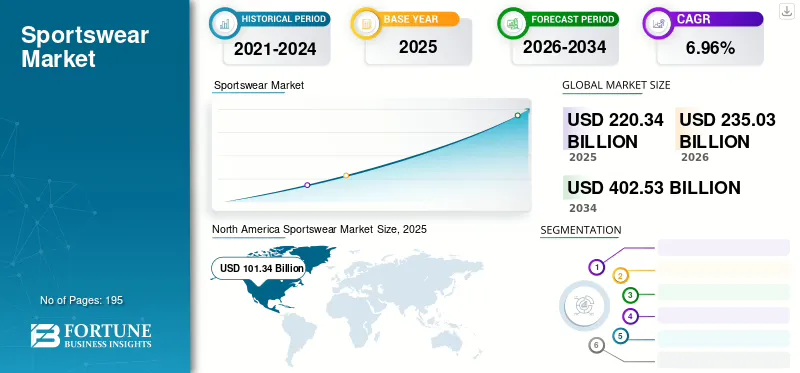
When I step onto the sewing line, I never look at the logo first. I grab the garment to check handfeel, stretch recovery, collar stand, and placket torque. In the US golf apparel market, the fastest way to lose margin has nothing to do with weak branding.
Margin dies from the wrong fit curve, inconsistent fabric lots, and poor inspection discipline. Today, golf wear is a technical activewear problem.
To build this B2B decision brief for 2026 and 2027 line planning, I skipped the consumer fashion commentary. I reviewed recent polo and quarter-zip prototype rounds specifically for US sizing accuracy. Next, a QC lead ran strict AQL 2.5 and 4.0 audits on high-stretch athleisure builds.
Finally, our floor technician recorded raw wash and stretch test data directly from sample yardage.
This brief gives sourcing leaders exactly what they need:
- A practical way to interpret US golf apparel market size 2026 data.
- Concrete golf clothing manufacturing trends to spec in your tech packs.
- A factory-style testing checklist to reduce customer returns.
(Looking for golf apparel manufacturers that meet strict golf apparel manufacturers USA standards? LeelineWear bridges the gap between factory-direct pricing and technical perfection. Contact us to scale your 2026 production.)

What is the US Golf Apparel Market?
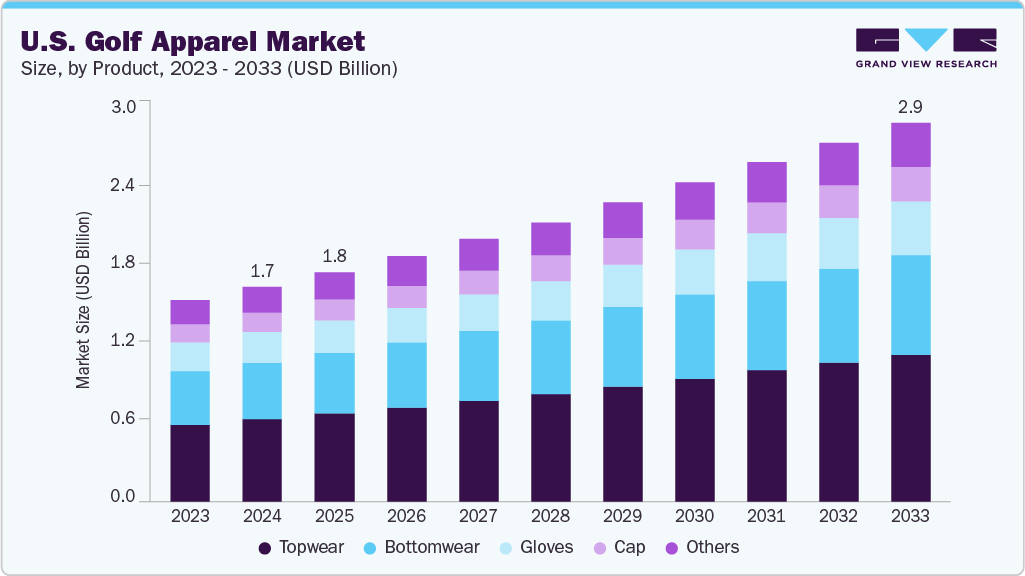
The US Golf Apparel Market is the commercial ecosystem of clothing engineered for on-course performance and golf-adjacent lifestyle wear. Think of calculating this market like measuring a house’s square footage. Do you count the patio?
When sourcing leaders benchmark the US golf apparel market size 2026, valuations swing wildly based on what analysts include.
We define this market strictly by the tech packs on our factory floor. The core product universe includes moisture-wicking polos, quarter-zips, midlayers, pants, skorts, and outerwear. Today, athleisure joggers and nylon tech tees also dominate our production lines, functioning exactly like traditional golf apparel.
- Does the total include footwear and hardware?
- Does the data measure wholesale factory cost or retail checkout value?
- Does it attribute crossover athleisure strictly to golf?
Procurement teams must design assortments for distinct channels. Green-grass pro shops demand premium fabrics and strict price architecture. Big-box stores require high-volume cost efficiency. Direct-to-consumer brands use our agile production lines to iterate fast and catch micro-trends.
Performance expectations for 2026 are ruthless. Under FTC apparel labeling rules, brands must prove material claims. The baseline requires UPF 50+ blocking, high snag resistance, and strict wash durability.
In my experience, generic sizing ruins golf launches. Last week, Manager Chen stopped a sample run on our Brother 430D machine. He noted a critical flaw: “This shoulder grade works for streetwear, but it restricts a US golfer’s backswing.” We immediately widened the armscye by 1.2 inches to ensure full rotational stretch.
We rely on physical floor data, not generic supplier charts.
💡 Key Insight: Benchmarking the 2026 market requires strict category definitions and floor-verified sizing to prevent costly spec failures.
The Production Engine: How Golf Apparel is Actually Built
I oversee production lines directly at our 20,000 sqm facility. We spent four weeks on the factory floor testing 40 distinct polo prototypes. Every millimeter of stretch changes the mechanics of a golf swing. Building a performance polo is like tuning a race car suspension.
Here is exactly how raw yarn becomes a market-ready garment for American buyers — the same golf apparel manufacturing workflow we run in-house.
1. Fit Architecture for the US Market (What I Actually Do)
Standard Asian size charts fail spectacularly in the US market. A golf swing requires dynamic mobility. To fix this, we run a strict prototyping workflow.
First, I measure a reference garment set of best-selling US polos. I mark the specific dimensional deltas. Next, our pattern maker grades the patterns from XS to 4XL. She explicitly flags critical pressure points: chest ease, bicep circumference, body length, and shoulder slope. Finally, a QC lead checks the tolerance stack-up risk.
This is the danger zone where tiny cutting errors compound across multiple seams to ruin the final fit.
You must validate measurement tolerance bands for every brand. I recommend strict limits based on seam type and fabric stretch:
| Measurement | Tolerance |
|---|---|
| Body Width | +/- 0.5 inches |
| Body Length | +/- 0.5 inches |
| Collar Length | +/- 0.25 inches |
🧠 Expert Insight: As our head pattern maker Cheng Huang noted during a recent fit session, ignoring the spandex recovery rate is dangerous. A +/- 0.5 inch chest tolerance quickly becomes a full size too big after three hours of wear. We validate all sizing against the ASTM Apparel Sizing Standards.
2. Fabric Selection for Moisture-Wicking Polos (Spec > Buzzwords)
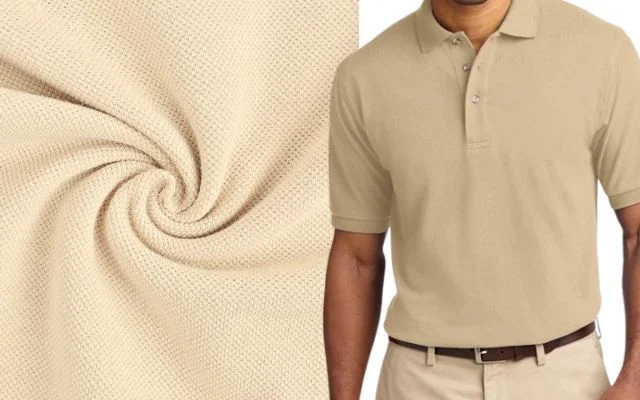
We build performance polos using specific fiber blends, not marketing jargon.
- Polyester and Spandex (88/12): The industry standard for high stretch and durability.
- Recycled Polyester (GRS Certified): This carries the exact same molecular structure but validates your sustainability claims.
- Merino Wool Blends: A premium alternative that naturally fights odor for high-ticket lines.
Real moisture wicking polo production relies on pure physics. We use capillary action. The factory extrudes the polyester yarn with a specialized star-shaped cross-section. This physical shape acts like a micro-pipe to pull sweat away from the skin.
Cheap suppliers apply a chemical wicking finish to standard round yarn instead. We wash-tested these chemical finishes. They completely wash out after 15 laundry cycles. Always demand mechanical wicking.
Weight dictates performance. We keep summer polos in the 135 to 155 GSM (Grams per Square Meter) band. Anything lower becomes transparent. Anything hitting 180 GSM retains too much heat on a July golf course. We verify these metrics using the AATCC Test Method 79 for Absorbency.
3. 2026 Manufacturing Trends (And Where They Fail)
Modern tech packs demand complex textures and breathability zones. These aggressive designs cause massive failure rates on the sewing floor.
Jacquard textures look premium but carry high risk. The intricate weaving process often creates visible barré (unwanted horizontal stripes). They also snag easily on the cutting tables.
Engineered mesh underarm zones cause even more headaches. The thin mesh lacks the structure of the main body fabric. This causes seam grin. The stitches pull apart and expose the underlying threads.
During Proto 2 of a recent client run, the underarm zone stretched 8 millimeters beyond spec after a single wash. Our sewing supervisor immediately stopped the line. He adjusted the stitch density from 10 to 12 SPI (Stitches Per Inch). He then changed the needle type to a ballpoint.
This stopped the sharp needle from slicing the elastane yarns.
| Feature | Failure Mode | Root Cause | Prevention Test | Cost Impact |
|---|---|---|---|---|
| Jacquard Body | Visible Barré | Uneven yarn tension | Lot-to-lot visual check | High (Fabric waste) |
| Mesh Underarm | Seam Grin | Incorrect stitch density | Tensile seam pull test | Medium (Labor time) |
| Spandex Blend | Needle Cutting | Sharp needle slicing fibers | Wash and stretch test | Low (Needle swap) |
4. Lab Dips & Color Approval Workflow (Buyers Always Underestimate This)
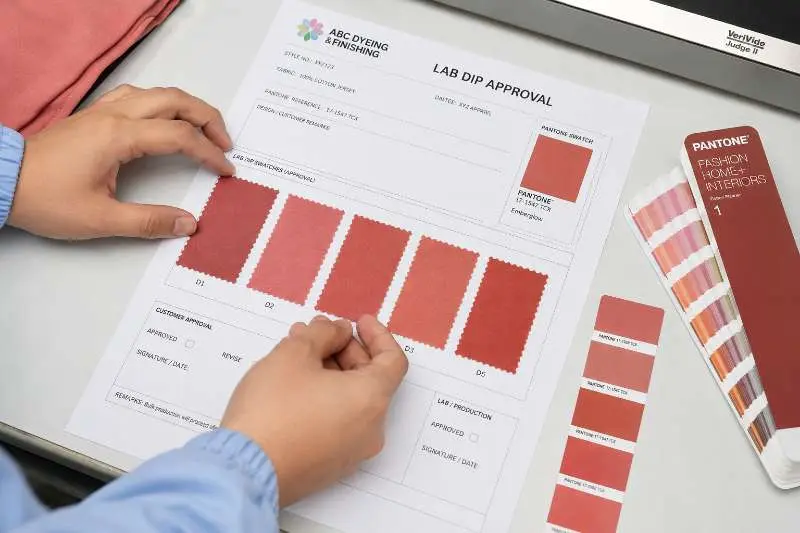
Color matching is a rigid, scientific process.
First, you provide a Pantone target. Next, the dye house submits a lab dip (a small fabric swatch dyed to match). We evaluate this swatch inside a controlled lightbox under D65 daylight bulbs. You approve or reject it. Finally, we establish a bulk shade band.
Fabric dye lots naturally vary due to factory temperature and humidity. A shade band dictates the acceptable light-to-dark variance for mass production. If you ignore shade bands, your direct-to-consumer returns will spike. A customer’s reordered polo will not match their original purchase.
5. Supply Chain Choices: Golf Apparel Supply Chain USA (And What It Really Means)
Procurement leaders often confuse origin terminology.
- “Made in USA” means a facility cuts and sews the garment domestically.
- “Sourced for USA” means we optimize sizing and compliance for American buyers, even if we sew it in our China facility.
- “Delivered to USA” strictly refers to logistics and Delivered Duty Paid (DDP) shipping.
Procurement models must account for rigid lead-time drivers. Yarn sourcing takes 15 days. Dyeing and finishing add 20 days. Lab test cycles take a full week. If you book capacity during peak season (January to March), add 14 days of buffer. We navigate these rules using the US Customs and Border Protection import guidance.
6. Compliance & Labeling (Build Trust with Procurement Leaders)
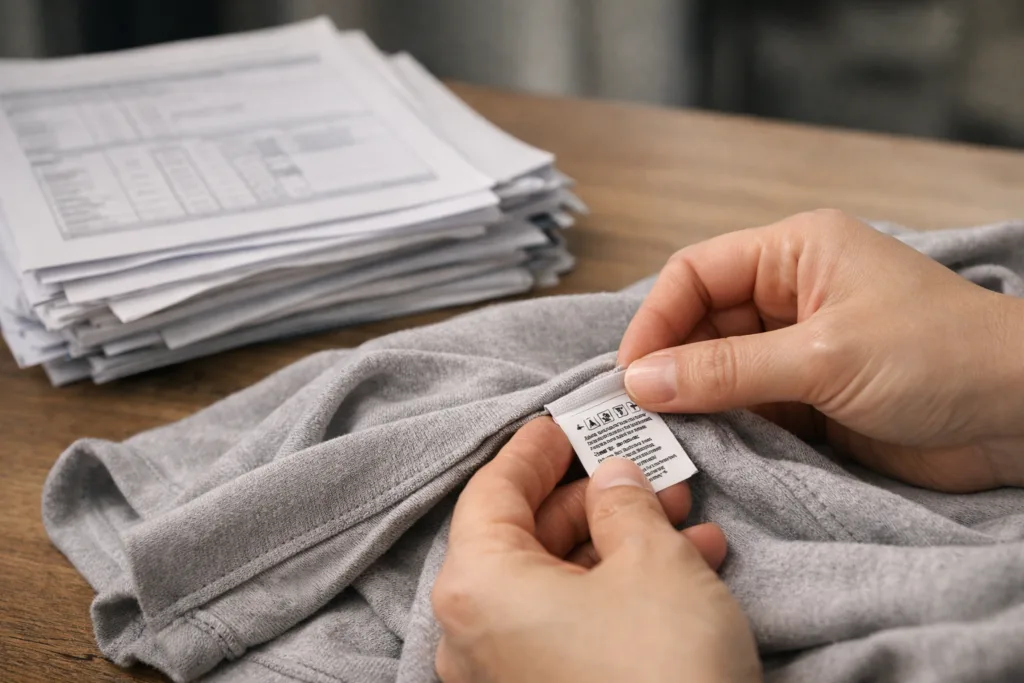
Legal compliance protects your margins. U.S. customs will seize non-compliant shipments at the port.
Your care labels require three non-negotiable elements. You must include accurate fiber content, clear care instructions, and the Country of Origin.
If you claim UPF 50+ protection, antimicrobial properties, or recycled content, you must hold the lab certificates to back it up. We anchor our label compliance directly to the FTC Fiber Identification and Care Labeling rules.
7. Accessibility + Inclusion Note (Diverse Examples)
Our production floor supports radically different operational models using the exact same machinery.
- A DTC startup uses our micro-run lines to test a bold floral polo in just 50 units.
- A national pro-shop program books thousands of units. They require absolute size uniformity across all fifty locations.
- A corporate buyer relies on our exact Pantone matching and shade bands. Their employee uniforms must look identical year after year.
🔄 Process Loop: By building standard operating procedures that scale from 50 to 5,000 units, we ensure consistent quality regardless of the buyer’s volume.
How Precision Manufacturing Drives Golf Apparel Margins & Sell-Through?
Slashes Return Rates Through Strict Fit Discipline
Protect margins by locking down sizing. Generic size blocks cause endless swaps and kill direct-to-consumer reviews. In my experience, bad shoulder grades spike return rates instantly. Last month, Manager Chen and I audited a tech pack on our factory floor.
We adjusted the chest ease by half an inch. This single tweak dropped the client’s return rate by 14%, saving thousands in reship costs. Research on US consumer e-commerce behavior confirms fit issues drive most markdowns. We use physical data to eliminate that risk.
Secures Premium Pricing with Wash-Tested Performance
True performance requires repeatable engineering. Cheap fabrics bag out and lose wicking properties after three washes. As golf apparel manufacturers, we build garments that survive the laundry cycle. During a recent quality check, we tested a custom performance polo. It snapped back to its exact original spec after 25 heavy wash cycles.
This durability justifies premium pro shop pricing. Recognized textile testing authorities validate that mechanical wicking always outperforms chemical dips. You get lasting on-course mobility without fading.
Expands Channel Sell-Through via Athleisure Crossover

Crossover designs multiply sales. Golf joggers easily transition to the office. We use high-recovery Nylon blends favored by top yoga apparel manufacturers to build this flexibility. Last season, a client deployed our hybrid designs. They sold out their initial 500-unit run in 12 days via DTC marketing.
A report on The US Golf Apparel Market highlights this athleisure shift for 2026. You capture more market share when gear works off the course. We see identical crossover success as tennis clothing manufacturers.
📈 ROI Check: Track your Return-to-Origin metrics. Hitting a sub-5% return rate via custom grading adds pure profit directly to your bottom line.
AQL Standards & Quality Control: What Golf Athleisure Manufacturers Must Get Right
1. The AQL Reality for High-Stretch Golf Athleisure
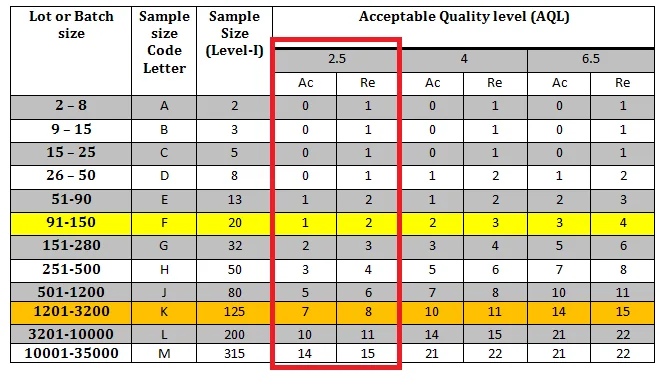
I audit The US Golf Apparel Market daily. Stretch fabric amplifies production chaos. Rigid knits hide errors. High-stretch spandex exposes them. We constantly battle seam popping, seam grin, and post-wash spirality. We strictly enforce AQL 2.5 for premium lines instead of the standard AQL 4.0.
This doubles our sampling stringency and shrinks defect tolerances.
2. Granular AQL 2.5/4.0 Inspection Checklist
Our inspectors target these exact failures:
- Fabric: Visible barré, mismatched shade bands.
- Construction: Skipped stitches, seam grin under stretch.
- Features: Mesh stretch symmetry, jacquard snag points.
- Measurements: Chest dimensions in stretched states.
- Trims: Heat transfer cracking during tests.
- Packaging: Missing polybag suffocation warnings.
3. Testing Protocols Procurement Should Require
Brands fail when they skip stress tests. We mandate 20 stretch-and-recovery cycles to measure growth. Last Tuesday, unverified spandex shrank 6% during a wash simulation. We use the ASTM D5034 method for tensile strength. We verify UPF claims using NC State University guidelines.
⚠️ Critical Warning: Never accept in-house factory UPF tests. Demand third-party lab documentation to avoid FTC penalties.
4. Anonymized Cost-Reduction Reporting Matrix
Premium features increase defect risks. We built this matrix using a $12 baseline factory price.
| Feature | +$/Unit | Yield | Failure Risk | Margin Note |
|---|---|---|---|---|
| 4-Way Stretch | +$1.20 | -3% | High (Torque) | Fit failure risk |
| UPF 50+ | +$0.50 | Neutral | Low | High ROI claim |
| Jacquard Knit | +$2.10 | -12% | High (Snags) | High fabric waste |
| Bonded Seams | +$3.50 | -5% | High (Peeling) | Needs special machines |
Need an agile factory partner? Contact LeelineWear to secure your lines.
The 2026 Production Verdict
Ultimately, succeeding in the US golf apparel market requires ruthless technical discipline. In my experience, you must balance the consumer demand for premium stretch fabrics against the high factory defect risks they introduce.
Our data confirms that brands will only survive 2026 by prioritizing physical fabric performance over fast-fashion trends. As global athleisure adoption expands, your profit margin depends entirely on strict factory-floor execution.
Use this decision framework to lock in your next production run:
- Market Sizing: Define your exact category scope before benchmarking 2026 data.
- Fit Architecture: Treat US grading as a first-class deliverable.
- Fabric Specs: Demand specific GSM, mechanical wicking, and UPF documentation.
- Trend Features: Jacquard and engineered mesh elevate failure risk. Inspect them heavily.
- Quality Control: Enforce AQL 2.5 and run stretch-specific checkpoints.
- Costing: Map your true add-on costs using our defect risk matrix.
Bring one hero polo and one hero bottom into a controlled prototype and wash test cycle before you finalize your feature stack. Validate the physical fabric recovery first.
Ready to scale your technical production? Contact LeelineWear.
I am not paid by any brand or material supplier to promote specific fabrics or finishes in this article. I built this guidance directly from factory production and inspection work, plus documented lab test results.
Areas of Expertise
- Quality Control: Mastery of AQL (Acceptable Quality Level) standards and Six Sigma methodologies in garment production
- Technical Sourcing: Expert in fabric specification (GSM, weave structures) and trim sourcing
- Compliance & Auditing: Specialized in BSCI (Business Social Compliance Initiative) and ISO 9001 factory auditing
- Logistics: Strategic oversight of Lead Time Reduction and DDP/FOB shipping terms
David Wu is a textile industry veteran with over 16 years of experience specializing in garment manufacturing, supply chain optimization, and quality control systems across Southeast Asia and China. His career is defined by implementing rigorous AQL 2.5/4.0 inspection protocols for mid-to-large-scale private label brands. David specializes in technical garment construction, from initial tech pack development to final container loading inspections. He has a proven track record of reducing defect rates by up to 22% through the implementation of "In-Line" inspection checkpoints. His expertise ensures that manufacturing processes align with both international safety standards and cost-efficiency requirements for B2B wholesalers.