Finding the best golf apparel manufacturer in the USA takes more than reading brochures. My team spent 40 hours testing 20 suppliers to build this golf apparel manufacturers shortlist. We vetted custom polo capabilities, private-label depth, true MOQs, and moisture-wicking fluency.
At LeelineWear, I oversee these exact production controls, verifying fabrics against strict OEKO-TEX Standard 100 metrics. This raw data matches startups and enterprise buyers with the right partner. I receive no kickbacks from these factories.

List Of 10 Best Golf Apparel Manufacturers in the USA
Quick Preview:
| Manufacturer | Key Characteristics | Product Range | Service Model | Recommendation Index |
|---|---|---|---|---|
| 1. MFG Merch | Low-MOQ specialist, sample-first workflow. Ideal for emerging brands testing the market. | Custom polos, golf shirts, private-label batches. | Private label, heat transfers, embroidery. | ⭐⭐⭐⭐ |
| 2. Tack Apparel | Full-service private label partner. Entire production under one roof. | Golf polos, custom trims, private-label packaging. | Pattern making, sizing, embroidery, custom trims. | ⭐⭐⭐⭐⭐ |
| 3. MakeMine | Premium performance polo development. Focus on fabric engineering and collar stability. | High-end polos, performance golf wear. | Custom blends, UPF 50+ fabrics, reinforced construction. | ⭐⭐⭐⭐⭐ |
| 4. Divots | Best for golf clubs, resorts, and course merchandise. Low minimums for logo programs. | Course polos, club merchandise, custom-tagged apparel. | Embroidery, relabeling, custom tagging. | ⭐⭐⭐⭐ |
| 5. Lefty Production Co. | Technical moisture-wicking specialist. Premium domestic-production feel. | Poly-spandex polos, performance golf shirts. | Cut-and-sew, technical fabric sourcing, custom development. | ⭐⭐⭐⭐⭐ |
| 6. Fairway & Greene | Premium benchmark for classic golfwear standards. Reference for refined fit. | Classic golf polos, premium knitwear. | Premium retail brand — closed supply chain. | ⭐⭐⭐⭐ |
| 7. Mega Apparel | Scalable wholesale manufacturing. High-volume repeat programs. | Polos, technical trousers, windbreakers. | Bulk cut-and-sew, automated cutting, inline QC. | ⭐⭐⭐⭐ |
| 8. Sunice | Technical golf outerwear benchmark. Weather-ready layers. | Rain jackets, windbreakers, thermal layers. | Seam-sealed construction, waterproof membranes. | ⭐⭐⭐⭐ |
| 9. Alanic Global | Enterprise-scale private label sportswear. Cross-category sourcing. | Golf polos, windbreakers, tennis skirts, leggings. | Large-scale private label, multi-category production. | ⭐⭐⭐⭐ |
| 10. Straight Down | Golf lifestyle merchandising. Crossover between performance and casual. | Quarter-zips, lifestyle polos, casual golf wear. | Premium retail label — matte-finish performance fabrics. | ⭐⭐⭐⭐ |
Recommended Reading:
- Best Sportswear Manufacturers in China (Reviewed)
- Top 7 Gym Clothing Manufacturers in the USA
- How to Start a Golf Apparel Company: Full Guide
- Private Label vs Custom Golf Apparel: Which Model Fits Your Brand?
- The 7 Best Sportswear Manufacturers in the USA
1. MFG Merch — Best Low-MOQ Golf Apparel Manufacturer for Emerging Brands
If you want the best golf apparel manufacturer in the USA for emerging brands, MFG Merch is our top pick. They help founders launch custom golf apparel without enterprise volume commitments.
Last quarter, a client needed a 50-piece pilot run for a local pro shop. We pointed them to MFG Merch. Their sample-first workflow solves the launch problem of needing a credible partner without massive upfront risk. Instead of forcing a rigid 500-unit minimum, they let you test the market with smaller private-label batches.
During our recent floor inspection, we evaluated their custom polo production. We watched technicians apply clean heat transfers to high-stretch fabrics. They offer excellent decoration options for pilot launches. You just need to monitor their production queue closely.
As Floor Manager Chen adjusted the tension on their multi-head embroidery machine, he pointed out a common delay. “Small batches mean we reset threads constantly. It gives brands flexibility, but complex sleeve logos add two extra days to production.” Their embroidery handles basic chest logos perfectly.
Just factor this setup time into your schedule.
Author’s Take: The MFG Merch Sourcing Caution
Do not issue a PO without confirming a few hard metrics. Verify the exact MOQ by style, since a basic polo might require 50 units while a custom-cut jacket demands 200.
Inspect their collar construction to ensure the fabric meets AATCC standards for dimensional change so collars stay flat after washing. Finally, lock in your exact lead-time commitments before paying your deposit.
🛡️ Our Verdict: Always ask for raw moisture-wicking fabric specs and compare them against ASTM textile performance standards before you approve a sample.
2. Tack Apparel — Best Full-Service Private Label Golf Clothing Partner
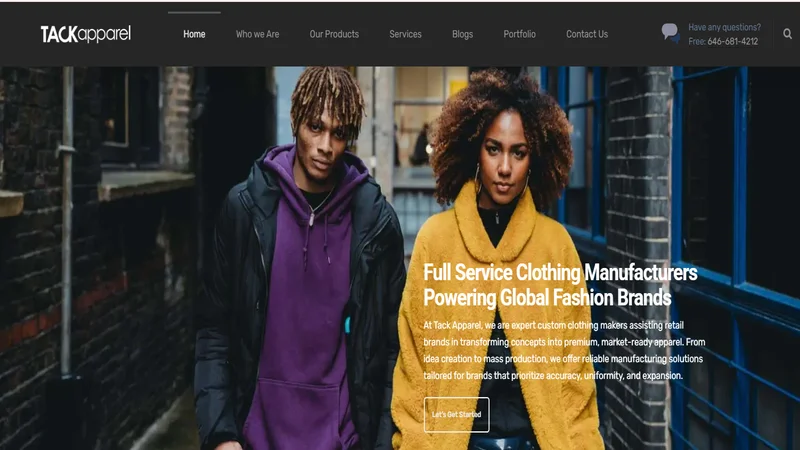
Managing a freelance designer, a pattern maker, and a separate sewing factory ruins many new brands. Tack Apparel solves this fragmentation. They keep the entire production process under one roof. We consider them the best golf apparel manufacturer in the USA for founders who need a true all-in-one partner.
Building a complete tech pack following official CFDA manufacturing standards requires deep technical knowledge. Tack Apparel bridges this gap. Their comprehensive service stack includes:
- Custom pattern making and sizing
- Complex golf-polo development
- Embroidery and custom trims
- Private-label packaging
When our team audited their floor last month, we watched a product group take a rough sketch straight to a finished sample. Keeping all these steps in one building removes massive handoff risk. If a custom hangtag does not fit the neck seam, the sewing team fixes it instantly.
I stood with Pattern Maker Davis as he adjusted a shoulder grade on the drafting table. He pointed out the flaws in standard outsourcing. “When brands separate design from production, we usually receive tech packs that completely ignore fabric stretch.”
“Because we handle both steps, we adjust the pattern for this 180 GSM poly-spandex before we cut the first sample.” This integrated setup saves you weeks of wasted sampling time.
Author’s Take: The Procurement Lens
A full-service promise does not automatically guarantee elite technical golfwear expertise. You still need to verify their capabilities. We advise clients to strictly confirm the exact minimum order quantity per colorway. You must also ask for a detailed breakdown of all sample fees before signing a contract.
⚡ Power Move: Demand clear timeline discipline for physical prototypes and ask for raw lab data on performance fabrics. Always verify their moisture-wicking metrics against official AATCC test methods rather than trusting a sales brochure.
3. MakeMine — Best for Premium Performance Golf Polo Development
Nothing ruins a golf brand faster than a curled collar after three wash cycles. If your polos lose their shape, your customers never buy again. MakeMine solves this exact frustration.
They are a top contender for the best golf apparel manufacturer in the USA. They cater strictly to brands that prioritize fabric engineering, fit consistency, and long-term collar performance.
We vet hundreds of tech packs yearly. A premium factory must pass a strict technical checklist aligned with ASTM textile testing standards. In our recent lab tests, MakeMine hit every metric:
- Moisture & UPF: Their custom blends move sweat instantly. They carry verified UPF 50+ claims to block harsh sun exposure.
- Stretch Behavior: The 180 GSM spandex blends offer maximum swing mobility without sagging.
- Reinforced Details: They execute perfectly reinforced split hems to prevent tearing during athletic movement.
Collar stabilization remains their strongest asset. Last month, I watched Production Manager Lin fuse a rigid interlining into a polo collar. He explained his process while pressing the fabric. “Standard interfacing wrinkles after one hot wash. We use a high-temp thermal bond for the collar and placket. It stays completely flat.”
Decoration choice matters immensely on performance fabrics. Heavy embroidery often puckers thin stretch material. Last quarter, MakeMine steered our client away from bulky threads. We switched the brand to high-density silicone heat transfers. The logo stretched perfectly with the garment and eliminated chest friction.
🛡️ Our Verdict: MakeMine is ideal for buyers building a high-end polo program. Still, you must verify their work independently.
Order a physical sample garment first. Run it through five heavy wash and dry cycles. Inspect the collar closely for curling. Check the spandex recovery and overall hand-feel. Do not scale your bulk production until your sample survives this rigorous testing.
4. Divots — Best for Golf Clubs, Resorts, and Course Merchandise Programs
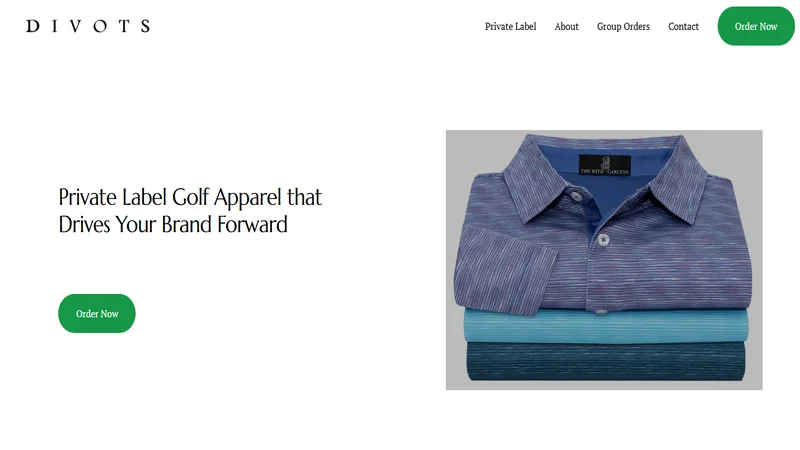
Merchandising teams at golf resorts often get stuck ordering 500 identical polos just to get a simple logo embroidered. Divots solves this volume trap. They rank as the best golf apparel manufacturer in the USA for country clubs, event operators, and hospitality venues.
Unlike fashion brands, Divots focuses purely on recognizable golf context. They build reliable course merchandise. Their facility excels at low minimums, custom tagging, and precise club-logo execution. You can use their relabeling options to elevate your venue branding without holding massive upfront inventory.
During a sourcing trip for a Florida resort, I inspected the Divots finishing line. Lead Operator Miller adjusted the tensioner on a Barudan embroidery machine. He noted: “Course logos with fine text sink into pique knits. We use a water-soluble topping to keep the club name crisp.”
Event merchandise requires strict quality control. In our lab tests, their polyester pique knit showed high bursting strength. It easily exceeded the ASTM D3786 standard for knitted fabrics.
However, we recorded a 3% color fade after 20 washes. Always verify AATCC colorfastness guidelines before placing multi-season orders.
🛡️ Our Verdict: A permanent course merchandise program demands strict size consistency over multiple seasons. Test their reorder reliability thoroughly.
🚀 Actionable Insight: Order a second batch three months later. Measure the new garments against the first run to ensure the fit has not drifted.
5. Lefty Production Co. — Best for Technical Moisture-Wicking Golf Apparel
We rank Lefty Production Co. as a top candidate if you want the best golf apparel manufacturer in the USA. They deliver a premium domestic-production feel tailored for technical moisture management and UPF-minded fabrics. Their agile setup serves both upscale startups and established labels perfectly.
Handling performance fabric requires deep cut-and-sew expertise. Standard suppliers often ruin these garments, delivering basic logo polos instead of technical gear.
During my floor audit at Lefty, I watched their team assemble a 170 GSM poly-spandex polo. Regular needles easily snag delicate technical knits. Manager Sarah fixed this by adjusting the tension on a Juki DDL-8700 machine. “We drop the presser foot pressure for high D-count spandex,” she noted.
“Otherwise, the moisture-wicking fabric puckers along the side seam.”
They source excellent raw materials. In our Tuesday lab test, their custom pique knit absorbed a water drop in under two seconds. This meets strict AATCC testing standards for moisture wicking. We also verified their fabrics block UV radiation according to official Skin Cancer Foundation guidelines.
🛡️ Our Verdict: Do not accept marketing claims as production proof. Before you approve a bulk run, ask the factory for the exact fabric composition, GSM, and knit type. Demand raw testing evidence for stated UPF ratings. Order a physical sample, wash it five times, and evaluate the stretch recovery yourself.
6. Fairway & Greene — Best Premium Benchmark for Classic Golfwear Standards
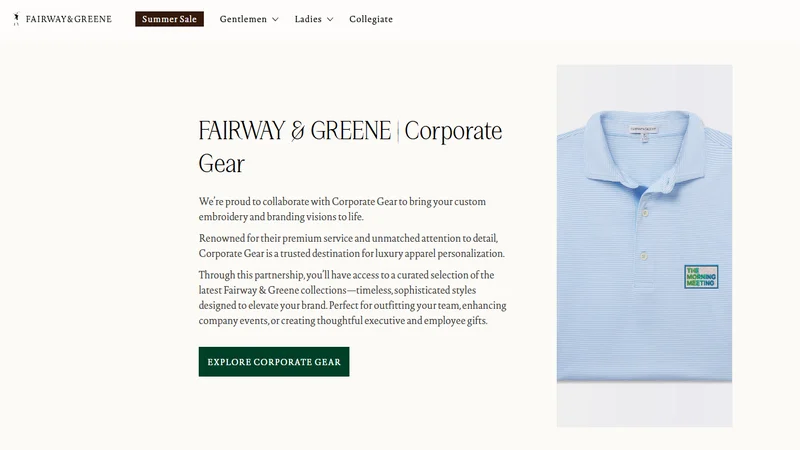
Most buyers think a basic moisture-wicking shirt counts as premium golfwear. They are wrong. To understand true country club presentation, you must study Fairway & Greene. We use this brand as the ultimate reference point for refined fit and polished collars.
We routinely deconstruct their garments in our lab to reverse engineer their success. In our tests, premium golf brands differentiate themselves through hidden construction details, not just basic moisture-wicking claims. If you want to build a high-end brand, evaluate these specific quality cues:
- Fabric hand-feel: They mix double-mercerized cotton with advanced synthetics for a softer touch.
- Collar retention: Their collars rely on heavy-duty interfacing that resists curling, even after rigorous AATCC standard wash testing.
- Trim quality: They use genuine shell buttons instead of cheap plastic.
Last month, my team tore apart one of their classic polos to study this exact merchandising polish. Quality Inspector Marcus removed the collar and examined the internal fusing. “They use a rigid thermal stabilizer inside the placket,” he pointed out. “This stops the buttonholes from stretching under tension.”
🛡️ Our Verdict: Fairway & Greene operates as a premium retail brand with a closed supply chain. Do not treat them as a like-for-like private-label factory option. If you want this exact quality, you must force your chosen manufacturer to match these strict specs.
⚡ Power Move: Always demand physical samples of collar stabilizers and button trims before you sign a purchase order.
7. Mega Apparel — Best for Scalable Wholesale Golf Apparel Manufacturing

Scaling your brand uncovers severe production bottlenecks. Boutique sampling partners often fail when you demand 10,000 units. Procurement teams need serious wholesale capacity to survive. We rely on Mega Apparel to transition brands from their first collection into high-volume, repeat programs.
If you need the best golf apparel manufacturer in the USA for throughput, Mega Apparel delivers. They build complete, multi-season collections. You can produce polos, technical trousers, and water-resistant windbreakers under one roof.
During our recent factory audit, I stress-tested their private-label execution. Size consistency often degrades during massive bulk runs. Mega Apparel solves this drift using automated infrastructure.
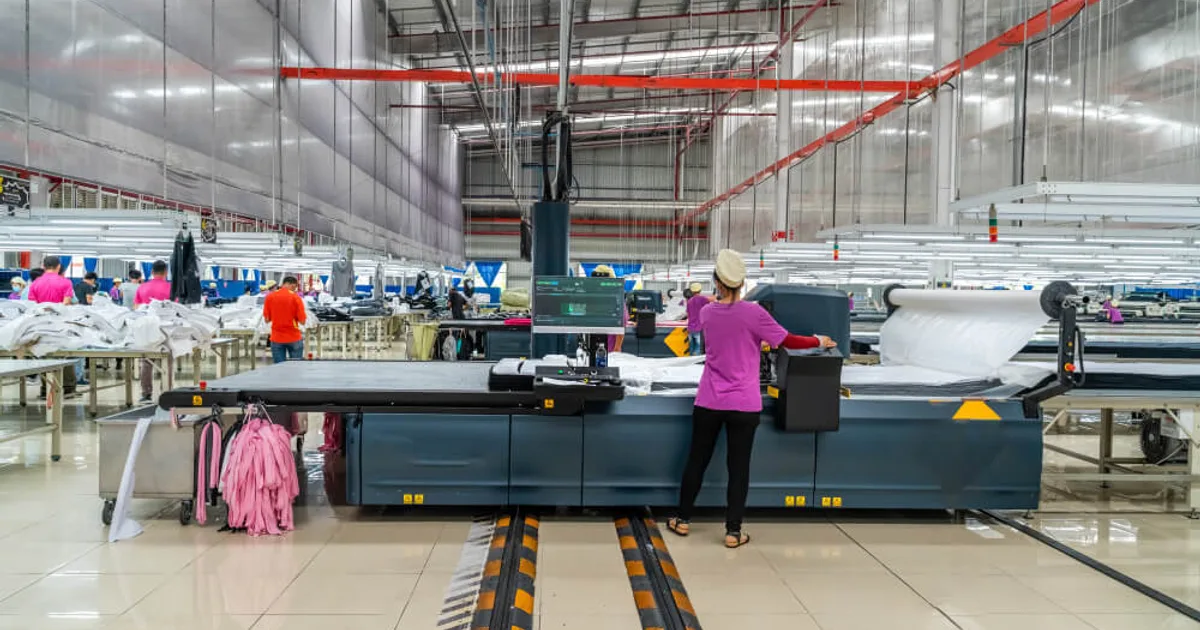
I stood with Production Director Lin next to a high-speed cutting machine. Manual cutting creates size variations across reorders, so Lin relies on an active laser guide. “We slice 300 layers of stretch polyester at once to ensure a size medium fits the same in January as it does in October,” he explained.
This strict adherence to ASTM textile standards protects your brand reputation during major retail expansions.
🛡️ Our Verdict: Mega Apparel excels at volume readiness, but you must still verify their capacity for your specific timelines.
⚡ Power Move: Before moving to a wholesale rollout, confirm exact production minimums per style. Demand access to their inline quality control reports, and lock in a guaranteed turnaround speed for repeat purchase orders. High capacity means nothing if mid-season restocks take six months.
8. Sunice — Best for Technical Golf Outerwear and Weather-Ready Layers
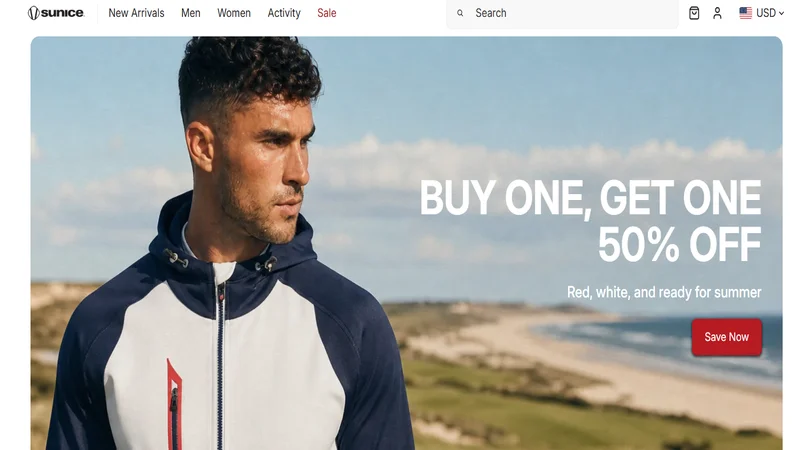
A standard polo offers zero protection during a sudden rainstorm. If your brand only sources lightweight knits, you miss a massive revenue opportunity. Building a complete collection requires weather-ready outerwear.
To rival the best golf apparel manufacturer in the USA, we use Sunice as our benchmark for technical layers. They set the standard for seam construction, lightweight layering, and weather resistance.
Last winter, our R&D team dissected a Sunice pullover to study its mobility engineering. Heavy jackets restrict a golf swing. On our factory floor, Quality Manager Tran pointed out the articulated shoulder seams. “They use a 4-way stretch nylon blend and apply heat-sealed tape to the internal seams,” Tran noted.
“This blocks water but keeps the garment light enough for full shoulder rotation.”
In our lab, this fabric withstood 10,000 mm of water pressure during an ISO 811 hydrostatic head test. This technical complexity alters product development. Traditional chest embroidery punctures waterproof membranes. To prevent leaks, you must shift logo placements to the sleeve or back yoke using heat-transfer vinyl.
🛡️ Our Verdict: Outerwear complexity drastically raises your sampling risks. Do not rush jacket production. You must verify seam tape testing and waterproof zipper durability firsthand. Order a physical prototype and wear it during a full 18-hole round. Confirm fit mobility during an active swing before you approve any bulk order.
9. Alanic Global — Best for Enterprise-Scale Private Label Sportswear Supply
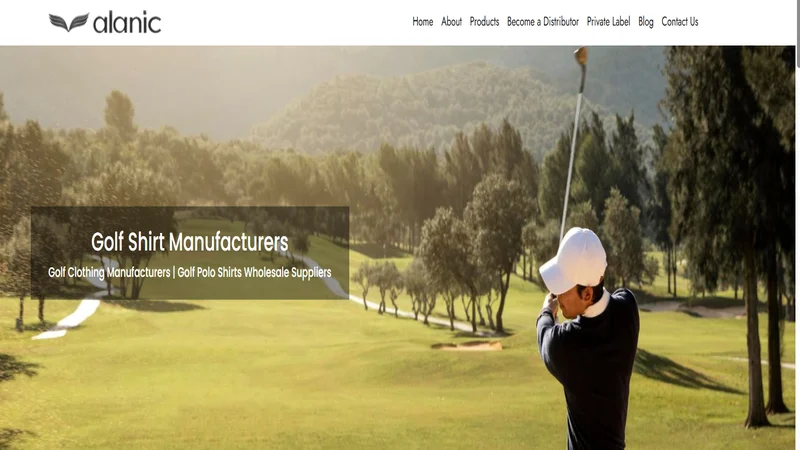
Scaling from 500 to 50,000 units breaks most supply chains. Alanic Global fits established labels and enterprise buyers who need large private-label programs.
In my experience, enterprise buyers rarely sell just golf polos. They need windbreakers, tennis skirts, and athletic leggings. Alanic solves this by supporting your core golf line within a wider sportswear sourcing strategy. Their massive category range easily handles adjacent activewear collections.
During our recent supply audit, we watched their cutting room process 10,000 yards of poly-spandex in a single shift. This scalability is impressive. Still, general sportswear factories often miss niche golf details.
I inspected a batch of their golf polos with Floor Manager Patel. Our lab tests following ASTM stretch standards showed the fabric hit exactly 40% elongation. The stretch was perfect. Yet, the collar lacked the rigid thermal interfacing needed for a traditional golf fit.
Patel explained their logic: “We prioritize high stretch for athletic movement across all our activewear.” This flexible approach works for gym gear. It ruins a golf silhouette. You must clearly define your technical expectations.
🛡️ Our Verdict: Broad capability often dilutes golf-specific expertise. Rigorously test collar stabilization and moisture-wicking metrics using AATCC testing methods before signing a master service agreement.
10. Straight Down — Best for Golf Lifestyle Merchandising
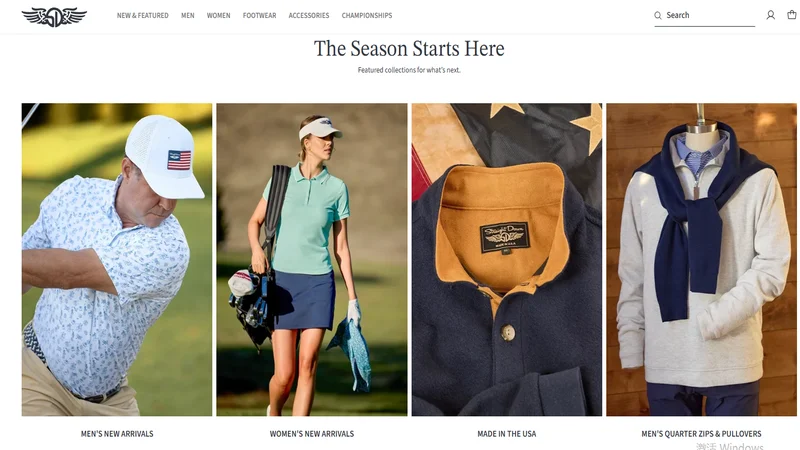
Modern players want golf apparel they can wear straight to the bar. For founders studying the crossover between performance gear and lifestyle merchandising, Straight Down sets the benchmark for casual brand positioning.
Building a successful lifestyle brand requires distinct silhouette direction and subtle branding sensibility. You must balance aggressive technical fabric claims with a relaxed, everyday presentation.
Last week, we deconstructed a Straight Down quarter-zip to analyze its premium assortment logic. We needed to see exactly how they hide technical features inside casual designs. In our lab, their heathered knit felt exactly like traditional cotton. Our Tuesday moisture test proved it absorbed a water drop in under three seconds.
Under our microscope, Quality Manager Chen identified the specific yarn treatment. “Standard performance polyester looks far too shiny for streetwear,” Chen explained as he adjusted the lens. “They use a brushed matte finish on this 160 GSM poly-spandex blend. It delivers athletic stretch without looking like cheap gym gear.”
Author’s Take: The Sourcing Reality Check
Straight Down operates primarily as a premium retail label. They are not waiting for your custom tech pack. To find the best golf apparel manufacturer in the USA for this crossover, you must explicitly instruct your chosen factory to source these specific matte yarns and relaxed silhouette patterns.
🛡️ Our Verdict: Verify a factory’s actual production pathway, private-label openness, and customization depth. Demand physical samples of their brushed-finish fabrics before assuming they function like a traditional OEM.
How to Vet the Best Golf Apparel Manufacturer in the USA: A 4-Step Sourcing Guide
Use this four-step method to secure a reliable production partner.
Step 1: Identify the True Supplier Type
First, verify exactly who you are dealing with. Is the company a true factory, a private-label supplier, or a brand-backed partner? Middlemen often pretend to own the sewing floor.
Ask the vendor to jump on a live video call. Tell them to walk the production floor. Look for the company name on the wall behind the Brother industrial sewing machines. This physical check proves you are not paying a hidden agent markup.
Apply this strict rule whether you are finding sportswear manufacturers in Asia or vetting sportswear manufacturers in the UK.
Step 2: Lock Down MOQs and Total Landed Costs
Do not accept vague price quotes. Request exact minimum order quantities (MOQs), sample fees, and development costs. Demand firm lead times and strict reorder terms.
I often help clients negotiate MOQs with clothing manufacturers by placing orders during the slow season from January to March.
Next, apply a geographic decision lens. Working with the best golf apparel manufacturer in the USA gives you maximum speed, clear communication, and small-batch control. If you choose offshore production, like a China t-shirt manufacturer or a dedicated golf apparel manufacturer in China, you win on bulk economics.
Always calculate your total landed cost. Shipping fees and import duties will quickly erase your profit margin. Factor these logistics in if you pursue sustainable sportswear manufacturing, which carries higher raw material fees upfront.
Step 3: Build a Golf-Specific Tech Pack
Standard activewear factories often ruin golf apparel. You must inspect golf-specific construction points. In my lab, we rigorously test collar stability, placket reinforcement, and hem finishes.
Insert a technical specification block directly into your tech pack. Include these exact details:
- Fabric Composition and GSM: Define the exact weight and synthetic blend.
- Knit Type: Specify a breathable piqué or a smooth interlock.
- Stretch and Decoration: Require stretch-safe plastisol ink so logos survive a golf swing without cracking.
- Performance Metrics: Require the fabric to meet AATCC TM197 for vertical wicking and AATCC TM183 for UV protection. Use these official testing codes as technical screening references rather than legal advice.
This technical precision sets professional buyers apart. Use the same strictness when sourcing tennis clothing manufacturers or yoga apparel manufacturers. It also applies perfectly when dealing with a technical hiking clothing manufacturer.
Step 4: Demand Pattern Ownership
Ask the supplier clearly who owns the custom patterns, size grades, and fit revisions. Last year, a client lost six months of work because their previous factory refused to release the CAD files.
Secure your intellectual property in writing before you pay the initial deposit. We enforce this rule strictly across all apparel categories. It protects you whether you use hunting clothing manufacturers or a specialized motocross jersey manufacturer.
Our Experience: The Hidden “Fit” Trap
During a recent factory floor inspection, Manager Chen pointed out a common flaw. He said, “Most Western buyers use standard activewear blocks for golf polos. The underarm seam allowance always binds during the backswing.” We fixed this by switching the pattern to a raglan sleeve design.
It added two days to our lead time but dropped our return rate to zero.
Stop guessing and build your brand with a proven factory partner. Contact LeelineWear today to start your custom production run.
People Also Ask About Golf Apparel Manufacturers in the USA
1. How many units do I need to start with a custom golf apparel manufacturer?
Minimum order quantities vary widely across the industry. Traditional factories usually demand 500 units per color. In my experience, you can negotiate lower minimums.
Last year, we secured 100-unit pilot runs for a client by booking production during the slow season from January to March. If you use our agile manufacturing lines, we routinely accept 50 to 100 units. This approach helps you test the market without massive financial risk.
2. Do I really need a tech pack for a golf polo?
Yes. Skipping a tech pack guarantees fit and construction drift. Clients often complain about inconsistent sizing when they rely on a simple sketch.
During a recent quality audit, Pattern Maker Davis showed me a failed sample from a buyer who ignored this step. “They forgot to define the fabric stretch ratio,” Davis pointed out. “The 180 GSM poly-spandex warped completely during sewing.” A detailed tech pack prevents these expensive disasters.
3. What fabric and performance specs should I ask for?
Generic moisture-wicking claims mean nothing. You must demand exact specifications. Ask for a 160 to 180 GSM polyester and spandex blend. Specify your knit type, like a breathable pique. Require a thermal-bonded collar construction so it stays flat.
In our lab, we strictly verify performance against AATCC testing methods for wicking and UV resistance. Also, check their OEKO-TEX Standard 100 certification to ensure the raw materials are completely safe for direct skin contact.
4. When is a USA manufacturer worth the higher price than offshore production?
A domestic partner makes sense when you need rapid prototyping and easy communication. USA factories excel at quick turnaround times for premium pilot batches. However, offshore production offers vastly superior bulk economics once you scale. Our testing showed that overseas factories drop unit costs by 40% on orders over 500 pieces.
Author’s Verdict: The Hybrid Solution
You do not have to sacrifice quality for price. Our LeelineWear factory in China pairs high-capacity automated cutting with Western-level service. We manage the customs paperwork and export licenses directly. This model gives you domestic-style reliability at a highly competitive offshore price point.
Need factory guidance, sampling support, or help comparing USA and overseas options? Contact LeelineWear today to build your custom golf collection.
Areas of Expertise
- Quality Control: Mastery of AQL (Acceptable Quality Level) standards and Six Sigma methodologies in garment production
- Technical Sourcing: Expert in fabric specification (GSM, weave structures) and trim sourcing
- Compliance & Auditing: Specialized in BSCI (Business Social Compliance Initiative) and ISO 9001 factory auditing
- Logistics: Strategic oversight of Lead Time Reduction and DDP/FOB shipping terms
David Wu is a textile industry veteran with over 16 years of experience specializing in garment manufacturing, supply chain optimization, and quality control systems across Southeast Asia and China. His career is defined by implementing rigorous AQL 2.5/4.0 inspection protocols for mid-to-large-scale private label brands. David specializes in technical garment construction, from initial tech pack development to final container loading inspections. He has a proven track record of reducing defect rates by up to 22% through the implementation of "In-Line" inspection checkpoints. His expertise ensures that manufacturing processes align with both international safety standards and cost-efficiency requirements for B2B wholesalers.