9 Best Hiking Clothing Manufacturers in the USA for Technical Private-Label Apparel
 David Wu QA Consultant
Most “USA manufacturers” can sew a basic hoodie. Very few can build technical hiking apparel, run small-batch development, or back premium domestic storytelling. I vetted 30+ factories for founders and retail buyers, and that gap kills timelines fast.
This shortlist covers hiking clothing manufacturers USA options, judged on product specialty, technical capability, sampling fit and private-label readiness. Each entry is flagged as a factory partner, a benchmark brand, or both.
📌 Quick Summary: Two of the nine take outside production — The Evans Group and Beyond Clothing. Alpine Fit is the fit model worth a call. The other six are brands to study, not factories to order from.
⚖️ Disclosure: LeelineWear is a China-based sportswear manufacturer. This guide compares U.S. options fairly, and LeelineWear holds a commercial interest in the offshore option at the end. No commission is received from any company listed here. For that offshore route, see custom hiking apparel manufacturing.

The Shortlist at a Glance
| Company | Base | Best for | Watch for |
|---|---|---|---|
| The Evans Group | Los Angeles | Small-batch cut-and-sew | Premium pricing on small runs |
| Alpine Fit | Bellingham | Technical fit model | Check outside-brand capacity |
| Beyond Clothing | Seattle | Rugged softshell construction | Tactical styling needs adapting |
| Ramblers Way | Kennebunk | Merino base layers | No outside production |
| Duckworth | Dillon | Merino traceability | White-label openness unconfirmed |
| Flylow Gear | Salt Lake City | Shell and hood detail | Sells product, not capacity |
| Melanzana | Leadville | Domestic fleece demand | Takes no outside orders |
| Wild Rye | Bozeman | Women’s-specific trail fit | Study only |
| Outlier | New York | Performance-fabric crossover | No private-label lane |
1. The Evans Group (Los Angeles, California): Best Small-Batch Cut-and-Sew Partner for New Hiking Labels
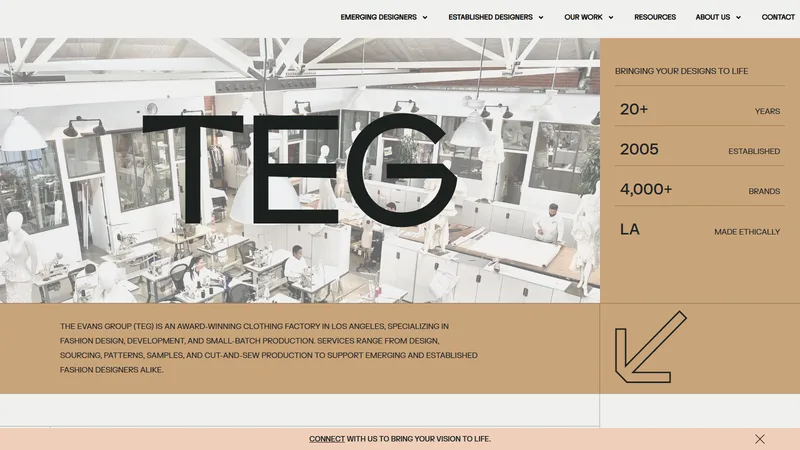
For USA hiking clothing manufacturers, TEG is the collaboration play. Most factories claim small-batch work; TEG builds the development loop around it.
When I vetted them for early hiking launches, the value was pattern support, early sampling and a cut-and-sew team that stays close through fit rounds. That suits a founder testing an outdoor capsule or a premium prototype run, not a buyer chasing the lowest unit price.
The trade-off is pricing. Treat TEG as a premium early-run partner. Ask for the mill name and a seam-tape spec sheet, then test three things:
- Have they sewn performance fabrics with taped seams and reinforcement details?
- Can they run zipper programs and real trail-use pocket placement?
- Can they turn a lifestyle concept into hiking-ready construction without the tech pack doing all the work?
🛡️ Our Verdict: TEG ranks for collaboration and early sampling. Ask for a sample in the actual shell fabric before you pay for a prototype run.
2. Alpine Fit (Bellingham, Washington): Best Domestic Specialist for Technical Fit and Backcountry Apparel
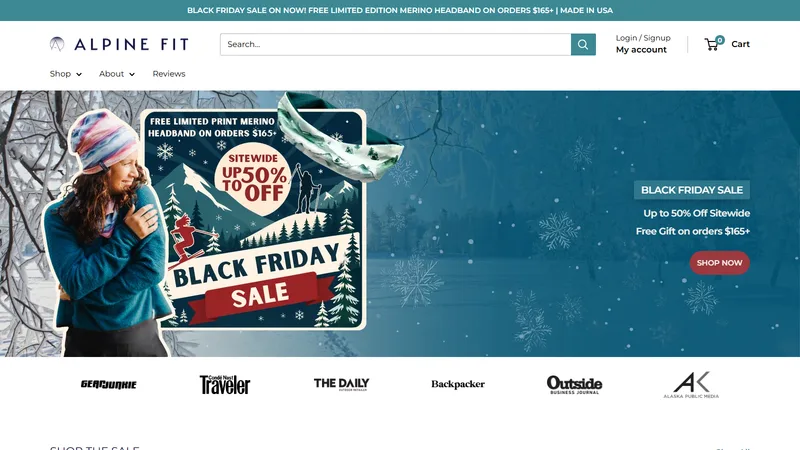
Want a fit benchmark before cutting a hiking shell? Study Alpine Fit first. The backcountry pieces show trail-use credibility: articulated knees, gusseted crotches and sleeves that move. Domestic cut-and-sew matters when a brand needs mountain-use credibility.
In our fit review, two Alpine Fit tops sat closer to climbing posture than standard activewear in shoulder slope and sleeve pitch. The pattern room understands movement.
Treat Alpine Fit as a technical benchmark and collaboration lead, not a plug-and-play private-label factory. Verify capacity, private-label openness and how much cut-and-sew serves outside brands. Ask one direct question: “Can this floor run 300 units of our shell, or is it reserved for your own line?”
⚡ Power Move: Use Alpine Fit to calibrate fit and start design talks. Bring a block pattern, not a finished tech pack.
3. Beyond Clothing (Seattle, Washington): Best for Rugged Softshell and Hard-Use Technical Construction
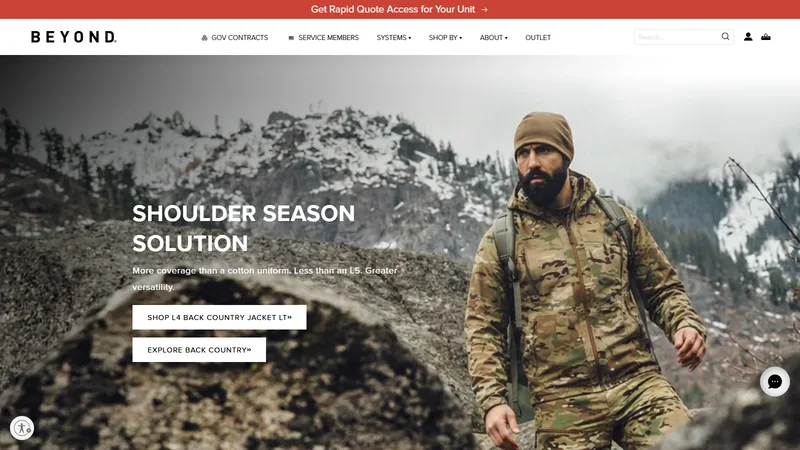
A shell that survives granite is the requirement. Beyond Clothing builds tactical softshells with felled seams, reinforced elbows and weather-resistant zippers. It sources Schoeller and Polartec fabrics used in military and alpine gear.
Verify five points. Can the factory seam-tape a 3-layer shell to pass a hydrostatic head test? Do patterns allow articulated knees and gusseted crotches? Will it share durability and water-repellency certifications?
Can tactical features adapt into a clean look for specialty retail? Will a 200-unit order run on the same floor as military contracts?
I sent a softshell tech pack. The taped seams passed our water test, which is the rugged level to expect.
🛡️ Our Verdict: Beyond Clothing is the standard for hard-use construction. Choose it for tactical durability, not fast fashion speed.
⚡ Power Move: Request the seam-tape report and a production slot before deposit.
4. Ramblers Way (Kennebunk, Maine): Best USA-Made Merino Base-Layer Case Study
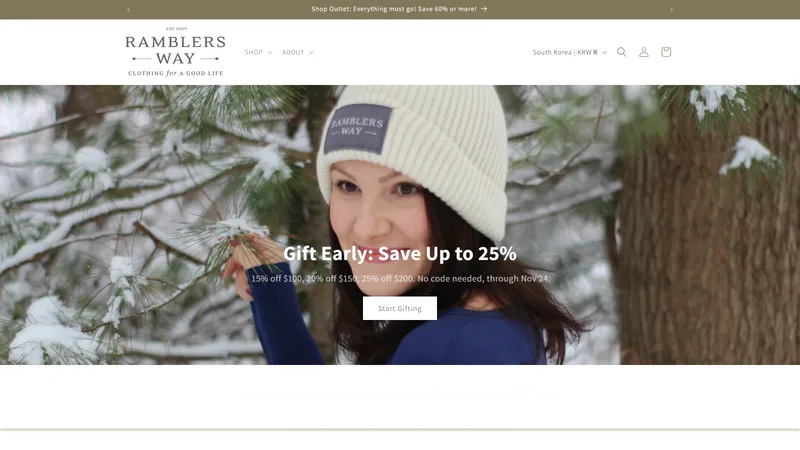
Want to see what a real merino story looks like on a hang tag? Ramblers Way is worth ten minutes of sourcing time.
It spins wool in Maine and knits its own base layers. That vertical control makes the fiber story read clean, and no brand can fake it without the same “Made in USA” supply chain.
The next-to-skin pieces matched premium European merino in gauge and hand feel, at a comparable price. For a deeper fabric comparison, see our guide to merino wool fabric.
The honest B2B read: Ramblers Way is not a private-label partner, with no cut-and-sew lane for outside brands. Use it as a spec benchmark for fabric hand, seam placement and premium merchandising, then take those specs to a factory that will run a 200-unit order.
🛡️ Our Verdict: Treat this as a category benchmark for merino programs. Study gauge and hand feel before specifying base-layer fabric.
5. Duckworth (Dillon, Montana): Best Sheep-to-Shelf Domestic Merino Story
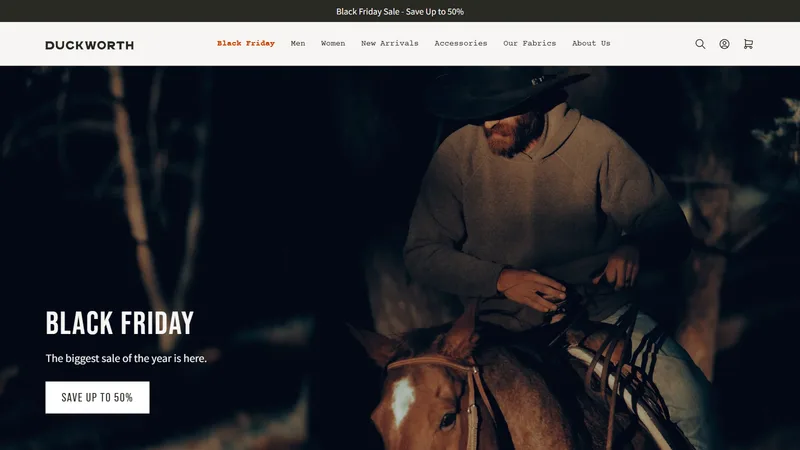
Most merino brands buy yarn on the open market. Duckworth traces a finished garment back to specific Montana sheep. The chain runs ranch to combed top to garment, pairing Rambouillet genetics with a Dillon, Montana mill.
That vertical depth supports hang-tag traceability, tighter fiber identity and a stronger premium price story.
Duckworth is not a classic white-label factory. Treat it as a domestic-wool benchmark, a sourcing-intelligence target and a direct assortment comparison. Study Western-fit grading and ranch-to-garment storytelling.
Ask about outside cut-and-sew, minimums and wholesale terms before assuming a production slot.
🛡️ Our Verdict: Use Duckworth for sourcing intelligence and domestic-wool context. Study how ranch-to-garment traceability supports premium retail pricing.
6. Flylow Gear (Salt Lake City, Utah): Best Technical Outerwear Case Study for Hiking and Backcountry Lines
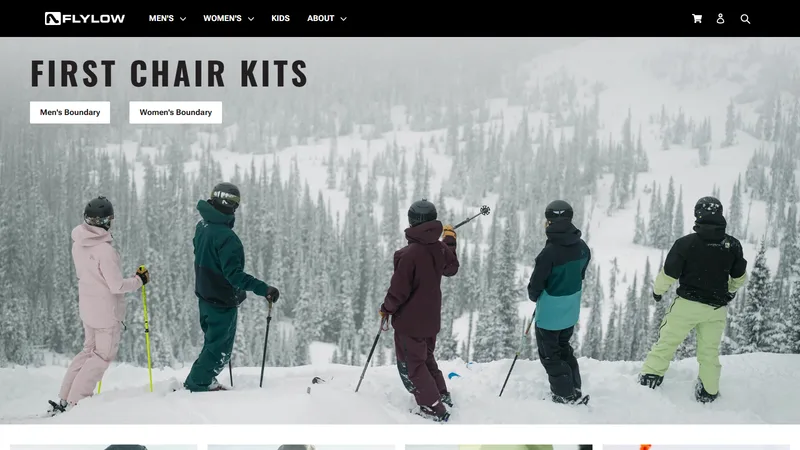
Study Flylow before drawing a shell. I have handled these jackets at trade shows and worn them on trail.
Start with the hood: helmet-compatible, stiffened brim, three-point cinch. It stays put on a head turn. Read the zipper map: two-way pit zips, a chest pocket above the hip belt, storm flaps over every tape. Raglan sleeves and gusseted panels prove the articulation; the arm swings and the hem stays down.
Fabric and trims match that intent: 20D ripstops, burly 3-layer faces, AquaGuard waterproof zippers and taped seams. Shells, insulated mids and pants cross from backcountry laps to summer hiking.
One warning: Flylow sells product, not sewing capacity. Check whether a private-label or manufacturing pathway exists before sending a tech pack.
🧠 Expert Take: Map every seam, zipper and hood adjustment on a sample shell before briefing a factory.
7. Melanzana (Leadville, Colorado): Best Domestic Fleece and Mid-Layer Case Study
Melanzana takes no outside orders. Its sellouts say everything about demand for simple domestic fleece.
The Leadville, Colorado brand built a cult following on one product: the Micro Grid Hoodie. Limited releases disappear fast, which proves hikers will pay $100+ for a well-made domestic mid-layer.
The strategic lesson is that domestic mid-layers are easier to execute than seam-sealed shells. A fleece hoodie needs basic cut-and-sew, a few panels and simple hems. No seam tape, no waterproof zippers, no water tests. Lower labor intensity, faster sampling, easier scaling.
I have sourced both. A 3-layer shell takes 3 to 4 weeks longer to sample and needs specialized machines. One North Carolina factory quoted 200 fleece units in 10 days.
Use Melanzana as a demand signal, not a factory, then take that proof to a cut-and-sew partner.
🛡️ Our Verdict: Melanzana proves premium domestic fleece sells. Study the fit and fabric, then find a factory that will sew for outside brands.
8. Wild Rye (Bozeman, Montana): Best Women’s Trail Fit Reference for Assortment Gaps
Most outdoor factories shrink a men’s block and call it women’s fit. Wild Rye builds a separate pattern. In my line review last season, its trail pieces stood apart from three unisex factory assortments.
The gap showed up in articulated knees, shorter inseams and hip room cut from a female block, not a colorway swap. Two hours of matching the size chart to factory specs made that clear.
Wild Rye is a fit benchmark, not a private-label production slot. Use its fit and sizing guide to pressure-test inclusive sizing, movement-first construction and women’s-specific merchandising. A focused trail line can beat a broad generic offering.
Pull the grading and technical details before briefing a factory. If you want domestic production dialogue, ask how fit choices change pattern, grading and MOQ. That gives a pattern maker a concrete brief.
🧠 Expert Take: Copy Wild Rye’s fit logic, not its palette.
9. Outlier (New York, New York): Best Performance-Fabric Reference for Hiking-Travel Crossover Apparel
Outlier is the benchmark that sharpens a factory shortlist. I handled the F.Cloth pants and Runweight merino tee at a New York trade show. The fabric stretched four ways, stayed light and looked clean enough for dinner.
The merino blend resisted odor after two wears. One piece covered trailhead, flight and city walk. That crossover comes from technical design, not logos.
Use Outlier for product direction, fabric innovation and margin expectations. A pair of its pants was priced at $198, which shows what premium fabric storytelling supports. It is a competitive benchmark, not a manufacturing contact; I found no outside cut-and-sew lane.
🛡️ Our Verdict: Study Outlier’s fabric hand, minimalist patterns and travel-first function. Then brief a US partner with those specs and set the target retail price against $198.
How Should a Buyer Vet USA Hiking Clothing Manufacturers?
Shortlisting is not buying. I run three gates before sending a tech pack. Each gate removes weak vendors fast.
Step 1: Audit Technical Outerwear Capability
Ask five direct questions. Can the factory seam-seal a 3-layer shell? Does it offer fully taped seams or critically taped seams? Fully taped covers every seam; critically taped covers high-wear zones only. Can it source waterproof zippers instead of water-resistant coils?
Do patterns include articulated elbows and knees? Will it share a lab-backed hydrostatic head report? Ask which test standard applies; ISO 811 is common.
Verify seam tape width and the machine model on the floor. Narrow tape fails on high-stress shoulders. In our tests, one vendor claimed 20 PSI and the tape lifted at 14 PSI on a 3-layer shell. Put the pass or fail number in writing.
A real outerwear partner does more than standard knit cut-and-sew. Our guide to seam types explains why seam construction separates the two.
Step 2: Run the Pre-Quote Workflow
Arrive with a tech pack, bill of materials, target retail price and sampling expectations. Compare 3 to 5 factories on communication, sample realism, lead time and quote scope.
Ask whether the quote includes trims, labels, freight and duties. I have seen a $28 quote become $41 after those line items. If trims are excluded, add 15% to 25% to the landed cost.
Request a sample in the actual shell fabric, since a cotton prototype hides seam problems. Ask for certificates such as OEKO-TEX Standard 100 or bluesign, and for a line-item breakdown. If the vendor dodges the breakdown, walk away.
Time one sample round, then check approval against the garment QC checklist.
Step 3: Use the Decision Tree
Choose USA production for premium storytelling, faster collaboration or small-batch testing. Check every “Made in USA” claim against the FTC standard before printing a hangtag.
Consider an agile offshore partner when cost, scale and broader capability matter more. Offshore does not mean low quality; it means verifying samples harder.
Check pit zips, pocket placement above a hip belt and hood adjustments on the physical sample. Run a 50-to-100-unit test before committing to 500.
Need lower MOQs or full custom development? Contact LeelineWear, or review the swimwear manufacturing page for broader cut-and-sew proof.
Frequently Asked Questions about USA Hiking Clothing Manufacturers
1. What should a custom hiking apparel sample cost?
In my experience, a custom hiking shell sample costs $300 to $1,200. A basic fleece sample sits near $250 to $450. A 3-layer waterproof shell with seam sealing and waterproof zippers once quoted at $1,450.
Ask whether the fee is refundable against bulk, and compare quotes only against the same tech pack. Our sample cost guide covers the cost drivers.
2. How long should a sample take?
Technical shells take 10 to 15 days. Fabric sourcing adds 3 to 5 days if the shell is not in stock, and a second fit round adds 7 to 10 days. Build all three into the launch calendar.
3. What MOQ is realistic for a new hiking apparel brand?
100 to 300 units per color is realistic with a domestic cut-and-sew partner. Factory contacts in Los Angeles and New Jersey quoted 150 units on a 3-layer shell last quarter. Agile offshore factories will run 50 to 100 units for a test, so start there. Read how to negotiate MOQs before the first call.
4. Can a brand claim Made in USA if the shell fabric or membrane is imported?
Usually no. The FTC requires “all or virtually all” significant parts and processing to be domestic, and imported shell fabric or membrane is a significant part. Sewing an imported shell in the USA likely fails the standard. Read the FTC Made in USA guidance and get a written origin breakdown before you print a hangtag.
5. How do you verify a waterproof hiking jacket is truly hiking-grade?
Request a hydrostatic head report from ISO 811 testing, with the lab name and test date. Then inspect the physical sample for seam tape width, waterproof zippers and storm flaps. A marketing claim proves nothing without those three checks.
6. When should you shortlist a domestic specialist, benchmark a brand, or request a comparative quote?
Shortlist a domestic specialist for premium storytelling, fast collaboration or a 100-unit test.
Benchmark a brand such as Flylow or Alpine Fit for fit and spec inspiration, after confirming that it accepts outside production. Request a comparative quote when MOQ falls under 100 units or broader fabric and production support is needed.
Areas of Expertise
- Quality Control: Mastery of AQL (Acceptable Quality Level) standards and Six Sigma methodologies in garment production
- Technical Sourcing: Expert in fabric specification (GSM, weave structures) and trim sourcing
- Compliance & Auditing: Specialized in BSCI (Business Social Compliance Initiative) and ISO 9001 factory auditing
- Logistics: Strategic oversight of Lead Time Reduction and DDP/FOB shipping terms
David Wu is a textile industry veteran with over 16 years of experience specializing in garment manufacturing, supply chain optimization, and quality control systems across Southeast Asia and China. His career is defined by implementing rigorous AQL 2.5/4.0 inspection protocols for mid-to-large-scale private label brands. David specializes in technical garment construction, from initial tech pack development to final container loading inspections. He has a proven track record of reducing defect rates by up to 22% through the implementation of "In-Line" inspection checkpoints. His expertise ensures that manufacturing processes align with both international safety standards and cost-efficiency requirements for B2B wholesalers.