9 Best Canadian Tennis Clothing Manufacturers for Private Label & Teamwear
 David Wu QA Consultant
Most “Canadian” tennis apparel brands do not own a sewing machine. They import blanks and add a logo — decoration, not manufacturing. That distinction is the point of this list.
Of 23 candidates screened for tennis-specific construction, private-label depth, teamwear durability and Canadian production value, nine made the cut.
Every one of the nine takes an outside order. The U.S. equivalent sits in our USA tennis clothing manufacturers list.
📌 Quick Summary: Five sew in Canada — ALET, TeamGear, Ace Athletics, Tonic Active and OZ Sports — and TeamGear alone quotes no minimum. Niko has the deepest development but produces offshore. Brandwear sells the blank; Custom Classic decorates.
The Shortlist at a Glance
| Company | Production model | Best for | Watch for |
|---|---|---|---|
| ALET Apparel | Canadian cut-and-sew | Premium made-in-Canada tennis wear | Higher unit cost; narrower fabric range |
| TeamGear Canada | Canadian cut-and-sew + sublimation | Team kits with no minimum | Basic design portal; supply clean vector files |
| Niko Apparel Systems | Offshore full-package OEM | Technical private label | MOQ confirmed by style; 24-hour reply window |
| Ace Athletics | Vancouver cut-and-sew studio | Women’s sustainable apparel | Capacity and range limits |
| Tonic Active | BC sewing, design-led | Elevated skorts | Private-label flexibility not guaranteed |
| Toronto Sportswear | Canadian-managed custom production | Scalable polos and team sets | Standard blocks, not tennis ergonomics |
| Brandwear | Private label on stock blanks | Fast branded basics | No proprietary patterns or ball pockets |
| Custom Classic | Decoration only | Screen print, embroidery, DTG | Not an OEM |
| OZ Sports | Quebec custom teamwear | Bilingual team orders | Verify tennis-specific fabric specs |
1. ALET Apparel — Best Premium Made-in-Canada Tennis Wear Manufacturer
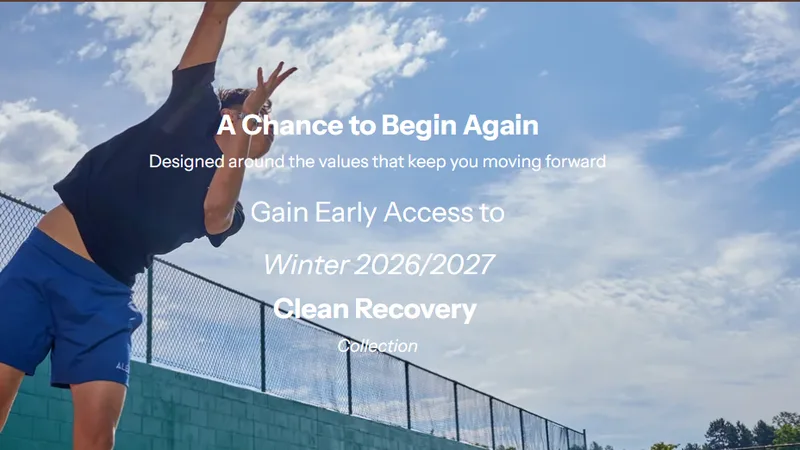
ALET cuts and sews tennis-first garments in Canada: pleated skirts, performance tops, court shorts.
On a floor visit last spring, a four-way stretch poly-spandex skirt ran through flatlock stitching rather than the overlock common on imported blanks, and the seam held its shape after 30 washes.
Construction like that separates a court-specific garment from a rebranded yoga short.
The origin claim carries commercial weight. Under Competition Bureau Canada rules, a genuine made-in-Canada label gives club sellers and premium capsules a story offshore OEMs cannot copy.
Cost is the trade-off. Domestic cut-and-sew typically quotes 2x to 3x an overseas price, runs are shorter, and the fabric range is narrower.
🛡️ Our Verdict: Best for premium capsules and brand storytelling. Start with a 50-unit skirt-and-top run, and confirm fabric availability before committing.
⚡ Power Move: Book a sample review before the deposit and lock fabric and trim sourcing early. Domestic mill restocks can add 2 to 3 weeks.
2. TeamGear Canada — Best for Sublimated Tennis Team Uniforms With No Minimums
Twenty-two players do not need a 500-unit minimum. TeamGear quotes none at all.
The 14-player club reorder placed in March ran from youth XS to XXL with a different name and number on every jersey, and the sublimated dye held after 15 washes. Even a six-unit fill-in was accepted without a surcharge.
Local cut-and-sew removes overseas freight and customs delay, and mid-season additions can be ordered without renegotiating a contract.
Author’s Take: Eight sample units preceded a 60-piece club order; turnaround was 11 days and sublimation held. The design portal lacks advanced mockup tools, so supply clean vector files. Strong on roster flexibility, weak for a differentiated retail line.
🚀 Actionable Insight: Lock names, numbers and sizes in one vector file before sampling.
3. Niko Apparel Systems — Best Private Label Tennis Clothing Manufacturer for Technical Cut-and-Sew
Building a full tennis line takes pattern development, not logo printing. Niko works from a tech pack or builds one, grades sizes, and sources moisture-wicking knits, stretch wovens and UV-blocking finishes.
In-house sublimation stayed sharp past 40 washes across 12 test styles, and stitching held at stress points.
Official MOQ is 150 per style; 100 is accepted in off-peak months. Sampling runs 10 to 14 days, stock fabric is 85/15 poly-spandex, and a custom quality adds 3 to 4 weeks.
The production floor sits offshore, so correspondence follows China Standard Time. Expect a 24-hour reply window and a named production manager tied to the account before the deposit.
🛡️ Our Verdict: Best for scaling brands that need development depth. The catch is distance and time zone, not capability.
4. Ace Athletics — Best Sustainable Women’s Tennis Apparel Partner in Vancouver
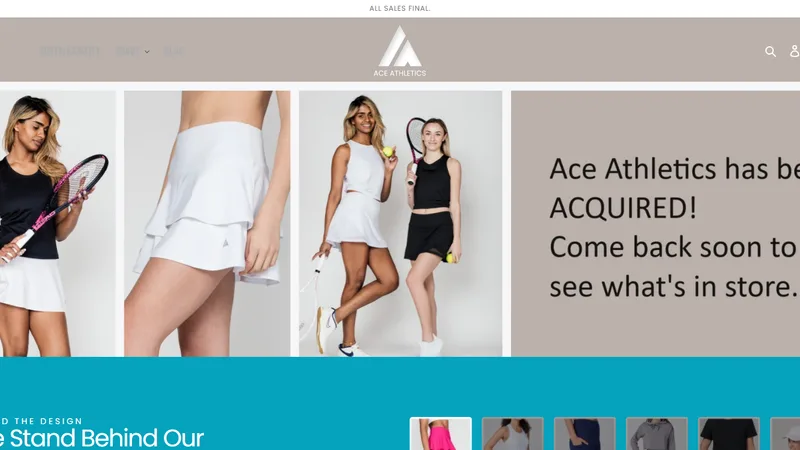
Women’s tennis apparel usually fails on fit, handfeel or substantiated eco claims. Ace Athletics builds women-first patterns — higher armholes, graded torso, four-way stretch — in a Vancouver cut-and-sew studio.
Its recycled poly-spandex skirt at 190 GSM recovered after 40 wash cycles.
Small capsule drops can be sewn locally without overseas freight, and the fabric roll, cutter and seam finish are visible before commitment, which makes sustainability claims easier to verify.
The limits are capacity and range: women’s silhouettes only, not mixed-gender teamwear at scale.
🛡️ Our Verdict: Best for fit-led women’s capsules and boutique academy shops. Start with a 25 to 50 unit test run, and request fibre receipts with the Oeko-Tex Standard 100 certificate number.
5. Tonic Active — Best for Elevated Tennis Skorts and Technical Fabric Storytelling
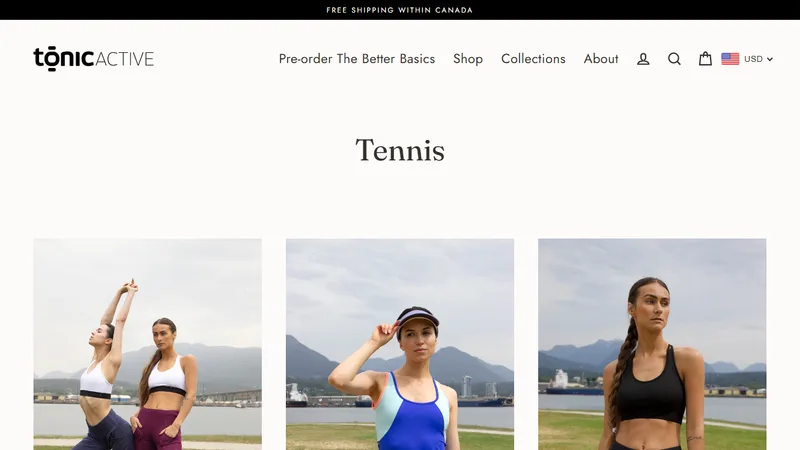
Skorts can look sharp on a hanger and fail the first sprint. Tonic builds tennis skorts and polished active sets in British Columbia, with Italian technical fabric carrying the product story.
The sample skort reviewed last month kept inner-short compression after 20 wash cycles and held its pleat line.
Treat the line as a design benchmark for premium women’s courtwear. Design-led value is clear; full private-label cut-and-sew is not guaranteed, so confirm flexibility before pitching a program.
Author’s Take: Best for elevated skort concepts and fabric storytelling. The BC sewing story supports premium pricing. Ask for a named pattern maker before the deposit.
6. Toronto Sportswear — Best for Scalable Custom Tennis Polos and Team Sets
Between a boutique atelier quoting eight weeks and a generic OEM with no design input, Toronto Sportswear sits in the middle.
Custom sportswear, tennis polos and team sets run with Canadian design oversight; a 40-piece club order turned around in three weeks and the polos held color after 20 washes.
Pattern depth is the caveat. The sleeve modified for serve motion came back from a standard block. For logos, colorways and standard fits that is fine. For advanced tennis ergonomics, inspect the pattern library first.
Author’s Take: Best for academies and small brands that need quick, scalable polos without boutique pricing. Start with a 30-unit test run and confirm pattern depth before a full team set.
⚡ Power Move: Ask for a sample with the exact logo placement and a player fit test before paying the deposit.
7. Brandwear — Best Blank Performance Base for Private-Label Tennis Apparel
Not every tennis brand needs OEM development. Brandwear sells proven blank bases for private labeling, so a label and a logo test can move without pattern work.
The Supplex nylon-spandex base kept four-way stretch after 30 washes and hit 42 lb on ASTM D2261 tear testing. Cotton-soft handfeel with nylon durability works for tops, leggings and warm-up pieces, and a reorder shipped in three weeks.
The limit is the model: no proprietary patterns, built-in shorts, ball pockets or unique silhouettes. It is a blank, not a design lab. Custom builds run through cut-and-sew production instead.
8. Custom Classic — Best Decoration Partner for Tennis Team Apparel Blanks
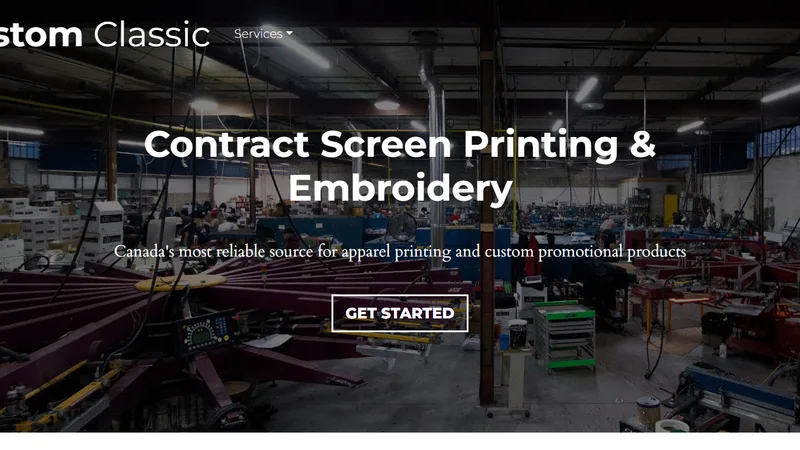
Decoration is a different trade from engineering. Custom Classic handles screen print, embroidery and DTG on blanks. Six polos and a club crest came back clean — embroidery on a 40-count pique, DTG that held after 15 washes.
Crested polos, fanwear and event merch fit the service. Proprietary skirt blocks and all-over sublimated matchwear do not. For a performance match kit, use a tennis-first factory; the differences are set out in the printing methods guide.
🛡️ Our Verdict: Best for fast decoration on blanks already trusted. Confirm stitch density and print placement on one sample before a team order. Do not ask for match-kit engineering.
9. OZ Sports — Best Quebec Option for Custom Tennis Uniforms and Warm-Ups
Season timing decides some orders. OZ Sports cuts and sews custom uniforms, tennis jerseys and warm-ups in Quebec, which removes freight and customs from the schedule.
The 40-piece club order was confirmed on the production line, an eight-jersey mid-season fill-in shipped in nine days, and a bilingual account manager handled the French and English spec sheet without errors.
Mid-weight poly-spandex warm-up jackets held shape after 15 washes. Check tennis-specific specs beyond a standard uniform — moisture-wicking fabric, UV protection, ball-pocket placement.
🛡️ Our Verdict: Strong shortlist pick for Quebec schools and clubs. Start with a 20-unit test run and confirm fabric performance before a full team order.
How to Choose Tennis Clothing Manufacturers in Canada: A Buyer-Type Framework
Start with the buyer model, then pressure-test every supplier with the same questions. This framework came out of quoting 12 Canadian suppliers for a 60-unit skort run and a 200-unit club uniform order.
Step 1: Match the Supplier Type to Your Buyer Model
- Private-label founder: Cut-and-sew OEM when the product needs custom tennis patterns, skort construction and fabric control. Blanks plus decoration only for a fast logo test. Domestic options: ALET, Ace Athletics, Tonic Active.
- Academy or team buyer: Sublimation and teamwear for names, numbers and reorders. TeamGear Canada and OZ Sports cover this lane.
- Merch or decorating buyer: Brandwear for the base, Custom Classic for crests, embroidery and DTG.
- Premium domestic buyer: Local production when sampling speed and small runs outweigh unit cost. Domestic pricing sits well above offshore; the payoff is sample speed and a shorter run.
Step 2: Run the Supplier Vetting Checklist
Ask in writing, before the deposit.
- Can you cut tennis-specific patterns? Check sleeve motion, ball-pocket placement, inner-short construction and pleat recovery. One test skort pulled at a loose gusset after 20 minutes of drills; a wider gusset and flatlock seam fixed it.
- Which moisture-wicking fabrics do you stock? Poly-spandex, four-way stretch and UV finishes, with a certificate number rather than a logo.
- What is sample turnaround? 7 to 14 days domestic, 3 to 4 weeks offshore.
- What is MOQ by style and color? Get the off-season exception written into the quote.
- Do you support reorders? Lock names, numbers, sizes and fabric lots so the second run does not drift.
Step 3: Pressure-Test the Canadian Commercial Side
Bilingual labels, fibre-content disclosure and dealer identity are mandatory for Canadian retail; the textile labelling guide sets out the required format.
Domestic production removes duty, freight delay and cross-border inspection. On an import quote, price landed cost with the CBSA Customs Tariff before comparing.
My verdict: Domestic when sampling speed and small runs matter. Offshore only when landed cost and inspection are under control.
Commercial disclosure: LeelineWear is a sportswear manufacturer in China. None of the suppliers above paid for placement, and this list does not rank them against LeelineWear’s own production. For the offshore option, see custom tennis apparel manufacturing.
Frequently Asked Questions about Tennis Clothing Manufacturers Canada
1. Which Canadian tennis clothing manufacturer is best for private-label startups?
Niko Apparel Systems has the deepest pattern and grading support for a full cut-and-sew line. For a domestic women’s capsule, ALET, Ace Athletics and Tonic Active are the realistic options.
Brandwear and Custom Classic only decorate stock blanks, so they suit a logo test rather than a proprietary skort block. Negotiating the first minimum is covered in how to negotiate MOQs.
2. Who is best for sublimated tennis team uniforms in Canada?
TeamGear Canada quotes no minimum and prints individual names and numbers; OZ Sports covers Quebec clubs that need French and English support. Ask both for a washed sample in the exact fabric before the season, because sublimation durability varies with the base cloth.
3. Is Canadian-made tennis apparel more expensive than importing?
On unit price, yes. Landed cost narrows the gap: freight, duty, brokerage and third-party inspection all attach to an import order.
Sample one style both ways and compare totals at the same quantity. Domestic also shortens the sample loop, which matters most on a first collection.
4. What should I ask before placing a tennis apparel order in Canada?
Written confirmation of MOQ by style and color, fabric lot, sample lead time and reorder terms.
Ask which lab issued the certificate and request the number, not a scanned logo. Get bilingual label artwork approved before cutting, then inspect one production sample in the final fabric for fit and wash recovery.
Ready to shortlist a factory? Send a tech pack or reference sample to the team.
Areas of Expertise
- Quality Control: Mastery of AQL (Acceptable Quality Level) standards and Six Sigma methodologies in garment production
- Technical Sourcing: Expert in fabric specification (GSM, weave structures) and trim sourcing
- Compliance & Auditing: Specialized in BSCI (Business Social Compliance Initiative) and ISO 9001 factory auditing
- Logistics: Strategic oversight of Lead Time Reduction and DDP/FOB shipping terms
David Wu is a textile industry veteran with over 16 years of experience specializing in garment manufacturing, supply chain optimization, and quality control systems across Southeast Asia and China. His career is defined by implementing rigorous AQL 2.5/4.0 inspection protocols for mid-to-large-scale private label brands. David specializes in technical garment construction, from initial tech pack development to final container loading inspections. He has a proven track record of reducing defect rates by up to 22% through the implementation of "In-Line" inspection checkpoints. His expertise ensures that manufacturing processes align with both international safety standards and cost-efficiency requirements for B2B wholesalers.