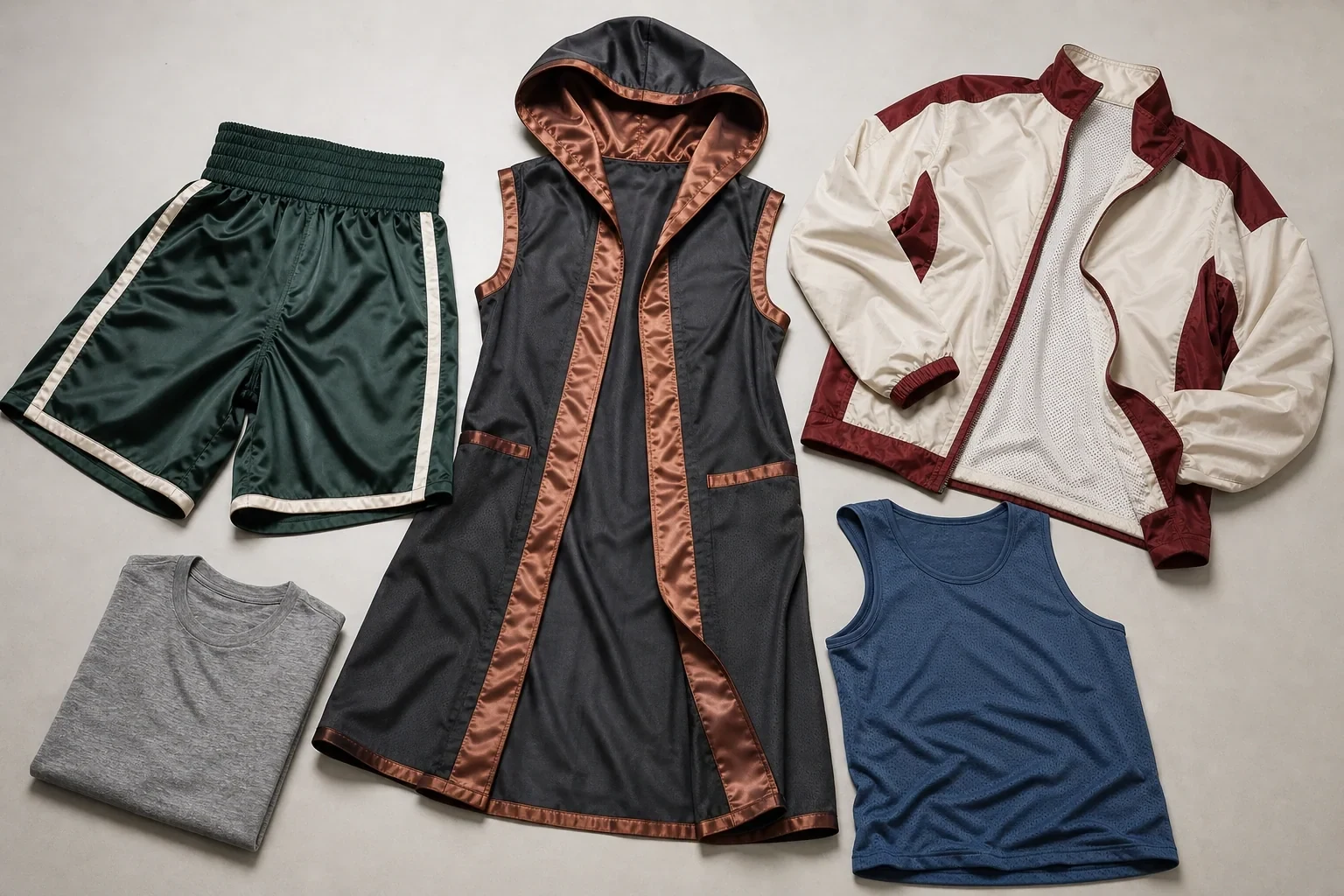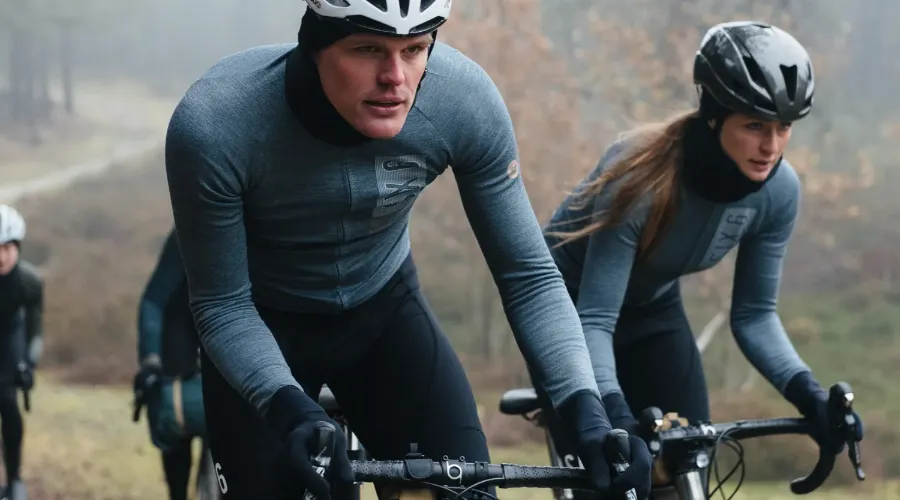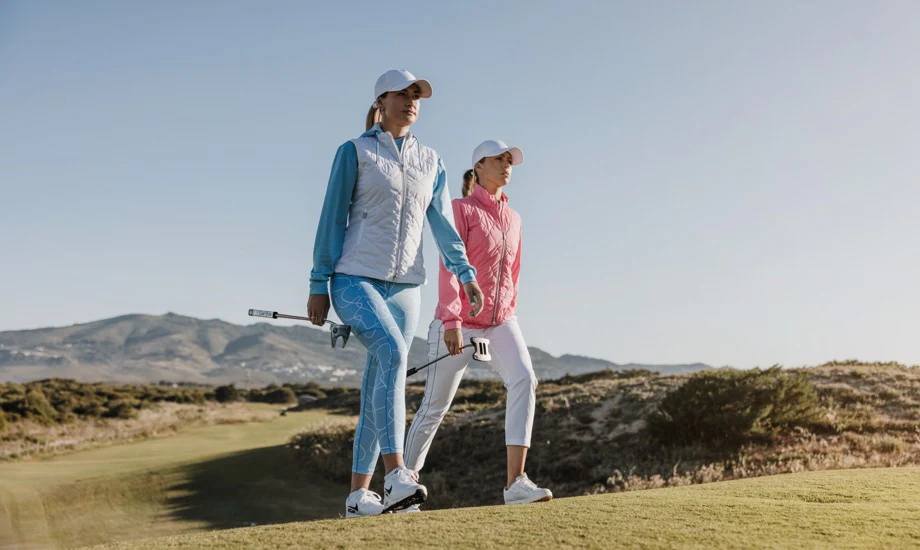
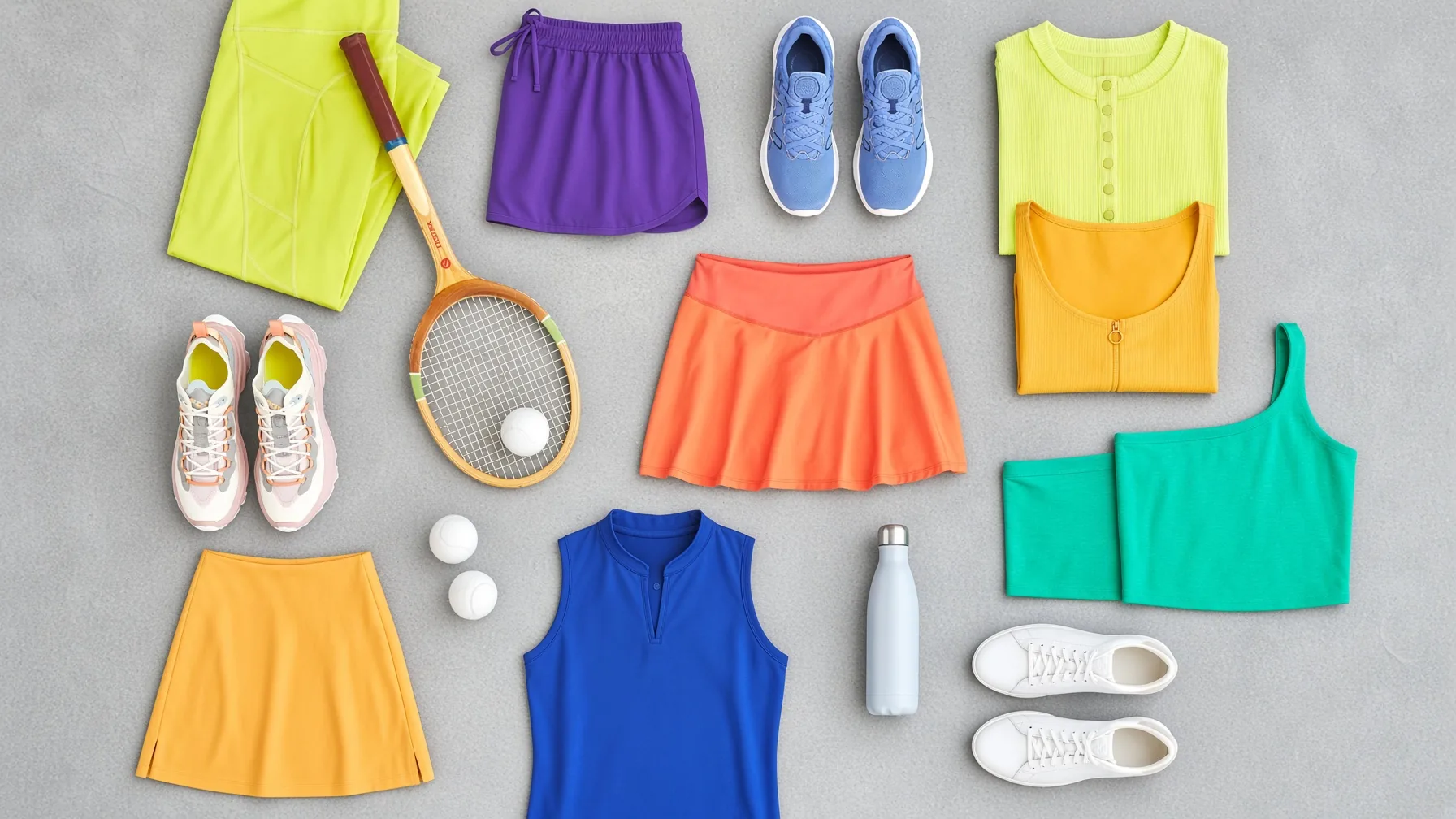
In short: Tennis clothing splits into eight categories: skorts, dresses, polos, tops and tanks, shorts, leggings and compression layers, warm-up layers, and accessories. Each has its own spec baseline and its own first failure point, which is where most bulk orders go wrong.
| Garment type | Who buys it | Spec baseline | First failure point |
|---|---|---|---|
| Skorts | Women’s club and team lines | Liner 220–240 GSM nylon/spandex | Liner twist and pocket release |
| Dresses | Women’s premium and club lines | Liner and shell within 2% recovery | Liner-to-shell recovery mismatch |
| Polos | Club, event, and team programs | Body 150–170 GSM; collar 220–240 GSM | Collar sag and heat build-up |
| Tops and tanks | Hot-weather, youth, and training lines | 140–160 GSM polyester/spandex | Sheerness when wet |
| Shorts | Men’s, women’s, and unisex programs | 4.5–5 in pocket depth, 8° inward angle | Ball release and waistband roll |
| Leggings and compression | Modesty layers and cold-weather play | ≤3% growth at knee and seat | Sheerness after squats |
| Warm-up layers | Club uniforms and retail capsules | Cuffs ≤10% growth after 20 pulls | Restricted shoulder reach |
| Accessories | Kit completion and add-on sales | Same dye lot as the core program | Color drift and brim memory |
Generic activewear specs fail on the tennis court. Tennis gear must survive lateral lunges, repeated ball carry, sweat load, and club dress codes.
This guide draws on sample-room feedback, pattern-making input, QC checks, and anonymized production data. Each section names the spec baseline and the failure point to test before bulk.
1. Tennis Skorts: The Highest-Risk Pattern in a Women’s Tennis Line
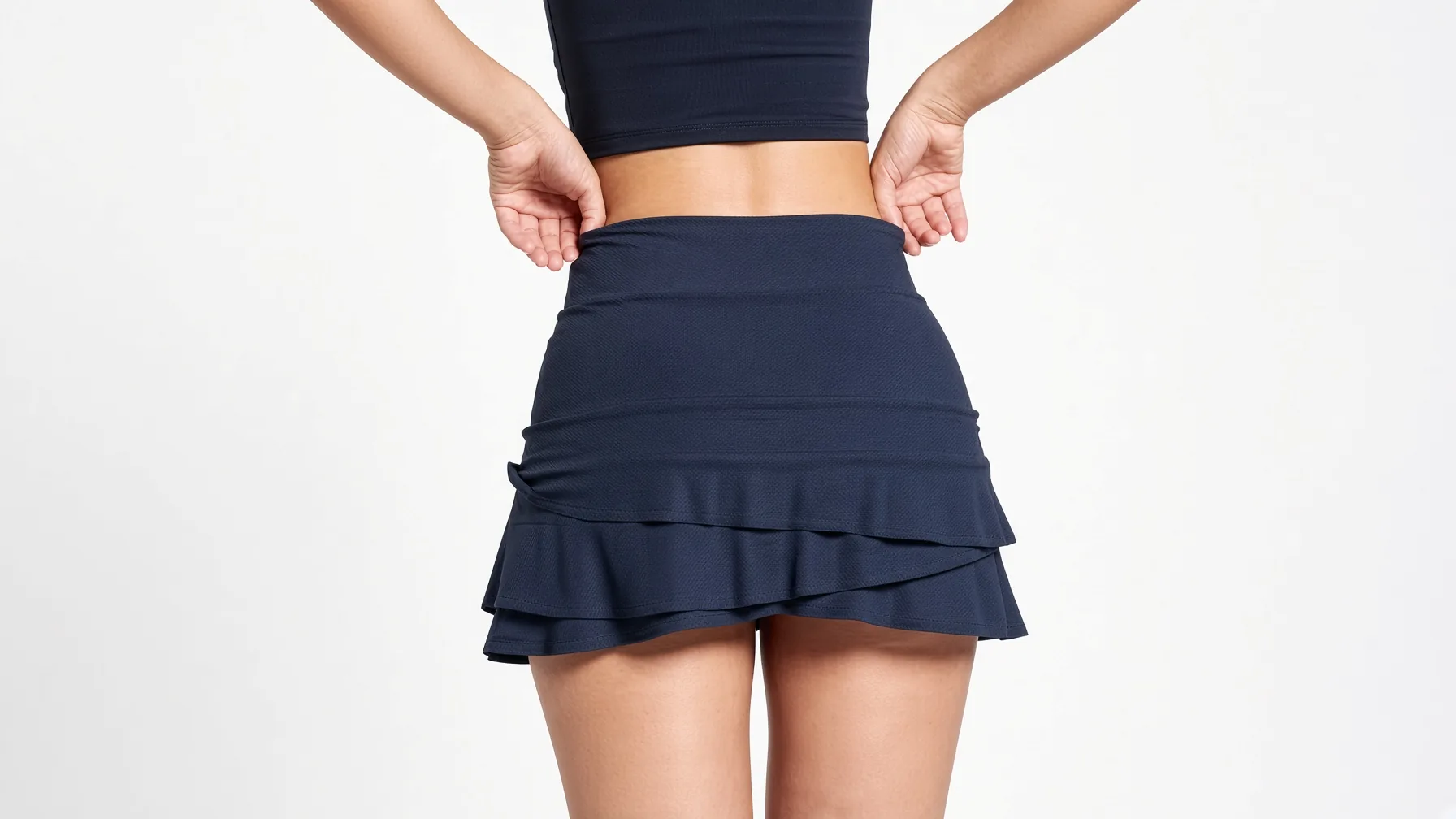
Most wholesale tennis skirt suppliers can sew a good outer skirt. The risk sits in the integrated short, pocket placement, and movement recovery.
Q: What kills the pattern first?
Mei, LeelineWear’s Lead Pattern Maker: “Rise balance. If the short pulls, the outer twists.” The gusset is drafted first, then the liner elastane is set at 18–22%.
Q: How do you hold tennis balls?
Mei: “Pocket angle. Too flat and the ball rolls out.” Pockets angle 8° inward with a gripper hem, and every sample faces an upside-down carry test.
Sourcing checklist:
- Separate outer and liner fabric specs.
- Test stretch recovery to ASTM D2594 after 5 ISO 6330 washes.
- Run split-step, lateral lunge, and upside-down ball-carry tests.
LeelineWear’s Verdict: Skorts fail at the liner, not the skirt. Reject any sample that twists 6 mm off-center after 20 lateral lunges.
2. Tennis Dresses: One-Piece Silhouettes With Two-Piece Engineering
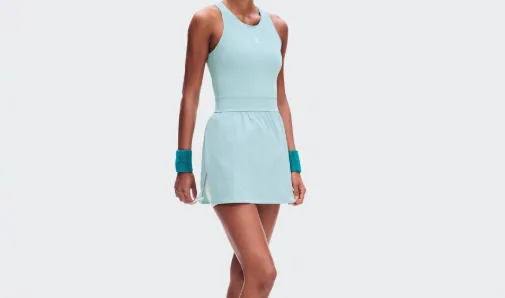
A premium tennis dress is not a fashion dress with a skirt. A court dress hides a two-piece system: supportive liner plus cosmetic shell, with built-in shorts or briefs, secure straps, a stable neckline, and ball pockets.
Start with the liner. Detachable liners add versatility; fixed liners lock support, so specify fixed for high-impact players. Sliding racerback adjusters hold tension through overhead reach.
Shelf bras with removable cups suit A–C cups; larger cups need a Power Mesh underband. US lengths grade at 33–35 inches shoulder-to-hem; confirm EU and Asia sizes against each market’s own chart.
Sample approval: raise arms overhead, run 20 lateral lunges, wet the shell and check opacity under stretch, then compare liner and shell recovery to ASTM D2594.
Last season a client returned a dress because the liner stretched 8% against the shell’s 4% and the hem sagged. A 220 GSM nylon/spandex liner matched recovery within 2% after 10 wash cycles; samples differing by more than 2% are now rejected.
3. Performance Tennis Polos: Club-Ready Styling With Moisture-Management Specs
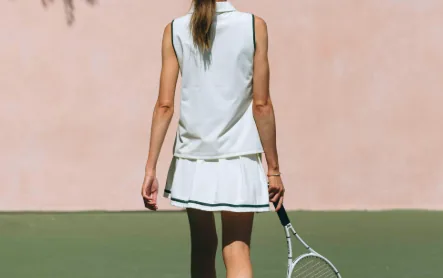
A performance polo can look club-ready on a hanger and fail in the third set. Clubs and events still specify a collar, so cotton-heavy polos that cling, sag, or trap heat are out.
Two anonymized 1,000-unit runs show the trade-off. Run A, a 160 GSM polyester/spandex knit, yielded 92% at a 3.1% defect rate and $8.40 a unit. Run B, a 180 GSM combed cotton/elastane blend, felt better but yielded 86% at 5.8% defects and $11.20.
After 10 washes, Run A held hem shape to 2 mm of sag against 6 mm. These are trial figures, not a production average; shipped orders run below 0.3% defects.
Lock two panel weights before bulk: body 150–170 GSM, collar 220–240 GSM. Specify collar construction — two-ply rib or fused self-collar — and pull-test 20 times.
Demand AATCC 195 data for liquid moisture management and ISO 17299 for odor; AATCC 100 covers antibacterial claims. Embroidery adds weight and limits stretch, so heat transfer must pass wash testing.
LeelineWear’s Verdict: Cotton blends win the showroom and lose at scale. Approve performance polos only after collar pull, wash, and wicking tests.
4. Tennis Tops and Tanks: Lightweight Match Layers for Hot-Weather Play
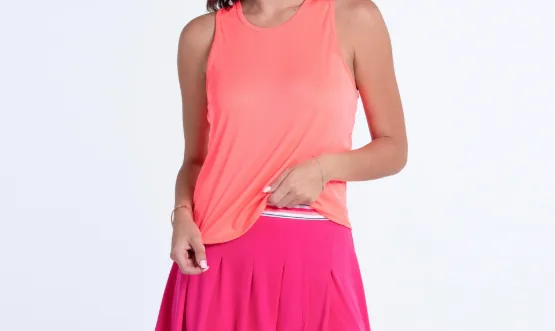
Crews and tanks win in humid climates, less formal club programs, youth lines, and training capsules. They move more air and cost less to scale.
Pattern them differently: cut tank armholes 15 mm deeper than crews and run 10 overhead reaches. If the bra band shows or the shoulder seam pulls, redraft. Mesh zones belong on the upper back and underarm gusset, never across the bra band.
Wash 20 cycles to AATCC 135 and reject hems that grow more than 5 mm; saturate the fabric, stretch it, and reject any top that turns sheer.
For branding, heat transfer suits small chest logos, sublimation works only on polyester, and embroidery stays off high-mobility panels.
Source polos, crews, and tanks as one coordinated collection: one fabric base, three silhouettes, one shade. Lab dips lock the shade across sets.
5. Tennis Shorts: Ball-Carry Function, Range of Motion, and Pocket Stability
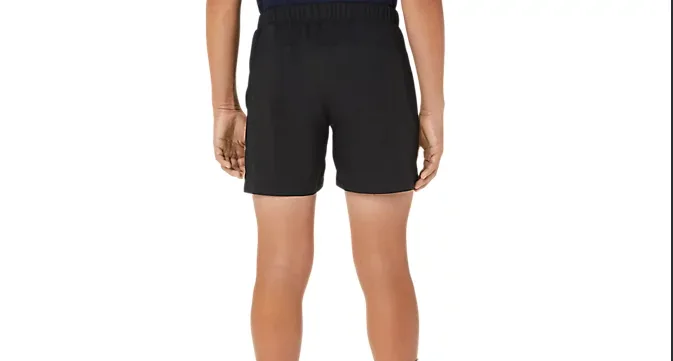
A tennis short fails the first time a player sprints: the ball pops out, the waistband rolls, the crotch pulls.
Shorts must allow deep lateral movement and hold two balls without bounce. Men’s inseams run 7–9 inches, women’s 3–5, and unisex 6–8; a diamond or wedge gusset reduces seam stress during split steps.
Pocket depth of 4.5–5 inches at an 8° inward angle keeps balls in, and 150 gsm mesh pocket bags drain sweat. Flatlock seams belong in high-friction zones; standard overlock abrades.
Sourcing checkpoints:
- Decide liner or no liner by program. Women’s liners cut chafing.
- Plan court-specific colors and check perspiration colorfastness to ISO 105-E04.
- Approve fit with 20 lunges, 10 serves, and a 10-minute seated test, then load two balls and shake the short upside down.
🛡️ Our Verdict: Reject shorts that drop a ball, roll at the waist, or exceed 3% waistband growth.
6. Leggings and Compression Layers: Cold-Weather Coverage Without Restriction
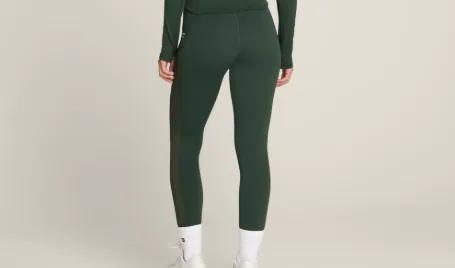
Leggings extend cool-weather play, add coverage under skirts and dresses, and carry training collections into pickleball and general fitness.
Three failure points decide approval. Squat-proof opacity: stretch wet and dry, then hold to light, and reject if skin shows. Recovery: run 20 lateral lunges, then measure growth at the knee and seat; anything over 3% goes back. Construction: a diamond gusset cuts crotch stress and flatlock seams reduce chafe.
Use a wide, flat waistband that will not roll, a brushed interior for cold weather, and a smooth exterior under skirts. Match legging fabric to skort and short liners so one nylon/spandex blend prevents dye-lot drift across the line.
🛡️ Our Verdict: Reject leggings that go sheer after 20 squats or lose over 5% recovery after 10 washes. Test opacity wet, not only dry.
7. Warm-Up Jackets and Hoodies: Pre-Match Layers That Still Need Court Mobility
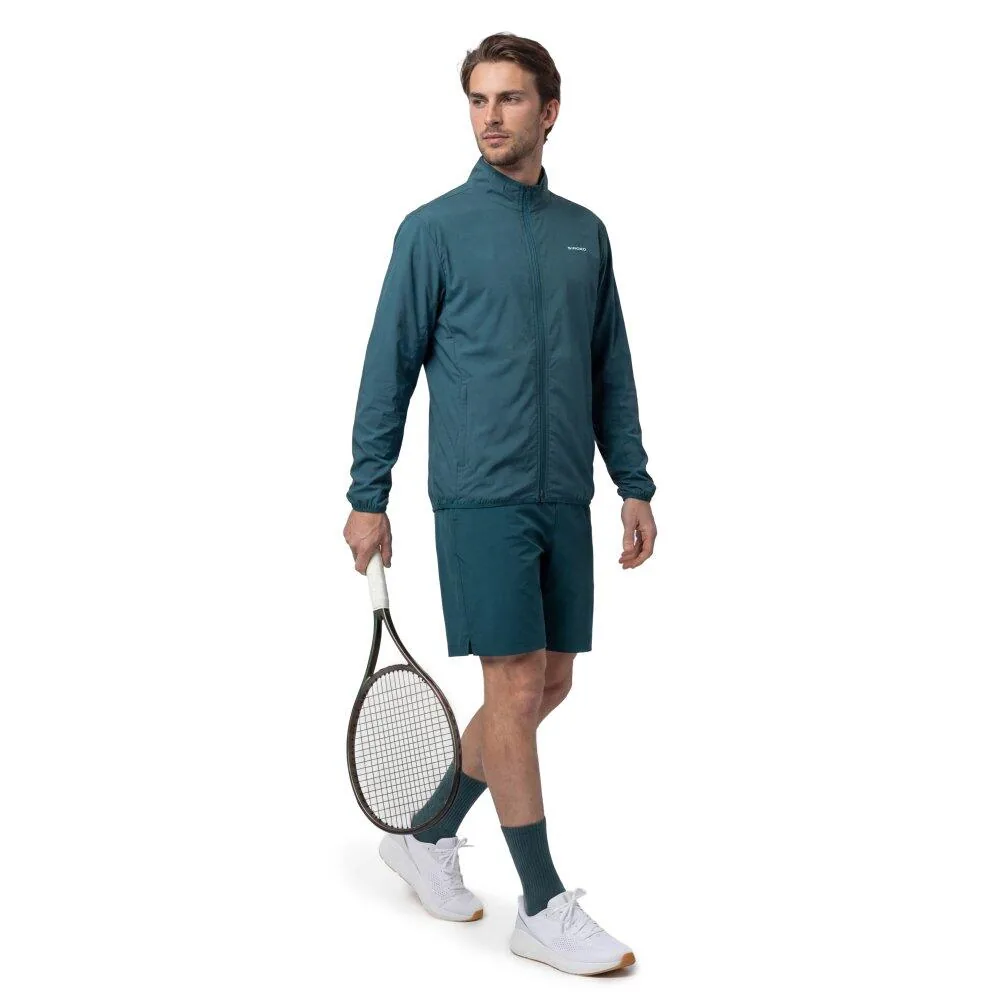
Players need heat before matches and shoulder mobility for serves.
Smooth-face knits block wind and slide over base layers; brushed interiors trap heat but add bulk.
Specify a smooth-face polyester/spandex shell with a light brushed backer. Run 500 open-close cycles on zippers as an in-house durability check, separate from the strength tests in ASTM D2061, and reject cuffs that stretch over 10% after 20 pulls.
Keep hoods low-profile and unlined. For serves, fabric needs at least 25% four-way stretch under the load agreed in the tech pack. Cut armholes deeper and add an underarm gusset; when a client’s shoulder seam restricted overhead reach, a raglan sleeve plus 2 cm of stretch mesh at the underarm fixed it.
Clubs should plan jackets as bundles with matching pants. Hoodies sell better in resort shops and retail capsules.
LeelineWear’s Verdict: Reject layers that restrict shoulder rotation or lose cuff shape after 10 washes.
8. Tennis Accessories: Hats, Visors, Socks, and Sweat-Management Extras
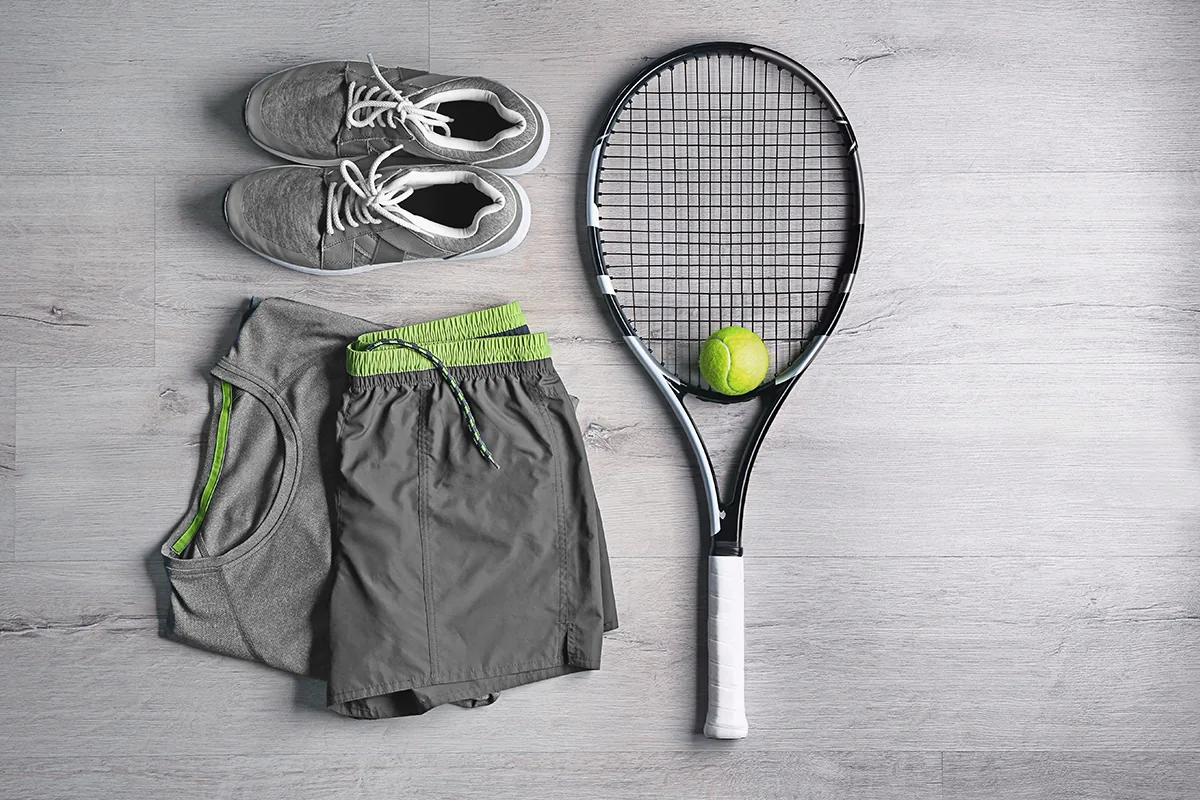
Accessories lift average order value and finish a kit, but they are the weakest link in sourcing.
Sun control: on caps and visors, run 200 open-close cycles on the adjuster, check brim memory after 5 washes, and match color to core polos with lab dips. Confirm wash fastness on the same standard as the core program. A faded visor ruins the kit.
Sweat control: sweatbands need absorbency, not just stretch. Verify terry density and dry time; an 80% cotton/20% polyester terry with 2–5% elastane beats polyester blends at the wrist.
Friction reduction: in socks, cushioning at heel and toe matters more than thickness. Check arch support and a flat toe seam, and request the same dye lot as the apparel program.
Private-label caps and socks carry low minimums per design — a low-risk way to complete kits before committing to cut-and-sew.
🛡️ Our Verdict: Reject visors that lose brim shape after 5 washes and socks that slide below the heel.
How to Manufacture Custom Tennis Apparel? A Factory-Floor Playbook
1. Choose OEM or ODM. OEM: you bring the design and the factory cuts and sews. ODM: start from the factory’s patterns and change fabric, color, trims, or logo.
2. Build a tech pack per style. Lock SKUs, fabric specs, measurements, seams, and logo placement. Use the tech pack guide.
3. Request proto and pre-production samples. Check fit and construction on the proto, re-test with final fabric and trims, then approve in writing. The sample stages guide covers each round.
4. Confirm MOQ and lead time. Get the per-style MOQ, pilot options, and production window in writing before sampling starts. See the MOQ guide. For lower-impact materials, see sustainable manufacturing.
QC SOP: AATCC 195 Moisture-Management Test
Run on every polo lot.
- Condition swatches at 21°C and 65% RH for 4 hours.
- Cut three 10×10 cm panels — top, middle, bottom — and mount flat.
- Apply 0.1 mL distilled water at the center with a micro-pipette.
- Record wetting time and the maximum wetted radius at 30 and 60 seconds; note whether water passes to the back.
- Log spreading speed and the one-way transport grade (1–5) from the raw R value.
- Pass or fail against the buying team’s AATCC 195 spec: any panel failing two of three metrics gets FAIL, with photos and data attached to the report.
Sign-Off Sequence
- Pre-production sample: approve fit, fabric, trims, and logo placement in writing before bulk starts.
- Certificate scope: collect OEKO-TEX Standard 100 or recycled-content certificates and confirm the number covers the exact fabric lot (OEKO-TEX).
- Final random inspection: book the AQL 2.5 check 2–3 days before packing; the report should cover measurements, seams, logos, and packing.
Frequently Asked Questions about Types of Tennis Clothing
What fabric is best for tennis clothing?
Tops work best in 140–160 GSM polyester/spandex, skort and dress liners in 220–240 GSM nylon/spandex, and polo bodies in 150–170 GSM with a 220–240 GSM collar. Weight alone does not prove performance: test opacity when wet and wicking to AATCC 195 before you approve bulk.
Which tennis garments need built-in shorts or a liner?
Skorts and most tennis dresses need one; shorts depend on the program, and leggings often serve as the modesty layer. A liner stops the outer layer twisting, carries a spare ball, and adds coverage on overheads. Specify liner rise, pocket angle, and seam anchoring, and expect 3–5% added unit cost.
When should a buyer choose a polo over a crew or tank?
Match the garment to the dress code first. Polos clear collar requirements at private clubs and most tournaments. Crews suit youth, school, and team programs, while tanks suit hot-weather training. Crews and tanks use less fabric, move more air, and usually cost less per unit.
What MOQ is realistic for a private-label tennis line?
Cut-and-sew usually starts at 100 units per style and color, with 50-unit pilots available for first-time brands. Stock blanks can start at 2 pieces, and private-label logo print often starts near 50 pieces per design. Ask for the MOQ in writing before you pay for sampling.
What is the difference between OEM and ODM for tennis apparel?
With OEM you supply the design and tech pack, and the factory builds to your specification. With ODM you start from the factory’s existing patterns and adjust fabric, color, trims, or branding. OEM gives more control and usually more sampling rounds; ODM reduces development time and tooling cost.
How should a buyer compare wholesale tennis skirt suppliers beyond price?
Ask for construction data, not just a quote: liner rise balance, pocket angle and depth, seam anchoring, opacity under stretch, and recovery after washing. A low quote rarely survives these checks. Compare samples side by side with the same lunge, ball-carry, and wet-opacity tests before you discuss price.
How do you verify moisture-wicking claims?
Request AATCC 195 data for the fabric lot. Our pass line is a wetting time under 5 seconds, a maximum wetted radius of 20 mm or more at 60 seconds, and a one-way transport grade of 3 or higher. A lot that fails two of the three metrics is rejected, whatever the supplier claims.
What QC checks matter most before bulk approval?
Approve the pre-production sample first, then lock AQL 2.5 for major and 4.0 for minor defects. Before packing, check perspiration colorfastness to ISO 105-E04, wash fastness to AATCC 61, and stretch recovery to ASTM D2594. Finish with a final random inspection covering measurements, seams, logos, and packing.
What should a first private-label tennis collection include?
Start with four to six styles: one skort, one dress, one polo, one top or tank, one short, and one warm-up layer if your market plays in cooler weather. Keep each style to two colors and one fabric base. Fewer styles cut sample cost and make approval faster.
Methodology note: This FAQ reflects factory process knowledge, pattern-maker input, and production data from our line. It is not based on paid placements.
Related reading: Custom tennis clothing manufacturing for MOQ, sampling, and DDP details; USA tennis clothing manufacturers for domestic options; and the moisture-wicking fabric guide for test methods.
Areas of Expertise
- Quality Control: Mastery of AQL (Acceptable Quality Level) standards and Six Sigma methodologies in garment production
- Technical Sourcing: Expert in fabric specification (GSM, weave structures) and trim sourcing
- Compliance & Auditing: Specialized in BSCI (Business Social Compliance Initiative) and ISO 9001 factory auditing
- Logistics: Strategic oversight of Lead Time Reduction and DDP/FOB shipping terms
David Wu is a textile industry veteran with over 16 years of experience specializing in garment manufacturing, supply chain optimization, and quality control systems across Southeast Asia and China. His career is defined by implementing rigorous AQL 2.5/4.0 inspection protocols for mid-to-large-scale private label brands. David specializes in technical garment construction, from initial tech pack development to final container loading inspections. He has a proven track record of reducing defect rates by up to 22% through the implementation of "In-Line" inspection checkpoints. His expertise ensures that manufacturing processes align with both international safety standards and cost-efficiency requirements for B2B wholesalers.