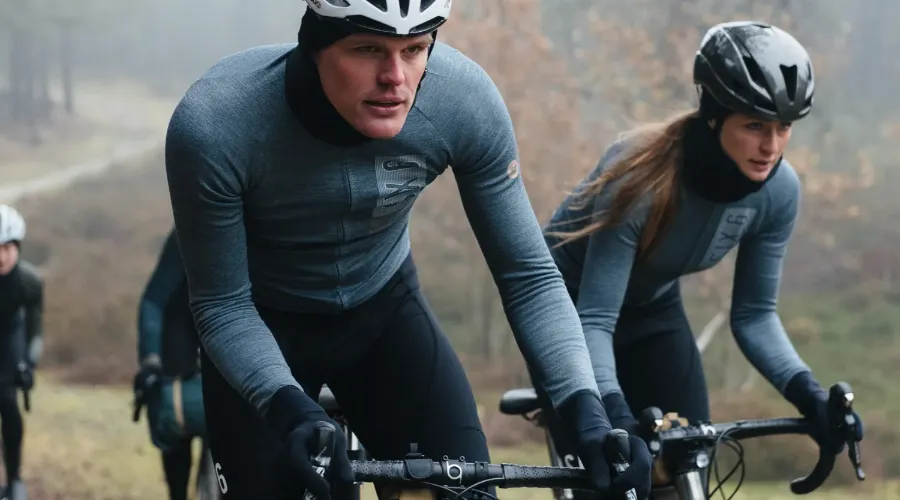
In short: Cycling apparel splits into ten sourcing categories: jerseys, bib shorts, skinsuits, base layers, thermal bottoms, gilets, rain shells, warmers, trail pieces, and softgoods. Each carries a different defect risk, and bib shorts plus race jerseys carry the most.
| Garment type | Best for | Spec baseline | First failure point |
|---|---|---|---|
| Jerseys | Launch SKU and club kits | 140–160 GSM club; 120–130 GSM race | Pocket sag and zipper wave |
| Bib shorts | Premium credibility | 220 GSM power Lycra; ±2 mm pad alignment | Pad misalignment and strap recovery |
| Skinsuits | TT, crit, and elite capsules | Integrated torso-to-leg pattern | Zipper curl and print distortion |
| Base layers | Margin and repeat orders | 110–120 GSM mesh or polyamide blend | Chafe from under-jersey bulk |
| Bib tights | Cold-weather range extension | 240 GSM brushed-back fabric | Compression that stiffens in cold |
| Gilets | Spring and fall add-on | 40–60 GSM woven front, mesh back | Trapped sweat and a weak zipper |
| Rain shells | Commuter and emergency use | 10,000 mm hydrostatic head, taped seams | Untaped seams and poor breathability |
| Warmers | Kit versatility | Silicone gripper, brushed or smooth face | Gripper slip and seam irritation |
| Trail and gravel pieces | MTB and cargo programs | 200D nylon-spandex face fabric | Sagging pockets and poor articulation |
| Softgoods | Kit completion | Same dye lot as the core kit | Print fade on stretch cuffs |
Most buyers treat types of cycling apparel as equally easy to source. They are not.
I built this shortlist after auditing our own line in China. We logged fit complexity, fabric GSM, seam failures, and reorder data, not rider hype.
In my experience, bib shorts and race jerseys carry the most defect risk. You will see which types belong in a launch range, which are harder to manufacture, and which resources to consult next: the LeelineWear homepage, the sportswear fabrics guide, and the sportswear tech pack.
Start with the cycling apparel manufacturing capability behind these specs.
1. Cycling Jerseys: The Core Private-Label Starting Point
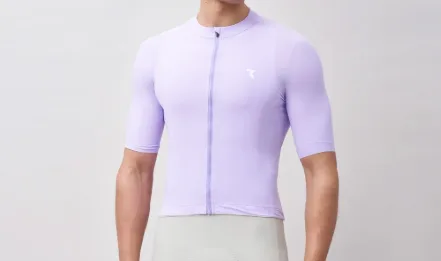
Jerseys are the lowest-risk cut-and-sew entry point and the anchor SKU for private label cycling jersey production on our line. Club, race, and gravel cuts share one pattern block and a tight fabric menu.
Club jerseys use 140 to 160 GSM polyester-elastane under OEKO-TEX Standard 100; race cuts drop to 120 to 130 GSM aero panels; gravel adds three-pocket layouts and heavier side panels. Lock pocket construction, zipper type, and silicone gripper before bulk. We keep sampling at 7 to 15 days and MOQ-friendly runs.
Before bulk, test moisture-wicking with a dry-time benchmark, not a label claim. Confirm sublimation readiness on the exact fabric, count panels, review the fit block in riding position, and map branding surfaces. Ask for a riding-position prototype.
In our last fabric review, we rejected two polyester-elastane lots that held moisture past 45 minutes under AATCC 195 testing. Approve the pattern before the print. The sportswear fabrics guide explains the test methods behind every spec here.
🛡️ Our Verdict: Our fastest sampling, but fit sign-off matters more than print approval. Approve the pattern before you approve the print.
2. Bib Shorts: The Make-or-Break Category for Premium Cycling Brands
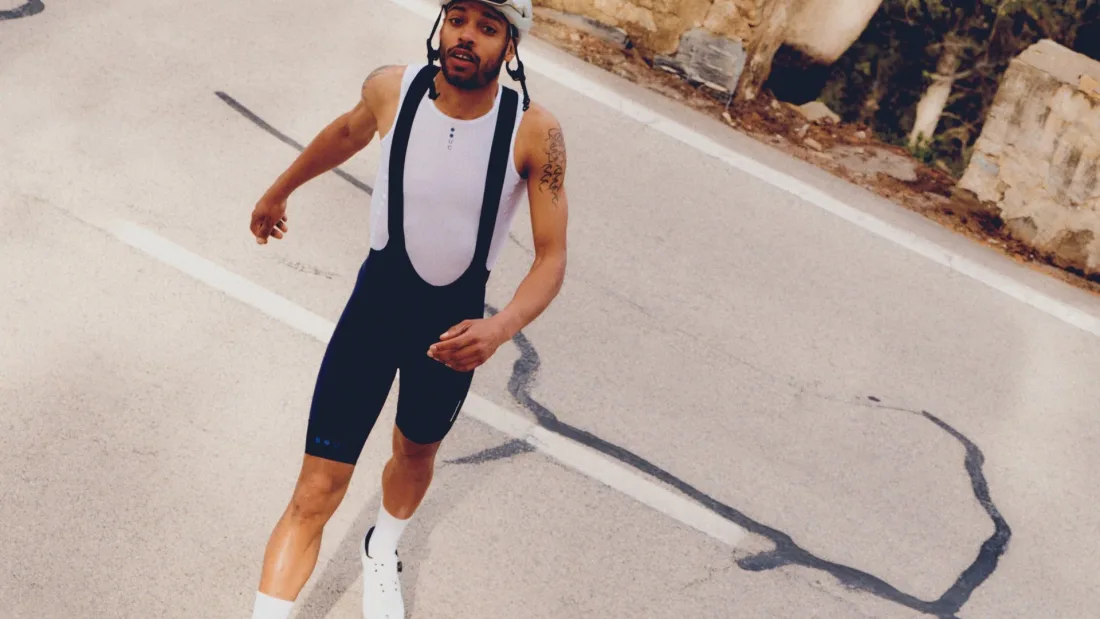
Bib shorts expose weak factories faster than any jersey. I have seen one misaligned pad ruin a premium launch.
The anatomy is unforgiving: compression fabric, strap recovery, leg grippers, chamois density zoning, and seam placement all interact. A 220 GSM power Lycra behaves unlike 180 GSM jersey knit. On our line, we test strap recovery after 30 washes and hold pad alignment to ±2 mm. Flatlock seams must survive 40 N/cm without chafe.
Wholesale bib shorts suppliers should prove pad sourcing. We use CyTech and Elastic Interface pads. Demand stretch recovery data and XS to 3XL size grading. Low-MOQ factories often skip pad-alignment jigs.
Manager Chen flags seam slippage when recovery drops below 92%. We run 100 to 200 unit bulk lots with inline seam checks every 50 pieces. For pad density and placement, read the cycling chamois guide.
🛡️ Our Verdict: Fast sample, high QC risk. Approve the chamois and strap recovery before bulk. A cheap pad saves $3 and costs the reorder.
⚡ Power Move: Before bulk, demand a 30-wash strap-recovery report and a ±2 mm pad-alignment jig check.
3. Cycling Skinsuits: High-Complexity Apparel for Aero-Led Collections
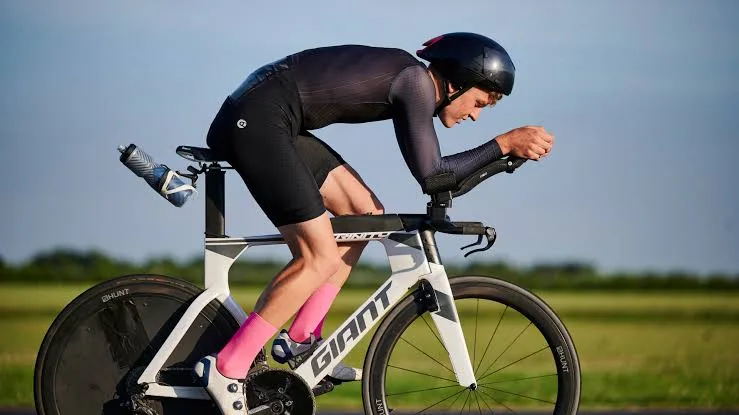
Skinsuits belong only in TT, crit, elite road, or a tight performance capsule. Treat them as a technical showcase, not a volume SKU.
Fit is unforgiving: you need integrated torso-to-leg patterning, not stitched blocks. Sleeve length follows use — long for TT drag control, short for crit cooling. Lock the zipper pull and test curl at full torso extension. Map textured sleeve fabrics and dimpled panels to drag zones, and add open mesh underarms for heat release.
Factory readiness is easy to fake. Ask for aerodynamic paneling experience, body-position fit validation, and print-distortion control on stretch panels.
A real aerodynamic sportswear manufacturer turns wind-tunnel ideas into repeatable patterns, panel counts, and seam specs. On our line, we run the same 100 to 200 unit lots with a torso-board fit check. The cycling fabric technology guide covers aero panel selection.
🛡️ Our Verdict: Reject suppliers that show only sketches. Demand a body-position fit check and print-distortion grid before bulk. Skinsuits reward elite pattern engineering, not fabric claims.
4. Base Layers: The Quiet Margin Builder in a Cycling Range
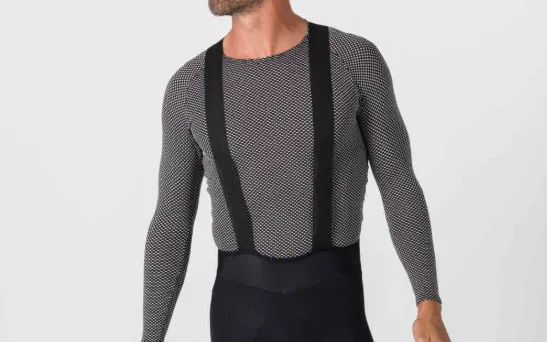
Base layers look low-value. They are your highest-margin repeat SKU. I have seen buyers skip them and leave money on the table.
They sell year-round, fit easier than bibs, and attach to every jersey order. Use mesh polyester for hot rides, polyamide blends for softness, or merino-synthetic hybrids for odor control.
Spec moisture transport first. In our internal dry-time comparison, a 120 GSM polyamide blend wicked sweat faster than standard jersey polyester. Thick seams cause chafe, so check under-jersey bulk and test seam softness on skin.
Position odor control for multi-day use. Sourcing base-layer wicking fabric differs from outer jerseys: base layers need skin-contact softness and fast dry times, while outer jerseys prioritize print and durability.
Last quarter, we rejected a 110 GSM mesh lot because it clung after 20 minutes. That is the pitfall.
🛡️ Our Verdict: Base layers are a low-risk upsell. Test wicking speed and under-jersey bulk before bulk. A $6 base layer adds $18 to the order.
5. Bib Tights and Thermal Bottoms: Cold-Weather Extensions of the Bib Program
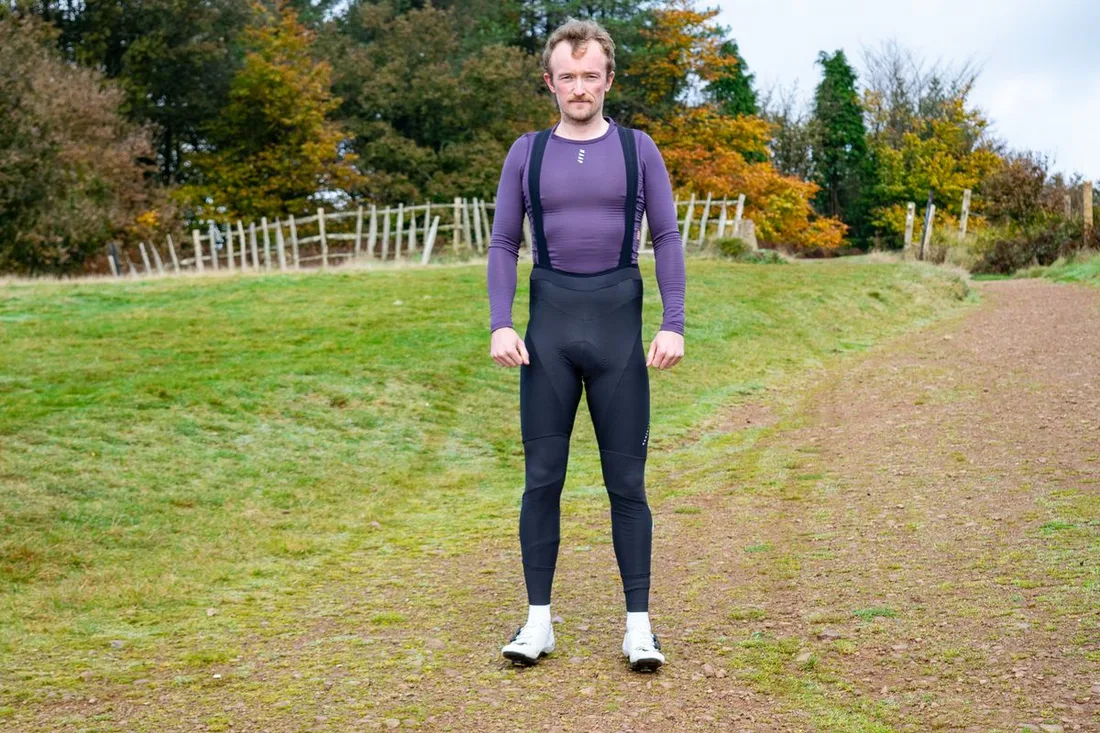
You proved the bib short block. Now extend it into thermal bib tights, 3/4 knickers, and brushed-back winter bottoms. They inherit your strap and chamois DNA, then add three new demands: insulation, panel shaping, and ankle finishing.
In our factory, brushed-back fabric consistency decides the range. Manager Chen flagged a 240 GSM lot that went stiff below 10°C. We rejected it.
We test knee articulation on a cycling dummy and hold the same pad-alignment tolerance as bibs. Reflective placement must survive 20 wash cycles. Water-resistance claims get an AATCC 22 spray test, not a label.
Cold-weather bottoms fail when compression turns to stiffness, so we test every lot at 100 to 200 units. Sampling matches bibs, so no rebuilding is required.
🛡️ Our Verdict: Thermal bottoms are a natural range extension only if the factory preserves compression without stiffness. Check brushed fabric consistency and knee articulation before bulk.
6. Gilets and Wind Vests: Low-Bulk Layering Pieces with Strong Commercial Utility
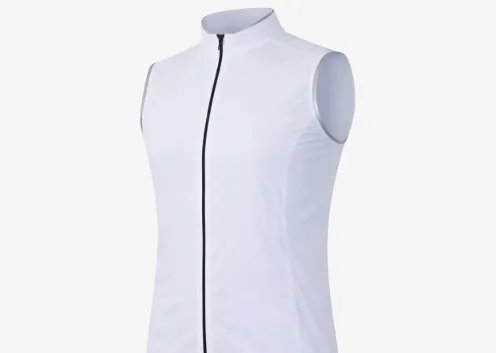
Most riders buy a gilet after one cold descent. That is your entry SKU.
A gilet gives you a full chest branding panel, grades easier than a jacket, and pairs with jerseys and arm warmers in spring and fall kits. It packs into a pocket — a smart add-on with low bulk and high logo space. Launch a gilet before a full jacket.
On our line, we spec 40 to 60 GSM ultralight woven front panels and open mesh backs. A wind vest that traps sweat fails on the first climb.
Lock the zipper pull at full stretch. Test pocket access with gloves. Check pack size, not just weight. Manager Chen rejects wind-blocking panels that hold vapor. We run 100-unit lots and test zipper stability 20 times per sample.
Gilets sell easily but fail with a bad zipper. Approve back mesh and pack size before bulk.
7. Rain Jackets and Protective Shells: The Test of Outerwear Manufacturing Depth
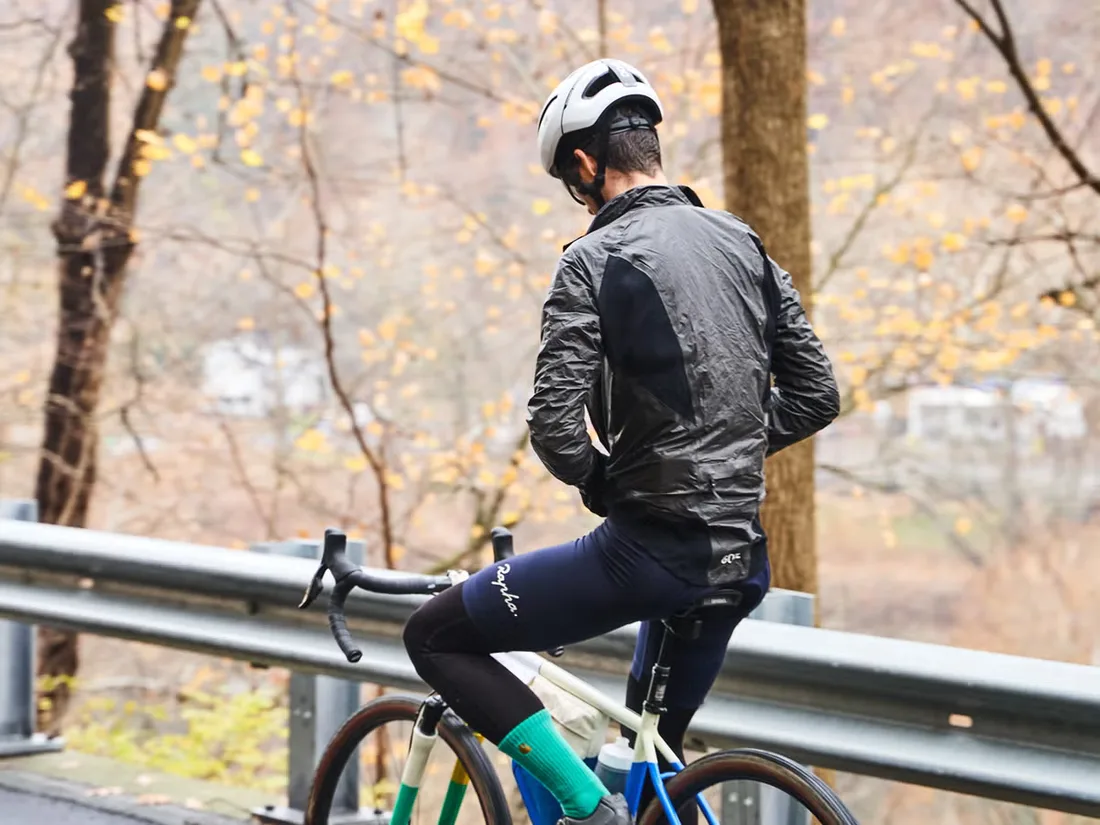
Most jersey factories cannot build a rain shell. A supplier once sent me a “waterproof” jacket with untaped seams.
Jerseys use flatlock and sublimation. Shells need taped seams, waterproof zippers, and breathable laminates. Different machines, different skill set. This category covers packable emergency rain jackets, commuter shells, and performance outerwear, and each demands real seam-sealing capability.
Ask six questions: waterproof or water-resistant? Hydrostatic head rating (ISO 811)? Can they tape every seam? Breathability RET? Cuff and hem sealing? Reflective durability after 20 washes? If the factory only shows sublimated knits, walk away.
We run shells on a separate line. Manager Chen rejects seam tape under 20mm. Our last lot hit 8,000mm hydrostatic head, below our 10,000mm spec. Sampling runs 7 to 15 days, and MOQ starts at 100 units. The waterproof cycling membrane guide explains the laminate options.
🛡️ Our Verdict: A rain jacket is not a jersey with a zipper. Demand a taped seam sample and a hydrostatic head report before bulk.
⚡ Power Move: Pull the tape off one seam from the bulk run. If it peels clean, reject the lot.
8. Arm, Knee, and Leg Warmers: Small Components That Raise Kit Versatility
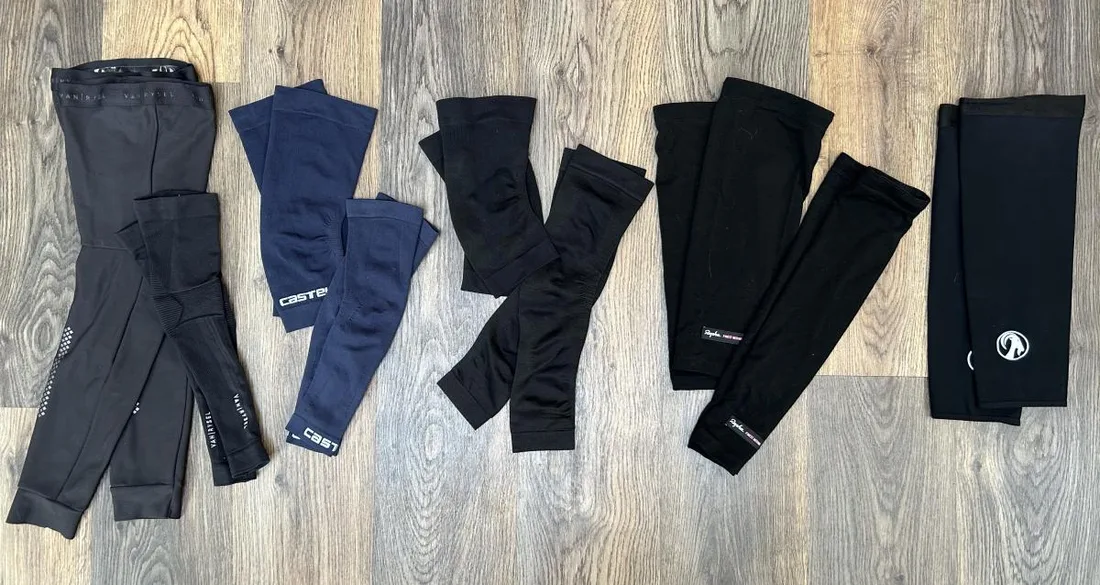
Arm, knee, and leg warmers add depth to a cycling apparel range at the lowest cost. They use little fabric, ship flat, and bundle with jersey and bib orders as easy add-on sales.
I treat them as accessory apparel, not afterthoughts. One size run covers spring and fall, so the same SKU sells twice a year. That lifts reorder frequency without a new pattern block.
Sourcing is fit-sensitive but manageable. Test gripper performance first. On our line, we reject silicone bands that lose 15% hold after 20 washes. Check wash recovery on every lot.
Choose brushed-back fabric for cold mornings and smooth-face for transitional rides. Set seams outside the knee crease to cut irritation. For mixed-size packs, verify size labeling and polybag accuracy before bulk. Manager Chen pulls ten packs per carton and checks labels against the packing list.
🛡️ Our Verdict: Warmers are low-cost add-ons with real margin. Test gripper hold and wash recovery before you approve the pack.
9. MTB and Gravel Overshorts, Trail Tops, and Cargo Pieces
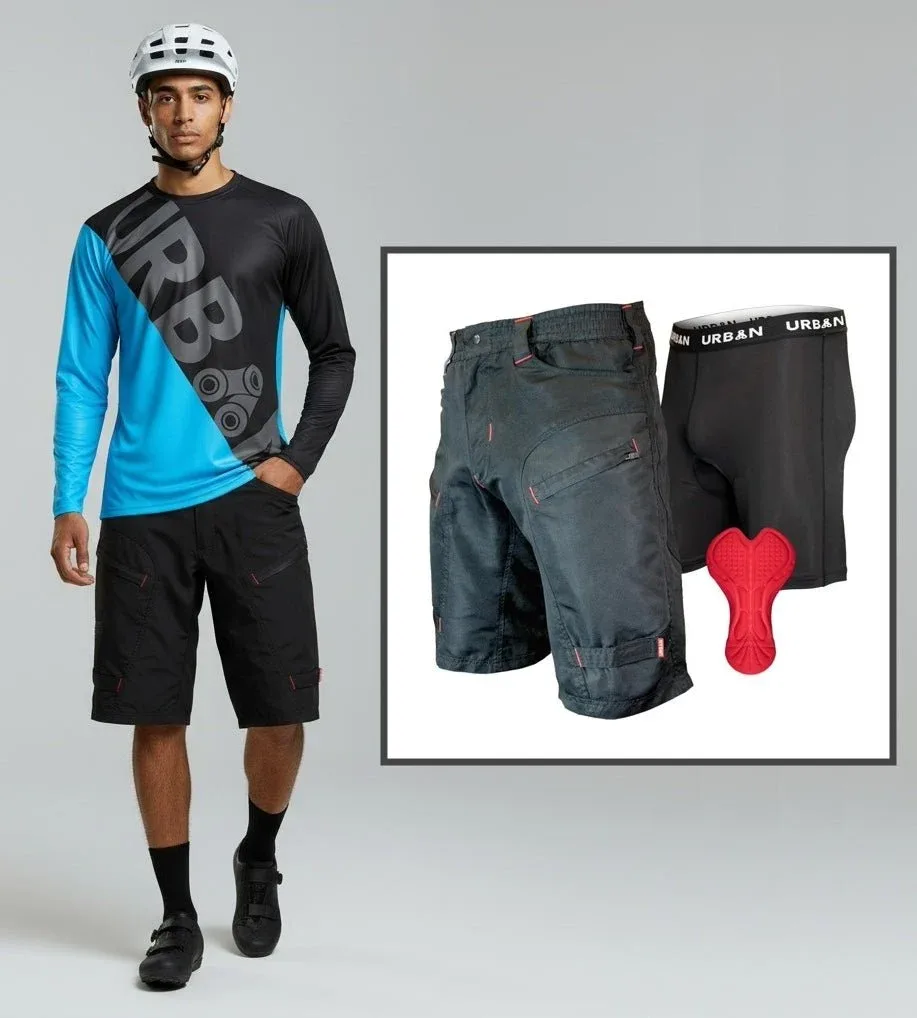
Most buyers sell road kit with trail graphics. That fails. Trail apparel is its own fit family: baggier tops, overshorts, liner-compatible bottoms, and cargo-focused gravel pieces.
Riders sit, stand, and walk off the bike in the same garment. They want freedom of movement, abrasion tolerance, and storage.
On our line, we spec 200D nylon-spandex face fabric for overshorts. We test knee articulation on a pedal-and-hike cycle. We load cargo pockets with 500 g and check sag after 20 minutes. We reject fabrics that pill after 5,000 abrasion cycles.
Liner compatibility matters, so confirm snap loops, chamois shape, and leg gripper clearance. Road compression does not translate to trail mobility. A factory that only cuts race jerseys will miss the gusset and pocket geometry. Manager Chen checks pocket placement in riding and walking stance.
🛡️ Our Verdict: Trail pieces need articulation and liner testing, not road patterns. Demand a loaded-pocket test and a pedal-and-hike fit check before bulk.
How to Source Custom Cycling Apparel?
I built this plan after auditing our own line in China. We scored each type of cycling apparel on six criteria: fit complexity, fabric performance, aerodynamic sensitivity, QC risk, MOQ practicality, and reorder logic.
Fit complexity covers panel count and riding posture. Fabric performance covers GSM, stretch, and dry time. Aero sensitivity covers seam placement and fabric zoning.
QC risk covers pad alignment and seam failures. MOQ practicality covers color runs and size grading. Reorder logic covers wash recovery and restock speed.
We rejected samples that failed stretch recovery, seam strength, and riding-position fit. Read the sportswear fabrics guide and the tech pack guide before you request samples. That keeps your brief tight and your MOQ realistic.
Expert Interview: Ask These Pattern Questions
I put these exact questions to LeelineWear’s Lead Technical Designer. Use them in your supplier call for elite skinsuits and jersey paneling.
- How do you set sleeve pitch and shoulder rotation for a riding position?
- How do you stop pocket sag under load and zipper wave at speed?
- Where do you zone textured fabric versus smooth fabric?
- How does race-fit drafting change from endurance-fit drafting?
QC SOP: High-Compression Bib Shorts
Run this literal sequence on every lot. It ties back to the sample stages your supplier should already follow.
- Check incoming fabric stretch and recovery.
- Count flatlock stitches per inch against the approved sample. Pull the seam to test extension at 40 N/cm.
- Verify strap anchoring at front and back.
- Measure the chamois centerline.
- Check left-right symmetry.
- Confirm sit-bone zone placement.
- Fit the short on a rider in riding posture.
- Classify defects by AQL 2.5.
- Recheck packaging, labels, and polybag accuracy.
Data: 5,000-Unit Run, Standard Polyester vs Premium Italian Lycra Blend
Our internal trial compared two bib short fabrics. The premium blend cut rework but raised input cost.
| Metric | Standard Polyester | Premium Italian Lycra Blend |
|---|---|---|
| Cutting yield | 92% | 89% |
| Sewing-line efficiency | 85% | 78% |
| First-pass defect rate (before final inspection) | 4.2% | 1.7% |
| Rework rate | 6.2% | 2.9% |
| Landed unit-cost effect | Baseline | +$3.60 per unit |
These are figures from one internal 5,000-unit trial, not a production average. Shipped orders average below 0.3% defects after AQL 2.5 final inspection. At +$3.60 per unit, break-even depends on your rework cost per unit — model it before you switch.
Author’s Take: Premium Lycra won on rework and reorder quality. Standard polyester only wins on first-order cash flow.
Use sustainable sportswear manufacturing for certification checks. Start your brief at LeelineWear or send it to contact.
I am not paid by any fabric mill or machine brand to promote these findings. I receive no kickbacks from the suppliers named here.
Frequently Asked Questions about Types of Cycling Apparel
1. Which cycling apparel should a new private-label brand launch first?
Start with jerseys, bib shorts, base layers, and a gilet. Jerseys deliver the easiest first production run. Bib shorts carry the premium signal, so sample them early. Base layers add margin. A gilet sells as a low-bulk add-on. Hold skinsuits, thermal bottoms, and rain shells until your fit blocks and QC routine work.
2. Do bib shorts matter more than jerseys for a premium cycling brand?
Yes for premium credibility, but no for launch speed. Jerseys drive volume and faster sampling. Bib shorts decide whether premium riders trust your brand.
Add skinsuits, thermal bottoms, or shells only after the bib block passes wear tests. Skinsuits need body-position fit checks. Thermal bottoms need brushed-back consistency. Shells need taped seams and a hydrostatic head report.
3. What MOQ is realistic for custom cycling apparel manufacturing?
Standard MOQ is 100 units per color and style. First orders can run a 50-unit pilot on private-label printing. On our line, that range fits custom cycling apparel runs without forcing a 500-piece commitment. Confirm sample fees, color minimums, and size grading before you commit.
4. How do I vet wholesale bib shorts suppliers and approve jersey fabrics?
Demand pad sourcing from CyTech or Elastic Interface, 30-wash strap recovery above 92%, and a ±2 mm pad-alignment jig check. For jersey fabrics, request GSM, stretch recovery, and a dry-time report using AATCC 195. We reject polyester-elastane lots that hold moisture past 45 minutes.
5. How long does private label cycling jersey production take, and when should I use one supplier versus specialists?
From tech pack to sample, expect 7 to 15 days. Add 15 to 30 days for bulk after fit and print approval on our line.
Use one vertically integrated supplier for jerseys, bibs, and thermal bottoms because fabric, color, and fit data stay in one queue. Add specialist softgoods partners for technical gloves, seamless socks, or taped shoe covers.
Methodology note: This FAQ reflects factory process knowledge, pattern-maker input, and production data from our line. It is not based on paid placements.
Related reading: Custom cycling apparel manufacturing for MOQ, sampling, and DDP details; best fabrics for cycling clothing for fabric selection; and the custom cycling apparel case study for a full factory-direct run.
Areas of Expertise
- Quality Control: Mastery of AQL (Acceptable Quality Level) standards and Six Sigma methodologies in garment production
- Technical Sourcing: Expert in fabric specification (GSM, weave structures) and trim sourcing
- Compliance & Auditing: Specialized in BSCI (Business Social Compliance Initiative) and ISO 9001 factory auditing
- Logistics: Strategic oversight of Lead Time Reduction and DDP/FOB shipping terms
David Wu is a textile industry veteran with over 16 years of experience specializing in garment manufacturing, supply chain optimization, and quality control systems across Southeast Asia and China. His career is defined by implementing rigorous AQL 2.5/4.0 inspection protocols for mid-to-large-scale private label brands. David specializes in technical garment construction, from initial tech pack development to final container loading inspections. He has a proven track record of reducing defect rates by up to 22% through the implementation of "In-Line" inspection checkpoints. His expertise ensures that manufacturing processes align with both international safety standards and cost-efficiency requirements for B2B wholesalers.