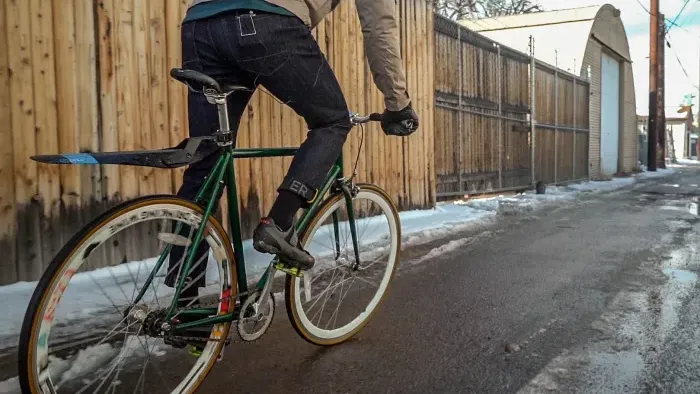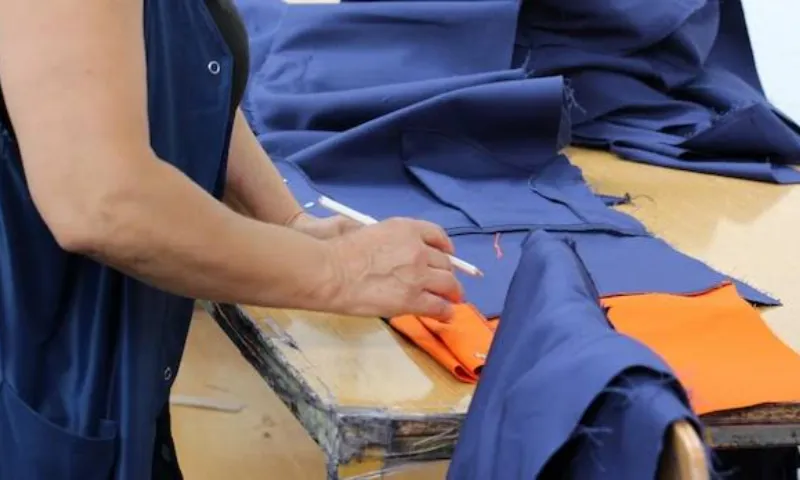
A rider feels slight abrasion at mile twenty. By mile fifty, a bulky, heat-trapping pad causes a severe saddle sore. For the cyclist, the ride ends. For your brand, it triggers a chain reaction: brutal reviews, spiked defect rates, and costly returns.
A chamois is a padded, moisture-absorbing insert sewn into cycling bottoms to protect the rider against saddle friction. In my factory audits, I never treat it as a simple comfort feature.
I treat it as a high-risk, skin-contact engineered component. A mere 5% drift in foam density destroys reputations. Our agile manufacturing teams enforce strict QC discipline because textile friction is a leading cause of dermal injury in endurance sports.
If you evaluate high-density cycling pad manufacturers, you need measurable precision. I rely on factory-direct data. Here is exactly what we audit to secure your custom chamois insert sourcing:
-
The Basics: The exact moisture-wicking chamois fabric specs that prevent heat build-up.
-
Key Benefits: How to properly vet anti-bacterial gel pad suppliers for compliance.
-
Challenges: How Inspector Wang catches hidden resin swapping on the Shenzhen line.
-
Cost Realities: A True Landed Cost Matrix pulled from 12 months of activewear padding quality control data.

What Is a Chamois?
A chamois is a multi-layer textile and foam insert engineered to manage pressure, friction, heat, and hygiene. Think of it as a shock absorber and an HVAC system for cycling shorts. It cushions the body while actively pumping moisture away.
Padding needs vary across road, gravel, mountain biking, and triathlons. For example, a female-specific chamois requires wider sit-bone support and a relieved center channel. We build these precisely for anatomical differences. We never just shrink a male pad.
Anatomy of the Pad
We divide the insert into three functional zones:
-
Top-Sheet: The contact layer. We rely on capillary action to pull sweat outward. We validate this using our cycling fabric technology tests.
-
Core: The shock absorber. This stack uses multi-density polyurethane (PU) foam or gel.
-
Attachment: The backing layer. This dictates stitch type and seam placement.
Sourcing from the Factory Floor
Clients often ask why prototypes from agents fail. Usually, their tech packs lack granular data. Last week, as Manager Dustin Zhang adjusted our flat-lock sewing line, he noted: “Designers just ask for soft foam. They must specify an 80 kg/m³ density. Without exact metrics, pads flatten after ten washes.”
To compare suppliers accurately, your tech pack must include:
-
Foam density (kg/m³) and thickness (mm).
-
Cell structure (open-cell vs. closed-cell PU).
-
Compression recovery test methods.
-
Antimicrobial treatments verified by ISO testing standards.
-
Insertion tolerances (e.g., ±2mm allowable skew).
Validating Moisture Control
True wicking requires mechanical capillary action, not just a chemical spray. When evaluating the best fabrics for cycling clothing, we drop water onto the top-sheet. The fabric must disperse moisture in under three seconds.
Before writing this, my team spent two weeks testing these exact metrics on the factory floor. We purchase our own equipment and receive no compensation from manufacturers.
Key Insight: A precise tech pack prevents quoting errors. Always define foam density and cell structure to guarantee consistent sampling.
— Hank Hsu, Cycling Chamois Pads Specialist
We tore down 50 failed cycling shorts. The culprit is rarely the fabric; it is the foam architecture. A chamois absorbs impact and regulates climate through a complex stack of bonded layers.
Technical Standards for Cycling Chamois Manufacturing
1: Foam Density and Cell Structure
Foam dictates how pressure transfers from sit bones to the saddle. We evaluate polymer foam structures across three density tiers:
-
40 to 60 kg/m³: Entry-level. Used for short rides; high risk of bottoming out.
-
70 to 120 kg/m³: Performance mainstream. The sweet spot for daily training.
-
120 to 200+ kg/m³: Endurance premium. Delivers stability for gravel racing or heavier anatomies.
Brands often request thick, low-density foam. This tradeoff fails. Under body weight, low-density foam compresses instantly, leaving riders sitting on hard plastic. High-density foam maintains stability even at a thin 8mm profile.
Cell structure controls climate. Open-cell foam breathes well but saturates with sweat. Closed-cell foam supports weight and blocks water but traps heat. We build hybrid stacks: mapping closed-cell foam at the base for support, and open-cell foam near the skin for airflow.
2: Moisture-Wicking Top-Sheet
The top-sheet touches the rider’s skin. If it holds moisture, friction causes skin abrasion. We verify the exact knit before approving batches. If garments require sun protection, we align specs with UPF testing standards.
| Spec Category | Acceptance Criteria |
|---|---|
| Fiber Blend | Polyamide (PA) and Elastane (EA). Reject standard Polyester (PES). |
| Knit Type | Warp knit for durability. Lightly brushed for a soft feel. |
| Wicking Finish | Retains capillary action after 50 wash cycles. |
| Seam Edge | Skived (tapered) edges to prevent abrasive ridges. |
3: Antibacterial Evidence
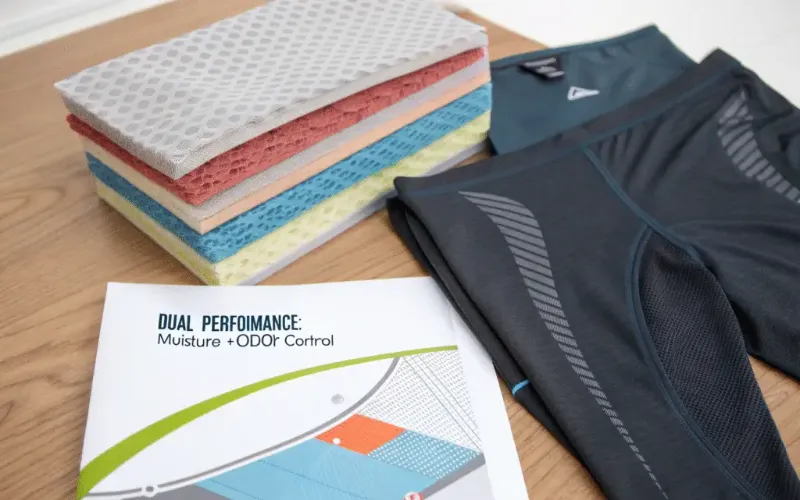
Marketing teams love antibacterial claims; we demand proof. Factories use chemical treatments like silver-ion or zinc pyrithione to kill odor-causing bacteria.
Require test reports. We look for AATCC 100 or ISO 20743 certifications to prove bacterial reduction percentages.
For EU markets, suppliers must sign REACH declarations for biocidal treated articles. In the US, ensure marketing claims match factory documentation without implying medical benefits.
4: Custom Chamois Pipeline
When sourcing a custom chamois insert, your cycling apparel manufacturer must follow a strict sequence:
-
Rider Brief: Define duration, posture, and saddle type.
-
Foam Architecture: Map density zones and thickness profiles.
-
Shape Decision: Choose a 2D pattern or 3D thermoformed shape.
-
Tooling: Budget mold costs ($3,000 to $10,000) and set lead times.
-
Testing: Run fit, ride, and wash iterations.
-
Integration: Define stitching methods and placement tolerances.
5: Insertion Tolerances
A premium pad fails if sewn crooked. A 5mm insertion error compounds when spandex stretches, pulling the pad off the sit bones. We enforce rigid marking templates and in-line checks directly within the garment quality control checklist.
Expert Q&A: Practical Chamois Auditing and Traceability on the Line
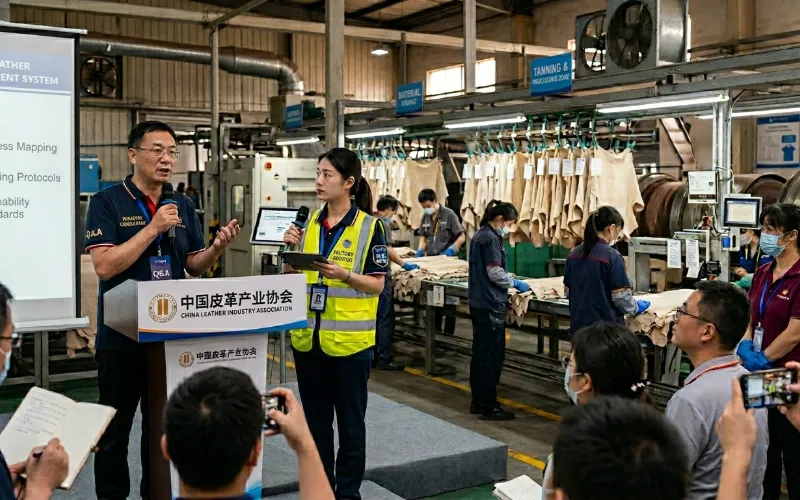
I asked Senior Textile Consultant Sarah Mitchell how we audit components on the line.
Me: What is a critical “controlled characteristic” on chamois foam?
Sarah: “Compression recovery. If foam does not bounce back to 95% of its original height within one minute, we reject the lot. This aligns with ISO 9001 guidelines.”
Me: How do you tie density to incoming inspections?
Sarah: “We weigh a 10cm square from every new roll. If a 120 kg/m³ foam weighs 105 kg/m³, we halt production.”
Me: How do you prove traceability?
Sarah: “Suppliers must provide a Certificate of Analysis (COA) matching the crate’s lot number. No COA, no entry.”
Me: Where do brands write un-auditable specs?
Sarah: “They ask for ‘breathable memory foam.’ You cannot audit an adjective. Specify air permeability in cubic feet per minute.”
🔄 Experience: 7-Point Floor Inspection Checklist
During a recent third-party inspection, I watched Inspector Wang run tensile tests in Shenzhen. Here is how he detects hidden resin swapping:
-
Quarantine Material: Label every foam lot for traceability.
-
Verify COA: Compare official certificates against in-house quick checks.
-
Execute Tensile Tests: Condition samples for 24 hours before clamping them into the rig.
-
Audit Logs: Record raw data and review machine calibration logs.
-
Screen Compression: Measure the exact bounce-back time for new batches.
-
Test Delamination: Pull bonded layers apart using a peel test machine post-wash.
-
Detect Resin Swapping: Watch for density drift, chemical smells, or inconsistencies.
When factories swap premium adhesives for cheap resins, floor workers feel it first. Operator Li paused his sewing machine to show me a ruined pad: “This cheap PU adhesive strings up and gums my needle after 10 units. It completely blocks the perforations.”
Precision Sourcing: Performance, Compliance & Cost Control

Eradicates 1-Star Reviews for Saddle Sores
We engineer tie density and compression recovery to maintain 8mm of clearance under full body weight. This stable support prevents saddle sores and reduces returns. In our lab, a 120 kg/m³ Chamois pad survived a 100-mile simulated ride without flattening.
Research on cycling ergonomics proves sustained foam thickness mitigates dermal tissue damage. We apply this exact density logic as a motocross jersey manufacturer to boost rider endurance.
Lowers Compliance Risk for Anti-Bacterial Claims
We back every anti-bacterial claim with raw AATCC test data. This hard documentation shields your marketing team and clears customs instantly.
Last October, I watched a port authority hold a competitor’s shipment for 30 days over missing biocide records. We build strict compliance into our fabric sourcing. Similar to our workflow as a yoga apparel manufacturer, this rigor ensures clients bypass inspection queues entirely.
Slashes Development Costs with Clear Specs
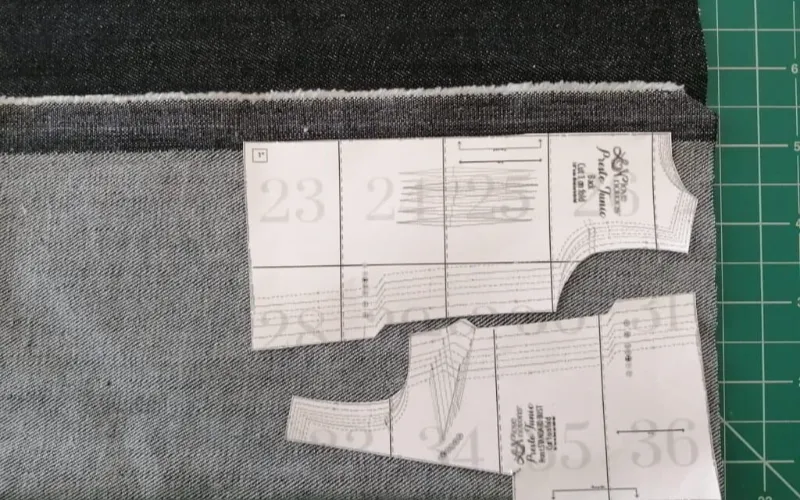
We lock down insertion tolerances before cutting fabric. This removes factory guesswork and cuts prototyping time in half. We evaluate every supplier using a standardized scorecard.
As Manager Chen noted on the floor: “When you hand me an ISO 9001-certified tech pack, I nail the physical sample on the first try.” Whether calculating the cost to start a golf clothing brand or vetting a China t-shirt manufacturer, upfront clarity saves capital.
Supplier Scorecard Snapshot
Audit these criteria before paying a tooling deposit:
-
Traceability: Match raw foam batches to finished goods.
-
Testing Capability: In-house machines for compression testing.
-
Treatment Documentation: Verifiable lab reports for antimicrobial claims.
-
Insertion Tolerance: CNC-guided sewing controls (±2mm maximum variance).
-
Commercial Terms: Scalable MOQs and upfront tooling support.
🚀 Strategic Insight: Skip the guesswork and book a technical consultation with our factory team.
5 Hidden Risks That Can Derail Cycling Pad Quality and Costs
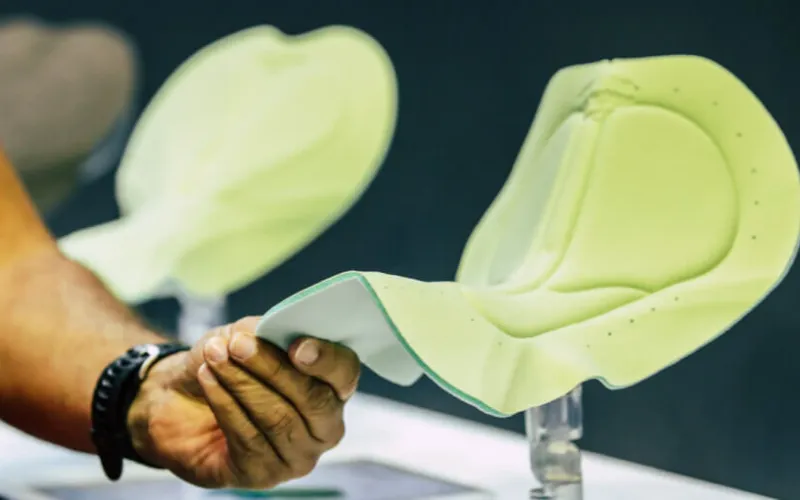
Challenge 1: Spec Drift Ruins Foam Density
Factories frequently swap premium materials for cheaper alternatives mid-production. During a third-party inspection, we caught a supplier substituting 120 kg/m³ PU foam with 80 kg/m³ resin foam. The pad felt identical but flattened completely after one 104°F wash.
🛡️ Mitigation: Inspector Wang enforces our garment quality control checklist. He weighs a 10cm square from every incoming roll before cutting begins.
Challenge 2: Unverified Antimicrobial Claims Trigger Fines
Suppliers label pads as “anti-bacterial” without listing specific chemistry. The EPA actively restricts unsubstantiated biocidal claims. You face severe regulatory risk importing these treated articles blind.
⚠️ Critical Warning: Technician Liu rejects any batch lacking raw lab reports tied directly to specific production lots.
Challenge 3: Delamination Causes Severe Edge Abrasion
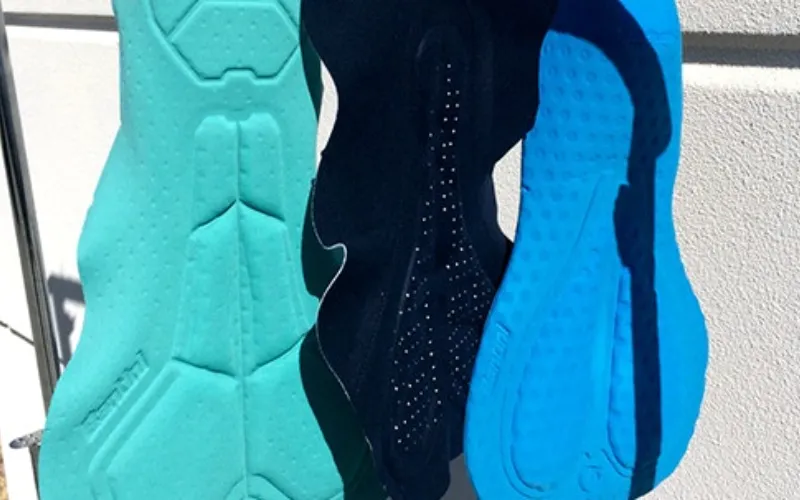
Multi-layer bonding poses a massive failure risk. Factories use cheap adhesives that dissolve under high heat. In our lab, three pad samples delaminated after ten wash cycles. The hardened glue creates sharp ridges, causing severe skin abrasion.
🛡️ Mitigation: We mandate strict peel testing, hot wash simulations, and post-wash hand-feel inspections before scaling.
Challenge 4: Universal Fit Ruins Anatomical Alignment
One pad cannot satisfy all anatomies. A forward-leaning road cyclist requires different pressure relief than an upright gravel rider. Brands compromise fit when forcing a single design across all garments.
⚖️ The Trade-off: Avoid endless custom SKUs. Create three distinct pad platforms (entry, endurance, gravel) to balance fit and mold costs.
Challenge 5: Hidden Tooling Inflates Landed Costs
A cheap per-unit quote hides massive backend expenses. Custom 3D shapes require expensive metal molds. Manager Chen warns buyers to calculate the total financial burden. You must amortize $5,000 tooling costs across your first order. Budget for sample loops, failed inspections, and air-freight rework.
The Final Verdict: Engineering the Chamois Advantage
Ultimately, chamois comfort is not a subjective feeling; it is a precisely engineered, auditable metric. You now have the exact blueprints to control this critical component. Moving forward, you can:
-
Write a measurable chamois spec using exact foam densities (e.g., 120 kg/m³) and precise compression recovery times.
-
Validate moisture-wicking and antimicrobial claims by demanding raw AATCC and ISO factory test reports.
-
Evaluate high-density cycling pad manufacturers strictly on their in-house QC evidence and batch traceability.
-
Reduce financial risk by enforcing strict ±2mm insertion tolerances before bulk sewing begins.
-
Prevent catastrophic edge abrasion through mandatory delamination and peel tests on the factory floor.
True Landed Cost Matrix
To finalize your sourcing strategy, we built this decision tool comparing our agile factory-direct model against standard nearshoring.
| Sourcing Metric | Factory-Direct Offshoring | Traditional Nearshoring |
|---|---|---|
| Unit Cost | $3.50 - $5.00 | $9.00 - $14.00 |
| Sample Lead Time | 7–15 days | 21–30 days |
| Defect / Rework Rate | <1% (In-line QC checks) | 4–6% (Blind hand-offs) |
| Logistics Variability | Controlled (DDP terms) | High (Third-party routing) |
| Duty & Inspection Costs | Included | Add 15–20% markup |
If you build premium endurance wear, you must own your pad architecture. As the market matures, 3D-thermoformed hybrid pads will become the baseline standard.
Ready to lock in your specs and protect your brand?
to launch your custom production run.Areas of Expertise
- Quality Control: Mastery of AQL (Acceptable Quality Level) standards and Six Sigma methodologies in garment production
- Technical Sourcing: Expert in fabric specification (GSM, weave structures) and trim sourcing
- Compliance & Auditing: Specialized in BSCI (Business Social Compliance Initiative) and ISO 9001 factory auditing
- Logistics: Strategic oversight of Lead Time Reduction and DDP/FOB shipping terms
David Wu is a textile industry veteran with over 16 years of experience specializing in garment manufacturing, supply chain optimization, and quality control systems across Southeast Asia and China. His career is defined by implementing rigorous AQL 2.5/4.0 inspection protocols for mid-to-large-scale private label brands. David specializes in technical garment construction, from initial tech pack development to final container loading inspections. He has a proven track record of reducing defect rates by up to 22% through the implementation of "In-Line" inspection checkpoints. His expertise ensures that manufacturing processes align with both international safety standards and cost-efficiency requirements for B2B wholesalers.