
For Established Creator Brands & Influencer-Led Labels
Creator merch manufacturing
that scales with your audience.
Certified quality. Transparent pricing at every volume. A dedicated account team that treats your brand like a business — because it is one. From our 20,000 sqm facility to your customers, in 15–30 days.
Built for Your Reality
Your merch launch isn't a corporate restock. This process is built around yours.
Three scenarios we solve every month. If one sounds familiar, you are in the right place.
The content drop has a date. The merch needs to match.
Your next video goes live in 2 weeks. You teased the merch drop in your last post, and pre-orders open the day of release — fulfillment follows 15–30 days later. If production slips by even 5 days, you are pushing delivery past the momentum window, and fans move on. We schedule production backward from your content calendar — not the other way around.
Your fans are global. Your shipping should be invisible.
Your audience is spread across more than 40 countries. A fan in Sydney expects the same unboxing experience as a fan in LA — no surprise customs fees, no factory-branded packaging, no 3-week delivery variance. Every package arrives looking like it came from you.
The drop went 3x bigger than planned. Now you need a restock that doesn't regress.
Last week's merch drop sold out in 48 hours. Your comments are full of "restock?" Now you need 3,000 more units — fast — and the quality needs to match batch one exactly. With documented color matching, QC records, and dedicated re-order priority, your restock is the exact product your audience already owns.
Solution #1
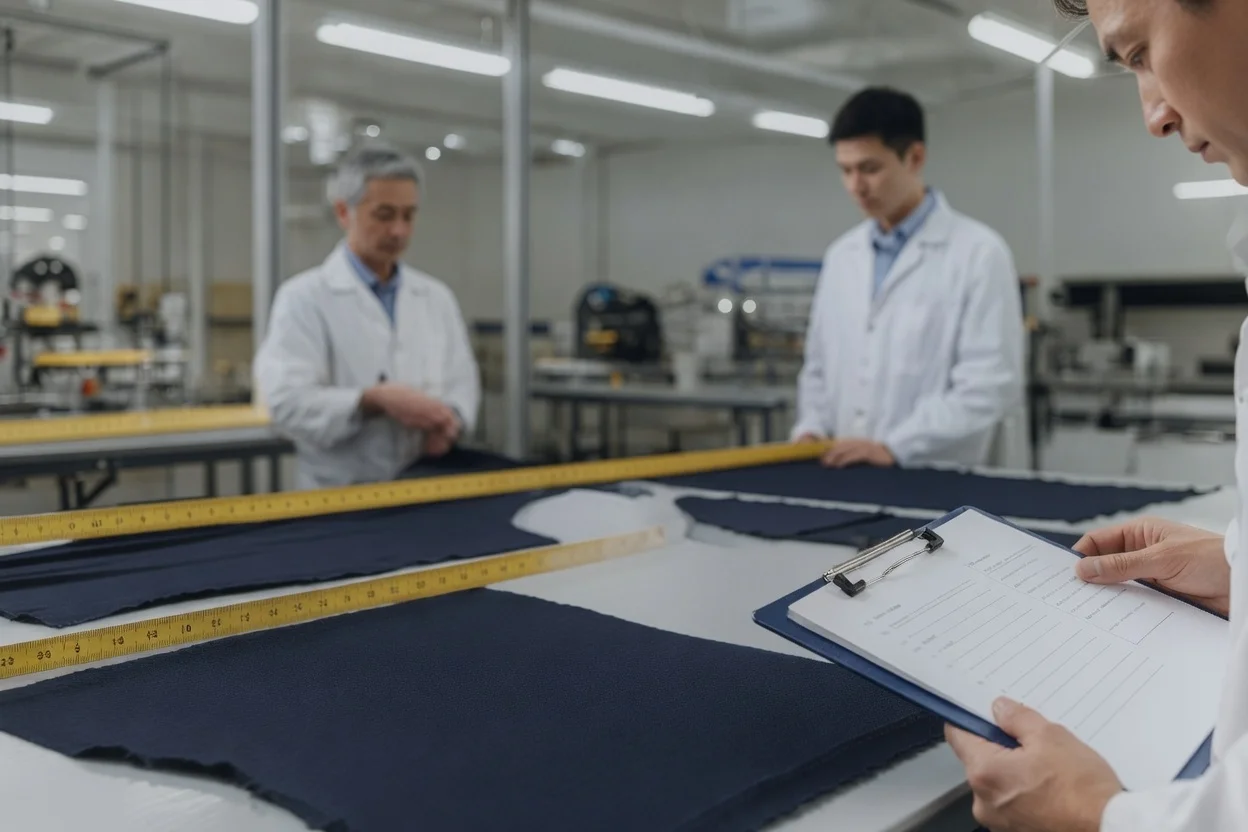
Quality your fans expect from you — and you should expect from your manufacturer
A bad shirt does not live in a warehouse — it lives in a comment section. One crooked print gets filmed, clipped, and quoted back to you for weeks, because your fans hold your merch to the same bar as your content. So ask the two questions that separate real quality systems from claims: "How do you inspect — visually, or statistically?" and "Are your certifications independently audited, or self-declared?"
- ✓ AQL 2.5 sampling against your approved spec — rejected on objective thresholds, never a visual once-over
- ✓ ISO 9001, OEKO-TEX Standard 100, and BSCI — independently audited every year, with audit reports you can review
- ✓ Physical color standard archived per design — a restock matches the drop your fans already bought
- ✓ QC photos and measurement reports shared before shipping — you approve what your audience receives
Solution #2
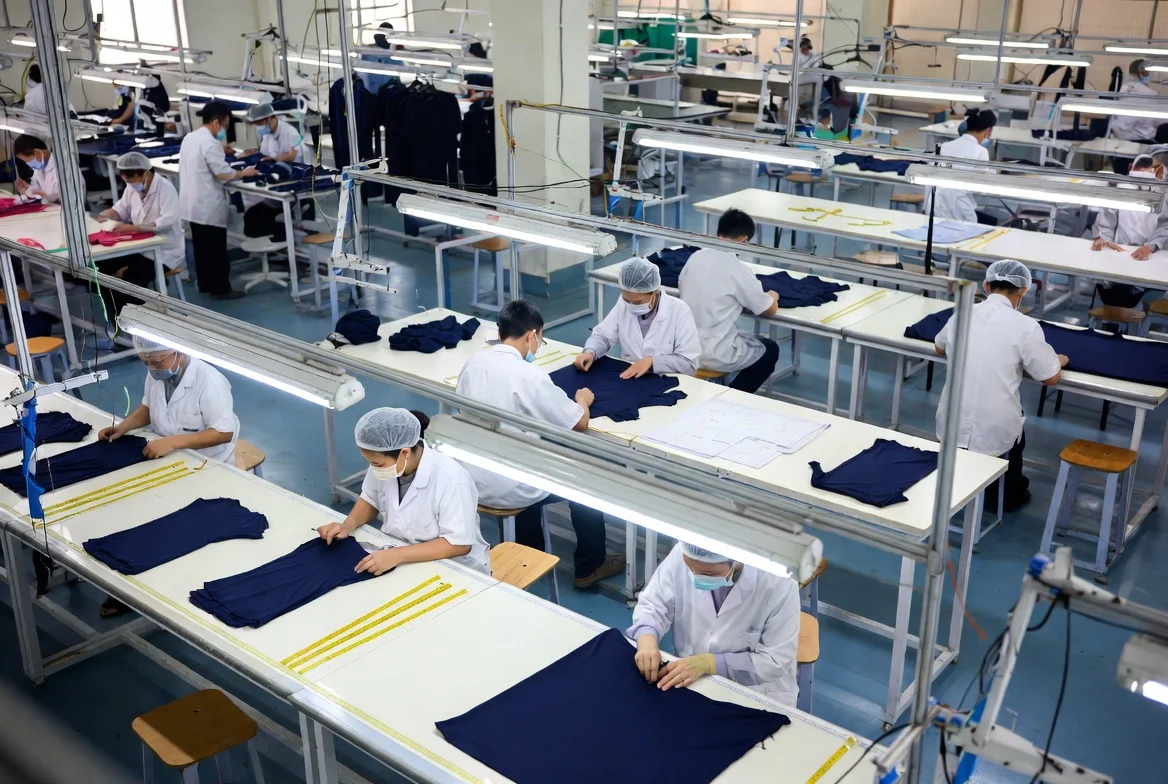
Launch at 100 units. Scale to 5,000. Same quality, predictable cost at every tier.
The merch math most creators are stuck between: print-on-demand has no minimum but eats $10–16 per shirt in margin, while "real" manufacturing wants 3,000 units of one design — inventory your audience never ordered. Mid-volume manufacturing is where most factories have no model at all. Ask two questions: "Do your production lines operate independently?" and "Do you publish per-unit pricing at my volume tier?" If lines are shared, your drop always waits behind a bigger client's order. If pricing is "on request," assume it moves when you ask.
- ✓ Run a pre-order drop per design — no inventory your audience has not asked for
- ✓ Per-unit pricing published at 100 / 500 / 1,000 / 3,000 / 5,000+ — model a drop margin before you tease it
- ✓ Restock a sold-out drop at 5,000+ units with the same QC and production team as your first batch
- ✓ Independent production lines — your order runs in parallel, not queued behind a 50,000-unit mega-run
Solution #3
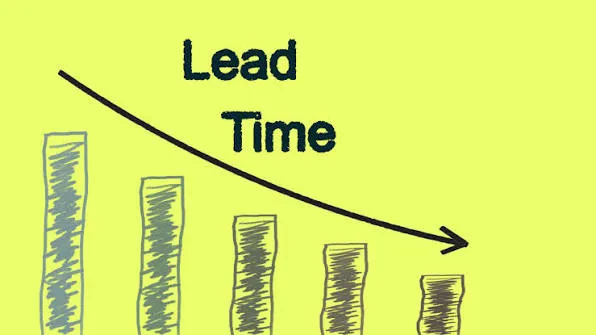
Your drop date doesn't move. Your production schedule does.
A content drop has a release date that does not move — your audience saw the teaser, pre-orders are open, and momentum decays in days. Factories think in queues; you think in launches. Ask: "Do samples share capacity with bulk production?" and "Does my order launch on a dedicated line, or join a queue?" Most factories are built so nothing waits — except you. The ones that ship fast are built so nothing waits, including your order.
- ✓ Production scheduled backward from your release calendar — not forward from the factory's
- ✓ Order starts within 48 hours of sample approval — a sold-out drop can be replenished before momentum fades
- ✓ In-house pattern making and digital tech pack review — no courier round-trips between revisions
- ✓ 3–5 fabric options tested in parallel, so sampling takes weeks, not months
Solution #4
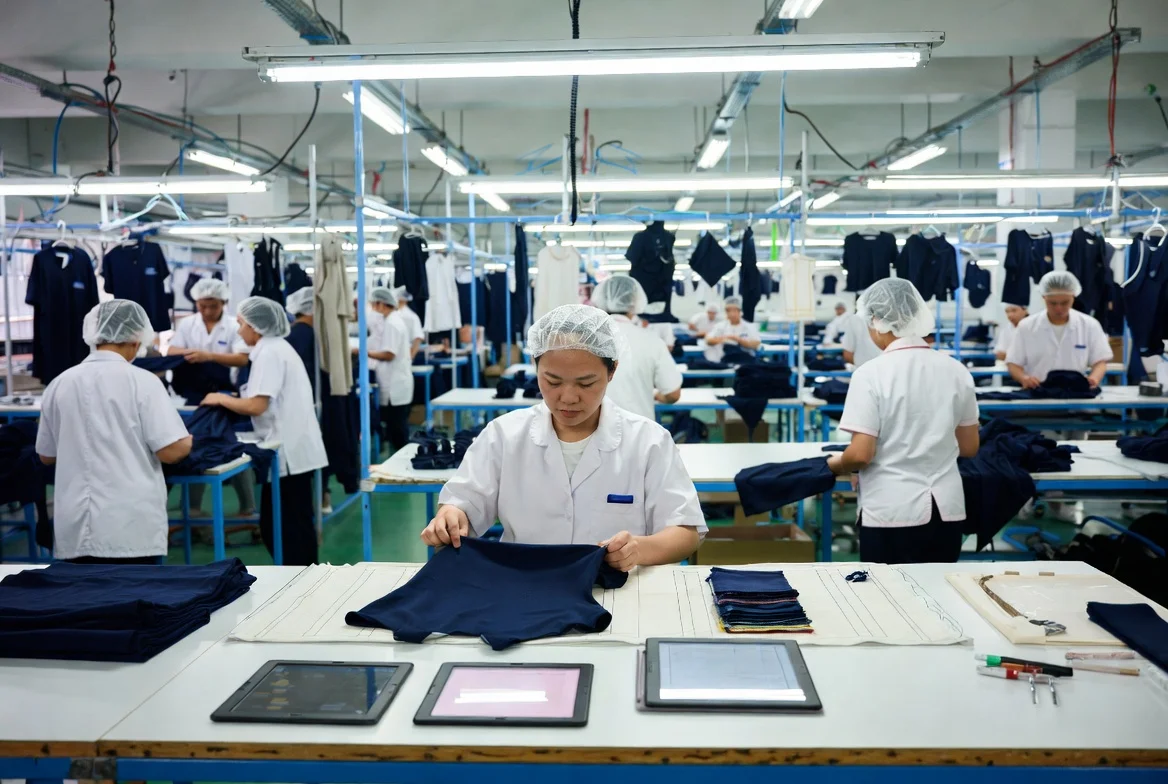
Everything your fan unboxes, made in one place — product, packaging, and identity
The unboxing is the only part of your merch your fans film — and the packaging does half the talking. Split your labels, packaging, and product across three vendors and you get three mismatched colors, three unsynced deliveries, and — when something is off — three vendors pointing at each other. The failure is structural: nobody owns the whole box. Ask one question: "Who is accountable for everything the customer receives?" The answer should be a single name.
- ✓ Woven labels, satin labels, hang tags, heat transfers — one source, matched across every component
- ✓ Custom poly bags, tissue paper, retail boxes — delivered on the same schedule as the product
- ✓ Your brand on the outside, never a factory name — the box reads as you, not your supplier
- ✓ Unboxing experience designed and produced as one workflow, not three
Material Guide
Six fabrics. One question.
What does your product feel like in your customer's hands?
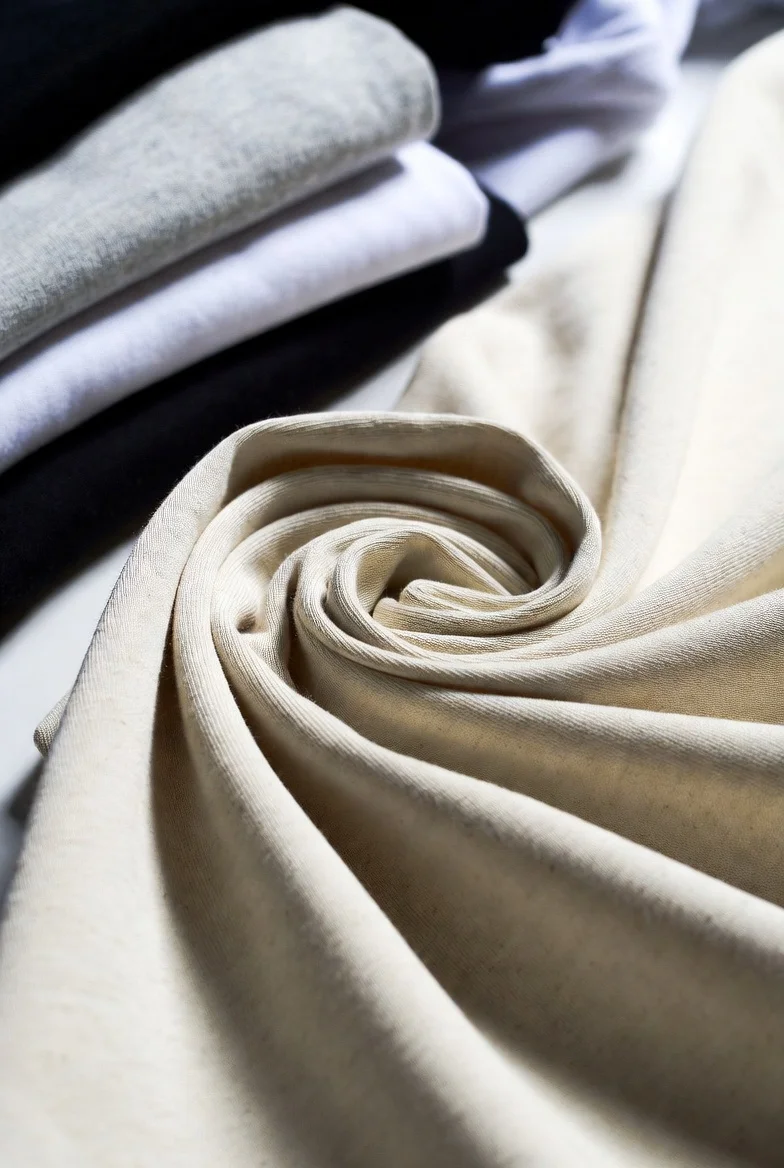
Premium Cotton 220–280 GSM
Heavy enough for premium hand-feel, light enough for year-round wear. The workhorse fabric for brands that want their product to feel expensive at any price point.
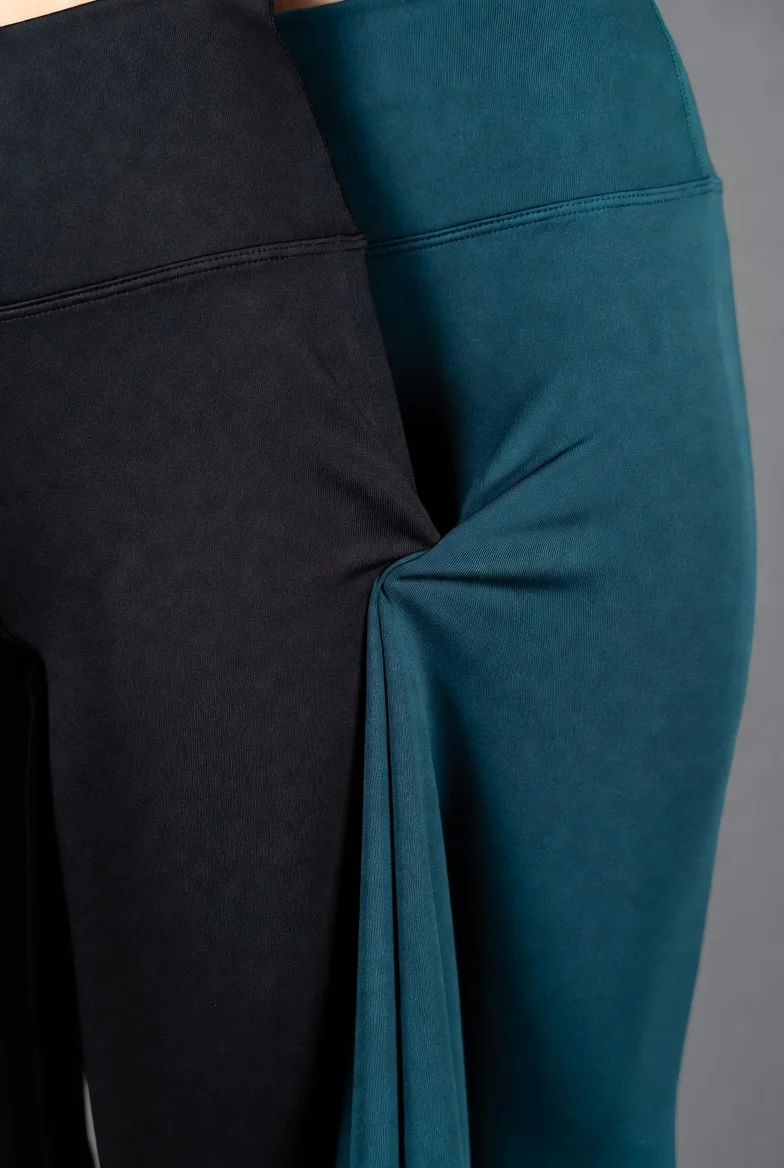
Polyester-Spandex 88/12 150–200 GSM
Four-way stretch with moisture-wicking properties. For brands operating in fitness, athleisure, or any category where fabric performance drives purchase decisions.
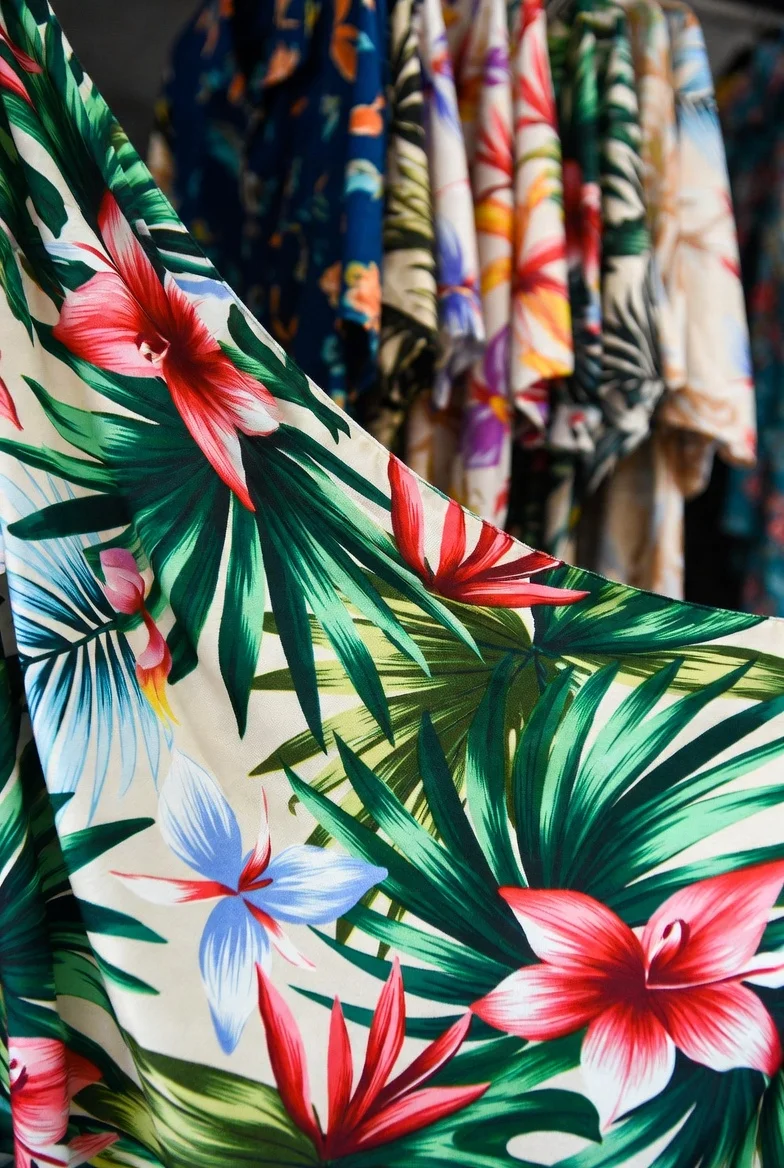
Rayon/Viscose 130–170 GSM
Silky drape and vibrant print absorption. The go-to for all-over print products where graphic impact drives conversion.
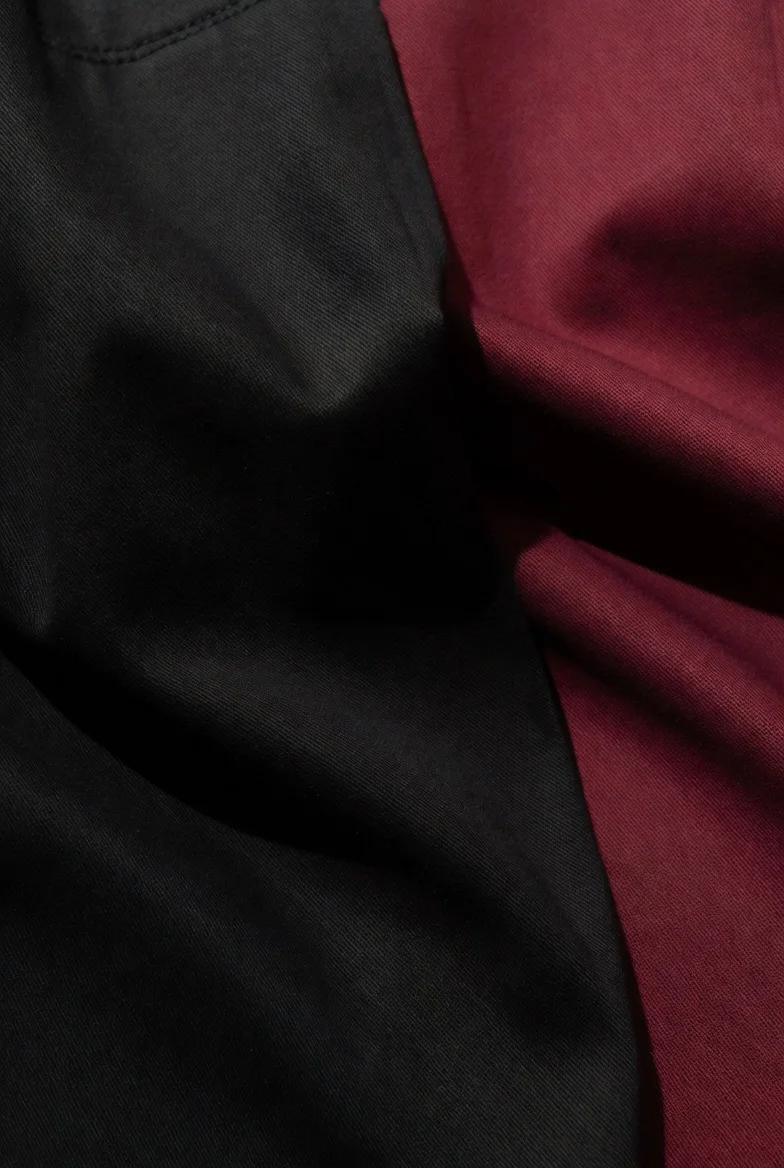
Heavyweight Poly-Cotton Drill 250–350 GSM
Structured, durable, holds shape through repeated wear. For outerwear and statement pieces where silhouette matters as much as comfort.
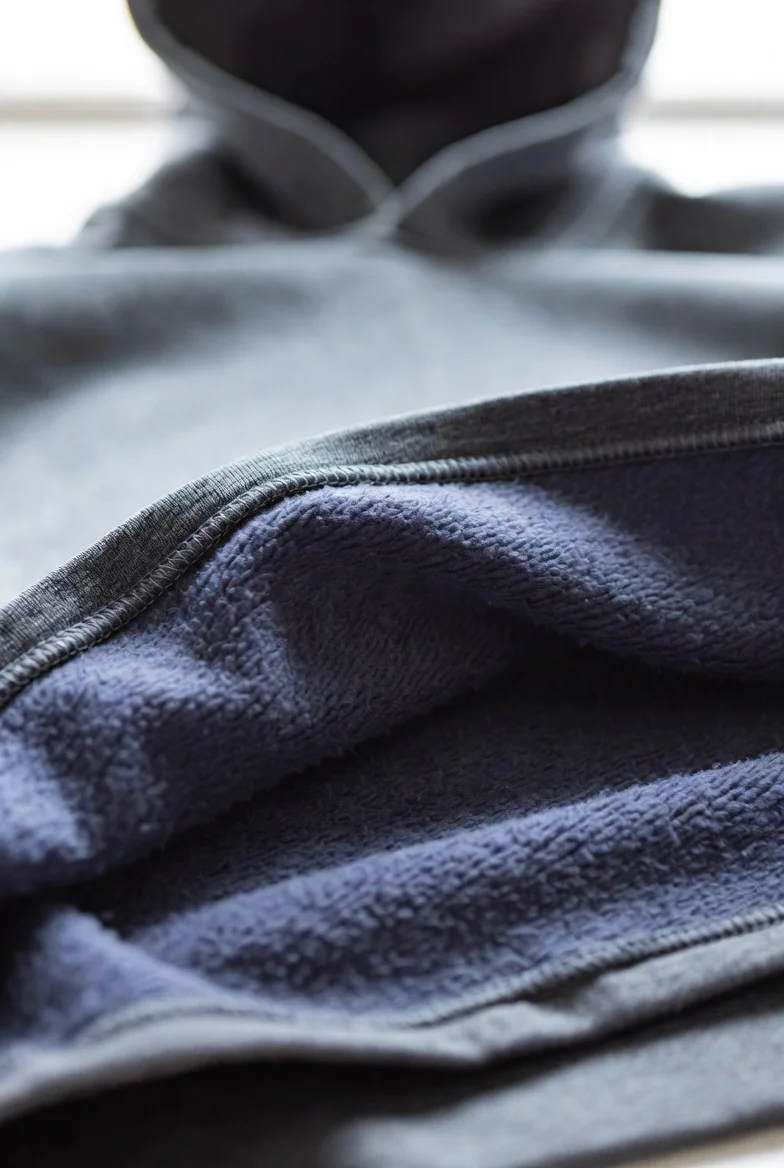
Fleece-Backed French Terry 280–360 GSM
Premium interior feel with a smooth face for printing. The hoodie fabric that customers compare to brands at twice the price — and keep.
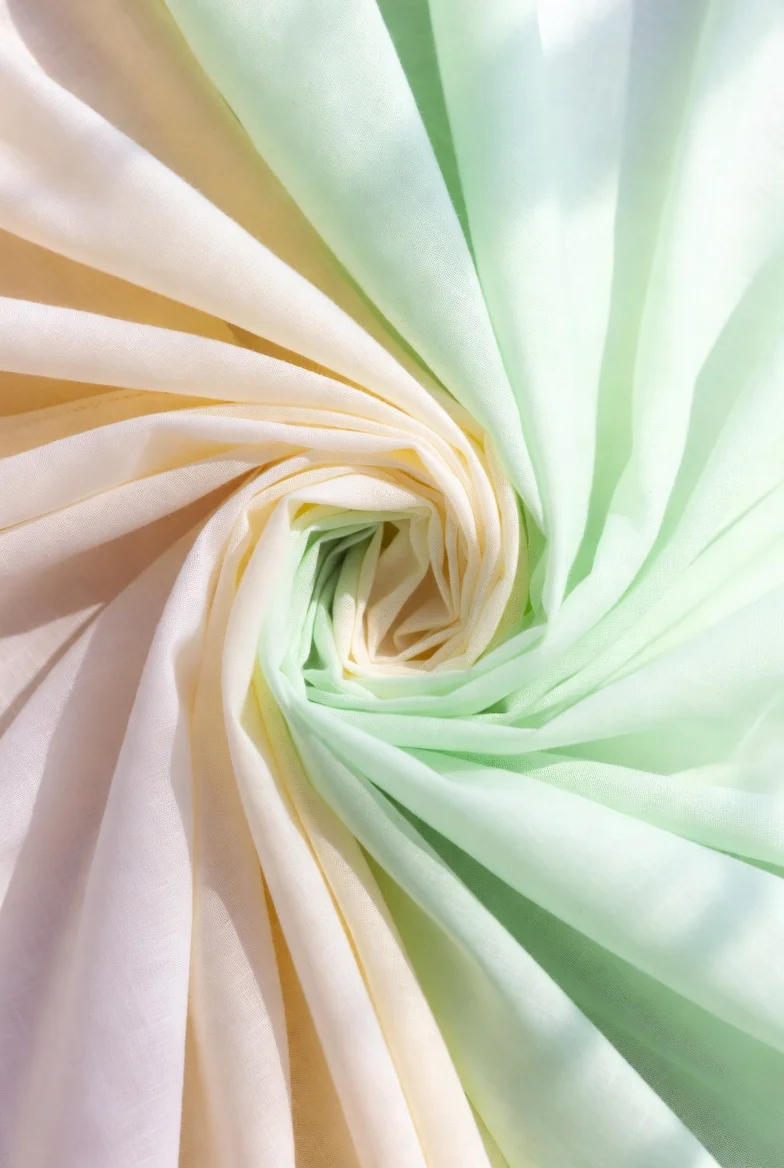
Lightweight Cotton Lawn 100–130 GSM
Ultra-light with a smooth print surface. For seasonal collections and warm-climate markets where weight and breathability are selling features.
Creator Field Guide
The merch numbers most suppliers won't tell you.
Platform gates, production models, and the point where POD stops making sense — the practical math behind a profitable merch line.
Gate #1
Platform requirements, spelled out
- ✓ YouTube Merch Shelf: 1,000 subscribers + 4,000 watch hours unlock the merch shelf on your videos.
- ✓ TikTok Shop: 5,000 followers to enable in-video shopping. Products must pass platform compliance for apparel.
- ✓ Conversion reality: most drops convert 0.5–2% of engaged audience — plan inventory against your real numbers, not your reach.
These are the entry gates. What you do past them is supply chain.
Gate #2
Pre-order vs. stocking inventory
- ✓ Pre-order model: manufacture to demand. A 100-unit minimum fits a pre-order window, so you only manufacture what your audience actually orders.
- ✓ Dead stock rule: once a design consistently clears ~50+ units per drop, it's proven enough to stock without pre-order risk.
- ✓ Margin math: pre-order protects cash flow; stocking protects margins. The mix is what scales.
Start with pre-order drops. Move to stock only for proven SKUs.
Gate #3
When print-on-demand stops making sense
- ✓ POD costs $10–16 per shirt with zero MOQ and no brand control — fine for testing, brutal for margins.
- ✓ Bulk drops to $5–10 per unit at 5,000+ pieces, with your labels, your packaging, and ~2× the print durability of POD.
- ✓ Switch point: around $3K/month merch revenue, or when a single design passes the 50-unit validation bar, bulk manufacturing wins.
Bulk isn't about volume. It's about margin and brand ownership.
Platform thresholds per official YouTube & TikTok documentation. POD pricing and validation rules of thumb per the Custom Ink 2026 creator merch guide.
Client Results
Three creators. One supply chain. Measurable growth.
Different platforms, different products, different starting points — the common thread is a supply chain that protects a creator's most valuable asset: their audience's trust.

Case 01
YouTube creator @naieem1k
300→3,500
Units/month in 14 months
0.2%
Defect rate across 16 orders
4.6★
Avg. customer rating
The Challenge
His first drop sold out in 72 hours — but the restock took 9 weeks and shipped with visible color drift between batches. Fans called it out in the comments, returns spiked, and a third drop had to be postponed mid-campaign.
The Solution
We planned production around his release calendar, archived a physical color standard for every design, and put restocks on a priority re-order lane so batch two matched batch one exactly — not close enough, exactly.
The Result
He scaled from 300 to 3,500 units/month across 8 SKUs with a 0.2% defect rate. Three consecutive drops shipped on time with zero stockouts — and his community stopped questioning the quality.

Case 02
Vanguard — menswear brand, Netherlands
+31%
Margin per unit after consolidating suppliers
28%
Repeat purchase rate
12/12
Seasonal collections on time
The Challenge
A Dutch menswear label scaling seasonal collections hit the wall of a fragmented supply chain — labels from one vendor, garments from another, deliveries out of sync. Color drifted between batches and EU retail windows were being missed.
The Solution
We consolidated garment and brand production under one roof — dedicated mid-volume lines, matched woven labels and finishing, and EU size grading. One QC team owned every component, so each seasonal collection shipped complete and on spec.
The Result
Margins improved 31% per unit after consolidating suppliers, and the consistent branded finish lifted repeat purchases to 28%. Twelve seasonal collections shipped on schedule across three years — the launch calendar never slipped.

Case 03
DAMIHOW — London activewear brand
5→20
SKUs in 24 months
40+
Countries shipped DDP
0
Quality returns in 2025
The Challenge
A London activewear label growing through its own store and social community hit a wall when international demand outpaced its fulfillment setup — customs surprises for EU and international buyers, packaging that varied by batch, and no single partner owning quality across a widening SKU range.
The Solution
We consolidated production and fulfillment under one workflow — consistent branded packaging, DDP shipping so duties were included upfront, and AQL-graded QC applied identically across every style as the line grew.
The Result
Expanded from 5 to 20 SKUs in 24 months, shipped DDP to 40+ countries with zero customs issues, and finished 2025 with zero quality returns.
Metrics are drawn from production, QC, and shipping records.
Verify, Don't Just Trust
Every number on this page can be checked.
We publish our operating stats with benchmarks and a clear path to verify them — because a claim you can audit is worth more than a claim you can't.
The numbers, with context
- 1
<0.3% post-delivery defect rate
Fewer than 3 in 1,000 units across all fulfillment orders since 2022 — because one bad shirt becomes a comment-section moment. If product doesn't match the approved sample, you get a remake, refund, or credit, documented in your production agreement.
- 2
3.8% average client return rate
Vs. an 18–22% category average for activewear sold on Amazon. Achieved through US/EU size grading and pre-shipment QC — not through suppressing returns data.
- 3
99.3% documented on-time delivery
From our shipping records across 150+ active client accounts. Your delivery date is agreed in writing before production begins.
How to verify us
- A
Independent certification audits
ISO 9001, OEKO-TEX Standard 100, and BSCI are audited by third parties every year — certificates are shared with clients, not kept as badges.
- B
QC evidence before every shipment
AQL 2.5 inspection photos and measurement reports are shared for your approval before any order ships. You see the product before we dispatch it.
- C
Visit the factory in person
Our 20,000 sqm facility is in China — about 60 minutes from Shenzhen Bao'an airport. We welcome factory visits and can arrange transport.
Common Questions
Questions brands ask before choosing a manufacturing partner.
Real answers from real production experience — no fluff, no dodging the hard questions.
The next step costs nothing.
Send us your brief. Get a production plan within 24 hours.
You will receive fabric options, a production timeline, and per-unit pricing at every volume tier — based on your specific requirements. No commitment. No pressure. Just the data you need to make a sourcing decision.
Also read: Team & Sports Uniform Apparel — the same procurement discipline for club, school, and esports uniform orders. And Boutique & Premium Lifestyle — small-batch, high-craft production for boutiques and independent designer labels. And Golf Apparel Manufacturing — performance polos, outerwear and knitwear engineered for on-course use.