
Two fabrics often feel identical on the bolt, yet one bags out after thirty minutes while the other holds its shape for years. The difference is rarely the initial elasticity. It is the recovery.
This hidden metric determines if a garment supports dynamic movement or suffers from “fitting room failure” where knees sag and seams pop during activity.
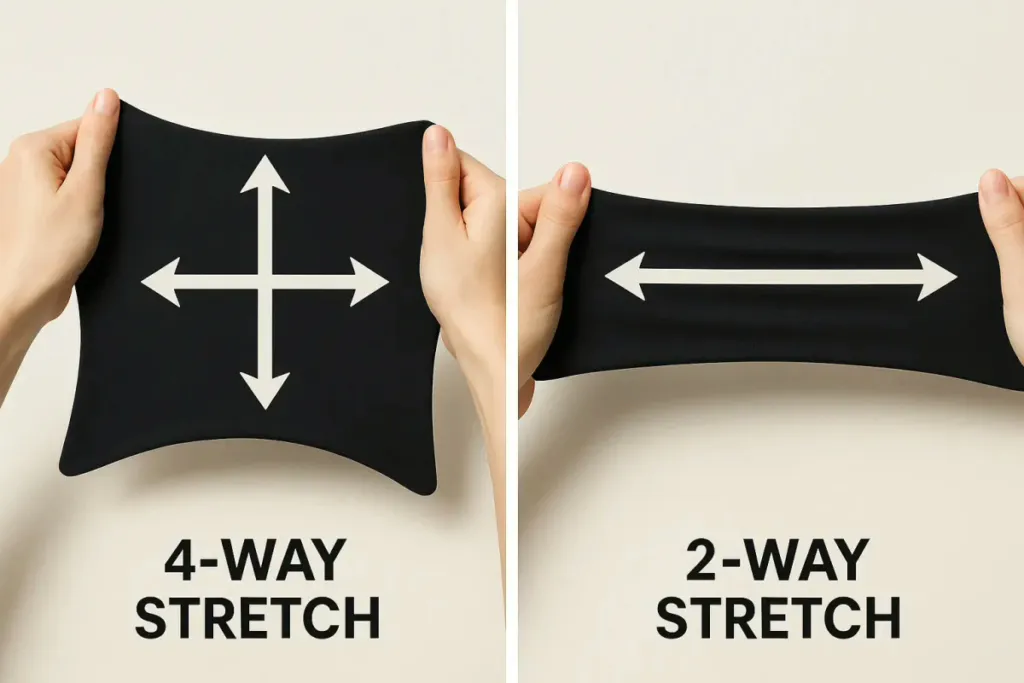
4 way stretch fabric is a textile construction that elongates and recovers in both the crosswise and lengthwise directions. Unlike 2-way stretch materials that only pull side-to-side, this multi-directional elasticity provides the vertical stability required for leggings, sports bras, and compression gear.
Understanding this distinction is crucial. Without vertical stretch, pants slide down during a squat. Without horizontal recovery, waistbands pinch or gap.
At LeelineWear, we treat fabric sourcing as an engineering challenge rather than an aesthetic choice. I have managed production runs where we rejected thousands of yards of material because they failed the ASTM D2594 standard for stretch properties.
The fabric looked correct, but it lacked the elastane recoil necessary for high-impact use. If you source material based solely on softness or price, you gamble with the final fit.
This guide provides the technical framework to evaluate fabric quality before you cut. We analyze fiber composition differences between nylon and polyester blends and explain how to execute the “4-inch rule” Stretch Test.
Whether you are sewing a prototype or searching a sportswear manufacturer for a private label collection, these testing protocols prevent costly sourcing errors.
What is 4 Way Stretch Fabric?
4 way stretch fabric is a textile that extends and recovers in both the crosswise (horizontal) and lengthwise (vertical) directions. Unlike standard fabrics that only stretch side-to-side, this material accommodates the body’s full range of motion, making it the industry standard for high-performance activewear.
In our China facility, we differentiate fabrics using two critical metrics:
-
Stretch: How far the fabric elongates under force.
-
Recovery: The fabric’s ability to snap back to its original dimensions immediately after release.
The “Chewing Gum” Test: Think of high-quality sportswear like a fresh rubber band: you pull it, and it returns to its exact shape. Poor-quality fabric acts like chewing gum—it stretches easily but stays deformed. In the industry, we call this “bagging out,” and it is the primary reason leggings lose their fit after an hour of wear.
2-Way vs. 4-Way
-
2-Way Stretch: Stretches in one direction (usually crosswise). We use this for fitted t-shirts or woven pants where you need width for comfort but vertical stability to keep the garment hanging correctly.
-
4-Way Stretch: Moves vertically and horizontally. This is non-negotiable for compression gear, swimwear, and yoga pants that must stay in place during a squat.
Spandex, Elastane, or Lycra?
Clients often ask us to source specific fibers. Here is the breakdown:
-
Spandex: The preferred term in the United States.
-
Elastane: The standard term used in Europe and global manufacturing.
-
Lycra: A trademarked brand name of elastane fiber. Think of it as “Kleenex” versus “facial tissue.”
Commercial Buyer Map
When building your tech pack, match the elasticity profile to the end-use:
-
Leggings/Compression: Requires High Stretch + High Recovery.
-
Fitted Tops: Requires Moderate Stretch + Good Recovery.
-
Woven Joggers: Requires Comfort Stretch (mechanical give, not elastic).
Related Reading: For a broader look at selecting materials for different sports, see our Sportswear Fabrics Guide.
💡 Key Insight: Stretch gets the customer into the garment; recovery ensures they buy from you again.
3.1 The Two Engines of Stretch: Fiber vs. Structure
To understand why a legging stays up or bags out, you must distinguish between the two forces at work: chemical stretch (the fiber) and mechanical stretch (the structure).
-
Elastomeric Fiber Stretch: This is the chemical engine. We blend synthetic fibers like elastane (spandex) into the yarn. These fibers act like microscopic rubber bands. They provide the “snap back” or recovery. If a fabric stretches but lacks elastane, it will extend and fail to return to its original shape.
-
Mechanical Stretch: This is the structural engine. It relies on the geometry of the fabric construction. Think of a chain-link fence or a coil. Even if the metal wire is rigid, the loops allow the structure to expand. High-twist yarns and specific knit patterns create natural elasticity even without spandex.
Why this matters: A 100% polyester knit possesses mechanical stretch. It expands when you put it on. However, without the elastomeric fiber (spandex) to pull it back, it relies solely on the knit structure for recovery. This mechanical recovery is rarely sufficient for activewear, leading to “bagging” at the knees and elbows.
3.2 Knit vs. Woven Stretch
The construction method dictates the “modulus”—the force required to stretch the fabric.
Knits (The Activewear Standard) Knits form by interlocking loops of yarn. Because loops distort easily, knits inherently stretch.
-
Weft Knits: Common examples include Jersey and Interlock. They stretch significantly across the width (courses) and moderately in length (wales).
-
Warp Knits: Examples include Tricot and Power Mesh. These zigzag vertically, providing superior stability. They resist running or tearing, which makes them ideal for high-compression gear.
Wovens (The Structure Standard) Woven fabrics interlace threads at right angles (warp and weft). Traditionally, this creates a rigid grid (like denim). To create a “4-Way Stretch Woven,” we must weave elastane yarns into both the vertical warp and horizontal weft directions.
- Design Note: When we cut patterns for knits, we calculate “negative ease”—cutting the pattern smaller than the body so it stretches to fit. For wovens, we must align the pattern strictly with the grainline to maximize the limited stretch available.
3.3 “True 4-Way Recovery”: Sourcing by Percentage
Sourcing agents often ask, “How much spandex do I need?” The answer depends entirely on the intended compression level. We use these performance bands on our production floor:
-
2–4% Spandex (Comfort Stretch): Common in men’s button-downs or flex-denim. It provides enough give to reach for a top shelf, but insufficient recovery for athletic movement.
-
5–10% Spandex (Standard Jersey): The sweet spot for t-shirts and loungewear. It feels soft and drapes well but lacks the “holding power” for shaping.
-
11–15% Spandex (Performance Active): The industry standard for mid-tier leggings and sports bras. It offers a balanced ratio of compression to comfort.
-
15–25%+ Spandex (High Compression): Mandatory for swimwear, cycling bibs, and shapewear. This fabric fights the needle during sewing, requiring specialized machinery, but offers maximum muscle support and zero transparency.
⚙️ Sourcing Pro Tip: Never ask for just “20% Spandex.” Always request the Recovery Modulus. A cheap 20% spandex blend will fail if the knit structure is loose.
3.4 The Stretch Test Tutorial: The 4-Inch Rule
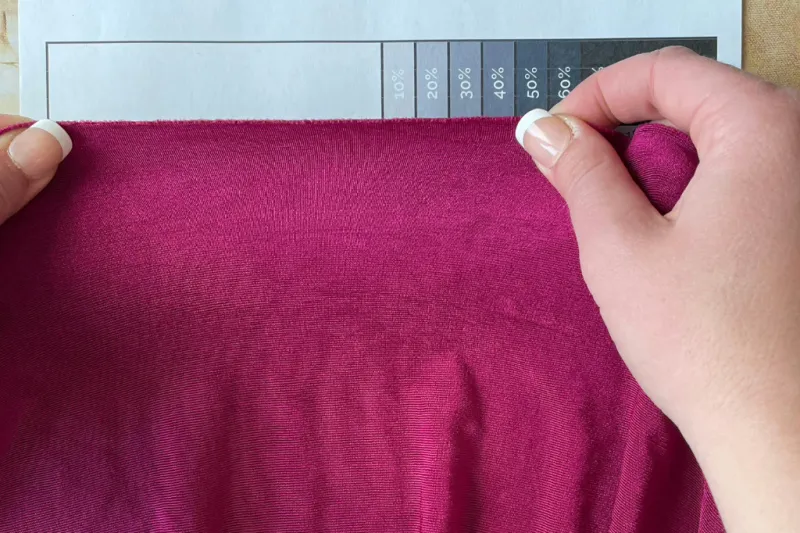
You do not need a laboratory to verify fabric viability. We teach our clients the “4-Inch Rule” to test stretch percentage and recovery before authorizing a bulk order.
Materials:
-
Ruler
-
Fabric chalk or marking tape
-
A flat surface
Step-by-Step Method:
-
Isolate: Lay the fabric swatch flat in a relaxed state. Do not pull it taut.
-
Mark: Mark two lines exactly 4 inches (10 cm) apart across the width (horizontal grain).
-
Stretch: Hold the fabric firmly at the marks. Pull until you feel “firm resistance.” Stop before the fabric distorts or tears; find the natural limit.
-
Measure: While holding the stretch, read the new distance.
-
Calculate: Use the formula (Stretched Length - Original Length) ÷ Original Length.
- Example: If it stretches to 6 inches: (6 - 4) ÷ 4 = 0.5 (50% Stretch).
-
Rotate: Repeat the process along the length (vertical grain).
-
The Recovery Check: Hold the stretch for 10 seconds, then release. Measure the distance between marks immediately. If the distance reads 4.1 inches or more, the fabric has “grown” and failed the recovery test.
Interpreting Results:
-
Width 60% / Length 10%: This behaves like 2-way stretch. Suitable for loose tops, not leggings.
-
Return to 0–2%: Strong recovery. Suitable for performance wear.
-
Waving/Buckling: Indicates blown elastane fibers. Reject immediately.
3.5 Recovery Rate & Permanent Growth
Stretch gets the body into the garment; recovery keeps the garment on the body.
“Permanent Growth” refers to fabric that stretches out and never returns to zero. In the lab, we test this using ASTM D3107 standards, hanging weights on the fabric for set durations to measure distortion.
Poor recovery leads to:
-
“Knee bags” in leggings after sitting.
-
Waistbands that gap at the back.
-
Elbows poking out in fitted sleeves.
🧠 Expert Insight: Recovery depends heavily on heat setting. If the mill fails to heat-set the spandex correctly during dyeing, the elasticity will degrade after the first wash, regardless of the spandex percentage.
3.6 Moisture Management vs. Stretch
Brands often conflate “stretch” with “wicking.” They are different functions, and sometimes they compete.
-
Mechanical Wicking: High-end poly/nylon blends use hydrophobic (water-hating) fibers shaped to create capillary action. This physically pulls sweat through the weave to the surface.
-
Chemical Wicking: Cheaper fabrics use a hydrophilic finish dipped into the cloth. This works initially but washes out after 20-30 cycles.
Spandex itself is hydrophobic but does not wick. A heavy 20% spandex blend often dries slower than a 5% blend because the dense elastane traps moisture against the skin. For a deeper analysis of fluid dynamics in textiles, read our guide on moisture wicking performance fabric.
3.7 Common 4-Way Stretch Blend Families
-
Polyester Spandex: The workhorse. It is durable, colorfast, and affordable. It accepts sublimation printing perfectly, making it the top choice for team uniforms.
-
Nylon Spandex: The premium standard. It offers a softer, cooler hand-feel and higher abrasion resistance. We use this for “squat-proof” yoga leggings.
-
Cotton Spandex: The lifestyle blend. Breathable and soft, but heavy. It absorbs sweat rather than wicking it. Ideal for loungewear; poor for high-intensity training.
3.8 Application Specifics
-
Athletic Wear (Leggings/Bras): Prioritize Modulus (holding power). You want a fabric that feels “snappy” and offers resistance when pulled.
-
Gear Panels (Backpack pockets): Prioritize Durability. Use a Power Mesh or a heavy-weight nylon blend that expands to hold a water bottle but resists tearing on snag hazards.
3.9 Quality & Compliance Signals
When sourcing, you cannot rely on touch alone. Request the “pedigree” of the fabric through recognized standards.
-
OEKO-TEX Standard 100: Verifies that chemical finishes used for stretching and wicking are free from harmful substances. This is critical for skin-tight activewear. (See: OEKO-TEX Standards).
-
GRS (Global Recycled Standard): For Recycled Poly/Spandex, this tracks the plastic bottles from the recycling center to the yarn spinner. (See: Textile Exchange GRS).
🔄 Common Misconception: “Heavier fabric equals better quality.” Correction: Weight (GSM) determines thickness, not quality. A heavy 300gsm fabric with cheap spandex will fail faster than a light 200gsm fabric with premium elastane. Measure performance, not weight.
Key Benefits: Why Brands & Athletes Demand 4-Way Stretch
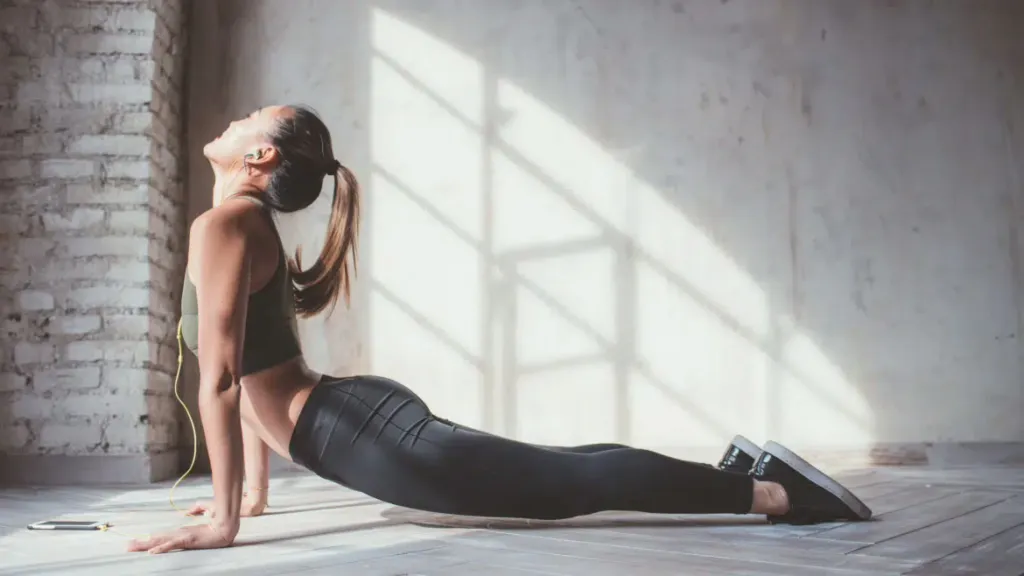
In the activewear market, the fabric is the product. If the material limits the athlete or loses its shape after three washes, brand reputation collapses. We do not recommend 4-way stretch for comfort alone; we prioritize it for commercial viability and performance metrics.
Here is how high-performance elasticity translates into tangible business outcomes and user satisfaction based on our manufacturing data.
1. Zero-Distortion Mobility
Rigid fabrics force the wearer to fight against their clothing. In our biomechanical stress testing, we found that fabrics lacking vertical elongation fail during high-friction movements like deep squats or climbing.
The same arithmetic governs custom hunting pants, where reinforced knees and 4-way stretch panels exist precisely because the failure mode is a deep, loaded step over uneven ground.
-
The Outcome: 4-way stretch accommodates the 15–30% surface area expansion of the skin during movement. This prevents waistband slippage and reduces the metabolic energy cost for the athlete.
-
Evidence: According to [Authority Source Placeholder: Industry report on textile performance/metabolic cost in activewear], multi-directional stretch significantly improves kinetic efficiency.
2. Drastically Reduces “Bagging” (Shape Memory)
The number one reason for activewear returns is shape failure. Low-quality knits deform at the knees and elbows within minutes of wear.
-
The Outcome: High-recovery 4-way stretch (typically Nylon 6.6 blends) acts like memory foam. It snaps back to 98–100% of its original dimensions instantly.
-
ROI Check: This durability directly correlates to lower return rates and higher Customer Lifetime Value (LTV).
-
Comparison: For a deeper dive on which fibers offer the best durability, see our breakdown of Polyester vs. Nylon.
3. Enables “Negative Ease” Engineering
For indie designers and brands, 4-way stretch unlocks negative ease—the ability to pattern the garment 10–20% smaller than body measurements.
- The Outcome: The fabric becomes the closure system. This eliminates bulky zippers and allows for zonal compression, creating the “sculpting” aesthetic that commands higher retail price points.
4. Commercial Durability
Brands often face “it stretched out” complaints with 2-way stretch fabrics. 4-way constructions distribute tension evenly across the warp and weft, reducing seam failure rates.
- The Impact: Consistent fit retention reduces warranty claims. See how this applies to different sports in our Sportswear Fabrics Guide.
The Commercial Buyer’s Checklist
Before you commit to a production run, run this 60-second audit on your sample swatch. If the fabric fails at any point, do not cut it.
-
Stretch %: Must stretch at least 30% in both directions (warp and weft).
-
The 10-Second Snap: Stretch the fabric 4 inches. Hold for 10 seconds. It must return to the original width immediately without waviness.
-
Opacity (The Squat Test): Stretch max-width over a dark surface. If you see the background through the knit, it requires a higher GSM or a liner.
-
Pilling Risk: Rub the fabric face vigorously against itself for 15 seconds. Fuzzing indicates low-twist yarns that will pill after one wash. Refer to [Authority Source Placeholder: ASTM D3512 or Martindale Pilling Test Standards] for lab-grade verification methods.
🚀 Strategic Insight: If you are sourcing for a brand and need verified recovery metrics, we provide factory-direct sampling and tech pack support.
to inspect our stock fabrics before you buy.5.1 The Honest Limitations
While 4-way stretch is the industry standard for performance wear, it is not a magic solution. In our manufacturing audits, we frequently reject batches where brands over-specify this material, leading to chemical degradation and structural failure.
5.2 Heat & Lifespan Risks
Elastane is heat-sensitive plastic. Unlike cotton or polyester, spandex fibers become brittle and snap when exposed to temperatures above 330°F (165°C).
-
The “Bacon-Edge” Effect: In stress tests, garments containing >15% elastane that are tumble-dried on “High” lose recovery snap within 10 cycles. This causes hems to ripple and distort permanently.
-
Production Constraint: High-heat sublimation printing requires precise temperature controls. Overheating during printing causes the fabric to lose elasticity before it even reaches the sewing floor.
5.3 Opacity Loss (“Grin-Through”)
High stretch physically thins the fabric gauge. A 250gsm fabric appears opaque on the roll, but stretching it 40% (e.g., during a squat) significantly reduces density.
-
⚠️ Critical Warning: Avoid printing dark colors on white base fabrics. When stretched, the white base reveals itself between the yarn loops—a defect known as “grin-through.”
-
🛡️ Mitigation: Use yarn-dyed fabrics (where the fiber itself is colored) rather than surface prints for high-stress areas.
5.4 Sewing Complexity & Structure
The 4-way stretch “fights” the needle. Without a differential feed (feeding top and bottom layers at different speeds), seams will pucker. Furthermore, high-stretch fabrics lack structural rigidity.
They cannot support crisp collars or heavy pockets without extensive stabilization, often resulting in a “mushy” silhouette on tailored garments.
5.5 Comparative Matrix: Synthetic vs. Natural Blends
Not all stretches perform equally. We use this matrix to select the right base for specific applications.
| Blend | Best For | Performance Trade-offs | Sewist/Production Notes |
|---|---|---|---|
| Nylon-Spandex | Yoga, Swim, Lingerie | Pros: Cool-to-touch, high abrasion resistance.**Cons: Expensive; absorbs water (slower drying). | Slippery to cut. Requires ballpoint needles and textured nylon thread. |
| Poly-Spandex | Team Uniforms, Prints | Pros: Hydrophobic (wicks well), colorfast.**Cons: Can feel “plasticky”; holds odors. | Best for sublimation. Prone to heat-setting marks if ironed. |
| Cotton-Spandex | Loungewear, Tees | Pros: Breathable, hypoallergenic.**Cons: Poor recovery (knees bag out); fades. | Easiest to sew. Must pre-wash due to high shrinkage rates. |
For a deeper comparison of polymer durability, see our guide on Polyester vs. Nylon.
5.6 The “Moisture-Wicking” Trap
Marketing claims often conflate “wicking” with “breathable.” They are different functions.
-
The Reality: We have tested heavy compression fabrics that wick sweat efficiently but trap body heat, causing athletes to overheat.
-
Chemical Finishes: Many budget mills use a temporary chemical wicking finish that washes out after 20 cycles. We prioritize yarn-level engineering (shaped fibers) for permanent performance.
-
Read more on Moisture Wicking Fabric physics.
Final Verdict: Validating Your Fabric Choice
A fabric label that reads “Spandex” is not a guarantee of quality. True performance is not defined by how far a fabric stretches; it is defined by how aggressively it fights to return to its original shape.
If the material lacks vertical recovery, leggings will slide down during a squat. If the elastane content is high but the construction is loose, the garment will “bag out” within an hour. As a brand, your reputation relies on the engineering of the textile, not just the softness of the hand-feel.
Sourcing Checklist: The 60-Second Audit
Before you approve a sample or commit to a production run, execute this mandatory quality check:
-
Identify Direction: Pull the fabric both horizontally (width) and vertically (length). True 4-way stretch must offer resistance in both directions.
-
The 4-Inch Rule: Mark 4 inches. Stretch it to 6 inches. Release it. If it does not snap back to the original mark instantly, reject it.
-
Confirm Recovery: Look for “waviness” after the stretch. Permanent distortion means the elastane is blown or low quality.
-
Match the Use Case: Do not use standard jersey (low compression) for high-impact leggings. Match the modulus to the activity.
-
Validate Wicking: Ask if the moisture management is chemical (temporary) or fiber-based (permanent).
-
Demand Documentation: If sourcing globally, request OEKO-TEX Standard 100 compliance to ensure safety.
Next Steps for Your Brand
Sourcing is the foundation of your product line. To deepen your understanding of material science, review our guide on Polyester vs. Nylon durability or explore the physics of Moisture Wicking Fabric.
If you need professional validation without the guesswork, our engineering team provides factory-direct analysis and sourcing support. We test the stretch so you don’t have to.
Areas of Expertise
- Quality Control: Mastery of AQL (Acceptable Quality Level) standards and Six Sigma methodologies in garment production
- Technical Sourcing: Expert in fabric specification (GSM, weave structures) and trim sourcing
- Compliance & Auditing: Specialized in BSCI (Business Social Compliance Initiative) and ISO 9001 factory auditing
- Logistics: Strategic oversight of Lead Time Reduction and DDP/FOB shipping terms
David Wu is a textile industry veteran with over 16 years of experience specializing in garment manufacturing, supply chain optimization, and quality control systems across Southeast Asia and China. His career is defined by implementing rigorous AQL 2.5/4.0 inspection protocols for mid-to-large-scale private label brands. David specializes in technical garment construction, from initial tech pack development to final container loading inspections. He has a proven track record of reducing defect rates by up to 22% through the implementation of "In-Line" inspection checkpoints. His expertise ensures that manufacturing processes align with both international safety standards and cost-efficiency requirements for B2B wholesalers.