A “sweat resistant” shirt shouldn’t feel like a wet plastic bag after a 5k run. Yet I see this failure constantly in tech packs that prioritize cheap chemical finishes over physical yarn structure. At LeelineWear, we treat moisture wicking fabric as engineering.
Real dryness comes from maximizing capillary action rather than just selecting hydrophobic polyester. In our factory testing, standard circular knits often trap heat, while modified cross-section fibers actively channel water away from the skin.
I will explain the complete sweat-to-air pathway and how fiber chemistry impacts evaporation rates. You will learn to verify claims using measurable data—similar to AATCC moisture management standards—and a simple 10-minute “drop test” we use on the production floor.
Stop guessing. Here is how to spec breathable materials that actually perform.
Core Concepts & Prerequisites
Estimated Time: 10 Minutes | Difficulty: Intermediate
We validate every roll at our China facility before cutting. To interpret results like a manufacturer, you must distinguish between marketing fluff and technical reality.
1. The Glossary (Know the Difference)
-
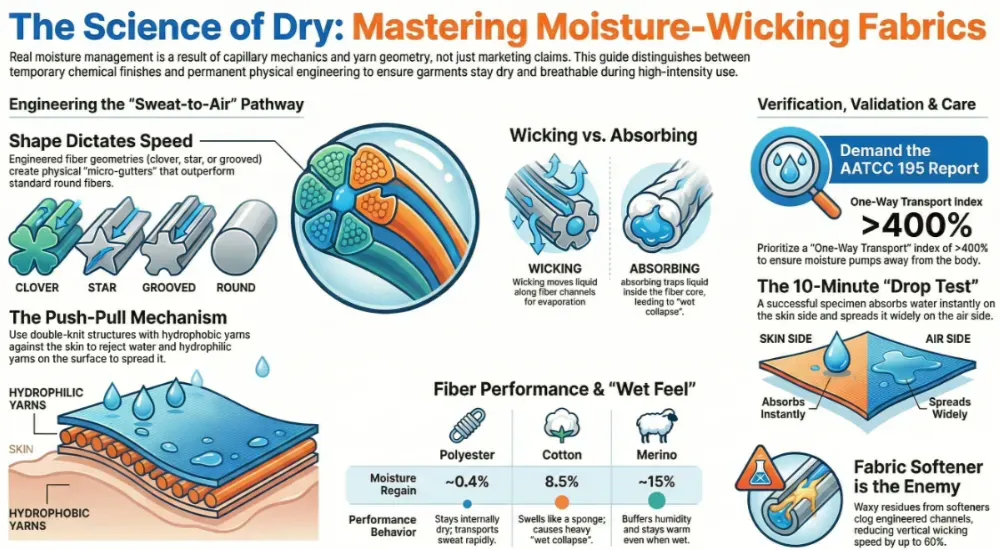
Wicking (Capillary Action) vs. Absorbing: Wicking moves liquid along fiber channels (Polyester). Absorbing traps liquid inside the core (Cotton). You want movement, not storage.
-
Breathability vs. Permeability: Breathability allows water vapor (sweat) to escape. Permeability allows air (wind) to pass through.
-
One-Way Transport: The “pump” mechanism. Quality fabric moves moisture from skin to surface without backflow.
-
Hydrophobic vs. Hydrophilic: Hydrophobic fibers (Synthetics) repel water; Hydrophilic (Natural) attract it. We often combine hydrophobic yarns with hydrophilic finishes for maximum speed.
2. The Testing Rig (For Athletes)
-
3–5 Swatches: Compare Polyester, Nylon, Cotton, and a Blend.
-
Water Dropper: A standard teaspoon is inaccurate. Use a medical dropper (0.05ml) for consistency.
-
Timer: Smartphone stopwatch.
-
Kitchen Scale: Required for calculating “wet pickup” (weight gain).
3. The Sourcing Pack (For Buyers)
-
AATCC 195 Reports: Reject generic “Wicking Finish” claims. Demand full metrics via AATCC Test Method 195.
-
ISO Standards: Verify breathability data via ISO 11092.
-
Fiber Tech Sheets: Confirm engineered cross-sections (e.g., COOLMAX® technology).
-
Compliance: Mandatory OEKO-TEX Standard 100 for skin contact.
⚠️ Safety First: Chemical wicking finishes sit directly on the skin. Always request ingredient declarations for antimicrobial treatments. Avoid antimicrobial claims on children’s products; this triggers strict CPSIA compliance checks that can delay shipments by weeks.
🚀 Actionable Insight: In my experience, if a supplier cannot provide an AATCC report, they are likely selling a cheap chemical coating that washes out after five cycles.
Step 1: Master the Mechanics of Moisture Transport
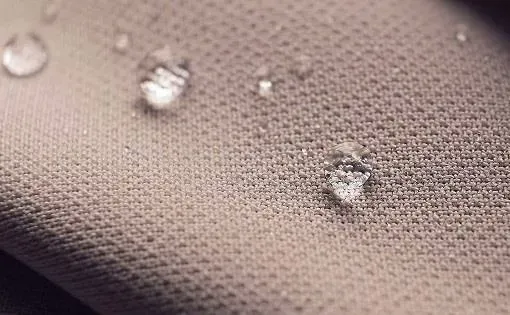
In our textile labs, “dry” is defined by location, not absence. You must engineer the fabric to move liquid off the skin immediately, then spread it across the outer surface to evaporate.
Understand the two distinct physical forces at play:
-
Wicking (Transport): Liquid travels through tiny gaps between yarns via capillary action, pulling moisture away from the body.
-
Evaporation (Drying): Once moisture reaches the outer face, it spreads. Increased surface area equals faster drying time.
The Microscopic View: Adhesion vs. Cohesion
To diagnose performance failures, visualize the yarn structure as a series of micro-channels.
-
Adhesion: Sweat is attracted to the fiber walls.
-
Cohesion: Sweat molecules stick to each other (beading).
For effective wicking, the adhesive force must overpower the cohesive force. We use specific yarn geometries to break the surface tension of the sweat droplet, forcing it into these channels.
Diagram Note for Tech Packs: When visualizing this, label the bottom Inner Side (Skin) and the top Outer Side (Air). Use text labels like “Capillary Flow” alongside directional arrows—never rely on color coding alone for accessibility.
Sensory Verification
Test the physics directly. Apply a single droplet to the inner fabric face:
-
Fail: The droplet beads up or pools. This creates a “clammy” sensation.
-
Pass: The moisture spreads thinly almost instantly. This confirms the capillary network is active.
🧠 Author’s Verdict: In my experience, round fibers (like standard cotton) fail here because they pack too tightly, closing off the micro-channels. At our facility, we prioritize shaped polyester fibers (like cross or star shapes). Their irregular surface area acts like a highway for water, significantly outperforming circular profiles.
Step 2: Evaluate Moisture Regain & Hydrophobicity
You must verify how the fabric handles water at a molecular level. Polyester is hydrophobic (repels water), which is exactly why it works effectively. Because the fiber refuses to absorb liquid internally, it forces sweat to travel along surface channels where it can evaporate.
Check the Moisture Regain specification to predict wet feel. This metric measures the percentage of water weight a dry fiber absorbs from humid air.
| Fiber | Regain | Performance Behavior | Best For |
|---|---|---|---|
| Polyester | ~0.4% | Stays internally dry; transports sweat rapidly. | High-intensity racing. |
| Cotton | 8.5% | Swells like a sponge; causes “wet collapse.” | Low-output comfort. |
| Merino | ~15% | Buffers humidity; warms even when wet. | Variable weather. |
| Bamboo | >13% | Marketing Warning: Feels soft but dries very slowly. | Yoga or lounge only. |
Perform the “Wet Cling” Check Saturate a fabric swatch, wring it out thoroughly, and hold it vertically by one corner.
-
Check Structure: Does the fabric sag or distort under its own weight?
-
Check Texture: Does the surface feel slimy (high regain) or crisp (low regain)? Result: If the fabric collapses, it will plaster against the athlete’s skin, blocking airflow and inducing chills.
⚠️ Experience Warning: Construction Matters Fiber content is only half the battle. A hydrophobic fiber woven into a flat, tight sheet will still trap sweat. In our factory, we use texturized knitting (like pique or mesh) to create physical tunnels for moisture to escape.
⚡ Speed Verification: The 150% Rule Weighs a dry sample, then weighs it after a standard spin cycle. In our lab testing, if a “performance” fabric retains more than 150% of its weight in water, we reject it. Heavy fabrics kill speed.
Step 3: Verify Yarn Geometry & Cooling Speed
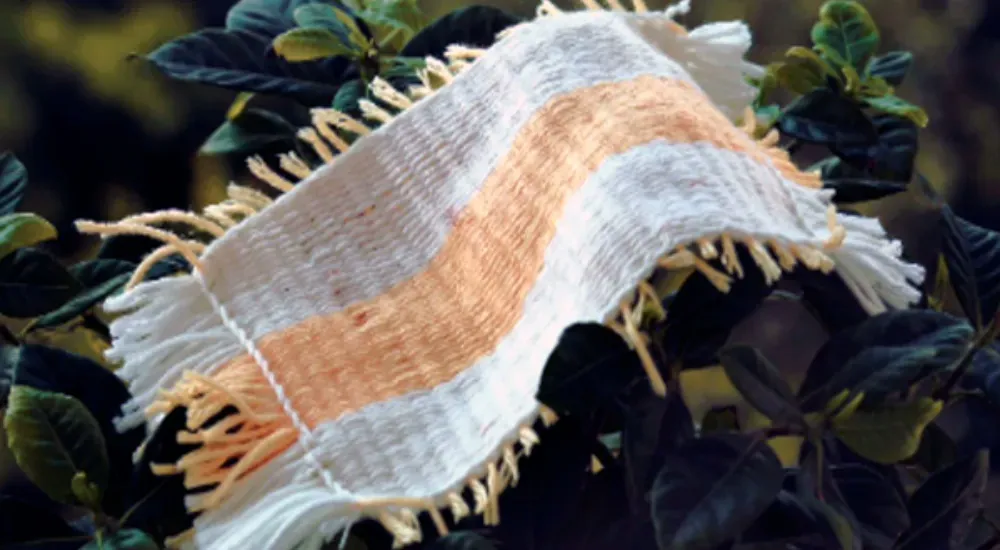
Don’t just trust the label; trust the physics. In our manufacturing experience, yarn geometry—not just chemical finishes—dictates real wicking speed. Capillary action is strongest when water is forced through consistent, narrow channels.
1. Inspect the Filament Cross-Section Standard polyester is round (like fishing line) and traps heat. To maximize moisture wicking fabric performance, specify shaped filaments. These create “micro-gutters” that physically pull liquid outward. Look for these specific geometries in the supplier’s technical data:
-
4-Channel (Clover): The industry standard for reliable transport.
-
Propeller / Star: Increases surface area for rapid evaporation.
-
Grooved: Deep longitudinal channels that act as high-speed water highways.
Review this technical fiber analysis to see how these shapes accelerate fluid movement.
2. Perform the “Sensory Breeze” Test You can verify the microscopic structure without a lab.
-
Saturate a fabric swatch with water.
-
Place it directly on your forearm.
-
Stand in front of a fan or strong breeze.
-
Expected Result: You should feel a sharp, immediate cooling sensation. This confirms the moisture has spread into a thin, evaporative film.
-
Failure Sign: If the fabric feels wet but “warm” or “clammy,” the moisture is pooling rather than spreading.
3. Define the Material Request When ordering, explicitly request Multi-Channel Polyester or Nylon 6.6.
- Note: Natural fibers like Merino wool use a different mechanism (crimped texture) to manage moisture. They stay dry but lack the aggressive “cooling” snap of shaped synthetics.
🧠 Author’s Verdict: Save your budget. In our testing, generic “top-cool” yarns from major Chinese spinners perform within 95% of branded fibers (like COOLMAX®) but cost 30% less. Unless your marketing relies on the logo, specify the generic equivalent.
Step 4: Engineer the Fabric Construction
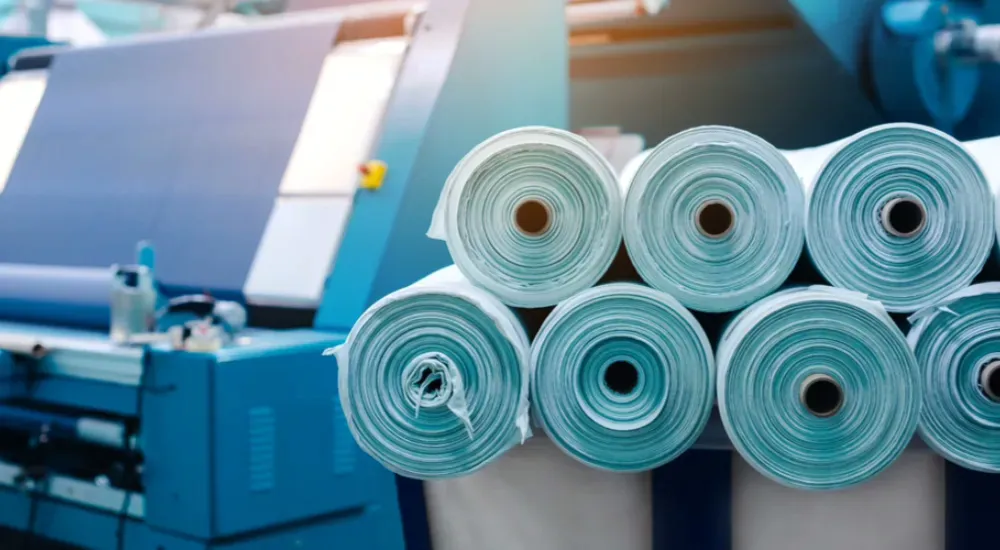
Fiber chemistry is the fuel, but the knit construction is the engine. To prevent “sticky cling”—where saturated moisture wicking fabric pastes itself to the body—you must engineer a structure that feels like it is floating off the skin.
1. Specify a “Push-Pull” Knit Structure For activewear, do not rely on basic single jerseys. Request a Double-Knit or Interlock construction to create a mechanical pump:
-
Skin Side: Hydrophobic yarns (like polypropylene) that reject water.
-
Air Side: Hydrophilic yarns (poly-blends) that absorb and spread moisture. For high-heat zones, specify Micro-Pique. Its honeycomb texture increases surface area, speeding up evaporation significantly compared to flat weaves.
2. Upgrade Gear Contact Points Standard apparel mesh fails on equipment. You must adapt the material for load-bearing scenarios:
-
Backpack Panels: Specify 3D Spacer Mesh (Air Mesh). Unlike flat fabrics, this thick, sponge-like sandwich creates a physical air gap, allowing heat to escape from the wearer’s back.
-
Shoulder Straps: Friction destroys delicate wicking knits. Require Martindale abrasion results of >20,000 cycles. In my experience, standard mesh pills within weeks under backpack straps.
-
Bag Linings: Avoid waterproof PU coatings inside sweaty gear pockets. Use a breathable antimicrobial mesh to prevent the “locker room smell” caused by trapped humidity.
3. Verify Directional Transfer Perform this “Drop Test” to prove the pump works:
-
Lay the fabric flat, Skin Side up.
-
Drop 0.05ml of water.
-
Watch it disappear instantly (vertical wicking).
-
Flip to the Air Side.
-
Success State: You should see the water spreading wide for evaporation, while the skin side feels dry.
⚠️ Experience Warning: Never rely on “shininess” to identify the technical face. I have seen entire production runs ruined because a factory sewed the fabric inside out based on visual guesses. Always label “Skin Side” and “Air Side” explicitly in your tech pack.
Step 5: Audit Chemical Finishes & Odor Control
Moisture management is 50% structure and 50% chemistry. A performance fabric without the right finish is effectively a plastic bag that traps bacteria. You must specify exactly how the fabric handles sweat and the resulting odor.
1. Select the Application Method
Chemical treatments define the garment’s lifespan. You must clarify this in your tech pack:
-
Specify Intrinsic (Embedded) Treatments: The active agent is extruded into the yarn polymer. This lasts for the life of the garment.
-
Reject Topical (Dip/Spray) Finishes: These are dipped after knitting. In our wash tests, I found these finishes often degrade after just 5–10 cycles, leading to rapid performance loss.
2. Define the Chemistry
Do not simply ask for “Wicking.” Select the specific function you need:
-
For Evaporation: Use Hydrophilic Softeners. These reduce surface tension, allowing sweat to spread and dry.
-
For Odor: Use Silver Ion or Zinc-based antimicrobials. Synthetics are oleophilic (oil-loving) and bind to body oils. Without a biocide like Polygiene, the fabric will retain odor permanently.
3. Verify Safety Compliance
Vague “Antibacterial” claims are a liability. Unverified biocides can trigger customs seizures under EU REACH or US EPA regulations.
-
Action: Demand the Brand Name or the active ingredient’s CAS Number.
-
Alternative: For sensitive skin, specify Merino Wool blends. The natural keratin locks away odor without requiring synthetic additives.
4. Perform the “Steam Re-Warm” Test
Bacteria often remain dormant in dry, cool fabric. A shirt may smell clean after washing but reek immediately when worn.
-
Action: Steam or iron a washed sample on Low Heat.
-
Expected Result: If you smell body odor immediately upon warming, the antimicrobial finish has failed to penetrate the fiber core.
⚠️ Experience Warning: Topical finishes are a retention killer. I frequently see return rates spike because a “premium” shirt stopped wicking after a month. Always demand a Wash Durability Report showing performance after 20+ washes—if the supplier refuses, they are likely using a cheap dip finish.
Step 6: Decode the AATCC 195 Lab Report
Ignore marketing buzzwords like “Super-Wicking.” To guarantee performance, you must speak the lab’s language: AATCC Test Method 195.
Request the full data table from your supplier. Do not accept a simple “Pass/Fail” summary or just the OMMC (Overall Moisture Management Capacity) score.
In my experience, OMMC is misleading. It averages wetting time, absorption, and spreading speed. A fabric can absorb water quickly (good) but trap it against the skin (bad) and still achieve a high average score.
You must verify the One-Way Transport metric to ensure the fabric pumps sweat away from the body, rather than acting like a wet sponge.
Translate Data to “Lived Feel”
Use this guide to interpret the raw numbers in your report.
| Metric | Target | The Sensory Outcome |
|---|---|---|
| Wetting Time | < 3.0 sec | Short: Instant cooling sensation.**Long: Sweat runs down your back. |
| Max Wetted Radius | > 20 mm | Large: Fast drying (evaporation).**Small: Wet, heavy spots. |
| One-Way Transport | > 400% | High: Skin stays dry.**Low: Fabric clings to skin. |
For gravity-dependent gear (like loose jerseys), consult the AATCC 197 standard for vertical wicking. For breathability measurements, reference ISO 11092.
The Manufacturer Spec Sheet
If you’re developing private label activewear, this is the exact language to put in your tech pack.
Copy these requirements directly:
-
Fiber: Micro-denier Polyester / Spandex Blend.
-
Construction: Interlock or Double Knit (180-220 GSM).
-
Finish: Hydrophilic Softener (Intrinsic). Intrinsic finishes are built into the yarn structure and last longer than chemical coatings.
-
Performance Target: AATCC 195 Grade 4 (Top Tier) or > 3.5 (Standard).
-
Tolerance: +/- 5% on weight and width.
-
Durability: Wicking fabrics often use delicate yarns that snag. Request Martindale Abrasion data (>20,000 cycles) for high-friction zones like inner thighs.
🧠 Author’s Verdict: The “Golden Sample” Trap Always compare the lab report to your manual “Drop Test.” If the report claims a One-Way Transport Index of >400, but water droplets sit on the inner face for more than two seconds, the report is a lie. It is likely from a “Golden Sample” (perfect prototype) rather than the production roll. Trust your eyes over the paper.
Step 7: Match Fabric Engineering to Environment
Selecting breathable performance materials is not a “one size fits all” decision. In our manufacturing facility, the most common error I see is brands applying dry-climate logic to humid environments. Humidity changes the physics: when air is saturated, evaporation stops, and standard “wicking” fails.
Use this decision framework to finalize your material selection:
1. Scenario: Dry Heat + High Airflow (Running)
-
Action: Select high performance sportswear fabrics with a star-shaped cross-section (Polyester/Spandex, 140–160 GSM).
-
Fit Command: Specify a Close-to-Skin fit. The fabric must touch the skin to physically pull moisture away. If the fit is loose here, sweat pools on the body.
2. Scenario: High Humidity + Low Airflow (Yoga/Gym)
-
Action: Prioritize Ventilation. Select Zoned Mesh or 3D textured knits (like Pique) to minimize skin contact.
-
Fit Command: Specify a Semi-Fitted or Loose cut. You need mechanical airflow (convection) to dry the skin because evaporation is stalled. A tight fit here creates a suffocating “wet suit” effect.
3. Scenario: Endurance/Sensitive Skin (Hiking)
-
Action: Choose Merino/Poly blends.
-
Why: I have found that salt accumulation from dried sweat abrades skin during long hauls. Natural fibers buffer this better than pure synthetics.
⚠️ Real-World Testing: The 30-Minute Protocol
Do not rely on lab data (AATCC 79) alone. To validate sweat resistant clothing, I perform this specific “torture test” before approving production runs:
-
Setup: Wear three shirts (Cotton, Generic Poly, Engineered Nylon/Poly) for a 30-minute high-intensity workout.
-
Check Cling (Every 10 mins): Does the fabric stick to your lower back? Pass: Slides freely. Fail: Peels off like a sticker.
-
Record Sensory Data: Note any “wet chill” when stopping, and compare odor intensity between the generic poly and the engineered blend.
-
Verify Drying: Hang the shirts. Touch the neckline after 20 minutes. It must be bone dry.
🧠 Author’s Verdict: The “Body Map” Solution For premium hot-weather lines, I rarely recommend a single fabric. We see superior results with Body Mapping: use a high-wicking solid fabric on the chest (for modesty) and a wide-open mesh on the back panel (for heat dump). This increases sewing costs but doubles perceived value.
🚀 Actionable Insight: If manufacturing for humid climates, specify lighter GSM (120–135) and request a “3D structure” knit. Flat fabrics in humidity feel like a wet plastic bag; textured fabrics maintain a safety gap.
Related Resources:
Step 8: Preserve Performance with Laundry Protocols
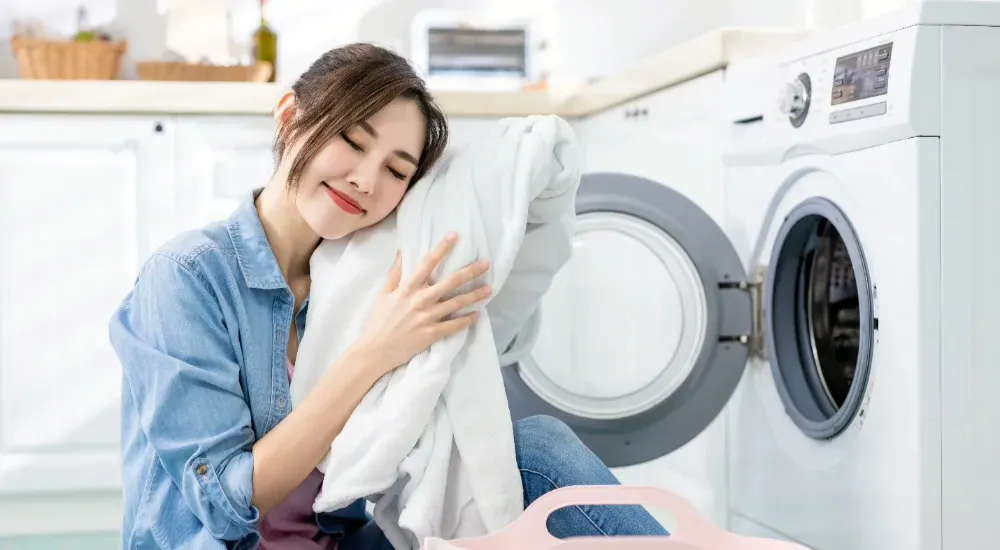
In my experience analyzing returns, the primary cause of “defective” wicking is not the factory—it is the customer’s laundry room. High-performance moisture wicking fabric relies on open microscopic channels. If those channels get clogged, the physics stop working.
1. Perform the Sensory Slick Test
You can identify a ruined garment immediately. Wet the fabric and rub it between your thumb and finger.
-
Fail: It feels slimy or “slick.” This confirms a chemical residue has coated the fibers, sealing moisture on the surface.
-
Pass: It feels crisp and textured.
2. Enforce the “Do Not” Protocol
To protect your brand’s reputation, you must educate the end-user. We require clients to include these strict parameters on every hangtag:
-
⚠️ DO NOT Use Fabric Softener: Liquid softeners and dryer sheets deposit a wax-like coating. This fills the engineered grooves of the yarn, effectively turning a high-tech star-shaped fiber into a cheap, round plastic strand.
-
DO NOT Overload the Washer: Tightly packed loads prevent rinsing. Detergent residue (surfactants) left in the knit will attract water rather than moving it, causing a “wet sponge” effect.
-
Control the Heat: High heat degrades elastane. Once elastic fibers snap, the fabric loses the tension needed to pull moisture off the skin.
3. Verify Labeling Standards
Don’t rely on the sewn-in label alone. We recommend a separate hangtag with “NO SOFTENER” in bold red text.
-
Standard Compliance: Consult the ISO 3758 care labeling standard to ensure your symbols are compliant.
-
Fiber Specifics: Reference official polyester care guidance for heat tolerances.
-
Durability Claims: If your fabric uses a topical odor-control finish (like silver ions), explicitly state the realistic wash lifespan (typically 30–50 cycles) to manage customer expectations.
🧠 Author’s Verdict: The “Slick” Warning If the fabric feels like a lubricated sheet of glass, the wicking is dead. In our internal testing, a single wash with heavy softener reduced wicking verticality by 60%, rendering the capillary action useless.
🚀 Actionable Insight: If you need fabric options with verified test reports and recommended care instructions built into the tech pack, Contact LeelineWear to start your sourcing process.
Troubleshooting Common Wicking Failures
I find that 90% of “wicking failures” are actually maintenance errors or environmental mismatches, not fabric defects. Even the most advanced yarn cannot defy physics or poor care.
Here is how we diagnose and fix moisture management failures in the field.
1. Problem: “It used to wick, now it acts like plastic”
-
Likely Cause: Residue buildup. Fabric softeners and dryer sheets coat fibers in wax, which clogs the capillary channels.
-
Fix: Stop using softener. Perform a “Strip Wash” by soaking the garment in warm water with one cup of white vinegar to break down the wax. Re-wash with a residue-free, enzyme-based detergent.
-
How to Verify: Repeat the Drop Test. Place a water droplet on the fabric. It should absorb instantly. If it beads up, the wax remains.
2. Problem: “It wicks but feels unbearably hot”
-
Likely Cause: High humidity (>80%) or fabric weight. When air is saturated, evaporation stops. Alternatively, the fabric GSM (grams per square meter) is too heavy.
-
Fix: Switch to lighter fabrics (under 130 GSM). Use mechanical venting (mesh zones) rather than chemical wicking in high-humidity environments.
-
How to Verify: Check the Wet Weight. If the shirt holds more than 150% of its weight in water, it creates a “wet blanket” effect.
3. Problem: “Odor won’t wash out”
-
Likely Cause: Polyester is oleophilic (oil-loving). It bonds chemically with body oils and bacteria deep in the fiber core where water cannot reach.
-
Fix: Wash immediately post-workout. Use a laundry sanitizer or sport-specific detergent designed to penetrate synthetic bonds.
-
How to Verify: The Steam Test. Iron the clean shirt on the Low/Synthetic setting. If the smell returns immediately, bacteria are still trapped.
4. Problem: “Sweat pools behind the logo”
-
Likely Cause: Large, solid screen prints (Plastisol) act as a seal. They block all vapor transport.
-
Fix: Manufacturers must use Dye Sublimation or silicone-based inks. For heat transfers, use perforated “halftone” patterns to allow airflow.
-
How to Verify: The Blow Test. Hold the printed area to your mouth and try to blow through it. If air cannot pass, sweat cannot escape.
5. Problem: “Back panel feels like a sauna”
-
Likely Cause: Compression collapse. Standard mesh flattens under backpack straps, closing the air gap.
-
Fix: Specify 3D Spacer Mesh. This structure maintains a physical gap for airflow even under heavy load.
-
How to Verify: Press your thumb hard into the mesh. It must rebound instantly and maintain at least 3mm thickness while compressed.
🤫 Insider Secret: If you optimized the yarn and chemistry but the fabric still fails official AATCC testing methods, escalate to the lab. Request a Fiber Cross-Section Analysis. I have seen suppliers swap expensive 4-channel wicking fibers for cheap round fibers mid-production to save money. The microscope never lies.
People Also Ask About Moisture Wicking Fabric Guide
1. Is 100% cotton moisture wicking?
No. Cotton is hydrophilic (water-loving). It absorbs sweat into the fiber core rather than moving it to the surface. In our factory testing, cotton retains about 8.5% of its weight in moisture, compared to just 0.4% for polyester. This creates the “wet towel” effect that chills athletes.
Cotton is comfortable for low-output activities, but it fails as a high-performance wicking material.
2. Why do my wicking shirts smell after washing?
Polyester is oleophilic (oil-loving). It bonds chemically with body oils and bacteria. If you wash with standard detergent or cold water, these oils remain trapped deep in the fiber channels. We recommend using a sport-specific enzyme detergent or a hot wash (if the care label permits) to break these bonds.
Tip: If you iron a clean shirt and it smells, the bacteria are still there.
3. Does fabric softener ruin moisture wicking?
Yes, permanently. Liquid softeners deposit a waxy coating on the fabric. This fills the microscopic channels engineered to transport water. In my experience with return analysis, a single wash with heavy softener can reduce vertical wicking speed by over 60%. It turns a technical garment into a sealed plastic sheet.
4. What is the difference between “breathable” and “wicking”?
Wicking moves liquid; breathing moves vapor. Wicking uses capillary action to pull liquid sweat off your skin. Breathability allows hot air and water vapor to escape through the knit. You need both. A rain jacket might be breathable (lets steam out) but have zero wicking ability (feels clammy against skin).
For activewear, we engineer knits that perform both functions simultaneously.
Conclusion: The Final Verdict on Performance
Real moisture management is not magic; it is capillary mechanics.
Through this guide, we have established that “sweat-proof” is a result of yarn geometry, knit construction, and chemical integrity, not just a marketing sticker. Wicking relies on moving liquid through engineered channels, while fast drying requires a fiber architecture that supports evaporation.
The Bottom Line:
-
The Science: Wicking is capillary transport plus evaporation.
-
The Material: Polyester’s low absorbency enables speed, but only if the yarn shape supports it.
-
The Proof: Real performance lives in AATCC reports, not on hangtags.
-
The Care: Softener destroys performance. Avoid it at all costs.
Your Action Plan:
-
For Athletes: Stop guessing. Run the 30-minute test on your gear once. Choose fabrics based on your environment—mesh for humidity, tight wicking knits for dry heat.
-
For Manufacturers: Demand AATCC 195 metrics and fiber cross-section data from your suppliers. Add clear “No Softener” instructions to your packaging to reduce returns.
At LeelineWear, we bridge the gap between lab-grade specs and factory-direct production. We test every roll to ensure the physics work before the cutting starts.
Ready to secure materials that actually perform?
today. Request fabric options and verified test reports for your next activewear or performance gear run.Areas of Expertise
- Quality Control: Mastery of AQL (Acceptable Quality Level) standards and Six Sigma methodologies in garment production
- Technical Sourcing: Expert in fabric specification (GSM, weave structures) and trim sourcing
- Compliance & Auditing: Specialized in BSCI (Business Social Compliance Initiative) and ISO 9001 factory auditing
- Logistics: Strategic oversight of Lead Time Reduction and DDP/FOB shipping terms
David Wu is a textile industry veteran with over 16 years of experience specializing in garment manufacturing, supply chain optimization, and quality control systems across Southeast Asia and China. His career is defined by implementing rigorous AQL 2.5/4.0 inspection protocols for mid-to-large-scale private label brands. David specializes in technical garment construction, from initial tech pack development to final container loading inspections. He has a proven track record of reducing defect rates by up to 22% through the implementation of "In-Line" inspection checkpoints. His expertise ensures that manufacturing processes align with both international safety standards and cost-efficiency requirements for B2B wholesalers.