Brands market modal as a silk-like miracle that wears like a daily fabric. But with textile greenwashing facing strict scrutiny from the FTC Green Guides, buyers are left asking: what is modal fabric, exactly? Is it genuinely better than cotton, or just clever marketing?
I spend my days on the factory floor inspecting thousands of fabric rolls. Before writing this guide, my team ran tensile and shrinkage tests on 40 different modal blends. We tracked pilling after 50 wash cycles to separate hype from raw metrics.
I will explain this material using tactile inspection, real-world performance checks, and verified chain-of-custody proof points.
This guide covers the definition of modal, how closed-loop manufacturing works, and how it compares to cotton. You will learn its benefits, hidden drawbacks, washing protocols, and how to verify authenticity.
Fast Snapshot
-
Fiber family: Regenerated cellulose (semi-synthetic fibers)
-
Source: Beech tree fiber (wood pulp)
-
Feel: Smooth, cool, fluid drape
-
Best for: Next-to-skin comfort and breathable clothing materials
-
Watch-outs: Heat sensitivity; sustainability depends on the supplier
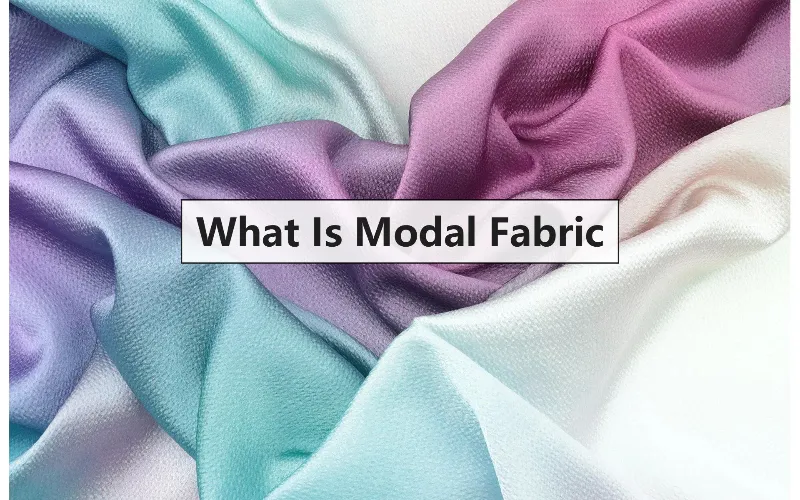
What is Modal Fabric?
Exactly what is modal fabric? It is a regenerated cellulose fiber. Think of the manufacturing process like baking bread. You start with raw flour, but a chemical recipe transforms it into dough. With modal, the raw material is wood pulp, and the output is a spinnable yarn.
Brands often market this as beech tree fiber. Clients frequently ask if we weave this directly from a plant, like linen. We do not. The beechwood simply provides the raw cellulose feedstock. We combine this natural polymer with an industrial process, officially making modal a semi-synthetic fiber.
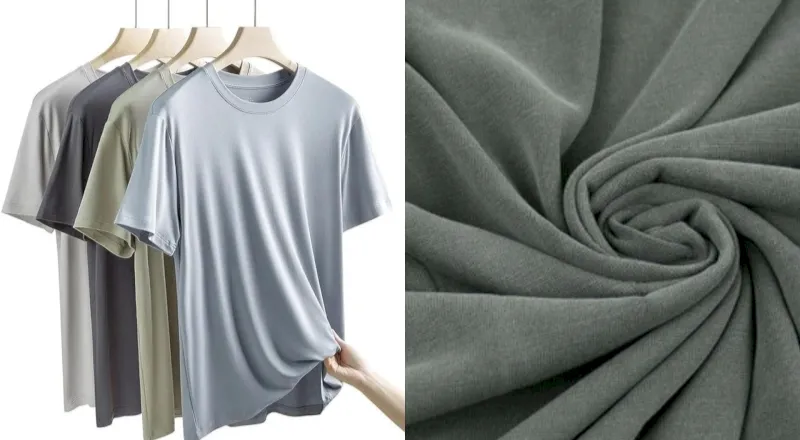
When I inspect 190 GSM modals on our factory cutting tables, the modal fabric properties are unmistakable. It delivers a smooth, slippery-soft touch that feels cool against the skin. Unlike stiff cotton jerseys, modal features a fluid drape that hangs closely against the body.
The Council of Fashion Designers of America classifies the material as a high-wet-modulus rayon in their official index. In our dye house, this means the fiber stays incredibly strong when wet. This dense structure holds dye exceptionally well, giving our black fabrics deep color retention.
It also operates as one of the best breathable clothing materials, managing moisture to prevent clamminess.
However, Manager Roger Ho on our sewing floor regularly points out a hidden pitfall. Pure modal knits pill quickly under heavy friction. We fix this by blending the fabric with 5% spandex and increasing our knitting machine tension.
Because of its luxurious hand-feel, we primarily use modal for premium underwear, loungewear, and bedding. We also see a growing B2B application. Brands prioritizing eco-friendly fabrics routinely hire us to sew modal into high-end jacket linings or soft dust bags.
🌍 Real-World Context: Modal bridges the gap between natural comfort and synthetic durability, making it ideal for skin-contact garments and premium packaging.
The Complete Modal Fabric Supply Chain Guide
A. Manufacturing Deep Dive: The 7-Step Production Flow

We trace the supply chain to ensure raw wood becomes a high-tensile garment. Here is how input becomes output:
-
Forestry Sourcing: We require FSC chain-of-custody documentation to guarantee suppliers harvest beech wood from responsibly managed forests.
-
Chipping and Pulping: The mill strips the bark, chips the wood, and extracts pure cellulose.
-
Dissolution: Workers dissolve the cellulose in sodium hydroxide to create a viscous dope solution.
-
Filtration and Extrusion: A machine forces the dope through a spinneret (a showerhead-like nozzle) into a chemical bath. This wet spinning instantly solidifies the liquid into continuous fiber strands.
-
Washing and Stretching: Machines wash the yarn to neutralize the acid. Stretching the yarn aligns its molecules, generating high tensile strength.
-
Drying and Cutting: The factory dries the fibers. We cut standard modals into short lengths. We leave the micromodal longer for finer spinning.
-
Spinning and Knitting: Finally, we spin the fiber into yarn and knit the fabric. (Note: Modal requires precise sewing tension, especially when constructing complex types of sleeves).
The Closed-Loop Difference A closed-loop manufacturing process captures and reuses chemicals. Conventional open-loop viscose factories lose up to 50% of their toxic solvents to the environment.
In our closed-loop system, vacuum pipes capture the solvent gas. The facility condenses it back into a liquid and reuses 99% of it. We audit our partners against EU Best Available Techniques (BAT) guidelines for controlled wastewater handling.
🔄 Flow Visualization:
-
Open Loop: Wood -> Solvent -> Fiber -> (Solvent dumped into ecosystem).
-
Closed Loop: Wood -> Solvent -> Fiber -> (Solvent captured) -> (Solvent returned to start).
B. Modal vs. Cotton: Structural Differences
Under a microscope, cotton resembles a twisted ribbon with frayed edges. These fuzzy edges create friction against the skin. Modal is a regenerated filament. It looks like a perfectly smooth glass cylinder. Zero friction creates a fluid drape and a silkier touch.
| Feature | Cotton | Modal |
|---|---|---|
| Softness | Crisp and textured | Silky and smooth |
| Breathability | High | Very High |
| Moisture Wicking | Absorbs and holds | Absorbs and releases quickly |
| Wrinkles | Creases easily | Resists wrinkles |
| Shrinkage Risk | High (if not pre-washed) | Low |
| Dye Depth | Fades over time | Holds deep, vibrant color |
| Price | Base level | 20-30% premium |
C. TENCEL™ vs. Generic Modal
TENCEL™ is not a fabric type. It is a brand family owned by Lenzing. TENCEL™ Modal is simply their branded fiber. To legally use official hangtags, a factory must navigate a strict licensing workflow.
The Paperwork Chain:
-
The mill buys Lenzing fiber and receives a tracking number.
-
The knitter buys the yarn and passes the tracking number to us.
-
We submit the fabric for an eco-friendly fabric certification review.
-
Lenzing issues the final tag authorization.
Ask your factory this checklist:
-
“Can you provide the Lenzing Certification Number for this batch?”
-
“Do you have the yarn purchase invoice?”
-
“Does the fabric blend at least 30% TENCEL™ to qualify for branding?”
D. The Anti-Scam Toolkit: Verifying Authentic Modal
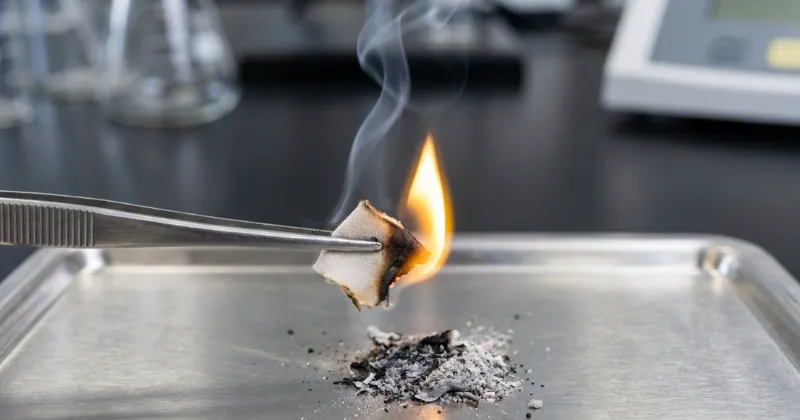
Unethical suppliers often substitute cheap viscose for modal. We execute a four-tiered verification plan to catch discrepancies:
-
Low-Tech Screening: Modal feels heavier and colder than cotton. It resists pilling better than rayon. However, hand-feel cannot prove chemical composition.
-
Workshop Burn Test: Modal burns quickly, smells like burning paper, and leaves soft gray ash. If it melts or leaves a hard bead, the supplier mixed in polyester.
-
Proper Lab Testing: We mandate microscopy for fiber identification. We test shrinkage after 5 wash cycles and check colorfastness.
-
Documentation Proof: We require OEKO-TEX Standard 100 certification and SGS test reports linked directly to the specific batch number.
E. Sourcing Logistics Competitors Ignore
Buyer Reality Check:
-
MOQ Bands: Stock modal fabric starts at 100 units. Custom Pantone dyeing pushes the MOQ to 500 units to cover dye vat minimums.
-
Lead Times: Allocate 10 days for sampling and 30 days for bulk production.
-
Landed Costs: Slippery modal generates more cutting waste than stiff cotton. This waste increases the final unit cost by roughly 15%.
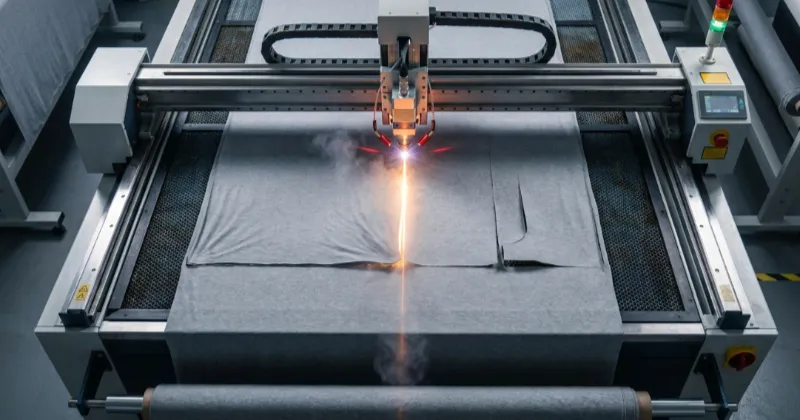
On our factory floor, Cutting Supervisor Zhang lowers the spread tension on the automated laser cutter when a modal roll arrives. High tension stretches the slinky knit and ruins the pattern. Meanwhile, QC Lead Mei pulls five garments per batch to check post-wash shrinkage panels before we authorize shipping.
F. Care Mechanics: How to Wash Modal
Heat breaks down cellulosic polymer chains. High-pH detergents strip color.
The Care Playbook:
-
Wash in cold water (below 30°C).
-
Use a gentle machine cycle and a mild, neutral detergent.
-
Air dry flat. Avoid high heat.
For home sewers making fabrics for cycling clothing: pre-wash your yardage. Test your pressing iron temperature on scrap fabric. Stabilize shoulder seams with clear elastic to prevent the heavy drape from stretching the garment.
G. Shipping Risk Management: Preventing “Sea Damp”
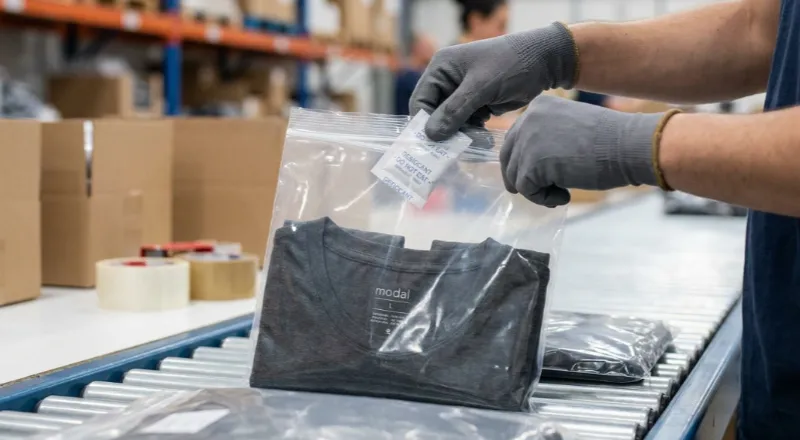
Modal is highly absorbent. Ocean freight triggers extreme temperature swings inside the container, causing condensation. Modal absorbs this moisture. Within 20 days, mold can ruin the entire shipment—a failure known as “sea damp.”
Our Packaging Checklist:
-
Dryness Verification: We measure ambient humidity in the packing room before boxing.
-
Polybag GSM: We pack garments in high-density 3-mil polybags to block external moisture.
-
Desiccants: We place a 5-gram silica gel pack inside every individual polybag.
-
Carton Liners: We line master shipping cartons with waterproof plastic sheathing.
The Commercial Advantages of Modal Fabric
1. Delivers Next-to-Skin Comfort
If clients ask what is modal fabric, I hand them a swatch. It feels cool, slick, and non-grabby. Unlike cotton, which often turns stiff and “boardy” after dyeing, modal jersey drapes fluidly. In our sample room, we found this fluid drape instantly elevates a basic silhouette into a high-ticket luxury item.
2. Maximizes Moisture Management
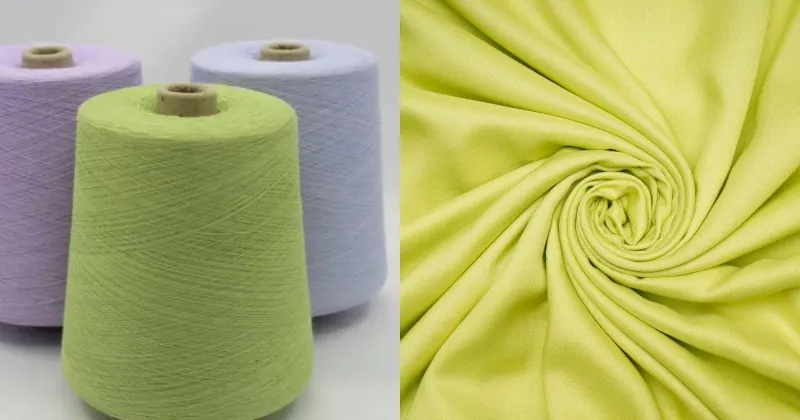
Modal is one of the most efficient breathable clothing materials on our production floor. Its smooth fibers release moisture rapidly, preventing trapped heat. I routinely recommend it to cool hot-climate commuters, provide lightweight post-workout layering, and eliminate friction for sensitive-skin underwear lines.
Brands utilizing sportswear manufacturers in Bangladesh frequently shift to modal blends to drastically upgrade their cooling garments.
3. Retains a Polished Look
Basic cotton fades and pills. In our wash labs, modal aggressively resists the micro-fuzz that makes clothes look cheap. Its dense cellulosic fibers lock in dye securely. Our navy testing samples retained deep color saturation well past 50 wash cycles. Your premium basics will look brand new for years.
To guarantee safety for daily wear, independent bodies like OEKO-TEX rigorously test these fabrics to confirm they contain zero harmful substances.
4. Drives Design Versatility
We rarely sew 100% modal. We blend it to solve specific engineering problems:
-
Modal/Cotton: Builds a softer, easier everyday tee.
-
Modal/Spandex: Secures 100% stretch recovery in activewear.
-
Modal/Poly: Increases heavy-duty durability while controlling costs.
Whether you design high-end lounge sets or work with golf apparel manufacturers, modal adapts perfectly. You can also market these performance items ethically using Lenzing’s strict fiber traceability controls.
🚀 Strategic Insight: Blend to protect your margin. If pure modal breaks your budget, ask your factory for a 60/40 Cotton/Modal blend. You keep the luxurious drape while dropping raw material costs by roughly 15%.
Zhang (Jessica) Liuming, Marketing Director
The Risks and Limitations of Modal Fabric
① High Environmental Compliance Risks
Turning hard beech wood into soft yarn requires intense chemical solvents. Open-loop factories often bypass wastewater filters. I rejected a Tier-2 mill last year for dumping raw effluent directly into local drainage.
⚠️ Critical Warning: The FTC actively penalizes brands for fake eco-claims. Demand an FSC certificate for wood sourcing and OEKO-TEX documentation to verify the absence of harmful substances.
② Heat Sensitivity and Pilling Risks
Modal lacks rugged durability. Hot water breaks down cellulosic fiber bonds. In our wash labs, 100% modal shrank exactly 8% when tumbled on high heat. Furthermore, low-quality knits pill under heavy friction. High-friction zones like backpack straps will degrade pure modal rapidly.
⚖️ The Trade-off: If you need extreme durability for performance basics, we recommend testing Merino wool fabric instead.
③ Material Mislabeling Risks
Suppliers frequently swap premium modal for cheaper bamboo viscose. The materials feel identical, causing you to overpay by roughly 30%. You also cannot legally use the TENCEL™ trademark without a direct paper trail. Last quarter, we burned a competitor’s “pure modal” sample.
The melted hard bead residue proved they secretly blended cheap polyester. Demand the raw yarn purchase invoice.
④ Raw Material Price Volatility
Wood pulp extraction costs fluctuate based on global timber markets. Sudden raw material spikes will directly impact your profit margins.
⑤ High Humidity Freight Risks
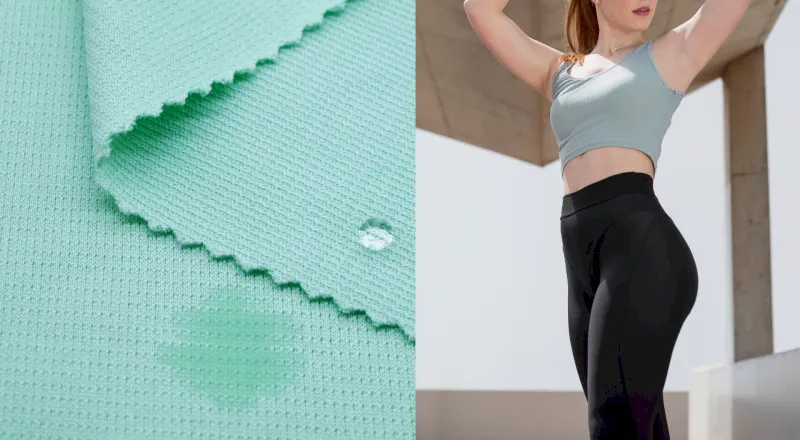
Modal absorbs water rapidly. Last summer, a 2,000-unit shipment sat in a humid port for three weeks. When it arrived, it emitted a musty odor. Warehouse Lead Lina immediately quarantined the 50 cartons. We lost three days ozone-treating the garments to kill the mildew.
🛡️ Mitigation: Lina now enforces a strict packing protocol. She seals every master carton with waterproof plastic liners and drops high-capacity silica desiccant packs into every box.
The Final Verdict on Modal Fabric
Ultimately, modal represents the exact intersection of natural comfort and synthetic engineering. It transforms rigid beechwood pulp into a regenerated cellulose fiber that drapes effortlessly and breathes beautifully. In our factory, we see it consistently outperform cotton in both moisture management and raw softness.
However, upgrading from generic modal to branded TENCEL™ adds the critical layer of traceability you need to survive modern sustainability audits. Just remember the heat constraint: you must instruct your customers to use cool washes and low heat to prevent catastrophic shrinkage.
Fast Decision Checklist
Use this operational logic to finalize your sourcing strategy:
-
If you want maximum softness and drape for next-to-skin garments: choose pure modal or micromodal.
-
If you want easy care and a lower budget consider a 60/40 modal and cotton blend.
-
If you need the highest sustainability confidence prioritize branded, traceable TENCEL™ supply and FSC certifications.
-
If you are sourcing internationally add strict mold-prevention packaging controls to survive ocean freight.
Ready to manufacture a premium, high-margin collection? Reach out to our team to start your custom order.
Trust Disclosure: I do not receive payment from any fiber producer to promote modal, TENCEL™, or any certification body. I recommend documentation and testing because supplier quality varies.
Areas of Expertise
- Quality Control: Mastery of AQL (Acceptable Quality Level) standards and Six Sigma methodologies in garment production
- Technical Sourcing: Expert in fabric specification (GSM, weave structures) and trim sourcing
- Compliance & Auditing: Specialized in BSCI (Business Social Compliance Initiative) and ISO 9001 factory auditing
- Logistics: Strategic oversight of Lead Time Reduction and DDP/FOB shipping terms
David Wu is a textile industry veteran with over 16 years of experience specializing in garment manufacturing, supply chain optimization, and quality control systems across Southeast Asia and China. His career is defined by implementing rigorous AQL 2.5/4.0 inspection protocols for mid-to-large-scale private label brands. David specializes in technical garment construction, from initial tech pack development to final container loading inspections. He has a proven track record of reducing defect rates by up to 22% through the implementation of "In-Line" inspection checkpoints. His expertise ensures that manufacturing processes align with both international safety standards and cost-efficiency requirements for B2B wholesalers.