I recently saw a client pay premiums for “organic” cotton, only to receive a fake, Photoshop-edited PDF.
Legitimate eco friendly fabric certifications provide third-party verification for material content and chemical safety. You are not buying a logo. You are buying verifiable proof backed by rigorous standards like GOTS.
This guide covers the specific paperwork you need to validate every sustainability claim.
Need a sanity check? Contact our team at LeelineWear to audit your documentation chain before you produce.
1. GOTS (Global Organic Textile Standard)
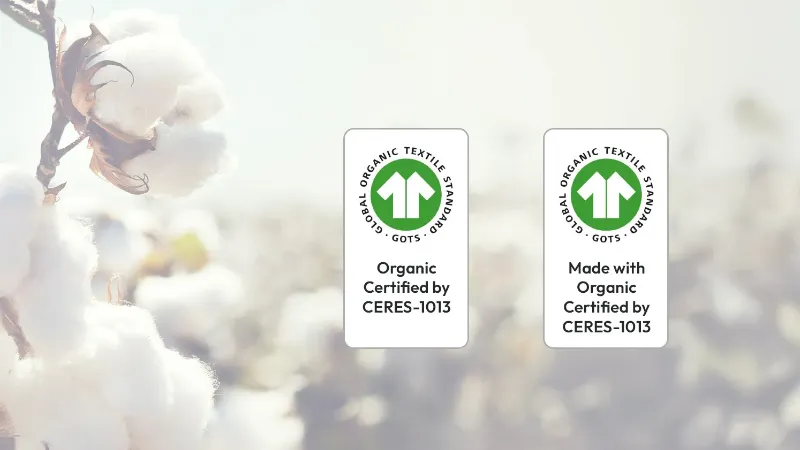
About eco friendly fabric certification, GOTS is the rigorous “field-to-fashion” standard. It verifies organic fiber content, bans toxic inputs like formaldehyde during dyeing, and mandates fair labor practices. Unlike simpler standards, it tracks the material through the entire supply chain.
Labeling Thresholds
You cannot just slap a logo on a shirt. To use the “Organic” label, the fabric must contain at least 95% certified organic fibers. The “Made with Organic” label allows a minimum of 70%. Always check the official PDF for exact logo sizing and placement rules.
The Paperwork Reality: SC vs. TC
A general factory certificate does not prove your specific order is organic. You must request two documents:
-
Scope Certificate (SC): This proves the facility has the machinery and permission to process organic goods.
-
Transaction Certificate (TC): This is vital. It acts as a receipt for your specific shipment. It links the certified fiber lot directly to your Purchase Order and Invoice.
What It Doesn’t Cover
GOTS focuses on the fiber. It does not certify non-textile trims like zippers, metal buckles, or plastic buttons. You will need separate documentation (usually OEKO-TEX) to ensure those components are safe.
Best for: Premium organic cotton t-shirts, baby apparel, bedding, and heavy canvas or twill products where the “organic” claim is the main selling point.
🛡️ LeelineWear’s Verdict In my experience, the Scope Certificate is just the entry ticket. We often see suppliers present an SC but refuse to provide a Transaction Certificate for the specific batch. This usually means they substituted conventional cotton during knitting. I never authorize the final balance payment until I see the draft TC linked to our invoice.
2. OEKO-TEX Standard 100 — Best for Non‑Toxic / Skin‑Contact Safety Claims
OEKO-TEX Standard 100 verifies product safety, not organic farming. It tests finished goods for harmful substances like formaldehyde, nickel, and azo dyes. This distinction is vital for activewear. When athletes sweat, their pores open and absorb chemicals from the fabric.
We treat this certification as a non-negotiable safety standard for any skin-contact product.
Where it fits: We build “Compliance Stacks” for our clients. We use GOTS to certify the raw cotton and OEKO-TEX to prove the dyes and softeners are safe. This covers the lifecycle from field to gym.
Classes & Thresholds: We select testing stringency based on Product Class. For leggings and sports bras, we require Class II (Direct Skin Contact). For baby products, we use Class I, which enforces stricter limits on saliva resistance. Always cross-reference your factory’s test results against the official Limit Values PDF.
Validation Protocol: Never accept a generic hangtag. Demand the Certificate Number and validate it via the Label Check tool. Do not use this label to claim a product is “chemical-free.” It simply means the chemicals used fall within safe, non-toxic limits.
🛡️ LeelineWear’s Verdict: Watch out for the “Trim Trap.” I often see factories use certified fabric but cut costs with cheap, lead-heavy zippers. This voids the garment’s safety. You must reject any certificate that only lists “fabrics” in the scope. Require the scope to explicitly read “finished articles” to ensure every component is tested.
3. Global Recycled Standard (GRS) — Best for Verified Recycled Collections
I see this issue constantly: brands buy “recycled” polyester, but without the right paperwork, it is chemically identical to virgin plastic. You cannot distinguish them in a lab. You need a strict chain of custody to prove it.
The Global Recycled Standard (GRS) is the gold standard. It tracks material from the recycler to your warehouse. Unlike simpler certifications, GRS also layers in social and chemical audits. It ensures the dyeing process didn’t use restricted toxins and that workers were treated fairly.
Paperwork You Must Demand
Most buyers make the mistake of accepting a generic “Scope Certificate” (SC). An SC only proves the factory is allowed to make recycled goods. To validate your order, you must demand a Transaction Certificate (TC). This document tracks the exact flow of goods for your specific PO number. No TC means no proof.
GRS vs. RCS: The Tradeoff
We often help clients choose between GRS and the Recycled Claim Standard (RCS):
-
RCS: Verifies recycled content only (5% minimum). Use this if you want a valid content claim without the cost of social/environmental audits.
-
GRS: Requires 20% recycled content (50% to use the consumer-facing logo). Use this for premium collections where you need to prove ethical production.
Best For: Recycled polyester teamwear, nylon outerwear, and eco-friendly bags.
🛡️ LeelineWear’s Verdict The biggest scam we encounter is certificate re-use. A factory buys 1,000 yards of GRS fabric, gets one certificate, then uses that same PDF to “verify” 10,000 yards for five different clients.
The Fix: Audit the Transaction Certificate. It must list your company name and the exact shipping weight. If the TC weight matches your PO weight, you are safe. If they send a generic PDF, reject the shipment.
4. Organic Content Standard (OCS)
Startups often hit a wall with GOTS. It requires 70% minimum organic content. If you produce performance wear with high synthetic blends, GOTS rejects you. The Organic Content Standard (OCS) is the pragmatic alternative.
What It Verifies
OCS is a chain-of-custody standard. It proves the organic fiber leaving the farm is the same fiber in your warehouse. It tracks content from 5% to 100%. Unlike GOTS, it does not audit chemical usage, water treatment, or social compliance.
-
OCS 100: Verifies 95–100% organic material.
-
OCS Blended: Verifies 5–94% organic material.
The Strategic Choice: OCS vs. GOTS
Use GOTS for premium, 100% cotton items to signal “purity.” Use OCS when you need functional blends.
If you make a hoodie with 60% organic cotton and 40% recycled polyester, GOTS is impossible. OCS Blended validates your organic claim without the strict processing restrictions.
Marketing Compliance
Precision prevents lawsuits. You cannot label OCS goods as “Organic Certified.” You must state the percentage: “Made with 60% Organically Grown Cotton.” Check the Textile Exchange Claims Policy for exact wording.
🛡️ LeelineWear’s Verdict I often see brands pay a 15-20% premium for GOTS-certified cotton, only to lose the logo because they added 8% spandex for stretch. This wastes your budget.
The Fix: For activewear, switch to OCS Blended. You get the verifiable “organic” marketing hook at a lower compliance cost. Always demand a Transaction Certificate (TC) for every shipment. Without a TC, that “organic” fabric is just expensive standard cotton.
5. bluesign® — The “Input Control” for Performance Wear
Most certifications test the final fabric for residue. bluesign® is different: it is an input stream management system. It audits the dye house’s chemical suppliers and manufacturing processes before production begins. Ideally, this prevents hazardous substances from entering the factory entirely.
Why It Matters for Technical Fabrics
Performance gear requires aggressive chemistry. To create a waterproof rain jacket or high-compression yoga legging, mills use complex chemical cocktails. bluesign® is the gold standard for verifying that these Durable Water Repellent (DWR) finishes and dyes are free from harmful PFAS and heavy metals.
It also strictly monitors the mill’s wastewater treatment to protect local water systems.
How Buyers Use It
You cannot send a finished sample to a lab to get this certification. Instead, you must vet the mill.
-
Ask: “Are you a bluesign® system partner?”
-
Verify: Check their certificate number in the bluesign® database.
-
Specify: Write “bluesign® approved fabric” clearly in your Tech Pack materials section.
🛡️ LeelineWear’s Verdict I often see new brands fall into a trademark trap. They buy certified fabric and assume they can use the bluesign® logo on their hangtags. You cannot.
To label a garment as a “bluesign® product,” every single component—zippers, buttons, and sewing threads—must be certified. Sourcing certified trims often comes with high MOQs that crush small brands.
🚀 Actionable Insight: Source bluesign® fabric to ensure your waterproofing chemistry is safe, but use OEKO-TEX for your consumer-facing marketing. It is easier to achieve and customers recognize the label.
6. Cradle to Cradle Certified® — Best for Product‑Level Circularity
Most eco friendly fabric certification only verify fiber content, like whether cotton is organic. Cradle to Cradle Certified® (C2C) is different. It is a multi-attribute framework that assesses the entire product lifecycle. It forces you to answer the hard question: Can this shirt be safely composted or disassembled for recycling?
The institute grades products—not just raw fabrics—from Bronze to Platinum across five critical categories:
-
Material Health: Ensures chemicals are safe for humans and the environment.
-
Product Circularity: Verifies materials can return to the earth or industry.
-
Clean Air & Climate: Prioritizes renewable energy in production.
-
Water & Soil Stewardship: Mandates responsible water treatment.
-
Social Fairness: Audits ethical labor standards.
Best For: Premium “Circular Design” collections and high-margin items like denim or home textiles. Brands use this to build a lifecycle narrative that goes beyond simple sourcing.
Operational Reality: The “Deep Transparency” Wall
This is the hardest standard to implement because it requires complete chemical transparency. Suppliers must disclose exact ingredient lists to an independent assessor. In our manufacturing experience, this creates friction; many dye houses refuse to share their formulas, fearing trade secret theft.
It works best when you have high leverage over a stable supply chain.
🛡️ LeelineWear’s Verdict: Beware the BOM Lock The biggest hurdle isn’t the chemistry; it’s the Bill of Materials (BOM) lock. Once you certify a C2C product, you cannot swap components without re-assessment.
We’ve seen brands lose their certification status because they switched zipper suppliers mid-production to save $0.05 per unit. Since the new zipper metal wasn’t assessed, the entire garment failed the Material Health check.
Our advice: Only attempt C2C if your supplier network is stable enough to stick to a fixed recipe for at least two years.
Behind the Label: How Audits Actually Work
A logo on a website proves nothing. Real certification requires rigorous, ongoing verification. In our experience managing supply chains, we distinguish between a “paper certificate” and actual compliance. You must understand what happens during an audit to know what you are buying.
Onsite Audits
inspectors physically visit the factory. They do not just sit in an office. They walk the production floor.
-
Facility Walkthrough: Inspectors check fire safety, machine guarding, and chemical storage. They ensure restricted substances are separated from certified inputs.
-
Social Compliance: Auditors interview workers privately. They check timecards against payroll records to verify fair wages and working hours.
-
Process Checks: They observe the production line. They verify that organic cotton is not mixed with conventional cotton during spinning or knitting.
Chemical Testing
This happens in a lab. There are two distinct types of control.
-
Input Control: This checks the chemicals before they enter production. Standards like the ZDHC MRSL (Manufacturing Restricted Substances List) manage this. It prevents toxins from entering the factory.
-
Finished Product Testing: This tests the final fabric. It ensures no harmful residues remain after dyeing and finishing. Our Experience: We once rejected a batch of “organic” hoodies. The cotton was organic, but the factory used a cheap, non-compliant dye. The input was good, but the output failed. You need verification for both.
Chain of Custody
This tracks the material’s journey. It moves from the farm to the ginner, then to the spinner, and finally to the garment factory. Every step leaves a paper trail.
-
Purchase Order (PO): You order 500kg of fabric.
-
Invoice: The supplier bills you for 500kg.
-
Shipment: The goods leave the factory.
-
Certificate: The certifier issues a document linking that specific 500kg shipment to the standard.
The Paperwork Stack You Must Request
Do not ask “Are you certified?” That question is too vague. Request this specific stack of documents before you pay a deposit.
1. Scope Certificate (SC)
This proves the factory has a license to produce certified goods.
-
Check the Supplier Name: It must match the entity you are paying.
-
Check the Product Category: If you are buying waterproof jackets, the SC must list “woven fabrics” or “outerwear,” not just “knitted socks.”
-
Check the Expiry Date: Ensure the certificate is valid for the duration of your production run.
2. Transaction Certificate (TC)
This is the most critical document. The Scope Certificate covers the factory. The Transaction Certificate covers your specific goods.
-
What it does: It proves that the 500 units you bought are certified.
-
When to ask: Request this upon shipment. Legitimate factories issue these as standard practice.
-
Warning: If a supplier refuses to provide a TC, they likely used uncertified material for your order.
3. Trim and Hardware Specs
Your fabric might be organic, but your zippers might contain lead.
-
Request: OEKO-TEX Standard 100 certificates for zippers, buttons, sewing threads, and printed labels.
-
Verify: Ensure the certificate number covers the specific material (e.g., “metal accessories” vs. “plastic buttons”).
How to Validate a Certificate

Forged documents are common. We frequently see suppliers Photoshop valid dates onto expired certificates. Follow this process to validate every document.
Step 1: Verify the Issuing Body
A certificate is only valid if it comes from an accredited body like Control Union, Intertek, or SGS.
-
Go to the Textile Exchange Public Database for GRS, GOTS, or OCS.
-
Use the OEKO-TEX Label Check for Standard 100 claims.
-
Type in the license number from the certificate.
For a sportswear-specific checklist that covers GRS 5.0, bluepass and SA8000:2026, see the sportswear certification audit.
Step 2: Match the Entity
The name on the database must match the name on your invoice exactly.
- Mismatch Alert: If the certificate lists “Factory A” but your invoice comes from “Trading Company B,” you have a broken chain of custody. Trading Company B needs its own Scope Certificate to sell certified goods.
Step 3: Tie Documents to the PO
Paperwork must match physical reality.
-
Look at your Transaction Certificate.
-
Find the Box referencing “Buyer’s PO Number” or “Invoice Number.”
-
Ensure it matches your commercial documents.
-
Check the weight. If you bought 500kg, the TC must cover 500kg.
Author’s Verdict: Greenwashing Red Flags
Marketing teams love buzzwords. Compliance officers hate them. Protect your brand from legal trouble by spotting these red flags.
Red Flag 1: Self-Made Seals A green leaf logo designed in Canva means nothing. Only use third-party trademarks like GOTS or GRS.
Red Flag 2: Vague Adjectives Avoid words like “Eco-friendly,” “Green,” and “Sustainable.” The FTC Green Guides in the US and EU regulations penalize vague claims. Be specific.
Red Flag 3: Missing Numbers “Made with recycled materials” is a weak claim. “Made with 40% recycled polyester” is a strong, verifiable claim. Always quantify your impact.
Need a Documentation Review?
Sourcing certified fabrics is complex. One missing document can ruin your compliance strategy and expose you to fines.
At LeelineWear, we act as your technical partner. We review the entire documentation chain. We check everything from the raw fiber Transaction Certificate to the final lab test before we cut a single piece of fabric.
for a sourcing consultation. Let us help you build a supply chain that is verified, safe, and ready for retail.People Also Ask About Eco Friendly Fabric Certification
1. GOTS vs. OEKO‑TEX — which one is ‘better’?
They are not competitors; they confirm different things. GOTS (Global Organic Textile Standard) certifies the origin and process. It proves the cotton grew without pesticides and that the factory pays fair wages. OEKO-TEX Standard 100 certifies safety. It proves the finished dyed fabric contains no harmful chemicals like formaldehyde.
In our manufacturing lines, we often stack these. We use GOTS to verify the organic fiber and OEKO-TEX to ensure the dyeing process is safe for skin contact. If you sell activewear, prioritizing OEKO-TEX is often smarter because sweat absorption makes chemical safety critical.
2. Can I claim ‘GOTS certified’ if my supplier shows a Scope Certificate only?
No. This is a common legal trap. A Scope Certificate (SC) only proves the factory can produce organic goods. It does not prove they did for your specific order.
To legally use the GOTS logo or claim “Certified Organic” on your hangtag, you must hold a Transaction Certificate (TC). This document links your specific invoice and shipping weight to the certified fiber lot. If your supplier refuses to provide a TC for your batch, you cannot legally claim certification.
3. GRS vs. RCS — which should a startup use?
Base this decision on your marketing claim and budget.
-
Use RCS (Recycled Claim Standard): If you simply want to verify recycled content (min. 5%) without paying for social audits. It is faster and cheaper for small runs.
-
Use GRS (Global Recycled Standard): If you need to prove ethical labor practices and chemical safety alongside recycled content.
Note: You need at least 50% recycled content to use the consumer-facing GRS logo. If your fabric blend drops below that (e.g., a 40% recycled poly / 60% cotton blend), stick to RCS to avoid compliance issues.
4. Do certifications cover zippers, buckles, threads, prints, and labels?
Rarely. A fabric certificate covers the fabric only. It does not automatically cover the trims. We frequently see garments fail safety tests because a factory used certified organic cotton but added a cheap, lead-heavy zipper to cut costs.
You must request accessory-level compliance. Specifically, ask for OEKO-TEX Class I or II certificates for every item on your Bill of Materials (BOM), including sewing threads and heat-transfer labels.
5. What’s the fastest way to spot a fake or meaningless ‘eco label’?
Perform the “Database Match” test. Valid certifications are transparent public records.
-
Ask for the license number (e.g., “GOTS License 12345”).
-
Search it in the official Textile Exchange or OEKO-TEX Label Check database.
-
Check the name. If the company name in the database does not match the company name on your invoice exactly, the chain of custody is broken.
If a supplier sends you a “Green Leaf” certificate they designed themselves rather than a third-party audit, reject it. It holds no legal value.
Need to validate your supplier’s paperwork before you pay the deposit? Don’t guess with compliance. Contact LeelineWear today. We can audit your documentation stack and ensure your “sustainable” collection is legally verifiable.
Related Resources:
Areas of Expertise
- Quality Control: Mastery of AQL (Acceptable Quality Level) standards and Six Sigma methodologies in garment production
- Technical Sourcing: Expert in fabric specification (GSM, weave structures) and trim sourcing
- Compliance & Auditing: Specialized in BSCI (Business Social Compliance Initiative) and ISO 9001 factory auditing
- Logistics: Strategic oversight of Lead Time Reduction and DDP/FOB shipping terms
David Wu is a textile industry veteran with over 16 years of experience specializing in garment manufacturing, supply chain optimization, and quality control systems across Southeast Asia and China. His career is defined by implementing rigorous AQL 2.5/4.0 inspection protocols for mid-to-large-scale private label brands. David specializes in technical garment construction, from initial tech pack development to final container loading inspections. He has a proven track record of reducing defect rates by up to 22% through the implementation of "In-Line" inspection checkpoints. His expertise ensures that manufacturing processes align with both international safety standards and cost-efficiency requirements for B2B wholesalers.