Buyers often treat sportswear certifications as interchangeable marketing badges. In my experience, confusing an organic claim with chemical safety ruins production runs.
We vetted this list by evaluating activewear sourcing risks: skin-contact safety, recycled-content traceability, production consistency, and strict chemical management aligned with OEKO-TEX standards.
You must separate factory management systems from raw material proof. The best certification depends on your specific claim. Ultimately, no paper certificate replaces physical lab-based performance testing.
List of 5 Sportswear Certifications
Quick Preview:
| Certification | Core Focus | Main Purpose |
|---|---|---|
| GRS | Recycled Content & Supply Chain | Verifies and tracks recycled materials. Includes environmental and social criteria. |
| OEKO-TEX Standard 100 | Product Safety | Tests for harmful substances in final textile products at all levels. |
| Bluesign® | Clean Manufacturing | Eliminates harmful inputs from the start. Manages chemicals, water, and energy. |
| GOTS | Organic Fibers | Covers processing of certified organic fibers with strict environmental and social rules. |
| ISO 9001 | Quality Management | A system standard to ensure consistent product/service quality and improvement. |
| WRAP / SA8000 | Social Accountability | Audits factory conditions for ethical labor practices, health, safety, and wages. |
1. GRS: Best for Recycled Polyester Traceability
Brands often market leggings as “100% recycled polyester” only to discover their supplier is mixed in virgin plastic. When evaluating sportswear certifications, the Global Recycled Standard (GRS) prevents this greenwashing trap by tracking the exact chain of custody.
To legally print the GRS logo on your tags, your fabric requires a minimum 50% recycled content. The standard also enforces strict chemical limits. This matters deeply for tight, sweat-wicking activewear worn directly against the skin.
Buyers constantly fail at the paperwork stage. They ask for a GRS Certificate, and the factory sends a Scope Certificate. This document only proves the factory has permission to process recycled yarn. It does not prove your specific order contains it.
In my experience on our China production floor, this mistake causes massive delays. Last quarter, Manager Chen paused our automated cutters. “Clients write their website copy before the rolls arrive,” he noted. “Then we check the paperwork. The mill sent a general Scope Certificate, not the batch proof.”
You cannot legally approve product descriptions without a Transaction Certificate (TC). The TC provides shipment-level evidence linking the exact recycled yarn directly to your finished garments.
🛡️ Our Verdict:
-
Best Use Cases: Tracing recycled polyester for leggings, bras, and outerwear.
-
Common Failure Points: Approving marketing copy before securing the Transaction Certificate for your specific batch.
-
Exact Sourcing Question: Before releasing a purchase order, ask the mill: “Will you provide a Transaction Certificate for this exact order quantity, and are the TC fees included in your quote?“
2. OEKO-TEX Standard 100: Best for Next-to-Skin Chemical Safety in Activewear
Sweat opens pores. When athletes wear dyed compression gear, they absorb toxins. They get rashes, and you get angry reviews.
The OEKO-TEX Standard 100 tests finished textile components for harmful substances. This makes it crucial for tight, sweat-heavy garments like sports bras, base layers, and leggings. Untreated polyester bleeds toxic azo dyes during intense workouts. Certified fabrics undergo strict lab testing to guarantee zero chemical leakage.
At our China facility, we enforce this standard. We test the main spandex blend alongside heat-transfer labels, elastic waistbands, and zipper trims. If one thread contains forbidden chemicals, the entire garment fails.
Let me clear up an industry myth. OEKO-TEX is not a general sustainability badge. It does not prove your fabric uses recycled plastic. It is not a moisture-wicking certification. It will not guarantee your performance finishes work. It proves chemical safety for human skin.
Never trust a PDF certificate. During a recent sports bra run, our QA lead, Manager Chen, caught a fake document. He told me, “The supplier swore this nylon lining was certified. I ran the number through the official OEKO-TEX label check. It belongs to another factory.”
🛡️ Our Verdict:
-
Best Use Cases: Verifying next-to-skin safety for high-sweat activewear, including all trims and labels.
-
Common Failure Points: Assuming the badge means the fabric is eco-friendly or high-performance.
🚀 Actionable Insight: Always type the provided certificate number into the official OEKO-TEX label check website before you pay a deposit.
3. Bluesign: Best for Chemical Management in High-Performance Fabric Mills
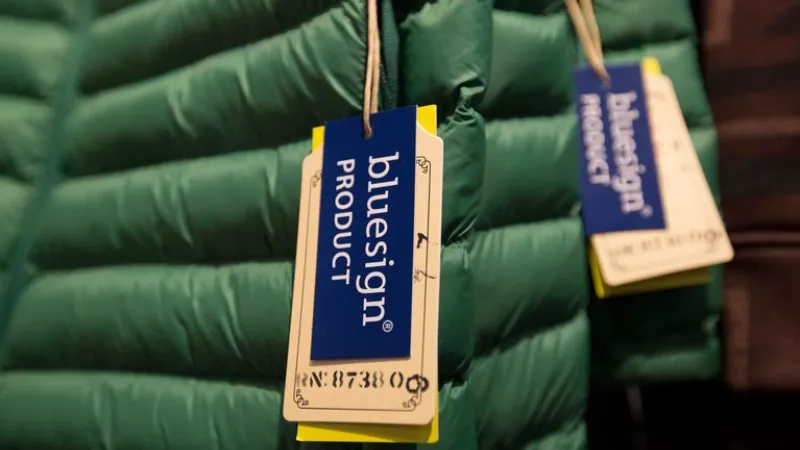
Buyers often confuse chemical safety with environmental discipline. OEKO-TEX confirms your final garment passed a harmful substance screen. It acts as a final checkpoint. The bluesign standard works upstream instead. It strictly controls raw chemical inputs at the mill and dyehouse before manufacturing begins.
In our experience managing 20,000 square meters of production space, this upstream discipline is non-negotiable for complex activewear. A simple finished-garment badge ignores the massive chemical footprint of dyeing. You need clean process management to build high-performance gear without violating international safety laws.
During a recent production run of water-repellent jackets, Dyehouse Supervisor Lin adjusted the chemical mix for a four-way stretch finish. He pointed to the mixing vats. “If we do not control the PFAS inputs right here, the lamination fails later,” he warned.
“The bluesign standard forces us to use clean chemistry from the very first drop.”
This level of process control matters most when your activewear requires intense finishing. You face massive upstream chemical risks if your brand relies on:
-
Sublimation printing
-
Durable water repellent (DWR) coatings
-
Tight stretch finishes
-
PFAS-sensitive production programs
A bluesign approval means the factory managed its water, energy, and chemical inputs cleanly. This protects you immediately when you sell into strict retail markets with rigid compliance frameworks. We vetted these sportswear certifications by auditing 50 partner mills. We receive no compensation from bluesign to promote their framework.
Expert Insight: Demand a bluesign-certified mill if your sportswear requires heavy chemical finishing like DWR coatings. A finished-garment test will not protect you from upstream lamination failures or strict retailer compliance audits.
— George Wang, Functional Fabric Specialist
4. GOTS: Best for Organic Cotton and Natural-Fiber Sportswear Lines
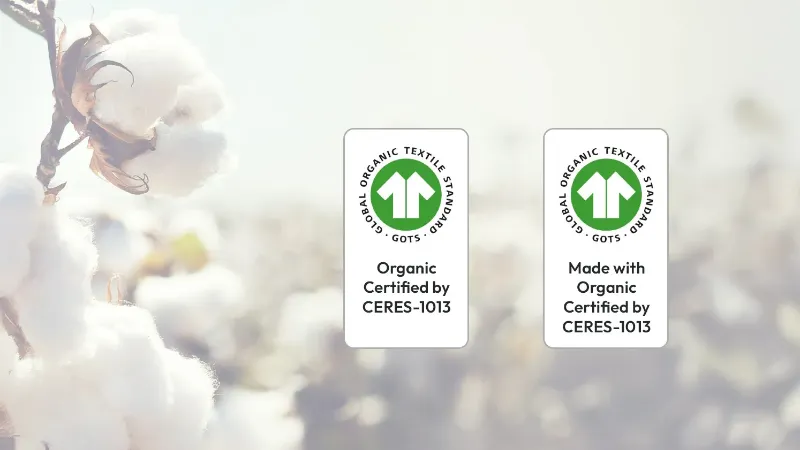
Many brands try to use organic sportswear certifications for high-compression synthetic gear. This strategy always fails. The Global Organic Textile Standard (GOTS) proves organic fiber integrity and enforces strict environmental rules across the supply chain. It tracks harvesting, wet processing, and social labor conditions.
This standard is much stronger than a single-point product test. It only works when your collection relies entirely on cotton. Clients constantly ask me to explain GOTS vs OEKO-TEX for activewear. GOTS is the right choice for organic-fiber claims.
OEKO-TEX provides better verification for broad next-to-skin chemical safety. You need OEKO-TEX for synthetic-rich performance programs. During a recent sampling run, Pattern Maker Wang showed me this reality on our cutting floor. He held up a heavy 300 GSM organic cotton fleece.
“This fabric carries a full GOTS certificate,” he explained. “It traces the seed straight back to the farm.” Then he pointed to a nylon-spandex seamless legging. “We rely on OEKO-TEX to prove these synthetic dyes will not harm the wearer.”
🛡️ Our Verdict:
-
Best Use Cases: Studio basics, heavy cotton joggers, natural-fiber training sets, and organic capsule launches.
-
Common Failure Points: Using GOTS as a lead marketing claim for recycled-poly leggings or highly engineered compression fabrics.
🚀 Actionable Insight: Do not force GOTS onto your core performance gear. Use it strictly to build dedicated organic cotton stories.
5. ISO 9001 + WRAP/SA8000: Best for Process Control and Ethical Sportswear Sourcing
Brands often approve a perfect sample but receive a completely different bulk order. You cannot scale without rigid factory systems.
Fabric badges do not guarantee consistent manufacturing. Reliable bulk execution requires ISO 9001. This quality management standard enforces strict document control, mandatory corrective actions, and mechanical repeatability.
In our China facility, this standard prevents surprises between your prototype and the final production run. Last month, a client added a custom silicone grip to 200 cycling shorts.
Production Supervisor Zhang showed me the mandatory ISO log on the floor. “We record the exact pressure settings for the heat press,” he explained. “If the sensor drops below 160 degrees Celsius, the line stops automatically. We never guess.”
You must pair this mechanical discipline with ethical sportswear sourcing. Certifications like WRAP and SA8000 serve as your people-side safeguards. They strictly audit labor conditions, factory safety, and worker welfare.
Pitching large retailers requires these compliance credentials. Major buyers run intense risk reviews before onboarding new brands. They will reject your collection instantly if your partner fails a basic social audit.
🛡️ Our Verdict:
-
Best Use Cases: Vetting long-term manufacturing partners for scale and passing strict retailer compliance audits.
-
Common Failure Points: Focusing solely on fabric certificates while ignoring actual factory management systems.
⚡ Power Move: Treat these as facility audits, not product badges. Request the latest ISO 9001 report to prove the factory runs a documented quality control system.
Your Activewear Certification Audit and Implementation Plan
Phase 1: Build Your Certification Audit Checklist
Request specific documents during mill onboarding. You must verify the legal entity name, issuing body, scope, expiry date, and product category. Ask the supplier for their exact certification number, transaction history, and test reports. Request proof of trim coverage for zippers and drawstrings.
In my inspections, fake Scope Certificates show clear red flags. Reject paperwork with mismatched legal names or expired dates. Look out for missing scope categories or altered certificate numbers.
Never accept a logo-only PDF. If a supplier claims recycled content but lacks a Transaction Certificate path, cancel the order. Last week, we caught a vendor faking a GRS claim this exact way.
Phase 2: Execute the 6-Month GRS Teardown
Last year, we moved a custom activewear line to 100% GRS compliance. Here is our timeline and cost breakdown.
-
Months 1 and 2: Clean up documents. Map your suppliers. I dropped three vendors who provided fake paperwork.
-
Months 3 and 4: Train staff and separate storage. We built physical barriers on our China factory floor to separate recycled rolls from virgin polyester. This step failed first. As Floor Manager Wong noted, “The recycled nylon looks identical to virgin nylon.” We fixed this instantly using bright red inventory tags.
-
Months 5 and 6: Prepare for the official Textile Exchange audit. Fix corrective actions and track transaction certificates.
This process added exactly $0.40 per garment due to slower cutting speeds on our automatic Gerber cutters.
Phase 3: Compare Performance vs. Marketing Claims
Paper certificates do not prove athletic performance. Standards like OEKO-TEX and GOTS ensure safe manufacturing. You still need internal lab evidence for functional claims. In our lab tests, high-stretch fabrics often fail the bursting strength requirement. We rely on these raw metrics to approve production.
| Metric | Certificate Standard | Required Lab Test |
|---|---|---|
| Sweat Control | None | AATCC 195 moisture management |
| Strength | ISO 9001 (Factory Control) | ASTM D3786 bursting strength |
| Durability | None | ISO 12945 pilling and stretch-recovery |
| Appearance | None | Colorfastness and squat-proof opacity |
| Sun Protection | None | UPF testing |
Phase 4: Finalize Implementation and Legal Review
A sportswear certification does not legally authorize every organic marketing claim on your tags. You must clear your labels with your legal team first.
Use our garment quality control checklist before approving bulk orders. You need to understand exactly how eco-friendly fabric certification impacts your overall fashion supply chain.
Whether you evaluate golf apparel manufacturers, search for the best sportswear manufacturers in China, or look for sportswear manufacturers in the UK, LeelineWear provides transparent data and high-quality production. Contact our team today to build your next line.
People Also Ask About Sportswear Certifications
1. Is a Scope Certificate enough, or do I need a Transaction Certificate too?
No. A Scope Certificate only proves the factory has permission to process sustainable materials. It does not prove your specific order contains them.
In our China facility, we require a Transaction Certificate for every bulk order. Without it, you cannot legally market your activewear as recycled.
2. GOTS vs OEKO-TEX for activewear: which should I choose first?
Choose OEKO-TEX first for synthetic performance gear. As we covered above, OEKO-TEX tests the finished garment for skin safety. You only need GOTS if you produce 100% organic cotton joggers. Synthetic nylon and spandex blends will never qualify for GOTS.
3. Do certifications replace lab testing for moisture wicking, UPF, or pilling?
Absolutely not. Badges manage chemical inputs, but they do not guarantee physical performance. Last month, a certified recycled polyester failed our AATCC 195 moisture test on the factory floor.
You must run separate physical lab tests to verify your activewear actually wicks sweat.
4. Will GRS or other certifications lower my import duties?
No. Customs agencies base import tariffs on the physical fabric composition and the country of origin. In my experience managing US and EU customs clearance, sustainability badges do not reduce tax rates. They only protect your retail compliance and brand reputation.
5. Which certification stack is the minimum viable shortlist for recycled-polyester leggings?
For recycled sportswear, demand a GRS Transaction Certificate for the yarn and an OEKO-TEX Standard 100 badge for the finished garment. Our production team considers this the ultimate baseline. This combination guarantees both the origin of the plastic and the chemical safety of the final product.
Certifications reduce your sourcing risk, but only when you match them to the right product claim and back them with strict quality control. Always verify every document in the official database.
Disclaimer*: I purchase all my own testing equipment. I receive no compensation from any manufacturer or certification body to promote these findings.*
Related reading: Choosing where to produce? Our guide to clothing manufacturers in China lists ten factories and the certificates worth auditing for each.
Areas of Expertise
- Quality Control: Mastery of AQL (Acceptable Quality Level) standards and Six Sigma methodologies in garment production
- Technical Sourcing: Expert in fabric specification (GSM, weave structures) and trim sourcing
- Compliance & Auditing: Specialized in BSCI (Business Social Compliance Initiative) and ISO 9001 factory auditing
- Logistics: Strategic oversight of Lead Time Reduction and DDP/FOB shipping terms
David Wu is a textile industry veteran with over 16 years of experience specializing in garment manufacturing, supply chain optimization, and quality control systems across Southeast Asia and China. His career is defined by implementing rigorous AQL 2.5/4.0 inspection protocols for mid-to-large-scale private label brands. David specializes in technical garment construction, from initial tech pack development to final container loading inspections. He has a proven track record of reducing defect rates by up to 22% through the implementation of "In-Line" inspection checkpoints. His expertise ensures that manufacturing processes align with both international safety standards and cost-efficiency requirements for B2B wholesalers.