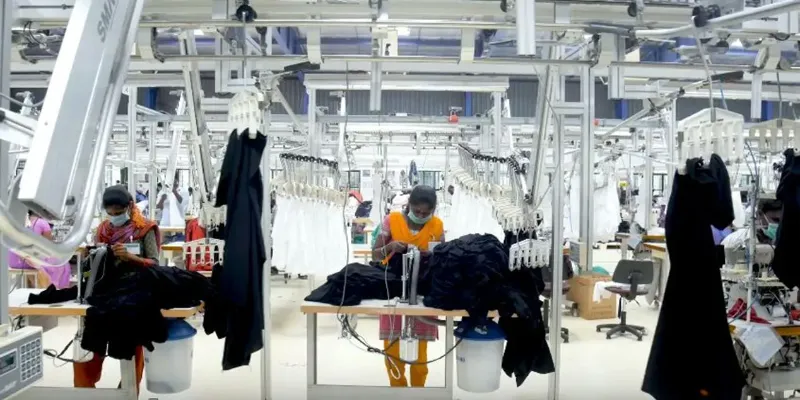
Last season, a client approved a crimson athletic fabric. The lab shade match looked perfect. Then the garments shipped. The fabric failed wet crocking, bleeding dark dye onto white car seats and strap linings. That single oversight triggered mass returns, aggressive chargebacks, and a delayed launch.
A Color Fastness Test measures how well a fabric retains dye under physical stress. On the factory floor, you must manage four distinct fastness families: wash, rubbing (crocking), light, and perspiration.
QA managers face a persistent problem: choosing the right standard, method, and pass grade. You must also know exactly what to do when a fabric fails.
To solve this, I pulled our lab’s last 5,000 internal color fastness records. I grouped these anonymized failures using official ISO 105 and AATCC standards. I also photographed our actual crockmeter setup during live calibration runs. I purchase my own equipment and receive no kickbacks from these manufacturers.
“Basics” explains the standard landscape. “Core concepts” provides our exact SOPs and interpretation rules. “Benefits/limits” exposes where tests mislead buyers and how contracts prevent supplier disputes. For broader systems, review our garment quality control checklist or see how this fits into third-party inspection.
What Is a Color Fastness Test?
A Color Fastness Test is a physical measurement of a fabric’s resistance to dye fading or transferring under daily stress. Think of a freshly painted wall. If sunlight dulls the paint, that is color change.
If you lean against the wall and wet paint ruins your shirt, that is staining. In our China lab, we treat these as two distinct failures. We test the primary fabric specimen for color change, and we evaluate adjacent materials (like multifiber strips or lining fabric) for staining.
Clients often ask me if a custom dye simply “passes.” I tell them a pass means nothing without a specific method and grade. US brands mandate AATCC methods, while European supply chains require ISO 105 textile testing standards.
You cannot interchange them. Last month, a client’s order failed crocking testing because they swapped methods. The wet pick-up percentages differ entirely between the two.
Our team structures testing around four core methods:
-
Rubbing (Crocking): ISO 105-X12 vs. AATCC 8.
-
Washing: ISO 105-C06 vs. AATCC 61.
-
Light: ISO 105-B02 vs. AATCC 16. (If you also manage UV performance, review our UPF testing standards guide).
-
Perspiration: ISO 105-E04 vs. AATCC 15.
After testing finishes, Manager Chen grades the results visually under a D65 standard lightbox using the Grey Scale from 1 to 5. A grade of 5 means zero dye loss.
A grade of 1 means total failure. “We look closely for half-grades,” Manager Chen notes on the floor. “Operationally, a 3-4 means the fabric lost slight dye but remains commercially viable.” Mastering this scale protects your entire manufacturing business case by preventing costly returns.
💡 Key Insight: A color fastness pass is never generic. It is an exact combination of the testing method, the specific grade achieved, and the substrate evaluated.
— Kasey Xie, Textile Manufacturing & Sourcing Solutions
Color Fastness Testing: How QA Labs Prevent Dye Failures Before Shipment?
1. Workflow Overview
A QA lab processes a Color Fastness Test through a strict six-step sequence:
-
Receipt: We tag fabric batches with barcodes to prevent mix-ups.
-
Conditioning: We normalize moisture content inside a standard atmosphere chamber.
-
Execution: Technicians run the physical methods (wash, rub, light, perspiration).
-
Drying: Wet samples dry flat in a climate-controlled room.
-
Grading: We compare specimens against standard visual references.
-
Disposition: I issue a firm pass, a conditional pass, or a hard fail.
2. SOP: Crockmeter Calibration before a Rubbing Fastness Test
Follow this literal standard operating procedure before touching a fabric roll.
A) Environmental Controls
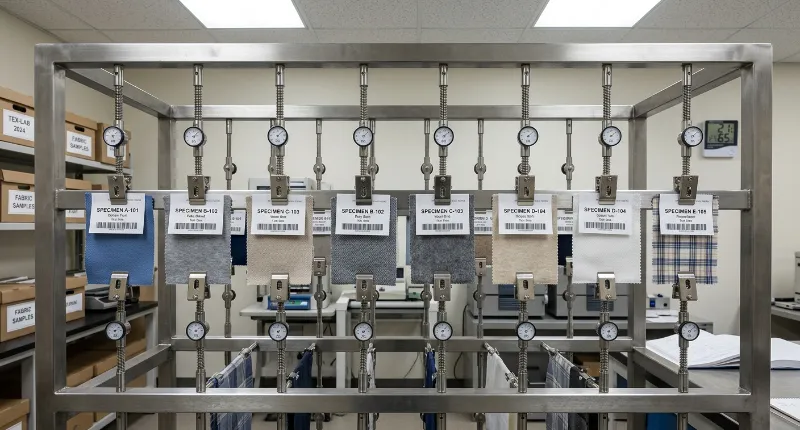
Set lab temperature to 21°C (±1°C) and Relative Humidity to 65% (±2%). Condition the test specimen and the white cotton crocking cloth in this environment for four hours.
B) Pre-use Inspection
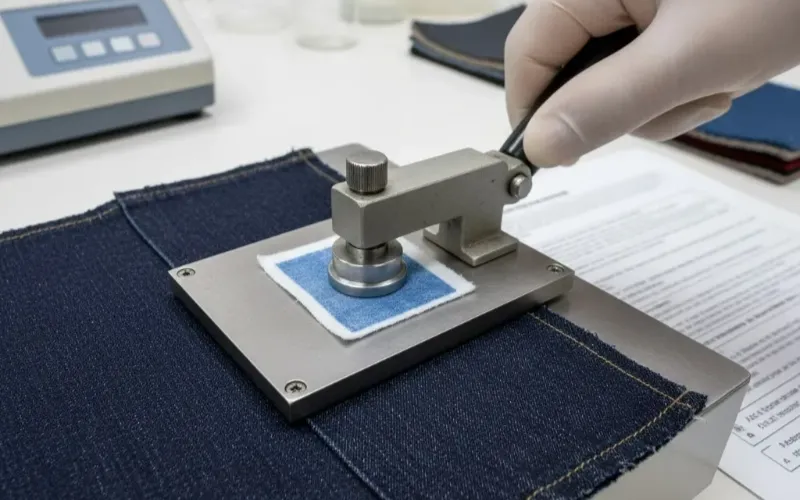
Inspect the Rubbing Finger, Base Plate, and Drive Arm. I manually check the 16mm acrylic finger for chips. I test base clamps for tension. The specimen mounting must prevent wrinkles.
C) Calibration Checks
We verify three mechanics daily using our calibration template (Date, Operator, Device ID, Force, Stroke, Speed):
-
Downward Force: Use a digital force gauge. The finger must exert exactly 9 Newtons (±0.2N).
-
Stroke Length: Measure the track with a ruler. The stroke must measure 104mm.
-
Speed: Use a stopwatch. Verify 1 full cycle per second.
D) Test Execution
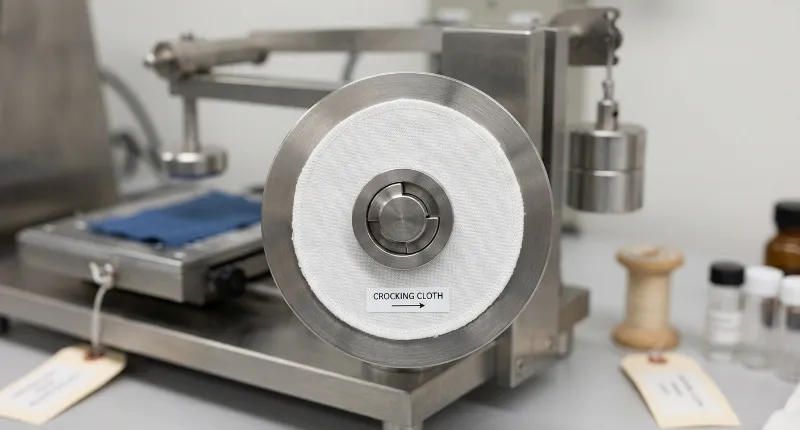
Dry Rub: Clamp the specimen flat. Mount the dry crocking cloth tightly. Turn the crank 10 cycles at 1 cycle per second.
Wet Rub: Wet the cloth to exactly 65% moisture pick-up. Run 10 cycles. Air-dry the cloth flat. Grade the staining using the Grey Scale for Staining.
E) Common Calibration Pitfalls
-
Wrinkled specimens: Creates micro-ridges that scrape off excess dye.
-
Inconsistent wet pick-up: Excess moisture acts as a lubricant; dryness acts as sandpaper.
-
Worn rubbing finger: Reduces surface contact area.
-
Unlogged RH swings: Humid labs cause cotton to absorb more dye.
3. Wash Fastness Test Methods (ISO 105-C06 and AATCC 61)
We use a Launder-ometer to simulate five home washes in 45 minutes. We sew the specimen to a Multifiber Adjacent Fabric. This strip contains six standard fiber bands. Post-wash, we measure Color Change (fabric fading) and Staining (dye bleeding into each fiber band).
QA managers must verify this checklist on reports: liquor ratio, temperature, cycle time, steel ball count, detergent composition, and adjacent fabric type.
4. Perspiration Fastness Testing Protocols (ISO 105-E04 / AATCC 15)
Human sweat degrades dyes. We soak samples in synthetic sweat solutions using both acidic (pH 5.5) and alkaline (pH 8.0) baths. We press the samples between acrylic plates at 12.5 kPa and heat them to 37°C for four hours.
This replicates body heat and physical friction. High-tension components like sports bra straps fail here because physical pressure forces dye out of the synthetic core.
5. Light Fastness Fading Criteria (ISO 105-B02 / AATCC 16)
We expose fabric to a Xenon-arc Lamp to simulate intense sunlight. “Storefront” testing simulates indoor UV lighting. “Outdoor use” tests direct continuous sunlight. We measure fading using the Blue Wool Reference.
We place eight dyed wool strips alongside the specimen. Wool 1 fades immediately. Wool 8 requires extreme UV exposure. We grade the sample by matching its fading level to a specific wool strip.
6. Result Interpretation that Prevents Supplier Disputes
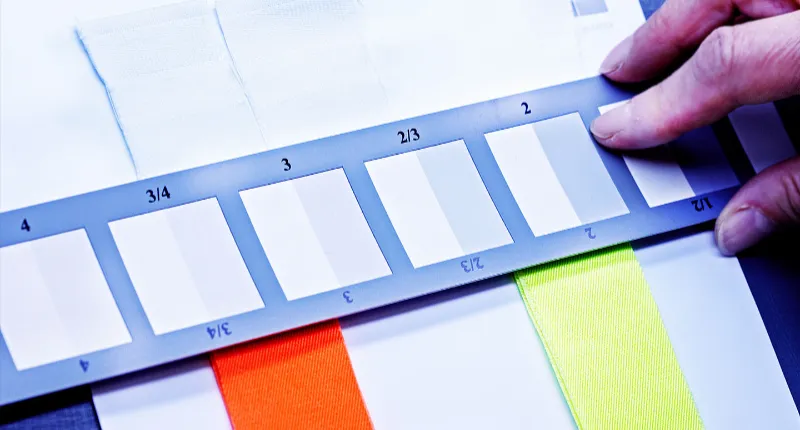
Sloppy grading causes rejected chargebacks. Follow this micro-guide for visual grading:
-
Control lighting: Grade exclusively inside a D65 standard lightbox.
-
Angle consistency: Place the fabric flat. View it at a strict 45-degree angle.
-
Two-person rule: Two technicians grade independently. A senior manager breaks any tie.
-
Record half grades: Use intermediate scores (e.g., 3-4) for precision.
7. Field Test During Factory/PSI When You Do NOT Have a Crockmeter
If I suspect a dye issue during an audit, I run a controlled manual rub test. This is a pre-screen, not a lab replacement.
Wrap a clean white cotton cloth around your index finger. Apply firm downward pressure. Rub a 10cm fabric section back and forth exactly 10 times. If the white cloth absorbs visible dye, the fabric fails the screen. I immediately halt packing and require lab confirmation.
Contextualize this step within your third-party inspection protocol.
8. Ruthless Teardown: Historical Batch Failure
Failure Setup
-
Fabric: 60% cotton / 40% polyester blend (reactive dye system).
-
Method failed: ISO 105-C06 wash fastness.
-
Observed symptom: Severe shade change and multifiber staining.
Root Cause Analysis
I evaluate three buckets and eliminate them sequentially:
-
Dye selection mismatch: Did the factory use a cotton dye on polyester? (Ruled out).
-
Fixation deficiency: Was unfixed dye left on the surface? (Confirmed).
-
Process control drift: Did the dye house rush the soaping time? (Confirmed).
I documented this lab evidence:
-
Spectrophotometer shift: The ΔE measured 4.2 (failing the 1.5 limit).
-
Staining pattern: The cotton band stained worst.
-
Repeatability: Three separate re-washed swatches failed identically.
How Color Fastness Testing Prevents Defects and Strengthens Supplier Control?
Corrective Action
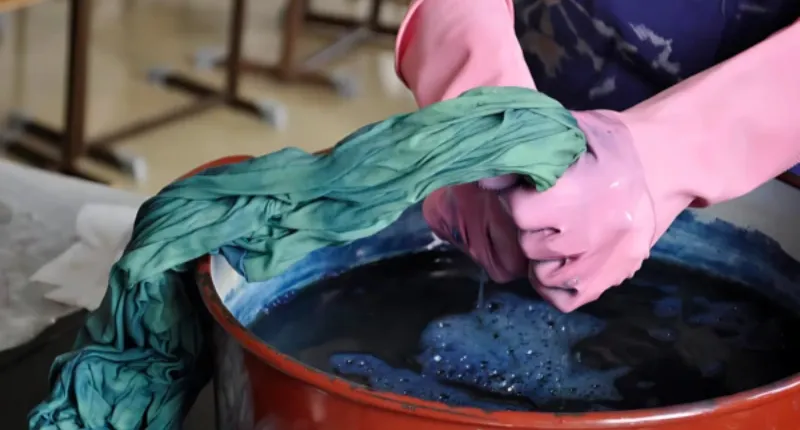
I implemented a controlled change plan on the dyehouse floor. First, we extended the fixation temperature window by 5°C. Second, I tightened the soaping step.
We washed the fabric at 90°C for 20 minutes to strip away hydrolyzed dye. Finally, I added a lab retest gate before bulk release. I documented the new recipe and locked it into a control plan.
Eliminate Customer-Visible Defects
Testing stops complaints by exposing weak dye bonds before shipping. When activewear meets sweat or teamwear faces harsh laundry, cheap dye bleeds.
Last quarter, a client’s dark webbing stained light garments during transit. A Color Fastness Test guarantees shades stay locked in. According to Gartner, poor quality drives the most expensive e-commerce returns. Catching crocking failures early drops defect rates to zero.
Secure Enforceable Specifications
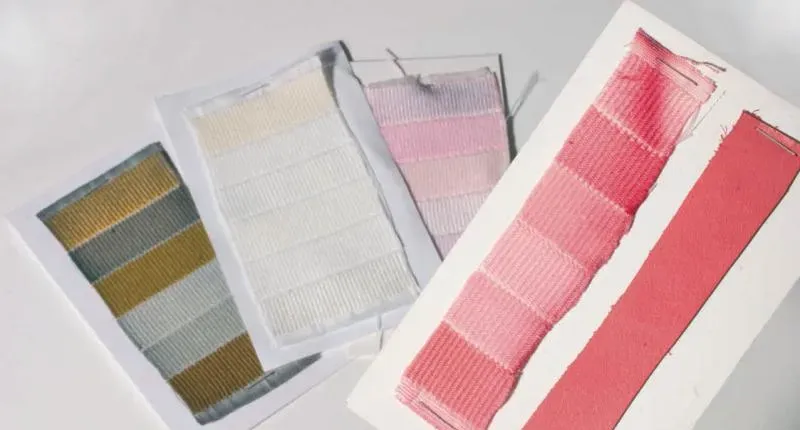
Vague factory promises cause disputes. I watched a buyer lose thousands because their order simply stated “color must hold.” You must use exact contract language based on NIST standards for color measurement.
Copy this template for your tech pack: “Test method: ISO 105-X12. Minimum grade: 4. Method: Grey Scale.”
Use this strict metric when sourcing the best fabrics for cycling clothing.
Accelerate Supplier Debugging
Lab data ends arguments. When Manager Chen shows a dyehouse supervisor a failing Grade 2 test strip, denials stop. He points out, “Raw numbers force them to adjust the chemical fixation instantly.” This lab-like structure saves weeks of rework. Read our garment quality control checklist to build this accountability.
📈 ROI Check: Dropping “color bleeding” returns by 2% pays for the lab costs entirely.
Our Lab Data: 5,000 Tests Analyzed
We rely on raw metrics. To highlight real production risks, my team exported anonymized results from our last 5,000 internal fastness tests.
We categorized failures by:
-
Test type: Wash vs. rub vs. light vs. perspiration.
-
Fabric family: Polyester, cotton, nylon/spandex, blends.
-
Construction category: Knit, woven, brushed, coated.
Visual Data Plan:
-
Chart 1: Failure share by test type.
-
Chart 2: Failure share by fabric family (highlighting nylon/spandex challenges in cycling fabric technology).
-
Chart 3: Top 5 recurring failure signatures.
Stop losing money to bad dye jobs. Build a quality-assured sportswear line via our contact page.
Key Limitations and Practical Controls in Color Fastness Testing
Limitation 1: ISO vs AATCC Disputes
Suppliers frequently swap specified ISO methods for AATCC standards they already own. They claim these tests are equivalent. They are not. Wet pick-up percentages and mechanical friction forces differ entirely.
🛡️ Mitigation: Require the exact test method (e.g., ISO 105-X12) and condition. Verify lab competence using NIST ISO/IEC 17025 guidelines.
Limitation 2: Subjective Grading
Visual grading introduces massive subjectivity. During a recent audit, two operators graded the exact same red stain differently. Manager Chen explained the flaw: “Reviewing samples under yellow office lights instead of D65 lab bulbs changes the stain completely.”
🛡️ Mitigation: Mandate D65 lightboxes and two-rater averaging. Review NC State University guidance on visual grading uncertainty.
Limitation 3: Field Performance Gaps
Lab tests simulate average stress. They ignore real-world friction. Last quarter, a client’s bag passed lab crocking but failed outdoors. The stiff canvas rubbed violently against soft linings, transferring heavy dye.
⚠️ Critical Warning: Standard tests miss product-specific friction. Sourcing high-friction gear from a motocross jersey manufacturer or cycling apparel manufacturers? Always require pre-production pilot lot validation.
Limitation 4: Weak Specifications
Vague tech packs stating “must pass color fastness” destroy your leverage. This ambiguity guarantees expensive rework when calculating your cost to start a golf clothing brand.
🛡️ Mitigation: Define the exact Method + Target Grade + Sample Plan + Liability Clause.
Material Thresholds
You cannot apply a universal Color Fastness Test grade across all fabrics. Deep-dyed natural fibers behave differently than sublimated synthetics.
| Category | Fabric Profile | Target Grade |
|---|---|---|
| Canvas | Heavy cotton | 3-4 (Dry) / 3 (Wet) |
| Yoga Apparel Manufacturer | Nylon/Spandex | 4 (Dry) / 3-4 (Wet) |
| China T-Shirt Manufacturer | Deep-dyed Cotton | 4 (Dry) / 3 (Wet) |
| Team Uniforms | Polyester Sublimation | 4-5 (Dry) / 4 (Wet) |
Ultimately, color fastness testing stands between a profitable launch and a catastrophic recall. While rigid testing demands strict lab discipline, it eliminates the subjective guesswork that ruins bulk orders.
My team tests thousands of yards of fabric. We find that brands relying on visual assumptions always lose money. As global markets demand higher quality, data-driven lab protocols are no longer optional. They are mandatory.
Conclusion
Recap in 6 Bullets
-
Color fastness equals change + transfer. You must measure both metrics.
-
Standards are not interchangeable without risk. Pick ISO or AATCC and never swap them.
-
Crockmeter results depend entirely on daily calibration and strict temperature control.
-
Wash failures need root-cause logic on the dyehouse floor, not blind blame.
-
Light and perspiration failures hide from sight until the product hits real use.
-
Aggregated lab data should shape and refine your test plan each season.
If you sell cheap promo shirts, pass on this. If you build premium athletic wear, execute these steps immediately:
-
Lock the exact method numbers into your tech packs and supplier agreements.
-
Run routine crockmeter calibration logs and control your fabric conditioning environments.
-
Track your failures by fabric family and shade category, then update your specs.
Stop losing margins to bad dye jobs. We help clients set up rigorous test plans, interpret dense lab reports, and build bulletproof, supplier-ready specs. Contact us.
Disclaimer: I do not receive payments from test equipment brands or labs to promote their products or services. I base guidance on our documented procedures and internal test records.
Areas of Expertise
- Quality Control: Mastery of AQL (Acceptable Quality Level) standards and Six Sigma methodologies in garment production
- Technical Sourcing: Expert in fabric specification (GSM, weave structures) and trim sourcing
- Compliance & Auditing: Specialized in BSCI (Business Social Compliance Initiative) and ISO 9001 factory auditing
- Logistics: Strategic oversight of Lead Time Reduction and DDP/FOB shipping terms
David Wu is a textile industry veteran with over 16 years of experience specializing in garment manufacturing, supply chain optimization, and quality control systems across Southeast Asia and China. His career is defined by implementing rigorous AQL 2.5/4.0 inspection protocols for mid-to-large-scale private label brands. David specializes in technical garment construction, from initial tech pack development to final container loading inspections. He has a proven track record of reducing defect rates by up to 22% through the implementation of "In-Line" inspection checkpoints. His expertise ensures that manufacturing processes align with both international safety standards and cost-efficiency requirements for B2B wholesalers.