Your profit margin is not determined by how cheaply you source fabric. It is determined by your return rate. I have witnessed entire seasonal launches collapse due to “minor” defects. A single open seam that snaps during a TikTok try-on haul, or a waistband measuring 2cm off-spec, causes spikes in returns and chargebacks.
When a customer unboxes a garment, they do not care about supply chain challenges. They only care that the product works.
A garment quality control checklist is your defense against these errors. It is not just a clipboard exercise. It is a binding communication contract between the brand and the manufacturer. If a standard is not documented, it does not exist.
Drawing on daily manufacturing operations at LeelineWear, this guide provides a field-tested inspection framework. We move beyond theory to implement the ISO 2859-1 (AQL) sampling plan. This is the industry standard for determining pass, rework, or reject decisions based on statistical data rather than gut feeling.
This guide is for brand owners and production managers who need repeatability. We will cover how to detect critical safety hazards, such as metal contamination from broken needles, and structural failures like skipped stitches that look fine on the table but fail under tension.
Whether scaling a micro-run of 50 units or managing a bulk restock, this system gives you the data to accept production with confidence. We also include a downloadable template to use with your suppliers. If you need a partner who already has these systems built into their factory floor, you can reach out to our team.
Here is how to standardize your quality control.
What is a Garment Quality Control Checklist?
A garment quality control checklist is the single source of truth for your product’s manufacturing standards. It is a technical document that lists every measurable requirement—from stitch tension to logo placement—paired with clear pass/fail rules.
In our factory, this document bridges the gap between your design file and the physical product coming off the line.
Think of this checklist like a building code inspection. A building inspector does not simply walk into a room and say, “This looks safe.” They measure the door frames, test the outlets, and verify the plumbing against a specific code.
Similarly, our inspectors use this checklist to objectively test the garment rather than relying on subjective opinions.
QC vs. QA vs. Compliance
These terms often get confused. In a manufacturing environment, they perform distinct roles:
-
QC (Quality Control): The inspection. This is the act of catching defects after they occur (e.g., finding an oil stain on a finished shirt).
-
QA (Quality Assurance): The system. This focuses on preventing defects before they happen (e.g., implementing a Standard Operating Procedure to clean machines daily).
-
Compliance: The law. This ensures the product meets safety and legal standards (e.g., verify fiber content labels or flammability requirements).
Where We Use the Checklist
This document guides your product through its entire lifecycle on the factory floor:
-
Pre-Production: We verify the “Golden Sample” matches your tech pack exactly.
-
Inline Inspection: We check workmanship while pieces are still being sewn to catch systematic errors early.
-
Final Inspection: We use the checklist as a “Gatekeeper” to decide if a shipment is released or held for rework.
Key Terms Glossary
To navigate a professional inspection report, you must understand these core concepts:
-
AQL (Acceptable Quality Limit): This is the industry standard for sampling, largely based on ISO 2859-1. It is a statistical method that dictates how many units we pick randomly to represent the whole batch. It defines the maximum number of defective units allowed before the entire order is rejected.
-
Defects Classification: We categorize errors into Critical (hazardous/unsafe), Major (unsellable/functional failure), and Minor (aesthetic issues not visible at arm’s length).
-
Sewing Quality Control List: A specific subset of the checklist focused on construction. It covers Stitch Per Inch (SPI), seam allowance, and thread strength.
-
Textile Inspection Procedure: The method of inspecting raw fabric rolls for holes or shading before cutting begins.
🌍 Real-World Context: In practice, a checklist is only effective if it is usable. We design our checklists with visual photo references and clear checkboxes. This ensures that factory floor staff can execute the standard perfectly, regardless of language barriers. Professional organizations like the ASQ define quality plans as the fundamental basis for acceptance criteria; without one, you are relying on luck.
Core Workflow Overview (The Mental Model)
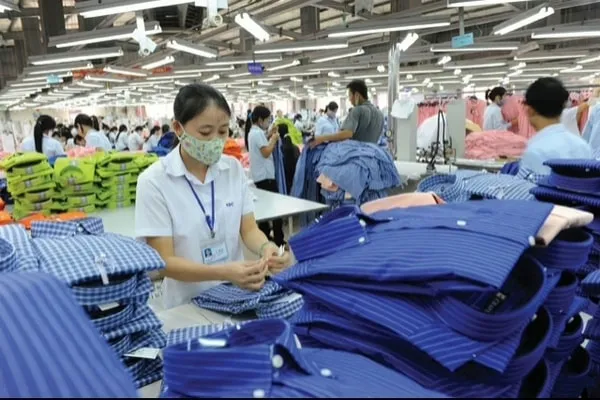
We treat quality control as a funnel, not a gate. The goal is to filter out defects while they are still raw materials, rather than waiting until they are finished goods. If you visualize the factory floor at LeelineWear, the Garment Quality Control workflow operates in a linear sequence.
-
Fabric Inspection (Incoming): We verify the raw rolls before cutting.
-
Pre-Production Alignment: We match the first output against the Tech Pack and Golden Sample.
-
Inline Sewing QC: Inspectors monitor stitch tension and seam strength during assembly.
-
Finishing Checks: We verify measurements and trim after assembly.
-
Pre-Shipment Inspection (PSI): The final AQL-based statistical pass/fail exam.
-
Corrective Action: If the PSI fails, we trigger a root-cause analysis and rework loop.
A) Fabric Quality Inspection (Incoming)
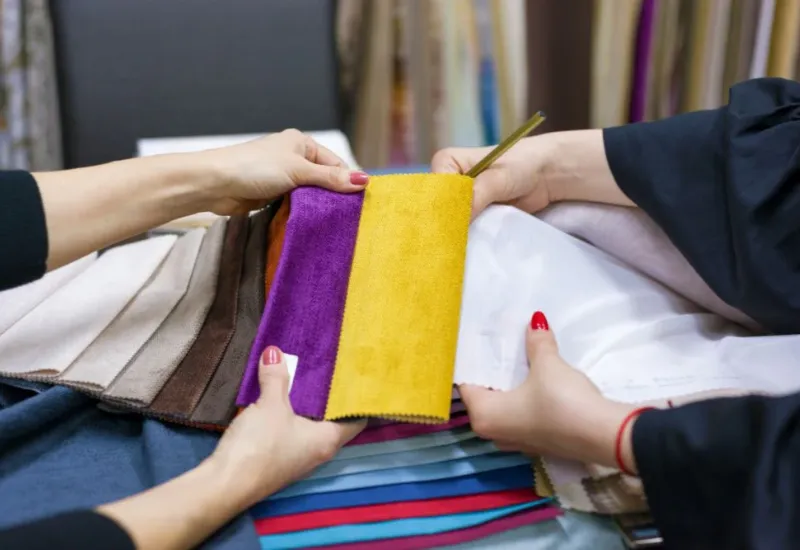
Defects are exponentially more expensive to fix after cutting. We use the 4-Point System, the industry standard for grading fabric rolls, to quantify quality before a single scissor touches the cloth.
An inspector pulls the roll over a backlit inspection machine at a speed slow enough to spot surface irregularities. They assign penalty points based on defect size:
-
1 Point: Defect length < 3 inches.
-
2 Points: Defect length 3–6 inches.
-
3 Points: Defect length 6–9 inches.
-
4 Points: Defect length > 9 inches (or any hole).
The system calculates total points per 100 square yards. If a roll exceeds the allowable threshold (typically 40 points), we reject the roll and return it to the mill.
👀 What we look for:
-
Barre: Unintended horizontal stripes in knit fabric caused by inconsistent yarn feed tension.
-
Shade Banding: Visible color shifting from the left selvage to the right selvage.
-
Slubs: Thick lumps of yarn that create a tactile bump on the surface.
⚙️ Technical Detail: We physically cut a 6-inch strip from the start of every roll to measure GSM (Grams per Square Meter). If the fabric weight deviates more than 5% from the spec, the garment’s drape and opacity will fail.
B) Golden Sample + Red-Tag Workflow
“Spec drift” occurs when a factory slowly deviates from the original design over a long production run. To prevent this, we establish a Golden Sample.
This is the single, signed-off reference unit. We zip-tie this sample to the line leader’s station. Every operator compares their current output against this physical standard for handle, color, and trim placement.
The Red-Tag Protocol: When an inspector finds a unit that does not match the Golden Sample, they attach a highly visible Red Tag.
-
Isolation: The unit is removed from the line immediately.
-
Root Cause: The floor supervisor inspects the unit to identify the source (e.g., “Machine 4 feed dog is loose”).
-
Corrective Action: Mechanics adjust the specific machine before production resumes.
C) AQL Sampling Plan (ISO 2859-1)
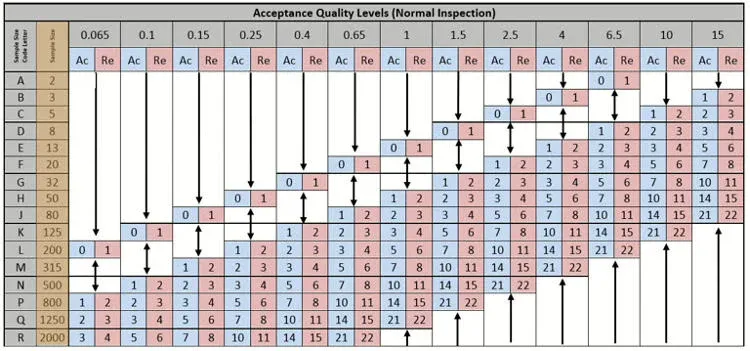
Inspecting 100% of a 10,000-unit order is inefficient and cost-prohibitive. Instead, we use AQL (Acceptable Quality Limit). This statistical method, defined by ISO 2859-1, determines exactly how many units to check to get a reliable snapshot of the lot’s quality.
How to use the AQL Table (Step-by-Step)
We typically use Inspection Level II for standard consumer goods. Here is the logic flow for a hypothetical order:
-
Determine Lot Size: You ordered 1,200 hoodies.
-
Find the Code Letter: In the ISO table, a lot size of 1,200 corresponds to code letter “K”.
-
Get Sample Size: Code “K” dictates we must randomly pull 80 units for inspection.
-
Apply AQL Standard: For a standard AQL 2.5 (Major defects), the table provides an Accept/Reject limit of 5 / 6.
The Decision: If we find 5 or fewer major defects in those 80 hoodies, the entire batch of 1,200 passes. If we find 6, the entire batch fails and requires 100% re-inspection.
🧠 Expert Insight: AQL is not a percentage allowance; it is a risk management tool. It ensures the process average remains stable. For a deeper understanding of sampling statistics, refer to the ASQ guide on sampling plans.
D) Garment Defects Classification
We categorize defects into three specific buckets based on severity. This tells the factory which errors require immediate stoppage and which are cosmetic.
1. Critical Defects (Zero Tolerance)
These render the product unsafe, illegal, or hazardous. The AQL for Critical defects is 0.
-
Metal Contamination: Needle fragments or scissor tips found inside the garment.
-
Choking Hazards: Buttons or snaps that detach with less than 90 Newtons of force (children’s wear).
-
Mold/Dampness: Moisture levels exceeding limits, risking fungal growth during transit.
2. Major Defects (AQL 2.5)
Functional failures that would cause a customer to return the product.
-
Open Seams: Stitching that has unraveled, leaving a hole.
-
Skipped Stitches: A break in the stitch line that weakens the seam structure.
-
Measurement Failures: A waist measuring 2 inches below tolerance.
-
Visual Misalignment: Logos printed crooked or off-center by more than 0.5 inches.
3. Minor Defects (AQL 4.0)
Cosmetic issues that do not impact function and are not easily visible at arm’s length.
-
Uncut Thread Ends: Loose “tails” left on the garment.
-
Slight Puckering: Minor waviness at the seam, common in synthetic blends.
E) Sewing Quality Control List
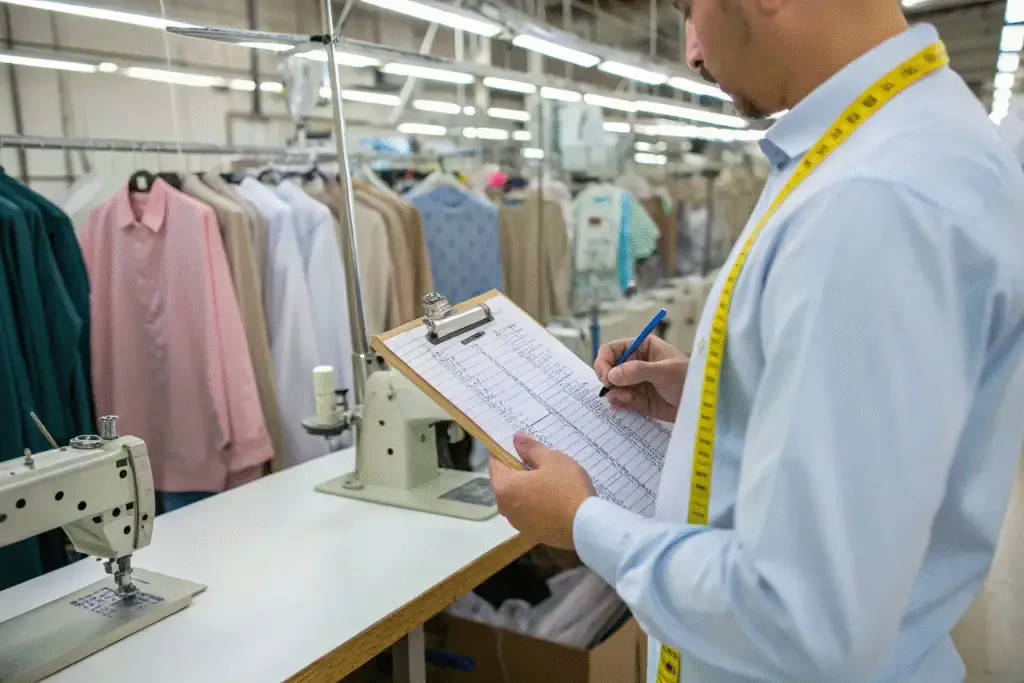
The inline inspector walks the aisles to monitor the “physics” of construction.
-
SPI (Stitches Per Inch): We count the stitches. If the spec requires 12 SPI but the machine runs at 8, the seam will burst under tension.
-
Seam Grin: On stretch fabrics (like leggings), we pull the seam transversely. If the threads “grin” (show through) or the seam opens, the thread tension is too tight.
-
Bartacks: We verify reinforced stitching on high-stress areas like pocket corners and belt loops.
F) Measurements + Tolerances
Fabric is flexible, so we measure on a rigid, flat table without applying tension.
-
POM (Points of Measure): We adhere to specific locations (e.g., “1 inch below armhole”).
-
Tolerance (+/-): We define acceptable deviation ranges. For a hoodie chest width, +/- 0.5 inch is acceptable. For a collar opening, only +/- 0.125 inch is allowed.
-
Size Set Check: The AQL sample must include at least one of every size (XS through XXL) to ensure grading consistency across the range.
G) Labels, Packaging, and Carton Checks
A perfect product fails if the logistics data is wrong.
-
Labeling: The Care Label must match the fabric composition (e.g., “100% Polyester”) and legally required Country of Origin.
-
Polybag Safety: Bags must display suffocation warning text (mandatory in US/EU markets).
-
Carton Drop Test: We drop a packed carton from waist height onto its corner. If the tape bursts or the box crushes, the cardboard ply is insufficient for export.
H) Metal Contamination Prevention
Metal detection is a non-negotiable safety protocol.
-
Calibration: We run a test card (typically a 1.0mm ferrous sphere) through the detector every hour. This 9-point calibration ensures the machine scans the entire aperture, not just the center.
-
The Pass: Every finished carton passes through the conveyor metal detector before sealing.
-
Segregation: If the machine alarms, the carton moves immediately to a locked “Quarantine Cage.”
🧠 Expert Insight: Our safety protocols align with OSHA machine guarding guidelines to ensure both operator safety and consumer protection.
I) Clothing Manufacturing Audit
An audit validates the system, while an inspection validates the product. Before partnering with a facility, we audit their capabilities:
-
Needle Control: Do they maintain a broken needle log?
-
Equipment: Are measurement tapes calibrated or stretched?
-
Environment: Is inspection station lighting adequate (minimum 1000 lux)?
J) How to Structure the Final Checklist Document
When building your checklist, structure it for the inspector on the floor, not the manager in the office.
Recommended Tabs:
-
Order Info: PO Number, SKU list, and AQL Level.
-
Defect Library: A dropdown menu of defects (Critical/Major/Minor) to standardize reporting.
-
Measurement Sheet: Columns for Spec, Tolerance, and Actual findings.
-
Photo Log: A mandatory section for uploading high-res photos of every defect found.
-
Summary: A clearly calculated “PASS” or “FAIL” result based on the AQL limit.
Why This Matters: The ROI of a Standardized Checklist

A garment quality control checklist is not just paperwork; it is a commercial shield. We have found that translating abstract “brand values” into binary engineering data saves thousands of dollars in returns and disputes.
Here is how that discipline converts directly to profit.
Turns ‘Opinions’ into Measurable Contracts
Without a checklist, quality is subjective. A factory might claim a crooked hem is “within tolerance,” while you see unsellable inventory. By defining defect classes based on ISO 2859-1 standards, we turn arguments into objective data.
If the spec states a 0.5cm tolerance, a 0.6cm deviation becomes a breach of contract, not a matter of opinion. This eliminates the “we thought you meant…” excuse.
Reduces Customer-Visible Failures
Your customer should never be your final inspector. If they find the defect, you pay for it in chargebacks and bad reviews. According to the ASQ (American Society for Quality), systematic sampling creates a firewall against error leakage.
-
Sewing QC: Catches skipped stitches before they split in a customer’s gym class.
-
Needle Control: Mandates metal detection to eliminate safety liability.
-
Fabric Checks: Identifies shade variations before cutting to prevent mismatched sets.
Makes Scaling Safer
Growth often breaks supply chains. When we scale a client from 50-unit micro-runs to 10,000-unit bulk orders, consistency usually suffers. A standardized checklist acts as your brand’s DNA. It ensures new partner factories adhere to the exact same ASTM textile standards as your original suppliers.
You can switch or add factories without diluting product quality.
Improves Accountability via Documentation
Inspectors must log evidence, not just check boxes. We require photo-backed defect logs to drive CAPA (Corrective and Preventive Action). This data feeds a supplier scorecard: if a factory consistently hits 98% compliance, you can confidently approve larger upfront deposits. If they drop, you have the data to demand discounts.
🌍 ROI in Action:
-
Yoga Studios: Ensures “Butter-Soft” fabric consistency for premium pricing.
-
Team Buyers: Verifies name/number accuracy for high-stakes season openers.
-
Corporate: Guarantees Pantone color matching to protect brand identity.
📥 Download the Garment Quality Control Checklist
Stop guessing and start validating. Get the exact tool we use at LeelineWear to ensure every shipment meets the “Golden Sample” standard.
What’s Inside:
-
Excel & PDF Formats: Fully editable tabs for your specific SKUs.
-
Defect Library: Pre-filled dropdowns for common issues (Oil stains, skipped stitches).
-
AQL Header: Built-in reference for sample sizes.
-
Pass/Fail Summary: Instant logic to approve or reject shipments based on data.
Need a manufacturing partner who already has these systems built into their production line? Contact our team to discuss your next project.
Challenges & Limitations of the AQL Framework
A quality control checklist is a tool, not a guarantee. Without strict operational discipline, even the best AQL standards fail. At LeelineWear, we manage five specific risks to prevent “buyer’s remorse” and ensure the checklist translates to reality.
Limitation 1: AQL is Statistical Risk Management
Clients often misinterpret an “AQL Pass” as proof of zero defects. AQL is a statistical bet. Under AQL 2.5, you statistically accept that up to 2.5% of the goods may carry minor faults. We have passed shipments that met the mathematical standard but still contained 20 faulty units in a 1,000-unit order.
⚖️ The Trade-off: To guarantee 100% perfection, you must fund 100% inspection, which doubles labor costs. AQL balances risk against budget.
Limitation 2: Subjectivity Drifts Without Calibration
One inspector’s “minor loose thread” is another’s “critical defect.” Without visual standards, pass rates fluctuate wildly between shifts. We mitigate this by rejecting text-only descriptions in favor of a Defect Library. 🛡️ Mitigation: Hold calibration sessions where inspectors align on physical samples.
If a thread exceeds 2mm, it fails. No debate.
Limitation 3: Visual Inspection Cannot Replace Lab Testing
A checklist cannot measure chemical performance. We have seen garments pass visual checks perfectly, only to shrink two sizes after the first wash. Attributes like colorfastness, pilling, and tensile strength require destructive lab testing.
⚠️ Critical Warning: As noted by the American Society for Quality (ASQ), visual sampling is distinct from material testing. Define your lab standards separately.
Limitation 4: The “Golden Carton” Trap
If the factory selects samples for the inspector, the data is compromised. Suppliers often prepare “Golden Cartons”—pre-checked boxes guaranteed to pass—to game the system. 🛡️ Mitigation: Enforce strict random selection. Our inspectors map the warehouse and calculate random pallet numbers before touching a box.
If a factory attempts to swap a carton, the inspection terminates immediately.
Limitation 5: Cost and Timing Penalties
A failed Pre-Shipment Inspection (PSI) triggers a logistical nightmare: unboxing, re-working, and re-packing. This process typically adds 5–7 days to the lead time, potentially missing launch windows. 🛡️ Mitigation: Do not wait until the end. Implement Inline Inspection (during sewing) to catch systemic issues before goods are boxed.
Needle Control Nuance
Metal detectors are not foolproof; low batteries or calibration drift occur. We strictly enforce a Broken Needle Log. If a needle breaks, the operator must tape all fragments into the logbook before receiving a replacement. If fragments are missing, we quarantine the entire bundle.
Related Resources:
-
Top 10 Sportswear Manufacturers in Vietnam | Buyer’s Shortlist
-
The 10 Best Sportswear Manufacturers in the UK (Vetted & Ranked)
Final Verdict: The Difference Between Hope and Certainty
A garment quality control checklist is only as powerful as its enforcement. It is not a magic wand that fixes bad manufacturing; it is a binding contract that holds it accountable.
To function effectively, the checklist must be inextricably linked to your Tech Pack and Golden Sample, grounded in the statistical reality of ISO 2859-1 AQL, and supported by a visual defect library. Without these pillars—and strict needle control—you are not managing quality; you are gambling with your return rate.
Your “Do This Next” Action List
Stop guessing and start standardizing. To turn this article into immediate commercial value, take these four steps before your next PO:
-
Define the Standard: Select Inspection Level II and lock in AQL 2.5 for major defects.
-
Visualize the Failures: Update the defect library in our template with photos. A “skip stitch” looks different on nylon leggings than it does on a cotton hoodie.
-
Enforce Safety: Mandate a broken needle log in your supplier SOP immediately.
-
Intervene Early: Schedule inline checkpoints at 20% production completion. Do not wait for the final box to be taped.
The Path Forward
Use the downloadable Excel/PDF template provided above as your baseline. It contains the exact logic we use to protect our clients’ inventory.
However, paperwork alone cannot fix a factory that lacks discipline. If you require a manufacturing partner where these AQL protocols are native to the factory floor, explore our factory-direct capabilities. If you are ready to secure a production line that prioritizes safety and consistency, contact our team today.
Ultimately, the best brands do not inspect quality into a product at the end; they verify the quality that was built in from the first stitch.
Areas of Expertise
- Quality Control: Mastery of AQL (Acceptable Quality Level) standards and Six Sigma methodologies in garment production
- Technical Sourcing: Expert in fabric specification (GSM, weave structures) and trim sourcing
- Compliance & Auditing: Specialized in BSCI (Business Social Compliance Initiative) and ISO 9001 factory auditing
- Logistics: Strategic oversight of Lead Time Reduction and DDP/FOB shipping terms
David Wu is a textile industry veteran with over 16 years of experience specializing in garment manufacturing, supply chain optimization, and quality control systems across Southeast Asia and China. His career is defined by implementing rigorous AQL 2.5/4.0 inspection protocols for mid-to-large-scale private label brands. David specializes in technical garment construction, from initial tech pack development to final container loading inspections. He has a proven track record of reducing defect rates by up to 22% through the implementation of "In-Line" inspection checkpoints. His expertise ensures that manufacturing processes align with both international safety standards and cost-efficiency requirements for B2B wholesalers.