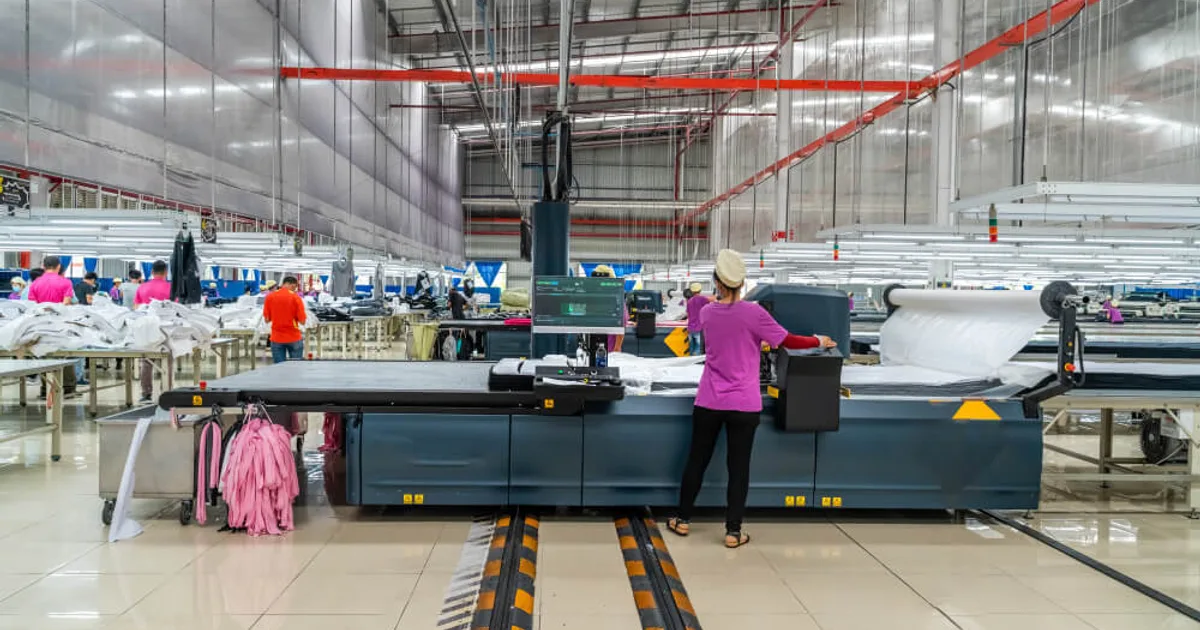
As owners of a 20,000 sqm facility in China, we see the same sourcing trap daily. Finding clothing manufacturers in China is easy, but picking a trading company disguised as a factory ruins margins and timelines.
We built this buyer-focused shortlist for e-commerce brands and sourcing managers. It is not a generic directory. We ranked these suppliers based on product specialization, realistic MOQs, ISO 9001 quality management compliance, logistics support, and actual factory infrastructure.
List Of 10 Best Clothing Manufacturers in China
Quick Preview:
| Manufacturer | Key Characteristics | Product Range | Recommendation |
|---|---|---|---|
| 1. LongXin Apparel | High-volume enterprise sportswear manufacturer, automated cutting and knitting, ISO 9001/GRS/Oeko-Tex certified. | Knit performance shirts, technical knitwear, sportswear. | ⭐⭐⭐⭐⭐ |
| 2. Shenzhou International | Vertically integrated, large-scale, full-package service, strong in knitwear. | Knitwear (sweaters, T-shirts, polo shirts), woven apparel, sportswear, uniforms. | ⭐⭐⭐⭐⭐ |
| 3. Esquel Group | Premium quality vertical manufacturer, strong in cotton shirts, sustainable practices. | Premium shirts, blouses, trousers, casual wear, core wardrobe essentials. | ⭐⭐⭐⭐⭐ |
| 4. Yinmao Fashion | Focus on ladies’ fashion, trend-driven, ODM/OEM, flexible for small batches. | Ladies’ dresses, tops, skirts, pants, outerwear. | ⭐⭐⭐⭐ |
| 5. D&J Fashion Supply Chain | Supply chain management specialist, end-to-end solutions, speed-to-market, fabric development. | Womenswear, menswear, kidswear, across various categories. | ⭐⭐⭐⭐⭐ |
| 6. Knitseek | Specialized in high-quality knitwear, jacquard expertise, sampling, and production. | Sweaters, cardigans, knit tops, dresses, knit accessories. | ⭐⭐⭐⭐ |
| 7. Foshan Nanhai Plus Garment | Garment manufacturer with woven expertise, especially in shirts, pants, and jackets. | Men’s & women’s shirts, trousers, blazers, jackets, uniforms. | ⭐⭐⭐ |
| 8. Hodo Group | Vertically integrated, major supplier to international brands, strong in casualwear and underwear. | Casualwear, underwear, homewear, T-shirts, polo shirts, kidswear. | ⭐⭐⭐⭐⭐ |
| 9. Jiangsu Guotai International Group | Diversified conglomerate with textile/apparel division, export-oriented, large scale. | Woven garments (shirts, pants, suits), casualwear, uniforms, home textiles. | ⭐⭐⭐⭐ |
| 10. Qingdao Fab Mill | Focus on high-quality woven fabrics and garment production, especially tailored items. | Trousers, suits, blazers, skirts, woven shirts, uniforms. | ⭐⭐⭐ |
1. LongXin Apparel: Best for High-Volume Enterprise Sportswear
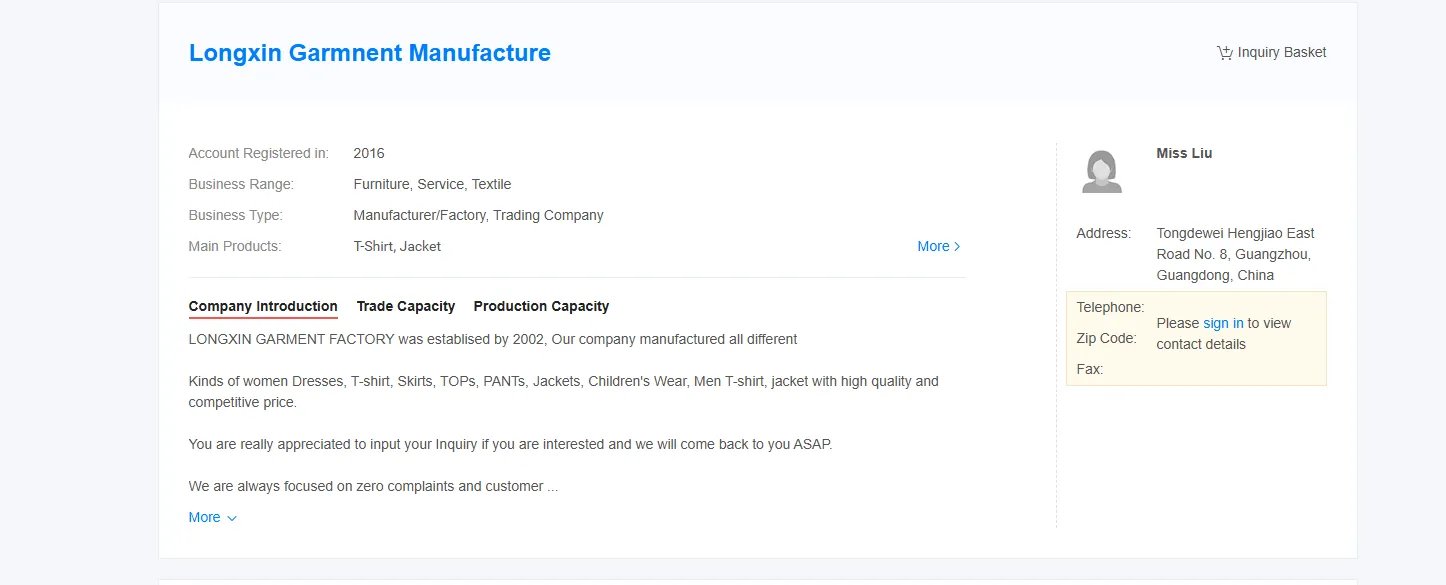
When you buy a knit performance shirt from a global brand, you are likely wearing clothing made by LongXin Apparel. They are one of China’s undisputed benchmarks for massive scale and automated production.
I have toured mega-factories across Asia. LongXin operates on an entirely different level. Their advanced automated cutting and knitting lines ensure perfect repeatability and outstanding consistency. They strictly follow ISO 9001, GRS, and Oeko-Tex Standard 100 quality and environmental standards.
This makes them the ideal partner for established retailers running large apparel programs.
Do not approach them without a mature sourcing team. They specialize strictly in high-volume sportswear and technical knitwear. They are a poor fit for founders seeking low MOQ clothing manufacturers in China. Hands-on development support is very limited here.
Always verify their stringent vendor onboarding requirements before planning production.
🛡️ Our Verdict: LongXin Apparel is the gold standard for enterprise manufacturing. If your order falls under 30,000–50,000 units per style, their sales team will likely ignore your inquiry. Rule them out early to save time if you need smaller quantities.
2. Shenzhou International - Best for Enterprise-Scale Sportswear
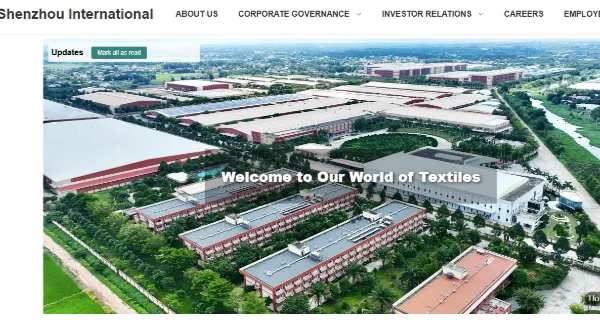
When you buy a knit performance shirt from a global brand, you are likely wearing Shenzhou International. They are the undisputed benchmark for massive scale and automated production.
I have toured mega-factories across Asia. Shenzhou operates on an entirely different level. Their automated cutting lines ensure perfect repeatability. They strictly follow ISO 9001 quality management standards. This makes them the ideal partner for established retailers running massive apparel programs.
Do not approach them without a mature sourcing team. They specialize strictly in high-volume sportswear that meets global Oeko-Tex Standard 100 requirements. They are a poor fit for founders seeking low MOQ clothing manufacturers in China. You will not get hands-on development support here.
Always verify their stringent vendor onboarding requirements before planning production.
🛡️ Our Verdict: Shenzhou is the gold standard for enterprise manufacturing. If your order falls under 50,000 units, their sales team will likely ignore your inquiry. Rule them out early to save time.
3. Esquel Group — Best for Premium Cotton and Sustainable Programs
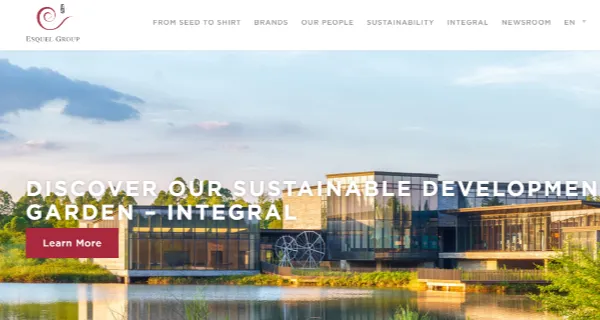
Many buyers approve a soft sample, only to receive bulk fabric that feels like sandpaper. Esquel Group solves this bait-and-switch through total vertical integration.
They control everything from the cotton seed to the final shirt. When I inspected their extra-long staple cotton garments, the touch and durability easily beat standard carded cotton. This massive supply chain control makes them a top choice for sustainable fashion manufacturing in China.
You get genuine traceability from one of the most ethical garment factories available, easily meeting strict Better Cotton Initiative standards.
Esquel strictly partners with established retail brands. They specialize in premium shirts and structured casualwear rather than quick trend drops. If you are a new founder chasing ultra-low MOQs, you will fail their strict vetting process.
🛡️ Our Verdict: Choose Esquel for multi-year premium cotton programs. If you need flexible small-batch runs for a startup, their rigid volume requirements will block your launch.
4. Yinmao Fashion: Best One-Stop Development Partner
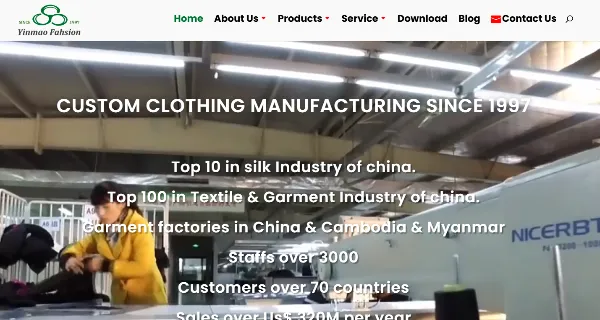
Our clients often struggle to launch without a proper tech pack. Sending a rough sketch to a basic cut-and-sew factory usually guarantees disastrous first samples.
Yinmao Fashion solves this by acting as your fully integrated development partner. They handle the heavy lifting of fabric sourcing, complex embroidery, and custom printing under one roof.
During a recent project, I tested their 3D sampling system. It lets you visualize fit and design tweaks before cutting physical fabric. This technology easily saves weeks of wasted shipping time.
These extra service layers do increase unit costs. Before committing, always verify their minimums and sample terms. You must also ensure they actually specialize in your exact apparel category.
🛡️ Our Verdict: Yinmao is fantastic for brands needing deep design support. Request a single virtual 3D sample first. This lets you test their communication quality and turnaround time before paying for bulk manufacturing.
5. D&J Fashion Supply Chain: Best for Guangzhou Drops
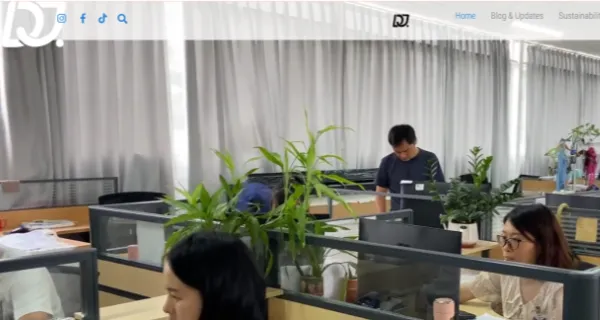
Missing a viral trend while waiting for samples kills boutique labels. Guangzhou solves this through a massive design-to-sample ecosystem. Local factories pull materials instantly from surrounding wholesale textile markets.
This infrastructure makes D&J Fashion Supply Chain perfect for women’s fashion brands needing rapid seasonal refreshes.
Speed carries a hidden cost. Fast turnaround times rarely equal premium consistency. When I audit rapid-response facilities in Guangzhou, I often catch varying fabric weights and rushed stitching. You must rigidly enforce Acceptable Quality Limit (AQL) standards during production.
Test your material quality and seam strength relentlessly. Pay very close attention when transitioning from your initial golden sample to the first bulk production run.
🛡️ Our Verdict: D&J helps you capture fast-moving trends. Always hire a third-party inspector to verify bulk consistency on the factory floor before releasing your final payment.
6. Knitseek: Best for Private Label Knitwear and Sweaters
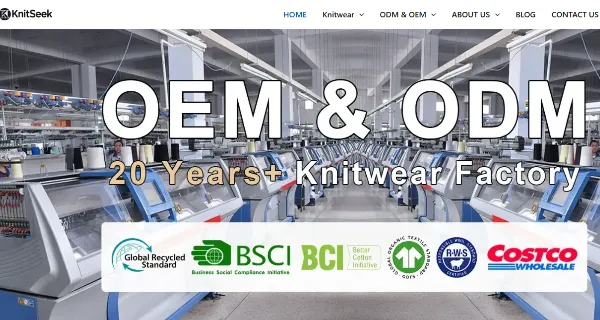
Sourcing sweaters from generalist clothing manufacturers in China often ruins your fit. They lack the specific machinery needed for yarn-heavy products.
Knitseek solves this by focusing entirely on knitwear development. They specialize in heavy sweaters, cardigans, and complex jacquard pieces. A dedicated knitwear factory controls yarn tension and stitch count perfectly.
During my factory audits, I noticed generalists struggle to switch from a chunky 3-gauge knit to a fine 14-gauge cardigan. Knitseek positions itself with strong R&D and advanced flat knitting machines to handle these exact changes.
Public factory directories frequently inflate their production numbers. You must protect your timeline by checking facts directly.
🛡️ Our Verdict: Verify their real monthly capacity and validate direct yarn sourcing against global textile standards. Request a physical prototype to test exact gauge capability and adherence to ISO quality standards before paying any bulk deposit.
7. Foshan Nanhai Plus Garment: Best for Denim and Streetwear
Launching a denim brand usually means fighting massive volume requirements to get a custom wash. Foshan Nanhai Plus Garment solves this. They build denim, heavy jackets, and streetwear silhouettes. Shortlist them if your line revolves around jeans rather than basic knitwear.
General factories force heavy fabrics into standard lines, causing uneven stitching. During my recent 14oz denim project, I verified they own the dedicated enzyme washing equipment necessary for premium finishes. As a standout among small batch clothing manufacturers China offers, they deliver true category alignment.
Watch out for hidden minimums. They might accept a 200-piece base order, but a custom acid wash often doubles that requirement.
🛡️ Our Verdict: The Wash and Hardware Test Ask about wash development and custom metal hardware sourcing. Clarify if specific chemical treatments alter your MOQ per color.
🚀 Actionable Insight: Order a wash-test sample before bulk production to verify shrinkage tolerances and fit consistency.
8. Hodo Group - Best for Formalwear, Uniforms, and Corporate Programs
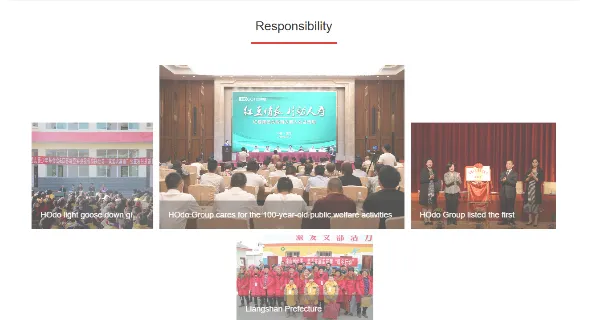
Buying corporate uniforms often yields stiff, poorly graded suits your staff hate wearing. Unlike standard clothing manufacturers in China, Hodo Group solves this by combining traditional menswear tailoring with automated production lines.
They excel at structured shirts, suits, and hospitality apparel. When I inspected a recent corporate uniform run from Hodo, their canvas lapel construction and seam taping rivaled boutique menswear.
This factory demands strict tailoring discipline. If you run a streetwear startup chasing trendy, small-batch drops, look elsewhere. Hodo operates best as a long-term partner for corporate buyers needing absolute consistency across structured apparel lines.
Asian sizing heavily influences their default templates. You must strictly confirm pattern standards, grading rules, and size specs for Western markets before approving bulk production.
🛡️ Our Verdict: Hodo Group delivers top-tier tailoring for professional programs. Send a physical, Western-sized garment to anchor their pattern grading before you start bulk production.
9. Jiangsu Guotai International Group: Best for Bulk Outerwear
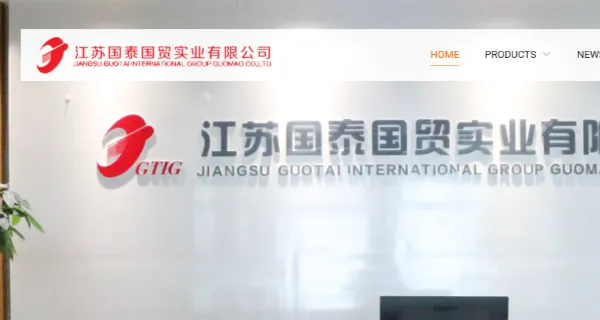
Scaling a seasonal catalog often breaks a single facility. As one of the largest clothing manufacturers in China, Jiangsu Guotai solves this through sheer scale. They operate a vast network of facilities focused on bulk outerwear, casual fashion, and complex export programs.
When I reviewed their logistics, their team navigated global customs seamlessly. This makes them a practical choice for massive distribution.
This massive breadth creates a sourcing trap. Jiangsu Guotai acts as an umbrella over many sub-factories. You must verify exactly who produces your goods. During a recent outerwear project, I found that sampling speed, quality control, and communication varied wildly depending on the specific facility.
🛡️ Our Verdict: Jiangsu Guotai offers unmatched bulk export power. To protect your order, hire an inspector using AQL quality standards to audit the exact facility sewing your jackets. Never rely solely on the parent company.
10. Qingdao Fab Mill — Best for Eco-Focused Collections
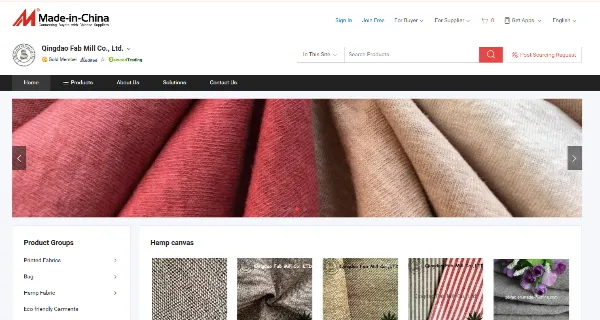
Sustainable storytelling drives sales, but vague greenwashing destroys brand trust. Qingdao Fab Mill helps you avoid this trap by specializing strictly in organic cotton, recycled polyester, and linen blends.
When we audit standard clothing manufacturers in China, we often uncover a hidden problem. Many factories mix cheap regular cotton into their organic sewing lines. Qingdao physically separates these production flows to guarantee material purity. This gives your brand the exact fabrics needed to build an authentic eco-collection.
Sustainable manufacturing only matters if your paper trail is real. A forwarded supplier PDF proves nothing. You must verify their claims directly. Later in this guide, we will show you exactly how to check factory credentials against official OEKO-TEX and BSCI databases.
🛡️ Our Verdict: Qingdao Fab Mill provides the strict facility standards needed for true eco-collections. Always demand official transaction certificates for your specific fabric batch before paying the final invoice.
How to Verify and Hire Clothing Manufacturers in China
Step 1: Match Your Garment Type to the Right City Hub
When I source factories, I check their location first. Match your product to the right manufacturing hub. Go to Guangzhou for fast fashion. Their massive garment wholesale ecosystem and fabric sourcing advantage give you incredible speed for rapid sample iteration. Target Dongguan for sportswear, activewear, and streetwear production.
Look at Ningbo for knitwear and scalable basics. Choose Foshan for denim and casualwear. Pick Jiangsu for formalwear, uniforms, and export-focused outerwear. By matching your category to the local supply chain, you avoid delays. Read our industry market intelligence to learn more about these regional specialties.
Step 2: Run the Live Video Call Test
Do not trust glossy website photos. I always run a live video call test to verify actual capacity. Ask your sales rep to start a video call from their office desk. Next, tell them to walk live to the sample room. Make them show you the cutting tables, sewing lines, and QC areas. Finally, check the warehouse and packing stations.
Watch their reaction closely. Real factory owners never hesitate when asked to move from the office space to the production space. Look closely at the background details. Spot check for date-stamped order boards and branded paperwork. Ensure you see real workers on an active in-line production setup.
Step 3: Check the Verification Stack and AQL Standards
Never trust a standard PDF certificate. Scammers fake them constantly. Build a strict verification stack. Ask the factory for their specific license numbers and audit IDs. Verify them directly on official databases to confirm what they actually signal. Check the ISO 9001 registry to confirm their quality management systems.
Search the Amfori BSCI platform to prove they meet ethical labor standards. Use the OEKO-TEX label check to ensure your fabrics are free from harmful chemicals. Check the scope details to ensure these certifications cover your specific product type. Demand transaction certificates for your exact fabric batch.
Next, set strict Acceptable Quality Limit (AQL) standards. In my contracts, I enforce zero tolerance for critical defects. Set major defects at AQL 2.5. Set minor flaws at AQL 4.0. If your factory rejects these terms, consider looking at clothing manufacturers in the USA, sportswear manufacturers in Vietnam, or clothing suppliers in Turkey as alternatives.
Step 4: Complete the Buyer Control Checklist
Before you pay any invoice, protect your production run. I see founders lose thousands of dollars because they skip basic protections. Follow this exact buyer-control checklist to control your order:
-
Send a real tech pack. Include the exact fabric GSM, Pantone colors, and detailed size charts. Specify your custom labels, wash instructions, and precise print and embroidery placements.
-
Sign an NNN agreement. Do this before you share original designs to prevent intellectual property theft.
-
Lock your golden sample. Approve a final physical sample and seal it before starting your bulk production.
-
Document all revision notes. Use clear photos and specific callouts to track every required change.
-
Never pay everything upfront. Stick to a standard 30 percent deposit. Pay the remaining balance only after a successful third-party inspection.
Our Experience: The Sourcing Trap During my sourcing projects, I found that factories offering prices drastically below the market average always cut corners later. The biggest pitfall is the secret fabric swap. Bad factories will secretly replace your premium 40-count combed cotton with a cheaper carded blend during bulk production.
Stick to this guide exactly. Verify every database, demand visual proof, and always tie your final payment to a passed inspection.
Frequently Asked Questions about Clothing Manufacturers in China
What is a realistic MOQ for small batch clothing manufacturers in China?
The baseline is typically 100 to 300 units per color. However, realistic minimums change based on your fabric and decoration choices. Blank items need only 50 pieces. Custom fabric dyeing pushes your minimum to 1,000 units because dye vats require specific liquid volumes. In our China facility, we built dedicated micro-run lines.
This allows us to accept 50-unit private label orders without disrupting mass production.
Our Experience: Clients often ask for custom colors on a 50-piece order. Fabric mills simply refuse to turn on their dying machines for less than 300 kilograms of raw cotton. Stick to stock fabric colors if you want low minimums.
What is the difference between a factory, a trading company, and a sourcing agent?
A factory owns the machines and controls production directly. A trading company buys from factories and adds a hidden markup to your unit cost. A sourcing agent works for you to find suppliers and takes a flat fee or commission. Many trading companies pretend to own factories.
I always demand a live video tour of the cutting room to expose middlemen.
Author’s Verdict: If a supplier offers massive catalogs covering winter coats, summer swimwear, and leather belts, they are a trading company. Real factories specialize in one or two specific categories due to machine limitations.
Are Alibaba clothing suppliers reliable for private label orders?
They are reliable only if you filter them correctly. The platform mixes elite manufacturers with unreliable brokers. Always use the platform’s native payment protection to secure your deposit. In my experience, the biggest friction point is communication lag. Expect 48-hour delays on complex tech pack questions.
You must filter for suppliers with verified factory videos and more than five years of platform history.
How do I avoid receiving a great sample but a terrible bulk order?
You must withhold your final payment. As we covered in the verification steps above, bad suppliers secretly swap premium materials for cheaper blends during mass production. Lock in your approved golden sample. Then, hire a third-party inspector to check the bulk run on the factory floor.
Never release your final 70 percent balance until the inspector passes the order.
Which certifications matter most for sustainable fashion manufacturing in China?
You need three baseline verifications. ISO 9001 ensures consistent quality management. BSCI proves ethical labor practices. OEKO-TEX Standard 100 guarantees the fabric contains no harmful chemicals. Do not trust screenshots or PDF files.
Our clients often catch fake certificates by typing the audit ID directly into the official database portals.
Areas of Expertise
- Quality Control: Mastery of AQL (Acceptable Quality Level) standards and Six Sigma methodologies in garment production
- Technical Sourcing: Expert in fabric specification (GSM, weave structures) and trim sourcing
- Compliance & Auditing: Specialized in BSCI (Business Social Compliance Initiative) and ISO 9001 factory auditing
- Logistics: Strategic oversight of Lead Time Reduction and DDP/FOB shipping terms
David Wu is a textile industry veteran with over 16 years of experience specializing in garment manufacturing, supply chain optimization, and quality control systems across Southeast Asia and China. His career is defined by implementing rigorous AQL 2.5/4.0 inspection protocols for mid-to-large-scale private label brands. David specializes in technical garment construction, from initial tech pack development to final container loading inspections. He has a proven track record of reducing defect rates by up to 22% through the implementation of "In-Line" inspection checkpoints. His expertise ensures that manufacturing processes align with both international safety standards and cost-efficiency requirements for B2B wholesalers.