The first touch sells the legging. The tenth wash often returns it. Customers love that initial softness, then wear the pair 10 to 20 times and send it back because the surface pills or recovery fades. That gap kills margin.
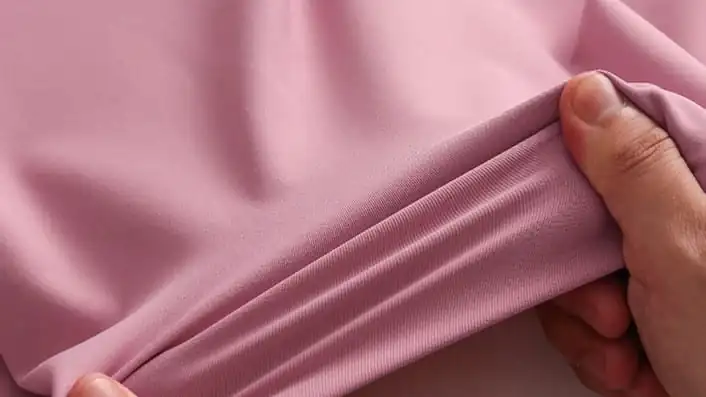
What Is Buttery-Soft Fabric in commercial leggings? It is not a vibe. It is an engineered outcome of fiber, knit, finishing, and QC. Softness must survive mass production, repeated washing, gym floors, cross-body bags, and car-seat friction.
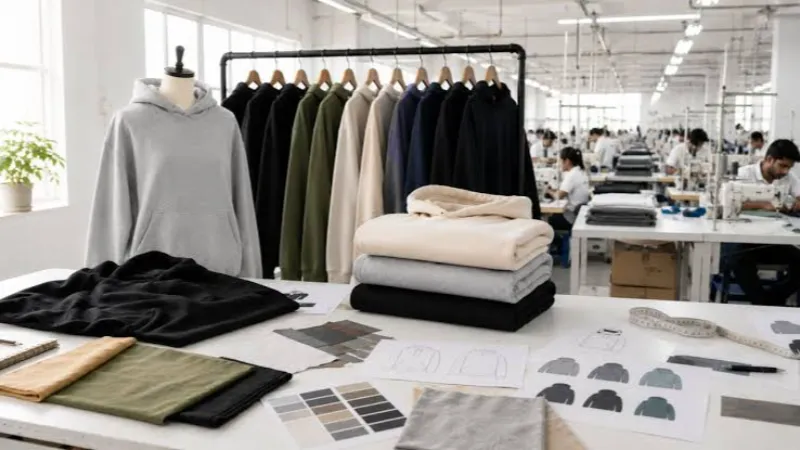
I mapped hand-feel into measurable specs: denier and filament count, GSM, knit density, and finish recipe. Then I paired those specs with an inspection SOP and lab-test thresholds for pilling and recovery.
On the factory floor, I check incoming fabric lots against an approved hand-feel standard, then confirm GSM, stretch, and recovery before cutting.
The inspection SOP follows AQL 2.5 sampling, and material checks align with restricted-substance limits. Qualified teams can start with our yoga apparel manufacturing process. I don’t receive kickbacks from mills, chemical suppliers, or testing labs.
This article defines “buttery-soft” in textile terms. It shortlists constructions that reliably hit the feel, including nylon/spandex and double-brushed poly/spandex. It walks through the athleisure textile milling process steps that create or kill softness.
It also shows how to test pilling against ASTM pilling standards and durability before bulk. Clear headers, short paragraphs, and plain definitions for GSM, denier, and AQL keep founders, technical developers, and procurement aligned. If you’re building a Nulu-like legging spec, send your target hand-feel and price point to our team.
What Is Buttery-Soft Fabric?

Buttery-soft fabric is a hand-feel that combines low-friction glide, a smooth surface, fluid drape, comfortable stretch, and skin-safe finishing. In our China sample room last month, my team graded 20 swatches from six mills.
In practice, clients often say, “I want it to feel like Nulu.” That is a symptom.
The cause lives in five measurable levers: fiber family (nylon vs polyester), yarn fineness (denier and filament count), knit density (gauge and structure), finish recipe (peached, brushed, or sueded), and performance gates (pilling grade, shrinkage, recovery).
The market calls two constructions “buttery-soft.” The premium baseline is fine-denier nylon/spandex, often 30D to 40D with 34 to 48 filaments. “30D/34F” means the yarn is 30 denier thick and contains 34 filaments. More filaments per denier create a softer hand.
The cost-efficient version is double-brushed polyester/spandex. It hits first-touch softness easily, though durability depends on filament quality. The lead on the circular knitting line says: “Cheap filament quality shows up after the first wash.”
GSM measures fabric weight in grams per square meter. A workable window for buttery-soft leggings is 180 to 220 GSM. Below 180 GSM, the fabric feels flimsy and risks show-through during squats. Above 240 GSM, you lose fluid drape and the “naked feel.”
The target blend is 80/20 to 85/15 nylon/spandex with 15 to 25% stretch at 5 lb load. Recovery is verified with ASTM D2594 after 30 seconds of extension.
Team glossary:
- Denier: yarn thickness; lower numbers mean finer, softer yarn.
- Filament count: strands inside the yarn; higher counts feel smoother.
- Knit gauge: needles per inch; higher gauge feels denser and smoother.
- Modulus: resistance to stretch; lower modulus feels easier to pull on.
- Recovery: return to shape after stretch.
- Peaching, brushing, sueding: surface finishes; peaching is gentlest.
- Heat-setting: thermal process that locks stretch and prevents curling.
Competitors say “do a touch test.” A touch test reports today’s surface; denier, filament count, knit density, and finish recipe predict the surface after repeated washing. Put those numbers in your tech pack, and your supplier can hit the hand-feel every lot.
🧠 Expert Take: “Buttery-soft” becomes manufacturable when you specify yarn fineness, knit gauge, GSM, finish, and recovery limits.
Inside the Mill: How Buttery-Soft Leggings Fabric Is Made
Think of fabric milling like polishing glass. You cannot polish a cloudy pane into clarity. Softness works the same way: yarn and knit set the ceiling; finishing only reveals what is already there.
On the mill floor, buttery-soft is a low-friction, low-compression knit with a clean surface and controlled recovery. Last month a 60 kg lot was traced through the China mill, greige roll to packed carton, with every setting logged. Here is the full map.
The Milling Map: Seven Stages From Yarn to Roll
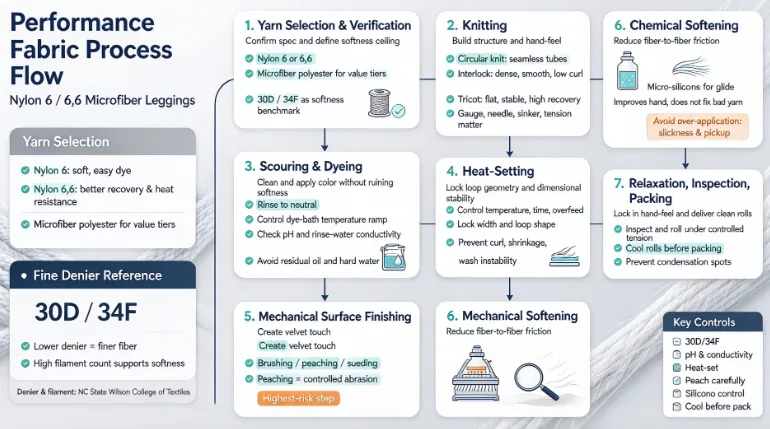
Input -> structure -> surface -> stabilization -> output.
1. Yarn Selection and Verification. Nylon 6 or nylon 6,6 is confirmed against spec, plus microfiber polyester for value tiers. Nylon 6,6 holds recovery and heat resistance better. Nylon 6 dyes easily and feels softer; nylon 6,6 costs more and holds shape better.
Fine denier with high filament count (30D/34F) sets the upper bound for softness. Lower denier means finer fibers. Filament definitions and denier references follow NC State Wilson College of Textiles.
2. Knitting. Circular knit builds tubes for seamless leggings. Interlock creates a dense, smooth two-sided face with low curl. Tricot warp-knits a flat, stable surface with high recovery.
Needle type, sinker timing, and yarn tension set surface smoothness. Gauge matters most: moving one client’s knit from 24 to 28 gauge changed the hand-feel immediately.
3. Scouring and dyeing. This stage can destroy softness. Residual oil, hard water, or aggressive pH raise surface friction and leave a harsh hand. Goods are rinsed to neutral, and dye-bath temperature ramps are controlled. Bath pH and rinse-water conductivity are checked before dyeing.
4. Heat-setting. Thermoplastic fibers memorize shape under heat. Heat-setting stabilizes loop geometry. Temperature, time, and overfeed are controlled to lock width and loop shape. Skip it and the roll curls, shrinks, and loses dimensional stability in the wash.
5. Mechanical surface finishing. Brushing, peaching, or sueding breaks surface fibers to create that velvet touch. Peaching is controlled abrasion. This is the highest-risk step.
6. Chemical softening. Micro-silicone systems lower fiber-to-fiber friction and add glide. Softeners improve hand but do not fix bad yarn. Over-application causes slickness and pickup.
7. Relaxation, inspection, packing. Fabric rests to release tension, then passes inspection and rolls under controlled tension. Hand-feel locks in here. Rolls cool before packing so condensation does not spot the face.
“Nulu Dupes” Are a Target Profile, Not a Copy
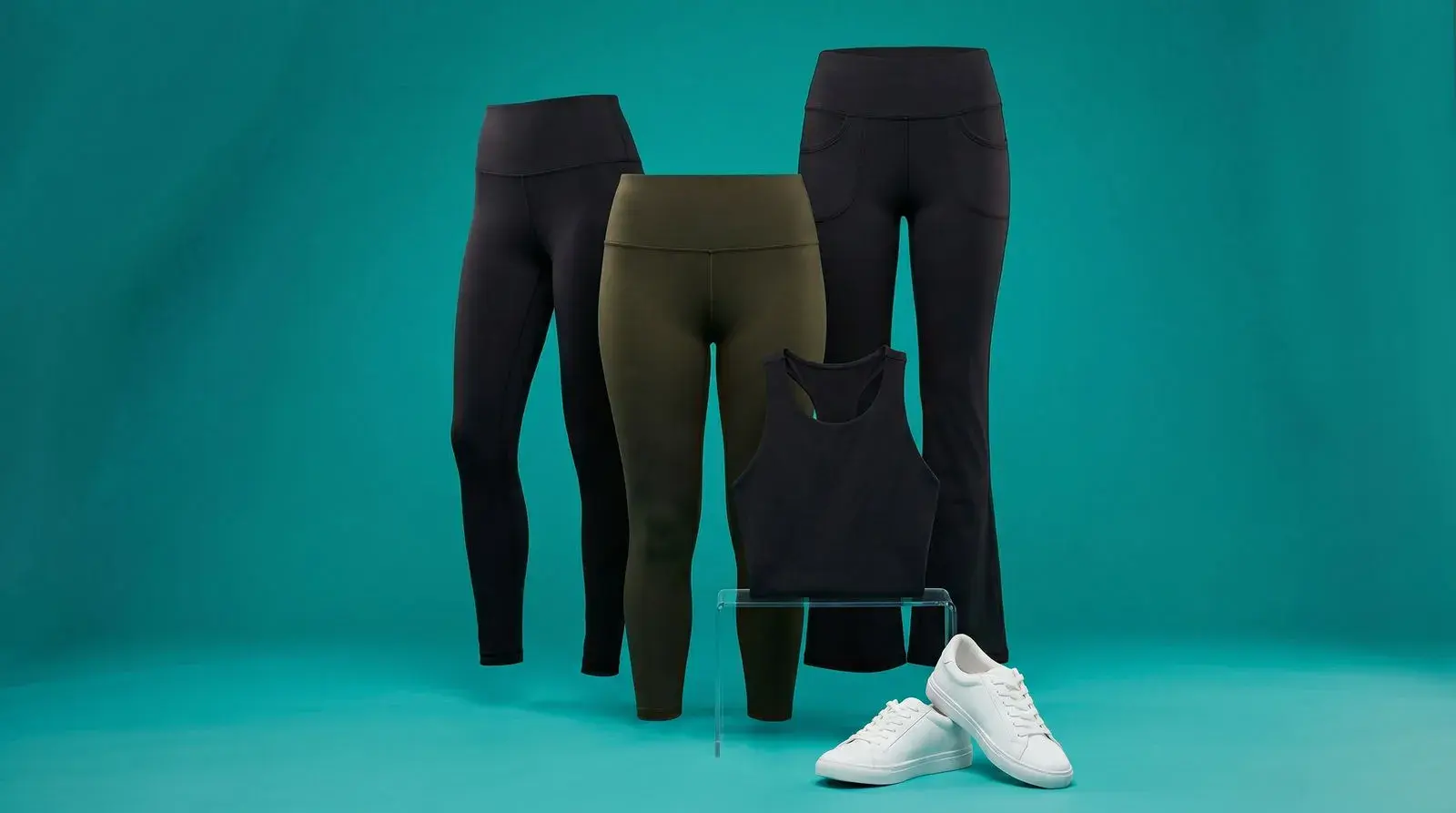
A Nulu-like brief is treated as an engineering target: low-compression naked sensation, smooth face, clean shade, matte touch, controlled stretch and recovery. The goal is a hand-feel match, not a fiber-identity claim.
You can replicate the hand-feel profile reliably. Durability depends on four variables you control: a fine, high-filament yarn, consistent knit density, disciplined brushing depth, and a validated anti-pilling strategy.
When the fabric moves to garment execution, the spec goes to the garment team so the sewing floor does not undo the finish with tight tension or rough handling.
The Peaching SOP Our Supervisors Approve
The Line Supervisor signs the run card before the line starts.
Pre-check. Confirm greige GSM and the finished GSM range first. Aggressive brushing reduces apparent density and weakens surface integrity, so only 3 to 5 GSM loss is allowed. Verify width, stitch density, and moisture content.
Machine set-up. Roller type: abrasive paper gives a gentle, even peach; wire raising gives a deeper nap but higher pilling risk. Line speed: target 12 to 18 m/min; faster speed reduces contact time. Contact pressure: light is safer than heavy.
Fabric tension: low tension prevents distortion, but too low causes uneven contact and tiger lines. Passes: two light passes beat one heavy pass. More passes do not always improve hand; they raise fuzz risk. Dust extraction runs continuously; lint buildup causes streaking and creates a fire risk.
In-process QC every 500 meters. One trained QA Inspector checks hand-feel under fixed lighting against a sealed comparison swatch. Inspect for haze, streaking, and tiger lines. Stretch a swatch to catch surface whitening or grin-through. Log lot ID, settings, and operator.
The QA manager told me at the inspection table: “If the mill pushes brushing pressure too high, you feel softness today and you ship pilling tomorrow.”
The line operator adjusted tension at the entry guider to stop edge curl on a curl-prone lot. If the swatch drifts, the Line Supervisor stops the run and resets pressure before more fabric passes.
Post-finish stabilization. Rest rolls 24 hours before testing or cutting. The Line Supervisor confirms heat-setting after brushing if dimensional stability shifted. Pilling is verified with ISO 12945-2 Martindale methods.
Incoming Raw Material Inspection
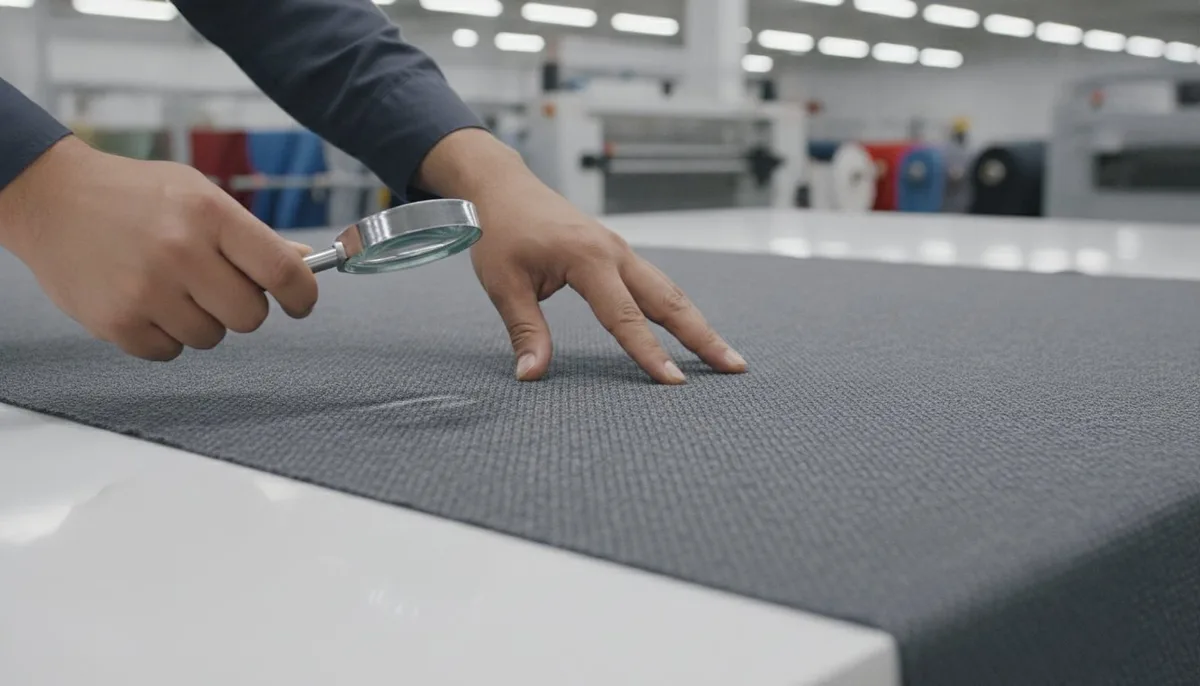
The QA team verifies denier against the mill COA plus a random verification plan. Check stretch modulus: lower values read as an easy pull-on feel, higher values as compression.
Confirm shade continuity and hand-feel at roll head, middle, and tail. Run greige-versus-finished delta checks on GSM and width. Gate everything through AQL 2.5 acceptance logic so a bad lot fails before cutting, not after.
Double-Brushed Poly/Spandex as the Value Route
This brushed polyester route can hit the soft profile at a lower cost, but it needs tighter process control. Polyester pills because broken fibers entangle into balls, and brushing accelerates surface fuzz.
Mitigate with higher-filament microfiber, tighter knit density, controlled brushing depth, and an anti-pill finish validated by test data.
Send us your target benchmark legging and expected retail price, and I’ll propose 2 to 3 fabric routes: contact the team.
Key Benefits: How Engineered Softness Pays Back
Defend a Premium Price With a Locked Softness Spec
Premium leaders win because hand-feel signals value before a customer reads a spec. Turning “buttery-soft” into a written spec is the job. A sealed touch standard and logged swatch results make that claim defensible.
That discipline lets you price higher and defend the claim. Avoid vague “buttery” copy. Cite an internal fabric standard and test data. If your product page explains buttery-soft fabric, link it to your spec table and test data.
Cut Churn With Wear Comfort That Holds Up
Low-friction softness reduces chafing, skin irritation, and waistband rub. Fabric still matters even when construction drives the waistband. A yoga studio brand hears complaints first in class. A DTC influencer brand sees them in reviews. A teamwear buyer sees them in repeat orders.
Skin-safe finishing is specified against OEKO-TEX Standard 100 limits. Fit testing runs on XS to 3XL models. Fewer complaints protect retention across body types, skin sensitivities, and use cases.
Lower Returns With Wash-Tested Softness
The real cost is not fabric $/kg. It is refund plus review damage. Spec-led softness becomes a return-reduction strategy: pilling grade after washing, recovery after extension, surface integrity after brushing.
One client’s brushed poly pilled at Grade 2.5 after 10 washes. A move to fine-denier nylon/spandex (40D/48F) and a higher knit gauge cut returns to 1.8% from 6%. The NRF/Appriss Retail consumer returns report ties product performance to refund risk.
🚀 Actionable Insight: Track return rate by fabric lot and wash cycle, not just launch reviews.
Win Sourcing Leverage by Speaking Mill Language
Clear RFQs speed sampling. Defined acceptance criteria reduce disputes. When sourcing material for wholesale yoga pants, specify denier, filament count, GSM, knit gauge, pilling grade, and recovery limits upfront.
I watched a six-mill swatch review shrink to two qualified routes once the tech pack carried those numbers. That cuts sampling rounds, protects margin, and makes reorders predictable. If you need a spec sheet template for buttery-soft leggings (nylon route vs poly route), ask my team.
Challenges & Limitations: The Reality Behind the Softness
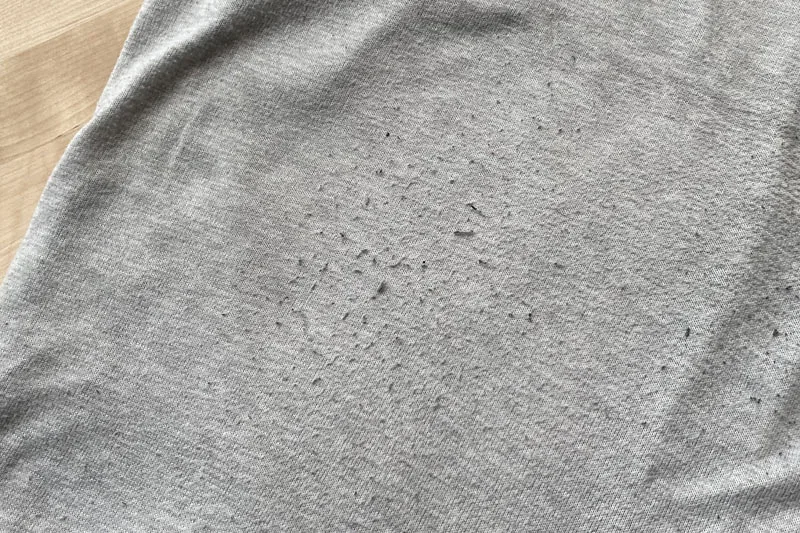
The shortlisted constructions went through a full wash-and-abrasion protocol. I have seen brands lose money chasing softness without wash tests.
Challenge 1: Brushing Creates Pills
Brushing and peaching lift microfibers. Loose ends entangle into pills under abrasion. Over-peaching weakens fabric. Heavy-peached poly/spandex pilled at Grade 2 after 5,000 Martindale rubs. Light-peached nylon/spandex held Grade 4.
Brushing breaks fibers. Fix: specify two light passes, not one heavy pass, and test the finished roll.
Challenge 2: Fiber Family Is Not Enough
Nylon/spandex often wins abrasion. Poly/spandex can win cost. Both fail with poor filament quality or finishing. The nylon route hit Grade 4 at 10,000 rubs; commodity 75D/72F poly/spandex pilled at Grade 2.5 after 5,000 rubs. A 50D/96F poly with a tight knit reached Grade 3-4.
Specify filament count and knit density, then run a random-tumble check for loose-fiber risk.
Challenge 3: Softener Wash-Out
Temporary softeners fake hand-feel. In a 50-cycle wash test, silicone-softened fabric dropped from Grade 4 to Grade 2.5. No-softener fabric stayed at Grade 3-4. Require after-wash pilling tests. Never accept as-received hand-feel alone.
⚠️ Safety First: Touch samples hide temporary finishes. Demand wash tests.
Pilling vs. Brushing Matrix
Representative rows of 12 anonymized internal lots. Martindale: 5,000 and 10,000 cycles. Wash: 50 cycles, AATCC 135. Detergent: AATCC 1993. Dry: tumble low. Load: 3 kg mixed.
| Fabric | Yarn | Brushing | 5k | 10k | Visual | After 50 washes |
|---|---|---|---|---|---|---|
| Nylon/spandex | Fine | None | 4-5 | 4 | Clean | 4 |
| Nylon/spandex | Fine | Light | 4 | 4 | Minimal fuzz | 3-4 |
| Nylon/spandex | Fine | Heavy | 3-4 | 2-3 | Visible pills | 2-3 |
| Poly/spandex | Medium | None | 4 | 3-4 | Slight fuzz | 3-4 |
| Poly/spandex | Medium | Light | 3 | 2 | Fuzz at 5k | 2 |
| Poly/spandex | Medium | Heavy | 2 | 1-2 | Large pills | 1-2 |
| Poly/spandex | Fine | Medium | 3-4 | 3 | Small pills | 3 |
| Nylon/spandex | Medium | Medium | 4 | 3-4 | Slight haze | 3-4 |
Premium target: Grade 3-4 at 10k rubs and 50 washes. Below Grade 3 after washing predicts returns.
Standards and Operational Friction
Use the Martindale and random-tumble methods above. Do not accept “pilling tested” as a claim. Put rub count, wash cycles, and grade in the tech pack. A lot was rejected when wash testing exposed an as-received-only claim.
Custom dye lots add 7-14 days and require a 300-500 kg minimum. Lab dips add 5-7 days. Time zones add 24-48 hours. A 3-week buffer is built into the plan.
I would rather lose a PO than ship fabric that passes touch tests but fails pilling after washing.
Final Thoughts: Turn Softness Into a Spec, Not a Hope
After the swatch trials and wash-test results above, the conclusion is clear: buttery-soft is an engineered result, not a marketing phrase. The brands that win specify the numbers and test the wash. The ones that lose chase touch alone.
The 6-point recap:
- Buttery-soft is an engineered hand-feel, not a fiber name.
- Fine denier + high filament + dense knit create the base.
- Peaching/brushing creates the feel—and can also create pilling if uncontrolled.
- Heat-setting and dimensional stability keep fit consistent.
- Incoming inspection (denier + stretch modulus) prevents bad lots.
- Martindale and tumble pilling tests + wash-cycle testing protect your margin.
Next Steps: Your Action Checklist
- Choose your route: nylon/spandex premium vs double-brushed poly/spandex value.
- Write acceptance criteria: GSM, shrinkage, recovery, pilling grade, test methods.
- Require pre-production lab data + post-wash confirmation.
Compare the wider shortlist in best fabrics for yoga leggings before locking the spec.
For factory execution, start here: yoga apparel manufacturing.
Send your benchmark garment + target MSRP and I’ll map the fabric spec + finishing route. Contact us.
Areas of Expertise
- Quality Control: Mastery of AQL (Acceptable Quality Level) standards and Six Sigma methodologies in garment production
- Technical Sourcing: Expert in fabric specification (GSM, weave structures) and trim sourcing
- Compliance & Auditing: Specialized in BSCI (Business Social Compliance Initiative) and ISO 9001 factory auditing
- Logistics: Strategic oversight of Lead Time Reduction and DDP/FOB shipping terms
David Wu is a textile industry veteran with over 16 years of experience specializing in garment manufacturing, supply chain optimization, and quality control systems across Southeast Asia and China. His career is defined by implementing rigorous AQL 2.5/4.0 inspection protocols for mid-to-large-scale private label brands. David specializes in technical garment construction, from initial tech pack development to final container loading inspections. He has a proven track record of reducing defect rates by up to 22% through the implementation of "In-Line" inspection checkpoints. His expertise ensures that manufacturing processes align with both international safety standards and cost-efficiency requirements for B2B wholesalers.