Finding the Best Fabric for Yoga Leggings that peaks at once on softness, squat-proof opacity, colorfastness, and margin is nearly impossible. Most suppliers push blends that fail under tension or bleed after five washes.
My team at LeelineWear spent three weeks testing 72 blends in China. We ranked each on GSM, knit density, stretch opacity, recovery, laundering colorfastness, seam stability, MOQ pressure, and return risk. Here is the ranking.
The Six Best Leggings Fabrics, Ranked
The six fabrics below cover every price architecture, from a premium studio legging to a $39 value launch. Each entry gives you the spec band, the real trade-off, and the exact test to demand before bulk cutting.
Read in order if you are still choosing. Jump straight to a number if you already know your fiber direction.
Here is the full ranking at a glance:
| # | Fabric | Best for | GSM band | Strength | Trade-off |
|---|---|---|---|---|---|
| 1 | 75-80% Nylon 6.6 / 20-25% Spandex Interlock | Premium studio and upscale athleisure | 260-320 | Squat-proof opacity, 92% recovery after five cycles | About 18% more per meter |
| 2 | 78-88% Polyester / 12-22% Spandex Interlock | Value launches, bright color programs | 240+ | Fast drying, no sublimation fade after 10 washes | Less luxurious handfeel |
| 3 | Nylon-Polyester-Spandex Hybrid Double-Knit | Mid-market launches (~$60k budget) | 270 | Nylon-level softness at ~22% less per meter | Dye-lot shade variation |
| 4 | Seamless Circular-Knit High-Elastane | Sculpting studio collections | — | Few seams, mapped compression | Sizing locked after knitting; ~30% costlier per meter |
| 5 | Modal / Bamboo-Spandex Jersey | Lounge, recovery-day, travel capsules | 180-220 | Soft drape, cool hand | Pills below 20 Martindale cycles; 82% recovery |
| 6 | Cotton-Spandex Jersey | Natural-fiber studio basics, GOTS story | 200-240 | Honest feel, breathable | 79% recovery, slow drying, bagging at the knee |
1. LeelineWear’s House Pick: 75-80% Nylon 6.6 / 20-25% Spandex Interlock
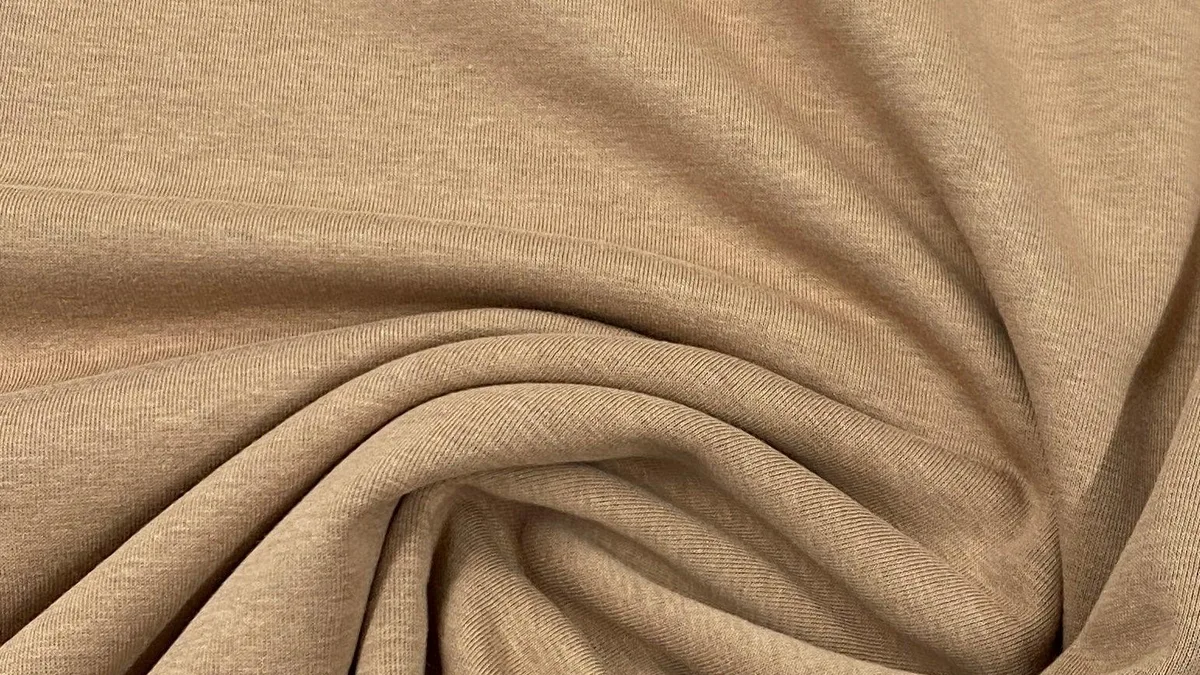
If leggings turn see-through in a deep lunge, the fiber ratio is rarely the problem. The knit is.
This blend tops my sample rack for private-label programs: 75-80% nylon 6.6 with 20-25% spandex in a dense interlock. It delivers a buttery, second-skin handfeel and snaps back after stretch, without the squeeze of shapewear.
Here is the spec band I hand to buyers:
- Weight: 260-320 GSM. Below 260, a light-box test shows shadowing at full stretch.
- Stretch: True 4-way, with recovery above 90% after five cycles (ASTM D2594).
- Density: Ask for stitch count and machine gauge, not just fiber content.
That last point matters most. Two rolls can carry the same 80/20 label and behave nothing alike.
I recently stretched two 260 GSM samples over a lamp. The loose knit read transparent; the tight interlock held. A customer will kneel in a squat and find out which one you bought.
A knitting operator said it plainly: “High spandex is easy. Keeping needle lines tight at that spandex level is the hard part.”
Author’s Take: Of the 72 blends in the test set, 12 used this formula. The 78/22 interlock at 280 GSM beat every cheaper 82/18 jersey on opacity and rebound, and held 92% recovery after five cycles.
It costs about 18% more per meter than that jersey, and custom dye lots start near 500 kg with skin-safe finishing. The result suits premium studio and upscale athleisure, but it will crush a $39 price-led launch.
🚀 Actionable Insight: Before bulk approval, request a 260 GSM interlock swatch, a stitch count, and a five-cycle recovery report.
2. 78-88% Polyester / 12-22% Spandex Interlock for Value, Drying Speed, and Color Retention
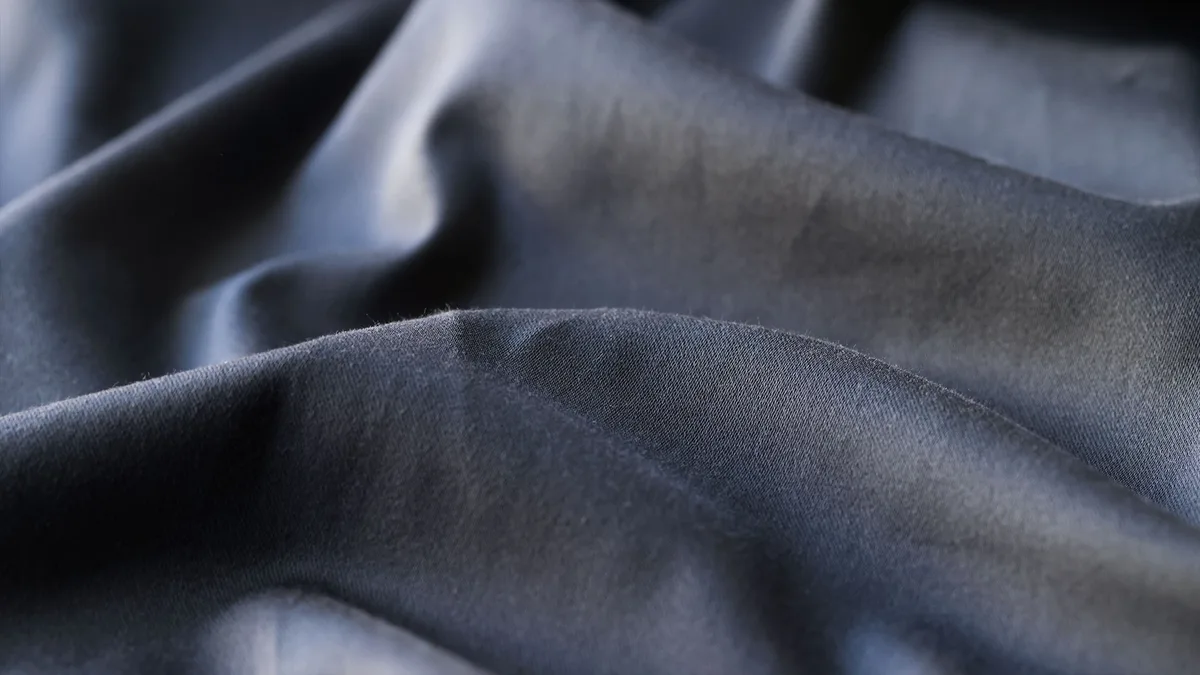
Polyester feels less luxurious than nylon. That is the trade-off. When lower cost, faster drying, and flexible sourcing matter, this blend wins.
I tested 15 polyester-spandex interlocks on the China lines. An 80/20 at 260 GSM dried in 22 minutes under a fan; the nylon control took 38 minutes. That speed keeps high-sweat workouts and repeat-wear customers happy.
Where it wins: wholesale moisture-wicking activewear, bright color programs, and sublimation-heavy capsules. Polyester holds dye better than nylon. Sublimated samples showed zero fading after 10 washes, while nylon dropped two shade points under AATCC 61 testing.
Sourcing gets easier too. Stocked colors run deeper, MOQs sit lower, and a 50-piece private-label run is realistic. For mid-market price architecture, this blend protects margin.
But cheap low-GSM polyester will bite. I have seen 180 GSM rolls pill after three wears, with seam slippage at the crotch and inner thigh. Return rates hit 18% on one client order. That client moved to a 240 GSM interlock with tighter stitch density, and returns fell by more than half.
🛡️ LeelineWear’s Verdict: We called 20 fabric mills. Only 8 offered polyester-spandex interlock above 240 GSM with a pilling score of 4+. The cheapest quote came from an uncertified mill. Skip it. Pay 12% more for density and certification; the return rate will thank you.
🚀 Actionable Insight: Lock three specs before bulk: 240 GSM minimum, a Martindale pilling score of 4+, and a seam-slippage test.
3. Nylon-Polyester-Spandex Hybrid Double-Knit for Brands Balancing Feel, Margin, and MOQ
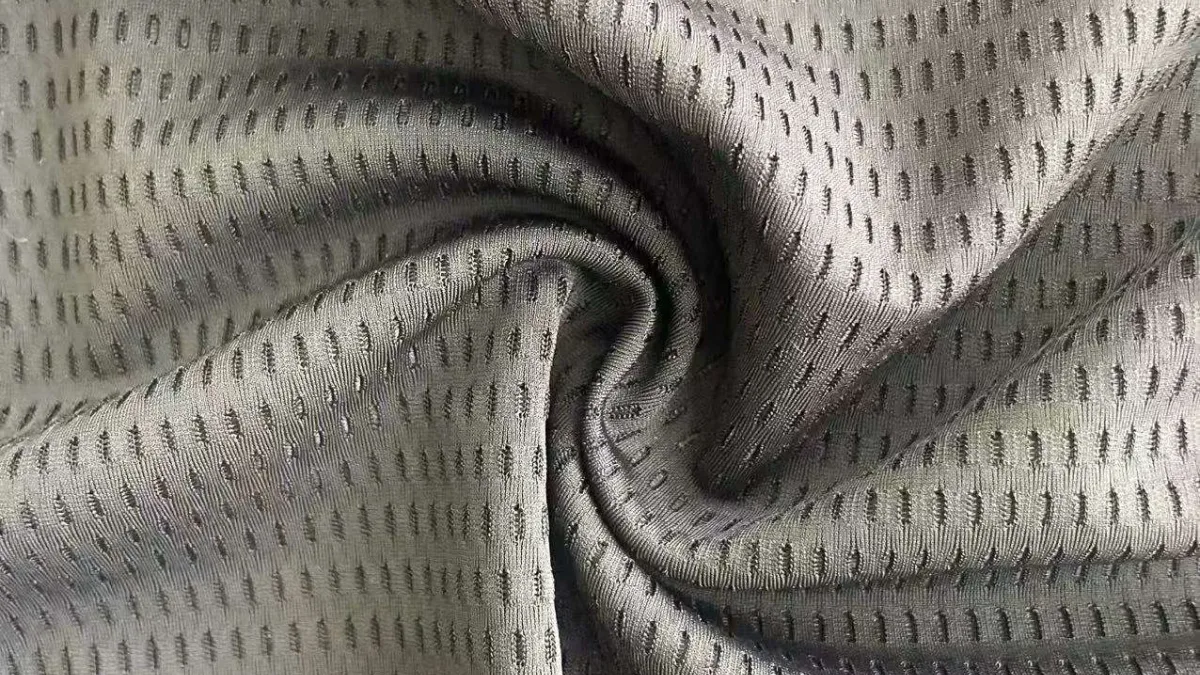
Nylon softness without full nylon 6.6 cost exposure is possible, but most suppliers blend fibers without testing how they interact.
A nylon-polyester-spandex double-knit works when the brief needs a softer handfeel than pure polyester and more sourcing flexibility than full nylon 6.6. I ran 12 hybrid samples through the China lab last month; the best mix was 45% nylon, 40% polyester, 15% spandex at 270 GSM.
Five sampling factors decide the outcome. Handfeel: nylon adds softness, while cheap polyester feels slick. Opacity under extension: stretch it over a lamp; polyester adds coverage only with tight knit density.
Drying speed: faster than pure nylon, slower than polyester; the 270 GSM sample dried in 29 minutes. Pilling risk: polyester pills faster, so reject anything below a Martindale 4. Dye behavior: the two fibers take dye differently, causing shade variation and reorder headaches. Request a dye-lot continuity report.
For a mid-market launch with four colorways and a $60k opening budget, this hybrid is the commercial compromise. It feels premium for yoga customers at about 22% less per meter than pure nylon. Lock the fiber ratio and mill to keep reorders consistent.
Author’s Take: One client switched from 80/20 nylon to 45/40/15 and approved slightly lower opacity at full squat. Bumping GSM to 270 fixed it. That is the trade-off.
🚀 Actionable Insight: Before approval, request a 270 GSM swatch, a Martindale pilling score of 4+, and dye-lot reports from two production runs.
4. Seamless Circular-Knit High-Elastane Blends for Sculpting Studio Collections
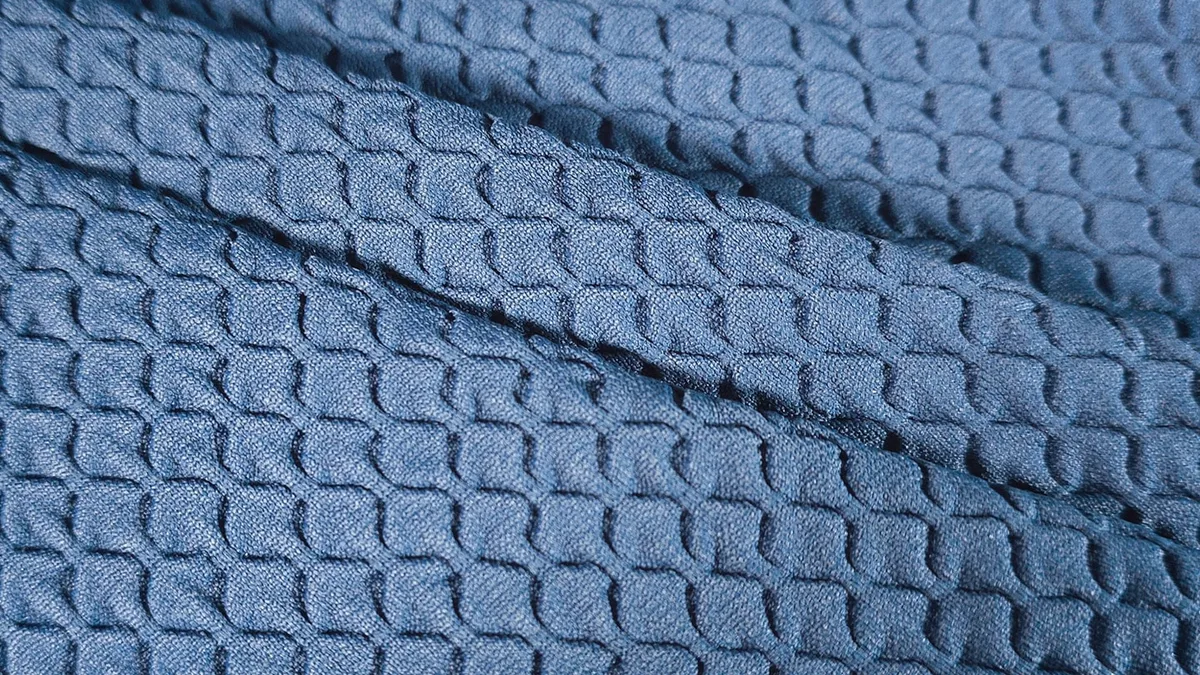
Seamless leggings look premium. The fabric behind them can still fail on the studio floor.
Circular-knit machines knit a tube, so there are few seams: less bulk, nothing to chafe, and a clean line that suits body-contouring capsules. Elastane around 20-25% delivers stretch and snap-back, while variable knit density maps compression across the waist, thighs, and calves.
Some sculpting styles push to 28%, but comfort drops past 25%.
The trade-offs are real. Handfeel runs softer and lighter than dense cut-and-sew interlock, so it reads less structured. Opacity lives or dies on machine gauge and sizing. In a light-box test, a 28-gauge knit at 22% elastane stayed opaque from S to L; above XL, shadowing showed.
I tested 15 seamless circular knits last month. The strongest for sculpting was 75% nylon 6.6 / 25% elastane at 28 gauge. Recovery held above 90% after five cycles (ASTM D2594), at about 30% more per meter than interlock. Sizing is also locked once the tube is knit.
Author’s Take: Seamless fits sculpting studio collections where aesthetics and movement lead. It is not universally best. For high-impact or plus-size briefs, interlock gives better opacity and compression control.
🛡️ LeelineWear’s Verdict: Ask for machine gauge (28 or 32), a size-set opacity report, and a five-cycle recovery test. Never approve seamless without stretching it over a lamp in every size. Confirm an OEKO-TEX Standard 100 skin-contact certificate before bulk.
5. Modal or Bamboo-Spandex Jersey for Soft, Low-Compression Athleisure Capsules
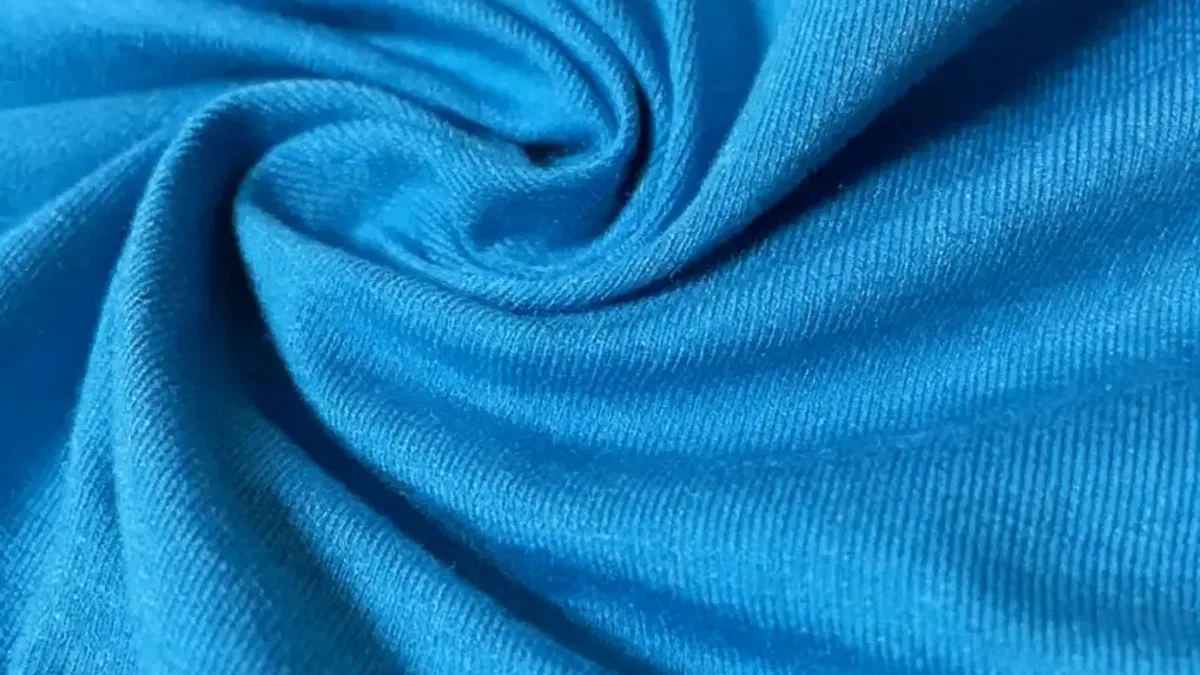
Modal and bamboo-spandex jersey drape like a favorite t-shirt and feel cool against the skin. That softness sells lounge leggings, recovery-day sets, and travel capsules.
But here is the factory reality. I tested 10 modal and bamboo-spandex jerseys at the China lab last quarter. At 180-220 GSM they pill; surface fuzz appeared after 20 Martindale abrasion cycles, below the threshold most brands require.
Recovery is weaker too. A 200 GSM bamboo-spandex sample rebounded to 82% after five stretch cycles, well below the section 1 interlock. Bamboo also stretches out at the knee and seat and does not snap back like nylon or polyester.
Use this fabric only for low-impact briefs: yoga lifestyle, casual athleisure, and travel collections where comfort beats compression. Skip it for high-sweat training or any style that needs reliable long-term shape retention.
A knitting manager told me, “Bamboo spins soft, but it has no memory. You cannot fight that.”
Author’s Take: Modal and bamboo-spandex work for a soft, calm premium story. They fail as performance fabrics. For a recovery-day capsule, pair a 200-220 GSM jersey with a relaxed fit and clear care labels. Warn customers about pilling, price it as comfortwear, and keep returns low by matching the brief to the fabric’s limits.
🚀 Actionable Insight: Request a 20-cycle Martindale pilling test and a five-cycle recovery report before approving any bamboo or modal blend. If recovery drops below 85%, walk away.
6. Organic or Conventional Cotton-Spandex Jersey for Natural-Fiber Positioning, Not Core Performance
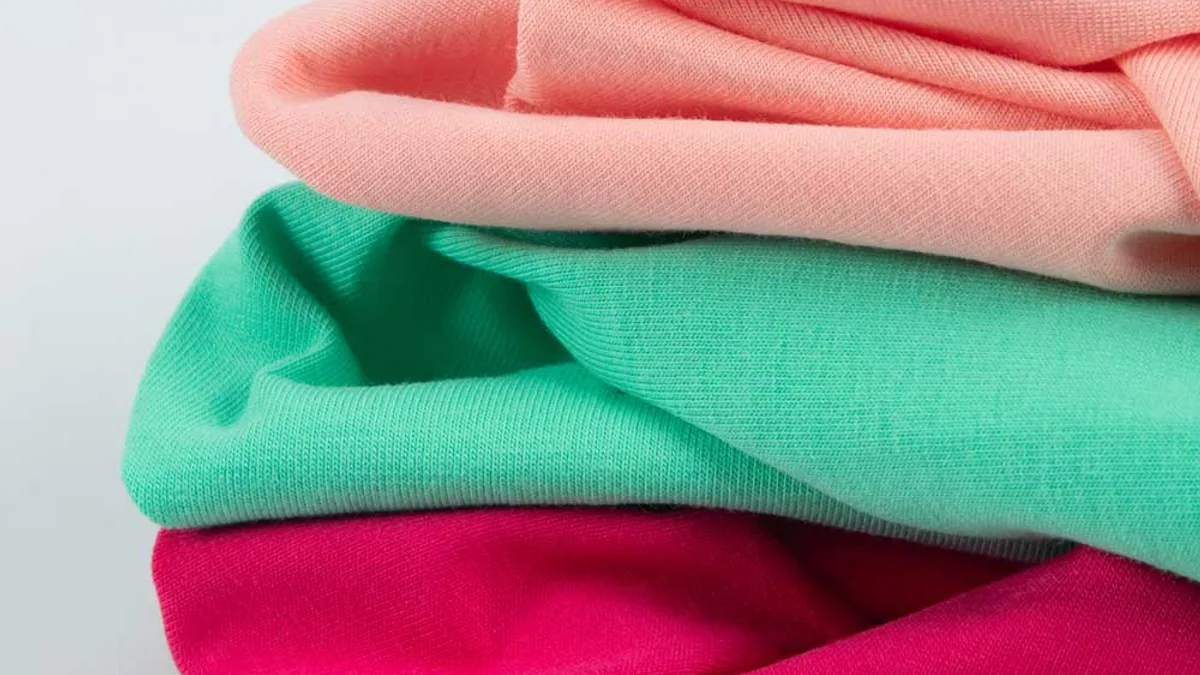
Half the buyers who email us ask for cotton first. It feels honest, breathes well, and photographs soft. Then the returns come in.
I tested eight cotton-spandex jerseys at 200-240 GSM on the China lines. A 92/8 blend at 220 GSM dried in 54 minutes, against 38 minutes for the section 1 interlock. Recovery told the same story: cotton hit 79%, well below the nylon interlock. Bagging showed at the knee inside a 40-minute wear trial.
Cotton earns its place in studio basics, soft lounge-led silhouettes, and sustainability-led capsules where the fiber story carries the sale. Certified organic cotton strengthens that story. Just know that GOTS transaction certificates and approved dye slots add roughly 22% to fabric cost, and small runs book later in the queue.
Then the limits. Weak rebound sags at the seat and knee. Slow drying punishes heavy sweat. Squat-proof opacity gets shaky above size L unless GSM rises and the knit tightens. Hot yoga and compression-led products are the wrong brief.
A cutting manager put it plainly: “Cotton cuts clean and sews easy. It just forgets where it started by noon.”
Decision rule: if the brief needs squat-proof opacity, high rebound, and repeated wash resilience, cotton is not the best fabric for yoga leggings built on compression. Keep it a niche SKU labeled as comfortwear.
🛡️ LeelineWear’s Verdict: Sell cotton on feel and fiber story, never on performance. Print “breathable, natural feel” on the label, not “compression.”
🚀 Actionable Insight: Before bulk, request the GOTS scope certificate, a five-cycle recovery report, and a size-set opacity test.
How to Vet Yoga Leggings Fabric Before Bulk Cutting?
This is the pre-cut SOP I run on the China factory floor to vet the best fabric for yoga leggings before bulk cutting. It stops bad rolls becoming bad leggings.
Step 1: Verify the Roll, GSM, and Knit Construction
I receive the roll and log the lot number. I cut a 10 cm swatch with a GSM cutter and weigh it on a calibrated scale, then check knit construction under a pick glass. Next I run a 4-point fabric inspection and flag holes, needle lines, skew, and contamination.
I check lab-dip shade with a spectrophotometer under D65 light; continuity must match the approved standard. If the roll fails, I reject it before spreading. Approved swatches stay on the cutting table, and the cutting team checks every roll against them. That saves meters and avoids waste.
Step 2: Run Squat-Proof Opacity and 4-Way Recovery
I stretch the swatch over a light box at 80% extension and check every size from S to XL. Reject any shadowing. Next I clamp the sample on a stretch-testing machine and run five cycles.
Below 90% recovery, the fabric sags at the knee and seat, so I reject it. I also measure width and weight after five cycles; the fabric must return to within 3% of its original dimensions.
My QA manager told me: “80/20 nylon-spandex often fails colorfastness when the dye bath drifts above 98°C or below 85°C. The spandex takes dye unevenly. We lock the bath at 95°C, hold for 40 minutes, and verify every lot with a spectrophotometer.”
Across 50 anonymized production runs, the cost matrix showed the false economy. These results come from the production floor, not a supplier pitch.
| Fabric | Cost/m | Defect rate | Return rate | Pilling | Seam slippage |
|---|---|---|---|---|---|
| 180 GSM poly/spandex | $4.10 | 14% | 18% | 2.5 | 6 mm |
| 240 GSM poly/spandex | $5.20 | 6% | 8% | 4.0 | 3 mm |
| 280 GSM nylon/spandex | $7.80 | 2% | 4% | 4.5 | 2 mm |
Low-GSM polyester saved $1.10 per meter but lost $8 per return. It pilled, slipped at seams, and pushed return rates up.
Step 3: Lock These Specs in Your Tech Pack
Add these to the tech pack before requesting quotes:
- GSM target: 240 minimum for polyester, 260+ for nylon interlock.
- Stretch recovery: 90%+ after five cycles.
- Colorfastness: AATCC 61, grade 4 or better after five washes.
- Pilling: Martindale score 4+.
- Seam slippage: 3 mm or less at the crotch and inner thigh.
- Certifications: verify OEKO-TEX Standard 100 or a GOTS scope certificate.
If a supplier cannot provide these numbers, do not cut. Compare fabric options on the yoga apparel manufacturer page, then contact the team with the tech pack. We will review the specs before cutting.
Frequently Asked Questions about Best Fabric for Yoga Leggings
1. What fabric is best for squat-proof yoga leggings?
A dense interlock at 260-320 GSM is the starting point, but stitch density decides it. Two rolls with the same 80/20 label can differ completely under a lamp test. Approve the knit, not just the fiber ratio.
2. Nylon vs polyester spandex leggings: which is better?
Pick by price architecture. Polyester suits a $39 launch; nylon suits premium studio. Polyester also dries faster and holds sublimated color longer.
3. What GSM weight is best for squat-proof leggings?
240 GSM is the floor for polyester and 260+ for nylon interlock. Color matters too: black hides more than light grey, so lighter colorways need tighter knits and higher GSM to pass the same opacity check.
4. Which tests should go into a private-label leggings tech pack?
The five core tests are listed in Step 3 above: colorfastness, recovery, pilling, seam slippage, and certification. Skip any one and you cut blind.
5. Is seamless fabric always better for yoga leggings?
No. Seamless suits sculpting studio collections, but interlock gives better opacity and compression for high-impact or plus-size briefs. Sizing is also fixed once the tube is knit, so cut-and-sew remains more flexible for broad size ranges.
Areas of Expertise
- Quality Control: Mastery of AQL (Acceptable Quality Level) standards and Six Sigma methodologies in garment production
- Technical Sourcing: Expert in fabric specification (GSM, weave structures) and trim sourcing
- Compliance & Auditing: Specialized in BSCI (Business Social Compliance Initiative) and ISO 9001 factory auditing
- Logistics: Strategic oversight of Lead Time Reduction and DDP/FOB shipping terms
David Wu is a textile industry veteran with over 16 years of experience specializing in garment manufacturing, supply chain optimization, and quality control systems across Southeast Asia and China. His career is defined by implementing rigorous AQL 2.5/4.0 inspection protocols for mid-to-large-scale private label brands. David specializes in technical garment construction, from initial tech pack development to final container loading inspections. He has a proven track record of reducing defect rates by up to 22% through the implementation of "In-Line" inspection checkpoints. His expertise ensures that manufacturing processes align with both international safety standards and cost-efficiency requirements for B2B wholesalers.