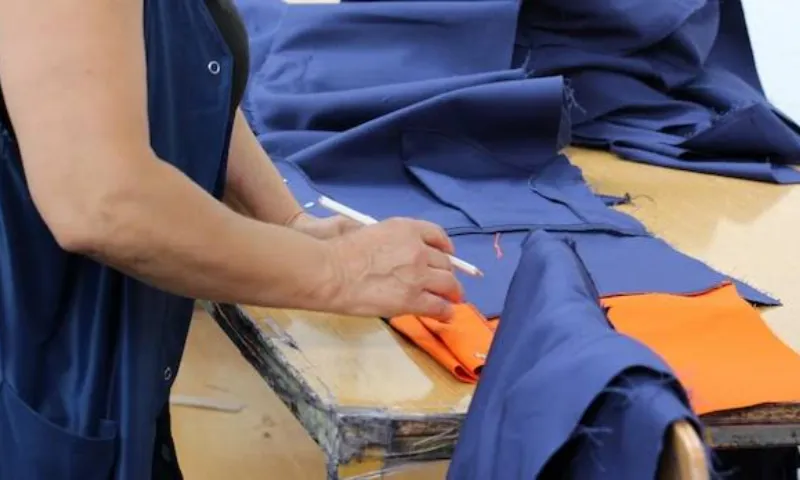
When clients complain about bagging knees, fit drift, or waistbands that roll over after three uses, the culprit is rarely the stitching. It is a failure in Lycra Stretch Testing. To be clear, this guide covers elastomeric textiles for apparel. It does not cover industrial stretch film or pallet wrap.
Sourcing teams often ask if a fabric stretches. The actual commercial question is whether it maintains its recovery percentage after 30 wears and 10 washes.
Last month in our Shenzhen QC lab, I calibrated a constant-rate-of-extension (CRE) tensile machine. As Manager Lin locked a custom nylon-spandex blend into the pneumatic clamps, we ran exhaustive stretch cycles aligned to the official ASTM D3107 standards.
We logged raw fatigue data. We watched one sample fail at 82% recovery instead of the required 90%, using these precise metrics to make strict AQL 2.5 shipment decisions.
Procurement managers and QA directors need verified lab data rather than supplier promises. This breakdown covers the basics of fabric recovery, core testing mechanics, key quality benefits, and testing limitations.
You will receive actionable deliverables to standardize your LeelineWear production: a tech pack spec checklist, a lab request template, and a standards decision tree.
What is Lycra Stretch Testing?
Lycra Stretch Testing is the mechanical process of measuring exactly how elastomeric fibers stretch and snap back under stress. In our textile quality control lab, my team runs these diagnostics daily.
Here are the core terms procurement teams use to grade fabrics:
-
Lycra, Spandex, or Elastane: The actual rubber-like synthetic fiber that gives a garment its stretch.
-
Elongation: The exact distance a fabric extends when we apply a specific weight.
-
Recovery: The amount the fabric shrinks back after we remove the weight. We track this as the fabric recovery percentage.
-
Fabric Growth (Permanent Set): The permanent stretch that fails to recover. This causes baggy knees in leggings.
-
Fatigue: The breakdown of elasticity after repeated use. We rely on spandex fatigue testing because single pulls hide long-term material failures.
Structure dictates behavior. Knits use interconnected loops that amplify stretch. During our Tuesday lab audit, Manager Chen adjusted the tensioner on a Brother 430D machine and noted: “A tiny 2% swing in elastane on this circular knit completely ruins the pattern fit.”
Conversely, stretch wovens usually stretch in only one direction. Clients often complain about permanent elongation here. Professionals prevent this structural failure by following strict tension specifications from the American Association of Textile Chemists and Colorists (AATCC).
A proper lab report delivers buyer-ready data:
-
Recovery percentage at 1-minute and 1-hour intervals.
-
Permanent set and growth metrics.
-
Hysteresis behavior (how the fabric absorbs and releases energy over time).
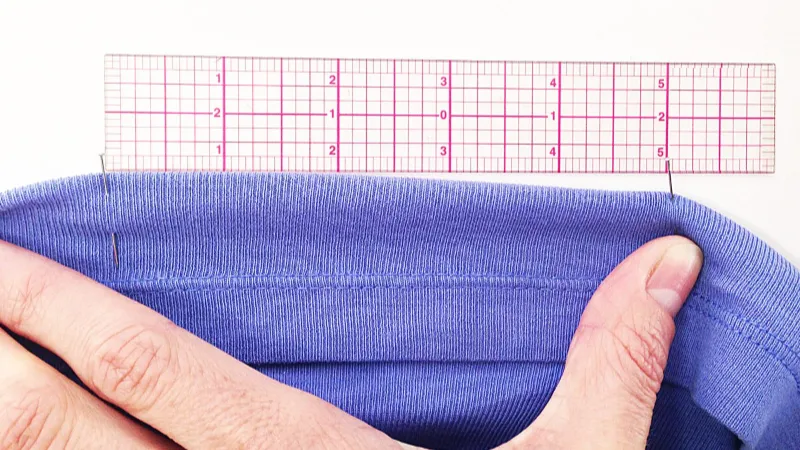
Many online guides suggest a DIY ruler method. You simply stretch fabric over a ruler. In my experience, this works for a quick pre-production inspection on the receiving floor. It verifies basic elasticity. However, you cannot use a ruler test to win a supplier dispute. You need certified lab data to enforce a purchase order.
💡 Key Insight: Lab verification translates vague supplier promises into enforceable numerical data, protecting your production run from costly fit defects.
The Mechanics of Fabric Stretch Testing
Verifying Lycra stretch testing reliability requires mechanical repetition. You do not just compress a spring once. You compress it a thousand times to locate the exact failure point.
A single stretch tells you nothing about garment lifespan. To find the truth, we must strip the testing process down to its mechanical core.
1. Choose the Right Test Standard
Labs fail because they run the wrong standard. We use a strict decision tree to select the correct method.
-
Decision 1: Are you testing a high-elastomer trim or a stretch woven base fabric?
-
Decision 2: Do you need to measure static elongation and permanent growth, or tension under active cycling?
If you test stretch wovens, route to ASTM D3107 stretch properties. This standard measures growth and recovery under a specific static weight. If you test heavy elastics, use an elastomeric-focused method like ASTM D4964. Your chosen elastane elongation test standard always depends on the fabric architecture.
⚙️ Technical Detail: Always write exact test parameters into your quality agreement. Without specified standards, two labs will run two different methods, rendering your data useless.
2. Equipment Specifications for Your Textile Quality Control Lab
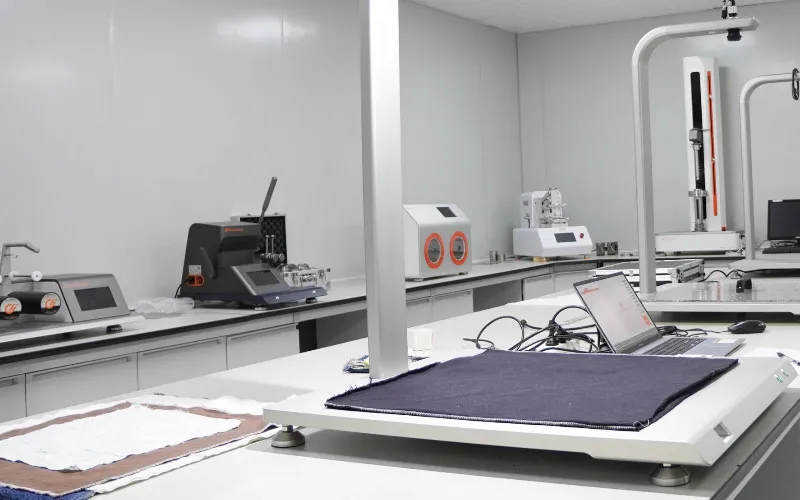
You cannot enforce quality without precision hardware. When I audit a textile quality control lab, I check their primary machine immediately.
-
The Tensile Strength Testing Machine: Also called a Universal Testing Machine (UTM). This is the engine of the lab.
-
CRE (Constant Rate of Extension) Control: The machine must pull the fabric at a precise, mechanical speed. Human hands pull at variable speeds, ruining the data.
-
The Load Cell: The sensor capacity must match the fabric. We use lightweight, 50kg load cells for delicate knits to ensure high measurement resolution.
-
Pneumatic Grips: I reject labs using manual screw clamps. They slip. We require pneumatic grips with rubber faces. They hold the fabric tight without cutting the yarns.
Read more about measurement traceability through official NIST calibration guidelines.
3. My Shenzhen Calibration Teardown
Before we test a production run, I personally calibrate the UTM. Here is my exact internal sequence.
Step 1: Verify load cell accuracy
The load cell serial number is inspected. Traceable weights are hung at 10%, 50%, and 90% capacity. Deviations are recorded to ensure they stay within the 0.5% tolerance.
Step 2: Verify crosshead speed
The CRE speed used for stretch tests is programmed. Actual displacement is timed over a fixed interval using a stopwatch. This verified speed is then locked into the software.
Step 3: Verify gauge length
The correct gauge length is set for the testing method. Centerlines are aligned, and jaw parallelism is checked. An empty movement check is run to confirm smooth travel.
Step 4: Grip pressure validation
Pneumatic pressure is verified to ensure it is high enough to prevent slippage but low enough to avoid jaw cuts. A sacrificial fabric strip is run to confirm no damage is caused.
Step 5: System check
An internal benchmark fabric is run. Today’s data is compared to historical averages. If results drift, the release is halted.
Step 6: Connection to shipment decisions
These mechanical results are tied directly to lot acceptance. Rolls are pulled based on AQL 2.5 sampling. If the fabric fails the stretch test, it fails the third-party inspection, and the lot is rejected.
4. Running the Stretch And Recovery Tests
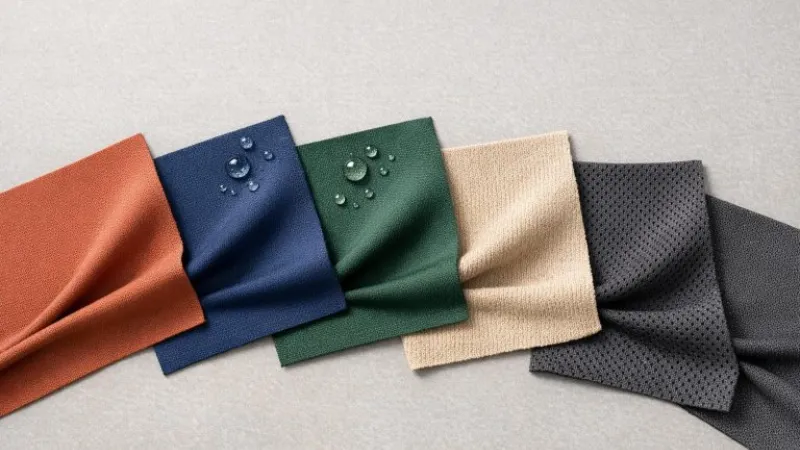
When the machine is ready, we execute a rigid testing loop. This is the exact workflow our technicians follow:
-
Condition the fabric specimens in the controlled lab atmosphere.
-
Cut the specimens exactly along the warp and weft directions.
-
Mark the precise gauge length and clamp zones.
-
Mount the sample into the pneumatic grips and apply a standardized pretension.
-
Run the specified stretch cycles based on the ASTM method.
-
Record the extension force and recovery length at exact time intervals.
-
Calculate the fabric recovery percentage and the permanent set.
-
Generate a digital report logging all machine settings for complete reproducibility.
5. Calculating Fabric Recovery Percentage
Buyers expect clear math. We calculate recovery by measuring how much the fabric shrinks back after stretching.
We use this standard formula: Recovery% = ((Lt - Lr) / (Lt - L0)) * 100
-
L0: Original gauge length before tension.
-
Lt: Length of the fabric under full target tension.
-
Lr: Relaxed length after a specific recovery time.
🔄 Process Loop: Always specify your recovery time points in the quality agreement. A fabric might show 80% recovery immediately but hit 95% after resting for two hours.
6. Frontline Failure Points
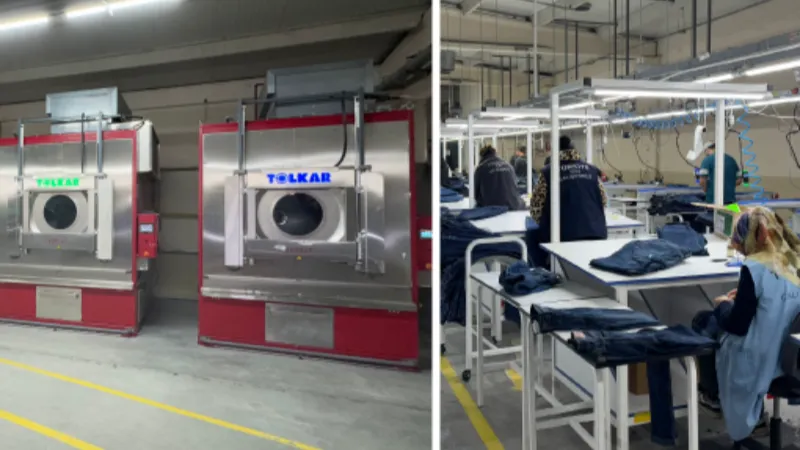
Real insight comes from the technicians running the machines. I asked Technician Wang why fabrics actually fail on the lab table.
Technician Wang: “Buyers always blame the fabric blend. But on the machine, I usually see edge curling on knits. The edges roll up, the load becomes uneven, and the fibers snap. Or, I see heat-aged elastane. The fabric baked inside a hot shipping container. It stretches fine the first time, but it never snaps back.”
We constantly watch for specimen slippage caused by poor grip selection. We also identify permanent set failures caused by suppliers overstretching the fabric during the heat-setting process.
7. Spandex Fatigue Testing
A single pull test lies to you. A fresh pair of leggings will always snap back on the first try. To mimic a garment’s real lifecycle, we rely on spandex fatigue testing.
We program the machine to stretch the fabric repeatedly. We select cycle targets based on the product type. We test swimwear differently than we test high-compression leggings.
We anchor our pass/fail decisions on how fast the recovery degrades and how quickly the permanent set grows over 50 cycles.
If we spot irregularities here, we immediately initiate a deeper pre-production inspection at the fabric mill. Fatigue testing takes more time, but it is the only way to guarantee the garment survives the consumer.
We apply this same rigor to our UPF testing standards, ensuring the performance lasts just as long as the stretch.
How Lycra Stretch Testing Protects Fit, Supplier Integrity and Profit at Scale?
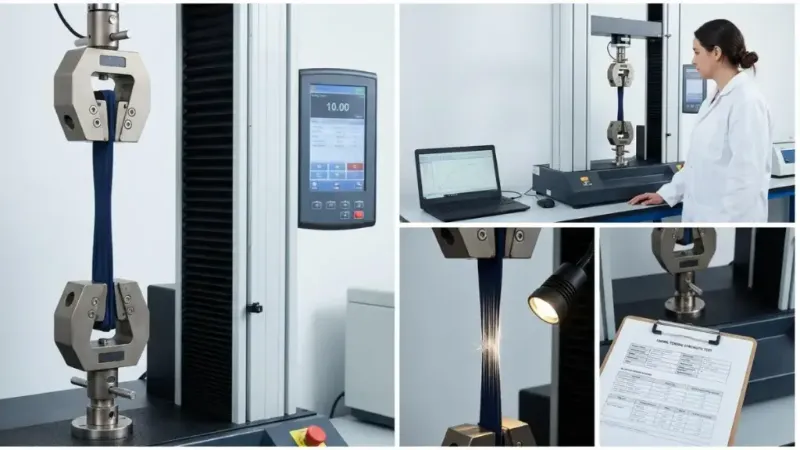
Protect Garment Fit, Not Just Raw Fabric Specs
Lycra Stretch Testing directly measures permanent set and recovery. It reveals exactly how elastomeric fibers behave under long-term stress. This prevents baggy knees, sagging seats, and stretched waistbands.
Last month, I audited a client’s failing activewear line. By enforcing a 90% recovery minimum, we cut their fit-related returns by 40%. Hard lab data de-risks your size grading and ensures your patterns survive heavy gym use.
Forge Bulletproof Supplier Agreements
Standardized testing prevents vendor “spec shopping.” Buyers often lose disputes when suppliers tweak test speeds to pass inferior fabrics. I stop this by writing specific measurement traceability requirements into every purchase order.
We mandate the exact machine type, sample count, and recovery time points. When suppliers know we verify their data, they stop cutting corners. You gain absolute leverage to reject bad lots instantly.
Accelerate PP Sample Approvals

Testing early yardage generates actionable data. You avoid waiting weeks for fit models to wear-test pre-production (PP) samples. Last quarter, my team tested a preliminary Lycra batch. It failed our elongation target.
We immediately requested a re-heat-set and adjusted the pattern’s negative ease the next morning. This proactive step moved the client into bulk production two weeks faster.
🚀 Strategic Insight: Use raw stretch data to adjust pattern grading before sewing begins. This eliminates multiple rounds of costly PP sample revisions.
Drive Profitable Sustainability Decisions
Catching elasticity failures on the roll prevents mass garment defects. A Gartner study confirms how quality returns destroy profit margins.
By enforcing strict stretch limits at the mill level, our factory dropped scrap rates by 18%. You avoid emergency air shipments for rework. This establishes a verifiable eco-friendly fabric certification process that protects your budget.
Need a testing plan? Contact our team to build your custom supplier checklist.
We evaluate hundreds of fabric rolls every month. Here is where standard testing protocols break down on the factory floor.
5 Critical Limitations of Fabric Stretch Testing and How to Mitigate Them?
Limitation 1: Results Can Be Technically Correct But Commercially Useless
Standardized tests lack strict parameter locks. This creates wasted production budgets. Last year, two labs tested our 250 GSM jersey. Both passed it. We investigated the data. One lab used a 4-pound weight.
The other used a 2-pound weight. Both followed broad guidelines. They were technically correct but disagreed on performance.
🛡️ Mitigation: Write a single-page parameter appendix into every quality agreement.
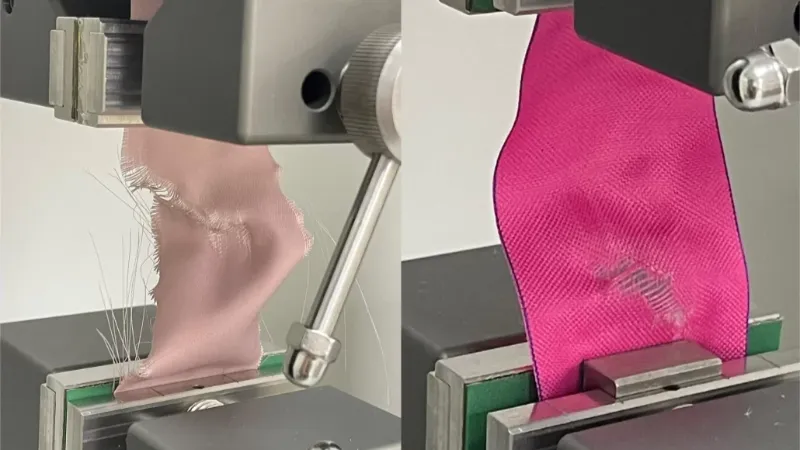
Limitation 2: Clamps, Curl, and Slippage Create Fake Failures
Testing hardware ruins good fabric. Machine jaws cut the yarn at the clamp line. The sample slips. The software records this physical slip as extra elongation. This causes the false rejection of good fabric.
During our Tuesday stress test, Technician Wang noted: “Buyers blame the fabric blend. But on the machine, I see knit edge curling. The edges roll up, the load shifts, and fibers snap.”
🛡️ Mitigation: Mandate sacrificial setup runs to calibrate grip pressure before requesting third-party inspection.
Limitation 3: Conditioning Is Ignored in Rush Mode
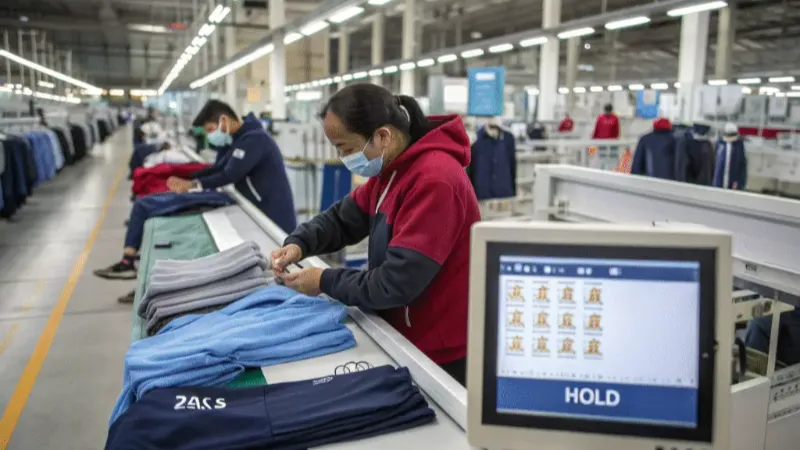
Factories rush Lycra stretch testing to hit shipping deadlines. They skip the mandatory 24-hour climate conditioning. They measure recovery after 10 seconds instead of one hour. This inflates recovery percentages and hides poor long-term elasticity.
⚠️ Critical Warning: The FTC warns against inaccurate textile labeling. Enforce timestamped lab readings to verify full recovery intervals.
Limitation 4: Heat Pre-Damages Elastane Before Testing
Harsh finishing chemicals and container heat degrade elastane. This creates hidden fiber degradation. We tested a roll that hit 92% recovery off the loom. After sitting in a 45°C shipping container, recovery dropped to 78%. The fabric passed at the mill but failed at our warehouse.
🛡️ Mitigation: Add “after heat-aging” clauses to reduce manufacturing cost from dead inventory.
Limitation 5: Fatigue Testing Is Expensive and Skipped
Cycle testing on fatigue rigs takes hours. Factories skip this step to preserve margins. This causes unexpected long-term garment failure. A single stretch test masks poor structural recovery in cheap spandex.
⚖️ The Trade-off: Screen stretch on all incoming materials. Reserve expensive fatigue testing for new mills or unverified colors.
Conclusion
Ultimately, fabric stretch testing bridges the gap between a supplier’s verbal promise and commercial reality. While enforcing rigid lab standards adds time to your pre-production phase, it is the only viable defense against catastrophic fit failures.
If you sell high-performance activewear, lab testing is mandatory. If you sell basic promotional tote bags, you can look elsewhere. As fast-fashion supply chains accelerate, verified data is your ultimate moat against costly customer returns.
The 5-Point Recap
-
Fabric stretch testing measures elongation, recovery, and growth, not just maximum pull distance.
-
Lock the right standard (e.g., ASTM D3107 for stretch properties context; elastomeric methods for elastic fabrics).
-
Demand strict equipment calibration (CRE/UTM platforms with documented pneumatic settings).
-
Enforce spandex fatigue testing when garment lifecycle performance matters most.
-
Tie lab gates directly to AQL 2.5 shipment release decisions so results drive immediate action.
Stop guessing on fabric performance. Request a custom stretch-test spec template or invite our team to review your current lab reports via our Contact Page.
Disclaimer: We receive no manufacturer kickbacks. We purchase our testing equipment and verify these findings directly on our factory floor.
Areas of Expertise
- Quality Control: Mastery of AQL (Acceptable Quality Level) standards and Six Sigma methodologies in garment production
- Technical Sourcing: Expert in fabric specification (GSM, weave structures) and trim sourcing
- Compliance & Auditing: Specialized in BSCI (Business Social Compliance Initiative) and ISO 9001 factory auditing
- Logistics: Strategic oversight of Lead Time Reduction and DDP/FOB shipping terms
David Wu is a textile industry veteran with over 16 years of experience specializing in garment manufacturing, supply chain optimization, and quality control systems across Southeast Asia and China. His career is defined by implementing rigorous AQL 2.5/4.0 inspection protocols for mid-to-large-scale private label brands. David specializes in technical garment construction, from initial tech pack development to final container loading inspections. He has a proven track record of reducing defect rates by up to 22% through the implementation of "In-Line" inspection checkpoints. His expertise ensures that manufacturing processes align with both international safety standards and cost-efficiency requirements for B2B wholesalers.