Sportswear manufacturers China vs Europe: Which is Better for Your Supply Chain?
 David Wu QA Consultant
 Sportswear Manufacturers China vs Europe — which is better for your brand in 2026? China is the winner for scalable unit economics and fabric depth, while Europe wins on compliance confidence and speed-to-market.
Your decision relies on Total Landed Cost (TLC) rather than just sewing fees. China (specifically Guangdong and Zhejiang) provides the lowest ex-factory pricing, making it the superior option for high-volume margin protection despite tariff volatility.
Europe (Portugal, Italy, Turkey) demands higher upfront costs but offsets them by eliminating audit friction, ensuring traceability, and shortening replenishment cycles.
-
Choose China for scale and material variety.
-
Choose Europe for low-risk traceability and premium agility.
Comparison Table
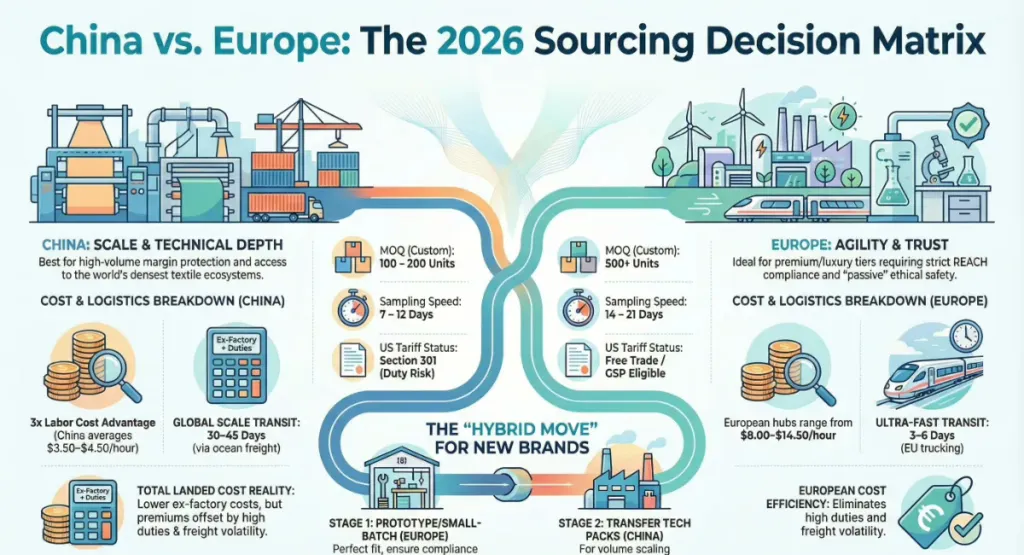
Here is the direct spec comparison between Guangdong/Zhejiang manufacturing hubs and European alternatives (Portugal, Italy, Turkey) for 2026 decision-making.
Table 1 — 2026 Cost & Logistics Snapshot
| Feature | China (Guangdong/Zhejiang) | Europe (Portugal/Italy/Turkey) |
|---|---|---|
| Labor Cost (Avg) | $3.50 – $4.50 / hour | $8.00 – $14.50 / hour |
| Statutory Min. Wage | $325 USD / month | $900+ USD / month |
| CMT Share of FOB | 15% – 20% | 30% – 40% |
| Freight Cost Index | $3,500+ (Ocean - WCI) | $1,600 – $2,500 (Truck) |
| Transit Time (US East) | 30 – 35 Days | 12 – 15 Days |
| Transit Time (EU) | 35 – 45 Days | 3 – 6 Days |
| Air Freight Lead Time | 5 – 8 Days | 1 – 3 Days |
| Tariff Status (US) | Section 301 (Duty Risk) | Free Trade / GSP Eligible |
Table 2 — MOQ & Speed Benchmarks
| Feature | China (LeelineWear Model) | Europe (Standard Factory) |
|---|---|---|
| MOQ (Stock/Print) | 50 Units | 100 – 200 Units |
| MOQ (Custom Cut & Sew) | 100 – 200 Units | 500+ Units |
| Sampling Speed | 7 – 12 Days | 14 – 21 Days |
| Bulk Production Speed | 25 – 35 Days | 40 – 55 Days |
| Reorder Turnaround | 3 Weeks | 6 Weeks |
Table 3 — Quality & Compliance Standards
| Feature | China (Guangdong/Zhejiang) | Europe (Portugal/Italy/Turkey) |
|---|---|---|
| QC Enforcement | AQL 2.5 (External Required) | AQL 1.5 (Internal Standard) |
| Chemical Compliance | GB 18401 (China Standard) | REACH (EU Strict) |
| Key Certifications | ISO 9001, BSCI | GOTS, OEKO-TEX Std 100 |
If you prioritize margin protection and scaling flexibility (low MOQs), China is the mathematical winner due to a ~3x labor cost advantage and faster production throughput.
However, if your business model relies on ultrafast replenishment to EU customers or requires strict REACH chemical compliance without third-party testing, Europe justifies the premium price point.
sportswear manufacturers China vs Europe: Main Differences
1. Total Landed Cost (TLC): The “Hidden Fee” Trap
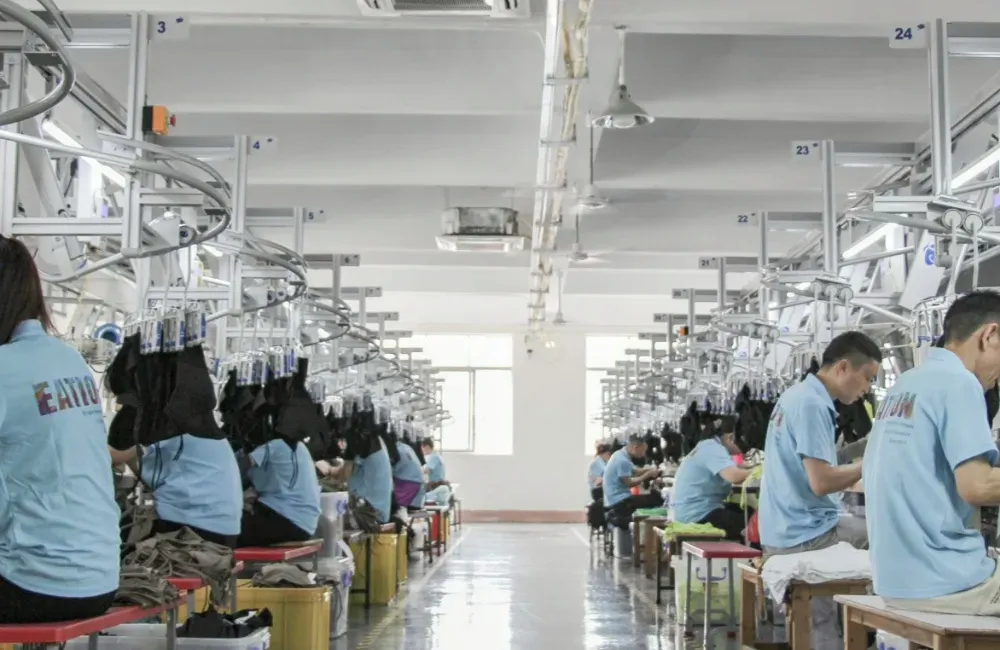
Amateur buyers calculate profit based on the FOB price (Factory On Board). Smart buyers calculate Total Landed Cost (TLC). The difference is often where your margin dies. The formula is unforgiving: Ex‑factory Price + Duties + Freight + Testing + Rework.
The Financial Reality:
-
China (Volume Economics): China wins on base unit cost due to raw scale and recent 2026-era automation upgrades (auto-cutting and digital pattern making) that offset wage hikes. A high-compression legging that costs $14.00 to sew in Portugal typically lands at $6.50 in Guangdong.
-
Europe (Tariff Shield): While the unit cost is double, Europe saves on the back end. Trucking a pallet from Porto to Paris is cheap and predictable. More importantly, EU production often bypasses the volatile Section 301 tariffs and anti-dumping duties that plague Chinese imports into the US.
The “So What?” Scenario: Consider a run of 1,000 Nylon/Spandex leggings.
-
China Route: You pay $6.50/unit. But you must add ~20% in duties (check your HTS code via the official USITC tariff database) and volatile ocean freight. If the Drewry World Container Index spikes during Q4, your $6.50 legging effectively becomes $10.50, and your capital is tied up on a boat for 40 days.
-
Europe Route: You pay $13.50/unit. Transport is negligible, and duties are often zero under trade agreements. Your margin ceiling is lower, but your financial floor is safer.
🧠 Expert Take:
Don’t confuse “Cheap Labor” with “Efficiency.” In 2026, Chinese factories aren’t cheaper because they pay people less; they are cheaper because the fabric mill, zipper factory, and dye house are all within a 50km radius.
In Europe, your “Italian” fabric might actually be shipped from China to Portugal for sewing, adding invisible logistics costs to your “local” production.
Winner: China (If you can absorb tariff risks and order 500+ units).
2. Lead Times: Sampling Ping-Pong vs. Bulk Speed
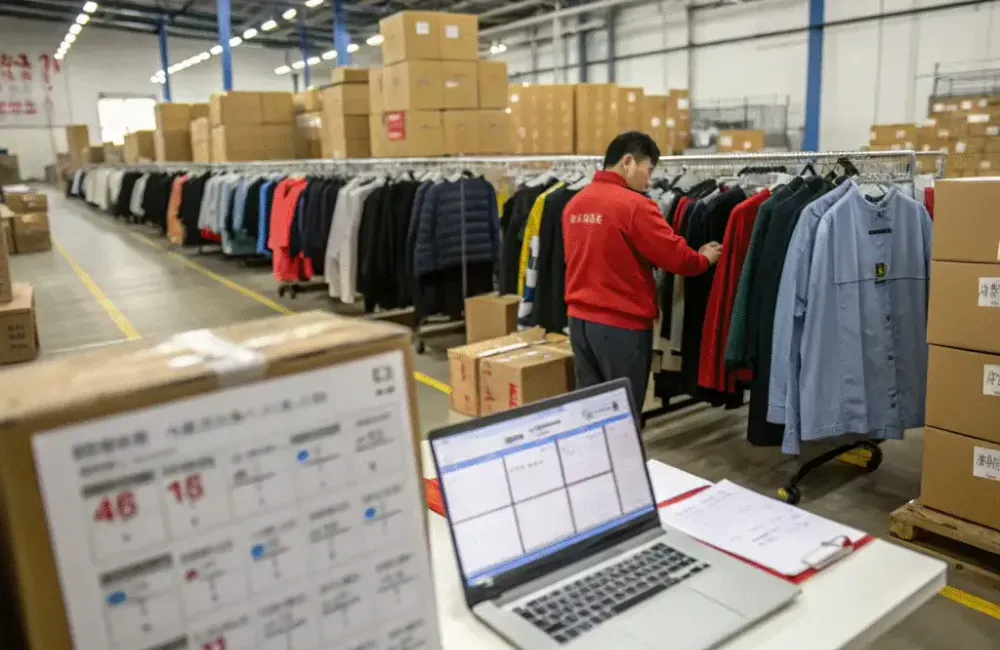
“Time to Market” is a misnomer. You need to distinguish between Development Speed (getting the sample right) and Replenishment Speed (restocking best-sellers).
The Workflow Contrast:
-
China (The Bulk Beast): Once a sample is approved, China is unbeatable. A Tier-1 factory in China can ramp from 500 to 50,000 units by simply turning on more lines. The bottleneck is the sample iteration. Sending a tech pack, waiting 10 days for a sample, finding the waistband is too loose, and waiting another 10 days for a revision can kill a season.
-
Europe (The Agile Iterator): Europe wins on proximity. You can fly to Porto for a day, approve the fit on a live model, and start production immediately. Shipping to EU distribution centers takes 2–4 days by truck, compared to 30+ days of ocean freight from Asia.
Physical Experience: If you source from China without 3D capability, you will feel the pain of “Sample Ping-Pong.” You receive a package, the fabric handfeel is wrong, and you lose three weeks correcting it. Europe allows for tactile, real-time feedback loops that reduce fit compromises.
🚀 Actionable Insight: If sourcing from China, demand 3D Virtual Sampling (CLO3D) for the first two rounds of revisions. Only request a physical sample once the digital fit map shows zero tension errors. This cuts 3 weeks off your development timeline.
Winner: Europe (For launch speed) | China (For scale/replenishment).
3. MOQ & Flexibility: The “Death Valley” of Inventory
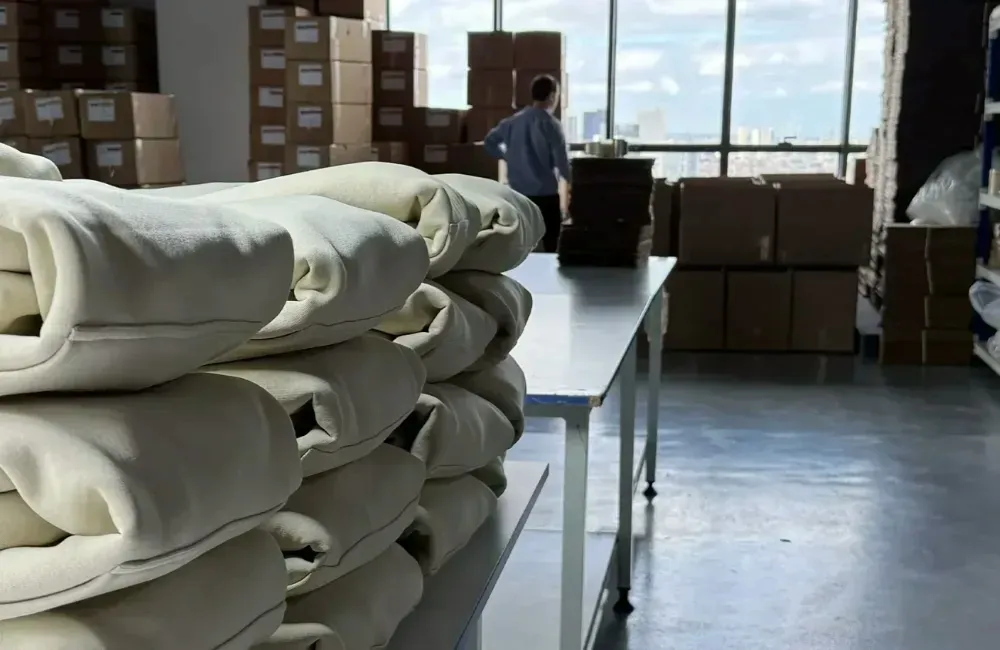
Minimum Order Quantity (MOQ) is the primary wedge that forces new brands into bad decisions.
The Capacity Split:
-
China (The Evolution): Historically, China demanded 1,000+ units per style. However, the rise of “Agile Manufacturing” (the model used by firms like LeelineWear) has introduced Micro-Run Lines. These are dedicated cells within massive factories that handle 50–200 unit orders. They charge a premium, but they grant access to Tier-1 machinery usually reserved for Nike or Adidas.
-
Europe (The Boutique Trap): European factories are culturally more open to small orders (100–300 units). The downside? They often lack fabric availability for small runs. Mills won’t dye 50 yards of custom fabric for you. You are often forced to use “stock market” fabric, limiting your design to whatever colors are currently sitting on a shelf in Lisbon.
Decision Matrix:
-
Validating Demand (50–200 units): Europe is safer if you are okay with generic fabrics.
-
Scaling Up (2,000+ units): China is mandatory. European factories often hit a hard ceiling on capacity; if your product goes viral, they cannot triple production overnight without months of lead time, leading to fatal stockouts.
Winner: Agile China (Specifically factories offering tiered “Micro-Run” programs).
4. High-Performance Fabric: Traceability vs. Innovation
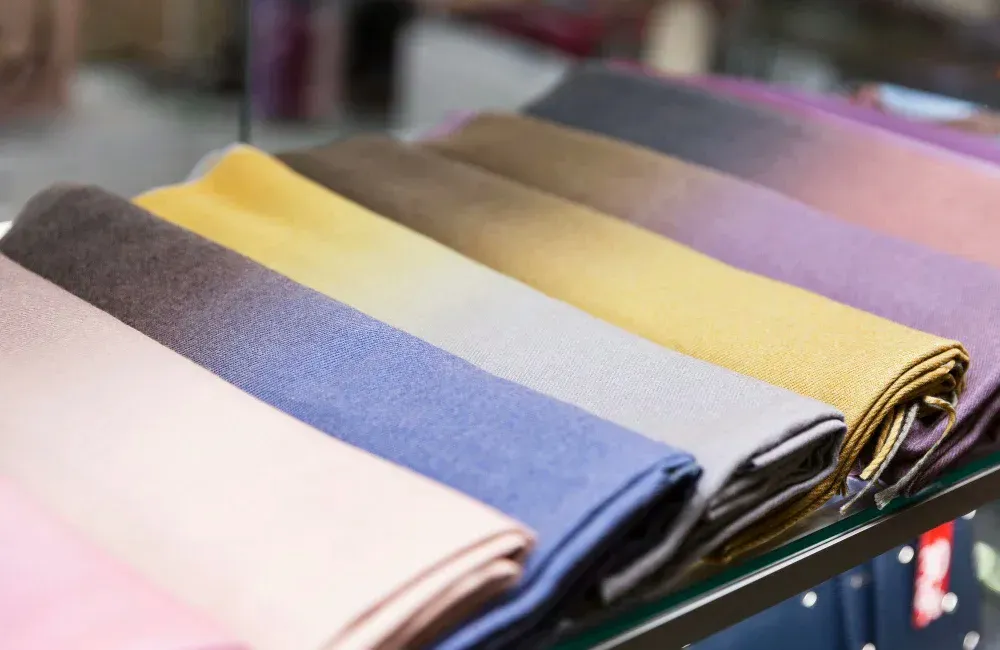
In sportswear, the fabric is the product. The geography of your factory dictates what materials you can access.
The Supply Chain Density:
-
China (The Candy Store): The textile ecosystem in Zhejiang and Guangdong is the densest on earth. You can source complex, high-elastane blends (Nylon 6.6, distinct rib structures) and access sublimation printing, laser cutting, and bonding facilities in the same industrial park.
-
Europe (The Heritage): Excellent for natural fibers (organic cotton, merino) and sustainable recycled polys. However, for high-compression, technical synthetics, Europe often imports the yarn or greige fabric from Asia, meaning you pay a premium for “Made in Europe” finishing on “Made in China” materials.
The Tactile Difference:
-
China: Superior for “squat-proof” opacity and recovery. The proximity to knitting mills allows for rapid testing of different GSM (grams per square meter) weights until the handfeel is “butter-soft.”
-
Europe: Superior for storytelling. If your brand relies on “local sourcing” marketing, the traceable European supply chain is a powerful asset, even if the technical performance is slightly lower per dollar.
⚡ Power Move: If sourcing China, use a “Nominated Supplier” strategy. Don’t just let the factory pick the fabric. Source the fabric yourself from a certified high-end mill (e.g., Carvico equivalents in China) and instruct your CMT (Cut, Make, Trim) factory to buy only from them.
Winner: China (For technical performance variety).
5. Ethical Manufacturing: Verification vs. Assumption
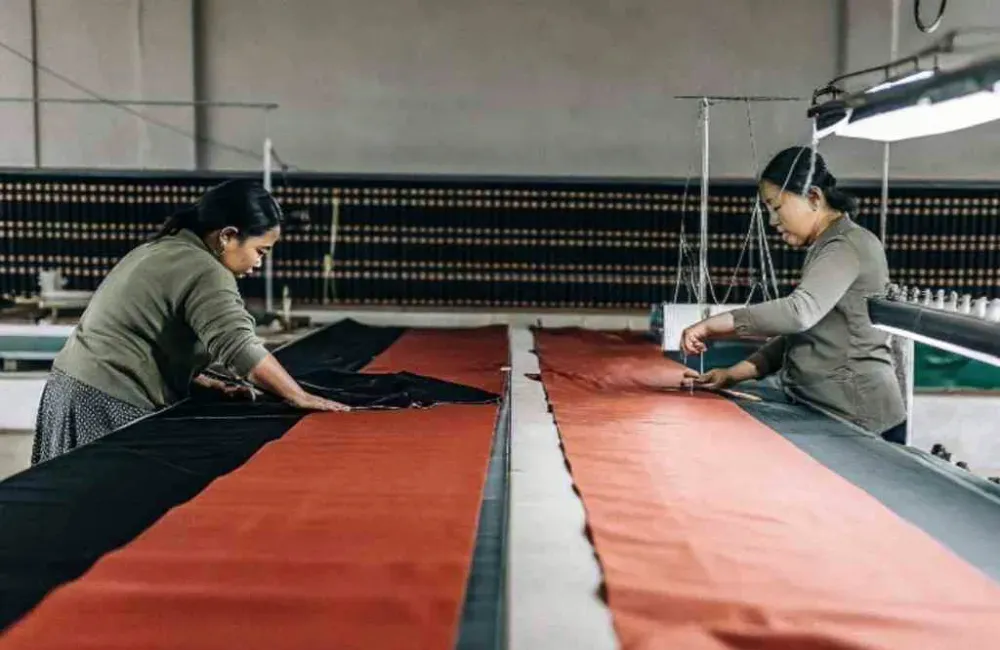
“Made in Europe” is not a get-out-of-jail-free card for ethics, and “Made in China” does not guarantee a sweatshop. The difference lies in the burden of proof.
The Compliance Landscape:
-
Europe: Operates under strict EU labor laws and REACH chemical regulations. Compliance is the legal default. If a factory poisons a river, they are shut down. Brands pay a premium for this “passive” safety.
-
China: You must actively verify. Greenwashing is rampant. A factory may show you a pristine showroom while subcontracting your order to an unventilated basement down the street.
The Verification Checklist: You cannot rely on a logo. You must validate certificates through official portals:
-
Chemical Safety: Verify OEKO-TEX Standard 100 validity.
-
Recycled Claims: Request Transaction Certificates (TCs) for GRS (Global Recycled Standard) lots. A GRS logo on a website means nothing without a TC for your specific batch.
-
Labor: Require a current SMETA or BSCI audit report and cross-reference the factory address on Google Earth to ensure the building size matches their capacity claims.
⚠️ Safety First: Never wire a deposit to a Chinese supplier without a signed NNN Agreement (Non-Disclosure, Non-Use, Non-Circumvention) and a clear penalty clause for unauthorized subcontracting.
Winner: Europe (For default trust) | China (If verified correctly).
China (Sportswear Manufacturing)
The Trade-Off: Unrivaled scalability and technical capability versus longer lead times and the need for strict oversight.
-
Supply Chain Density: In our sourcing audits, we find that proximity is king. Factories in Guangdong typically have zipper suppliers, fabric mills, and print houses within a 50km radius, effectively eliminating sub-component delays.
-
Advanced Capabilities: Access to specialized machinery often unavailable in smaller hubs, such as high-gauge seamless knitting and laser-bonded hems for performance wear.
-
Cost Efficiency at Scale: Offers the lowest ex-factory pricing, particularly because performance raw materials do not need to be imported—they are produced locally.
-
Con: The “Golden Sample” Trap: The gap between a sample room and the production floor is massive. Without third-party inspection, the “perfect” prototype you approved may not match the bulk shipment.
-
Con: Logistics Latency: Ocean freight adds 30–45 days to your cash cycle. Reliance on long freight lanes also increases exposure to Section 301 tariffs and port disruptions.
🚀 Actionable Insight: Beat the Freight Clock. Don’t rely solely on FOB (Free on Board) terms where your liability begins at the China port. Negotiate DDP (Delivered Duty Paid) terms for your first run. This forces the manufacturer to handle the export license, customs clearance, and final delivery, removing the volatility of logistics from your plate.
Europe (Portugal, Italy, Turkey)
The Trade-Off: Speed, traceability, and prestige versus significantly higher costs and rigid capacity ceilings.
-
Traceability Confidence: Shorter supply chains make it significantly easier to verify labor conditions and environmental claims through simple, low-cost site visits.
-
Rapid Replenishment: Trucking finished goods from Portugal to France takes days, not weeks. This allows premium brands to run lean inventories and restock best-sellers instantly.
-
Small-Batch Culture: European factories are operationally structured to handle high-frequency, low-volume orders for boutique fashion brands.
-
Con: Capacity Constraints: In our experience, booking large-scale production (10k+ units) often results in massive lead time extensions, as facilities lack the surge capacity of Asian counterparts.
-
Con: The Cost Floor: Labor costs are 3–4x higher than Asia. This premium is difficult to pass on to consumers unless you are operating strictly in the luxury tier.
🧠 Expert Take: The “Italian” Fabric Loophole. Be cautious of “Made in Europe” claims on technical activewear. We frequently see European factories importing “greige” (raw) fabric from China and only dyeing/finishing it locally. If true sustainability is your goal, you must audit the Country of Origin of the yarn, not just the sewing floor.
Ceng Anna, OEM and ODM clothing manufacturer
Certification & ‘Greenwashing’ Checklist
Trust, but verify. Use this checklist to prevent reputational risk in either region.
-
ISO 9001: Verify the scope includes the specific manufacturing site address, not just a holding company or trading office.
-
GRS (Global Recycled Standard): Never accept a generic logo. Demand a Transaction Certificate (TC) specific to your Purchase Order batch.
-
OEKO-TEX Standard 100: Validate the certificate number against the Official Label Check to ensure it hasn’t expired.
-
Audit Reports: Request recent SMETA or BSCI reports. specifically looking for “Corrective Action Plans” to see how they resolve past issues.
-
Operational Trust: Mandate a pre-production sample sign-off and require inline inspection photos/video (during sewing) before releasing the final balance.
Final Recommendation: China or Europe?
Buy from China if you are…
-
Scaling a proven SKU: You need reliable capacity and the lowest unit cost to maximize margin on established best-sellers.
-
A teamwear / sublimation buyer: You require complex customization at volume (jerseys, kits) that European mills cannot price competitively.
-
Operationally mature: Your brand can run tight QC (AQL target + inspections) and manage the logistics volatility associated with longer freight lanes.
Buy from Europe if you are…
-
A premium / sustainability-led brand: Your customer pays for the story; traceability and audit readiness are non-negotiable for sell-through.
-
A small-batch launcher: You need high flexibility and fast iteration speeds (especially if selling inside the EU) to test the market.
-
Risk-averse: You value lower compliance friction and speed over the lowest possible ex-factory cost.
If you’re unsure, do this hybrid move
Don’t view it as a binary choice. Many successful brands prototype or small-batch in Europe to perfect fit and quality with minimal communication lag. Once the SKU is validated, they transfer the tech pack to China for volume scaling.
⚡ Power Move: Split the line. Source high-speed “Hero” products in Europe to build brand heat, and move your core “Basics” to China to subsidize the profit margin.
Ready to build your supply chain?
LeelineWear bridges the gap, offering China-direct pricing with the agility of a western consultancy.
-
Learn capabilities: View our factory solutions
-
Start production:
Related reading: Still weighing options? Our guide to clothing manufacturers in China ranks ten factories on MOQ, QC, and verified capability.
Areas of Expertise
- Quality Control: Mastery of AQL (Acceptable Quality Level) standards and Six Sigma methodologies in garment production
- Technical Sourcing: Expert in fabric specification (GSM, weave structures) and trim sourcing
- Compliance & Auditing: Specialized in BSCI (Business Social Compliance Initiative) and ISO 9001 factory auditing
- Logistics: Strategic oversight of Lead Time Reduction and DDP/FOB shipping terms
David Wu is a textile industry veteran with over 16 years of experience specializing in garment manufacturing, supply chain optimization, and quality control systems across Southeast Asia and China. His career is defined by implementing rigorous AQL 2.5/4.0 inspection protocols for mid-to-large-scale private label brands. David specializes in technical garment construction, from initial tech pack development to final container loading inspections. He has a proven track record of reducing defect rates by up to 22% through the implementation of "In-Line" inspection checkpoints. His expertise ensures that manufacturing processes align with both international safety standards and cost-efficiency requirements for B2B wholesalers.