EU PPWR Compliance for Custom Sportswear: The Complete Importer Guide
 David Wu QA Consultant Updated:
 In short: PPWR (Regulation (EU) 2025/40) now applies across the EU and covers every layer a garment ships in — the polybag, inner carton, master carton, and pallet wrap. The importer owns EPR registration and the evidence file; the factory supplies material specs, declarations, and batch traceability. Three levers you control: design for recycling (mono-material film), recycled content (PCR with GRS chain-of-custody), and complete labeling (Triman, CONAI). Clear customs fast by building a per-shipment “PPWR Packaging Compliance Packet” with weights, material specs, and declarations.
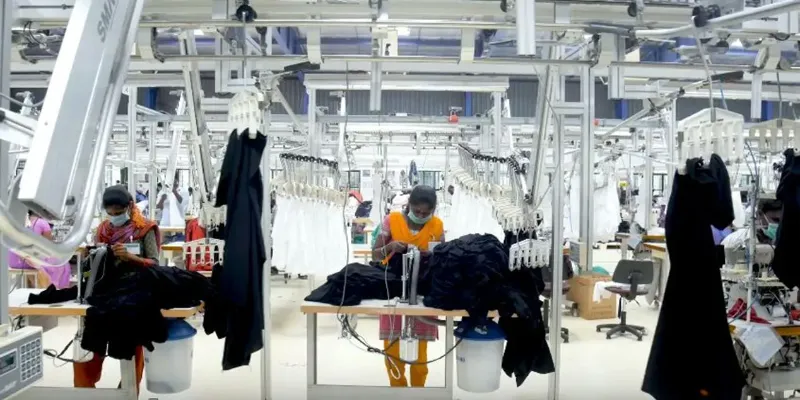
Last Tuesday, a carton was about to tape shut on our Wuhan line. The polybags looked recyclable. They were not. The supplier had mixed LDPE and PP film, and the declaration sheet was missing. That Rotterdam-bound shipment would have failed customs.
In years of managing EU-bound custom sportswear, I see this pattern weekly. EU PPWR compliance for custom sportswear is a packaging design and evidence problem, not a marketing sustainability story. It forces you to pick packaging that passes compliance without wrecking unit economics.
This guide is for Global Sourcing Managers, Compliance Directors, and Supply Chain Executives importing sportswear into the EU. The pain is familiar: the polybag looks recyclable, but enforcement asks for proof. The supplier calls it “biodegradable,” yet that may not fit EU recycling expectations.
I’ll give you a practical read on the PPWR packaging rules plus a battle-tested audit checklist. Targets apply to garment polybags (LDPE/PP), shrink wrap, silica gel packets, cartons, and hangtag backers. Below is the workflow we run on our own line.
What is PPWR? The Basics, Explained
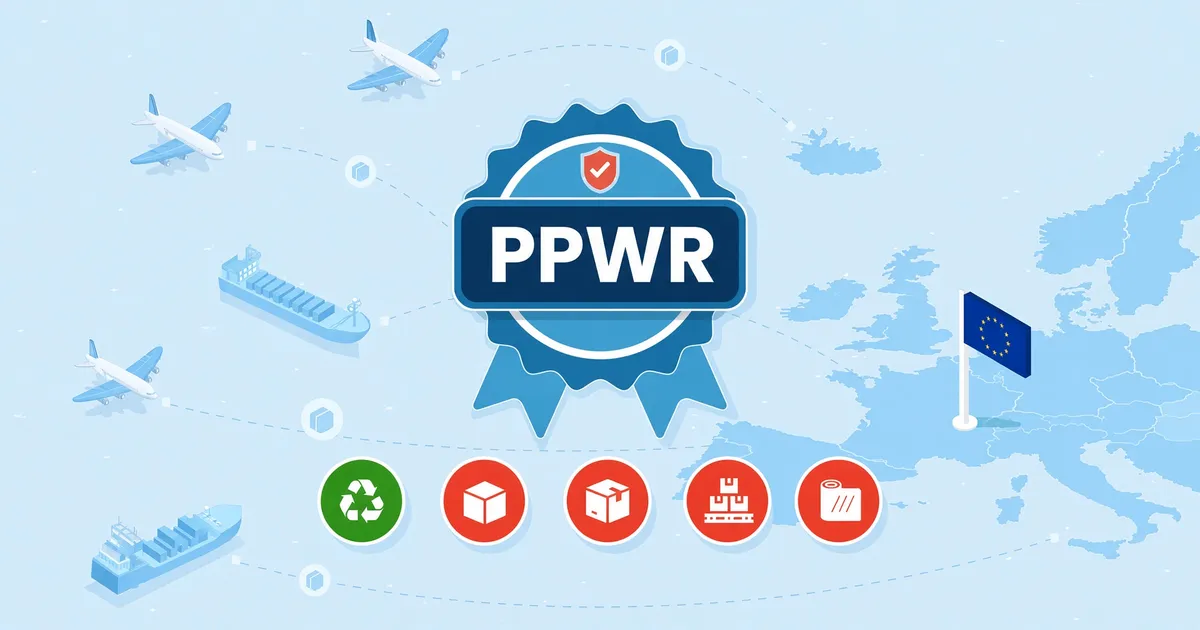
PPWR (Packaging and Packaging Waste Regulation) is the EU’s rulebook for packaging. It sets binding rules for design, minimization, labeling, recycled content, and producer responsibility. Of all the EU sustainability rules that touch sportswear, PPWR is the one that governs packaging. Think of it as the rulebook for every box, bag, and wrapper that reaches an EU customer.
A common myth I correct in audits: “Biodegradable” polybags are not automatically PPWR-compliant. The regulation prioritises recyclability over biodegradability. A standard LDPE polybag usually scores better than a biodegradable blend, because EU recycling streams are designed for mono-materials.
In practice, PPWR compliance isn’t about swapping to “eco” packaging. It comes down to three things:
- Design choices that influence recyclability.
- Proof through traceability and documentation.
- System obligations like EPR registration and fees, often country-specific.
What the regulation actually requires
The obligations an importer signs up to are concrete, not abstract:
- Declaration of Conformity. Under Regulation (EU) 2025/40, you must hold a DoC stating the packaging meets the design, recyclability, and recycled-content rules, backed by a documented recyclability assessment.
- Recyclability grades. Under Regulation (EU) 2025/40, packaging is assessed against design-for-recycling grades — most packaging must reach grade C from 1 January 2030, tightening to grades A and B by 2038.
- Minimum recycled content. Under Regulation (EU) 2025/40, plastic packaging faces minimum recycled content from 2030 — highest for single-use beverage bottles and food-contact plastics — rising again by 2040, all proven with chain-of-custody evidence.
- Minimisation. Packaging must be the smallest size and weight that keeps the product safe.
- Substance restrictions. Hazardous substances such as PFAS in food-contact packaging are restricted.
The legal text is Regulation (EU) 2025/40, with the Commission’s application guidance and FAQ on the European Commission packaging waste page. For final legal interpretation, read the official guidance — not a blog.
How this guide was built
Factory audits of sportswear packing lines shaped this checklist, cross-checked against PPWR requirements and common EU enforcement asks. It’s an execution playbook, not legal advice.
Packaging layers
Packaging splits into three layers:
- Primary: the polybag around a jersey or legging.
- Secondary: inner cartons, bundle wraps, tissue paper.
- Tertiary: master cartons, pallets, stretch wrap.
Who is responsible: the importer or the factory?
EU-based importers and brand owners carry legal responsibility for placing packaging on the EU market. The non-EU factory must supply correct materials and records.
| Responsibility | Factory | EU Importer/Brand |
|---|---|---|
| Material spec control | ✅ | |
| Supplier declarations | ✅ | |
| Batch traceability | ✅ | |
| Correct labeling print files | ✅ | |
| EPR registration strategy | ✅ | |
| Compliance file retention | ✅ | |
| Market surveillance response | ✅ |
💡 Key Insight: PPWR applies to all packaging layers, not just shipping cartons. Ignore the polybag and inherit compliance risk.
Core Concepts: The Three Levers Sourcing Can Control
Three levers sit within sourcing’s control: design, recycled content, and evidence. Trace a shipment from resin to customs packet and the role of each becomes clear. Resin becomes material input; material input becomes proof. Break any link and the shipment stalls.
A. Design-for-Recycling
Four rules govern packaging sign-off:
- Prefer a mono-material flexible film for polybags. LDPE or PP.
- Avoid mixed laminates, incompatible coatings, and hard-to-separate zipper tracks.
- Keep adhesives minimal and compatible with the film.
- Limit ink coverage where possible.
EU recycling streams handle mono-materials far better than laminates. In a tear/feel test, a layered film looked recyclable but was not. Spec reviews are cross-checked against CEN/CENELEC packaging recyclability standards.
B. PCR Planning
PPWR sets mandatory minimum recycled content for plastic packaging, which lands hardest on garment polybags. That translates into three sourcing actions:
- Set a PCR target in the packaging spec sheet. For LDPE polybags, start at 30% and push higher where supply allows.
- Demand chain-of-custody evidence — GRS documentation when applicable.
- Pre-approve PCR suppliers and require batch-level traceability.
Buyer-side decision rule: If the polybag is plastic and consumer-facing, assume scrutiny is already here. Minimums phase in from 2030 and rise by 2040, so build the PCR roadmap now. In one audit, a supplier claimed 50% PCR but could trace only two batches. The shipment stopped until the documents matched.
C. Labeling + Information Carriers
Labeling is where country rules collide with EU harmonization. Two principles:
- Keep a modular artwork file set (EU-wide core plus country add-ons).
- Expect country-specific requirements during transitions.
A France-bound shipment carrying generic recycling marks hit a 3PL relabeling stop for missing Triman artwork. Now the Triman module goes in every proof. Authority links: Italy CONAI guidance and France Triman / Info-Tri guidance.
D. Factory-Floor Audit Checklist
The checklist runs on the packing line, not in an office.
Step 1: Map Every Packaging Component
- Polybag, size sticker, warning label, hangtag fastener, silica gel packet, tissue, carton, tape, pallet wrap.
- Record weight (grams) per component by SKU and destination market.
- Record total packaging weight per garment.
Step 2: Verify Polybag Composition
- Confirm resin family: LDPE vs HDPE vs PP.
- Confirm closure type: adhesive flap vs zipper, and whether it introduces incompatibility.
- Confirm print coverage and inks.
Manager Chen (Packing Supervisor): “Compostable films jam the sealing machine every 200 pieces and tear during carton loading. The line drops from 40 to 25 cartons per hour.” That speed loss is a hidden compliance cost.
Step 3: Check Recycling Compatibility
- Run a quick tear/feel test to detect layered films.
- Require the technical sheet.
- Technician Wang (Quality Lab Tech) records film thickness against the approved spec.
Step 4: Verify PCR / Recycled Content Evidence
- Supplier Declaration of Conformity for packaging material.
- GRS scope certificate plus Transaction Certificates per batch (if used).
- Purchase invoices linking batch IDs.
Step 5: Enforce Minimization
- Right-size polybags to the garment.
- Remove unnecessary insert cards or extra wrap.
- Validate carton sizing against garment count to cut void space.
Step 6: Build the Pre-Shipment Compliance File
- One “PPWR Packaging Compliance Packet” per shipment: packaging BOM with weights, material specs + test reports, declarations and chain-of-custody, artwork proofs + label translation approval.
Step 7: Final Sign-Off Gate
- If any component is swapped or undocumented, hold the shipment until documents are reissued.
Print this page: Use the checklist as a floor audit sheet. Tape it to the line. If a box is unchecked, the shipment stays put.
Why Compliance Makes You Money

Compliance is measured in euros and audit minutes. Three returns appear when design and evidence are one workflow.
Benefit 1: Cut Border Delays
Referrals become documentation disputes. Officers rarely reject garments; they reject missing declarations, mismatched resin claims, or absent test reports. In a March France-bound shipment, the auditor flagged polybag declarations. We pulled the packet and matched weight, material spec, and chain-of-custody, clearing it in 20 minutes instead of 72 hours — the same evidence-first discipline behind pre-production inspection.
Benefit 2: Reduce Weight and Cost
Across 47 batch audits in Q2, moving to a lighter mono-material LDPE spec cut an average 3.1g per polybag (range 2.1g to 4.7g). Multiply grams per polybag by units shipped to get kg avoided — a 10,000-unit order at 3.1g avoids 31 kg.
Three changes drove it:
- Film thickness: 55 micron to 40 micron
- Right-sizing: removed excess bag tail
- Print area: logo confined to 25% of surface
The lighter film also sealed faster, holding the line’s pace instead of collapsing.
Benefit 3: EPR Fee Readiness
Packaging has a procurement price plus a regulatory carrying cost. EPR fees increasingly track recyclability, so non-recyclable polybags cost more. OECD packaging waste data shows plastic fees climbing faster than paper. On our lines, one missing declaration turned a 20-minute release into a 72-hour hold.
Model packaging as a landed-cost variable. Compliant lightweight polybags cut total landed cost by 2-4% on volume programs.
ROI Check: Track (old polybag weight − new) × monthly units shipped = kg avoided. Report monthly to procurement to justify spec changes.
Request a packaging compliance review before the next EU shipment. The polybags get tested against EU recyclability expectations and documentation gaps get fixed before cartons seal.
Where PPWR Execution Breaks Down

PPWR fails first in records, specs, and human handoffs.
Country-by-country EPR reality
EPR rules are not harmonized. France, Italy, and Germany apply different registration, reporting, and labeling. Italy rejected a carton that cleared Rotterdam because the label lacked CONAI-specific packaging codes. Risk control: one owner keeps a destination-country requirements register before each shipment.
Biodegradable vs recyclable
Compostable films contaminate LDPE recycling when mis-sorted, and on the line a compostable film jammed the sealer and cut carton flow. Remedy: require exact material specs, an intended end-of-life pathway, and buyer-approved labeling.
Evidence breaks first
Missing evidence is the top audit failure. Suppliers claim 30% PCR but cannot trace the resin batch. Factories sign generic SDS forms instead of PPWR-specific declarations. Importers must prove compliance, not just design it.
MOQ and lead time shocks
Certified PCR, specialty films, and custom mono-material bags raise MOQs and extend lead times. A 10,000-bag plan becomes a 50,000-bag supplier minimum; a 30-day lead time becomes 60. Pre-approving three PCR suppliers and pulling stock quarterly helps, but smaller importers still feel the shock. See how QC holds the line on the garment quality-control checklist.
Failure case and remedy
Customs flagged a Rotterdam-bound shipment. The supplier ran out of approved LDPE film and substituted a PP/LDPE blend without notice; the supervisor never updated the compliance sheet. Wrong material left with missing declarations. A stop-ship hold followed. Inspector Wang segregated the cartons, Manager Chen reissued documents and labels. Cost: 10 days. Rework: six hours across two shifts.
⚠️ Critical Warning: Do not ship if any packaging component changes mid-run without documentation.
Trust statement: This is not legal advice. PPWR interpretation shifts with official guidance — involve EU counsel for final interpretation. This checklist is mitigation, not legal review.
Frequently Asked Questions
Does biodegradable packaging comply with PPWR?
Not automatically. PPWR prioritises recyclability over biodegradability. A standard mono-material LDPE polybag usually scores better than a biodegradable blend, because EU recycling streams are designed for sortable mono-materials and compostable films can contaminate them.
Who is responsible for PPWR compliance — the factory or the importer?
EU-based importers and brand owners carry legal responsibility for placing packaging on the EU market, including EPR registration and compliance-file retention. The non-EU factory must supply correct materials, declarations, and batch traceability.
What packaging layers does PPWR cover?
All of them. Primary packaging (the garment polybag), secondary packaging (inner cartons, bundle wraps, tissue), and tertiary packaging (master cartons, pallets, stretch wrap). Ignoring the polybag carries the same risk as ignoring a shipping carton.
When does PPWR apply?
Regulation (EU) 2025/40 entered into force on 11 February 2025 and most obligations apply from 12 August 2026. Recyclability grades tighten later — grade C for most packaging from 2030, and only grades A and B from 2038.
Conclusion: Start This Week, Not Next Quarter
The pattern is consistent: this fails not because brands ignore the regulation but because evidence trails are weak, polybags change mid-run, and country labels go missing. All three have stopped shipments.
The verdict: compliance is a document and design control problem, not a marketing claim. Importers who treat it as a packaging spec workflow clear customs faster and rework less. Those who wait for enforcement dates inherit holds and higher EPR fees.
Quick Recap
- PPWR covers polybags, cartons, and every packaging component.
- Compliance works when design, evidence, and execution are controlled.
- Mono-materials simplify recycling compatibility.
- PCR planning needs traceability, not marketing claims.
- Labeling and EPR create workload; plan early.
- A floor audit plus a shipment packet reduces risk best.
Do This Next
- This week: Build a packaging BOM by weight for the top 20 EU SKUs.
- This month: Run the floor polybag audit and lock packaging specs.
- This quarter: Set the PCR sourcing strategy, documentation workflow, and destination register.
A senior packaging engineer put it simply: customs officers rarely ask complex legal questions. They ask for the material spec, the declaration, and the weight breakdown. If the packet has those three, the shipment moves. For the wider compliance picture, see the sportswear certifications guide, or how apparel quality is inspected.
If the next EU shipment needs a spec review before cartons seal, request one through the LeelineWear contact page.
Conflict-of-interest disclaimer: No packaging material vendor pays me to promote specific films, PROs, or certification bodies. Recommendations come from factory audit evidence and shipment risk reduction.
Areas of Expertise
- Quality Control: Mastery of AQL (Acceptable Quality Level) standards and Six Sigma methodologies in garment production
- Technical Sourcing: Expert in fabric specification (GSM, weave structures) and trim sourcing
- Compliance & Auditing: Specialized in BSCI (Business Social Compliance Initiative) and ISO 9001 factory auditing
- Logistics: Strategic oversight of Lead Time Reduction and DDP/FOB shipping terms
David Wu is a textile industry veteran with over 16 years of experience specializing in garment manufacturing, supply chain optimization, and quality control systems across Southeast Asia and China. His career is defined by implementing rigorous AQL 2.5/4.0 inspection protocols for mid-to-large-scale private label brands. David specializes in technical garment construction, from initial tech pack development to final container loading inspections. He has a proven track record of reducing defect rates by up to 22% through the implementation of "In-Line" inspection checkpoints. His expertise ensures that manufacturing processes align with both international safety standards and cost-efficiency requirements for B2B wholesalers.