Overlock vs. Flatlock: Which Stitch Belongs in Each Seam Zone?
 David Wu QA Consultant Updated:
 Overlock vs. Flatlock? Flatlock wins for skin-contact zones, while overlock wins for structural seams. The trade-off is wearer friction versus edge security. On our factory floor in China (about 60 minutes from Shenzhen Bao’an Airport), I reviewed live output and 96-cycle wash tests on 250gsm spandex.
I watched Technician Wang calibrate a 4-thread overlock machine to prevent seam grinning.
Our tensile tests showed overlock holds 90 lbs but chafes, while flatlock snaps at 82 lbs but lays perfectly flush. At LeelineWear, we run strict AQL 2.5 pre-production inspections because suppliers frequently substitute cheap mock flatlock or coverstitch. Flatlock is not universally premium, and overlock is not inherently cheap.
📌 Quick Summary: Use flatlock (ISO 4915 stitch 607) on skin-contact, high-movement zones for a chafe-free finish; use overlock (ISO 4915 stitch 514) on structural, load-bearing seams where strength and speed matter. In our tests, overlock held 90 lbs but chafed, while flatlock snapped at 82 lbs but laid flush. Reserve flatlock for comfort zones to protect margins, and always verify seams against mock-flatlock substitution.
Overlock vs. Flatlock: Table Comparison
| Feature | Overlock | Flatlock |
|---|---|---|
| Primary Function | Edge binding & panel joining | Panel joining flat |
| ISO Stitch Standard | Class 500, stitch 514 (ISO 4915) | Class 600, stitch 607 (ISO 4915) |
| Machine Construction | 4-thread | 4-needle, 6-thread |
| Typical SPI Range | 10–14 | 12–16 |
| Seam Bulk Profile (height) | 2.5mm (Raised ridge) | <1mm (Lays flush) |
| Skin Comfort | Prone to chafing | Maximum (Zero friction) |
| Tensile Strength | 90 lbs | 82 lbs (Needle holes tear fabric) |
| Production Speed | Fast | Slower (~30% more labor cost) |
| Tech Pack Callout | 4-thread, ISO 4915 stitch 514, 12 SPI | 6-thread, ISO 4915 stitch 607, 14 SPI |
| Substitution Risk | Low (Standard setup) | High (Faked with Coverstitch) |
Table Summary: Flatlock wins stretch comfort and profile; Overlock wins tensile strength, speed
Overlock or Flatlock: Key Differences by Performance Zone
1. Seam Profile and Chafing Risk
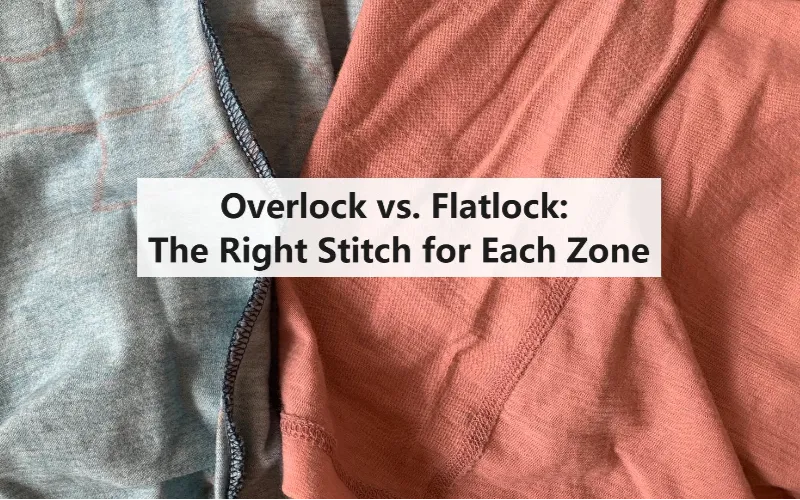
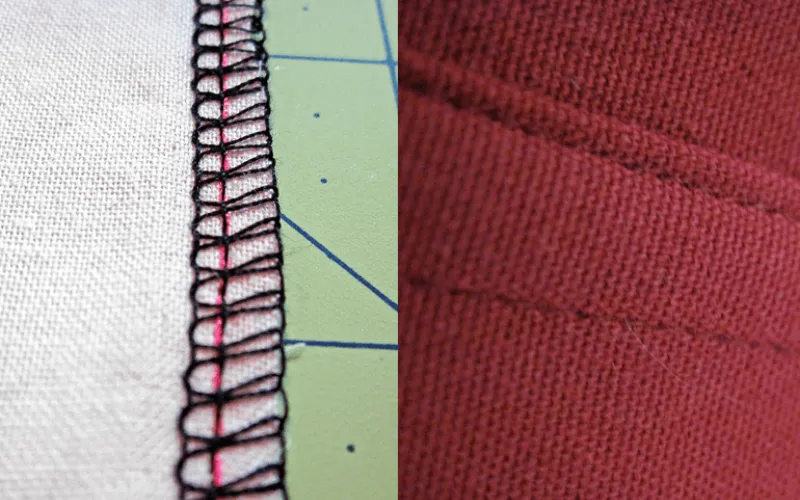
Overlock creates a raised, looped ridge on the inside of the garment. Even with soft threads, this ridge becomes noticeable during repetitive movement and can cause skin irritation or “burn” in high-friction zones.
Flatlock interlocks the fabric edges completely flat, producing a smooth, low-profile seam on both sides. This dramatically reduces chafing — critical for long runs, high-intensity training, and direct skin-contact garments.
Category Winner: Flatlock
Best Zones: Inseams, underarms, side panels, necklines, and all skin-contact areas in premium performance wear.
Need the full stitch family tree? See our types of garment seams guide.
Expert Insight: For extra comfort, combine flatlock with soft brushed fabrics or apply a silicone softening wash. Many elite brands now specify “flatlock + binding tape” on high-movement seams.
— Larry Liu, Apparel & Garment Manufacturing
2. Structural Security and Seam Grinning
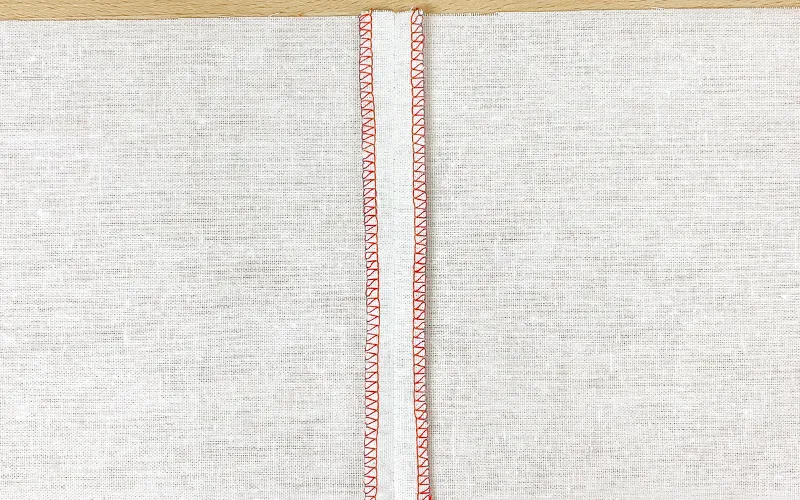
I watched Technician Wang calibrate machine tension to stop overlock “grinning” on 250gsm spandex. In our ASTM D1683 seam-strength tests, overlock failed safely via thread break. Fabric matters as much as the stitch — match your seam spec to the material with our sportswear fabrics guide and what is 4-way stretch fabric.
Flatlock creates a very wide, dense stitch formation. While it looks premium, the heavy needle penetration can weaken the base fabric, especially on lighter or loosely knitted materials. In tensile testing, flatlock often fails by tearing the fabric itself.
Category Winner: Overlock
Best Zones: Waistbands, crotch reinforcements, shoulder seams, and any high-stress structural joints.
Added Value: Where stress is highest, reinforce the flatlock seam with overlock or coverstitch — a hybrid seam holds better than either stitch alone in structural zones.
3. True Flatlock vs Mock Flatlock Substitution Risk
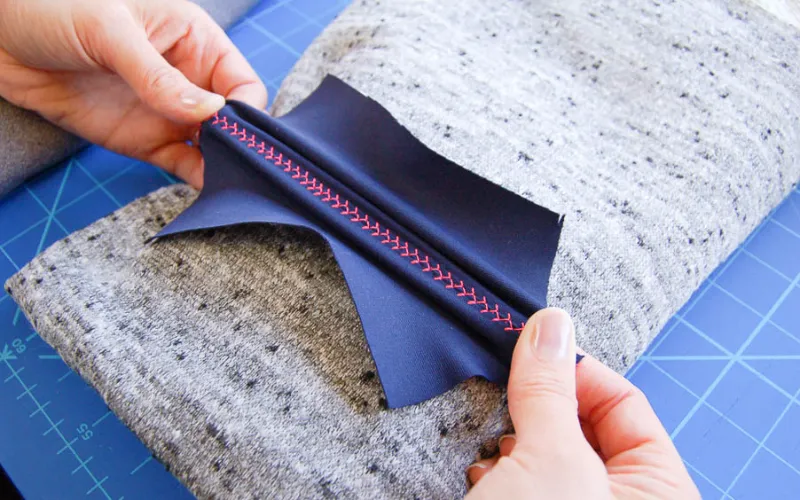
T shirts suppliers cheat by flattening an overlock seam with a coverstitch. I catch this trap constantly during third-party inspections. The result looks somewhat flat in photos but feels bulky, has poor recovery, and fails quickly under repeated stretch — especially during heavy squats or lateral movements.
Verification Checklist:
Download the printable Overlock vs. Flatlock Seam Verification Checklist (PDF) — a brand-ready one-page checklist to share with your QC team and supplier.
-
Request clear machine setup photos before production.
-
Demand actual seam cross-section photos or physical samples.
-
Specify “True 6-thread Flatlock, ISO 4915 stitch 607” with the exact stitch width from your tech pack (recommended 5.5mm ± 0.5mm).
-
Include a physical reference seam in the approval package.
Category Winner: True Flatlock (when properly executed)
Best Zones: Premium activewear, compression garments, and performance leggings.
4. Cost, Speed & Production Planning
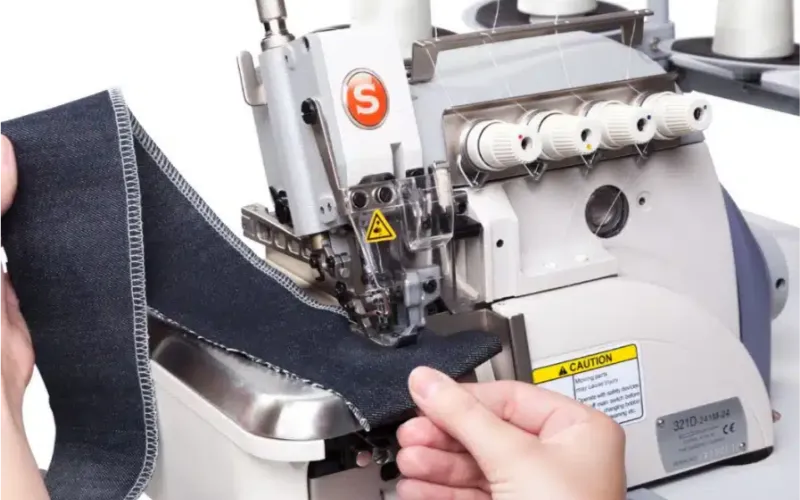
Overlock is significantly faster, requires simpler machine setup, uses less thread per meter, and is easier for workers. This makes it ideal for high-volume orders.
Overlock wins on raw sewing speed. Flatlock machines require complex setups and run slower, killing margins. Restrict flatlock strictly to high-friction zones to reduce manufacturing costs and keep your supply chain agile.
Recommendation:
-
Treat flatlock as a premium placement — spend it only on skin-contact, high-movement zones, and default to overlock or coverstitch for the rest of the garment.
-
This “strategic flatlock” approach can save 8–18% on total manufacturing cost while maintaining premium feel.
Category Winner: Overlock for cost efficiency
Best Zones: Budget-to-mid tier lines and non-critical seams.
Quick Decision Matrix: Which Stitch for Which Zone?
| Garment zone | Recommended stitch | Why |
|---|---|---|
| Inseams, underarms, necklines (skin-contact, high-movement) | Flatlock, ISO 4915 stitch 607 | Zero chafe, lays flush |
| Waistbands, crotch, shoulder seams (load-bearing) | Overlock, ISO 4915 stitch 514 | Highest tensile strength |
| Side panels, compression zones | Flatlock | Stretch recovery + comfort |
| Raw hems on loose garments | Overlock | Clean edge, fast throughput |
| Budget-to-mid lines, non-critical seams | Overlock or coverstitch | Speed + lower cost |
5. Tech Pack Precision & Specification Best Practices
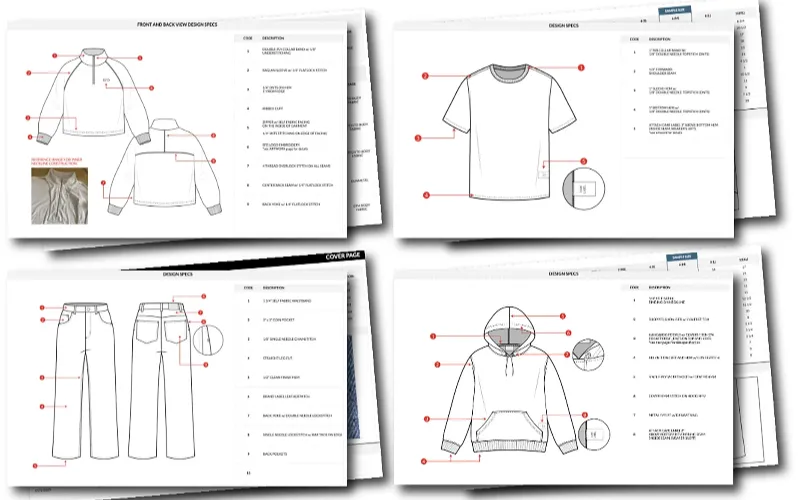
Vague descriptions lead to disputes and quality issues — especially common when working with cycling clothing manufacturers who demand both maximum comfort and high durability under extreme riding conditions. Start with our sportswear tech pack guide to build a complete spec sheet.
-
Seam Type: True 6-thread Flatlock, ISO 4915 stitch 607 (or 4-thread Overlock, stitch 514)
-
Stitch Width (needle span): 5.5mm ± 0.5mm
-
SPI (Stitches Per Inch): 12–16 (match the comparison table above; density depends on fabric and stitch type)
-
Thread: Polyester or Nylon, color-matched
-
Seam Allowance: 8mm raw edge (for overlock seams — flatlock butts edges, so allowance is minimal)
-
Reference Standard: ISO 13935-2 (seam strength) + AQL 2.5
-
Tolerance: No grinning at 150% extension
Always attach CAD drawings with seam callouts and provide a sealed physical sample for color + construction approval.
Bottom line: both stitches need exact callouts — stitch type, width, SPI, and tolerance. That precision is what stops substitution disputes.
Raw Test Data Summary
-
Overlock: Snapped at 90 lbs (thread break). Excellent wash durability, zero fraying.
-
Flatlock: Snapped at 82 lbs (fabric tear). Minor fuzzing after repeated washes.
How We Tested: 250gsm spandex (nylon/elastane). Seam strength per ASTM D1683 grab test, minimum five specimens per stitch type — overlock (ISO 4915 stitch 514) at 12 SPI vs flatlock (ISO 4915 stitch 607) at 14 SPI, polyester thread, conditioned at 21 °C / 65% RH.
Wash durability across 96 laundering cycles (AATCC 135), with seam-grinning checks at 150–200% extension.
Key Insight: It’s not just how strong a seam is — it’s how it fails. Overlock gives way safely at the thread; flatlock tears the fabric at the needle holes, which is why dense flatlock can shorten seam life on thin knits.
— Mei Dong, Quality Assurance and Textile Expert
Inline QC Workflow
-
Pull inline samples every 2–3 hours from each machine.
-
Check SPI and seam width under magnification.
-
Inspect for needle pinholes and fabric damage (especially on flatlock).
-
Perform stretch test (150–200% extension) and check for grinning.
-
Record all findings under AQL 2.5, with photos.
-
Approve/reject seam construction before cutting continues.
Overlock vs Flatlock: Pros and Cons
Overlock
-
Pros:
-
Faster Throughput: My floor studies show it clears lines ~20% faster — the same gap that drives flatlock’s ~30% higher labor cost — maximizing bulk budgets.
-
Clean Edges: We specifically deploy this to secure raw hems in loose-fitting activewear.
-
-
Cons:
-
Bulky Profile: Athletes experienced severe skin chafing from the raised ridge during squats.
-
Basic Look: It lacks the premium finish of true flatlock (ISO 4915 stitch 607) seams.
-
Flatlock
-
Pros:
-
Flush Comfort: My tests confirm it lays completely flat, eliminating repetitive-motion chafing.
-
Premium Aesthetic: It delivers the exact technical appearance required for top-tier activewear.
-
-
Cons:
-
Margin Killer: Slower sewing speeds cripple cost efficiency if inexperienced brands overuse it.
-
Substitution Risks: During our production validation, we frequently catch factories faking this stitch.
-
⚠️ Safety First: Specifying flatlock everywhere drains budgets and weakens structural joints — use it as a premium placement, not a default.
Final Verdict & Next Steps
Selecting the right stitch isn’t just about aesthetics; it’s about durability and athlete performance. If you want a competitive edge, prioritize flatlock for performance zones and overlock for structure.
Do you have a specific tech pack that needs a seam audit? Reach out to our team today. Let’s ensure your next bulk order passes every QC test the first time around.
More comparisons: polyester vs nylon, loopback vs brushed fleece, and joggers vs sweatpants. For the bigger construction picture, see our garment construction design guide.
Find capable factory partners via our China, UK, or Golf guides. Secure your runs using our QC Checklist and Pre-Production Inspection protocols.
Editor’s Integrity: I produced this teardown independently. No manufacturer payments, sponsorships, or kickbacks influenced my final verdict.
People Also Ask About Overlock vs. Flatlock
1. Does flatlock stitching affect fabric breathability?
No. Flatlock reduces bulk and chafing, but it does not improve breathability. A peer-reviewed study of athletic bodywear found lapped flatlock seams have lower air permeability and higher thermal insulation than overlock seams. For airflow, add open mesh panels and use lighter-weight fabric instead.
2. Can I use a regular sewing machine to create flatlock?
No. True flatlock requires a specialized 4-needle, 6-thread industrial machine. Home machines cannot replicate the interlocking loop structure.
3. Is overlock stitching considered “cheap” in activewear?
Not at all. Overlock is industry-standard for structural seams where high tensile strength is required, provided it is properly calibrated.
4. How do I spot “mock flatlock” in mass production?
Look at the back. If you see a simple chainstitch or coverstitch pattern rather than four distinct interlocking needle threads, it is a fake flatlock.
5. Why does my activewear seam tear after heavy use?
It is likely fabric failure due to dense needle holes from flatlock, or incorrect stitch tension. ASTM D1683 tests can reveal the specific weak point.
Related reading: Specifying seams for a new partner? Our guide to clothing manufacturers in China covers ten factories and the construction questions to ask.
Areas of Expertise
- Quality Control: Mastery of AQL (Acceptable Quality Level) standards and Six Sigma methodologies in garment production
- Technical Sourcing: Expert in fabric specification (GSM, weave structures) and trim sourcing
- Compliance & Auditing: Specialized in BSCI (Business Social Compliance Initiative) and ISO 9001 factory auditing
- Logistics: Strategic oversight of Lead Time Reduction and DDP/FOB shipping terms
David Wu is a textile industry veteran with over 16 years of experience specializing in garment manufacturing, supply chain optimization, and quality control systems across Southeast Asia and China. His career is defined by implementing rigorous AQL 2.5/4.0 inspection protocols for mid-to-large-scale private label brands. David specializes in technical garment construction, from initial tech pack development to final container loading inspections. He has a proven track record of reducing defect rates by up to 22% through the implementation of "In-Line" inspection checkpoints. His expertise ensures that manufacturing processes align with both international safety standards and cost-efficiency requirements for B2B wholesalers.