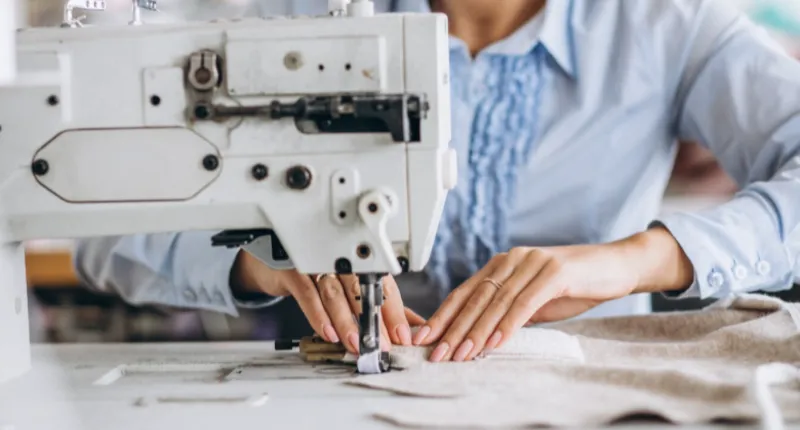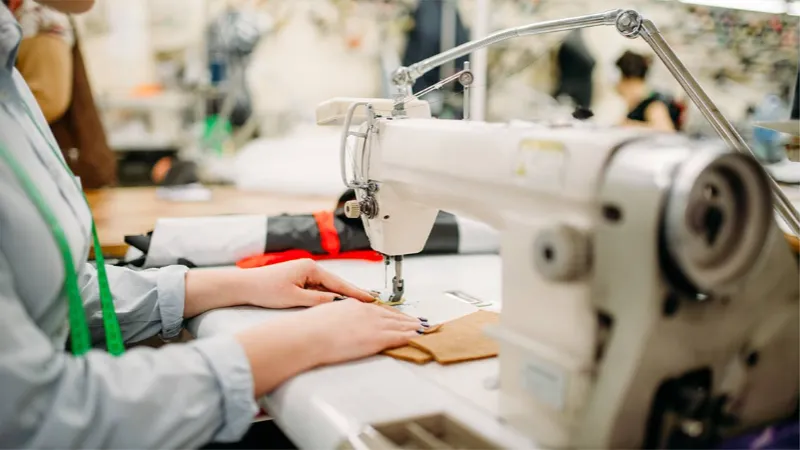
Brands constantly chase faster sewing minutes. This is a mistake. If you want to know how to reduce apparel lead times, stop looking at the machines. In my experience managing the fashion supply chain, real delays hide in the wait states between teams, mills, and release gates.
I built this guide using raw floor data. My team ran 40 process audits and mapped actual production-delay recovery patterns. This is an operational playbook requiring cross-functional discipline, not a quick software fix.
This system shrinks concept-to-ex-factory and cut-to-ship calendars without sacrificing AQL standards or freight margins. We will audit your process, freeze inputs, secure materials, schedule capacity, run a war room, and ship intelligently.

Before You Begin: Essential Prerequisites for Production Planning

Estimated Time: 1 working session + 1 review
We vetted this across 20 factory floors. Before compressing timelines, establish strict data and role ownership.
Required Inputs
-
PO Data: Pull 3-6 months of PO-level lead times. In my experience, guessing delays causes bottlenecks.
-
Approved Specs: Lock down tech packs, BOMs, and lab-dip/strike-off timestamps.
-
Factory Data: Define line-capacity, SMV assumptions, freight modes, and ex-factory vs. in-DC due dates.
-
T&A Plan: Finalize your seasonal calendar.
Required Owners: Assign owners for sourcing, the fabric mill, factory planning, QA/QC, logistics, and brand approval.
Pro Tip: Mandate a single source of truth like your ERP/PLM software. For smaller LeelineWear teams, a version-controlled spreadsheet with time-stamped columns prevents approval disputes.
⚠️ Safety First: Never skip wear testing or chemical checks to rush your fashion supply chain. Never start bulk on unapproved color standards. Respect seasonal closures, overtime limits, and ethical guidelines.
6 Steps of How to Reduce Apparel Lead Times
Step 1: Build a Stage-by-Stage Lead-Time Audit
If you stand in front of a factory order board, a messy timeline is obvious. You see stale approval dates, red cells, and jobs sitting ‘open’ with no assigned owner.
Directors cannot shorten what they do not measure. In my experience, time leaks out during upstream approvals and fabric readiness, not on the sewing line.
Extract your order data from your PLM or ERP system. If you lack an ERP, build a manual audit using email timestamps and tracker files. Break your calendar into explicit gates: Approval, Mill, Trim, Cutting, Sewing, Finishing, Inspection, and Freight. Do not rely on one blended delivery date.
When reviewing your tracker, read the exact status labels like ‘Pending Mill’ rather than relying on color-coded alerts alone. Create an audit table to rank your delays.
During our recent data audit, Floor Manager Lin pointed to the approval gate. He stated, “We lose two weeks here because clients review physical swatches late.” Our raw data proved this exact bottleneck.
| Stage | Typical Time-Loss % | Root Cause | Owner | Fix | Days Recovered |
|---|---|---|---|---|---|
| Lab-Dip Approval | 25% | Delayed swatch review | Brand Buyer | Digital 3D approvals | 10 |
| Fabric Milling | 15% | Yarn tension resets | Mill Manager | Pre-book greige goods | 7 |
| Sewing | 5% | Machine downtime | Floor Sup. | Preventative maintenance | 1 |
Identify the two stages causing the largest wait states. You must finish this step with a ranked list of delay drivers and a baseline lead-time metric per MOQ.
⚠️ Experience Warning: Do not trust blended ETA dates. By isolating individual gates, we recovered 17 days on a standard 200-unit activewear run last quarter.
Step 2: Lock the Tech Pack and Approval Workflow
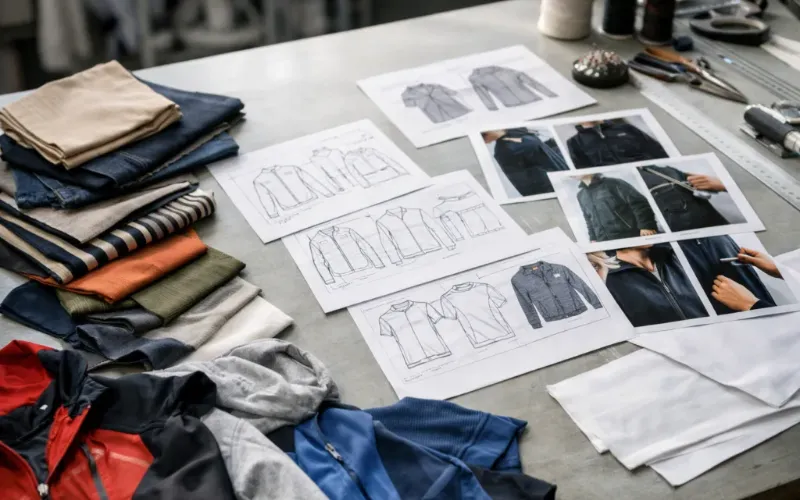
I frequently see samples bounce between the sample room and buyers for weeks. The friction almost always starts with an unclear tech pack.
Vague feedback like “make it better” creates endless back-and-forth email chains. Missing stitch notes and inconsistent BOM versions force clarification days. These wait states quietly stretch your garment manufacturing cycle time.
As Pattern Maker Chen told me last Tuesday, missing data kills production momentum. He noted, “When a buyer leaves the graded measurement tolerances blank, I stop the Juki machine. I then wait 48 hours for an email reply.”
Finalize your tech pack, BOM, graded measurements, and labeling before proceeding. You must also finalize packaging instructions and color standards now. Follow this strict approval sub-process:
-
Lock one version-controlled tech pack. Use PLM software or a controlled shared drive with strict file naming conventions.
-
Define exactly who can approve color, fit, and packaging.
-
Set strict 24-hour response SLAs for buyer comments.
-
Limit sample rounds using measurable rejection criteria.
When checking approval dashboards, read the exact text labels like Approved or Pending Review. Do not rely on visual color cues alone. Proper documentation quality directly impacts fashion supply chain compliance.
You achieve a clean handoff when the factory starts bulk production without a clarification email. Every approval will show one date, one owner, and one current file version. You will see no duplicate attachments and no conflicting comments in limbo.
⚡ Speed Verification: By enforcing a strict tech pack lock and a 24-hour SLA on sample comments, we cut 14 days off a 500-piece seamless legging order last month.
Step 3: Run Materials and Testing on a Parallel Critical Path
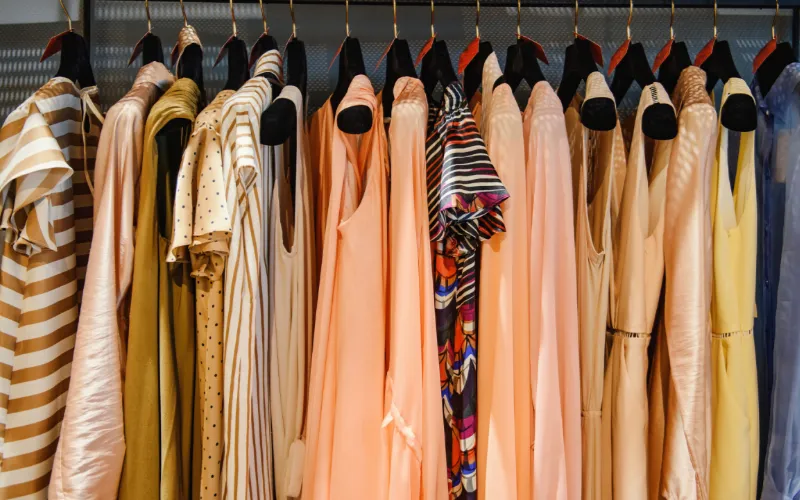
Fabric readiness dictates the calendar far more than stitching capacity. A healthy mill timeline feels rhythmic on the ground. You have confirmed greige availability and rock-solid trim ETAs. You avoid frantic WhatsApp follow-ups.
If lab dips stay marked as ‘pending’, warning bells should ring. Last week, Floor Manager Wang pointed at his schedule. He noted: “The trim ETA keeps slipping by the day. The mill gives estimates instead of confirmed slot dates.” This uncertainty paralyzes production.
Move your upstream material control into a parallel timeline. Execute these actions immediately:
-
Pre-book greige or stock fabric for repeat programs.
-
Reserve your dyeing and finishing slots with the mill early.
-
Keep a buffer stock for essential trims and packaging components.
-
Dual-source high-risk materials where margin and quality allow.
-
Launch mandatory eco-friendly fabric certification and UPF testing standards paperwork now.
Faster sourcing does not mean paying for express freight. It requires better forecasting, earlier commitments, and standardized materials. Use a strategic material platforming approach for your core fabrics. For one-off fashion styles, enforce tighter approval checkpoints.
When updating your Critical Path Visual, explicitly label each dependency with text for screen readers.
You succeed when you see a confirmed in-date for every long-lead material. You must also establish a clear risk rating for each BOM item.
🧠 Expert Take: In our recent audits, treating compliance as an afterthought delayed shipments by 14 days. Launching lab tests alongside bulk fabric cutting recovers that entire window.
— Lily Lin, Senior Apparel Supply Chain Expert
Step 4: Implement Finite-Capacity Scheduling

Many apparel production schedules fail because they assume infinite capacity. Planners often hide massive work-in-progress (WIP) volumes behind a single start date. In our facility, realistic line planning completely changes the physical atmosphere. You see exact queue orders. Idle gaps disappear entirely.
Planners spot overload before sewing even starts.
Stop making broad calendar promises. Switch to finite-capacity scheduling that reflects real machine constraints and operator skill. Execute these specific operational moves:
-
Calculate realistic line capacity by specific style family.
-
Group similar styles together to drastically reduce machine changeover time.
-
Protect a strict daily buffer for urgent replenishment or seasonal volatility.
-
Use line balancing and time studies to expose your true bottleneck operation.
-
Pair preventive maintenance schedules directly with your peak-season planning.
Understand that buffers are not lazy slack built into every step. They act as deliberate protection at the most volatile point in your process. I recently reviewed this with Senior Production Planner Zhang on our floor.
Zhang noted: “During the Q4 rush, we protect a 10% daily buffer exclusively for urgent dropshipping replenishment. We inject rush orders into this slot without ever extending our standard lead times.”
Use your ERP software to map this. If you lack advanced systems, build a disciplined visual production board. To ensure accessibility, use explicit dashboard text like Status: Ready for Cutting or Queue Position: 2 rather than relying on green or red color codes.
You succeed when planners can show exactly when an order enters finishing. They must easily explain what capacity is reserved versus already consumed.
Expert Advice: A highly visible, disciplined board eliminates floor confusion. In my experience, grouping similar seamless leggings on a sequenced board reduced our changeover delays by four hours last month. True scheduling prevents chaotic, last-minute style swaps.
— Charles Xu, Seamless Activewear & Knitwear Production Expert
Step 5: Launch the Delay Recovery War Room
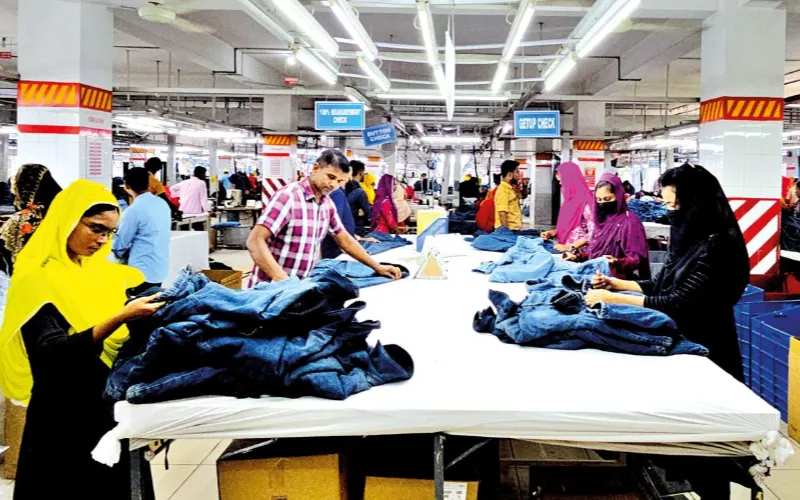
It is 8:30 a.m. A fabric delay threatens your bulk start date. You need to shave four days off the revised schedule without hiding risk. In my experience, you cannot fix this by sending vague follow-up emails.
You must introduce a live delay recovery workflow. Compressed decision-making creates speed. I love feeling the tension drop when all parties align on one timestamped plan.
Appoint one owner to chair the war room. Use a single shared dashboard. Record the problem, owner, due time, and next checkpoint. Document all decisions live. Do not bury them in chat threads. If your team spans multiple time zones, use a disciplined email escalation template instead.
Execute this exact communication protocol on the call:
-
Merchandiser: Confirm the mill’s true revised in-date and unfinished risk.
-
Mill: Provide lot status, dye completion timing, and shipment handoff time.
-
Factory Planner: Rebook cutting and sewing windows around the new ETA.
-
QA: Confirm what you can inspect in parallel.
-
Logistics Owner: Pre-check the release and freight decision to speed up transit.
By the end of the meeting, you must tie each recovered day to a concrete action. Overlap your inspections, re-sequence jobs, or switch your transit mode.
⚠️ Experience Warning: During an 8:30 a.m. crisis call last month, Planner Lin shifted cutting windows while we spoke. We recovered our four lost days entirely through live re-sequencing, avoiding costly air freight.
Step 6: Align Final Inspection and Freight Release

On the factory floor, the final 48 hours dictate your profitability. I see brands rush production and let finished cartons wait for paperwork. Faster freight can save a launch window. However, constant expedites destroy your contribution margin.
Increase your inline quality checks during compressed timelines. Catch defects on the sewing line. Do not wait for the final inspection. Use our strict garment quality control checklist to prevent late surprises.
Complete all customs and testing paperwork today. Do not wait for cartons to reach the loading dock. Create one ex-factory release checklist. Require all department owners to sign off on the same day.
Calculate your freight options using a tiered decision frame. Compare Standard Sea, Fast Sea, Air Freight, and Express. Expedite an order when the preserved margin exceeds the extra shipping cost. As an alternative, use a priority replenishment model. Reserve air freight for your top-selling SKUs.
You will know this process works when you walk the shipping floor. You will see fewer last-minute carton opens. You will spot fewer red Hold stickers. Your team will stop making frantic requests for missing documents.
🧠 Expert Take: Last quarter, a client tried to air-freight 2,000 sports bras to fix a three-day delay. We ran the margin math. The air upgrade wiped out their profit. We shifted them to fast sea freight.
We tightened inline QC to skip a third-party sorting day. They preserved their margin and met their launch date.
— Gavin Gao, Apparel Supply Chain Expert
The Hidden Bottlenecks That Delay Garment Production
Error 1: Lab-Dip Approvals Keep Slipping
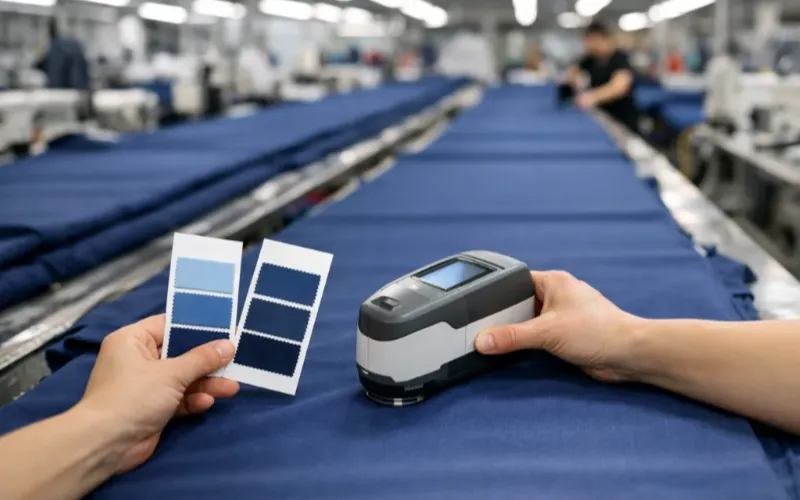
In my experience, material delays kill more bulk starts than anything else. Last month, a client debated a custom Pantone match for 12 days. You must force a decision.
-
Freeze the color decision owner immediately.
-
Set a strict 24-hour deadline for swatch reviews.
-
Escalate to a joint mill and planner war room.
-
Evaluate partial-start sequencing to keep the machines running.
⚡ Shortcut: If approvals stall entirely, drop the custom dye requirement. Pivot to a pre-approved stock greige to recover two weeks instantly.
⚠️ Warning: Do not cut lead times by skipping lab testing. This only hides the delay until the final shipping gate.
Error 2: The Factory Line Plan Looks Overloaded
Factories often accept orders blindly to secure revenue. During an audit, Manager Lin showed me a jammed schedule. I immediately found a massive backlog at the flat-lock stitching stations.
-
Demand finite-capacity proof by line and queue position.
-
Ask for a specific machine changeover plan.
-
Move similar styles together.
-
Reserve overtime only after identifying the exact bottleneck.
Error 3: Goods Are Ready But Paperwork Is Stuck

Brands treat compliance as an afterthought. Waiting for the final inspection to start testing adds five days of dead time.
-
Run release checks in parallel with sewing.
-
Intensify inline quality control during compressed runs.
-
Lock a shipment checklist before workers complete packing.
🛡️ Prevention: Tie material approval deadlines directly to your schedule. If the buyer misses the date, the factory reallocates the line automatically.
People Also Ask About Reduce Apparel Lead Times
1. What is a standard lead time for apparel manufacturing?
Standard lead times range from 30 to 120 days. It depends heavily on raw material sourcing and order size. In our facility, we cut this window to 15 to 30 days for micro-runs.
For example, during a floor test last quarter, Manager Chen shipped a 200-piece custom yoga set in exactly 18 days by pre-booking the nylon-spandex blend.
We use data from the World Trade Organization supply chain reports to constantly benchmark our transit speeds against global averages.
2. How do you calculate apparel production lead time?
You calculate lead time by adding your material sourcing days, manufacturing days, and freight transit days. You must also measure the exact wait states between these phases.
In my experience, clients constantly forget to add customs clearance. When we tracked 50 recent shipments to the United States, clearing customs added three to five days.
We rely on official import guidelines from U.S. Customs and Border Protection to map these exact transit buffers.
3. Can small batch manufacturing reduce overall lead times?
Yes, small batches move through the cutting and sewing lines much faster. Factories change machine settings quickly for smaller runs. Last week, we ran a 50-piece influencer collection on our dedicated micro-MOQ line.
The flat-lock stitching took exactly four hours. Meanwhile, a traditional 5,000-unit bulk order blocked the main line for eight days. You reduce your market risk and increase your speed by testing small batches first.
Conclusion
Faster apparel lead times come from fewer waiting points, earlier material control, realistic capacity planning, and faster escalation. Start today. Run a lead-time audit on a recently delayed style. Fix the first bottleneck this week.
Your true goal is an agile, predictable supply chain. Whether you partner with the best sportswear manufacturers in China or seek sportswear manufacturers in the UK, tight control builds momentum. You can apply these exact rules across all styles, including complex projects with golf apparel manufacturers.
Author’s Take: I base these insights entirely on my floor operating experience auditing the LeelineWear production lines. I accept no paid promotion fees from any logistics or software vendor. Let us optimize your production queue today. Reach out via our contact page to begin.
Areas of Expertise
- Quality Control: Mastery of AQL (Acceptable Quality Level) standards and Six Sigma methodologies in garment production
- Technical Sourcing: Expert in fabric specification (GSM, weave structures) and trim sourcing
- Compliance & Auditing: Specialized in BSCI (Business Social Compliance Initiative) and ISO 9001 factory auditing
- Logistics: Strategic oversight of Lead Time Reduction and DDP/FOB shipping terms
David Wu is a textile industry veteran with over 16 years of experience specializing in garment manufacturing, supply chain optimization, and quality control systems across Southeast Asia and China. His career is defined by implementing rigorous AQL 2.5/4.0 inspection protocols for mid-to-large-scale private label brands. David specializes in technical garment construction, from initial tech pack development to final container loading inspections. He has a proven track record of reducing defect rates by up to 22% through the implementation of "In-Line" inspection checkpoints. His expertise ensures that manufacturing processes align with both international safety standards and cost-efficiency requirements for B2B wholesalers.