Top 7 Gym Clothing Manufacturers USA, By Production Model
 David Wu QA Consultant Updated:
In short: Most companies marketed as “gym clothing manufacturers USA” are decorators, blank-stock wholesalers, or general cut-and-sew shops rather than activewear specialists. This guide shortlists seven US manufacturers with documented domestic capability, states what each is publicly known for and where the model differs — cut-and-sew, blanks, or teamwear — and lists the commercial, seam, and origin questions to settle before a tech pack goes out.
How this list was built. Every entry draws only on publicly available information — company websites, the CFDA production directory, trade-press coverage, and corporate listings — reviewed in September 2026. No facility paid for placement, and none is a LeelineWear client.
Disclosure. LeelineWear is a sportswear manufacturer in China. Many founders we advise begin by weighing US production, so this page documents what the domestic option actually delivers — including where it does not compete on cost.
🧠 Expert Take: “US shops win on speed, oversight, and the Made in USA claim; they rarely win on unit cost. For most gym-wear brands, the honest answer is to prototype where communication is fastest and scale where the economics work.” — Sharline Shaw, Founder & CEO, LeelineWear
Quick Preview
| # | Manufacturer | Location | Documented model | Best fit |
|---|---|---|---|---|
| 1 | Lefty Production Co. | Los Angeles, CA | Full-package cut-and-sew; lists activewear and compression | Small-batch technical runs |
| 2 | Tack Apparel | Long Beach, CA | Private label, cut-and-sew, decoration | Low-MOQ private-label tests |
| 3 | Affix Apparel | Los Angeles, CA | Private label, cut-and-sew, decoration, packaging | Branded test runs |
| 4 | Royal Apparel | Hauppauge, NY | Vertically integrated made-in-USA organic basics | Cotton athleisure basics |
| 5 | The Evans Group (TEG) | Los Angeles, CA | Development house + cut-and-sew; studio runs up to ~50 pieces/style | Pattern development and grading |
| 6 | Augusta Sportswear | Grovetown, GA | Wholesale teamwear and athletic blanks | Institutional and team orders |
| 7 | WSI Sports | Eagan, MN | In-house US cut-and-sew; thermal, compression, and base-layer programmes | Engineered performance runs |
1. Lefty Production Co. — Los Angeles, CA
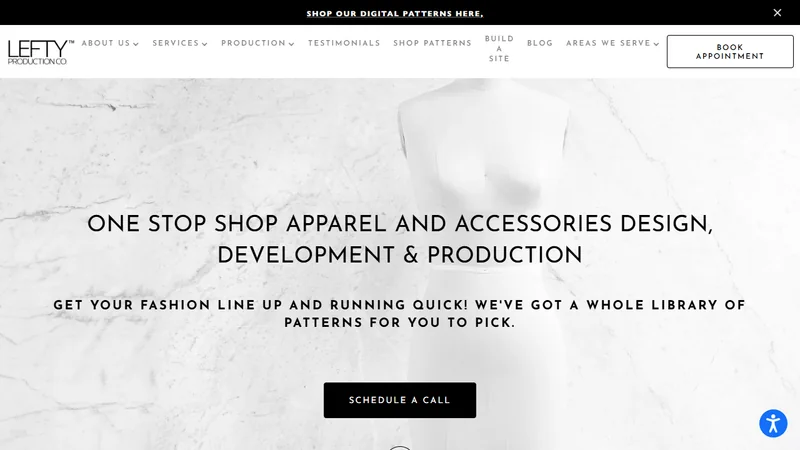
Lefty Production Co. is a Los Angeles full-package manufacturer founded by Marta Miller. Its published specialities include activewear and compression apparel, alongside swimwear and children’s wear.
That both categories appear on a public capability list matters. They need flatlock and coverstitch machinery, and often bonding, which a general cut-and-sew shop does not run.
Lefty acquired Stitch Texas in 2022 and lists operations in both Los Angeles and Austin, so pin down which city sews your order and who owns the patterns.
Documented (Sept 2026): Los Angeles, CA (+ Austin, TX) · Full-package · Lists activewear, compression, swimwear · Low MOQ
🛡️ Our Verdict: A credible small-batch technical option. Confirm the sewing location and the pattern owner before committing.
2. Tack Apparel — Long Beach, CA
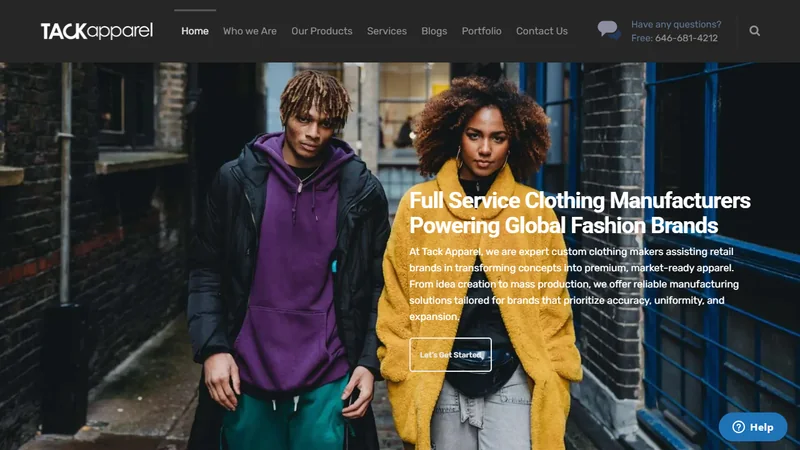
Tack Apparel is a Long Beach, California contract manufacturer that presents itself as a low-MOQ private-label partner. Its public scope covers cut-and-sew plus decoration, and reviews and directory listings associate it with activewear — sports bras, leggings, and compression shorts.
Low minimums are the reason it appears here. A shop that will take a small private-label run lets a first collection test demand before any bulk commitment.
Public review scores for the company vary by market, so treat minimums, sample dates, and deposit terms as commercial terms to lock in writing, not as assumptions.
Documented (Sept 2026): Long Beach, CA · Private label, cut-and-sew, decoration · Low-MOQ stated · Activewear association is review-based, not a published capability page
⚡ Power Move: Request an MOQ breakdown by style, colourway, and fabric before the first quote, and put sample dates in the purchase order.
3. Affix Apparel — Los Angeles, CA
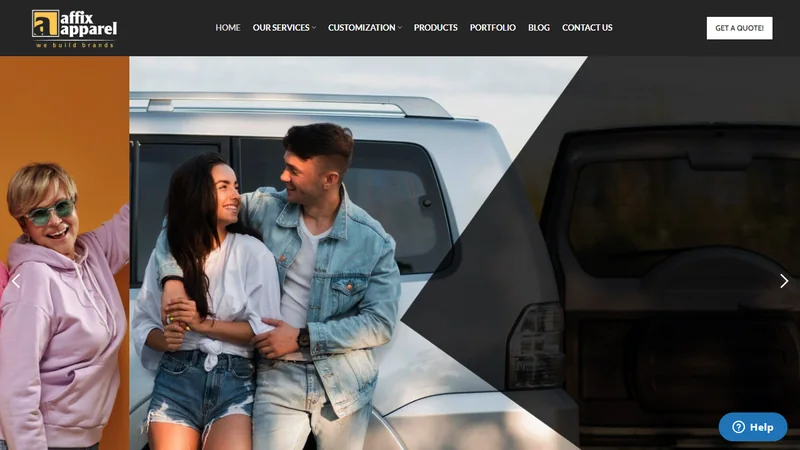
Affix Apparel is a Los Angeles private-label contract manufacturer founded in 2011. Its public scope covers cut-and-sew plus screen printing, sublimation, embroidery, custom labels, sourcing, pattern, grading, sampling, and packaging — the full under-one-roof service stack, which keeps a small branded run in a single queue.
The published minimum is as low as 50 pieces per style, which suits a first capsule or a market test.
Public reviews of the company are mixed, which is not unusual at this size but does change the risk profile. Lock sample dates and defect terms in writing before any deposit.
Documented (Sept 2026): Founded 2011 · Los Angeles, CA · Private label, cut-and-sew, decoration, packaging · Public MOQ from ~50 pieces/style
⚠️ Experience Warning: Confirm the manufacturing address and the inspection terms before any deposit changes hands.
4. Royal Apparel — Hauppauge, NY
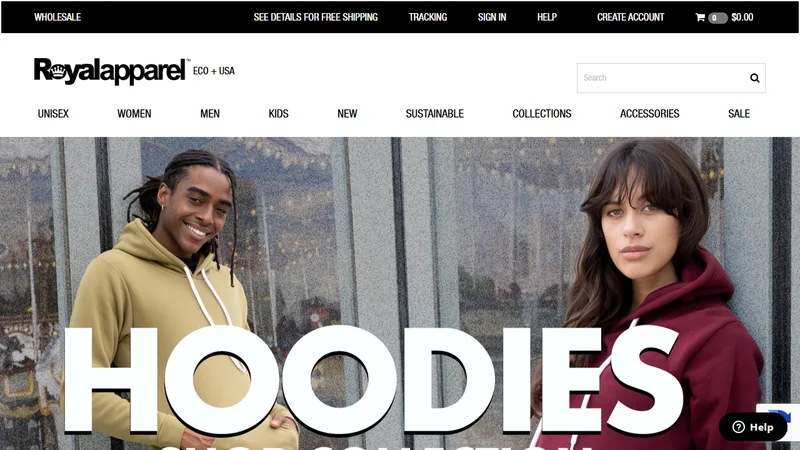
Royal Apparel is a vertically integrated, made-in-USA manufacturer headquartered in Hauppauge, New York, with a second New York facility. It knits, dyes, cuts, and sews in-house, and its range covers organic cotton, bamboo, hemp, and recycled-polyester basics.
One nuance matters for a gym-wear line. Royal’s strength is domestic basics and private-label relabelling — tees, tanks, joggers, and yoga-friendly layers — rather than engineered performance compression. It is a blanks and basics house, not a custom pattern developer.
Use it when a line needs domestic organic basics at accessible minimums, and check the sportswear fabrics guide before locking the material list. If environmental claims anchor the brand, read our sustainable sportswear manufacturing guide.
Documented (Sept 2026): Hauppauge, NY (Long Island) · Vertically integrated made-in-USA basics · Organic cotton, bamboo, hemp, RPET · Blank and private-label model
🛡️ Our Verdict: The right pick for USA-made organic cotton basics. Do not expect engineered synthetic performance programmes.
5. The Evans Group (TEG) — Los Angeles, CA
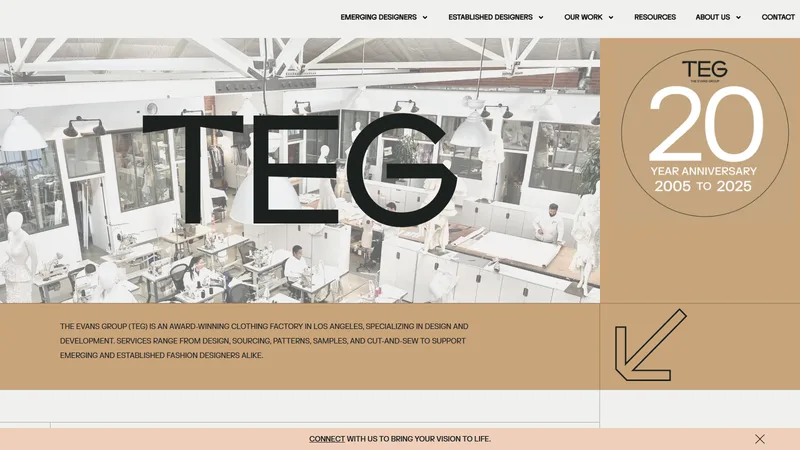
The Evans Group has run a vertically integrated development house in downtown Los Angeles since 2005, founded by Jennifer Evans. Its published service list covers pattern making, sample development, grading, cut-and-sew, and small-volume production, with activewear, knitwear, and sportswear among its categories.
The useful part for a gym-wear programme is the tiering. TEG publicly describes a studio tier of up to roughly 50 pieces per style and a factory tier above that, so a single house can carry a pattern from first sample into a graded run.
The caution is breadth. A house that also produces eveningwear and tailored garments is not an activewear specialist.
Documented (Sept 2026): Founded 2005 · Downtown Los Angeles, CA · Development, pattern making, grading, cut-and-sew · Studio runs up to ~50 pieces per style
📋 Checklist: Confirm performance-knit and stretch capability, and ask who retains the pattern files, before sending fabric.
6. Augusta Sportswear — Grovetown, GA
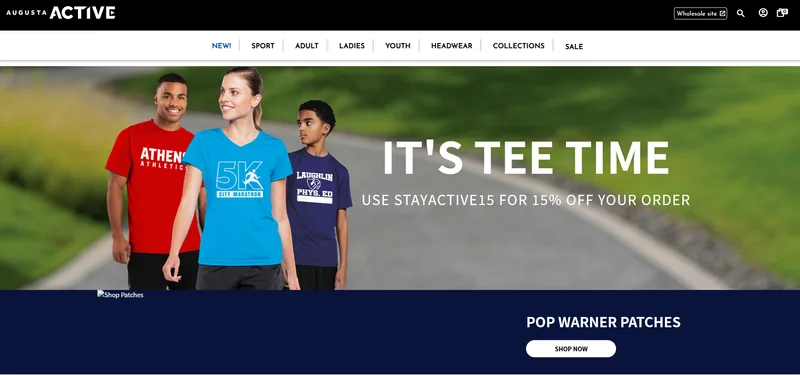
Augusta Sportswear is a teamwear and athletic-blank platform based in Grovetown, Georgia, founded in 1977 and now part of Momentec Brands. It designs and distributes ready-to-decorate uniforms and performance apparel — polos, shorts, hoodies, jackets, and performance tees — with tear-away labels for non-branded use.
Two domains matter here, and they do different jobs. The Augusta brand site is augustaactive.com, while the legacy augustasportswear.com domain redirects to momentecbrands.com — the parent group’s shared trade platform.
That split matters commercially. Decorators and team dealers order through the wholesale platform behind a brand filter rather than through the consumer site, so plan the trade-account setup into your timeline instead of assuming a direct route to the factory floor.
Model matters more than capability here. Augusta runs a wholesale stock-blank business selling to decorators and team dealers. It is not a custom cut-and-sew private-label factory, and it will not develop a signature pattern from scratch.
Open a trade account, browse the catalogue, and use it for institutional orders and decorated team stock. Ask which styles are domestically produced, since the catalogue spans both domestic and imported lines.
Documented (Sept 2026): Founded 1977 · Grovetown, GA · Part of Momentec Brands · Brand site augustaactive.com; augustasportswear.com redirects to the momentecbrands.com trade platform · Wholesale ready-to-decorate teamwear blanks · Not a custom cut-and-sew house
⚡ Power Move: Confirm per-style minimums, decoration lead times, and the domestic-versus-imported split for the styles you shortlist.
7. WSI Sports — Eagan, MN
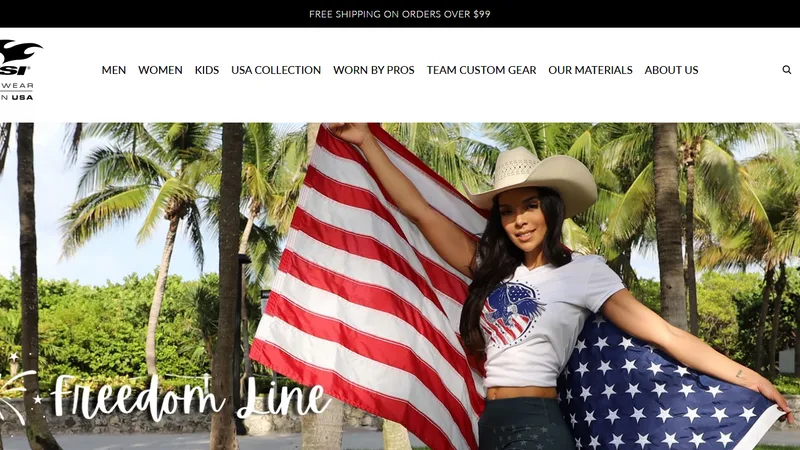
WSI Sports has designed, cut, and sewn performance apparel at its own Eagan, Minnesota factory since 1990, founded by Joel Wiens. The range runs to thermal, compression, and base-layer programmes rather than fashion casualwear.
Documented professional output is the reason it appears here. WSI supplied cold-weather gear to the XFL, and its TAC Gear line is used by military and law enforcement.
A supplier that has already passed fabric weight, seam durability, and thermal regulation under professional scrutiny has answered questions you would otherwise pay sampling rounds to ask.
The caution is material origin. WSI states that most fabrics and yarns are sourced in the United States but that certain components are still imported, so request a bill of materials before relying on an unqualified Made in USA label.
Capacity is also tighter than at the larger blank houses, and a Minnesota floor sits outside the Los Angeles cluster, which can shorten freight for brands distributing through the central United States. Lock your production window early either way.
Documented (Sept 2026): Founded 1990 · Eagan, MN · In-house US cut-and-sew, just-in-time · Thermal, compression, and base-layer programmes · Cold-weather kit supplied to the XFL · Not a fashion casualwear house
🔬 Our Verdict: The strongest documented technical programme on this list. Confirm fabric origin and available capacity before committing a peak-season run.
How to Vet US Gym Clothing Manufacturers? 3 Checks and a Quote Checklist
Public listings tell you what a supplier says it does. They do not tell you whether it can hold a stretch seam or a delivery date. Three checks separate the two.
Check 1: Confirm True Domestic Production
Ask where cutting and sewing happen. Some companies label a product “USA” while only decorating imported blanks. Request floor photos or a live video call, and if nobody will show the sewing line, move on.
Check 2: Test the “Made in USA” Claim
An unqualified claim means all or virtually all production is domestic; a qualified claim means only part is. Compare any claim against the FTC Made in USA standard before a label is printed.
Check 3: Separate Stock-Blank Programs from Custom Cut-and-Sew
Stock-blank houses such as Augusta sell ready-to-decorate inventory. Cut-and-sew shops such as Lefty, TEG, or WSI Sports cut and sew to your pattern. Decide which supplier type your product needs before requesting a quote.
Pre-Quote Checklist
Request all six of these before any quote:
- MOQ by style, colourway, and fabric
- Sample fee and timeline
- Pattern and grading charges
- Bulk lead time after approval
- Seam construction and stitch options
- QC standard and inspection points
Domestic capacity has shrunk for years, which shapes lead times and pricing. The US textile supply chain supported 453,122 jobs and shipped $60.9 billion of fiber, textiles, and apparel in 2025, per the National Council of Textile Organizations — even as the industry lost plants.
Where domestic minimums or machine gaps block a launch, LeelineWear runs cut-and-sew and seamless activewear from its own factory in China at a 100-piece minimum, with a 50-piece pilot available for first orders. Compare the two side by side before you decide.
Frequently Asked Questions About US Gym Clothing Manufacturing
1. What MOQ should I expect from a US gym clothing manufacturer?
Publicly listed US minimums for private-label activewear commonly start around 50 pieces per style, while high-throughput cut-and-sew lines and stock-blank programmes sit higher. The cut-and-sew minimum is rarely the binding constraint: the fabric mill may still require a minimum dye lot. Always confirm whether the MOQ applies per style, per colourway, or per fabric, because a 50-piece total can become 150 across three colours.
2. How much do samples and development cost before bulk production?
US sample fees commonly run $150 to $500 per style for basic cut-and-sew, and higher once pattern making, grading, and fit corrections are included. Some shops credit the sample fee toward the bulk order; many do not. Request a sample-to-grading bundle quote, and expect development costs to rise if you arrive without a tech pack, because the factory has to interpret your fit intent.
3. Can I label a product Made in USA if I use imported fabric?
Not as an unqualified claim. Under the FTC Made in USA standard, an unqualified claim requires that all or virtually all of the product be made in the United States, and imported fabric usually disqualifies it. A qualified claim such as Made in USA of Imported Fabric is acceptable when accurate. Ask every supplier for a written breakdown of fabric origin and sewing location.
4. What is the difference between full-package production and cut-and-sew?
Full-package means the factory handles fabric sourcing, pattern making, sampling, grading, and production management. Cut-and-sew assumes you bring a complete tech pack with approved patterns and specified fabrics. Full-package suits founders without technical fit knowledge; cut-and-sew moves faster and costs less but shifts fit risk onto you. Match the service level to your internal skill set.
5. How do I compare a domestic manufacturer with an overseas factory partner?
Do not compare on unit price alone. Compare total landed cost, sampling speed, MOQ flexibility, and development support. A US shop may charge more per unit but accept a short first run; an overseas factory-direct partner often wins on fabric sourcing and unit economics at larger volumes. Benchmark both against your launch timeline and cash flow rather than a single quote.
Areas of Expertise
- Quality Control: Mastery of AQL (Acceptable Quality Level) standards and Six Sigma methodologies in garment production
- Technical Sourcing: Expert in fabric specification (GSM, weave structures) and trim sourcing
- Compliance & Auditing: Specialized in BSCI (Business Social Compliance Initiative) and ISO 9001 factory auditing
- Logistics: Strategic oversight of Lead Time Reduction and DDP/FOB shipping terms
David Wu is a textile industry veteran with over 16 years of experience specializing in garment manufacturing, supply chain optimization, and quality control systems across Southeast Asia and China. His career is defined by implementing rigorous AQL 2.5/4.0 inspection protocols for mid-to-large-scale private label brands. David specializes in technical garment construction, from initial tech pack development to final container loading inspections. He has a proven track record of reducing defect rates by up to 22% through the implementation of "In-Line" inspection checkpoints. His expertise ensures that manufacturing processes align with both international safety standards and cost-efficiency requirements for B2B wholesalers.