10 specific Questions to Ask Clothing Factory are required to verify a factory’s sportswear capability, lead times, and quality systems. At LeelineWear, we find that generic inquiries fail; you must demand evidence like AQL 2.5 inspection reports, video proof of flat-lock stitching lines, and OEKO-TEX certifications.
This forces the supplier to validate their MOQ and lead time claims with data, separating true manufacturers from risky middlemen.
Key Takeaways
-
Validate specific capabilities: Don’t accept generic “yes” answers. I verify machinery for flatlock or bonded seams and test sample opacity before sending a Tech Pack.
-
Challenge the MOQ: Factories often state “500 units” on the web but accept paid pilot runs (approx. 50-100 units). Ask for the exact minimum per style, color, and size.
-
Deconstruct lead times: “30 days” is a red flag. I require a timeline split by sourcing, lab dips, sewing, and PSI (Pre-Shipment Inspection) to identify real bottlenecks.
-
Quantify quality standards: Subjective promises fail. Agree on AQL 2.5 limits and keep a signed golden sample to measure the final shipment against.
-
Demand compliance proof: Website logos mean nothing. Request current OEKO-TEX or REACH test reports to ensure your sportswear is safe for skin contact.
-
Calculate true costs: A low FOB price ignores logistics. I compare DDP (Delivered Duty Paid) terms to see the final price at my warehouse door.
-
Protect your assets: Sign an NDA/NNN before development. Define specific remedies for defects in your contract to protect your cash flow.
The Vetting Protocol: 10 Questions to Ask Clothing Factory
I have spent decades on factory floors, and I can tell you this: a factory’s sales rep is trained to say “yes.” Your job is to find the “how.” In sportswear manufacturing, the difference between a high-performance legging and a see-through disaster lies in technical capability, not good intentions.
When we audit potential partners or assess our own production lines at LeelineWear, we do not ask generic questions. We use a forensic approach. We peel back the layers of marketing to reveal the machinery, the quality control (QC) architecture, and the financial reality.
Use these 10 specific questions to ask clothing factory. If they hesitate, walk away.
1. “Have you produced items like mine, and what parts are in-house vs outsourced?”

Why it matters Sportswear is technical. A factory that excels at cotton t-shirts often lacks the tension-control machinery required for high-compression nylon/spandex.
You need to verify if they control the critical steps—specifically sublimation printing, laser cutting, or flatlock stitching—or if they farm these out to unsupervised subcontractors. Outsourcing increases the risk of IP theft and quality variance.
The “Good” Response
“We have 10 lines dedicated to seamless knitting (using Santoni machinery) and an in-house Monti Antonio digital sublimation printer for your jerseys. We outsource the zipper molding to YKK, but we handle all cutting, dyeing, and sewing here. Let me show you the 4-needle 6-thread machines we use for your seams.”
Documents to Request
-
Production Video: A live video call or timestamped footage of them manufacturing your specific product category.
-
Sample Set: Physical samples from a recent run to test seam recovery and print clarity.
🚩 Red Flag: The “We Make Everything” Myth
The Horror Story: A client ordered technical compression shorts. The factory outsourced the sewing to a denim workshop unfamiliar with stretch fabrics. The seams were thick, chafing, and snapped the moment a fitness model squatted. The factory had no control over the subcontractor’s thread tension.
2. “Are you CMT or FPP/Full-Package—and what exactly is included?”

Why it matters
You must strictly define the scope of work to avoid “surprise” invoices.
-
CMT (Cut-Make-Trim): You provide the fabric, trims, and patterns; they only sell you the labor.
-
FPP (Full Package Production): They source the fabric, zippers, labels, and packaging, and handle the sewing. Most small-to-mid-sized brands need FPP, but hidden costs often lurk in the “sourcing” fees.
The “Good” Response
“We operate on a Full Package model. Our quote includes sourcing the 250gsm Nylon/Spandex blend, lab dips for color matching, heat-transfer labels, individual polybags, and final packing. You only provide the Tech Pack and artwork. We handle the rest.”
Documents to Request
-
Itemized Quote: A breakdown separating material costs from labor costs.
-
Sourcing Network List: Evidence they have direct accounts with verified fabric mills (like Carvico or local equivalents).
🚩 Red Flag: Vague Inclusions
The Horror Story: A brand thought they paid for FPP. Two weeks before shipping, the factory sent a surprise invoice for $5,000, claiming “zippers, care labels, and hangtags were not in the unit price.”
3. “What MOQ applies to my exact order: per style, per color, per size, and per fabric?”

Why it matters
Manufacturers often advertise a low MOQ (Minimum Order Quantity) of “100 units” to get your email. However, the fine print often requires 500 units per color or demands you use their leftover “stock fabric.” You need the specific constraint for custom manufacturing.
The “Good” Response
“For custom dyed fabric (Pantone match), our MOQ is 300 pieces per color, split across 4 sizes. If you use our available stock colors (black, navy, white), we can lower this to 50 pieces per style. We also offer a paid pilot run of 50 units for market testing.”
Documents to Request
- MOQ Table: A written policy showing price tiers (e.g., 100 units = $15/unit; 500 units = $12/unit).
4. “What is your sampling process, sample cost, and revision policy—and who owns the patterns?”

Why it matters
Sampling is where you define the fit. If you pay for development, you should own the intellectual property (IP)—specifically the graded pattern nest (the .dxf or .rul files) and the digitization files. Many factories hold these hostage to prevent you from switching suppliers.
The “Good” Response
“Samples cost $100 per style, credited back if you place a bulk order over 300 units. This includes two rounds of fit revisions. Once paid, you own the CAD patterns and the Tech Pack updates. We will transfer the source files to you if you ever choose to leave.”
Documents to Request
-
Sample Invoice: Clear terms on “refundability” upon bulk order.
-
IP Agreement: A clause stating pattern ownership resides with the buyer.
5. “Can you build from a Tech Pack, and what do you need from me to quote accurately?”
Why it matters
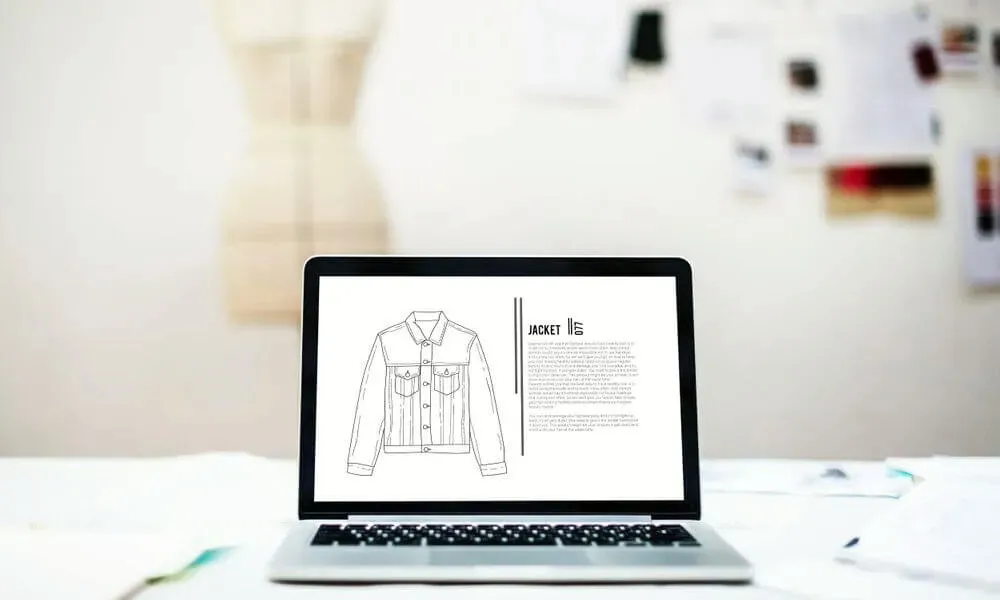
Professional factories rely on a Tech Pack—the engineering blueprint of your product containing the BOM (Bill of Materials), measurements, and tolerances. If a factory gives you a price without asking for this, they are guessing.
The “Good” Response
“Please send your Tech Pack in PDF or Excel. We need to see the fabric weight (GSM), stitch type (e.g., flatlock vs. overlock), and your measurement chart to give a firm price. If you don’t have a Tech Pack, our in-house R&D team can help create one for a fee.”
Documents to Request
- Spec Sheet Template: Ask to see the format they use internally to ensure it matches your data fidelity.
🚩 Red Flag: “Just Send a Photo”
The Horror Story: A buyer sent a photo of Lululemon leggings. The factory copied the look but used cheap polyester and single-stitching. The leggings were see-through and fell apart in the wash because the “photo” didn’t specify GSM or stitch tension.
6. “What is the full lead time breakdown from today to delivered goods?”

Why it matters
”30 days production” is misleading. It ignores the time needed to mill the fabric, approve lab dips (color samples), and ship the goods. You need a critical path timeline that accounts for every stage of the lifecycle.
The “Good” Response
“Here is the schedule: 7 days for Lab Dips (color approval), 20 days for fabric weaving/dyeing, 3 days for Pre-Production (PP) sample approval, 15 days for cutting and sewing, and 5 days for finishing/packing. Total turnaround: 50 days ex-factory.”
Documents to Request
- Gantt Chart / Critical Path: A visual timeline showing milestones.
7. “What is your QC system and acceptance criteria (AQL), and can we write it into the PO?”

Why it matters
”High quality” is subjective. AQL (Acceptable Quality Limit) is mathematical. It defines how many defects are allowed in a batch before the whole order is rejected. For sportswear, we typically use AQL 2.5 for major defects (functional issues) and 4.0 for minor defects (cosmetic).
The “Good” Response
“We inspect 100% of goods inline during sewing. For final inspection, we follow AQL 2.5 Standards (Level II). We classify defects as:
-
Critical (0 allowed): Needle fragments, mold, sharp edges.
-
Major (2.5): Open seams, wrong color, sizing out of tolerance (+/- 2cm).
-
Minor (4.0): Untrimmed threads, slight packaging issues. We welcome your third-party inspector.”
Documents to Request
-
QC Checklist: The actual sheet their staff uses on the floor.
-
Previous Inspection Report: A redacted report showing how they document errors.
-
[Link to an AQL sampling standard / recognized inspection methodology] to understand the statistical tables.
🧠 Author’s Take: If a factory refuses a third-party inspection (PSI), run. It implies they hope you won’t notice the defects until the goods land in your warehouse.
8. “What compliance and sustainability standards can you prove for my target market?”

Why it matters
In sportswear, fabric touches the skin during sweat and heat. You must ensure materials are free from harmful chemicals (lead, azo dyes, formaldehyde). Furthermore, Western consumers demand ethical labor practices.
The “Good” Response
“Our facility is ISO 9001 certified for management. For materials, we only buy from mills holding a current OEKO-TEX Standard 100 certificate (ensuring chemical safety). We can provide the test reports for colorfastness and chemical safety under REACH (EU) or CPSIA (US) standards.”
Documents to Request
-
Certificate Copies: Verify the certificate number on the issuing body’s website.
-
Lab Test Reports: Recent tests from Intertek, SGS, or Bureau Veritas.
9. “What are your commercial terms: unit price assumptions, payment schedule, and Incoterms (FOB/CIF/DDP)?”

Why it matters
A low unit price means nothing if shipping costs triple the budget. You must clarify the Incoterms (International Commercial Terms) to know who pays for freight, insurance, and duties.
The “Good” Response
“Our unit price is $12.50 FOB (Free on Board) Shanghai. This means we cover costs until the goods are on the ship. If you prefer, we can quote DDP (Delivered Duty Paid), where we handle shipping, insurance, and customs duties directly to your warehouse for $15.00 total. Terms are 30% deposit, 70% before shipment.”
Documents to Request
- Proforma Invoice: Must state the Incoterm explicitly (e.g., “FOB China”).
🚩 Red Flag: Hidden Logistics
The Horror Story: A buyer agreed to “EXW” (Ex Works) thinking it was standard. They ended up having to hire a truck to pick up goods from the factory deep in inland China, adding $2,000 to their costs and delaying the shipment by weeks.
10. “If something goes wrong, what is your defect warranty/claims process—and what remedies do you offer?”

Why it matters
Mistakes happen in manufacturing. You need a pre-nuptial agreement for your production run. If 15% of the zippers break, you need a defined remedy, not a vague promise to “do better next time.”
The “Good” Response
“If the defect rate exceeds the AQL limit, you can reject the shipment. If defects are found after delivery, submit photos within 14 days. We will either:
-
Remake the defective units immediately (air freight at our cost).
-
Issue a credit refund for the defective value.
-
Pay for local repair costs if the issue is minor (e.g., re-sewing a label).”
Documents to Request
- Claims Policy: A written clause in the sales contract or RMA (Return Merchandise Authorization) workflow.
How to Score Factories
Use this simple rubric during your calls. Score each question 0–2.
-
0 Points: Vague answers, refuses to show proof, gets defensive.
-
1 Point: Verbal confirmation but slow to provide documents.
-
2 Points: Clear, technical answer backed by immediate evidence (video/cert/policy).
Score < 12: High Risk. Do not proceed. The factory lacks the systems to guarantee quality.
Score 15+: Viable Partner. Proceed to sampling.
At LeelineWear, we designed our operations to score a perfect 20 on this test. As a vertically integrated manufacturer, we own the knitting machines, the dye house, and the logistics license. This allows us to provide the AQL reports, the live production videos, and the DDP shipping terms that protect your business from day one.
Exceptions: Adjusting Your Strategy by Business Model
Standard manufacturing advice is dangerous because it assumes every buyer is a mid-sized corporation with a standard timeline.
In my years managing production floors, I have seen “standard” questions backfire. A startup asking a Tier-1 factory about “maximum capacity” often gets assigned a sales rep who ignores their 100-unit order. Conversely, a dropshipper focusing on bulk packing quality will lose customers when single units arrive without tracking codes.
You must adapt your vetting process to your specific constraints. Here is how we modify the strategy based on who you are.
Scenario A: Startups & Micro-Run Collections
Constraint: Tight budget, unproven market, small volume.
Startups often try to project size to win respect. This is a mistake. If you lock yourself into high MOQs (Minimum Order Quantities) to secure a lower unit price, you risk sitting on 400 units of dead stock.
The Pivot: Stop asking about capacity. Focus on flexibility.
-
Ask: “Do you offer a paid pilot run (50–100 units) to test the market?”
-
Ask: “Can we combine sizes and colorways to hit the production minimum?”
-
Ask: “What is your revision policy for samples?” (You need a factory that tolerates iteration).
Tactical Shift: Use Stock Fabrics. For your first drop, request the factory’s “available stock” fabric card. Custom milling fabric often requires 1,000+ yards. Using stock fabric allows you to produce lower volumes and cuts weeks off your lead time.
Scenario B: E-Commerce & Dropshipping
Constraint: You never touch the product; logistics is the product.
If the factory ships directly to your customer, their warehouse connects directly to your reputation. A sewing defect is bad; a shipping error is fatal.
The Pivot: Validate their digital infrastructure, not just their sewing machines.
-
Ask: “Do you use a WMS (Warehouse Management System) that scans barcodes for every single unit?”
-
Ask: “Can you provide blind shipping?” (Ensures the package does not show the factory’s Chinese address/branding).
-
Ask: “What is your SLA (Service Level Agreement) for dispatch? Do orders leave within 24 hours?”
⚠️ Warning: Avoid factories that claim they can dropship but cannot show you their pick-and-pack station. If they are hand-writing labels, they will mix up addresses.
Scenario C: Teamwear & Event Deadlines
Constraint: The delivery date is immovable (e.g., Season Opener).
For schools and leagues, quality is secondary to timeliness. If the jerseys arrive one day after the first game, they are worthless.
The Pivot: Prioritize delivery terms over unit cost.
-
Ask: “Can you ship DDP (Delivered Duty Paid)?”
- Why: Under standard shipping (FOB), goods can get stuck in customs if you don’t have a broker. With DDP, the factory handles import taxes and clearance. You just wait for the box.
-
Ask: “What is the hard cutoff date for roster changes?”
Our Experience: We always build a 10-day buffer specifically for artwork approval. Vector files often need technical fixes before printing. If you don’t account for this, it eats into your production time.
Scenario D: Sustainability-Focused Brands
Constraint: Your marketing relies on “Eco-Friendly” claims.
“Sustainable” is a marketing term, not a manufacturing spec. Unscrupulous suppliers know Western buyers want green products and may claim “bamboo” or “recycled” without proof.
The Pivot: Demand chain-of-custody documentation.
-
Ask: “Do you have a current GRS (Global Recycled Standard) scope certificate?”
-
Ask: “Can you provide a Transaction Certificate (TC) for my specific batch of fabric?”
-
Ask: “Are your dyes OEKO-TEX Standard 100 certified?”
Special Note: Size Grading for Diverse Bodies
Constraint: Inclusive sizing (XS–4XL).
Many factories simply scale up a “Size Small” pattern mathematically to create a 4XL. This results in garments that fit poorly in the rise, shoulders, and armholes.
The Pivot: Do not just ask “Can you make 4XL?”
-
Ask: “What grading rules do you use for plus sizes?”
-
Ask: “Do you have separate fit models for sizes XL+?”
-
Ask: “what is your tolerance limit for sizing?” (e.g., +/- 1cm is standard; anything more is sloppy).
The Universal Tool: The Audit Checklist
Regardless of your scenario, relying on memory during negotiation is a liability. We use a standardized apparel manufacturing checklist to audit every partner. This ensures you capture data on payment terms, QC standards, and equipment lists in a structured format.
For high-stakes overseas production, we also recommend hiring a third-party inspection service for a Final Random Inspection (FRI) before the goods leave the factory. This is your insurance policy.
People Also Ask About Questions to Ask Clothing Factory
What’s a realistic MOQ for a startup sportswear brand?
Expect 100–300 pieces per color for custom dye. However, if you use “available stock” fabric, I often see factories accept 50–100 units per style. Always ask for a paid “pilot run” to test quality before committing to bulk; most reputable factories allow this to build the relationship.
What does AQL 2.5 / 4.0 mean in apparel QC?
It is a statistical pass/fail standard. AQL 2.5 means in a batch of 1,000 leggings, if we find more than 21 “Major” defects (like open seams), the entire shipment is rejected. AQL 4.0 applies to “Minor” cosmetic issues like loose threads. It replaces subjective arguments with math.
What’s the difference between a factory, a trading company, and a sourcing agent?
Factories own the machines; others are middlemen. A factory (like LeelineWear) controls the schedule and cost. Trading companies add a 15–30% markup but offer more variety. To verify, I ask for a video call on the production floor; agents usually refuse or show a showroom.
How long do sportswear samples and bulk production take?
Plan for 60–75 days total. A realistic breakdown is 10–14 days for sampling, 30–45 days for bulk production (milling fabric takes the longest), and 7–15 days for air freight. If a factory promises “2 weeks for everything,” they are likely selling you blank stock, not custom manufacturing.
Should I do a factory audit or a pre-shipment inspection—or both?
Do both, but at different times. An audit happens before the deposit to verify capabilities and labor conditions. A Pre-Shipment Inspection (PSI) happens after production is 80% packed to catch defects. If you can only afford one, prioritize the PSI to stop bad product from shipping.
What Incoterm should I choose (FOB vs DDP) as a US buyer?
Choose DDP (Delivered Duty Paid) for simplicity. It means the factory handles customs, duties, and delivery to your door. FOB (Free on Board) looks cheaper on paper, but you become responsible for the goods once they board the ship, including hiring a customs broker and paying surprise import taxes.
How do I protect my Tech Pack and designs?
Use an NNN Agreement (Non-Use, Non-Disclosure, Non-Circumvention). This is stronger than a standard NDA in China. Practically, I protect IP by ensuring the factory contract explicitly states that pattern files belong to the buyer, not the manufacturer, once the sample fee is paid.
What documents should a factory provide before I pay a deposit?
Require a Proforma Invoice (PI) and a stamped Tech Pack. The PI must detail the Incoterms, bank info, and exact lead time. Crucially, have them stamp/sign your Tech Pack to acknowledge the specific tolerances. I also demand a copy of their business license to verify the bank account matches the company name.
Ready to skip the vetting and go straight to production? Contact LeelineWearto start your custom sportswear project with a factory that already meets these standards.
Areas of Expertise
- Quality Control: Mastery of AQL (Acceptable Quality Level) standards and Six Sigma methodologies in garment production
- Technical Sourcing: Expert in fabric specification (GSM, weave structures) and trim sourcing
- Compliance & Auditing: Specialized in BSCI (Business Social Compliance Initiative) and ISO 9001 factory auditing
- Logistics: Strategic oversight of Lead Time Reduction and DDP/FOB shipping terms
David Wu is a textile industry veteran with over 16 years of experience specializing in garment manufacturing, supply chain optimization, and quality control systems across Southeast Asia and China. His career is defined by implementing rigorous AQL 2.5/4.0 inspection protocols for mid-to-large-scale private label brands. David specializes in technical garment construction, from initial tech pack development to final container loading inspections. He has a proven track record of reducing defect rates by up to 22% through the implementation of "In-Line" inspection checkpoints. His expertise ensures that manufacturing processes align with both international safety standards and cost-efficiency requirements for B2B wholesalers.