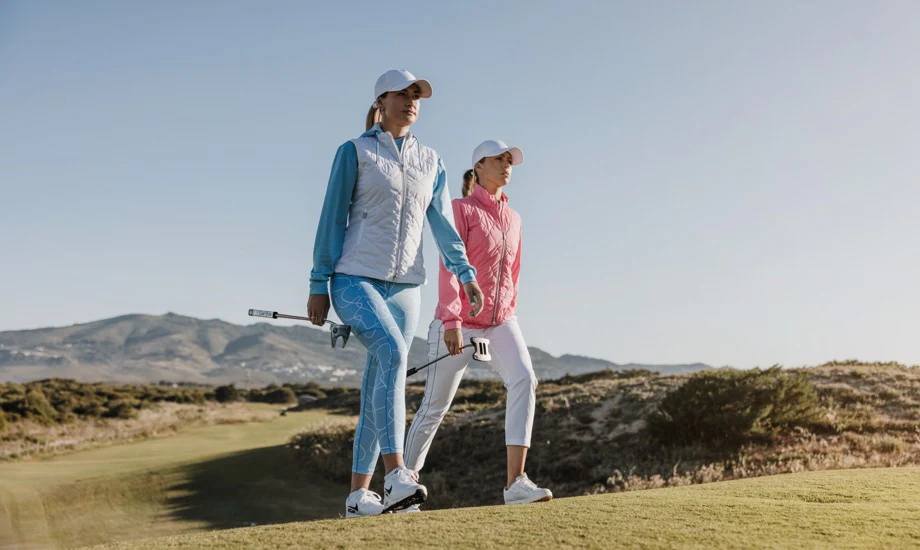
In short: Golf apparel splits into seven categories: polos, trousers, shorts, skorts and dresses, midlayers, outerwear, and accessories. Each has its own spec baseline — polos at 150–190 GSM (grams per square meter), trousers at 200–260 GSM, shorts at 130–160 GSM — and its own failure mode.
Scope note: Performance tees and hoodies follow the same cut-and-sew logic. Seamless base layers and golf shoes sit outside a cut-and-sew line; source them separately.
The analysis draws on category patterns, factory QC, LeelineWear production data, and an interview with the quality lead. Figures come from the internal trial or run described in each section, and test methods are stated wherever a standard applies.
Start with the golf apparel manufacturing capability behind these specs.
1. Golf Polo Shirts
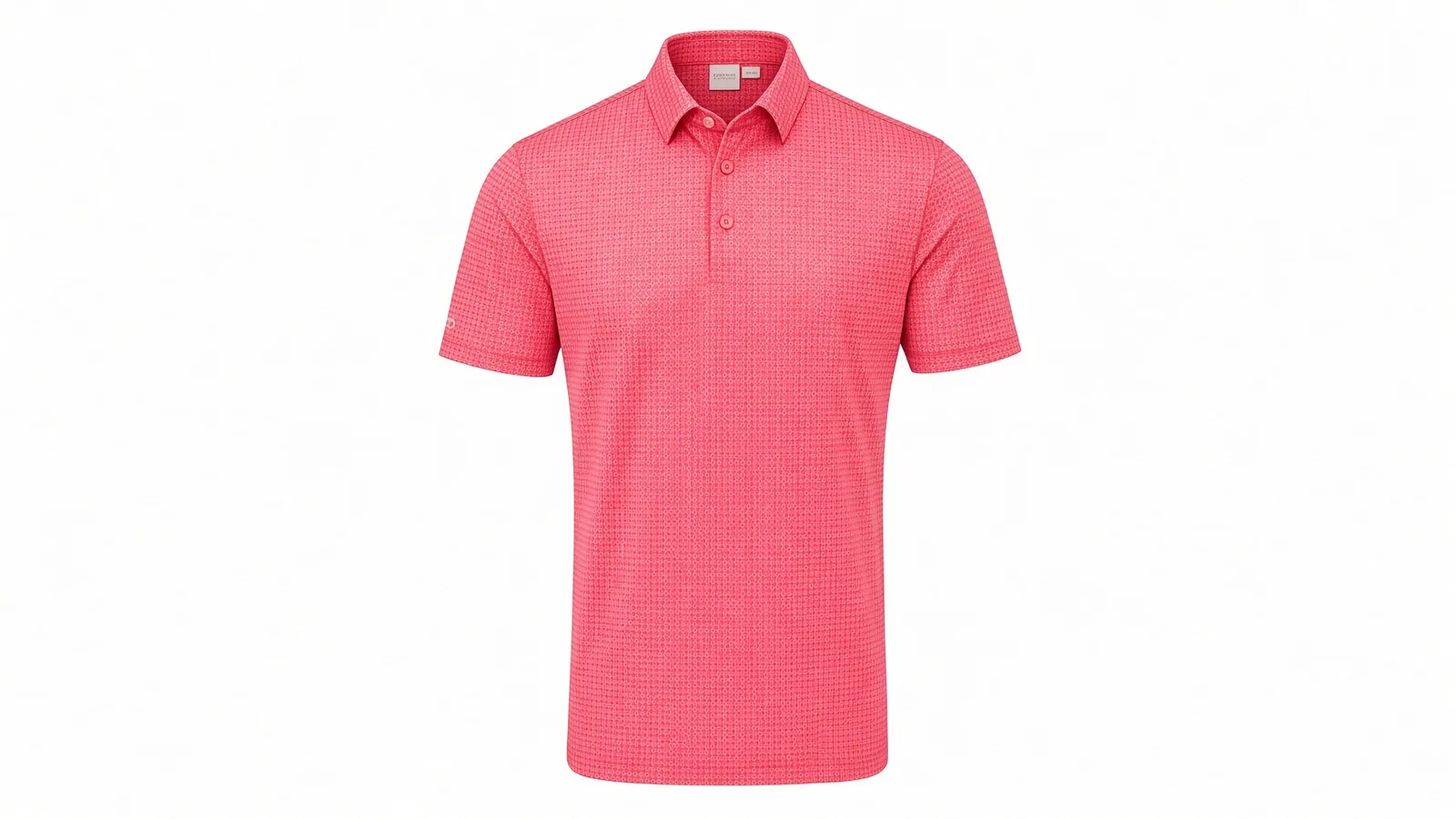
A first polo sample often comes back with a collar that wilts after two washes. The trap starts in the tech pack.
Polos carry the most volume: they clear dress codes, hold a chest logo, and are usually the first style a private-label line launches.
Spec the baseline: 150 to 190 GSM, 88 to 92% polyester, with the balance as spandex (8 to 12%). Pick pique for structure, jersey for drape. Wicking comes from yarn structure or a topical finish; the topical version fades after roughly 20 washes, so ask the mill which it used.
Lock the collar, placket, and side vents early — those three decisions change cost more than the fabric.
Author’s Take: In one polo run, 20 of 40 samples failed collar roll by wash five. Ask for the interlining spec, not just fabric weight. Anything that fails pilling or colorfastness goes back to the mill.
QC sequence: stretch recovery, pilling, colorfastness, collar roll. For wicking, read the sportswear fabrics guide.
2. Golf Pants and Spandex-Blend Trousers
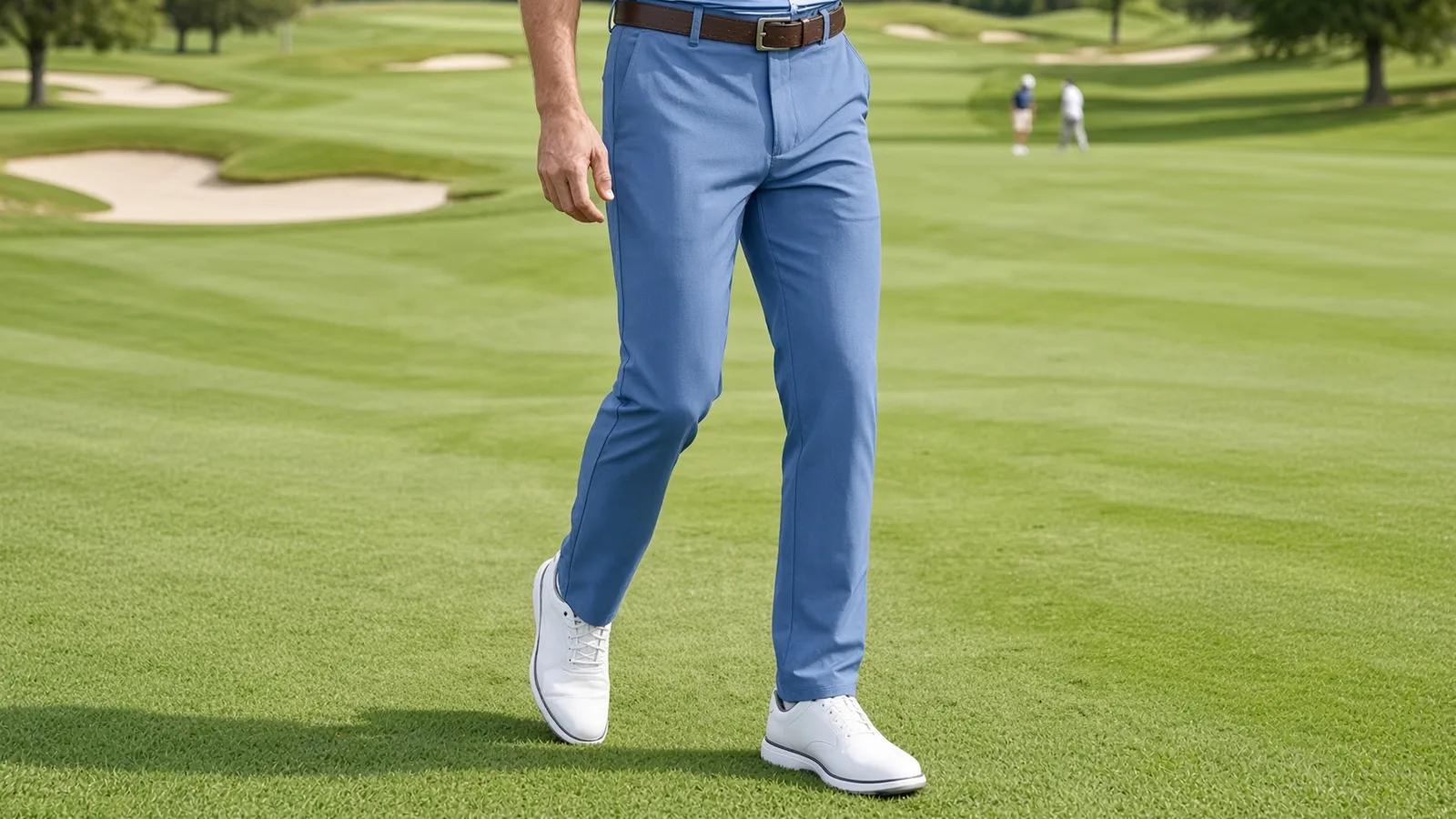
A trouser order can bleed margin before a single pair ships. Fabric yield, opacity under stretch, and defect rate hit faster here than on any other golf garment.
Start with the cut. Flat-front trousers serve private clubs; five-pocket performance pants fit corporate programs; tapered hybrids work for retail. Each carries a different pattern and fabric risk.
Choosing between stock blanks and full OEM? The private label vs custom comparison sets the trade-off.
Baseline: 200 to 260 GSM polyester-spandex or nylon-elastane, certified to OEKO-TEX Standard 100. Test waistband comfort, crotch mobility, pocket construction, and wrinkle resistance. At 12% spandex and above, check opacity on a stretched panel: a 15% blend may look opaque on the roll and turn sheer on the course.
LeelineWear’s Verdict: In the trial, the premium elastane blend cut seam-slippage and recovery defects enough to offset its higher material cost. The full numbers are in the data table below; they are trial figures, not a production average.
💡 Pro Tip: Ask for the mill’s stretch-recovery curve, not a single elongation number.
3. Golf Shorts
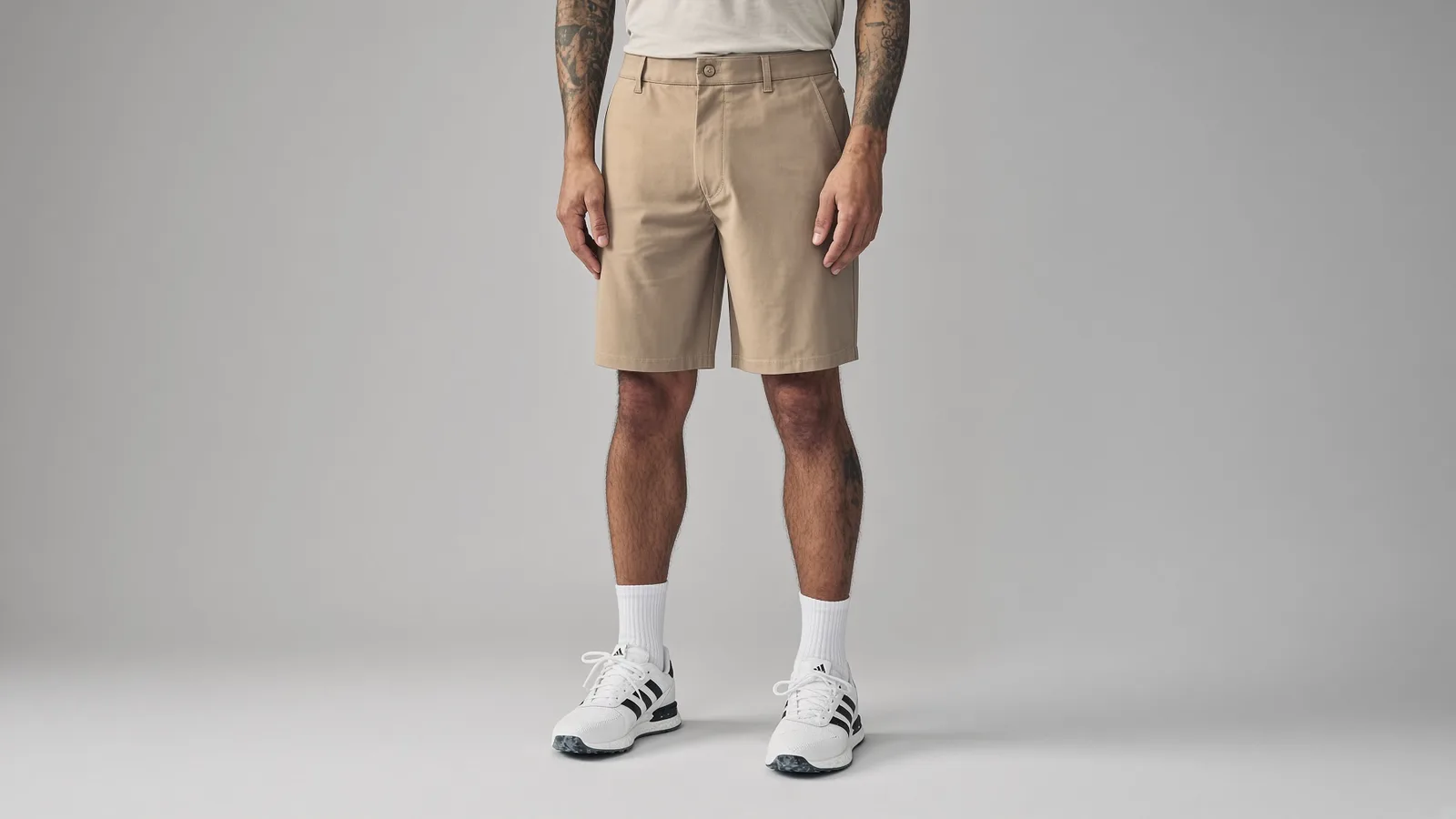
Shorts look simple. They are the fastest way to add returns. The customer sits in a cart, swings, then walks 18 holes — the fabric has to recover.
Treat shorts as the volume play: summer capsules, resort programs, and lighter-price-point collections.
Spec 130 to 160 GSM woven polyester-spandex or nylon-spandex. Use side elastic or hidden stretch panels, not all-around elastic. Pick inseam by fit intent: 7 to 9 inches is mainstream, and 10 inches suits conservative markets. Test recovery after 30 minutes seated and 20 practice swings.
Watch the return drivers: baggy leg opening, pocket flare, shine at the seat, and poor recovery. Breathability and quick-dry finishing matter more than raw softness.
Our Verdict: A recent shorts run saw 12% of samples fail recovery after sitting. A 4-way stretch woven and a 1.5 cm narrower leg opening fixed the recovery loss and the baggy leg opening.
4. Golf Skorts, Skirts, and Dresses
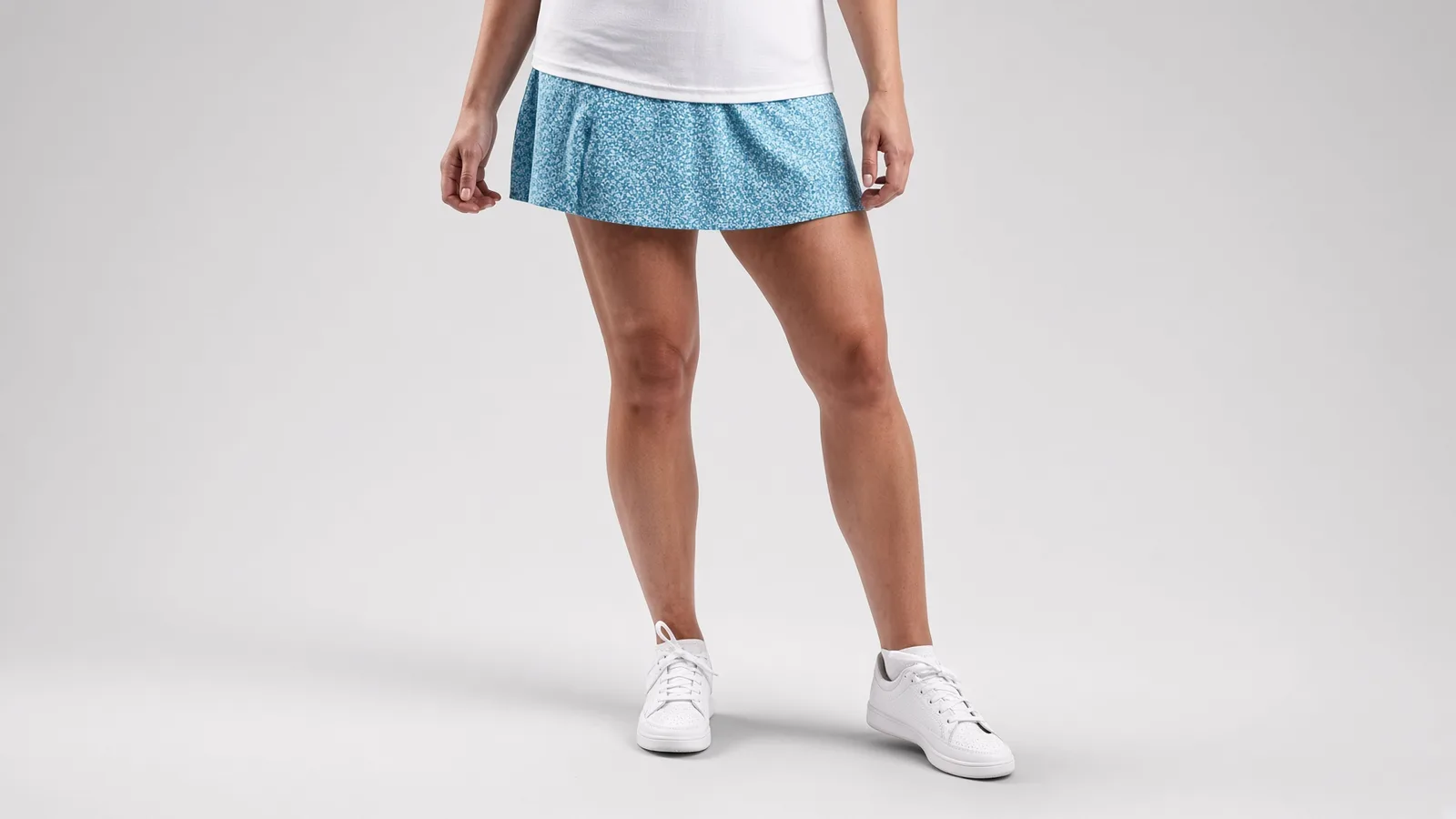
A skort sample can pass the mirror test and fail the tee box: bend to place a ball and the built-in short rides up.
Three styles, three jobs. Skirts sell on styling for resort shops; skorts perform and carry the round; dresses merchandise a full look and anchor resort capsules.
Engineer all three the same way. Built-in shorts need a 5- to 7-inch inseam and a silicone grip at the hem. Flat-lock or bonded seams stop chafe, and waistband compression must hold without digging.
Pocket placement has to clear the hip crease so a scorecard does not print through. Prove opacity with a 5-wash squat test, then check moisture management and recovery after a 30-minute seated test.
Skort grading is unforgiving: the M-to-L step often needs three rounds before the back rise stops gapping.
🧠 Expert Insight: Pull 30 samples per style, not 10. Request UPF 50+ lab data on the sewn panel — one supplier’s UPF 50 fabric tested at UPF 28. Test the garment, not the roll swatch.
⚡ Power Move: Approve bulk only after you see one skort pass a 20-swing rotation test and a deep bend on a real body, not a mannequin.
5. Golf Midlayers: Sweaters, Pullovers, and Quarter-Zips
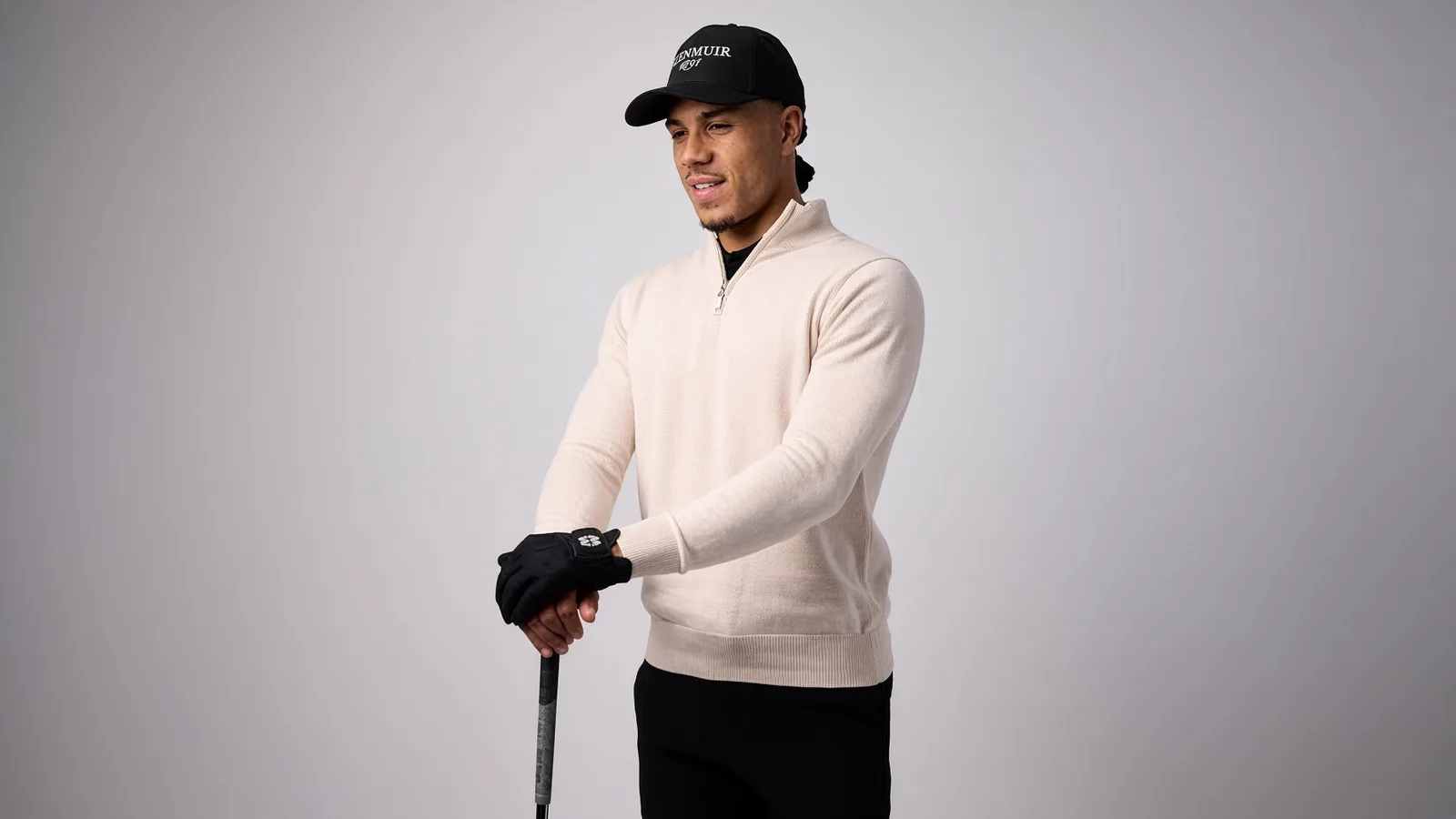
A midlayer that pills by the third wash kills the reorder. The fix starts at the cuff and the zipper.
Midlayers sell as morning warmth, shoulder-season layering, and a way to lift average order value. A round can start at 8°C and finish at 18°C, so merchandise the piece as a third layer, not a basic.
Material routes differ. Polyester fleece wins on warmth-to-weight and cost; stretch knits move with the swing; Merino blends bring hand feel and odor control at a higher price. Cotton-rich options present well but absorb sweat.
Zipper quality and cuff recovery decide whether the piece survives a season. Confirm logo placement before knitting. Smooth-face finishes show embroidery cleaner; brushed fleece traps lint. Bulkier fabrics need wider fit tolerance and add 3 to 5 days to sampling.
Author’s Take: One quarter-zip run lost 8 of 20 samples to cuff recovery failure after 10 washes. A 2x2 rib cuff with 12% spandex fixed it. Require wash-recovery data before you cut.
6. Golf Jackets, Vests, and Windbreakers

A windbreaker may pass the fit check, then delaminate at the shoulder seam after ten washes. That is where simple activewear becomes trim-heavy technical manufacturing.
Split the stack by weather. Windbreakers block gusts; water-resistant shells handle light rain; waterproof builds cover serious weather; insulated pieces serve cold-season programs. Vests give mobility-first warmth over a polo. Match protection to the customer’s weather, not the highest spec.
Confirm before sampling:
- Shell weight and breathability in g/m²/24h (MVTR)
- Membrane vs coating
- PFAS-free DWR (durable water repellent) direction (EPA background)
- Articulated sleeves for the swing
- Taped vs stitched seams
- Cuff and hem adjustability
- Packability
Every zip, cord lock, storm flap, and taped seam add a line item to the MOQ sheet. Outerwear sits at the upper end of the 15- to 30-day production window, and inspection points multiply: a shell run had 14, against six on a polo.
🧠 Expert Insight: Three of eight samples failed the AATCC 22 spray test at wash ten. Switching to a C0 (fluorine-free) finish solved it. For compliance, review the sustainable sportswear manufacturing guide.
📋 Checklist: Tape every critical seam. Order one seam-tape pull test per color lot.
7. Golf Accessories: Caps, Socks, Belts, and Gloves
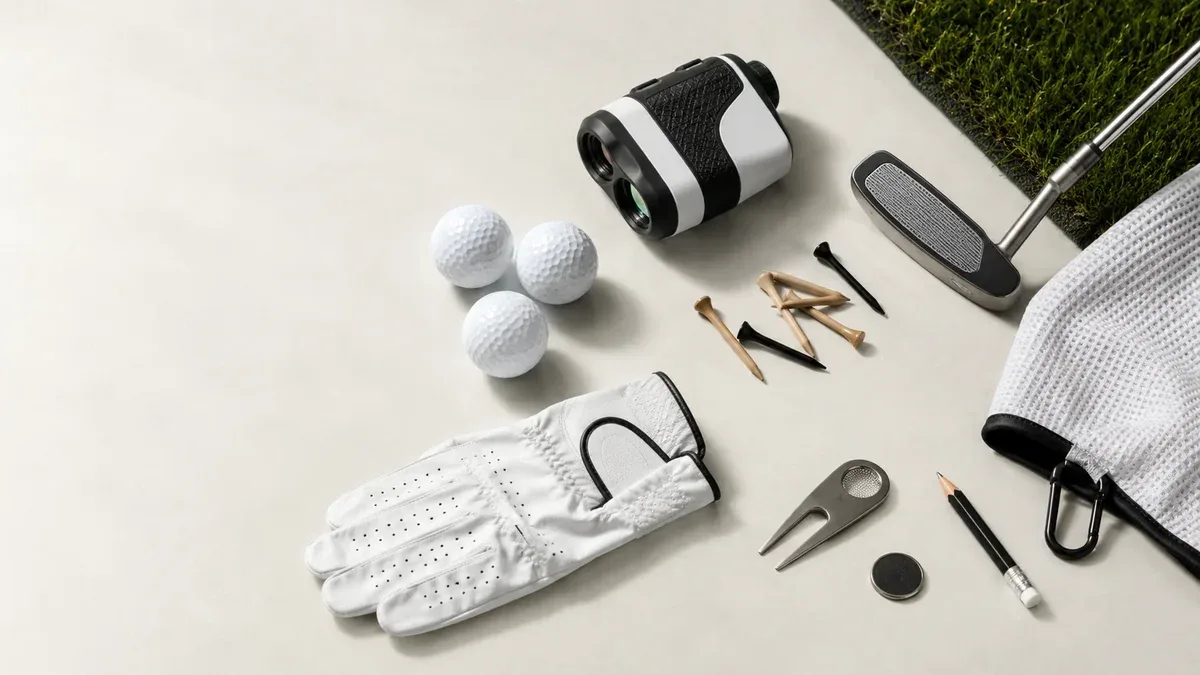
Accessories are not hero garments. They lift basket size, and if treated as filler, returns eat the profit.
Caps and visors handle sun exposure: spec polyester with a wicking sweatband. Socks control blisters: choose a cotton-nylon blend with a cushioned heel. Belts need stretch webbing. Gloves drive grip, and cabretta leather still sets the feel standard.
Caps, socks, and belts bundle cleanly with an apparel factory: embroidery, woven labels, and bagging run inline. Gloves usually need a specialist; leather cutting and fit tolerance punish generalists.
Author’s Take: Caps stay in-house because embroidery frames run beside the sewing lines. The first generalist glove batch hit a 9% seam-split rate.
Match thread to the polo logo and keep packaging consistent. Corporate buyers notice when the cap, sock, and belt carry one logo standard and ship on one invoice.
⚡ Power Move: Quote accessories as one bundled package with a single delivery date, not four line items.
Seven Factory Questions, One per Category
| Garment | Ask before you cut |
|---|---|
| Polos | ”What is the collar roll rating after five washes?” |
| Trousers | ”Show a 5-wash opacity test.” |
| Shorts | ”Run a seated recovery test.” |
| Skorts and dresses | ”Can you show the size-grade rule for the back rise?” |
| Midlayers | ”Name the zipper brand and pull force.” |
| Outerwear | ”Provide the DWR wash report.” |
| Accessories | ”Which items can share one production run?” |
How to Source Golf Apparel? A Factory-Floor Playbook for Buyers
I pulled 12 months of production records and sat down with Li Wei, LeelineWear’s Senior Production Manager and Quality Control Lead. She has spent more than 12 years on the factory floor.
“A UPF rating only counts after the sewn panel has been laundered and re-tested. An unwashed swatch number is marketing, not evidence.”
— Li Wei, Senior Production Manager and Quality Control Lead, LeelineWear
The Expert Interview: UPF 50+ Treatment by Garment Type
Q: What is the treatment sequence for knit polos, women’s skorts/dresses, and lightweight outerwear?
A: For knit polos, the process starts with yarn-dyed polyester plus a titanium dioxide dispersion in the dye bath, then a pad-dry-cure at 160°C for 90 seconds. Skorts and dresses use the same chemistry on a lightweight woven, with the cure dropped to 150°C to protect elastane. Outerwear is padded after dyeing and cured at 150°C.
Application methods bind differently. UV-blocking pigment spun into the fiber at extrusion sits inside the yarn for the life of the garment; exhaust application draws the blocker into the yarn; pad-cure fixes it to the surface. Wash durability follows that order, so ask the mill which route it used.
Q: How does the treatment affect hand feel and breathability?
A: By ASTM D737, air permeability drops less than 5% at a 2% add-on. Stiffening starts above 3%, so keep the add-on at or below 2.5%.
Q: What wash durability and lab reports should buyers request?
A: Test to 30 home launderings and report UPF at 0, 5, 10, 20, and 30 washes. Ask for AATCC 183 on the sewn panel, laundered to AATCC 135, then re-tested.
Factory-Floor SOP: Four-Way Stretch Recovery on Golf Polos
- Condition the specimen at 21°C ± 1°C and 65% ± 2% relative humidity for 4 hours.
- Mark two gauge points 100 mm apart across the width and two along the length.
- Stretch to 80% extension at 100 mm/min — a 100 mm gauge pulls to 180 mm.
- Hold for 30 seconds, release, and relax flat for 60 seconds.
- Measure the distance between the original points.
- Pass/fail: return to within 5% of original length (95% recovery) after three cycles.
- Log specimen ID, operator, date, and recovery. Two failures in a lot trigger a root-cause review and a 20-piece re-test.
Original Data: Standard Polyester-Spandex vs Premium Elastane-Blend Trousers
Internal trial data from 500-unit runs of each fabric. Defect rates are counted at final inspection before rework; shipped orders average below 0.3% after AQL 2.5. Costs are per pair in USD.
| Metric | Standard Polyester-Spandex | Premium Elastane-Blend |
|---|---|---|
| Pre-rework defect rate | 12% | 3% |
| Fabric yield | Baseline | +8% |
| Material cost (net of yield) | Baseline | +$2.40 |
| Hidden costs (saving) | Baseline | -$4.10 |
| Net cost (saving) | Baseline | -$1.70 |
The premium fabric costs more upfront, but lower defects and higher yield cut hidden costs. In this trial it netted a $1.70 saving per pair. It stops paying off if the standard fabric’s defect rate falls below about 8% and the product’s return rate stays under 5%; run both numbers before switching. Choose the premium blend for direct-to-consumer sales or when one return costs over $10.
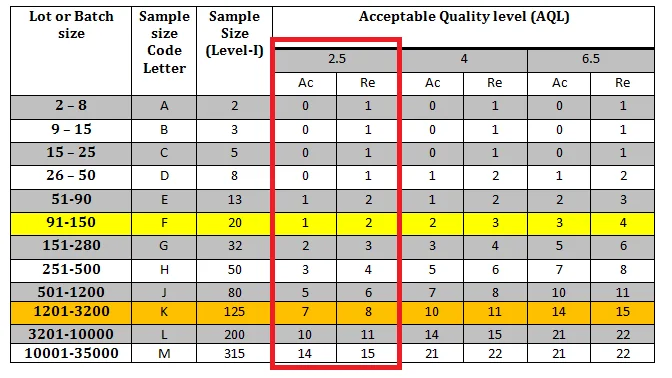
Workflow in brief: tech pack 3 to 5 days, sample 7 to 15 days, written pre-production sample (PPS) approval 5 to 7 days, bulk 15 to 30 days, then an AQL 2.5 (acceptable quality limit) check 2 to 3 days before packing. Use the tech pack guide and sample stages guide to close gaps.
Ready to spec the line? Contact LeelineWear and the team will walk you through the factory-floor steps for the exact styles. For a full run, see the custom golf apparel case study.
I am not paid by any fabric mill or trim supplier to promote these findings.
Frequently Asked Questions about Types of Golf Apparel
1. Which types of golf apparel should a new private-label brand launch first?
Start with a polo. It has the highest volume and clears most dress codes. In LeelineWear’s order history, polos make up about 60% of first orders. Skip outerwear on launch because trim count raises risk.
2. What tests matter before bulk approval for golf apparel?
Run five checks on the pre-production sample: stretch recovery, colorfastness, pilling, seam quality, and fit approval. Recovery must hit 95% after three cycles. Colorfastness and pilling need grade 4 or higher. Pull-test every critical seam, and approve fit on a live model swing.
3. What fabric is best for hot-weather golf apparel?
Choose lightweight polyester-spandex: 130 to 160 GSM for shorts and 150 to 170 GSM for hot-weather polos; the general polo range runs to 190 GSM. Look for mechanical stretch, a wicking yarn or finish, and UPF 30+ (UV protection factor) on the sewn panel. Avoid cotton-rich blends for summer rounds; they hold sweat and dry slowly. Add ASTM D737 if breathability is a selling claim.
4. What is a typical MOQ for custom golf apparel?
The standard MOQ (minimum order quantity) is 100 units per style, with 50-unit pilots for first-time brands. Custom dyeing raises the threshold to 300 to 500 units per color because the dye lot must be set up. Stock fabric and stock colors keep the entry point low while you validate the design.
5. How much does it cost to develop a golf apparel line?
Budget sampling and bulk separately. Sampling is quoted per style and depends on fabric, trims, and print work. Bulk polos typically land at $8 to $12 per unit at 100 to 300 units, before freight and duties. Build the full landed cost before you set a retail price.
This FAQ uses LeelineWear factory data. Validate each spec against the brand brief.
Related reading: Cost to start a golf clothing brand for the full line-item budget.
Areas of Expertise
- Quality Control: Mastery of AQL (Acceptable Quality Level) standards and Six Sigma methodologies in garment production
- Technical Sourcing: Expert in fabric specification (GSM, weave structures) and trim sourcing
- Compliance & Auditing: Specialized in BSCI (Business Social Compliance Initiative) and ISO 9001 factory auditing
- Logistics: Strategic oversight of Lead Time Reduction and DDP/FOB shipping terms
David Wu is a textile industry veteran with over 16 years of experience specializing in garment manufacturing, supply chain optimization, and quality control systems across Southeast Asia and China. His career is defined by implementing rigorous AQL 2.5/4.0 inspection protocols for mid-to-large-scale private label brands. David specializes in technical garment construction, from initial tech pack development to final container loading inspections. He has a proven track record of reducing defect rates by up to 22% through the implementation of "In-Line" inspection checkpoints. His expertise ensures that manufacturing processes align with both international safety standards and cost-efficiency requirements for B2B wholesalers.