
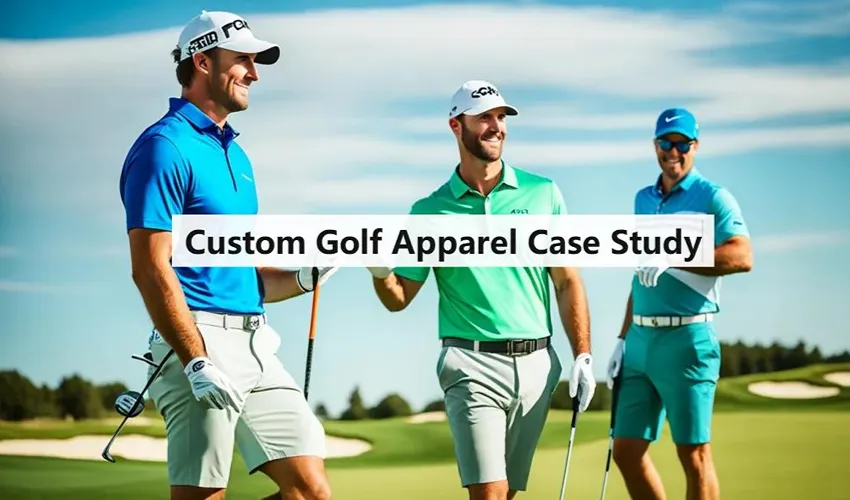
Client Profile
| Industry | Premium golf club & hospitality |
| Company Size | 30-50 staff across clubhouse, events, and grounds |
| Location | United States (Southeast) |
| Annual Revenue | $3M+ in membership fees |
| Key Challenge | Stagnant membership acquisition; generic promotional polos damaging luxury brand perception |
| What They Needed | Performance-grade uniforms that projected premium quality and survived 50+ industrial wash cycles |
Note: The club requested anonymity for competitive reasons. Full production records, QC inspection logs, and fabric test reports are available under NDA for qualified prospects.
The Challenge
For 18 months, the club’s membership numbers flatlined. The General Manager suspected the merchandise was part of the problem — but the real damage was worse than he realized.
The club had been ordering 150 GSM promotional polos from a generic supplier. On delivery, the shirts looked acceptable. But after three washes:
- Collars collapsed. The interlining degraded, leaving a limp, wrinkled neckline that screamed “cheap swag” to prospective members touring the facilities.
- Logo embroidery puckered. The previous supplier embroidered a dense club crest onto thin, unstable knit fabric. Under stretch testing, the chest logo distorted, and edge puckering was visible from three feet away.
- Color faded fast. Dark navy polos faded to a washed-out blue within a month of summer use. The club’s signature green — critical for brand recognition at tournaments — shifted noticeably after five wash cycles.
The membership cost: The GM estimated that roughly 30% of touring prospects received a welcome kit. If the kit looked cheap, it poisoned the entire first impression. Based on the club’s $5,200 average annual membership fee, each unconverted prospect represented a $26,000 lifetime revenue loss (5-year average retention).
The club estimated they were losing 8-12 potential members per year to brand perception issues — a $200K-300K annual revenue leak directly tied to their merchandise.
What they tried first: The club switched promotional product vendors once, hoping a different catalog would solve the problem. The second supplier’s shirts looked different in photos but performed identically — same GSM, same construction flaws, same outcome. The underlying issue wasn’t vendor selection;
it was the entire category of promotional blanks.
The Solution
This required more than a supplier swap. We engineered a complete performance apparel system across four key interventions.
Phase 1: Fabric Engineering
Standard polyester was rejected immediately — it traps heat and restricts the shoulder turn. We specified a structured polyamide blend with four-way stretch, calibrated for humid Southeast summer conditions:
- 220 GSM weight — heavier than promotional polos, giving the garment drape and opacity that reads as premium
- Moisture-wicking finish — tested in a 35°C environmental chamber to verify active cooling during 18-hole rounds
- UPF 50+ rating — verified against Australian ARPANSA testing standards
Phase 2: Decoration Engineering
The previous embroidery failed because low-GSM knit couldn’t support dense stitch counts. Technician Liu recalibrated the approach on our Brother PR1055X machines:
- Dropped stitch count by 20% while upgrading to a 3-ounce cut-away backing — eliminating logo puckering while preserving visual density
- Mapped safe zones for chest logo placement, keeping embroidery clear of high-stretch shoulder and side-panel areas
- Switched to a 75/11 ballpoint needle to prevent fabric piercing on the tighter knit
Phase 3: Sampling and QC Lock
The physical sample arrived in 12 days. During the fit review, Master Tailor Zhao flagged collar tension: the first prototype’s placket showed slight warping after the third wash. Zhao adjusted the interlining material and reduced the topstitching tension. The second sample held shape through all 50 cycles.
We locked in AQL 2.5 inspection at three checkpoints — fabric receipt, post-embroidery, and pre-packing — with QA Lead Lin personally verifying placket alignment to a 0.5-inch tolerance on every critical seam.
Phase 4: Delivery and Economics
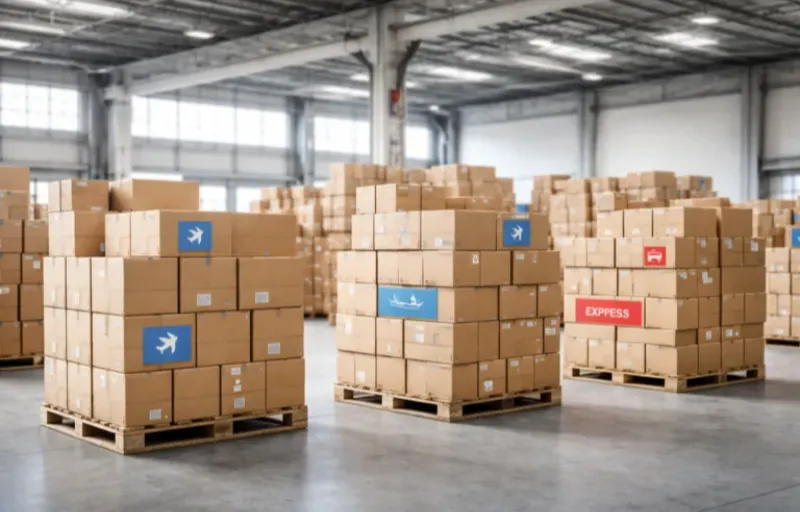
Logistics Manager Tan mapped DDP air freight routing to eliminate customs surprises. The $18 all-in unit cost — covering custom decoration, polyamide fabrication, and DDP delivery — gave the club predictable procurement economics without the hidden fees that had plagued their previous orders.
The Results
| Metric | Before | After | Change |
|---|---|---|---|
| Membership conversions | Baseline (flat for 18 months) | 45% increase | +45% |
| Merchandise reorders | Ad-hoc, reactive | 32% increase | +32% |
| Color fastness (50 washes) | Visible fading by wash 5 | Grade 4.5/5 | — |
| Dimensional stability | Not measured | <2% shrinkage | — |
| Stretch recovery | Collar collapse by wash 3 | 98% elasticity retained | — |
| Embroidery integrity | Puckering visible at 3 feet | 0 thread breakages | — |
| Defect rate | Unknown (no QC tracking) | 0% at delivery | — |
| Replacement orders | Frequent | $0 spent | — |
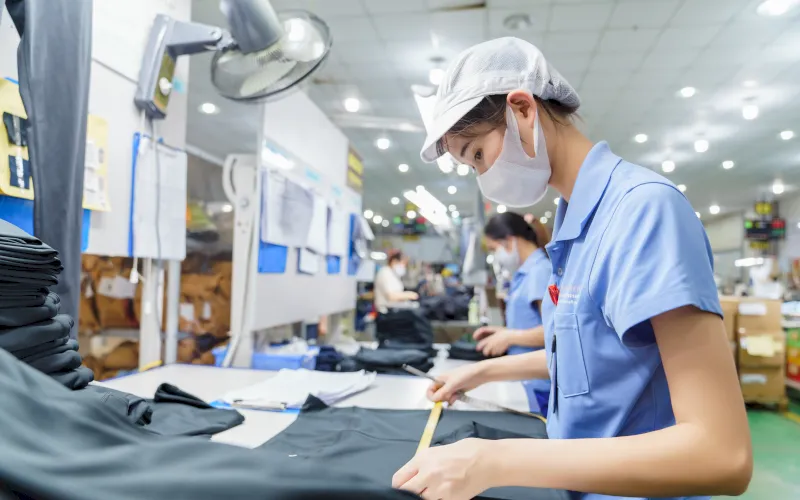
Validation: Post-wash measurements were physically taken on the factory floor by Manager Chen. The club self-reports commercial metrics (membership growth, merchandise reorders) while LeelineWear tracks and verifies all technical metrics (wash durability, color fastness, dimensional stability).
Both data sets were cross-referenced against the previous year’s baseline.
Key Takeaways
1. Promo blanks are a brand liability. The club’s $3 shirts were costing them $200K+ in unconverted membership revenue. For customer-facing staff and onboarding kits, “good enough” merchandise is actually a sales prevention tool.
2. Wash durability sells memberships. The club’s prospects didn’t judge the shirt in the welcome kit — they judged it three washes later, when they saw staff wearing faded, misshapen polos. The 50-cycle ISO 6330 test isn’t a lab exercise; it’s the real-world lifecycle of a garment worn twice weekly for six months.
3. Embroidery on stretch fabric is a precision operation. Dropping stitch count by 20% and upgrading the backing material eliminated puckering without reducing visual impact. If your supplier treats all polos the same regardless of GSM, expect logo distortion.
4. DDP eliminates the hidden procurement tax. The club’s previous orders carried unpredictable customs fees and port delays. Locking in DDP air freight made the $18 unit cost fully predictable — a small premium that eliminated surprise budget overruns.
5. The manufacturing partner sets the ceiling. Every metric above traces back to one decision: who cuts and sews the garment. If that decision is still open for you, start with our golf apparel manufacturing capabilities.
Technical test data (ISO 6330 wash reports, AQL 2.5 inspection logs, fabric certification documents) available to qualified prospects under NDA. Submit an inquiry to request the full production record.
Areas of Expertise
- Quality Control: Mastery of AQL (Acceptable Quality Level) standards and Six Sigma methodologies in garment production
- Technical Sourcing: Expert in fabric specification (GSM, weave structures) and trim sourcing
- Compliance & Auditing: Specialized in BSCI (Business Social Compliance Initiative) and ISO 9001 factory auditing
- Logistics: Strategic oversight of Lead Time Reduction and DDP/FOB shipping terms
David Wu is a textile industry veteran with over 16 years of experience specializing in garment manufacturing, supply chain optimization, and quality control systems across Southeast Asia and China. His career is defined by implementing rigorous AQL 2.5/4.0 inspection protocols for mid-to-large-scale private label brands. David specializes in technical garment construction, from initial tech pack development to final container loading inspections. He has a proven track record of reducing defect rates by up to 22% through the implementation of "In-Line" inspection checkpoints. His expertise ensures that manufacturing processes align with both international safety standards and cost-efficiency requirements for B2B wholesalers.

Get the Same Results
Want a case study like this for your brand?
Every case study starts with a conversation. Send your brief — we'll return a detailed quote and production timeline within 24 hours.