
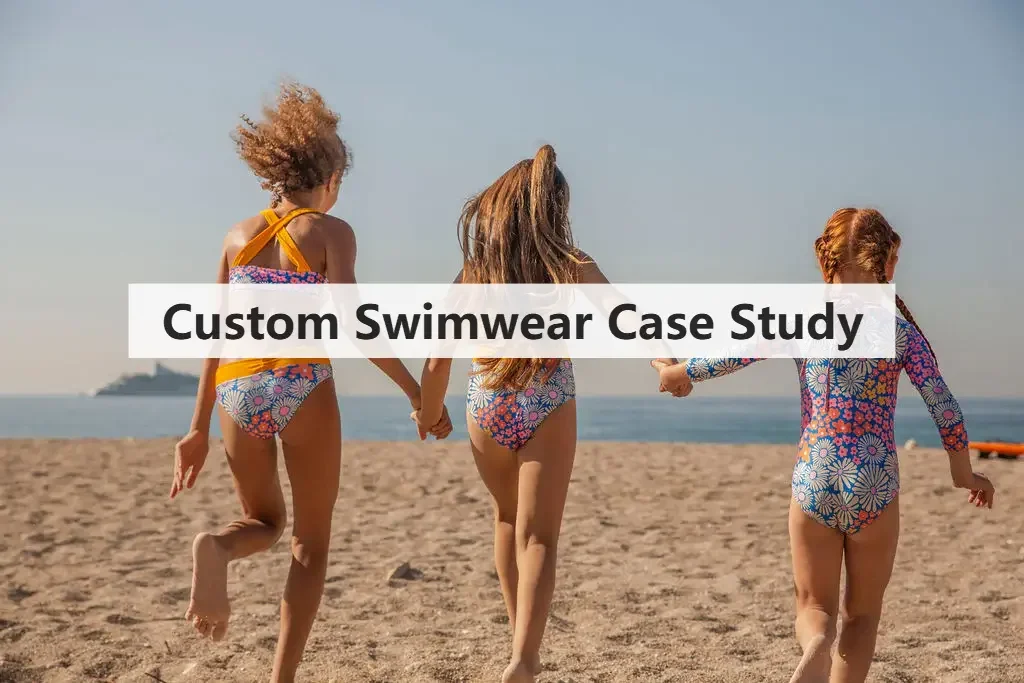
Client Profile
| Industry | Mid-market private label swimwear |
| Company Size | 8-15 employees |
| Location | Australia |
| Annual Revenue | ~$2M |
| Key Challenge | 15% defect rate from middlemen; recycled polyamide fabric causing unpredictable shrinkage; poor Western-fit grading causing sizing complaints |
| What They Needed | Direct factory control with four-way stretch expertise, sustainable fabric validation, and 40% faster sourcing cycles to hit seasonal launch windows |
The client requested anonymity. Redacted tech packs, fabric test reports, and QC inspection logs available to qualified prospects under NDA.
The Challenge
Seasonal swimwear lives and dies by launch windows. Miss the summer drop by two weeks, and you’ve lost the entire season’s margin. This client was bleeding on every front.
What middlemen were costing them:
- 14 days lost per development cycle. The previous supplier — a sourcing agent, not a manufacturer — added a full two weeks of communication lag to every sample round. The agent forwarded messages between the brand and an unnamed factory; neither party had direct visibility into the other’s constraints.
- 15% defect rate. Patterns arrived with inconsistent sizing. Bikini tops and bottoms from the same “set” had completely different physical specifications. The recycled polyamide fabric — chosen for sustainability positioning — introduced severe shrinkage that the agent never flagged or tested.
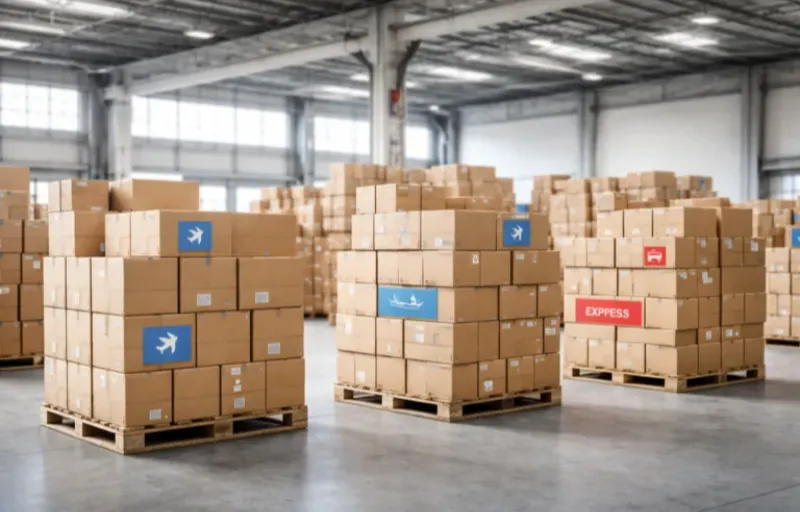
- $4,000 in expedited freight per season. Delayed approvals forced the brand to air-ship samples at a premium, eating margin before a single unit was sold.
- 5 sample rounds to reach approval. The industry standard for well-engineered swimwear is 2-3 rounds. Every extra round cost 2-3 weeks and pushed the summer launch window closer to the edge.
What they tried first: The client switched sourcing agents once. The second agent produced the same problems — different person, same middleman model. The underlying issue wasn’t the agent; it was the gap between design intent and factory-floor execution that no middleman could close.
Pattern Maker Chen diagnosed the core problem within hours of receiving the previous supplier’s samples: “The recycled nylon lacked standard recovery. The initial armhole binding gaped widely after just one wear.” The fabric’s stretch modulus had never been measured. The supplier had treated it like virgin nylon and been wrong.
The Solution
We halted the project and rebuilt the development methodology. Five phases, from design audit to QC lock.
Phase 1: Design Package Audit
The original digital files looked beautiful but lacked the technical specifications that factories need to execute: elastic tension ratios, hardware gauges, lining attachment methods, and flatlock stitch instructions.
Wei translated aesthetic sketches into precise, manufacturable specifications — front and back flat sketches, detailed BOM, fabric composition percentages, D-ring hardware specs, and a fully graded measurement chart from XS to XXL with 0.5cm dimensional tolerances.
Phase 2: Sustainable Fabric Validation
We tested the recycled polyamide before cutting a single yard of bulk. High-stretch polyamide blends warp seams if recovery metrics are ignored. Our team:
- Measured shrinkage at 4% post-wash — documented and compensated with a negative 4% digital grading margin
- Verified sustainability claims against Global Recycled Standard requirements using raw supplier certificates
- Validated stretch recovery against AATCC dimensional change standards
Phase 3: Fit-First Sample Cadence
We skipped the traditional rough prototype and moved directly to a precision fit sample. This eliminated two full rounds of international shipping. Physical remakes were ordered only for structural changes — like modifying underwire casing for larger cup sizes. Sample rounds dropped from 5 to 2.
A real friction moment: The second sample round caught the recycled lining bunching at the leg opening. Technician Wang corrected the feed dog timing on the Pegasus overlock machine, feeding the lining slightly slower than the shell fabric.
This one-day fix permanently solved the bunching issue that would have affected every unit in bulk production.
Phase 4: Production-QA Lock
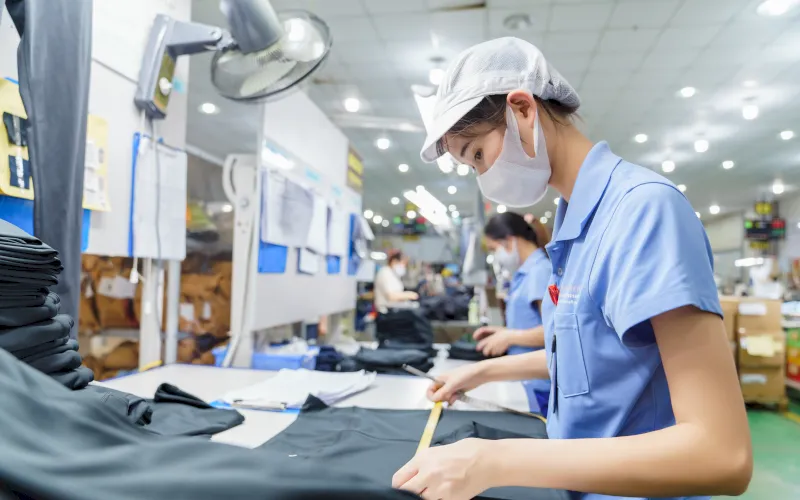
We applied AQL 2.5 inspection at three checkpoints — fabric receipt, post-sewing, and pre-packing. Bulk turnaround dropped from 40+ days to 18 days. Defect rate fell from 15% to 0.5%.
Phase 5: Timeline Protection
We built the production calendar backward from the summer launch date with a hard 10-day buffer. Seasonal swimwear cannot absorb delays. The 36-day end-to-end sourcing cycle gave the brand three full weeks of margin before their drop deadline — versus the zero-margin, panic-driven timeline they’d been operating on.
The Results
| Metric | Before | After |
|---|---|---|
| Total sourcing time | 60 days | 36 days |
| Sample iterations | 5 rounds | 2 rounds |
| Defect rate | 15% | 0.5% |
| Bulk turnaround | 40+ days | 18 days |
| Expedited freight cost | $4,000/season | $0 |
| Development speed | — | 22 days to final approval |
Validation: Shipment manifests and QA logs verified against factory floor records. The 0.5% defect rate confirmed via final inspection reports. Fabric recovery data validated against AATCC dimensional change standards.
Key Takeaways
1. Sustainable fabrics require pre-production validation. Recycled polyamide doesn’t behave like virgin nylon. A 4% shrinkage rate, if unmeasured and uncompensated, produces sizing failures across the entire production run. Measure first, compensate in the digital pattern, then cut bulk.
2. Middlemen cannot close the design-to-floor gap. The client’s two previous agents both failed because neither could measure stretch modulus, adjust feed dog timing, or validate GRC certification at the mill level. Factory-direct manufacturing puts the technical decision-maker on the same floor as the sewing line.
3. Fit-first sampling eliminates rounds. Skipping the rough prototype and starting with a precision fit sample cut the iteration cycle from 5 rounds to 2. The marginal cost of a higher-quality first sample is dwarfed by the savings from eliminating three rounds of international shipping and 6+ weeks of calendar time.
4. Swimwear launch windows are unforgiving. Building the production calendar backward from the drop date — with a 10-day hard buffer — is the difference between a profitable summer season and a warehouse full of late-arriving inventory.
Redacted tech packs, fabric test reports, and QC inspection logs available to qualified prospects under NDA. Submit an inquiry to request the full sourcing documentation.
Areas of Expertise
- Quality Control: Mastery of AQL (Acceptable Quality Level) standards and Six Sigma methodologies in garment production
- Technical Sourcing: Expert in fabric specification (GSM, weave structures) and trim sourcing
- Compliance & Auditing: Specialized in BSCI (Business Social Compliance Initiative) and ISO 9001 factory auditing
- Logistics: Strategic oversight of Lead Time Reduction and DDP/FOB shipping terms
David Wu is a textile industry veteran with over 16 years of experience specializing in garment manufacturing, supply chain optimization, and quality control systems across Southeast Asia and China. His career is defined by implementing rigorous AQL 2.5/4.0 inspection protocols for mid-to-large-scale private label brands. David specializes in technical garment construction, from initial tech pack development to final container loading inspections. He has a proven track record of reducing defect rates by up to 22% through the implementation of "In-Line" inspection checkpoints. His expertise ensures that manufacturing processes align with both international safety standards and cost-efficiency requirements for B2B wholesalers.
Get the Same Results
Want a case study like this for your brand?
Every case study starts with a conversation. Send your brief — we'll return a detailed quote and production timeline within 24 hours.