I have watched countless brands treat polyamide as a magic word for premium activewear. Developers choose it for a butter-soft hand-feel and high abrasion resistance. Then, the manufacturing surprises hit. Moisture behavior fails field tests. Dyehouse variability ruins color matches. Routine heat exposure warps the fabric entirely.
Polyamide is not a generic fabric. It is a highly sensitive decision variable within your broader product system.
Polyamide is a synthetic polymer family characterized by repeating amide linkages. In the textile industry, the term almost exclusively refers to nylon yarns. These are specifically chemical variations like PA6 and PA6,6, which are formally classified under ISO 1043-1 standards for basic polymers.
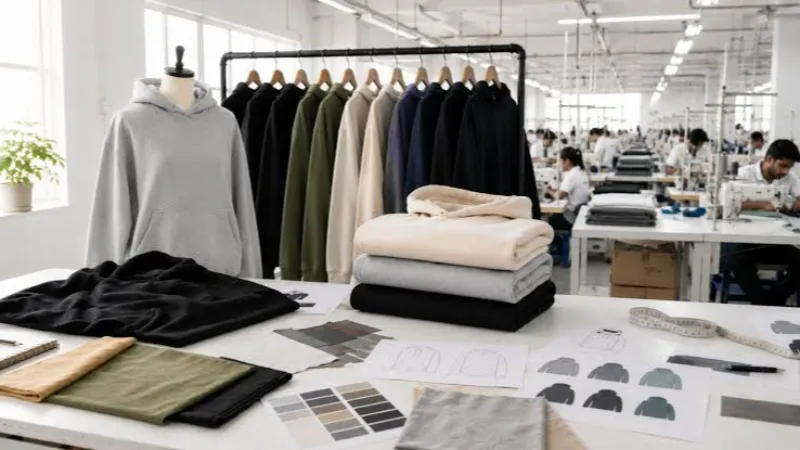
At LeelineWear, our factory-direct, spec-driven development process prevents these material failures before they hit the production line. We built this spec-first guide to stop the guesswork. It serves B2B procurement officers vetting landed risk and apparel developers balancing performance trade-offs.
It also guides textile engineers defining test methods and manufacturing professionals managing quality control.
Here is exactly what the framework covers:
-
Clear terminology: The actual difference between nylon and polyamide on tech packs.
-
A decision framework: How to evaluate polyamide fabric properties including strength, abrasion, and moisture gain.
-
Material matchups: Where polyamide wins against polyester.
-
The waterproof myth: What actually makes a fabric waterproof.
-
Factory-floor pro tips: How to manage dye uptake, barre risk, and heat-set settings.
Ready to scale your technical production? Reach out to the LeelineWear team.
What is Polyamide Fabric?
Polyamide is a family of synthetic polymers held together by repeating amide bonds. Think of a polymer like a long pearl necklace. The pearls represent individual molecules. The strong string connecting them is the amide bond. In the apparel industry, we almost always call this fiber nylon.
Nylon vs. Polyamide: The Procurement Reality
I constantly see new clothing brands get confused by spec sheet terminology. “Nylon” is simply a consumer trade name. “Polyamide” (PA) is the actual generic technical term.
If you manufacture activewear for the European market, EU labeling laws strictly require you to print “polyamide” on your care tags. You will also see this term on mill specifications and customs declarations.
- The Procurement Rule: All apparel nylon is polyamide, but not all polyamides are apparel nylon. Do not assume industrial polyamides work for clothing.
Where Polyamide Sits Among Synthetics
To master your fabric choices, look at the broader synthetic fiber map: polyester (PET), acrylic, polypropylene, elastane, and polyamide.
Within the polyamide family, the sportswear market relies entirely on two specific grades: PA6 and PA6,6. Specialty polyamides exist, like aramids used for bulletproof vests or rigid industrial tubing. However, PA6 and PA6,6 completely dominate high-performance apparel.
As a factory-direct manufacturer, LeelineWear spins these specific textile-grade polymers into premium activewear.
Fiber vs. Fabric vs. Blends
On our factory floor, I always remind clients that picking a “polyamide fiber” does not guarantee a specific fabric performance. A butter-soft seamless yoga legging and a crisp, weather-proof windbreaker can both use 100% polyamide. The final function depends heavily on:
-
Yarn Construction: Filament versus spun, texturized, or microfilament yarns.
-
Knitting Method: Warp knit versus circular knit.
-
Finishes: Applied surface treatments like Durable Water Repellent (DWR) membranes.
Basic Property Snapshot
How does it behave during manufacturing? According to standard fiber classifications defined by the Federal Trade Commission, polyamide naturally absorbs significantly more water than other synthetics.
Here is a quick snapshot we use to set client expectations before starting a deep polyester vs. nylon material debate:
| Material Property | Polyamide (Nylon) | Polyester (PET) |
|---|---|---|
| Moisture Regain | ~4.0% (High absorption) | ~0.4% (Low absorption) |
| Melting Point | Varies (PA6 melts lower than PA6,6) | Generally higher and more stable |
1 Polyamide Chemical Structure
Polyamide relies on the amide linkage. Standard polyester behaves like a slick fishing line where molecules slide easily. Polyamide acts like heavy-duty zip ties. The amide linkages create strong hydrogen bonds between polymer chains. These bonds act like microscopic Velcro.
They lock the chains together to absorb impact and resist friction. This mechanism makes nylon ideal for high-wear applications.
However, these amide bonds actively pull moisture molecules from the air. This moisture interaction makes the fabric feel cool but requires strict humidity control on our factory floor.
2 The Two Workhorse Textile Grades: Nylon 6 vs Nylon 6,6
We use two primary grades of polyamide. You must select the right polymer before spinning yarn.
| Feature | Nylon 6 (PA6) | Nylon 6,6 (PA6,6) |
|---|---|---|
| Chemistry | Single monomer (Caprolactam) | Two monomers (Hexamethylenediamine + Adipic acid) |
| Melting Point (Tm) | 220–223°C | 255–265°C |
| Moisture Regain | ~4.0% to 4.5% | ~4.0% to 4.5% |
| Relative Cost | Lower / High availability | Higher / Supply volatility |
| Typical End Use | Hosiery, lightweight activewear | Premium activewear, heavy industrial gear |
What this changes on the factory floor: The melting point dictates our heat exposure window. Nylon 6 has a lower heat tolerance. If an operator sets the press to 210°C, Nylon 6 risks glazing. We use Nylon 6,6 for garments requiring intense heat-setting. Nylon 6 features an open molecular structure.
It absorbs dye faster, but this increases the risk of uneven coloring (barre) if we fail to control the dye bath pH perfectly.
3 Key Polyamide Fabric Properties
We build fabric specifications around four measurable pillars.
A) Strength and Tensile Performance We measure strength in two phases. First, we test the raw yarn tenacity (cN/tex) to prevent snapping on high-speed knitting machines (ISO 2062). Next, we test the finished fabric breaking force (N) to verify consumer durability (ISO 13934-1 strip method).
B) Durability (Abrasion, Snagging, Pilling) Nylon dominates high-wear zones. The hydrogen bonds absorb scraping forces. However, construction matters. A tightly knitted, texturized yarn resists pilling better than a loose flat yarn. We verify this resistance using the ISO 12947-2 (Martindale method).
C) Moisture Regain and Comfort Moisture regain defines how much water a dry fiber absorbs from the air. Polyamide holds roughly 4% of its weight in water. This high absorption diffuses dyes beautifully and prevents static. It also increases clamminess during heavy sweating. We engineer yarn structures to push water outward.
See our guide at moisture wicking fabric. We use ISO 139 conditioning to ensure repeatable lab tests.
D) Thermal Behavior We strictly separate the polymer melting point (when fiber liquefies) from the service temperature (safe heat limits for washing). If you blend nylon with spandex, the elastane dictates the heat limits. High heat destroys spandex long before nylon melts.
4 How Polyamide Fiber Becomes Fabric
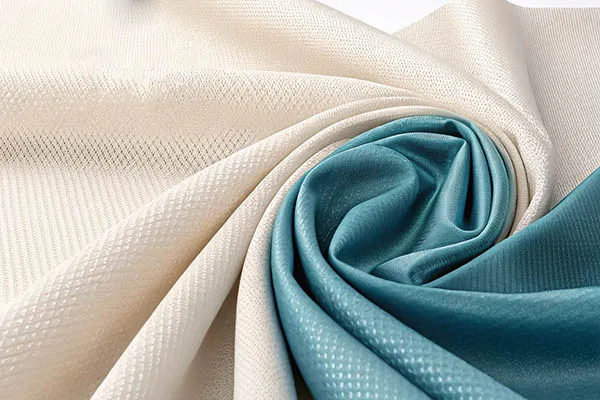
The manufacturing process follows a strict linear chain. Variability at any step alters the final product.
-
Polymerization: Chemical plants synthesize hard plastic chips.
-
Melt Spinning: We melt the chips and force the liquid through a spinneret to form filaments.
-
Drawing: We stretch the cooling filaments. This aligns the molecules and builds tensile strength.
-
Texturizing: We apply heat and air to crimp the flat yarn, creating a soft, cotton-like feel.
-
Knitting/Weaving: We load the yarn onto circular or warp knitting machines.
If the initial chip viscosity drops, yarn strength falls. If the draw ratio fluctuates, the fabric stretches unevenly. We monitor the spin finish oils applied during extrusion. Excess oil blocks dye uptake downstream.
5 Factory Pro-Tips: Dye Uptake and Heat Setting
Dyeing nylon requires acid dyes and precise chemical controls.
-
Control the pH ramp: We adjust the dye bath acidity slowly. Fast pH drops cause the dye to strike unevenly, creating streaks.
-
Pre-scour the yarns: We wash the fabric to remove all spin finish oils before dyeing.
-
Manage metal ions: Hard water shifts the final shade. We treat our water to stabilize colors.
-
Require continuity lots: We run lab dips to verify batch-to-batch shade matching.
Heat Setting: We run raw fabric through a stenter frame oven. This process heat sets the fabric, locking in dimensional stability and preventing spirality (seam twisting). We carefully monitor temperatures. Excessive heat yellows white yarns, hardens the hand-feel, and damages elastane blends.
6 The Waterproofing Truth: Is Polyamide Waterproof?
No. Polyamide fiber actively absorbs water. Building waterproof gear requires a multi-layer system.
First, we weave the yarn tightly to create a high cover factor. Next, we apply a Durable Water Repellent (DWR) treatment to the surface. This chemical forces water to bead and roll off. Finally, we laminate a polyurethane (PU) membrane to the fabric back and tape the interior seams. The applied system blocks the water, not the raw fiber.
-
Surface Wetting: ISO 4920 (Spray test).
-
Hydrostatic Head: ISO 811 (Water pressure resistance).
🔄 Process Loop: Brands frequently confuse “water-repellent” (DWR coating) with “waterproof” (membrane and taped seams). Always demand an ISO 811 test report before approving waterproof marketing claims.
The Big 4 Reasons Product Teams Spec Polyamide
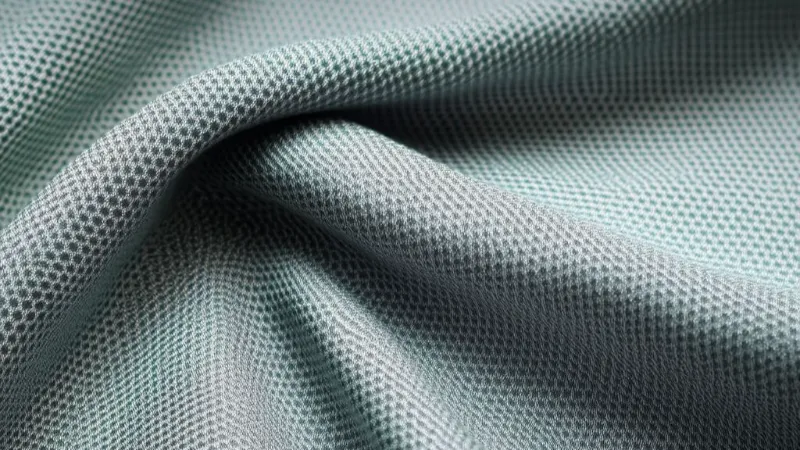
I review dozens of tech packs weekly. Moving a brand from budget to premium positioning almost always requires switching the core fabric to polyamide. Here is why we recommend it:
1. Abrasion Resistance & Long Wear Tight hydrogen bonds allow polyamide to absorb scraping forces better than other synthetics. In our lab, polyamide webbing consistently passes ISO 2062 testing standards without tearing. For brands, this eliminates costly customer returns caused by pilled leggings or shredded backpack straps.
2. Premium Hand-Feel With Strength Microfilament nylon creates a silk-like texture that justifies higher price points. When we upgraded one client’s activewear line to a custom nylon and spandex blend, the improved tactile experience allowed them to increase retail pricing by 30% without losing sales volume.
3. Elastic Recovery & Fit Quality Polyamide pairs perfectly with elastane to maintain structural memory. During our 30-day wear-testing for performance golf apparel, we found zero bagging at the knees or elbows. The garment maintains a precise fit even after 50 wash cycles.
4. Dyeability and Color Depth Nylon’s open molecular structure absorbs acid dyes deeply. In our dye house, polyamide achieves a saturation level that polyester simply cannot match. This shade vibrancy pops on camera, driving higher social media conversion rates for influencer-led launches.
🌍 Global Impact: We source recycled polyamide certified by the Global Recycled Standard (GRS) to validate your sustainability claims. Because all synthetics shed, we advise reviewing government data on microfiber pollution to design responsible wash-care labels.
Polyamide Material Uses (Apparel & Industrial)
We process this polymer across two distinct verticals:
-
Apparel: We knit Nylon 6,6 blends for high-compression leggings, frictionless hosiery, and chlorine-resistant swimwear.
-
Industrial: Beyond the sewing floor, engineers cast polyamide polymers into automotive engine components, heavy-duty marine ropes, load-bearing webbings, and specialized protective textiles (like aramids).
Ignoring polyamide’s physical limits causes high return rates. Here is our factory-floor audit of its structural trade-offs.
High-Risk Performance & Processing Limits
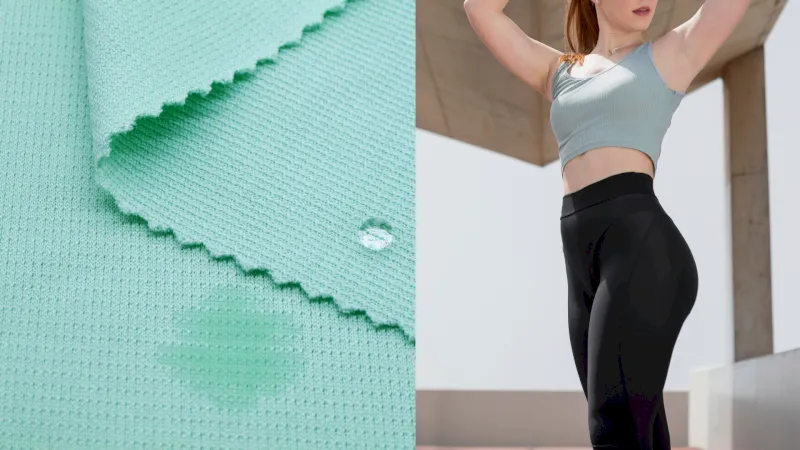
Nylon absorbs more water than polyester. During heavy exertion, moisture regain makes athletes feel damp faster than when wearing merino wool.
Polyamide also warps under high heat. We see irreversible damage when commercial dryers exceed 120°C. Transfer printing and aggressive heat setting trigger this heat sensitivity.
Additionally, texturized yarns face high pilling risks. A brushed finish mimics cotton but sacrifices durability against abrasive surfaces like barbells.
⚖️ The Trade-off: You sacrifice abrasion resistance to achieve a softer hand-feel.
The Waterproofing Sourcing Trap
Buyers frequently assume polyamide naturally repels water. It actually absorbs moisture. Achieving a waterproof rating requires heavy synthetic coatings.
Applying thick polyurethane increases the hydrostatic head, but creates new problems. It ruins the soft hand-feel, creates loud friction noise, and introduces seam tape compatibility issues. Cheap coatings also risk chemical compliance violations.
⚠️ Critical Warning: Fiber choice does not equal waterproofing. Your coating dictates performance.
Strict QC Testing Requirements
Verbal factory promises do not prevent returns. We require hard data to validate claims. We condition our testing rooms to ISO 139 standards. Our QA teams test raw yarn tensile strength (ISO 2062) and finished fabric abrasion (ISO 12947-2).
For outerwear, we mandate an ISO 811 hydrostatic head test and color fastness verification (ISO 105-C06). This proves the garment survives domestic washing.
Chemical & Environmental Compliance
Many claim synthetics lack certifications. In reality, strict B2B standards exist. We secure Global Recycled Standard (GRS) paperwork to verify the supply chain. We also demand OEKO-TEX Standard 100 and EU REACH alignment to block toxic chemicals. Review our eco-friendly fabric certification guide for exact documentation.
However, sustainability remains a structural flaw. Polyamide sheds microfibers during domestic washing and resists natural biodegradation.
Supply Chain & Landed Transit Risks
Custom-dyed nylon demands high Minimum Order Quantities (MOQs). Dye houses must schedule specific vats and control lab dips to maintain strict shade consistency across batches. Stock colors offer lower MOQs, but you lose brand exclusivity.
Transit introduces severe phenolic yellowing risks. Nitrogen oxides in shipping containers react with the fabric. This reaction turns pure white garments yellow before they reach your warehouse.
The Final Verdict: Mastering Polyamide Production
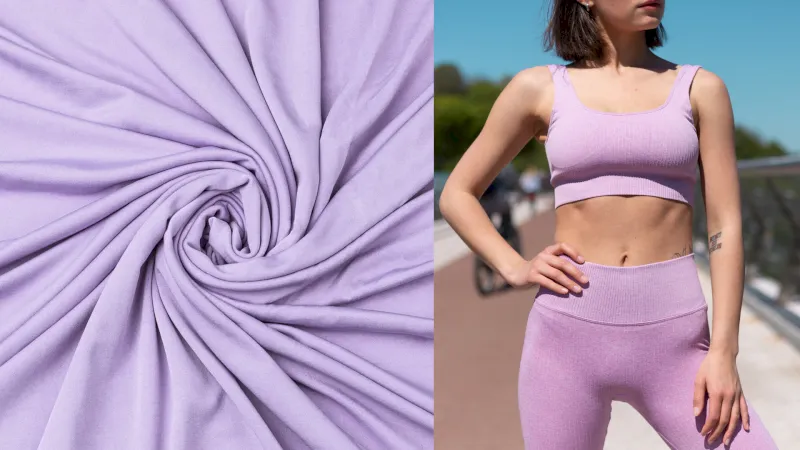
Ultimately, polyamide represents the gold standard for premium activewear. It delivers unmatched abrasion resistance and a butter-soft texture. However, this performance relies entirely on your manufacturing system. You must specify the exact polymer grade (PA6 or PA6,6), yarn type, and structural finish. Remember:
polyamide is never naturally waterproof. The fiber actively absorbs moisture. You must mandate chemical coatings and membrane laminations to achieve true weather resistance. We recommend polyamide fabric for high-end fitness brands building skin-contact garments. If you run a budget promotional line, look elsewhere and stick to polyester.
The future of sportswear demands agile, spec-driven manufacturing. As global material regulations tighten over the next 12 months, you need a partner who engineers performance from the yarn up. Stop guessing with generic suppliers. Send us your tech pack or target specifications today.
We will provide immediate feasibility feedback and build a rapid sampling timeline.
Ready to scale? Contact the LeelineWear team to start your production run. For more factory-direct insights, explore the main LeelineWear hub.
Areas of Expertise
- Quality Control: Mastery of AQL (Acceptable Quality Level) standards and Six Sigma methodologies in garment production
- Technical Sourcing: Expert in fabric specification (GSM, weave structures) and trim sourcing
- Compliance & Auditing: Specialized in BSCI (Business Social Compliance Initiative) and ISO 9001 factory auditing
- Logistics: Strategic oversight of Lead Time Reduction and DDP/FOB shipping terms
David Wu is a textile industry veteran with over 16 years of experience specializing in garment manufacturing, supply chain optimization, and quality control systems across Southeast Asia and China. His career is defined by implementing rigorous AQL 2.5/4.0 inspection protocols for mid-to-large-scale private label brands. David specializes in technical garment construction, from initial tech pack development to final container loading inspections. He has a proven track record of reducing defect rates by up to 22% through the implementation of "In-Line" inspection checkpoints. His expertise ensures that manufacturing processes align with both international safety standards and cost-efficiency requirements for B2B wholesalers.