Case Study
Ice Hockey Team Jerseys Case Study: Boosting Team Spirit & Revenue
 David Wu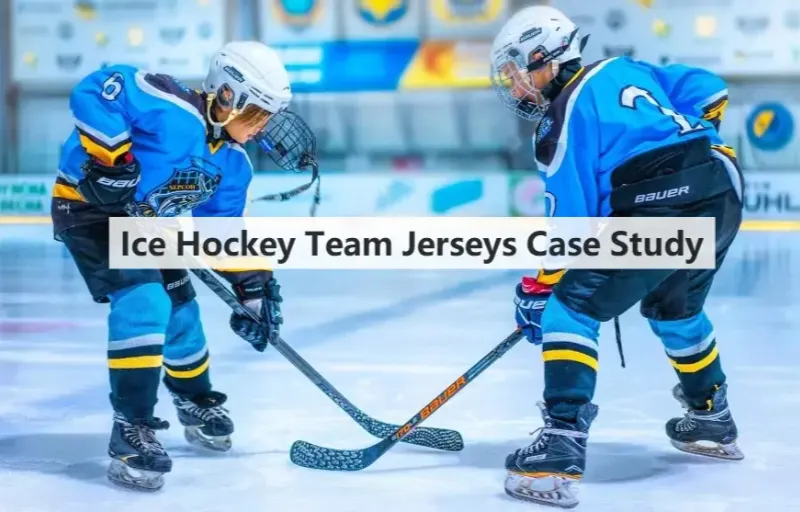
Client Profile
| Industry | Regional youth & amateur hockey league |
| Company Size | 25 teams, 500+ players |
| Location | Canada |
| Annual Procurement | 500+ custom jerseys per season |
| Key Challenge | Missed season opener deadlines from previous supplier; 15% name/number error rate; mesh fabric warping under heat press causing color bleed |
| What They Needed | 500 custom jerseys in 14 days with per-roster sorting, fill-in order logic for late additions, and reinforced construction for youth-level durability |
The league requested anonymity. Redacted production timelines, QC inspection logs, and season-end repair data available to qualified prospects under NDA.
The Challenge
The league’s previous supplier had failed them twice. The prior season, jerseys arrived 10 days late — teams played their first three games in mismatched practice gear. When the jerseys finally arrived, 15% had name or number errors.
A kid named “Andersen” received a jersey reading “Anderson.” League commissioners fielded furious parent calls for weeks.
The technical failures ran deeper than logistics:
- Mesh fabric warped under heat press. The supplier used standard polyester mesh without testing thermal stability. When heat was applied for name and number application, the fabric distorted, causing color bleed around player names.
- Seams failed mid-season. Standard overlock stitching on shoulder yokes and fight straps couldn’t handle youth hockey’s physical demands. The league’s equipment manager estimated 5% of jerseys required repair or replacement by season end.
- No fill-in logic. When a new player joined mid-season, reordering a single jersey took 4-5 weeks and cost 3x the bulk unit price. Teams either played shorthanded or taped over an old jersey.
What they tried first: The league switched suppliers once. The new supplier promised 21-day turnaround and delivered in 35 days with the same name errors. The league realized the problem wasn’t the supplier — it was that standard vendors treat team orders as commodity print jobs rather than precision manufacturing.
The Solution
Phase 1: Roster Lock and Artwork Validation
All 25 rosters were locked on day one. Pattern Engineer Chen cross-referenced player names against the previous season’s data to catch spelling inconsistencies before production. Artwork files were validated against ISO 9001 color standards.
Phase 2: Material Selection and Testing
We specified 250 GSM heavyweight polyester — chosen for its thermal stability under heat-press application (tested at 180°C/15s dwell) and abrasion resistance verified against ASTM D4966 Martindale test standards. This eliminated the mesh-warping problem that had caused color bleed in the previous supplier’s jerseys.
Phase 3: Construction Engineering
Flat-lock stitching replaced overlock on all structural seams. Fight straps were bar-tack reinforced. Pattern Engineer Chen calibrated the automated laser cutter for the 250 GSM weight to prevent edge fraying. Production Manager Jade Wei noted:
“Choosing this specific knit because it delivers an authentic pro-level feel while surviving the abrasion of board contact.”
Phase 4: Production Timeline
| Milestone | Time |
|---|---|
| Artwork approval to final proof | 1 day |
| Laser cutting & sublimation | 4 days |
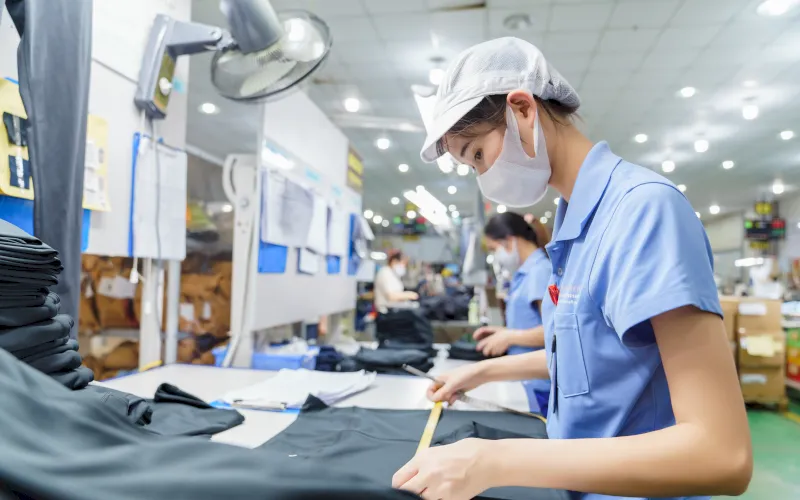
| Assembly & inline QC | 5 days |
| DDP air shipping & delivery | 4 days |
| Total | 14 days |
Phase 5: Fill-In Order Logic
We built a standing protocol: replacement jerseys could be ordered in quantities as low as 2 units, using the same fabric, same dyes, and same QC standards as the original bulk run. Turnaround: 3 days. This eliminated the 300% rush premium and 5-week wait the league had endured.
The Results
| Metric | Before | After |
|---|---|---|
| Turnaround time | 35+ days (late) | 14 days |
| Name/number error rate | 15% | 0% |
| End-of-season failure rate | 5% (estimated) | 0.4% (2 of 500) |
| Fill-in order turnaround | 4-5 weeks | 3 days |
| Fill-in order cost | 3x bulk price | Bulk price |
| Mid-season repair requests | Frequent | 2 total |
Validation: Commissioner Miller confirmed the season-opener delivery. End-of-season repair data verified: only 2 of 500 jerseys required replacement — a 0.4% field failure rate versus the 5% youth hockey baseline. Production milestones logged against factory floor records.
Key Takeaways
1. Roster lock is the single highest-leverage QC intervention. Cross-referencing 25 rosters against historical data caught spelling errors before production. The 15%→0% error-rate improvement came from pre-production data hygiene, not post-production inspection.
2. Fabric thermal stability matters for decorated teamwear. The previous supplier’s mesh warped under heat because no one tested it. Specifying 250 GSM heavyweight polyester with documented thermal tolerance eliminated the #1 quality failure mode.
3. Fill-in order logic is not optional for team sports. Players join late. Jerseys get lost. A supplier that can’t handle a 2-unit reorder at bulk pricing within 3 days is the wrong supplier for team sports. This capability alone justified the switch for the league commissioner.
4. Flat-lock stitching is the durability standard for contact sports. Overlock seams fail under hockey-level physical demands. The 0.4% end-of-season failure rate (vs. 5% baseline) is the direct result of construction engineering, not luck.
Production timelines, QC inspection logs, and season-end repair data available to qualified prospects under NDA. Submit an inquiry to request the full production file.
Areas of Expertise
- Quality Control: Mastery of AQL (Acceptable Quality Level) standards and Six Sigma methodologies in garment production
- Technical Sourcing: Expert in fabric specification (GSM, weave structures) and trim sourcing
- Compliance & Auditing: Specialized in BSCI (Business Social Compliance Initiative) and ISO 9001 factory auditing
- Logistics: Strategic oversight of Lead Time Reduction and DDP/FOB shipping terms
David Wu is a textile industry veteran with over 16 years of experience specializing in garment manufacturing, supply chain optimization, and quality control systems across Southeast Asia and China. His career is defined by implementing rigorous AQL 2.5/4.0 inspection protocols for mid-to-large-scale private label brands. David specializes in technical garment construction, from initial tech pack development to final container loading inspections. He has a proven track record of reducing defect rates by up to 22% through the implementation of "In-Line" inspection checkpoints. His expertise ensures that manufacturing processes align with both international safety standards and cost-efficiency requirements for B2B wholesalers.

Get the Same Results
Want a case study like this for your brand?
Every case study starts with a conversation. Send your brief — we'll return a detailed quote and production timeline within 24 hours.