How to finding sportswear manufacturers: From Tech Pack to First PO
 David Wu QA Consultant
 Treating production like e-commerce is the fastest way to lose budget. Most founders struggle with how to finding sportswear manufacturers because they skip technical validation. They often lose months when samples arrive with poor stretch recovery, incorrect GSM, or messy seams.
Sourcing is an engineering discipline that demands rigorous checks on swatches and strict adherence to ISO 9001 quality management systems. I apply this precise methodology on the leelineWear factory floor, evaluating fabric hand-feel and stitching tension before authorizing bulk runs.
This guide details a repeatable pipeline for startups and team buyers. You will learn to vet ethical credentials, define clear Incoterms, and secure a signed purchase order protected by standard AQL inspection protocols.
How to Finding Sportswear Manufacturers: Prerequisites
Suppliers prioritize buyers who speak their language. To avoid being deprioritized or charged “risk premiums,” prepare these items before reaching out.
Essential Tools & Files
-
One-page product brief: Define the category, target price, market, and size range per style.
-
Tech pack: Include flat sketches, measurement specs, grading rules, stitch notes, and artwork placements. Minimal specs lead to inaccurate quotes.
-
Fabric spec targets: Specify fiber content, GSM (weight), stretch %, and opacity. Do not rely on adjectives like “soft”; use physical benchmarks.
-
Branding pack: High-resolution vector files (.AI/.SVG) for logos, label copy, and hangtags.
-
Supplier scorecard: A spreadsheet to track MOQs, lead times, payment terms, and sample quality.
Knowledge & Compliance Checklist
-
Budget: Secure funds for initial sampling and third-party inspection services.
-
Logistics: Familiarize yourself with Incoterms (e.g., FOB vs. DDP) to avoid surprise shipping costs.
-
Skin safety: Request OEKO‑TEX Standard 100 certification for any fabric touching the skin.
-
Sustainability: Plan to verify GOTS documentation through public databases rather than accepting PDFs at face value.
-
Quality standards: Review ANSI/ASQ Z1.4 to understand how AQL sampling works for bulk inspections.
-
Market compliance: Confirm fiber content and care labeling laws for your specific country before production begins.
🚀 Actionable Insight: Plan, don’t improvise. Detailed specs and compliance checks upfront prevent irreversible errors during the bulk production phase.
Recommended Reading: Sportswear manufacturers China vs Europe: Which is Better for Your Supply Chain?
Step 1: Define Non-Negotiables and Product Specs

Manufacturers ignore vague inquiries. To receive accurate quotes, you must convert your concept into a technical dataset before sending a single message.
Create a Non-Negotiables List to reject unqualified suppliers immediately. Limit this to five constraints:
-
Product Category: Distinguish clearly between Seamless Knitting (e.g., compression leggings) and Cut-and-Sew (e.g., jerseys, hoodies).
-
MOQ Target: State your limit per style (e.g., “50 units per color”).
-
Budget: Define a target unit cost that includes shipping (DDP).
-
Certifications: Require OEKO-TEX Standard 100 for skin contact safety. Only request GOTS if you intend to market organic claims.
-
Timeline: Set a rigid “In-Hand” date.
Next, translate “premium” into engineering terms. Do not ask for “soft fabric”; request Nylon 6.6 blends for high recovery. Replace “thick” with 220–250 GSM to ensure squat-proof opacity. Specify Flatlock seams for anti-chafe performance.
Align your specifications with your launch path:
-
Startups: Request Stock Colors to lower MOQs and speed up sampling.
-
Teamwear: Prioritize Sublimation durability over custom hand-feel.
-
Scaling Brands: Lock fabric lots to ensure consistency across re-orders.
Verification: You are ready to proceed when you can summarize your product in 30 seconds without saying “like Lululemon.”
🚀 Actionable Insight: Never reference colors by name (e.g., “Forest Green”) or rely on “the green fabric” from a photo. Manufacturers perceive color subjectively. Always provide a specific Pantone Connect code (e.g., 19-5917 TCX) to ensure the lab dip matches your vision.
Step 2: Execute a 5-Channel Sourcing Sweep
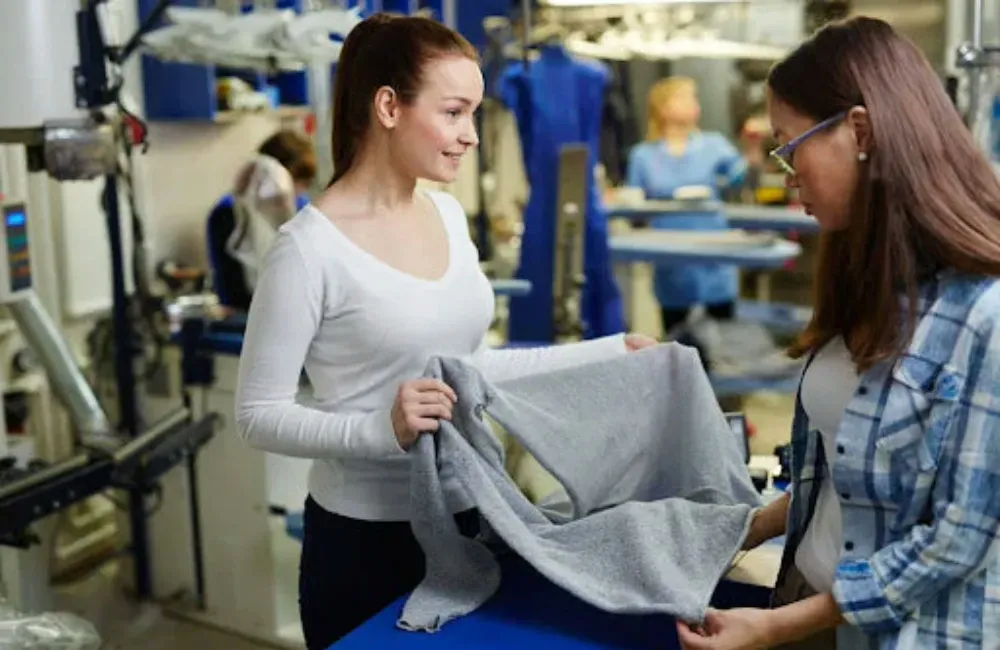
Create a spreadsheet titled “Sourcing Master List.” Populate it by sweeping these five channels to isolate “Agile Factories” from “Trading Companies”:
-
Textile Directories: Search Common Objective or domestic databases for suppliers with pre-vetted compliance.
-
B2B Marketplaces: On Alibaba or Global Sources, locate the search filters and select Verified Manufacturer or Factory. Note: Read the text label explicitly rather than relying on icon colors.
-
Trade Shows: Review exhibitor lists from ISPO or the Canton Fair. Photograph booth “Capability Boards” to verify technical stitch work.
-
Network Referrals: Ask fabric mills for factories that pay on time.
-
Sourcing Agents: Engage only if timezone management is impossible.
Data Capture Protocol
For every lead, log these verification points in your spreadsheet:
-
Factory Status: Ask, “Do you own the production line? Where is it located?”
-
Product Proof: Request photos of three past styles and their business license.
-
Logistics: Record MOQ per style, sample lead time, and bulk lead time.
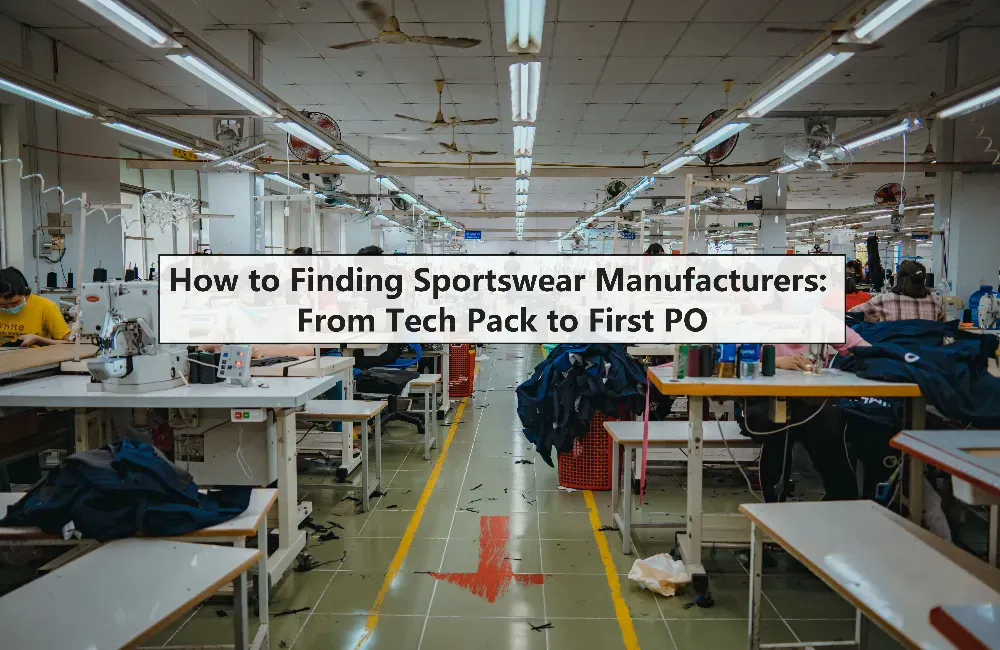
⚠️ Safety First: Video or it didn’t happen. Request a live video walk-through and listen for the “Industrial Audio Signature.” A quiet office indicates a middleman. A real factory has a chaotic audio profile: sewing motors, steam presses, and CNC cutting tables. If a supplier refuses the tour, mark them as a Trading Company.
Step 3: Standardize the RFQ and stress-test responses
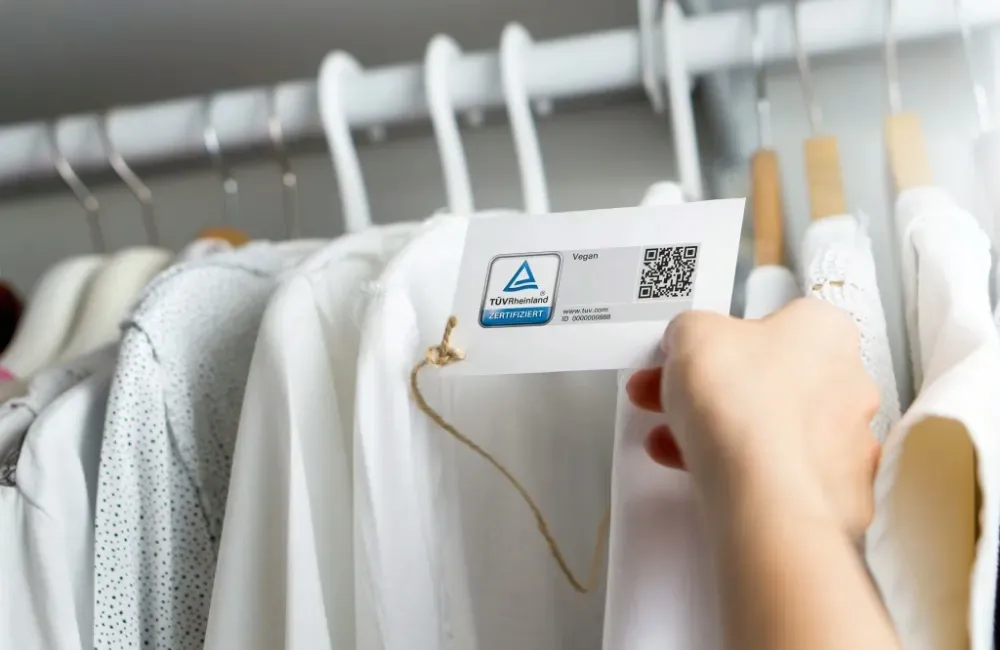
Subjective conversations create ambiguity. To compare suppliers objectively, send a standardized Request for Quotation (RFQ) to every lead simultaneously.
Copy and paste this template to force comparable answers:
SUBJECT: RFQ for [Brand Name] - [Product Category]
Hi Team,
Please review the attached Tech Pack summary and provide:
1. FOB Price per unit for [Target Quantity].
2. Sample cost and lead time.
3. Bulk lead time after sample approval.
4. MOQ per size/color.
5. Payment terms and Incoterms.
6. Confirmation of [Certification] availability.
Please attach unedited photos of similar past production.
Score the replies Grade incoming responses on a strict 0–2 scale:
-
Speed: 2 points for a meaningful reply within 24 hours. 0 points for delayed responses requiring nudges.
-
Clarity: 2 points for itemized tables and confirmation of assumptions. 0 points for vague “yes we can” messages.
-
Proof: 2 points for raw, unpolished photos of relevant production. 0 points for generic catalog images.
Run a communication stress test Send a specific technical follow-up (e.g., “Confirm the stitch density for the waistband label”). If they answer a different question or ignore the specific detail, mark this as a red flag. Communication gaps during vetting typically escalate into production failures.
Verification Shortlist only suppliers who meet your MOQ, provide clear documentation adhering to Incoterms® rules, and pass the stress test.
⚡ Power Move: Diversify your risk. For first-time imports, shortlist both a Direct Factory (lower cost) and a Vetted Agent (smoother management). If the factory fails the communication test later, the agent acts as your safety net.
Step 4: Verify Certifications and Compliance
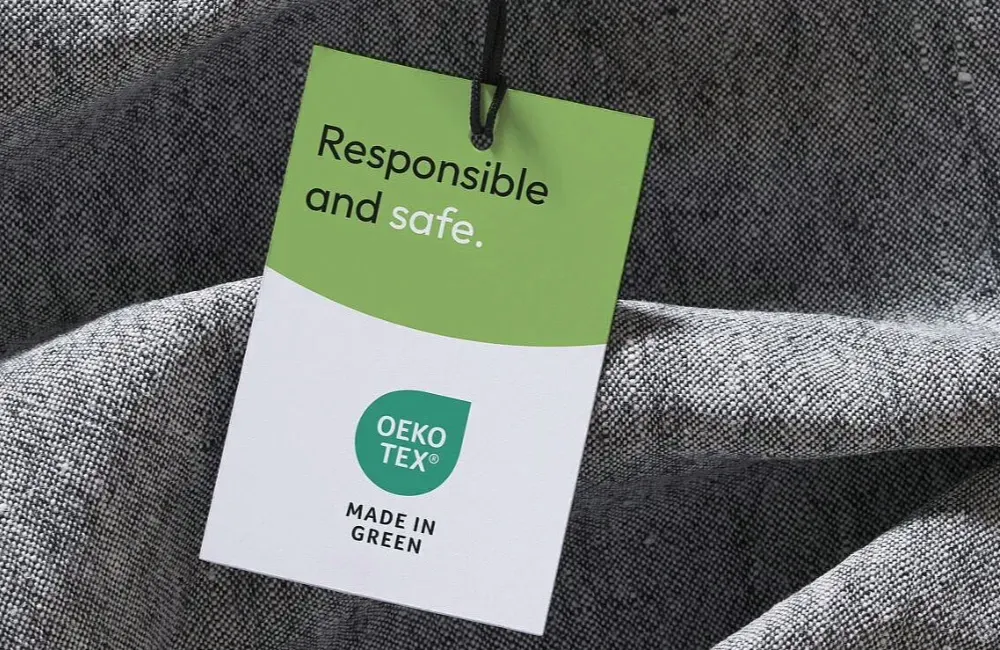
A website logo is not proof of compliance. To prevent greenwashing liability, you must validate documents against official databases before ordering samples.
1. Identify the Required Standard
-
OEKO‑TEX Standard 100: Mandatory for skin-contact safety (e.g., leggings, sports bras).
-
GOTS: Required for organic fiber claims.
-
GRS/RCS: Required for recycled content chain-of-custody.
2. Request Verification-Ready Documents Do not accept generic claims. Demand the Scope Certificate PDF. It must contain the Certificate Number, Issuing Body, and Validity Dates.
3. Execute the Verification Workflow
-
Cross-Check: Enter the certificate ID into the official OEKO‑TEX Label Check or the GOTS Public Database.
-
Validate Scope: Ensure the certificate covers your specific facility and Product Class (e.g., “Ready-made garments”). A certificate for “Raw Yarn” does not cover finished leggings.
-
Archive: Save the PDF and a validation screenshot to a dated folder.
⚠️ Safety First: Get the Transaction Certificate (TC). For GOTS/GRS, a Scope Certificate only proves the factory can produce compliant goods. To market your specific batch as organic or recycled, you must obtain a Transaction Certificate for that order. Consult Textile Exchange’s guide on TCs for details.
Step 5: Execute the Sampling Loop and Tech Pack Validation
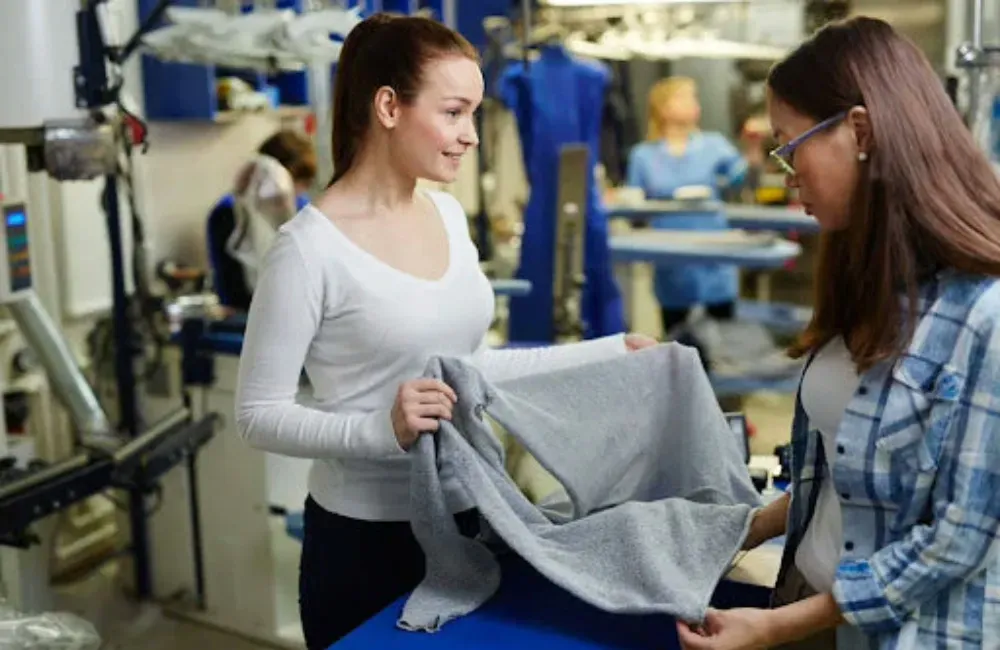
Do not authorize a single cut until you convert your design into a blueprint. Guessing dimensions leads to costly bulk failures.
-
Construct a production-ready tech pack. Include a Graded Size Chart that defines measurements for every SKU, not just the sample size. Specify Fabric Specs (GSM, composition) and Construction Callouts. Explicitly demand Flatlock Seams for activewear to prevent chafing, rather than standard overlock.
-
Order samples in a tiered sequence. Do not move to the next stage until the current sample is approved:
-
Prototype Sample: Verifies construction and design concept.
-
Fit Sample: Verifies sizing and grading accuracy.
-
Golden Sample: The final pre-production unit. Bulk production must match this exactly.
-
Execute a physical stress test. When samples arrive, ignore the aesthetics initially and stress the material.
-
Wear Test: Squat to check opacity (“squat-proof”) and monitor for waistband roll.
-
Wash Test: Launder according to AATCC home laundering standards to measure shrinkage and pill resistance.
-
Stretch Recovery: Pull seams to their limit. If the fabric “bags out” at the knees or elbows after stretching, the recovery target is unmet.
-
Submit a Revision Brief. Use annotated photos to pinpoint fit issues in priority order. Require the supplier to sign a physical tag on the Golden Sample and return a digital confirmation of the specs.
⚡ Power Move: The “Pop” Test. Pull the seam of your sample to its absolute limit. If you hear a cracking or popping sound, the thread tension is too high. Reject the sample immediately and instruct the factory to adjust the looper tension, or your bulk order will rip during customer use.
Step 6: Define Your Quality Control (QC) Protocols
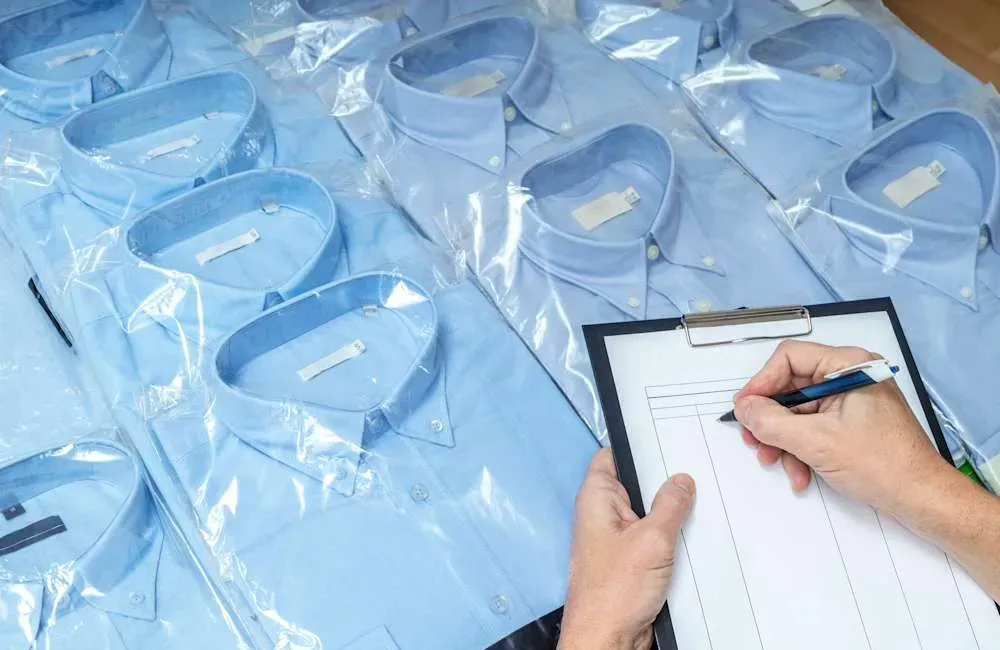
Subjective feedback is legally unenforceable. To guarantee the bulk order matches your sample, codify your standards using AQL (Acceptable Quality Limit).
1. Set the Inspection Standard Reference the ANSI/ASQ Z1.4 or ISO 2859-1 sampling plan in your contract. This statistical method dictates the sample size for pass/fail decisions. Set your defect thresholds:
-
Critical (0 Tolerance): Safety hazards (mold, sharp objects).
-
Major (2.5 AQL): Unsellable failures (holes, wrong size labels, broken zippers).
-
Minor (4.0 AQL): Cosmetic flaws (uncut threads, slight color shading).
2. Enforce a Sportswear Checklist Standard inspections often miss performance issues. Verify these specific points:
-
Stitch Integrity: Stretch fabric to max width. Reject if seams “grin” (threads show) or snap.
-
Print Durability: Require a Rub Test and wash cycle to check for peeling logos.
-
Measurements: Define strict ±0.5cm tolerances for waist, inseam, and rise.
3. Execute the Inspection If manufacturing overseas, hire a third-party agency. Do not rely on factory internal teams.
-
In-Line: Conduct during production to catch cutting errors early.
-
Final Random Inspection (FRI): Perform when 80% of goods are packed.
⚠️ Safety First: Mandate a Metal Detection Report. High-speed sewing often leaves broken needle tips inside seams. A single injury lawsuit exceeds the cost of ten inspections.
Verification: Review the inspection report photos and defect counts. Do not release the final payment until the batch receives a “PASS” grade.
Step 7: Calculate Landed Cost and Select Incoterms
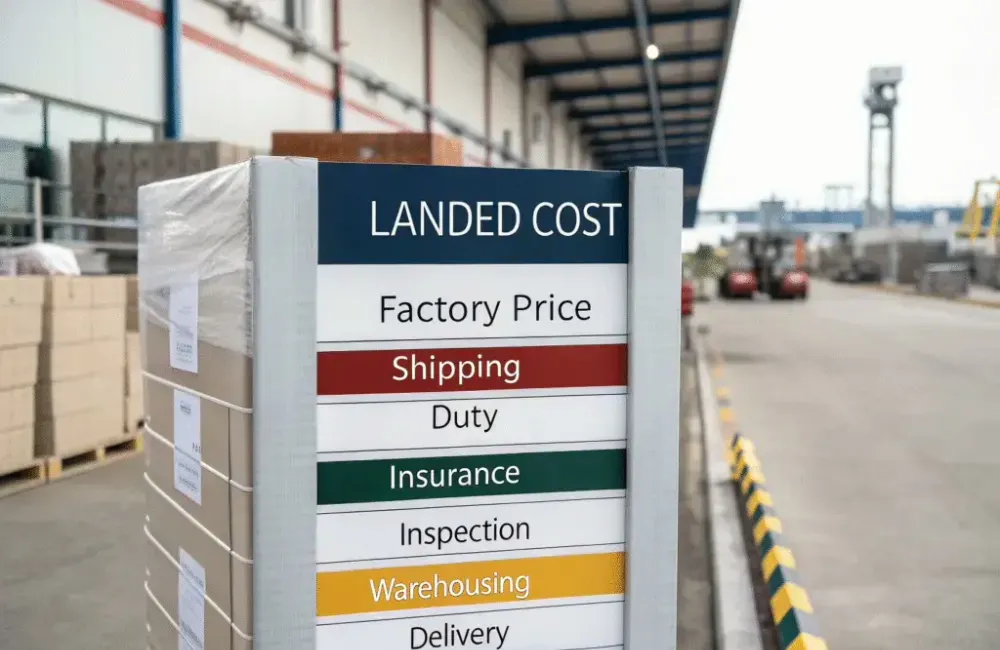
Factory price (EXW) is vanity; Landed Cost is reality. You must model the total delivery cost before placing an order to prevent hidden fees from erasing your margin.
1. Select the Incoterm Define who controls the shipment using standard commercial terms:
-
Choose DDP (Delivered Duty Paid): Ideal for speed. The supplier handles export, shipping, and customs clearance. You pay one all-inclusive price.
-
Choose FOB (Free On Board): Ideal for transparency. You hire a freight forwarder, giving you control over the route and tax declarations.
2. Collect Logistics Inputs Request a preliminary Packing List from the supplier. You need exact data to quote shipping:
-
Carton Dimensions (cm): Essential for calculating volumetric weight.
-
Gross Weight (kg): The actual scale weight.
-
HS Code: The specific product classification code.
3. Structure the Cost Model Map every expense line item in a spreadsheet to derive your final unit cost:
| Cost Component | Data Source |
|---|---|
| Product Cost | Supplier Quote |
| Freight | Forwarder Quote (Air vs. Sea) |
| Insurance | ~1% of Cargo Value |
| Duty & Tax | Official HTS Search |
| Brokerage Fees | Customs Broker Quote |
Verification: Ensure your target retail price allows for a healthy margin after adding these landed costs to the base factory price.
🚀 Actionable Insight: Watch the Volumetric Weight. Carriers charge based on space occupied, not just weight. Instruct the factory to “Vacuum Seal” bulky items like hoodies or puffers. This reduces carton volume by up to 50%, drastically cutting air freight costs.
Step 8: Finalize the Contract and Audit the Facility

Never wire a deposit on a handshake. You must secure a binding agreement that ties payment to performance and verifies the facility actually exists.
Draft an Operational Contract
Standard invoices are insufficient. Execute a formal Sales Agreement where the Signatory Party matches the legal entity on the business license exactly. If the names differ, do not pay.
Include these non-negotiable clauses:
-
Attachments: Explicitly list the Tech Pack version, Golden Sample photos, and Packaging Specs as binding exhibits.
-
Defect Tolerance: Define Rework/Refund mechanisms if the defect rate exceeds your AQL standard.
-
Performance Penalties: Set specific deductions for late shipment (e.g., “5% discount per week of delay”).
-
IP Protection: Include NNN (Non-Disclosure, Non-Use, Non-Circumvention) language to prevent your designs from appearing in their catalog.
-
Payment Terms: Tie the 70% balance to a “Passed” inspection report, not the shipping date.
Execute a Live Video Audit
Before signing, demand a real-time video tour to spot staged offices. Verify these specific elements:
-
Specialized Equipment: Confirm machinery matches the product (e.g., circular knitting machines for seamless leggings).
-
Raw Material Storage: Check for clear roll ID labels and dye lot tracking.
-
In-Line QC: Locate inspectors actively checking garments on the sewing line.
-
Packing Area: Verify barcode scanning and carton labeling processes.
-
Safety Compliance: Look for clear aisles, fire extinguishers, and PPE usage.
Compare your observations against LeelineWear’s manufacturing capabilities to benchmark what a Tier-1 facility looks like.
Verification: You have a countersigned agreement and video proof of the production line before wiring funds.
⚡ Power Move: The “Sound” Check. During the video call, ask the rep to stop talking. You should hear the specific industrial hum of machinery (e.g., the rhythmic clatter of knitting machines). If you hear silence or office phones, you are touring a showroom, not the factory.
Troubleshooting: Red Flags & Common Failure Points

Most sourcing disasters are visible before you pay the first invoice. When finding sportswear manufacturers, you must look for specific discrepancies in their communication and documentation.
If a supplier answers “yes” to every request without checking production schedules, they are likely a middleman or a scammer. Use these steps to identify and neutralize threats.
Red Flag #1: “Too cheap, too fast, no questions asked”
Problem: The quote is significantly below market average (e.g., $4 for a technical hoodie) and promises unrealistic lead times. Why it matters: This is bait. They will likely demand a price hike after your deposit is locked in or swap for inferior fabrics. Fix: Force them to justify the math.
-
Script: “Please provide the Cost Breakdown (BOM) showing fabric yield per unit vs. Cut & Make (CM) labor costs.”
-
Action: If they cannot break down the costs, they do not control the factory floor.
Red Flag #2: Won’t show the factory
Problem: Supplier refuses video calls and only sends static product photos. Why it matters: They may be a trading company working from an apartment, not a facility owner. Fix: Demand a live sensory audit.
-
Script: “I need a 5-minute video call today. Please walk me from the fabric storage area to the cutting table.”
-
Action: Listen for the background noise. Real factories have a deafening hum of sewing motors. Silence is a warning sign.
Red Flag #3: Unverifiable Certificates
Problem: Supplier sends a generic PDF certificate. Why it matters: Photoshop is cheaper than compliance. A static PDF is worthless without digital verification. Fix: Verify the license number in the official OEKO-TEX database.
-
Script: “Please send the Scope Certificate PDF. I need the License Number and the name of the Certifying Body for verification.”
-
Action: If the company name in the database does not match the invoice, it is a forged document.
Red Flag #4: Refusal of AQL Inspection
Problem: Sample quality is high, but they reject third-party inspection for the bulk order. Why it matters: This signals a “Bait-and-Switch” strategy where they use leftover, lower-grade fabric for mass production. Fix: Make inspection a payment release gate based on ISO 2859-1 standards.
- Script: “Our finance team requires a PASS result from a 3rd party inspection (AQL 2.5) before releasing the 70% balance payment.”
Red Flag #5: Payment pressure or changing banks
Warning: Never wire funds to a personal bank account. This typically results in total loss of funds with no legal recourse.
Problem: Sudden requests to pay via Western Union or to a different beneficiary. Fix: Pause immediately.
- Action: Match the Beneficiary Name on the bank details exactly to the company name on their Business License.
Common Failure: Bulk doesn’t match the sample
Problem: The factory loses the reference sample or changes fabric lots during production. Fix: Establish a “Golden Sample” protocol.
- Script: “I am sending the sealed Golden Sample back to you. Do not open the seal. This must be kept on the production line for the QC manager to reference against bulk output.”
🛡️ Prevention: The “Fabric Lot” Lock Fabric dyed in January often looks different than fabric dyed in June due to humidity and chemical variance. Expert Move: For signature colors, buy the raw fabric roll upfront for the entire season. Ask the factory to warehouse your specific rolls. This guarantees that your re-order in 3 months matches your launch inventory exactly.
People Also Ask About How to Finding Sportswear Manufacturers
How do I find a reliable sportswear manufacturer for my brand?
Finding manufacturers requires a structured “5-Channel Sweep.” Do not rely solely on a Google search. Utilize B2B platforms like Alibaba (filtering strictly for “Verified Manufacturer”), consult trade show exhibitor lists (e.g., ISPO), or use sourcing agents for local access.
Always validate their claims by requesting a live video tour of the production floor to distinguish real factories from trading intermediaries.
What is the standard MOQ for custom activewear?
Industry standard Minimum Order Quantities (MOQs) typically range from 300 to 500 pieces per style/color for cut-and-sew production. However, “Agile Factories” like LeelineWear offer micro-runs starting at 50–100 units to help brands test the market. Always clarify if the MOQ applies per size or per design before sampling.
Do I need a tech pack before contacting factories?
Yes. A tech pack is a non-negotiable engineering blueprint. Without it, manufacturers cannot provide an accurate quote or create a viable sample. Attempting to source without a tech pack leads to “guesstimated” pricing and samples that fail to meet ASTM International standards for fit and performance.
How do I verify if a factory’s certifications are real?
Never accept a PDF certificate at face value. Scammers frequently photoshop compliance documents. You must verify the License Number directly through the issuing body’s official database, such as the OEKO-TEX® Label Check or the GOTS Public Database.
If the company name in the database does not match the invoice entity exactly, do not wire funds.
Should I choose FOB or DDP shipping terms?
This depends on your logistics infrastructure. FOB (Free On Board) gives you control but requires you to hire a freight forwarder and manage customs. DDP (Delivered Duty Paid) is a “landed” solution where the manufacturer handles all export/import duties and delivery to your door. For startups, DDP reduces administrative risk;
for scaling brands, FOB often yields better margins.
Conclusion
Building a sourcing pipeline is not about luck; it is a system of requirements, verification, and engineering. If you have followed this guide, you now possess the success criteria for a scalable supply chain: 3–5 vetted suppliers, a signed “Golden Sample,” a defined QC standard, and a landed-cost model you can trust.
Your Immediate Next Steps:
-
Deploy the RFQ: Send your tech pack and volume targets to your shortlisted candidates.
-
Audit the Source: Schedule video tours to verify machinery and labor conditions.
-
Stress Test: Place sample orders and subject them to the “Pop Test” and wash protocols.
If you want a factory-direct partner for low MOQ, private label, and fully custom activewear, contact us now!
Final Advice: Document every decision. Keep a version history of your tech packs, archive every sample photo, and save every approval email. When you scale from 100 to 10,000 units, this documentation will prevent quality drift and protect your brand’s reputation.
Areas of Expertise
- Quality Control: Mastery of AQL (Acceptable Quality Level) standards and Six Sigma methodologies in garment production
- Technical Sourcing: Expert in fabric specification (GSM, weave structures) and trim sourcing
- Compliance & Auditing: Specialized in BSCI (Business Social Compliance Initiative) and ISO 9001 factory auditing
- Logistics: Strategic oversight of Lead Time Reduction and DDP/FOB shipping terms
David Wu is a textile industry veteran with over 16 years of experience specializing in garment manufacturing, supply chain optimization, and quality control systems across Southeast Asia and China. His career is defined by implementing rigorous AQL 2.5/4.0 inspection protocols for mid-to-large-scale private label brands. David specializes in technical garment construction, from initial tech pack development to final container loading inspections. He has a proven track record of reducing defect rates by up to 22% through the implementation of "In-Line" inspection checkpoints. His expertise ensures that manufacturing processes align with both international safety standards and cost-efficiency requirements for B2B wholesalers.