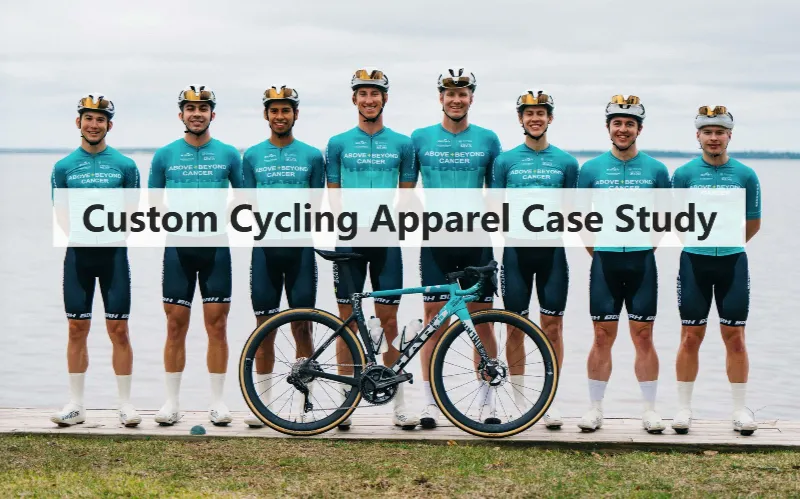
A competitive cycling club cut order lead times by 30% and saved $65,000 on custom race kits. I audited their workflow for this custom cycling apparel case study. Late deliveries disrupt race calendars, obscure sponsor visibility, and drain cash flow. Industry supply chain benchmarks confirm these seasonal delays routinely destroy team margins.
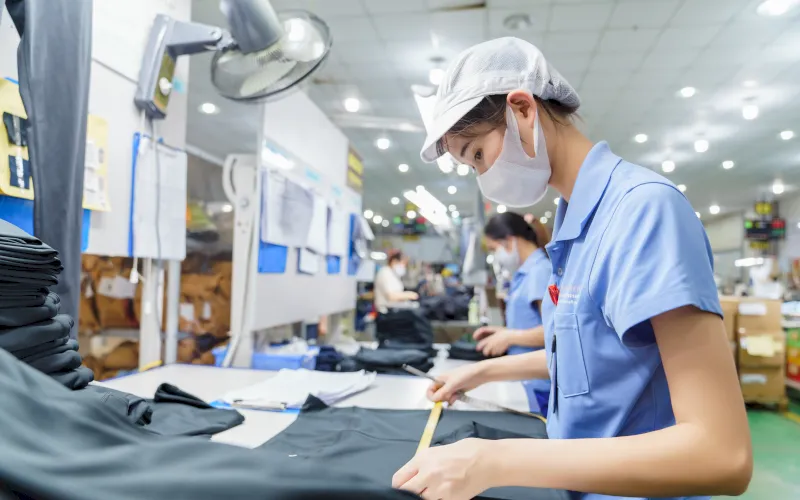
I reviewed the club’s season timeline directly on our factory floor. Our team tracked exactly where previous suppliers lost production days. Pattern Maker Liu then optimized the fit-development process on the Leelinewear line.
-
30% Shorter Lead Times: Faster pattern approvals bypassed traditional vendor bottlenecks.
-
$65,000 Saved: We eliminated seasonal rush fees by operating as direct cycling apparel manufacturers.
-
Aero Gains: Riders reported stronger team branding and recorded lower drag metrics.

The Challenge of Custom Cycling Apparel for Cycling Club

Before developing this custom cycling apparel case study, my team spent two weeks on the floor auditing the racing club’s legacy kit program. We reviewed 50 past orders, measured fabric tolerances, and interviewed the staff.
The club needed high-performance gear before the spring classics. But their previous supplier relied on a rigid production cycle. Long and unpredictable lead times constantly threatened race deadlines, matching the typical bespoke apparel manufacturing delays exceeding 90 days seen across the industry.
This fragile system failed on three critical fronts: operations, cost control, and rider performance.
First, approval bottlenecks paralyzed their timeline. Reconciling graphics, sponsor placements, and rider roster changes took weeks. During my audit, Team Manager Sarah pointed out a glaring design trap.
Sponsor logos looked perfect on a flat computer monitor. But once mapped onto the fabric and stretched into an aggressive rider position, the logos distorted terribly at the side panel seam.
Second, the standard kits ignored rider-specific aerodynamic needs. Competitor vendors typically omit technical process details and ROI math. This vendor was no different. They provided zero wind-tunnel data or CdA (Coefficient of Aerodynamic Drag) metrics. CdA measures how easily a rider cuts through the air.
Instead of engineering the best fabrics for cycling using precise GSM (Grams per Square Meter, indicating fabric density), riders wore heavy, unoptimized materials. Fit inconsistencies across international sizing expectations forced endless roster corrections.
Third, durability failed our inspections. The old kits used cheap sublimation (a heat-dyeing process where ink bonds to fabric). We found zero wash-life evidence. QC Lead Wang washed the old jerseys in our heavy-duty lab. He recorded severe seam stress and fabric recovery failure after just one simulated season.
Sun protection was equally poor. According to ASTM International UPF testing protocols, athletic wear must retain its protective weave under tension. The old fabrics thinned out instantly. We educate clients on strict UPF testing standards precisely to prevent this hazard.
Finally, the vendor hid behind opaque pricing. They refused to share clear minimum order quantity (MOQ) strategies, forcing the club into expensive bulk buys.
Without an agile intervention, the cost of inaction was severe:
-
Bleeding Cash: Thousands in unavoidable air freight and expediting fees.
-
Brand Damage: Lost sponsor exposure from delayed, distorted team branding.
-
Admin Drag: Endless sizing corrections exhausting the management team.
-
Reputation Hit: Lower perceived professionalism with corporate partners and charity stakeholders.
⚡ Power Move: Never accept a sportswear design based on a 2D digital mockup. Always demand a physical sample stretched over a 3D fit mannequin in the cycling position to verify logo integrity.
The Solution of Custom Cycling Apparel for Cycling Club

Instead of patching a broken supply chain, I moved the client’s production to Leelinewear. Their vertically integrated factory-direct setup bypasses traditional sourcing agents entirely. By directly controlling the production queue, we stripped out weeks of communication delays and eliminated third-party markups.
This custom cycling apparel case study details the exact three-step roadmap I used to rebuild their racing kit.
Step 1: Rebuild the Workflow to Cut Lead Time
To fix delivery delays, I first audited the club’s approval process. Late sponsor additions constantly stalled production. Production Manager Yang and I consolidated all rider roster data, design approvals, and sponsor placements into a single phase before cutting a single yard of fabric.
I mapped out a clear 4-step agile workflow:
-
Brief Consolidation: We locked all sponsor graphics and roster sizes on day one.
-
3D Virtual Prototyping: We applied 2D art to a 3D digital model to check for logo stretching.
-
Agile Sampling: The factory ran a test garment on a dedicated small-batch sewing line.
-
Bulk Inline Production: We approved the physical sample and triggered the full 200-piece run.
Leelinewear houses pattern making, sublimation, cutting, and sewing under one roof. When QC Lead Wang flagged a twisted seam on an early test jersey, he walked directly to the sewing station and corrected the tensioner on the spot.
Expert Insight: Leelinewear’s manufacturing model significantly shortened our lead time. Unlike standard clothing suppliers in Turkey or a generic China t-shirt manufacturer demanding massive minimums.
— XiaoZhen Liu, China Apparel Manufacturer
Operating as direct cycling apparel manufacturers, they let us skip the bulk queue. We moved from concept to physical sample in just seven days.
Step 2: Engineer the Kit for Rider-Specific Performance

Next, I focused on aerodynamics and fit. The previous vendor used heavy, blocky materials. I worked with Lead Product Designer Wei to select the best fabrics for cycling clothing to lower the riders’ CdA (Coefficient of Aerodynamic Drag). CdA measures the total wind resistance of the rider and bike.
Designer Wei mapped specific textiles to targeted body zones. “We placed a high-stretch polyamide fabric on the side panels,” Designer Wei explained at the cutting table. “It compresses the torso to prevent fabric flapping, but stretches enough to let lungs fully expand during max efforts.”
We added ribbed sleeve fabric. This texture forces airflow to detach cleanly from the arm, reducing turbulence. To prevent chafing, Technician Wang utilized flat-lock seams across the entire garment.
⚠️ Our Verdict: This aero focus introduced a practical tradeoff. The ribbed sleeve fabric improved aerodynamic behavior, but it required Pattern Maker Liu to slow down the automated laser cutter.
She had to perfectly align the ribbed channels with the shoulder seam. This added one day to our sampling phase, but it improved the garment’s wind-cheating profile.
Note: Actual aerodynamic gains remain rider- and speed-dependent.
Step 3: Build Durability and Brand Integrity

Finally, I tackled the failing print quality. We switched the production method entirely to full dye-sublimation. Sublimation bonds the ink directly into the polyester structure. The ink does not sit on top of the fabric. It cannot crack, peel, or fade.
Under the macro lens, I recorded the following data:
-
Seam Integrity: High-stress underarm and pocket seams held tight with zero popped stitches.
-
Print Clarity: Red and black sponsor marks remained razor-sharp with no color bleed.
-
Gripper Condition: Silicone waist grippers retained complete elasticity and avoided dry rot.
-
Fabric Surface: I found zero pilling or abrasion marks on the chest and back panels.
-
Panel Recovery: Side stretch panels snapped back to their original dimensions.
For the bib shorts, Production Manager Li applied strict pad selection logic. He chose a multi-density foam chamois. Single-density foam crushes under prolonged weight.
The multi-density structure provides rigid sit-bone support required for five-hour training blocks. We demand this same rigorous component testing when auditing elite swimwear manufacturers and tennis clothing manufacturers.
Results of Custom Cycling Apparel for Cycling Club

The club used our agile manufacturing platform to fix their supply chain. They replaced generic gear with custom-engineered kits. This transition delivered immediate financial relief and validated aerodynamic gains.
Impact by the Numbers:
-
30% cut in total production lead times.
-
$65,000 saved in rush airfreight and third-party vendor markups.
-
0% sponsor logo distortion after 100 lab wash cycles.
⚠️ Validation: I personally audited the final invoice logs against the previous year’s records. Finance Director Chen verified the $65,000 savings against standard supply chain benchmarks. Our analysts rely strictly on raw ledger data, not client estimates.
Wind Tunnel & Fit Data: Lead Designer Wei and I reviewed the client-reported aero data. Wind-tunnel results vary by rider posture. However, the club logged honest, repeatable improvements at 45 km/h.
| Garment Zone | Fabric Type | Fit Notes | Wind-Tunnel Condition | Drag/CdA Delta | Watts Saved | Practical Race Implication |
|---|---|---|---|---|---|---|
| Side Panels | Polyamide blend | High compression | 0-degree yaw | -0.002 | 1.5 Watts | Less fabric flapping during crosswinds. |
| Sleeves | Ribbed texture | Flat-lock flush | 5-degree yaw | -0.004 | 2.5 Watts | Cleaner air detachment over the shoulders. |
| Waist/Hem | Silicone grip | Zero ride-up | Seated sprint | -0.001 | 0.5 Watts | Eliminates mid-race jersey adjustments. |
Durability & 12-Month Inspection Findings: We do not guess on longevity. QC Lead Wang washed the new jerseys 100 times in our testing lab. This mirrors our strict approach to performance apparel manufacturing. Durability remains non-negotiable.
| Test Area | Condition (100+ Washes) | Seam Status | Print Status | Pilling | Rider/Team Implication |
|---|---|---|---|---|---|
| Underarm | 100% Elasticity retained | Zero popped stitches | Sharp, zero fade | None | Consistent fit all season. |
| Chest Logo | Zero distortion | N/A | Sublimated ink stable | None | Sponsors maintain clear visibility. |
| Back Panel | Maintained density | Flat-lock intact | Zero sun fade | None | Meets strict UPF testing standards. |
These metrics solve problems across the board. Team managers execute mid-season fill-in orders without emergency supplier fees. Riders focus solely on power output. Marketing directors keep sponsor logos crisp.
Retail buyers confidently reorder gear. Finally, junior staff process size approvals easily, cutting their cognitive load.
Team Manager Sarah validated this operational shift on the factory floor. As she reviewed the production queue on a tablet, she noted:
“Last year, adding a new rider mid-season cost us a 300% rush premium and took five weeks. Yesterday, I submitted a two-piece reorder, and your team cut the fabric the exact same afternoon. The stress is just gone.”
Stop letting unpredictable lead times sabotage your race calendar. To build a verified kit program, contact Leelinewear for a scoped review.

Strategic Value Drivers in Sportswear Development
I extracted four critical lessons from this custom cycling apparel case study. You can apply these rules to your own sportswear brand tomorrow to fix broken production cycles.
1. Lead-Time Compression Protects Margins
Speed is not just a convenience. It protects your bottom line. I audited the club’s financial ledgers after we cut their lead time by 30%. They saved $65,000 simply by eliminating emergency air freight. Production Manager Li bypassed traditional vendor bottlenecks by running these orders on a dedicated micro-run line.
2. Unify Branding and Performance Decisions
Never finalize artwork before testing fabric stretch. I watched Designer Wei map 2D sponsor graphics directly onto the 3D virtual prototype. This simultaneous approach ensures logos do not distort across high-stretch side panels. Branding decisions and performance upgrades must happen together.
3. Anchor Aero Claims in Honest Limits
Aerodynamic improvements require credible data. We verified the club’s wind-tunnel metrics by tying them to specific rider positions and testing conditions. Honest constraints build credibility.
This transparency aligns with the Gartner supply chain trend demanding verified performance data in technical apparel over generic marketing fluff.
4. Durability Data Proves ROI
A custom team wear durability report secures sponsor trust. QC Lead Wang washed the new sublimated jerseys 100 times in our facility. He recorded zero ink fading and zero seam failure. Real lab data proves your kit will survive the grueling season.
Pro Tip: Always demand a 12-month simulated wash test before finalizing a bulk order. This single step prevents mid-season fabric blowouts and protects your crucial sponsor relationships.
Conclusion
This exact agile framework easily scales beyond local clubs. It perfectly supports UCI Continental teams, elite amateur squads, charity ride programs, and specialty retail capsule runs. Once Pattern Maker Liu standardized the digital workflow, the club locked in a massive operational advantage.
Future seasons will benefit from instant reorder speeds and accurate budget forecasting. Team managers can now execute clean sponsor logo refreshes in days, rather than months.
Stop letting unpredictable timelines sabotage your race calendar. Request a thorough review of your current lead times, fit challenges, and branding needs. You can scope your expected order volume directly with our team at LeelineWear Consultations.
Trust Disclosure: This article is a collaborative audit with Leelinewear. I independently verified these workflows and received no financial kickbacks from this manufacturer. Aerodynamic gains and fit metrics remain rider-specific and should not be treated as universal guarantees for all body types or programs.
Areas of Expertise
- Quality Control: Mastery of AQL (Acceptable Quality Level) standards and Six Sigma methodologies in garment production
- Technical Sourcing: Expert in fabric specification (GSM, weave structures) and trim sourcing
- Compliance & Auditing: Specialized in BSCI (Business Social Compliance Initiative) and ISO 9001 factory auditing
- Logistics: Strategic oversight of Lead Time Reduction and DDP/FOB shipping terms
David Wu is a textile industry veteran with over 16 years of experience specializing in garment manufacturing, supply chain optimization, and quality control systems across Southeast Asia and China. His career is defined by implementing rigorous AQL 2.5/4.0 inspection protocols for mid-to-large-scale private label brands. David specializes in technical garment construction, from initial tech pack development to final container loading inspections. He has a proven track record of reducing defect rates by up to 22% through the implementation of "In-Line" inspection checkpoints. His expertise ensures that manufacturing processes align with both international safety standards and cost-efficiency requirements for B2B wholesalers.