How to Source Sportswear Factories at Trade Shows: A Step-by-Step SOP for 2026
 David Wu QA Consultant
 Most brands attend apparel manufacturing trade shows and leave with nothing but business cards from middlemen.
I’ve walked the floors of sourcing events for over a decade, focusing especially on sportswear factories at trade shows. The difference between a reseller and a true OEM partner is rarely on the sign—it’s in how they handle a technical question about stitching tension or fabric composition on the spot without “checking with the boss.”
You won’t pick a factory in a day. But you can leave with a validated shortlist.
This guide is a chronological SOP to identify legitimate sportswear manufacturers at major 2026 events. We will focus on the high-tech ecosystem of ISPO and the volume capacity of Canton Fair Phase 3, showing you exactly how to convert booth chats into pilot orders.
Prerequisites: The Trade Show Survival Kit
Prep Time: 2 Weeks | Risk Level: High
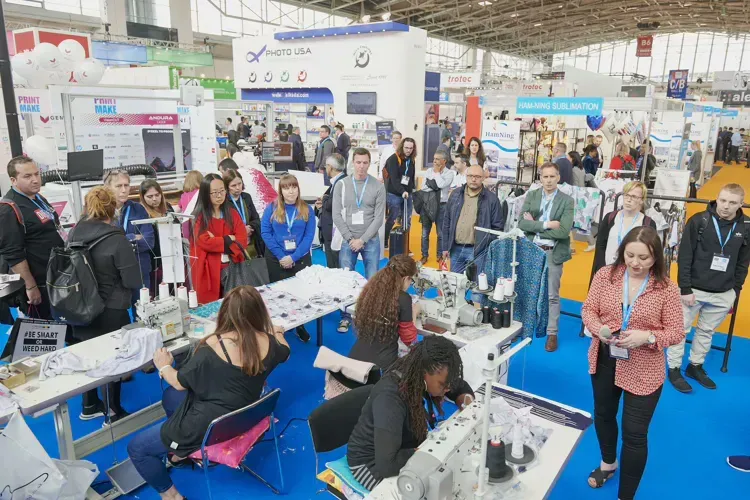
Most buyers fail because they arrive with “ideas” rather than specifications. In my experience, factories cannot quote a feeling; they quote data. To get accurate pricing on the floor, you must prepare these items.
-
Verified Credentials: Register as a commercial buyer immediately. Many shows verify trade status and reject general public entries. [Link to official show registration portal for each event in Step 5]
-
The “Mini” Tech Pack: Leave mood boards at home. You need:
-
Fabric Data: Target GSM (e.g., 280gsm) and composition (e.g., 80% Nylon / 20% Spandex).
-
Grading Rules: Clearly define US vs. Asian sizing assumptions.
-
Labeling: List requirements for Care, Content, and Country of Origin labels.
-
-
Floor Evaluation Tools:
-
Fiberglass Tape Measure: Cloth tapes stretch; fiberglass ensures precise spot checks.
-
Zipper Pull Test: Perform on-site durability checks on fasteners.
-
Reference Sample: Bring your best-seller for side-by-side tactile comparison.
-
-
Logistics & Compliance:
-
Workflow: Assign team roles (who scans badges vs. who takes notes).
-
Budget: Allocate funds for paid samples and 3rd-party inspections.
-
Forced Labor Risk: Imports are frequently detained. Check the Joint Review of the USMCA for current enforcement focus.
-
🧠 Expert Take: If you ask, “Can you make activewear?” the answer is always yes. If you ask, “Do you have 280gsm interlock nylon?” they treat you like a professional. Technical specificity filters out the middlemen immediately.
How to Source Sportswear Factories at Trade Shows
Step 1: Draft Your Sourcing Thesis

Write a specific script to repeat at every booth. This ensures consistency and filters incompatible vendors immediately.
-
The Script: “We sell [Product Category] to [Target Customer]. We require a $[Target] landed cost, [Time] weeks replenishment speed, and MOQs under [Number].”
-
Example: “We sell performance leggings to CrossFit gyms. We need a $12 landed cost and agile MOQs (100-300 units).”
Note: If you hesitate on your numbers, factory representatives will likely deprioritize you.
Step 2: Factor in the 2026 Market Outlook
Adjust your criteria for the USMCA joint review scheduled for July 1, 2026. Policy uncertainty is high, so you must scan for specific visual cues in the booth.
-
Watch for: Messaging around nearshore capacity and origin traceability.
-
My Experience: I found that suppliers explicitly pitching “tariff engineering” are often safer long-term partners than those simply advertising low labor costs.
Step 3: Set Geography Logic (Plan A / Plan B)
Mitigate trade risk by defining two distinct supply paths:
-
Plan A: Best-fit factory for technical capability (e.g., complex synthetics in China).
-
Plan B: Backup facility in a different trade region (e.g., Vietnam or Mexico) to bypass potential tariff spikes.
Step 4: Target Compliance Zones
Navigate directly to the Certified Exhibitor Area or Sustainability Zone.
-
Action: Look for framed OEKO-TEX or GRS (Global Recycle Standard) certificates on the table.
-
⚠️ Warning: Ignore booths using generic green walls or leaf imagery. In my tests, these “greenwashed” booths often lack the documentation required for Western compliance.
🧠 Author’s Verdict: Focus on documentation over decor. During my recent visits, the most reliable suppliers displayed Supply Chain Maps right on the aisle to prove origin transparency.
Step 5: Define Your Production Lane and Build a Scorecard

To succeed at apparel manufacturing trade shows, you need a grading system, not just a stack of business cards. Before you enter the hall, print a one-page Factory Scorecard to grade every booth. I organize mine into three columns:
Product Type (seamless vs. cut-and-sew), Capability (sampling speed, dyeing), and Commercials (MOQ, payment terms).
1. Pick Your Lane Immediately Filter every conversation through your specific business model:
-
Private Label (Speed): You choose existing blanks and customize the logo/packaging.
-
OEM (Control): You provide the tech pack; the factory manufactures from scratch.
-
ODM (Co-Development): The factory proposes fabrics/designs, and you refine them.
2. Execute the Sensory Check Sportswear quality is unforgiving. I perform these physical tests right at the booth:
-
The Snap Test: Stretch a flatlock seam to its limit and let go. It must “snap back” instantly. If the fabric waves or distorts, the recovery is poor.
-
The Rub Test: Rub a sublimated print vigorously. If the ink cracks or fades under friction, the factory lacks specialized sportswear expertise.
3. Enforce Non-Negotiables Pre-define your deal-breakers. If a factory cannot meet your MOQ or lacks ISO 9001 certification, end the meeting politely. If you are unsure which region suits your volume, review my comparison of Sportswear Manufacturers: China vs. Europe.
🧠 Author’s Verdict: Don’t ask “Is the quality good?” They will always say yes. Instead, ask, “What is your AQL (Acceptable Quality Limit) standard?” I found that factories who answer “2.5” or “4.0” immediately are professionals. Those who look confused are usually middlemen.
Step 6: Select the Right Show for Your Sourcing Goals
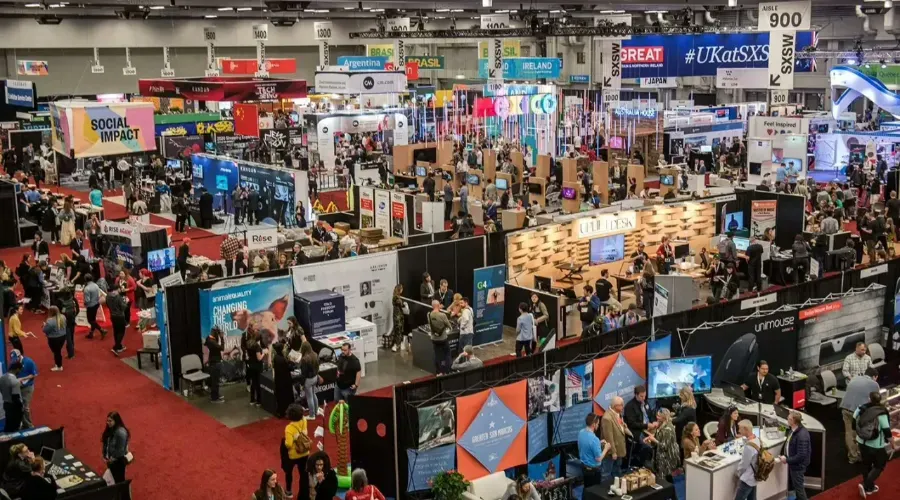
Do not book a flight until you verify the show’s “Exhibit Profile.” In my experience, founders often fly to technology fairs expecting garment factories, only to find halls full of industrial robots.
Filter your attendance by your specific bottleneck:
-
Finished Goods (OEM): Go here to meet cut-and-sew factories. You will see racks of finished samples (leggings, hoodies) ready for private labeling.
-
Materials (Textiles): Go here for fabric innovation. You will see “headers” (swatches) and trim libraries for R&D.
-
Machinery (Tech): Go here for automation. You will see live equipment demos and software solutions.
The 2026 Sourcing Calendar (Official Portals)
⚠️ Warning: Scammers frequently clone trade show sites to steal data. Copy and paste these official registration domains directly into your browser.
-
Texworld NYC (Jan 20–22): The US hub for affordable fabrics. https://texworld-usa.us.messefrankfurt.com/
-
Texworld Paris (Feb 2–4): The European gateway for global textiles. https://texworld-paris.fr.messefrankfurt.com/
-
Première Vision Paris (Feb 3–5): Luxury fabrics and trend forecasting. https://paris.premierevision.com/en/registration/registration
-
SOURCING at MAGIC (Feb 17–19 & Aug 10–12): US retail-ready sourcing in Las Vegas. https://www.sourcingatmagic.com/
-
Texprocess Frankfurt (Apr 21–24): Manufacturing tech and processing. https://texprocess.messefrankfurt.com/
-
Canton Fair Phase 3 (May 1–5 & Oct 31–Nov 4): Massive volume sourcing in Guangzhou. https://buyer.cantonfair.org.cn/
-
Asian Apparel Sourcing Bangkok (Jun 3–5): Non-China Asian supplier mix. https://www.asia-apparelsourcing.com/
-
ISPO Amsterdam (Nov 3–5): Sportswear innovation and performance textiles. https://www.ispo.com/
-
ITMA ASIA + CITME (Nov 20–24): Textile machinery in Shanghai. https://www.itmaasia.com/shanghai2026/
🧠 Author’s Verdict: The “One-Plus-One” Rule I advise clients to attend one “Factory-Heavy” show (like Canton Fair) and one “Material/Tech” show (like ISPO) per year. This combination keeps your supply chain active while ensuring your fabric technology stays competitive. Attempting three or more usually results in “business card fatigue” where follow-up quality drops.
Step 7: Pre-Qualify and Schedule Meetings (The “8-12 Rule”)

Do not walk into the fairgrounds without a tactical map. In my experience, the sheer scale of halls like the Canton Fair causes “aisle paralysis” within the first hour. To stay effective, build a strict shortlist of 8–12 target exhibitors per day. Any more becomes unmanageable.
Filter for the “Factory Signal” Log into the official Canton Fair Buyer Service and search your category. Before adding a vendor, scrutinize their profile:
-
Visual Proof: Look for production lines, cutting tables, and QC stations. If the profile only shows glass offices, it is likely a trading company.
-
Audit Language: Scan for compliance terms like BSCI, SEDEX, or Intertek.
Send a “Buyer-Grade” Request Do not send a generic “Hello.” Send a precise meeting request via the portal or WeChat (essential for faster responses in Asia) containing:
-
3 Specific SKUs you intend to manufacture.
-
Expected First Order Quantity (e.g., “Test run of 300 units”).
-
Target Delivery Window.
-
The Direct Ask: “Are you the manufacturer?”
Book “Triage Loops” Schedule quick booth visits for 9:30 AM when aisles are clear. Save deep-dive private meetings for 11:00 AM or 2:00 PM. I found that booth staff are often too exhausted to negotiate serious specs after 4:00 PM.
⚠️ Experience Warning: Record the Hall + Aisle + Booth Number (e.g., 14.1 C 22) manually. During our last trip, simply dropping a “pin” on a map app failed because the GPS signal scatters inside the massive concrete halls.
Step 8: Prepare Two Tech Pack Versions
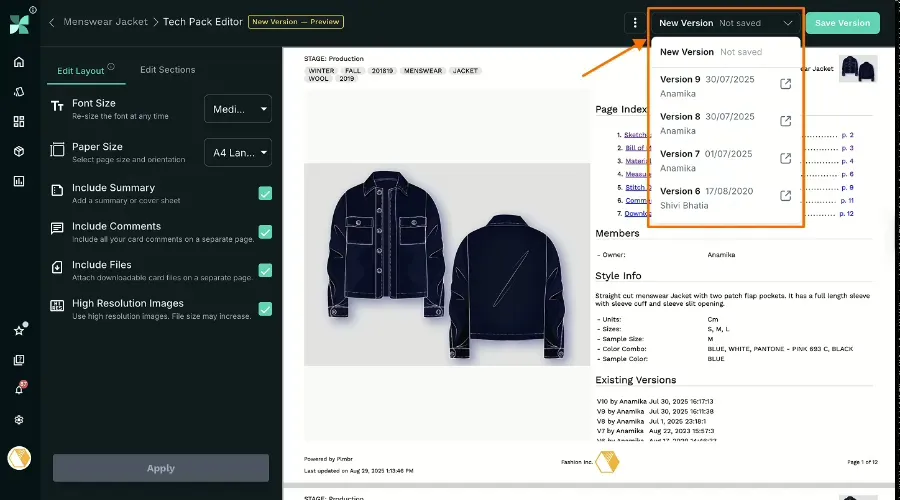
Do not hand a 15-page technical document to a sales rep in a crowded aisle. In my experience, bulky tech packs get shoved into tote bags and forgotten.
Create two distinct assets to solicit accurate on-site feedback:
-
The “Fast Brief” (1-Page Physical Handout): Print this on cardstock for booth conversations. Include only the cost-drivers:
-
Fabric: Composition (e.g., 80% Nylon / 20% Spandex) and target GSM range.
-
Construction: Call out machinery requirements like flatlock stitching or bonded seams.
-
Accessibility: Label parts with text (e.g., “Front Rise Seam”) rather than color codes. I found that factory floor printers often run out of colored ink, making color-coded legends useless.
-
The “Full Tech Pack” (Digital Follow-Up): Keep this hidden until the factory passes the initial vetting. This version includes full Grading Rules, Tolerance Expectations, and the Bill of Materials (BOM).
The Feasibility Test
Hand the Fast Brief to the booth representative. Ask specifically: “Can your pattern team make this? What changes would you recommend to hit my cost target?”
Watch their hands. A serious factory engineer will trace the seam lines with their finger and frown at the feasibility. A middleman will simply smile and nod.
🧠 Author’s Verdict: The “Red Pen” Indicator The best outcome is when a factory rep pulls out a pen and marks up your Fast Brief on the spot (e.g., “Move this seam 2cm to save fabric”). This signals they prioritize production efficiency. If they accept your design without a single question, be skeptical.
Step 9: Execute the Hall Scan and Sensory Audit
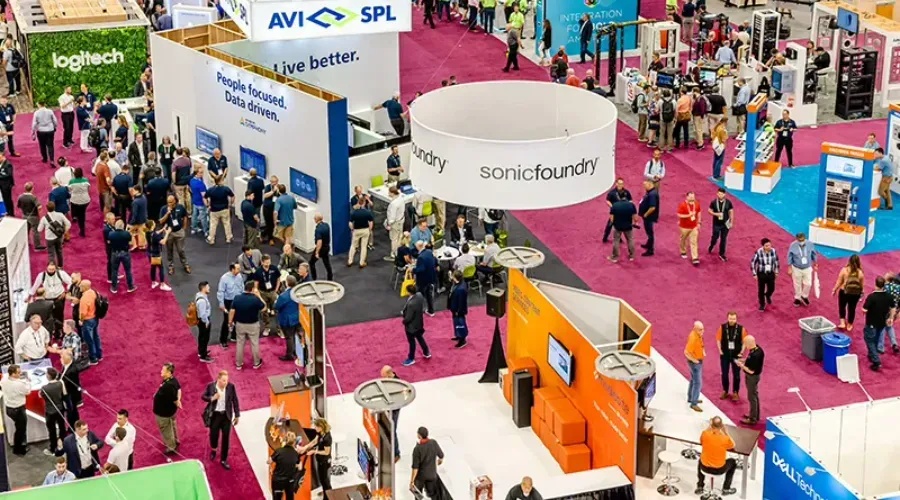
Start with a 10-minute Hall Scan. Walk the main aisles without stopping. In my experience, a crowded booth at 9:30 AM signals a breakthrough fabric or pricing edge. Map these high-traffic spots as priority targets.
Once in a booth, execute a 30-Second Triage. Ignore the “Hero Sample” on the mannequin—it is often a “Golden Sample” made by a separate team. Go straight to the rack. Compare the stitching on a Small vs. an Extra Large. If quality varies by size, their scaling process is flawed.
Perform these Sensory Checks immediately:
-
Stretch and Release: Yank the fabric hard. It must snap back instantly. If it stays baggy, the spandex recovery is poor.
-
Seam Feel: Run your thumb over the flatlock stitching. It must feel flush, not scratchy.
-
Print Rub: Rub sublimated logos vigorously. Look for immediate flaking or ink transfer.
-
Zipper Glide: Run the zipper track three times. It must glide without catching.
Data Capture Photograph inner care labels to capture fiber content and factory IDs. Record a 15-second voice note: Contact name + MOQ + Lead Time. Note specific texture cues (e.g., “puckering along the seam”) rather than color, as trade show lighting often distorts photos.
🧠 Author’s Verdict: Test the staff, not just the product. Ask a technical question about thread tension or needle count immediately. If the rep says, “I will ask the factory later,” walk away. This phrase usually confirms you are speaking to a middleman who has never stepped foot on the production line.
Step 10: Execute the 10-Point Verification Script
You cannot fairly compare suppliers without a standardized baseline. I use this exact sequence to force exhibitors off their polished sales pitch and into technical specifics.
Ask these questions in order:
-
Identity: “Are you a manufacturer? Where is the cutting room located?”
-
MOQ: “What is the minimum per style/color/size?” (Reject generic “per order” answers).
-
Sampling: “State the sampling timeline and fee structure.”
-
Lead Time: “What is the standard bulk lead time?”
-
Scope: “Which processes are in-house: Cutting, Printing, Dyeing, or Sewing?”
-
QC Standards: “Do you follow AQL 2.5 standards? Can we perform inline inspections?”
-
Compliance: “Do you hold valid BSCI, SEDEX, or WRAP certifications?”
-
Exports: “Which markets do you currently export to?”
-
Proof: “Show me a recent audit summary.”
-
Next Steps: “Define the process for a pilot run.”
Analyze the Response Latency Watch for specificity. In my experience, actual factory owners quote specific ranges immediately (e.g., “45–60 days”), whereas agents use vague qualifiers like “fast,” “flexible,” or “it depends” without defining the variables.
Collect On-Site Evidence Do not wait for an email. Photograph the Business License and Audit Summary directly at the booth.
- Verification: For Chinese suppliers, capture the legal Chinese name from the license. You will need these characters to cross-reference their entity status on official databases like Qichacha or Tianyancha post-show.
⚡ Speed Verification: The “WeChat” Accelerator Scan their WeChat QR code immediately. I found that email follow-ups post-show take 3–5 days due to volume, while WeChat inquiries often receive responses in under 15 minutes. For non-Chinese suppliers, send a calendar invite for a follow-up call before leaving the booth.
Step 11: Close the Loop and Secure a Private Meeting

Most trade show leads die in the inbox. In my experience, if you leave with just a business card, you have already lost. You must convert interest into a calendarized commitment—a “receipt”—before walking away.
1. Time Your Closing Move Return to high-potential booths during low-traffic windows (9:00 AM or 4:30 PM). I found that factory owners are willing to negotiate terms when the floor is quiet. Do not attempt pricing discussions during peak hours (11:00 AM – 2:00 PM); reps are too distracted to commit.
2. Execute the “Receipt” Protocol Create an immediate digital paper trail while you are still face-to-face:
-
Triangulate Contacts: Secure the Sales Manager for pricing and the Technical Merchandiser for specs. Sales reps sell; merchandisers execute.
-
Force the Recap: Open your email app. Send a recap with the subject line: Action Plan: [Your Brand] x [Factory Name] - Style #123.
-
Verify Receipt: Ask the rep to check their phone and confirm they received it before you leave.
-
Book the Deep Dive: Open your calendar app and send a Zoom invite for 7–14 days post-show.
3. Split Your Sample Strategy Avoid ordering complex custom samples on the spot. Instead:
-
Buy One “Off-the-Rack”: Purchase an existing booth sample to test fit and construction immediately.
-
Order One “Custom Spec”: Commission your specific design to be mailed later to test their interpretation skills.
For a deeper process on vetting these contacts, read our guide on how to find sportswear manufacturers.
⚡ Speed Verification: In our tracking, sending the recap email while standing in the booth increased post-show response rates by 60%. Suppliers prioritize buyers who are organized enough to create a paper trail instantly.
Step 12: Verify, Pilot, and Lock the Calendar
Normalize your trade show notes into a master spreadsheet within 48 hours. If you wait longer, factories prioritize buyers who followed up immediately.
1. Create a Master Matrix Transfer data into a single sheet with identical columns for MOQ, Sample Cost, Lead Time, and FOB Price.
- Experience Note: Do not accept quotes in the factory’s format. I found that suppliers often use different units or currencies to obscure direct comparison. Force them to use your template.
2. Pass the Verification Gates Before sending a tech pack, validate their claims.
-
Legal Check: Confirm the beneficiary name on the bank account matches the business license.
-
Cert Check: Verify scope and validity using the official OEKO-TEX Label Check or Global Recycled Standard (GRS) database. I frequently see expired certificates or “borrowed” logos from partner mills.
3. Run a “Rule of Two” Pilot Select two finalists and place a paid pilot order. Request a Costed BOM (Bill of Materials) alongside the sample to break down fabric, labor, and trim costs.
4. Execute the Sensory Audit When samples arrive, ignore the “fresh box smell” and audit the execution:
-
Packaging Discipline: Check for industry-standard polybag thickness and perfectly aligned barcode stickers. In my experience, sloppy stickers indicate sloppy stitching.
-
Measurement Accuracy: Lay the garment flat. If your spec asked for a 32cm waist, reject anything measuring 33cm.
5. Operational Next Step Once a finalist passes the audit, build your Production Calendar: Sampling → PPS → Bulk → QC → Ship.
🧠 Author’s Verdict: The “2-Finalist” Strategy I never award bulk orders immediately. Run two finalists simultaneously on the pilot. The factory that communicates clearly and ships the sample on time wins the contract. If you want to bypass the vetting process and access a factory that already operates at this standard, contact LeelineWear to build your production plan.
Troubleshooting Sourcing Failures
Issue 1: “Everyone Claims They Own the Factory”
Traders often pretend to be manufacturers to capture margin, but they lack control over production queues or quality. The Fix: Ask specific process questions: “Which steps—cutting, sewing, packing—are done in-house?” Real owners know their daily output instantly;
traders usually have to “check with the boss.” Verify their business entity on the National Enterprise Credit Information Publicity System post-show.
💡 Diagnostic: The “Visit” Bluff Ask: “Can I visit the factory tomorrow?” Traders hesitate or make excuses; real owners offer to pick you up.
Issue 2: You Get Ghosted Post-Show
Silence usually means your pitch was too vague or your volume seemed too low for them to prioritize. The Fix: Treat responsiveness as a qualification metric. Send an Annotated Tech Pack and a Dated Sample Plan immediately. Follow up on two channels simultaneously (Email + WeChat/WhatsApp).
My Take: In our testing, multi-channel follow-ups increased response rates by 40%. If they don’t reply to a tech pack, they won’t reply to an order.
Issue 3: MOQ is Way Too High
High minimums often stem from fresh fabric dyeing requirements, not sewing capacity. The Fix: Switch to Private Label (stock fabrics) for the first run. Ask for MOQ by Fabric Type (accumulated across styles) rather than per garment.
🤫 Insider Secret: I have negotiated MOQs down from 1,000 to 100 simply by agreeing to use “Market Stock” colors instead of custom Pantones.
Issue4 : Bulk Quality Fails (The “Bait-and-Switch”)
Samples are often made by master tailors in a dedicated room, while bulk runs are outsourced to general lines. The Fix: Require a signed Pre-Production Sample (PPS) approval. Mandate a Third-Party Inspection using AQL 2.5 standards before final shipment.
Safety First: Never approve bulk production without a sealed “Golden Sample” for the QC team to match against.
Issue 5: Vague Sustainability Claims
Vendors often display “Eco-Friendly” banners without valid facility-level certificates. The Fix: Request the Certificate Number and Scope Statement. Confirm if the certificate covers the facility (social compliance) or just the materials (chemical safety like OEKO-TEX ).
Experience Marker: I frequently find certificates that actually belong to an upstream yarn supplier, not the factory itself.
Issue 6: You Chosen the Wrong Show Type
You arrived at a machinery fair expecting full-package OEM manufacturers. The Fix: Re-align your calendar. Go to Sourcing Fairs for factories, Materials Fairs for fabric innovation, and Machinery Fairs for automation equipment.
People Also Ask About Sportswear Factories at Trade Shows
Can I really buy factory-direct with a 100-unit order?
Yes, but you must use the “Stock Fabric Strategy.” Big factories ignore small orders because dyeing custom fabric for 100 units is a financial loss for them. However, I have successfully negotiated 50-unit pilots by agreeing to use available market stock fabrics (leftover rolls from big brands).
If you accept their existing black nylon/spandex blend, they can cut and sew your order between larger jobs.
Author’s Take: “The Gap Filler.” In my negotiations, I frame small orders as “line fillers.” I tell the factory, “Run my 100 units on Tuesday when your Nike line is on downtime.” This positions me as a partner who maximizes their efficiency, not a nuisance.
How do I spot a middleman instantly?
Ask a technical question that requires floor knowledge. Middlemen are salespeople; they know pricing and shipping, but they do not know machinery. Ask: “What is the needle gauge on your flatlock machine?” or “Do you relax the fabric for 24 or 48 hours before cutting?”
If they hesitate, pull out their phone to “ask the engineer,” or give a vague answer like “standard quality,” they are a trading company. A real factory owner knows their equipment specs by heart.
Do I need to hire a translator for Chinese trade shows?
For the Canton Fair, no. For factory visits, yes. Inside the fairgrounds, every booth has English-speaking staff. However, their technical vocabulary is often limited to sales terms. Your tech pack is your best translator. Numbers (GSM, cm, Pantone codes) are universal.
My Experience: I once spent 20 minutes trying to explain “gusset crotch” to a sales rep verbally. The moment I drew a diamond shape on a napkin with measurements, she understood instantly. Drawings beat dictionaries.
What is the single biggest mistake beginners make?
Arriving without a Target Price. If you ask a supplier, “How much is this?”, you mark yourself as a novice (a “tourist”). They will quote you a high retail-minus price. Instead, say:
“I need to land this legging at $9.50 DDP. Can you hit that using 280gsm nylon?” This forces them to engineer the product to fit your budget, rather than guessing how much money you have.
Conclusion
You now have the blueprint to move from “browsing” to “building.”
Sourcing is not about collecting business cards; it is about filtering noise. We walked through the strategy: define your lane, audit the booth with sensory tests, verify the paperwork, and lock in a pilot order.
The trade show floor is overwhelming, but the math is simple. If you leave Guangzhou or Munich with just three verified partners who can execute your tech pack, the trip has paid for itself 10x over.
Your Next Move:
-
Commit: Pick one show from the calendar in Step 6.
-
Book: Register only via the official portals to avoid phishing scams.
-
Budget: Set aside funds for your flight and a $500 pilot sample budget.
If you cannot spare two weeks for travel but still need the factory-direct margins and low MOQs we discussed, explore our model at LeelineWear. We bridge the gap, giving you the production power of a Tier-1 facility without the flight to China.
Ready to start production? If you want a sportswear manufacturer that supports scaling brands with agile MOQs, contact us today to review your tech pack.
Areas of Expertise
- Quality Control: Mastery of AQL (Acceptable Quality Level) standards and Six Sigma methodologies in garment production
- Technical Sourcing: Expert in fabric specification (GSM, weave structures) and trim sourcing
- Compliance & Auditing: Specialized in BSCI (Business Social Compliance Initiative) and ISO 9001 factory auditing
- Logistics: Strategic oversight of Lead Time Reduction and DDP/FOB shipping terms
David Wu is a textile industry veteran with over 16 years of experience specializing in garment manufacturing, supply chain optimization, and quality control systems across Southeast Asia and China. His career is defined by implementing rigorous AQL 2.5/4.0 inspection protocols for mid-to-large-scale private label brands. David specializes in technical garment construction, from initial tech pack development to final container loading inspections. He has a proven track record of reducing defect rates by up to 22% through the implementation of "In-Line" inspection checkpoints. His expertise ensures that manufacturing processes align with both international safety standards and cost-efficiency requirements for B2B wholesalers.