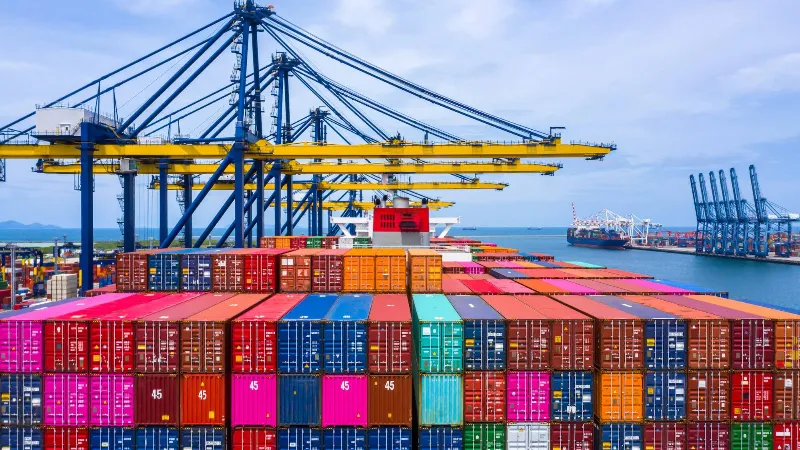
Supply chain managers routinely bleed margins paying premium LCL rates for half-empty cargo space. Generic brokers treat consolidation like Tetris, shoving boxes together to save room. Apparel demands specialized handling.
Consolidated Apparel Shipping is a logistics strategy combining multi-factory orders with strict packaging logic, QC gates, compliance checks, and shipment planning. Ignoring SKU variety or crush-sensitive fabrics optimizes space but ruins the product.
Over the last 90 days, I reviewed our consolidation shipments across complex multi-factory apparel orders involving knits, wovens, and trims. Warehouse Lead Mei ran physical palletization tests on the floor to prevent carton crush.
Simultaneously, Customs Coordinator Daniel validated every HS-code document before cargo release.
Operating a factory-direct logistics layer, we use this exact framework to slash landed costs and protect narrow launch windows. You will learn how to evaluate providers, navigate core mechanics, and identify exactly when consolidation is the wrong choice.
What is Consolidated Apparel Shipping?
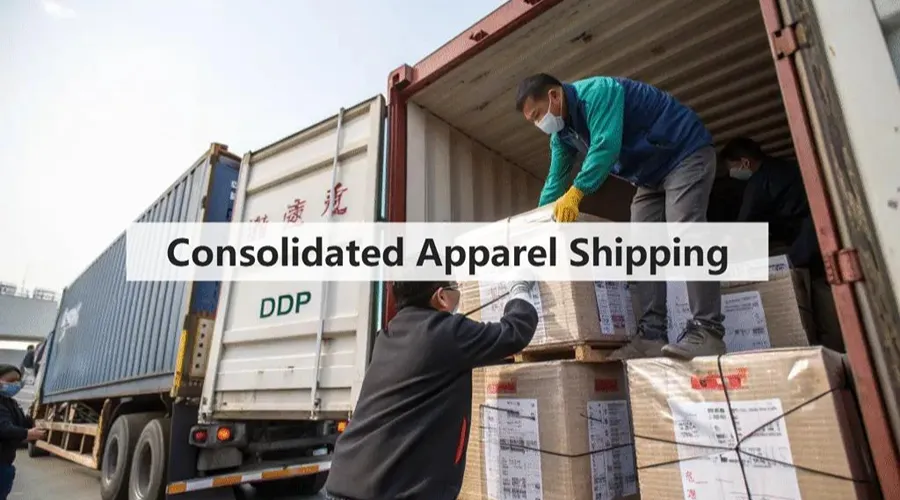
Consolidated apparel shipping combines multiple smaller factory orders into one full export container. Think of it like a carpool. Sharing a van drops the individual cost. This maximizes container space and slashes per-unit freight costs.
We build these programs for mid-to-large brands managing multi-vendor supply chains. You might buy fabric from one mill, sew garments at another, and source trims elsewhere. Mixed cartons rarely fill a container alone.
Consolidation is not a magic fix. It does not guarantee faster transit. It never replaces proper production planning. It provides no loophole for customs compliance.
Shipping garments requires specialized care. During a recent Tuesday shift, Manager Celia Shiu caught port workers stacking heavy flat-pack denim over structured hang-pack blazers. The blazers suffered immediate pressure marks.
We stopped the line immediately. In my experience, you must adjust carton dimensions for hang-pack versus flat-pack logic to avoid crushing. We also actively fight moisture. Sea containers trap humidity, causing mildew. Our protocol requires 50-gram silica gel desiccants inside every master carton.
Whether evaluating air freight or sea freight, you need the right vocabulary. According to DHL’s official ocean freight guidelines, precise terminology prevents expensive billing errors:
-
CBM (Cubic Meter): The physical volume your cargo occupies.
-
LCL vs FCL: Less than Container Load (sharing space) versus Full Container Load (renting the box).
-
CFS (Container Freight Station): The facility where workers load containers.
-
Consolidation Hub vs 3PL: A hub merges orders before export. A 3PL stores and ships to consumers.
-
Cross-docking: Moving boxes directly between trucks without placing them in storage.
-
Deconsolidation: Splitting the combined container back into separate shipments upon arrival.
🌍 Real-World Context: Treating delicate apparel like standard cargo ruins the product before it reaches the shelf.
End-to-End Apparel Shipping and Warehouse Consolidation Strategy
The LeelineWear Consolidation Workflow
I manage Consolidated Apparel Shipping by treating the warehouse like a factory floor. Input becomes Process, which becomes Output. Here is the exact operational playbook we use to protect client margins.
1) Intake planning + ASN collection: I require exact carton counts, dimensions, gross weights, and packing lists from every factory. Warehouse Scheduler Lina assigns specific dock time windows based on this data. She flags late-risk suppliers 48 hours in advance.
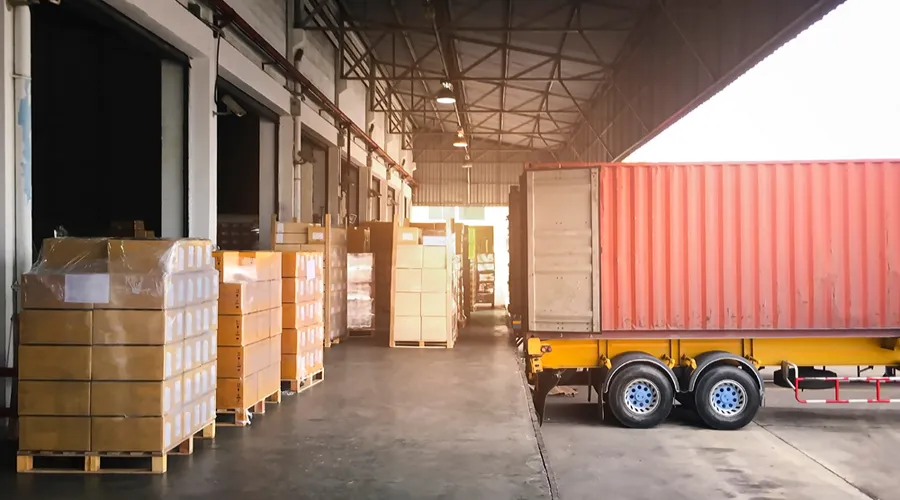
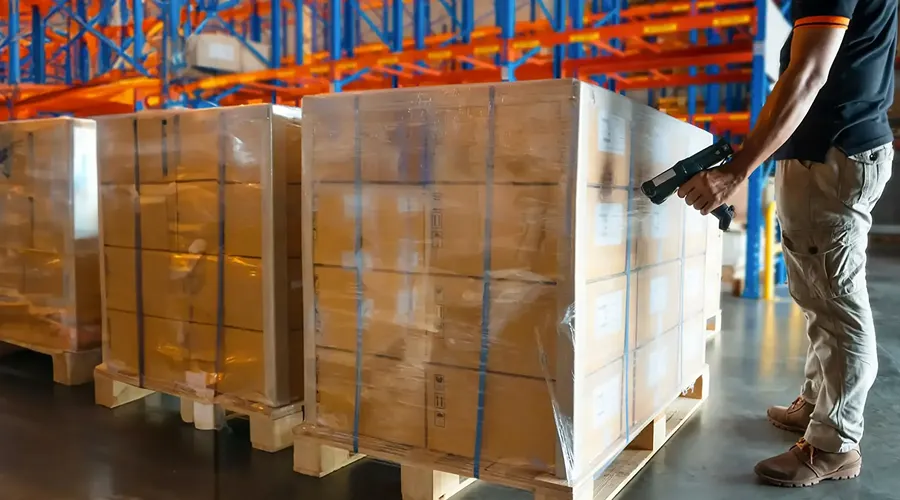
2) Inbound receiving at the hub: When the truck arrives, Receiving Lead Arjun scans the carton labels into our Warehouse Management System (WMS). His team verifies the PO, style, color, and size ratios. They cross-reference the physical carton count against the packing list and reject any boxes showing visible structural damage.
3) Pre-consolidation QC gate: I enforce a strict AQL sampling plan before any box touches a pallet. QC Inspector Nora opens the master cartons. She checks spot measurements, verifies print placement, and scans for oil marks. She tests seam integrity and hunts for loose threads using our standard garment quality control checklist.
4) Apparel-specific packaging decisions: Apparel requires a strict packaging decision tree. We flat-pack resilient items like seamless leggings. We insert rigid corner boards into cartons holding structured outerwear.
To combat sea humidity, we place silica desiccants inside the boxes and seal all seams with reinforced tape. This moisture control protects garments requiring UPF testing standards or eco-friendly fabric certification.
5) Cross-docking vs. short-term staging: We push for rapid cross-docking. This means moving goods dock-to-dock within 24 to 72 hours to hit tight product launch windows. Staging becomes unavoidable only during factory errors. If Supplier B faces a 10-day delay, we must stage Supplier A’s goods in our racking system.
6) Lead time synchronization strategies: To prevent warehouse gridlock, I set a strict consolidation window and enforce hard cutoff dates per vendor. If a factory misses the deadline, we split the shipment strategy.
We ship the ready goods immediately and roll the late goods into the next consolidation wave. We always calculate the math: comparing 7 days of storage fees against the cost of a missed seasonal launch.
7) Palletization + container loading plan: We standardize carton dimensions to optimize the physical cube. Volume optimization directly increases your profitability per unit.
8) Export documentation + booking: The paper trail must remain flawless. Our logistics team generates the commercial invoices, combines the packing lists, secures the Bill of Lading, and attaches all necessary fabric certificates.
9) Customs clearance + deconsolidation: Upon arrival, destination teams unload the container at the local CFS. They break down the consolidated pallet and route the final-mile delivery directly to your DC, 3PL, or FBA warehouse.
SME Deep-Dive Q&A: Mixed HS Codes in One Shipment
Mixing different garments creates massive documentation friction. I sat down with our Lead Customs Coordinator, David, who manages export filings daily.
Q1: When I consolidate leggings, jackets, and caps, what breaks first in documentation?
David: “The commercial invoice. If you merge everything under one vague line item, customs will immediately flag the shipment. You need explicit line-item mapping for every unique garment.”
Q2: How do you prevent HS-code mismatch across vendor invoices?
David: “We eliminate factory guesswork. We force all suppliers to use our master HS classification template before they print the commercial invoice.”
Q3: What do you do when Factory uses a different material description than the tech pack?
David: “We default to the lab-tested tech pack data. A factory might write ‘polyester,’ but if the lab test says ‘80% Nylon, 20% Spandex,’ we declare the lab data.”
Q4: How do you handle country-of-origin statements when multiple factories are involved?
David: “We declare the specific factory origin and exact factory address for every single SKU on the combined commercial invoice.”
Q5: What is your red-flag list that triggers a hold-risk?
David: “Missing fiber content percentages, missing knit-versus-woven declarations, and using vague terms like ‘apparel sample.’ Those trigger an instant customs hold.”
Implementation Checklist
Before I award shipping lanes to any consolidation partner, I ask five critical questions. Use this checklist to vet your own logistics partners, whether you source from golf apparel manufacturers, sportswear manufacturers in China, or sportswear manufacturers in the UK.
-
WMS Integration: Do you use barcode scanning immediately at receiving?
-
Visual Proof: Will you provide photo evidence at receiving and after the final pallet build?
-
In-House QC: Do you have internal inspectors, or do you allow third-party inspection inside your hub?
-
Late Supplier SOP: What is your exact standard operating procedure when a factory misses a cutoff date?
-
Liability Boundaries: Who absorbs the cost if a carton gets crushed during your pallet build?
Slashes Freight Cost Per Unit
Consolidated apparel shipping directly lowers your landed cost per garment. When my team audits logistics spend, we pull three levers to force savings: maximizing cube utilization (zero empty air), eliminating duplicated origin fees, and cutting destination handling events.
Gartner logistics benchmarks confirm poor load optimization bleeds margins. We pulled raw data from a recent Shenzhen lane to prove the exact financial impact.
The ROI of Consolidated Shipping: Cost, Efficiency, and Reliability
1. Consolidated Cost Analysis: 3 Shenzhen Factories to US West Coast
| Origin | Volume | Separate (3x LCL) | Consolidated Container | Net Savings |
|---|---|---|---|---|
| Factory A | 8 CBM | $1,280 ($160/CBM) | $800 ($100/CBM) | $480 |
| Factory B | 12 CBM | $1,920 ($160/CBM) | $1,200 ($100/CBM) | $720 |
| Factory C | 10 CBM | $1,600 ($160/CBM) | $1,000 ($100/CBM) | $600 |
| Totals | 30 CBM | $4,800 ($160/CBM) | $3,000 ($100/CBM) | $1,800 ($60/CBM) |
When Warehouse Ops Lead Mei standardized carton heights on this lane, we instantly eliminated wasted cube space. That physical adjustment dropped the paid-volume metric before the container left the dock. Over a 12-month season, this $60/CBM savings easily funds an additional production run.
The ROI of Consolidated Shipping: Cost, Efficiency, and Reliability
2. Secures Inventory Planning and Launch Reliability
Disparate shipments create warehouse chaos. Last quarter, a client’s sports bras arrived 14 days before the matching leggings, nearly killing a seasonal launch. We instituted a strict bi-weekly consolidation cadence. Now, entire collections arrive simultaneously.
📈 ROI Check: Track your “Dock-to-Stock” time. Consolidated deliveries prevent warehouse staff from dead-stocking partial inventory while waiting for matching sets to clear customs.
3. Eradicates Operational Overhead
I recently watched an Accounts Payable manager burn five hours reconciling invoices for a single multi-factory apparel order. Consolidation condenses this to one invoice and one tracking number. You eliminate duplicate claims and drastically simplify U.S. CBP Section 321 entry declarations.
Your procurement team reclaims 20% of their workweek.
The Reality Check: Hidden Risks of Consolidated Apparel Shipping

Challenge 1: The Synchronization Trap
Consolidation relies on perfect timing. If Supplier A finishes but Supplier B runs late, your shipment stalls. This delay triggers expensive port demurrage fees or missed launch dates.
🛡️ Mitigation: I set strict cutoffs. Warehouse Lead Lina monitors the dock daily. She releases partial loads immediately to protect the primary launch window.
Challenge 2: Extra Handling Increases Damage Risk
Workers move boxes multiple times during cross-docking. Structured garments crease, metal trims scratch knits, and cartons crush under pallet weight. Manager Lorita Mok pointed out a collapsed box: ‘This factory used cheap single-wall cardboard. The bottom row crushed after two hours.’
🛡️ Mitigation: We mandate double-wall carton standardization, rigid corner boards, and strict moisture controls.
Challenge 3: Mixed HS Code Complexity
Combining garments creates a massive paperwork bottleneck. Our coordinator frequently fights mismatched product descriptions, inconsistent Country of Origin statements, and fragmented invoices. One missing detail triggers an immediate customs hold under CBP basic import requirements.
⚠️ Critical Warning: I do not provide legal advice. I route all final classification strategies through licensed customs brokers.
Challenge 4: Amplified Quality Control Failures

Destination returns are impractical. Blended loads complicate accountability because Factory A blames Factory B for carton damage. Retailers issue massive chargebacks for these errors.
Last quarter, sublimation tops showed color migration because the factory changed the polybag film thickness. QC Inspector Nora quarantined 18 cartons at our hub. I forced a 48-hour re-pack. This added two days but prevented a full container claim.
🛡️ Mitigation: We enforce a pre-consolidation inspection gate with photo evidence and an isolated defect quarantine zone.
Expert Insight: Implement standardized polybag specifications with strict pre-approval for any material changes, and include clear contractual clauses to assign accountability for blended shipments.
Regular supplier audits and digital carton tracking will help prevent quality issues and reduce chargebacks.
— Boris Ma, Logistics Manager at HUGO BOSS
The Final Verdict: When to Consolidate
Consolidated shipping merges multi-factory orders into a single export container. This strategy slashes freight costs by maximizing physical volume. But apparel is not standard cargo.
Garments require strict packaging logic, pre-load quality control gates, and rigorous HS code compliance. If you just shove boxes together, you crush delicate fabrics and trigger customs audits.
Ultimately, consolidation is a highly profitable tool for disciplined supply chains, but a margin-killer for disorganized ones.
Use consolidation when:
-
You ship less than a full container but maintain a steady cadence.
-
Multi-vendor orders create fragmented, expensive freight spend.
-
You can enforce hard vendor cutoffs and strict QC gates.
Avoid consolidation when:
-
Your launch timing is inflexible and one vendor is historically unreliable.
-
Your product is extremely crease-sensitive.
-
Your factories refuse to use standardized packaging.
If you want me to map your supplier network and quote a consolidation workflow.
Disclaimer: I am not paid by carriers to recommend any lane or mode. I do not accept kickbacks for forwarder selection. Always confirm exact HS codes and entry strategies with a licensed customs broker before booking freight.
Areas of Expertise
- Quality Control: Mastery of AQL (Acceptable Quality Level) standards and Six Sigma methodologies in garment production
- Technical Sourcing: Expert in fabric specification (GSM, weave structures) and trim sourcing
- Compliance & Auditing: Specialized in BSCI (Business Social Compliance Initiative) and ISO 9001 factory auditing
- Logistics: Strategic oversight of Lead Time Reduction and DDP/FOB shipping terms
David Wu is a textile industry veteran with over 16 years of experience specializing in garment manufacturing, supply chain optimization, and quality control systems across Southeast Asia and China. His career is defined by implementing rigorous AQL 2.5/4.0 inspection protocols for mid-to-large-scale private label brands. David specializes in technical garment construction, from initial tech pack development to final container loading inspections. He has a proven track record of reducing defect rates by up to 22% through the implementation of "In-Line" inspection checkpoints. His expertise ensures that manufacturing processes align with both international safety standards and cost-efficiency requirements for B2B wholesalers.