Shirts are grouped by collar, closure, and hem. A button-down shirt has buttons that pin the collar points down. A button-up is any shirt that fastens down the front. Dress shirts tuck in with a long hem, while casual and camp-collar shirts are cut to be worn untucked. We’re LeelineWear, a China t-shirt manufacturer — the breakdown below is the same one our pattern makers run through before a single yard of cloth is cut.
Which style flatters you comes down to fabric weight and cut, not the label. Below are the 14 types of shirts we handle in the factory: what each one is, the construction detail that sets it apart, and the fit to request in your tech pack so you order it right the first time.
Skim the fabric table in the sourcing section for the weave to specify, then read our types of sleeves guide to finish the design.
List Of 14 Types of Shirts You Should Know
Here’s the quick version before the detail.
| Style | Best for | Formality |
|---|---|---|
| Dress shirt | Formal office & events | High |
| Oxford shirt | Smart-casual, office | Medium |
| Button-down shirt | Business-casual, preppy | Medium |
| Casual button-up | Untucked, weekend | Low |
| Cuban / camp-collar | Summer, relaxed tailoring | Low |
| Band-collar / grandad | Minimal, no-tie | Low |
| Polo shirt | Golf, warm office, sporty | Medium |
| Henley shirt | Casual layering | Low |
| T-shirt | Everyday | Low |
| Overshirt (shacket) | Transitional layering | Low |
| Chambray / denim | Workwear, western | Low |
| Flannel / plaid | Cold weather, casual | Low |
| Blouse | Women’s formal & casual | Medium |
| Tuxedo shirt | Black tie | Highest |
1. Dress Shirt
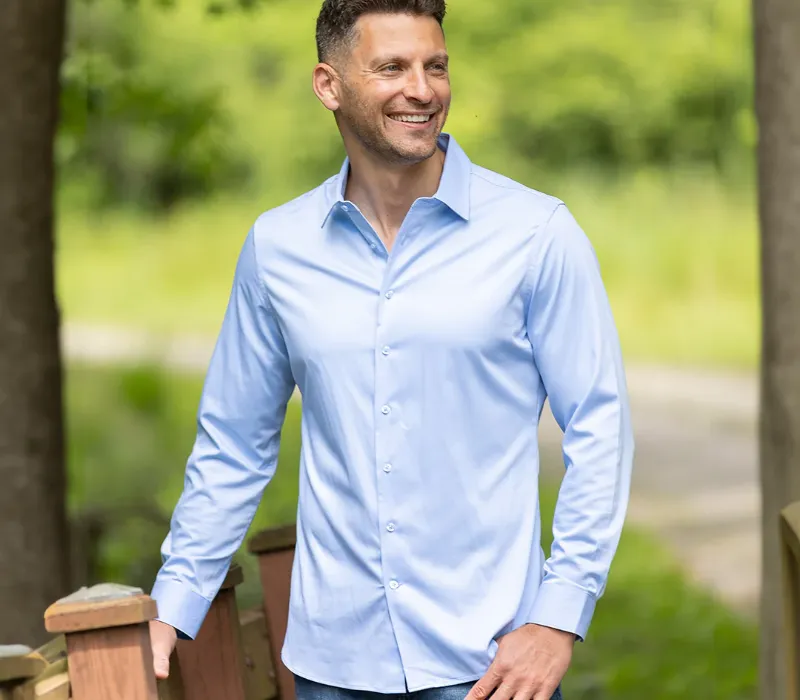
A dress shirt is built to be tucked in and never untucked. We make ours from crisp woven fabrics like poplin, with a structured collar and long tails that hold the hem below your belt line. The rigid construction is what signals formality — the fabric, not the pattern, does the talking.
Fabric to request: the classic is smooth poplin or broadcloth at 100–120 GSM. If you need white for a dress shirt, go above 115 GSM — anything lighter turns see-through under bright retail lights. A 120 GSM twill gives you the same polish with better opacity.
Fit & who it flatters: choose a classic cut for broad builds, slim for standard profiles, or extra-slim for athletic frames. The shoulder seam must sit directly on your shoulder bone, and you should fit two fingers inside the collar.
🛡️ Our Verdict: Never wear a dress shirt untucked — we engineer the hem to stay anchored below your belt. If your tech pack pairs it with a formal tie, request a spread collar, not a point collar.
2. Oxford Shirt
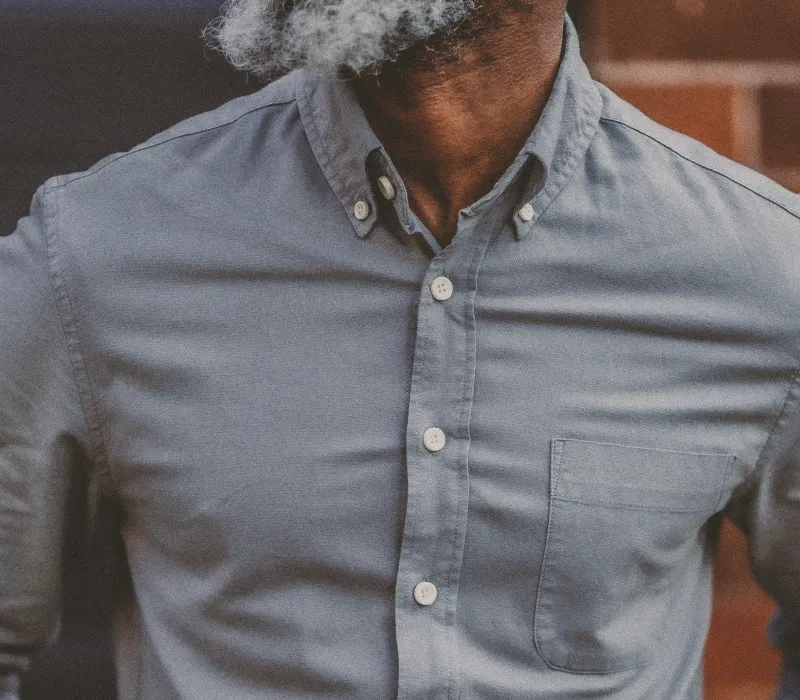
People often call a button-down collar an “Oxford,” but the word describes a basketweave textile structure. On our floor we mill Oxford cloth from thick yarns, which gives it a textured hand and skips the glossy formality of poplin or broadcloth. That relaxed polish is why it bridges campus, weekend, and office wear. If you’re choosing between weaves, see our sportswear fabric guide.
Fabric to request: standard Oxford for a smart-casual baseline, or pinpoint Oxford when you need to wear a tie — we weave pinpoint with finer yarns for a smoother finish.
Fit & who it flatters: it works with nearly every frame because the fabric has give. Pair it with chinos or layer it under knitwear, and it can go without a tie safely.
🛡️ Our Verdict: Make standard Oxford your smart-casual baseline; switch to pinpoint if your tech pack includes a tie.
3. Button-Down Shirt
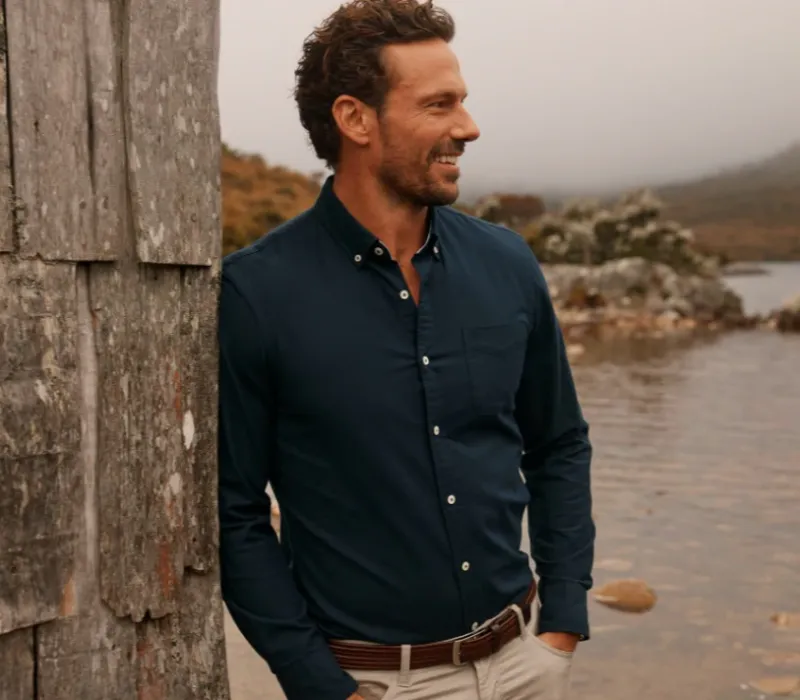
A button-down refers strictly to the collar — small buttons fasten the collar points to the shirt body. It is not, as many tech packs assume, “any shirt that buttons.” We reinforce those buttoned points during sewing so the fabric can’t curl when it’s washed and worn.
Construction difference: the buttons stop the collar from tipping forward, which keeps a soft collar crisp. That same anchoring is why a thick knot gets wedged and looks strained.
Fit & who it flatters: this collar flatters medium to long necks and sits well with softer tailoring. It defines preppy and business-casual wear.
⚠️ Watch this: if your tech pack calls for a formal tie, switch to a spread collar. A button-down wants to stay casual, and forcing a formal knot on it is the single most common sample error we see.
4. Casual Button-Up Shirt
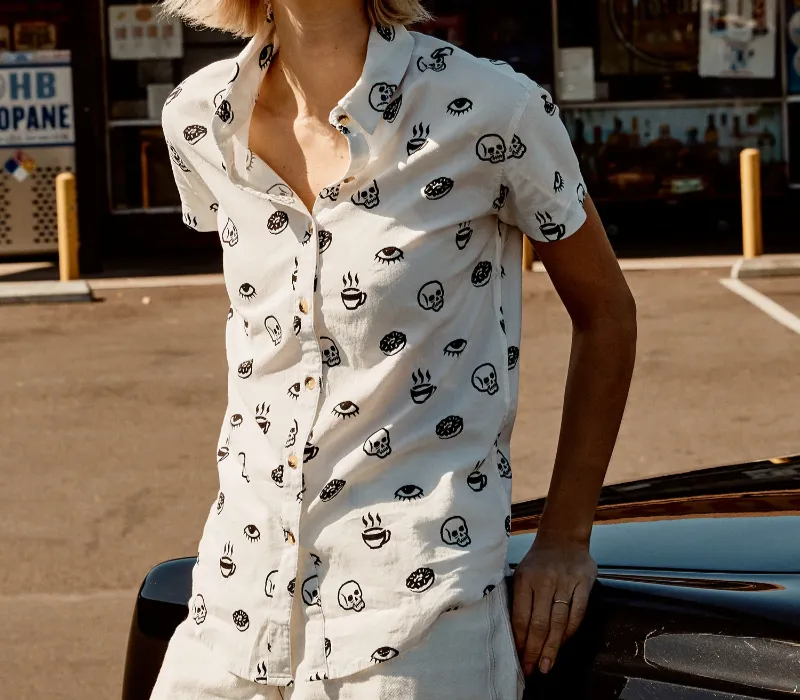
A casual button-up looks nothing like a dress shirt, even though both fasten down the front. We cut the casual version with a shorter hem and softer construction so it drapes instead of standing stiff. Founders often design casual shirts that mimic office wear, which is exactly what leaves the wearer looking sloppy.
Fabric to request: washed cotton, linen blends, or a soft twill. These give a relaxed drape that a crisp poplin can’t.
Fit & who it flatters: a fuller cut gives broader builds room, and it works worn open over a tee. The hem rule: on the wearer, it should stop around the middle of the back pocket.
🛡️ Our Verdict: Measure the tail. If the fabric drops below the middle of your back pocket, it’s cut for tucking — tuck it in.
5. Cuban / Camp-Collar Shirt
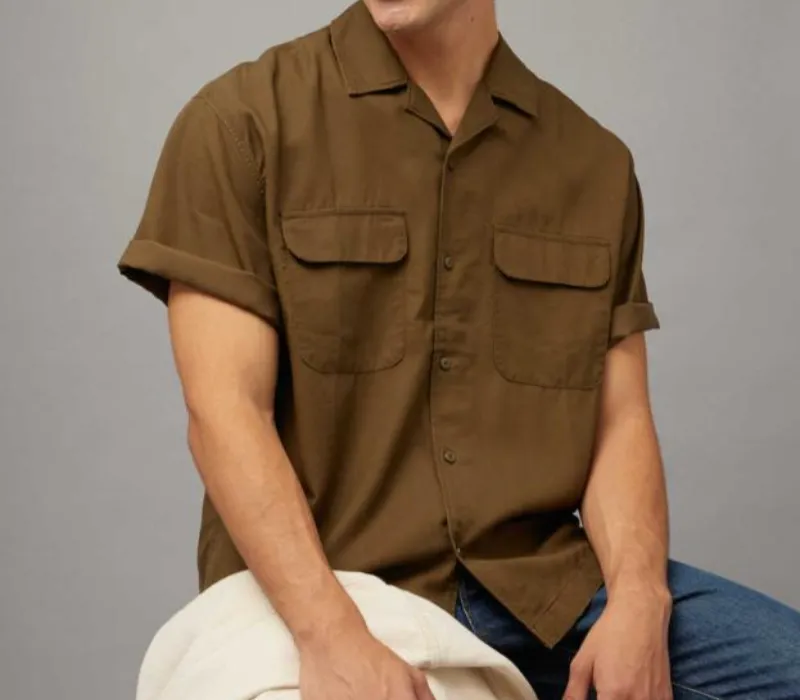
A camp collar drops the rigid collar band entirely, leaving a flat, open neckline with an airy drape. Standard point collars feel suffocating in summer heat, so camp shirts are engineered for airflow first. We use a straight, boxy hem specifically for untucked wear.
Fit & who it flatters: the open V shapes a generous neckline that flatters broader chests and softer jawlines. It reads intentional without defaulting to a basic T-shirt.
Fabric to request: a linen blend or a light cotton at roughly 100–130 GSM keeps the drape relaxed without clinging.
🛡️ Our Verdict: This anchors modern relaxed tailoring for vacations and creative offices. Pair the open collar with matching shorts or loose trousers for an effortless summer-evening outfit.
6. Band-Collar / Grandad Shirt
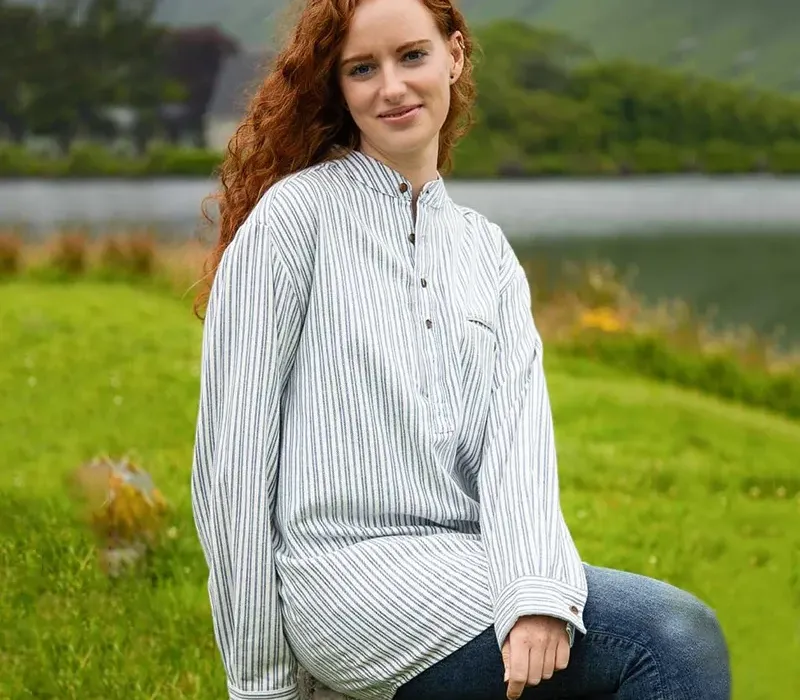
When a client wants a pared-back look, our pattern makers remove the fold-down collar leaf entirely and sew the structural band straight to the neckline. The result is a clean, minimal finish with nothing rubbing the throat — instant relief if you find stiff collars uncomfortable.
Fabric to request: a soft cotton poplin or a lighter twill, because there’s no collar to add structure. Anything too crisp looks like a uniform.
Fit & who it flatters: excellent for rounder faces and for anyone who hates fabric against the neck. Layer it under a lightweight jacket for a minimal, modern silhouette.
🛡️ Our Verdict: Use it to expand a wardrobe beyond standard collars, but never pair it with a tie — there’s no leaf to frame a knot.
7. Polo Shirt
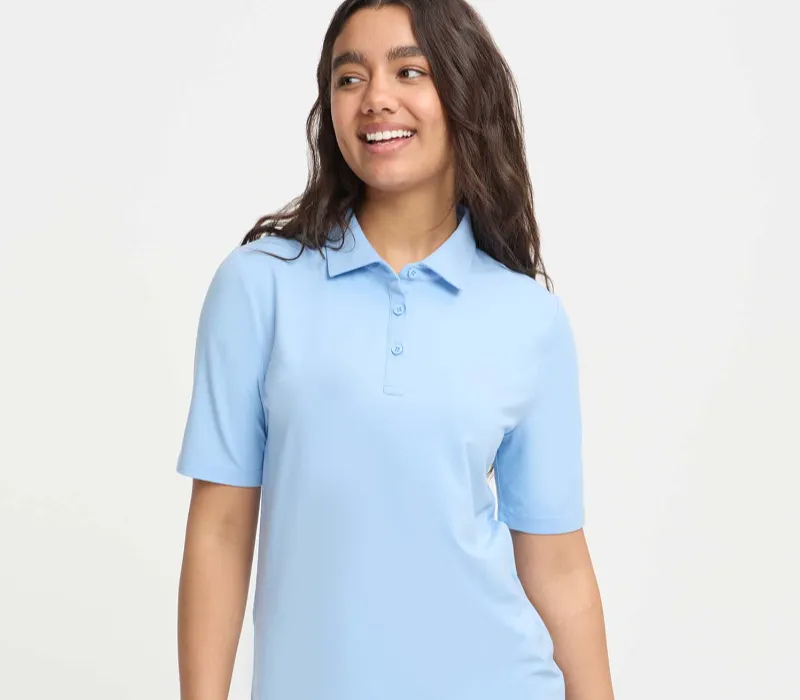
A polo is knit, not woven — it needs a knit body, a short placket, and a soft collar. That construction places it exactly between a basic T-shirt and a stiff woven shirt. Woven “polos” are the most common mislabel we catch in sample reviews. For the knit and GSM that define a true polo, see our polo shirt fabric types guide.
Fabric to request: classic piqué for a waffle texture that breathes, or a smooth jersey when you want a sleeker finish.
Fit & who it flatters: flatters athletic and average builds. The sleeve length matters more than the logo — a properly graded sleeve should end around the middle of the bicep, and the hem should sit just below the waistband.
🛡️ Our Verdict: Check sleeve fit during sampling. If the hem hits off-center or the sleeve ends past the bicep, the grade is wrong for your size range.
8. Henley Shirt
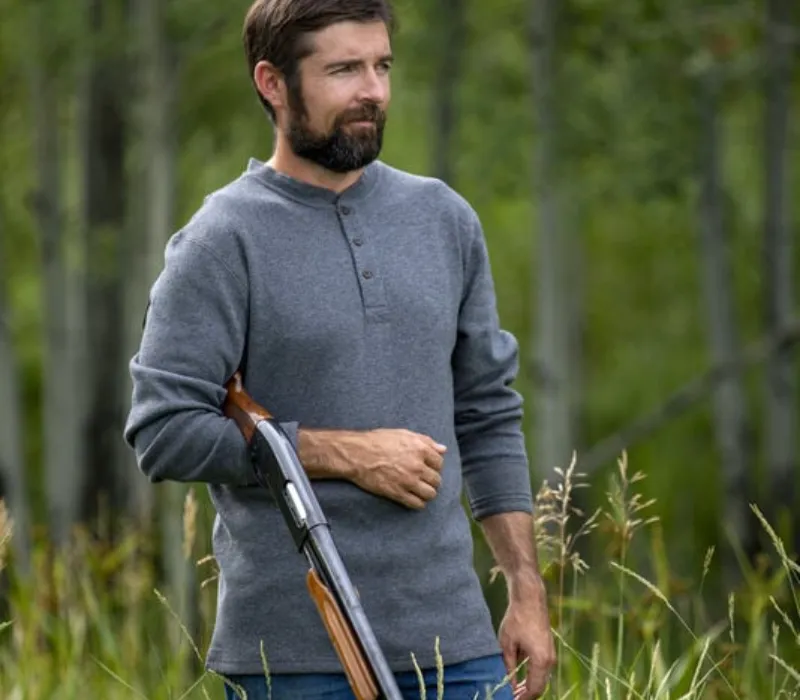
A Henley is a crew-neck T-shirt with a short button placket added to the round neckline. That small detail gives it a rugged, three-dimensional structure a plain tee can’t match, which is why it upgrades an otherwise basic casual wardrobe.
Fabric to request: short-sleeve cotton blends for summer; a heavier 250 GSM long-sleeve Henley adds real thermal comfort for transitional weather when you want warmth without a jacket.
Fit & who it flatters: highlights athletic builds and broad shoulders. Unbutton the top two buttons to elongate the neck.
🚀 Actionable Insight: Keep this casual shirt out of the boardroom — a Henley reads relaxed no matter the fabric weight you spec.
9. T-Shirt
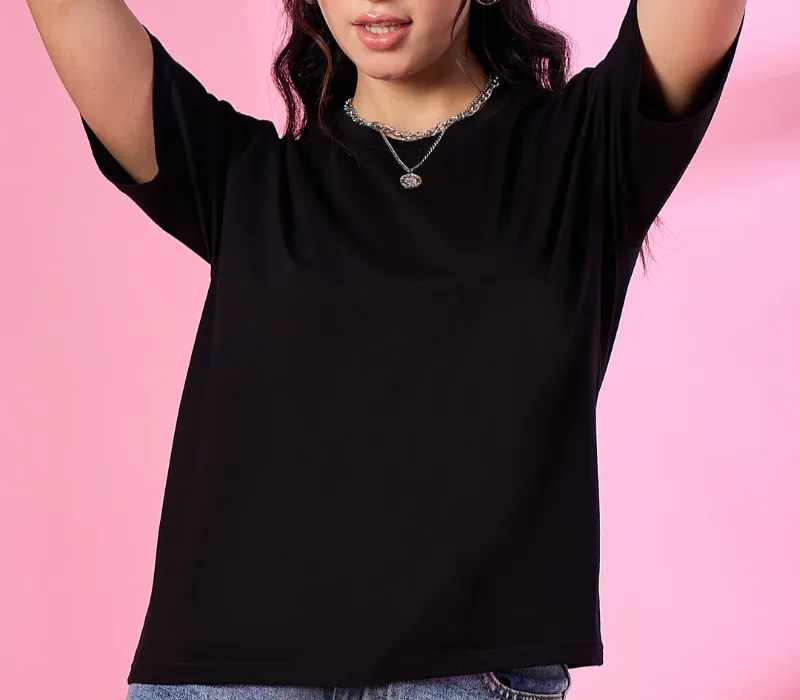
A true T-shirt is simple knit construction with zero plackets and everyday versatility. Because it has no collar structure to hide behind, every decision is about fabric and cut. At our factory we teach silhouette language with this garment — cutting crew and V-neck first, then fitted, boxy, oversized, or cropped variations.
Fabric to request: fabric weight dictates drape. Heavier 250 GSM cotton holds its shape and meets strict AATCC opacity standards; a lighter 150 GSM tee is softer but drapes more and can go sheer in white. The full GSM spec table lives in our sportswear fabric guide.
Fit & who it flatters: V-necks lengthen short necks; oversized cuts add bulk to narrow shoulders; fitted tees favor lean, athletic frames.
🛡️ Our Verdict: Match the cut to your frame, and spec the GSM to the season.
10. The Overshirt (Shacket)
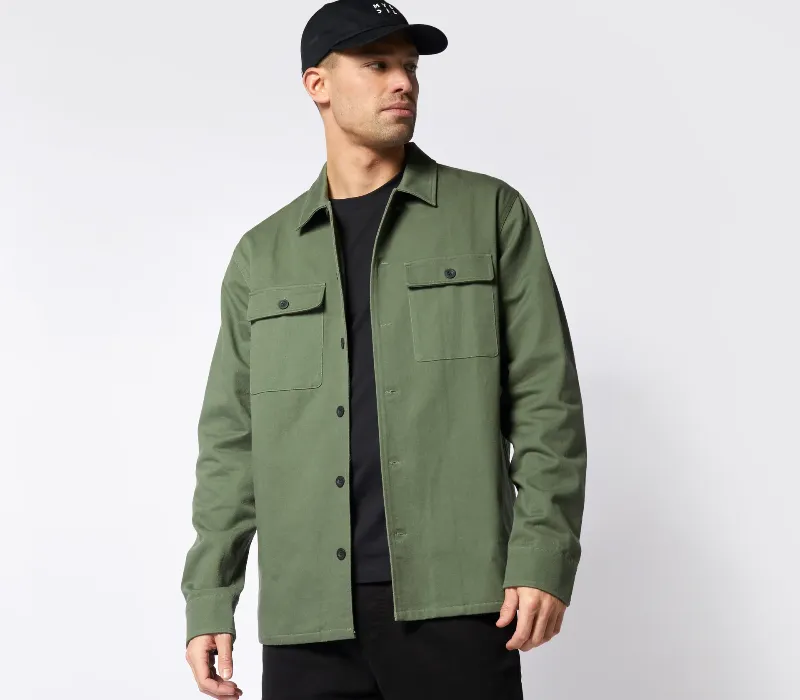
The “shacket” is a trend-forward hybrid that sits between a shirt and a light jacket. We cut it roomier for layering and make it from sturdy cloth so it has structure without a full lining. Handling these high-density textiles means reinforced seams — a cheap shacket’s seams burst along the armhole by week three. To spec the right stitch, read our types of seams guide.
Fabric to request: a heavy twill, brushed cotton, or a wool blend. Roughly 200 GSM and up — well above a shirt-weight twill — gives it enough body to read as a jacket.
Fit & who it flatters: rectangular and slim frames, because the added volume is deliberate. It adds instant visual weight and structure.
🛡️ Our Verdict: Style it open over plain tees or fine knits for transitional weather — it gives you a jacket’s look without committing to one.
11. Chambray and Denim Shirts
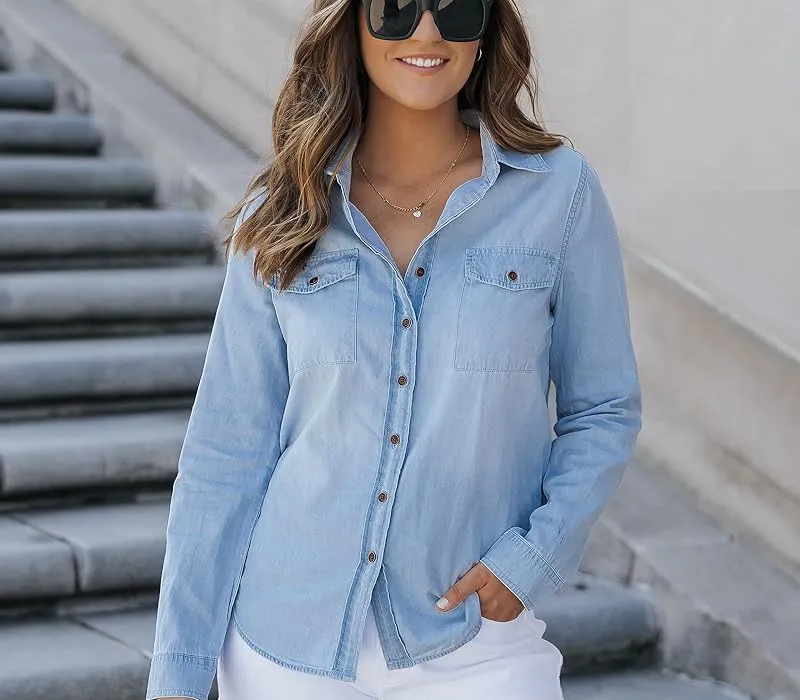
Most people confuse chambray and denim — the difference is the weave. Chambray is a plain weave: soft, light, built for summer. Denim is a heavier twill weave you can spot by its diagonal surface lines and rugged structure. We build the two completely differently on the line.
Fabric to request: chambray at 100–130 GSM; denim at 150–250 GSM.
Fit & who it flatters: chambray for business-casual ease; denim for durable workwear or western-leaning outfits. Darker washes increase formality and reduce visual bulk.
⚠️ Watch this: check the fabric’s underside. True denim shows a white back; chambray looks the same on both sides. If you request chambray but expect denim’s ruggedness, the garment will tear under heavy use.
12. Flannel and Plaid Shirts
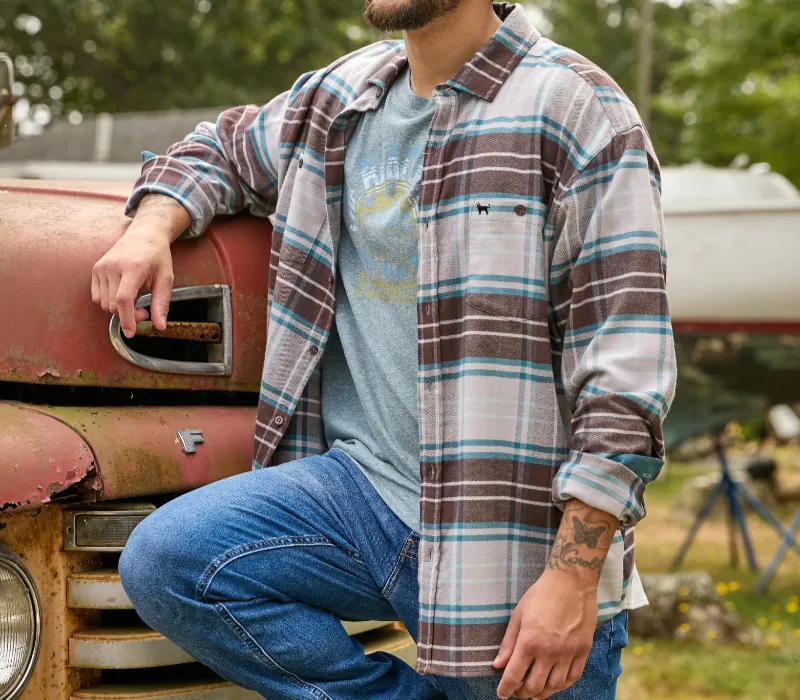
“Flannel” and “plaid” are not the same thing. Flannel is a soft, brushed fabric; plaid is a pattern. You can weave plaid onto heavy flannel, crisp twill, or lightweight cotton. Gingham is a simple two-color checkerboard; plaid uses multiple intersecting lines.
Fabric to request: flannel at 150–200 GSM for warmth. The material weight and pattern scale set the vibe — heavy flannel with large plaids builds rugged cold-weather shirts, while thin cotton with small gingham reads preppy and relaxed.
🚀 Actionable Insight: In your tech pack, specify both fabric GSM and pattern type. “Flannel” alone invites sampling errors, because the mill doesn’t know the scale or weight you want.
13. Blouse
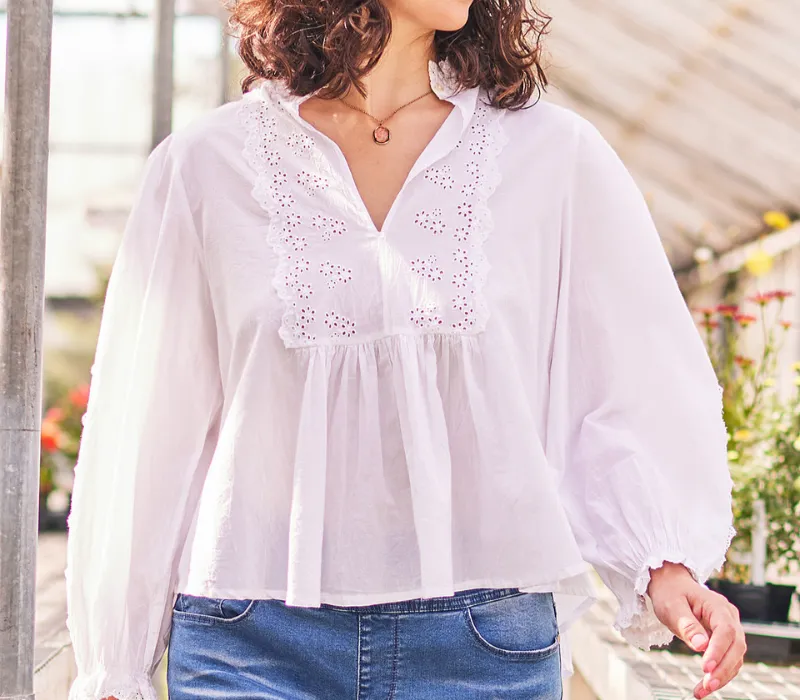
“Blouse” is a broad category for women’s tops built on softer drape, lighter detailing, and decorative elements. In our sample room we group them into one production family: wrap, pussy-bow, peplum, tunic, and shell. Brands overcomplicate these in tech packs, so we segment them by construction instead.
Fabric to request: 19-momme silk blends for formal collections, crisp 120 GSM cotton for daily wear. For a soft, drapey alternative, read our modal fabric guide.
Fit & who it flatters: when grading patterns, we use fabric drape to flatter different bust and waist proportions. Always balance proportions — pair a high-volume blouse with tailored bottoms so it doesn’t swallow the frame.
🛡️ Our Verdict: On women’s garments, fit is everything. A 120 GSM cotton shell and a silk wrap grade very differently — never spec them from the same pattern.
14. Tuxedo Shirt
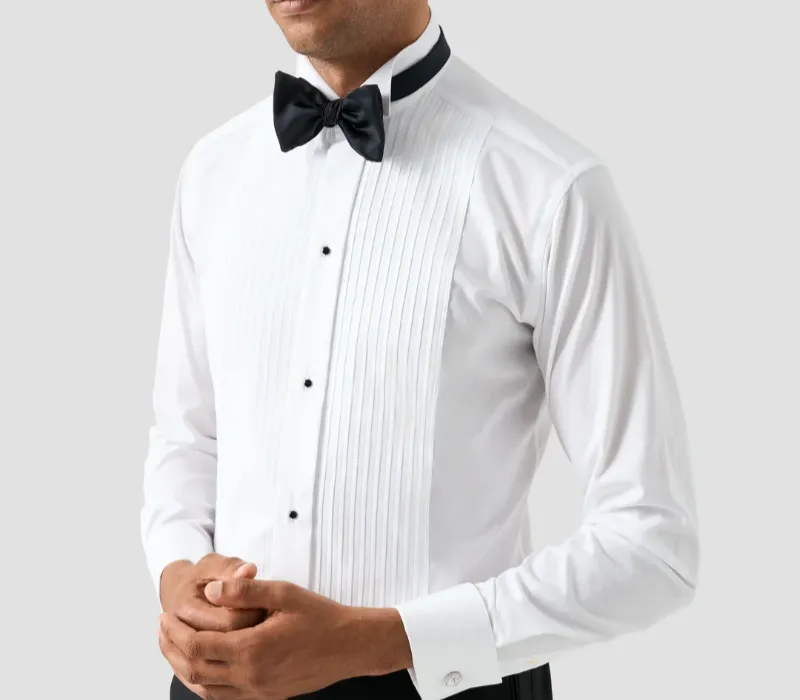
A tuxedo shirt is not a dress shirt with extra buttons — it’s engineered exclusively for evening wear. Clients often substitute a standard dress shirt for strict black-tie attire, and the sample comes back wrong. The details that make it formal are the ribs and the trim.
Fabric to request: heavy piqué cotton for the bib, with French cuffs and a specific collar — wingtip for a bow tie, spread for modern styling.
Fit & who it flatters: a stiff, pleated bib flatters a flat stomach; if you carry extra weight, choose a clean hidden placket instead.
🛡️ Our Verdict: Reserve this for galas and weddings — never the office. It’s the most constrained shirt we build, and the details don’t translate to daywear.
How to Choose the Right Shirt: A Quick Decision Guide
Match the situation to the garment, then to the fabric you put in your tech pack. The weave details below line up with the fabric table further down.
| Scenario | Best pick | Fabric to ask for |
|---|---|---|
| Black-tie event | Tuxedo shirt | Piqué bib, French cuffs |
| Formal office / client meeting | Dress shirt | Poplin or broadcloth; go heavier for white |
| Business-casual office | Oxford or button-down | Standard Oxford, or pinpoint if you wear a tie |
| Weekend, untucked | Casual button-up or cuban collar | Washed cotton, linen blend, or chambray |
| Hot summer day | Cuban / camp-collar | Linen blend or a light cotton |
| Layering under a jacket | Band-collar grandad | Soft cotton poplin or a light twill |
| Golf, sporty, warm office | Polo | Piqué (breathes) or smooth jersey |
| Cold-weather layering | Overshirt or flannel | Heavy twill or brushed flannel |
| Everyday basics | T-shirt | 250 GSM cotton (opaque) or lighter for softness |
| Women’s formal-to-casual | Blouse | Silk for formal, cotton for daily |
Still weighing a single style? Our sportswear fabric guide covers the technical spec behind every weave.
How to Source and Shop for Shirt Fabrics Like a Factory Expert?
I watch brands waste thousands of dollars picking the wrong shirt fabrics during sampling. You need a reliable system to avoid these costly errors. Follow this step-by-step sourcing guide to build accurate tech packs. Order the exact shirts you want the first time.
Step 1: Decode the Core Fabric Table
We built this glossary by analyzing over 5,000 custom sportswear and private label orders. Learn the exact terms our pattern makers use. Match your desired look with the correct industrial fabric using this table.
| Fabric | Weave Structure | Typical Hand Feel | Usual Weight Range | Wrinkle Behavior | Formality Signal |
|---|---|---|---|---|---|
| Poplin / Broadcloth | Plain weave | Crisp and smooth | 100 to 120 GSM | High | High (Formal) |
| Twill | Diagonal lines | Soft and thick | 120 to 160 GSM | Low | Medium (Business) |
| Oxford | Basketweave | Textured and bumpy | 130 to 150 GSM | Medium | Low (Casual) |
| Pinpoint | Fine basketweave | Smooth and soft | 110 to 130 GSM | Medium | Medium (Smart-casual) |
| Chambray | Plain weave | Soft and light | 100 to 130 GSM | High | Low (Casual) |
| Denim | Twill weave | Stiff and rugged | 150 to 250 GSM | Low | Low (Workwear) |
| Flannel | Brushed surface | Fuzzy and warm | 150 to 200 GSM | Low | Low (Casual) |
| Linen | Plain weave | Dry and airy | 110 to 140 GSM | Very High | Low (Vacation) |
| Piqué | Waffle knit | Stretchy and bouncy | 180 to 220 GSM | Low | Low (Sporty) |
| Silk / Satin | Satin weave | Slick and glossy | 80 to 100 GSM | Medium | High (Evening) |
Step 2: Master the Fabric Weight Scale
Tell your manufacturer your target climate first. Fabric weight dictates garment drape and body comfort. We measure this weight in GSM (Grams per Square Meter). Use this simple scale to choose the right material.
-
Lightweight (Under 120 GSM): Pick this for hot weather. It provides a flowy drape and maximum airflow.
-
Midweight (120 to 160 GSM): Choose this for all-purpose wear. It holds its shape well and works year-round.
-
Heavyweight (160+ GSM): Use this for rigid structure and cold weather layering. Thick fabrics require specialized heavy-duty sewing needles to prevent thread breakage.
Pay attention to shrinkage and opacity. Request pre-shrunk fabrics from your supplier. If you skip this step, your garments might shrink two full sizes after the first wash. At our facility, we test fabric shrinkage according to the official AATCC TM135 standard for dimensional changes.
We also test fabric opacity using an industrial light box. This extra step ensures your customers never complain about see-through white shirts.
Step 3: Stop Confusing These Common Fabric Pairs
Stop mixing up basic terminology. This mistake stalls our production lines and delays your sampling phase. Review these top four confused pairs to get your tech packs right.
-
Oxford vs. Poplin: Oxford uses a bumpy basketweave. Poplin uses a flat, tight weave.
-
Chambray vs. Denim: Chambray is a soft plain weave. Denim is a stiff twill weave.
-
Flannel vs. Plaid: Flannel is a brushed fabric. Plaid is a colour pattern.
-
Button-Down Collar vs. Button-Up Front: Button-down pins the collar points. Button-up is the front closure.
Step 4: Finalize Your Sourcing Strategy
Check your tech packs. Define your materials clearly so the factory understands your vision. You will see a massive drop in sampling errors. Our agile micro-MOQ production lines allow you to test these fabrics in small batches. Next, review our guide on types of sleeves to finish your physical design.
To build basic tees, partner with a reliable China t-shirt manufacturer. Source your athletic collections directly from private label golf shirt suppliers. Read our wholesale sportswear sourcing rules to avoid common manufacturing traps. Check out these distinct swimwear types to expand your summer catalog.
Ready to start production? Contact us today. Let our factory build your next best-seller.
People Also Ask About Types of Shirts
What is the difference between a button-down and a button-up?
A button-up shirt features a full row of buttons down the front. A button-down shirt only refers to the collar style. Small buttons fasten the collar points directly to the shirt body. In our factory, clients mix these terms up constantly on their tech packs. We always clarify this detail before cutting fabric.
If you request a formal shirt but specify a button-down collar, we flag the error immediately.
What is the difference between an Oxford shirt and a dress shirt?
An Oxford shirt uses a thick basketweave fabric that creates a rougher casual texture. A dress shirt uses a smooth and tightly woven fabric like poplin. Dress shirts also feature longer tail hems built strictly for tucking into trousers. When startup founders want a versatile office uniform, I recommend the Oxford.
It breathes better than tight poplin and resists heavy wrinkles. You can wear it safely without a tie.
Which shirt styles are most formal?
The tuxedo shirt sits at the absolute top of the formality scale. We engineer these exclusively for black tie events using pleated bibs and French cuffs. Standard dress shirts rank right below them. We build these with rigid spread collars to frame a thick tie perfectly. Formal shirts require precise tailoring and an extended hem.
This extra fabric ensures the shirt stays firmly anchored inside your waistband all day.
Which shirt type is best if you want to wear it untucked?
The Cuban collar shirt and the casual button-up serve as your best untucked options. Our pattern makers cut these styles with a flat squared hem. The fabric should stop exactly at the middle of your back pocket. If the hem drops any lower, the garment looks sloppy. We also recommend basic polos and short Henley shirts.
These knit options provide a relaxed fit while keeping a clean silhouette.
What fabric should I choose for summer shirts or private-label shirt production?
You should select breathable fabrics under 120 GSM. Linen blends, chambray, and lightweight cotton weaves provide the best airflow. In our testing, these materials stop overheating and drape perfectly on the body.
If you want to produce a custom summer collection, LeelineWear can help. We operate as a vertically integrated China t-shirt manufacturer capable of handling complex knits.
For heavyweight oversized tees and knit streetwear specifically, see our custom streetwear manufacturing capabilities.
Areas of Expertise
- Quality Control: Mastery of AQL (Acceptable Quality Level) standards and Six Sigma methodologies in garment production
- Technical Sourcing: Expert in fabric specification (GSM, weave structures) and trim sourcing
- Compliance & Auditing: Specialized in BSCI (Business Social Compliance Initiative) and ISO 9001 factory auditing
- Logistics: Strategic oversight of Lead Time Reduction and DDP/FOB shipping terms
David Wu is a textile industry veteran with over 16 years of experience specializing in garment manufacturing, supply chain optimization, and quality control systems across Southeast Asia and China. His career is defined by implementing rigorous AQL 2.5/4.0 inspection protocols for mid-to-large-scale private label brands. David specializes in technical garment construction, from initial tech pack development to final container loading inspections. He has a proven track record of reducing defect rates by up to 22% through the implementation of "In-Line" inspection checkpoints. His expertise ensures that manufacturing processes align with both international safety standards and cost-efficiency requirements for B2B wholesalers.