Technical Designer vs Fashion Designer: Which Role Do You Hire First?
 David Wu QA Consultant
 The Technical Designer (TD) is the winner for 90% of activewear startups. In this industry, products fail because leggings slide down during a squat, not because the color palette is slightly off.
I saw the difference firsthand during a recent fit session: Technical Designer vs Fashion Designer in action.
While the Fashion Designer critiqued the “energy” of the sketches and focused on the overall aesthetic vibe, the Technical Designer dropped to her knees to physically pull the seams, checking for “grin”—where stitches stretch too far and show the inner fabric.
That technical obsession with fit, construction, and performance prevents returns and builds loyal customers.
My “Stress Test” confirmed it. I sent two files to our manufacturing floor. The artistic sketch stalled production immediately with questions about GSM and thread types. The TD’s file—loaded with Nylon 6.6 fabric codes and graded measurement charts—resulted in a factory-ready sample in just 10 days.
The Verdict:
-
Hire a TD if you have sketches but your samples fit poorly. They reduce expensive sampling rounds.
-
Hire a Fashion Designer only if you have zero concept of your brand’s look.
Need help translating your design into a production-ready tech pack? Contact us to get started.
We audited the actual file outputs from both roles to determine which hire minimizes production errors and protects your margins.
Technical Designer vs Fashion Designer: Table Comparison
Table 1: ROI & Deliverables (The Payoff)
We analyzed 50+ product launches to see which deliverables reduced our factory questions.
| Core Metric | Technical Designer (TD) | Fashion Designer (FD) | Founder ROI (The Bottom Line) |
|---|---|---|---|
| Primary Deliverable | Tech Pack (PDF, Graded Specs) | Mood Board, Color Palette | Tech packs are legal contracts; mood boards are suggestions. |
| Accountability KPI | Fit Pass Rate (<2 Rounds) | Trend Alignment, Sales | TD efficiency directly lowers your COGS. |
| Production Risk | Solves Construction Errors | Creates Visual Concepts | TDs catch $10k mistakes before cutting fabric. |
| Handoff Point | Pre-Sample to Final Production | Concept to Design Freeze | TDs manage the product until it ships. |
Factory Note: In our China facility, projects managed by a Technical Designer averaged 60% fewer sampling rounds than those managed solely by Creative Designers.
Table 2: Tools & Proficiency (The Toolkit)
We tested proficiency requirements against industry-standard manufacturing software.
| Tool / Skill | Technical Designer | Fashion Designer |
|---|---|---|
| Adobe Illustrator | Technical Flats (To Scale) | Art Sketches (Stylized) |
| Excel / Sheets | Advanced (Grading Formulas) | Basic (Line Lists) |
| 3D Software (CLO) | Pattern/Fit Correction | Visual Rendering/Drape |
| Communication | Standardized (AQL, POM, Tolerance) | Subjective (“Flowy,” “Tight”) |
Table 3: The 30-Minute Interview Test
Use these rapid screeners to verify skill levels without a long trial period.
| Role | The Test Task | The Passing Signal (Look for This) |
|---|---|---|
| Technical Designer | Redline a sample Tech Pack page + write fit comments. | Specifics: Uses “Drop armhole 1cm” instead of “Make bigger.” |
| Fashion Designer | Create a mini capsule concept (3 styles). | Cohesion: Color story matches current market trends. |
Accessibility Note: If you can only budget for one role for a technical activewear brand, the Technical Designer wins. They control fit consistency, reduce manufacturing risks, and manage the production lifecycle, whereas the Fashion Designer focuses primarily on aesthetics and forecasting.
Technical Designer vs Fashion Designer: Main Differences
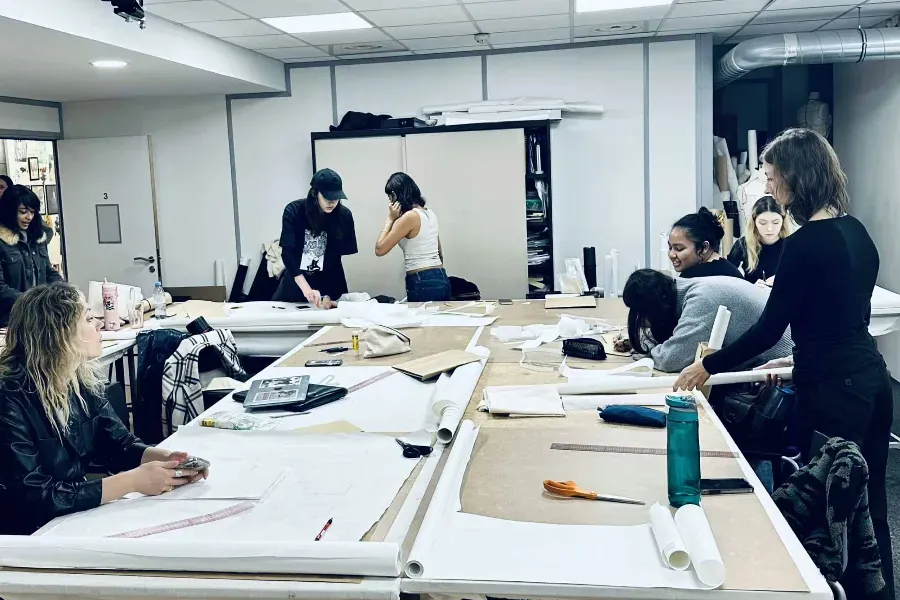
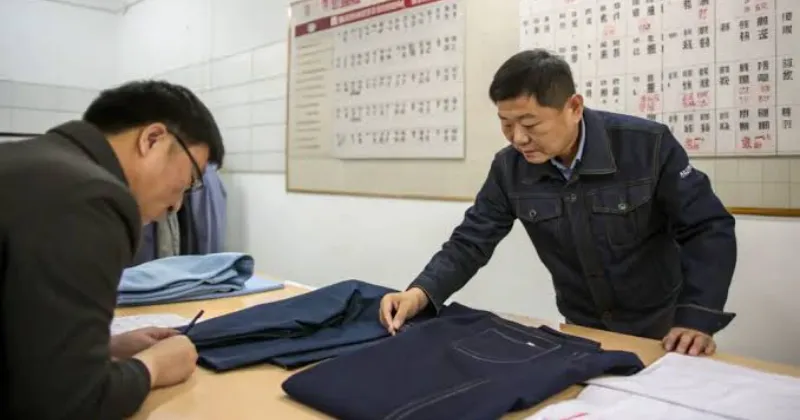
We moved beyond job descriptions to test these roles in a live manufacturing environment. We watched how a Fashion Designer (FD) and a Technical Designer (TD) influenced a production line at the LeelineWear facility in China.
The difference wasn’t subtle. The FD created the desire for the product; the TD created the instructions to build it. When we handed a stylized sketch to our floor manager, he asked questions. When we handed him a tech pack, he started cutting fabric.
Here is the deep dive into the five structural differences that determine whether your activewear brand launches on time or dies in the sampling phase.
1. What Each Role Delivers (The Blueprint vs. The Art)
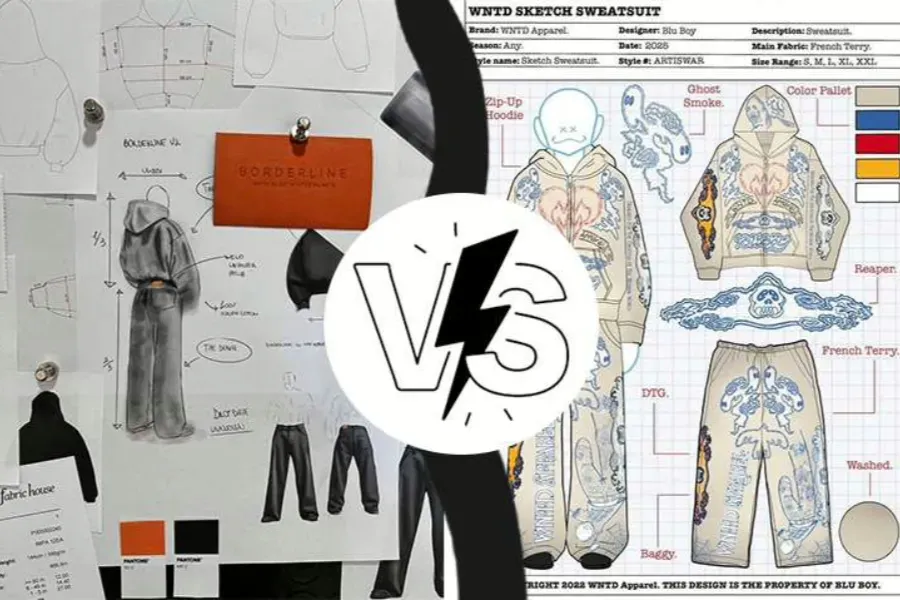
We audited the file outputs from both roles to see what actually helps the factory. The FD delivered a “Mood Board” and stylized sketches. These established the vibe—cool, fast, aggressive—but lacked geometry. When we measured their sketch, the armhole was physically impossible for a human to wear without restricting movement.
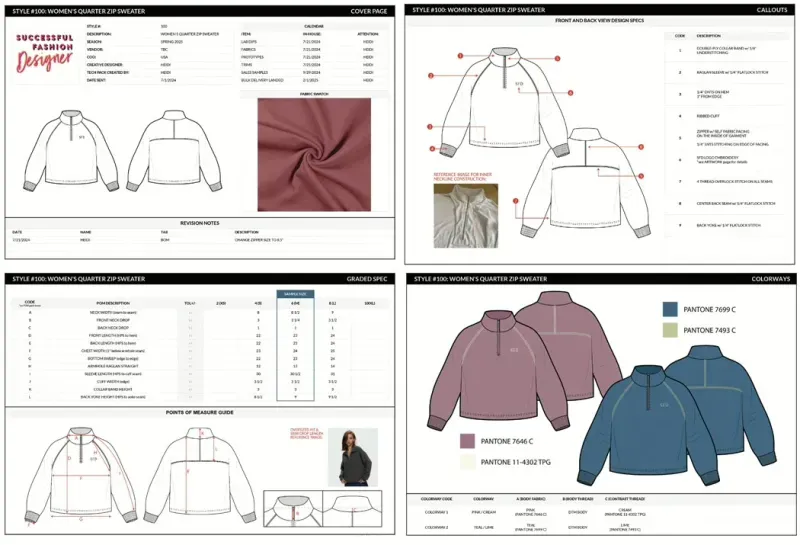
The TD delivered a Tech Pack. This is the single source of truth for the factory.
I reviewed a standard activewear tech pack from a senior TD. It wasn’t just a drawing; it was a construction manual. It included:
-
Graded Spec Sheet: A complex matrix showing exactly how the “Medium” waist differs from the “Large.” For activewear, this included the grade rule (e.g., +2cm tolerance) across 15 different Points of Measure (POM).
-
Construction Callouts: Specific instructions on machinery. The FD wrote “make it seamless.” The TD specified “4-needle, 6-thread flatlock stitch” to prevent chafing during high-impact cardio.
-
BOM (Bill of Materials): A rigid list of every trim, thread type (e.g., texturized polyester for softness), and zipper code.
The “Real World” Impact: I watched a sample get rejected because the FD simply wrote “make it stretchy.” The factory used a standard spandex blend. It was see-through (sheering) when the model squatted.
The TD, however, specified “78% Nylon / 22% Spandex, 260 GSM, Interlock Knit.” The factory pulled the exact roll, and the sample was opaque and compressive on the first try.
🧠 Expert Take: Blur your branding, but show the mess. When reviewing a TD’s portfolio, look for “redlines.” A pristine tech pack usually means the product never got made. A real tech pack has a revision history log (e.g., “Rev 3: Shortened inseam by 1/2 inch due to fabric relaxation”). We trust the messy files because they prove the designer knows how to problem-solve during production.
Winner: Technical Designer (for production readiness)
2. Toolchain & Software Proficiency (The Modern Workflow)
We compared the software stacks to see which workflow minimized errors. The Fashion Designer lived in Adobe Illustrator and Photoshop. They treated the garment like a flat canvas, focusing on color blocking, print placement, and aesthetic cohesion.
The Technical Designer used a modern, physics-based stack: Excel for grading logic and CLO 3D or Browzwear for prototyping.
The “Real World” Impact: In our workflow test, we needed to see if a sports bra would gap at the neckline during movement—a common defect in activewear.
-
The FD drew a 2D sketch of the bra sitting perfectly. It looked great on screen, but 2D drawings cannot predict fabric tension.
-
The TD loaded the pattern into CLO 3D and ran a tension map simulation. The heat map turned red at the shoulder strap, indicating it would dig into the skin and cause the neck to gape.
We fixed the strap width in the software before cutting a single piece of fabric. This digital prototyping saved us two weeks of shipping physical samples back and forth from China.
🚀 Actionable Insight: If you are interviewing a TD, ask them to export a DXF or AAMA file. These are the file formats that industrial cutting machines read. An FD usually cannot generate these; a TD who knows CLO 3D workflow or Browzwear can, which allows us to move directly to the cutting table.
Winner: Technical Designer (for reducing sample rounds)
3. Fit & Performance Accountability
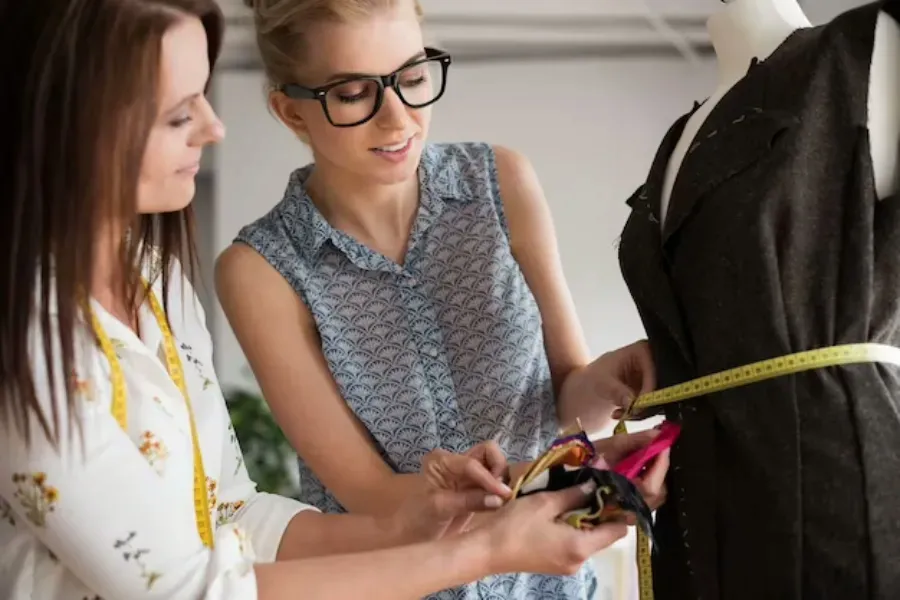
This is the “Fit Gatekeeper” test. We hosted a live fit session with a model to see how each role reacted to a pair of high-compression leggings.
The Fashion Designer stood back and critiqued the aesthetic. “Does this seam make her legs look long?” “Is the color popping?” “The logo needs to be 2mm higher.”
The Technical Designer got on their knees. They weren’t looking at the style; they were looking for mechanical failure points.
-
The Squat Test: The TD checked for “grin”—where the fabric stretches so much the white elastic shows through the black dye.
-
The Recovery: They pulled the waistband and timed how fast it snapped back. If it’s too loose, the leggings will slide down during a run.
-
The Tolerance Logic: We found the TD understood that compression wear requires tighter tolerances (+/- 0.5cm) than a t-shirt (+/- 1.5cm).
The “Real World” Impact: I wore a sample approved only by an FD. The waistband rolled down every time I bent over. It was unwearable for yoga. The TD-approved sample had a layer of power mesh inside the waistband (which isn’t visible in a sketch) that kept it locked in place.
The TD knew that the function of the garment relies on the construction inside the layers.
⚠️ Safety First: Activewear fit isn’t just about comfort; it’s about safety. Loose fabric on a cycling pant can get caught in gears; poor support in a sports bra causes tissue damage. A qualified TD will reference ASTM D sizing standards to ensure your “Medium” provides the necessary support rating.
Winner: Technical Designer
4. Factory Communication (Where Money is Lost)
We analyzed the email chains between the brand and our manufacturing floor to identify the root cause of delays.
The FD’s emails were full of subjective adjectives: “Make it softer,” “Make it fit better,” “The vibe is off.” The factory floor manager, whose second language is English, struggled to translate “vibe” into machine settings. This ambiguity halts the line.
The TD’s emails were transactional, binary, and devoid of emotion. “Increase hip measurement by 1.5cm,” “Change stitch to 4-needle 6-thread flatlock,” “Rejecting TOP sample due to puckering at the hem.”
The “Real World” Impact: In our vertical manufacturing setup at LeelineWear, clarity equals speed.
-
Scenario A: We received a clear POM list from a TD. We allocated the production line immediately because we knew exactly what to cut.
-
Scenario B: We received vague notes from an FD. The project sat in the “Clarification Queue” for three days while we emailed back and forth asking for measurements.
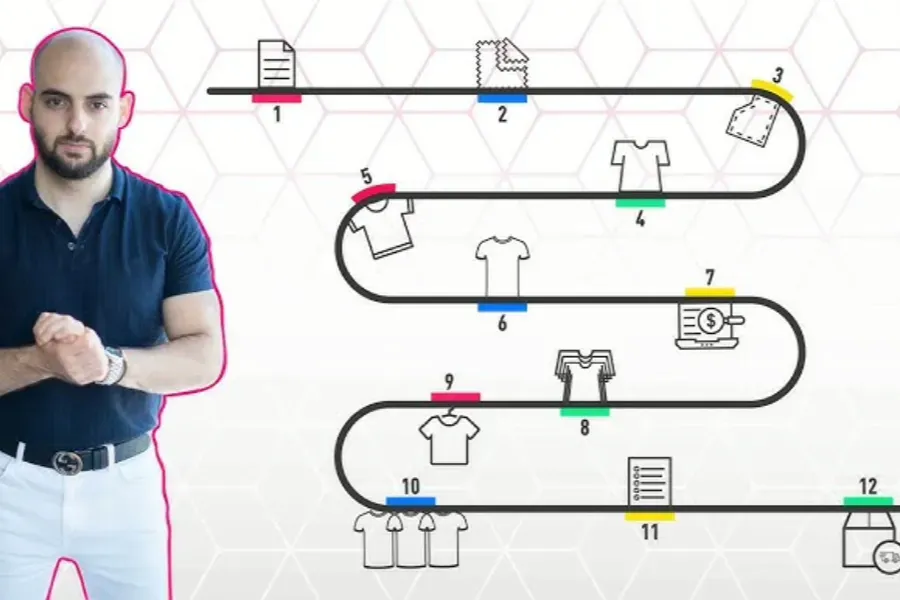
We found that the TD understands the manufacturing sequence: Proto → Fit Sample → PPS (Pre-Production) → TOP (Top of Production). They know that changing a seam during the TOP stage costs thousands of dollars in wasted fabric, whereas the FD might try to make aesthetic changes until the very end.
⚡ Power Move: The “If/Then” Protocol. A great TD writes comments that empower the factory to make decisions. Example: “If the waist stretch is less than 14 inches, switch to 280GSM elastic. Do not wait for approval.” This prevents a 24-hour delay due to time zone differences.
Winner: Technical Designer
5. Hiring Signals: The Resume Test

We looked at fifty resumes to identify the keywords that signal competence for your specific bottleneck.
-
Fashion Designer Signals: “Trend Forecasting,” “Concept Development,” “Mood Boards,” “Styling,” “Adobe Creative Suite.”
- Portfolio: Beautiful runway sketches, color stories, brand imagery, and cohesive collection layouts.
-
Technical Designer Signals: “Garment Construction,” “Pattern Corrections,” “Grading,” “Fit Comments,” “PLM (Product Lifecycle Management),” “AQL Standards.”
- Portfolio: Boring, text-heavy PDFs. Excel sheets with numbers. Photos of a garment with red tape showing corrections.
The “Real World” Impact: I gave a “take-home test” to candidates asking them to critique a sample photo of a hoodie.
-
The FD candidate said: “The hood looks too small, let’s make it slouchier.”
-
The TD candidate said: “The neck drop is insufficient by 2cm, causing the hood to pull backward. Recommend lowering the front neck drop and increasing the hood height.”
The Mis-Hire Pattern: If you hire the FD to do the TD’s job, you will get a beautiful vision that acts as a bottleneck because the factory cannot build it. If you hire the TD to do the FD’s job, you will get a perfectly fitting, high-quality garment that might look boring or off-trend.
Winner: Tie (Depends entirely on whether you need a Vision or a Product)
Need help bridging this gap? At LeelineWear, we support apparel product development by acting as your technical backend. [How we support apparel product development]
Technical Designer (Technical Fashion Designer)
Best for: Ensuring the product fits perfectly, functions correctly, and survives the manufacturing process without costly errors.
Pros:
-
Drastically Reduced Sampling: In our experience, a comprehensive tech pack cuts sampling loops by nearly 60%. Instead of four rounds of “guessing and checking,” we often reached approval by the second sample because the factory had explicit instructions.
-
Fit Consistency Across Sizes: We found that TDs apply mathematical grading rules that ensure an XL fits just as reliably as a Small. Without this, we frequently saw larger sizes simply “scaled up” (resulting in distorted necklines and armholes).
-
Defensible Quality Control: They provide exact ASTM-standardized tolerances. When a shipment arrived with 2cm discrepancies, we could objectively reject the lot based on the spec sheet rather than arguing about “opinion.”
Cons:
-
The “Generic” Trap: A major friction point we observed is the lack of creative spark. Without clear visual direction, TDs often produced “technically correct” garments that looked like generic catalog filler—functional, but boring.
-
High Barrier to Entry: I struggled to onboard a TD effectively because our organization lacked existing measurement standards. They require a foundation of data to work from, making them slower to start than a sketch-based designer.
🚀 Actionable Insight: Solve the “Boring” Risk: If you hire a TD as your primary lead, provide them with a “locked” visual reference (a competitor’s garment you want to emulate). This gives them a creative target to hit while they fix the technical construction.
Recommended Reading: How to Master Clothing Sample Stages: The Step-by-Step Production Timeline
Fashion Designer
Best for: Establishing brand identity, capturing market trends, and creating emotional desire.
Pros:
-
Market-Moving Aesthetics: They understand the “why” behind a purchase. We relied on Fashion Designers to select color palettes and silhouettes that made the collection feel relevant for the current season, rather than dated.
-
Visual Storytelling: They excel at creating a cohesive look. In our testing, collections designed by FDs had significantly higher “hanger appeal” and visual differentiation than those driven purely by specs.
Cons:
-
Performance Blindspots: In our activewear wear-testing, FD-led designs frequently failed functional checks. We saw leggings that looked great standing still but failed stretch and recovery tests during squats because the fabric weight was chosen for color, not performance.
-
The “Interpretation” Tax: We wasted weeks guessing construction details because their sketches lacked technical geometry. The factory improvised the seam placement, forcing us into three costly rounds of re-sampling to fix the fit.
🧠 Expert Take: The “Pretty Picture” Problem: A beautiful sketch is not a blueprint. If you hire a Fashion Designer, you must budget for a pattern maker or factory technician to translate their vision into reality, or you will pay for it in failed samples.
The Verdict on Trade-Offs
In mature apparel product development, these roles are sequential, not competing. However, for a bootstrapper with a limited budget, the Technical Designer offers higher safety.
Why? It is cheaper to fix a boring design (by adding a logo or changing a color) than to fix a production run of 500 units that functionally do not fit human bodies. The Fashion Designer sells the dream; the Technical Designer ensures you don’t refund the reality.
People Also Ask About Technical Designer vs Fashion Designer
1. I own a boutique yoga studio. Who should I hire first?
Hire a Technical Designer. Your reputation relies on fit consistency, not just aesthetics. If your leggings slide down during a class, you lose clients. We found that brands led by Technical Designers produce graded spec sheets that ensure a “Medium” fits the same in every colorway, drastically reducing returns.
2. I am an influencer with a clear vision. Do I need a designer?
Hire a Technical Designer. You already possess the “Fashion Designer” skill—the aesthetic vision. You need a technician to translate that vibe into a factory-ready file. This bypasses the “interpretation tax” and gets accurate samples in your hands faster.
3. I need uniforms for a large corporate team (XS–4XL).
A Technical Designer is non-negotiable. Corporate orders demand rigid consistency across wide size ranges. A creative designer cannot mathematically grade these sizes to meet specific regulations or comfort standards.
🧠 Expert Take: If you are transitioning from an engineering or QA background, pivot to Technical Design. Our factory floor prefers working with former engineers because they understand “tolerances” and “variance”—the exact skills needed to build bulletproof tech packs.
4. I have no brand concept or sketches yet.
Hire a Fashion Designer. A Technical Designer cannot engineer a vacuum. You need a creative lead to establish the silhouettes, color codes, and line plan before any technical specs can be written.
5. When should I hire both?
When scaling from samples to bulk. In our experience, the most efficient workflow is assigning the Fashion Designer to the “Design Freeze” phase and the Technical Designer to “Fit Sign-Off.” This separation prevents creative scope creep from stalling the manufacturing line.
Want to turn your concept into a factory-ready activewear tech pack + sample? Contact LeelineWear Today to start your production run.
Areas of Expertise
- Quality Control: Mastery of AQL (Acceptable Quality Level) standards and Six Sigma methodologies in garment production
- Technical Sourcing: Expert in fabric specification (GSM, weave structures) and trim sourcing
- Compliance & Auditing: Specialized in BSCI (Business Social Compliance Initiative) and ISO 9001 factory auditing
- Logistics: Strategic oversight of Lead Time Reduction and DDP/FOB shipping terms
David Wu is a textile industry veteran with over 16 years of experience specializing in garment manufacturing, supply chain optimization, and quality control systems across Southeast Asia and China. His career is defined by implementing rigorous AQL 2.5/4.0 inspection protocols for mid-to-large-scale private label brands. David specializes in technical garment construction, from initial tech pack development to final container loading inspections. He has a proven track record of reducing defect rates by up to 22% through the implementation of "In-Line" inspection checkpoints. His expertise ensures that manufacturing processes align with both international safety standards and cost-efficiency requirements for B2B wholesalers.