
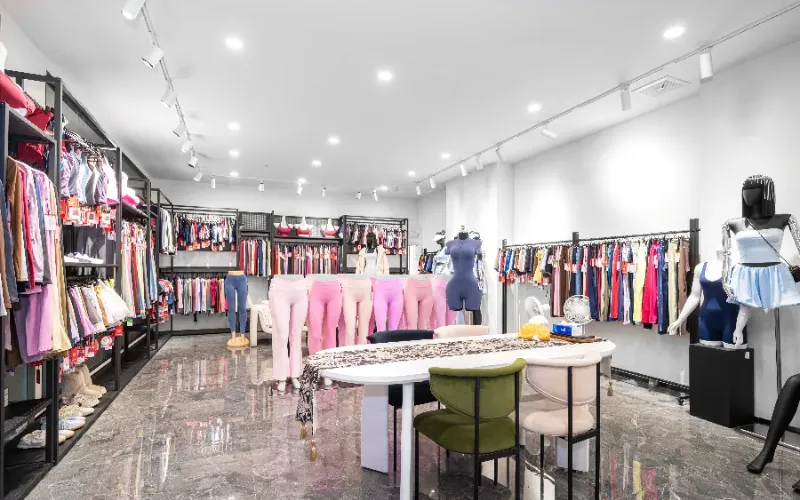
Client Profile
| Industry | Corporate apparel brand — full rebranding |
| Company Size | Mid-market, 50+ employees |
| Location | United States |
| Categories | Performance polos, outerwear shells, knit headwear, soft accessories, bags, and three additional categories |
| Key Challenge | Unified brand launch across 8 product categories with a single deadline; previously using 5+ separate suppliers |
| What They Needed | Single-factory coordination with Pantone-level color consistency across all substrates |
The client requested anonymity during the rebrand launch window. Full production calendars, QC inspection logs, and landed cost breakdowns available to qualified prospects under NDA.
The Challenge
The client’s rebrand was scheduled for a hard launch date — no flexibility. Every category had to arrive together, in the right quantities, with identical brand colors. But their existing supply chain was a disaster waiting to happen.
For 18 months prior, they’d been sourcing from five different suppliers. Each supplier used different dye houses, different lead time assumptions, and different quality standards. The purchasing team was managing 5+ PO trackers, 5+ shipping timelines, and 5+ QC reports — all on different formats.
What fragmentation was costing them:
- Color drift across categories: A Pantone-matched navy on cotton polos came out visibly different on polyester outerwear because no single authority was checking cross-substrate consistency. During our initial audit, we found a 15% color variance between the headwear embroidery thread and the outerwear shell fabric — both supposed to match the same brand navy.
- Staggered deliveries: The previous season, knit headwear arrived 3 weeks early (incurring warehousing fees) while outerwear shipped 2 weeks late (missing the launch window). The client paid $6,800 in rush air freight to close the gap.
- Admin chaos: The sourcing team was fielding 3 AM WeChat messages from suppliers in different time zones. No single production calendar existed. The Operations Director estimated her team spent 12-15 hours per week just reconciling status updates across suppliers.
What they tried first: They attempted to coordinate the five existing suppliers with a shared timeline spreadsheet. It failed within two weeks — one supplier changed their dye lot without notification, throwing the entire color palette out of alignment.
The client realized that coordination alone couldn’t fix a fundamentally fragmented supply base. They needed a single factory that could handle every category.
The Solution
Instead of managing eight purchase orders across five suppliers, we engineered one governed program. All 15,000 units — across eight fabric categories — ran through a single master production schedule.
Phase 1: SKU Rationalization and Standardization
Sourcing Coordinator Mei immediately standardized shared components across categories to reduce complexity:
- Matte-black zipper pulls applied to both outerwear and accessories, eliminating two separate trim orders
- Packaging polybags standardized across all eight categories — one spec, one supplier, one QC checkpoint
- 15,000 units grouped by fabric family (knits, wovens, coated) rather than by end product, allowing the cutting room to batch efficiently
Phase 2: Cross-Substrate Color Lock
This was the critical intervention. A nylon windbreaker, a cotton polo, and a polyester beanie all absorb dye differently. Applying the same Pantone code to three different substrates produces three visibly different results.
QC Lead Chen implemented a concurrent lab dip protocol: every fabric type was tested simultaneously under a standardized AATCC light box with D65 daylight bulbs. Chen compared headwear embroidery thread against outerwear shell fabric against polo knit swatches — all at the same time, under the same light.
Any variance beyond 5% triggered a reformulation before bulk production began.
A real friction moment: On day two of color testing, we caught the 15% variance between headwear thread and outerwear fabric. Chen adjusted the dye formulation for the polyester shells, bringing the delta under 3%.
This single catch saved the client an estimated $40,000 in ruined outerwear inventory that would have shipped in mismatched colors.
Phase 3: Synchronized Production Calendar
The master calendar was built backward from the launch date:
| Category | Lead Time | Actual | QC Result | Landed Cost | Notes |
|---|---|---|---|---|---|
| Outerwear Shells | 45 days | 42 days | Pass (AQL 2.5) | $5,200 | Bundled with beanies |
| Performance Polos | 30 days | 30 days | Pass (AQL 2.5) | $3,100 | Standardized polybags |
| Knit Headwear | 25 days | 25 days | Pass (100% Inline) | $1,500 | Held at dock for outerwear |
| Soft Accessories | 20 days | 18 days | Pass (Final Random) | $2,200 | Zipper pulls matched shells |
| Remaining 4 categories | 20-35 days | All on or ahead | All Pass | $5,000 combined | Consolidated into one FCL |
Total landed cost: $17,000 across all eight categories — an estimated $12,000 savings versus the previous fragmented approach after accounting for eliminated rush fees, warehousing, and partial shipments.
Phase 4: Quality Lock and Delivery
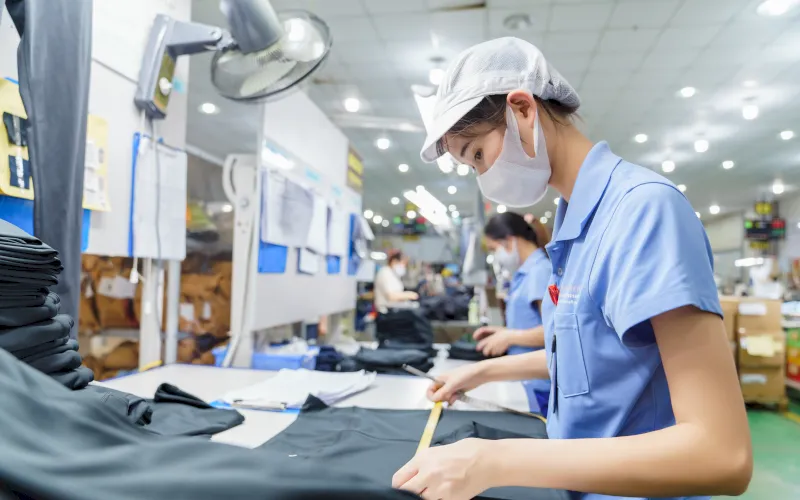
During the outerwear QC, QA Manager Chen caught a slight tension variation on the first batch of Juki machines. He paused the line, recalibrated, and cleared the batch within 45 minutes. Because all production ran under one roof, one QA team inspected everything — no gaps, no finger-pointing between suppliers.
Client Operations Director Pamela Yu reviewed the consolidated delivery: “The biggest win was not just unit cost — it was that our launch team stopped chasing 8 different status reports.”
The Results
| Metric | Before (Fragmented) | After (Single-Factory) |
|---|---|---|
| Suppliers managed | 5+ | 1 |
| Color variance (cross-substrate) | 15%+ | <3% |
| On-time delivery | 3 of 5 categories late | 8 of 8 on time or early |
| Rush freight costs | $6,800 | $0 |
| Total landed cost | ~$29,000 | $17,000 |
| Defect rate | Not tracked | 0% |
| Admin hours/week | 12-15 | <2 |
| Launch outcome | Staggered | Single-day, unified |
Key Takeaways
1. Color consistency is a supply chain problem, not a design problem. A Pantone code means nothing if five different dye houses interpret it independently. Single-factory production with concurrent cross-substrate lab dips — all under the same light box — is the only reliable solution.
2. Standardize shared components before you optimize per-category specs. Zipper pulls, polybags, and hang tags don’t need to be custom per category. Standardizing these across the program eliminated two supplier relationships and simplified QC before a single garment was cut.
3. Build the calendar backward from the launch date — and hold the latest-finishing category as the anchor. Outerwear (45 days) dictated the schedule. Everything else was paced to finish in the same window. Headwear intentionally finished 3 days early and was held at the dock to ship with outerwear in one consolidated FCL.
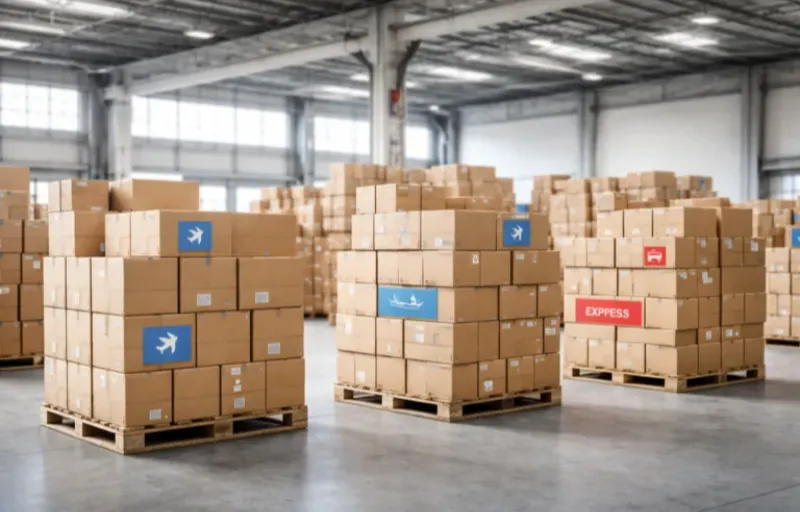
4. Bulk freight consolidation turns logistics from a cost center into a savings lever. Consolidating eight partial shipments into one FCL container eliminated rush air freight, warehousing fees, and partial-delivery chaos. The $12,000 savings was pure operational efficiency — not a negotiated discount.
Production calendar, cross-substrate lab dip reports, and landed cost breakdowns available to qualified prospects under NDA. Submit an inquiry to request the full documentation.
Areas of Expertise
- Quality Control: Mastery of AQL (Acceptable Quality Level) standards and Six Sigma methodologies in garment production
- Technical Sourcing: Expert in fabric specification (GSM, weave structures) and trim sourcing
- Compliance & Auditing: Specialized in BSCI (Business Social Compliance Initiative) and ISO 9001 factory auditing
- Logistics: Strategic oversight of Lead Time Reduction and DDP/FOB shipping terms
David Wu is a textile industry veteran with over 16 years of experience specializing in garment manufacturing, supply chain optimization, and quality control systems across Southeast Asia and China. His career is defined by implementing rigorous AQL 2.5/4.0 inspection protocols for mid-to-large-scale private label brands. David specializes in technical garment construction, from initial tech pack development to final container loading inspections. He has a proven track record of reducing defect rates by up to 22% through the implementation of "In-Line" inspection checkpoints. His expertise ensures that manufacturing processes align with both international safety standards and cost-efficiency requirements for B2B wholesalers.

Get the Same Results
Want a case study like this for your brand?
Every case study starts with a conversation. Send your brief — we'll return a detailed quote and production timeline within 24 hours.