
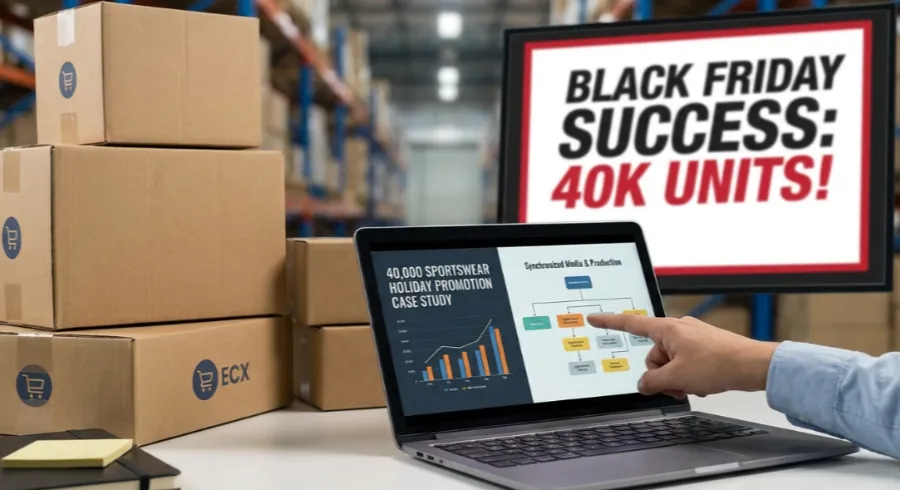
Client Profile
| Industry | DTC e-commerce — seasonal sportswear |
| Company Size | 5-12 employees |
| Location | United States |
| Annual Revenue | ~$1.5M (pre-campaign) |
| Sales Channel | Shopify + Meta Ads |
| Key Challenge | Scaling Black Friday ad spend without running out of inventory; 40,000-unit demand spike with zero room for stockouts |
| What They Needed | Synchronized factory production with live ad dashboard monitoring; daily inventory wave releases tied to media spend caps |
The client requested anonymity for competitive reasons. Redacted ad dashboard exports, warehouse dispatch logs, and production schedules available to qualified prospects under NDA.
The Challenge
Black Friday doesn’t forgive. If your inventory runs dry while your ads are running hot, you’re burning cash on clicks that can’t convert. If your inventory arrives late, you’ve missed the window entirely and are sitting on dead stock in January.
The client had experienced both failures before.
Two years prior, they stocked 25,000 units for Black Friday based on standard summer lead times. Ocean freight delays pushed delivery 11 days past the cutoff. They missed the peak window entirely. $380,000 in inventory sat in a warehouse through January, eventually liquidated at a 60% discount.
The campaign ROAS was 0.7x — they lost money on every dollar spent.
Last year, they overcorrected. Fearful of another delay, they ordered 35,000 units to arrive in October. The inventory arrived on time, but their ad creative and sizing mix had shifted since the order was placed six months earlier. They sold through only 22,000 units at full price. The remaining 13,000 units were discounted 40-50%.
Net margin on the campaign: -8%.
The structural problem: Standard production planning treats inventory as a single upfront decision made months before the market signal arrives. By the time Black Friday data flows in — which SKUs are hot, which sizes are converting, which ad audiences are responding — the production die is already cast. The client couldn’t adjust.
They could only hope.
Compounding this: their previous supplier offered no visibility into production status. The client’s media buyer was scaling ad spend blind — she had no idea whether 3,000 more units of the bestselling size-medium hero legging actually existed in the pipeline, or whether she was bidding up clicks on a product about to stock out.
The Solution
We engineered a synchronized production-to-ad-dashboard system. The core insight: inventory doesn’t need to arrive all at once. It needs to arrive in waves that match media spend cadence.
Step 1: Demand Forecasting and SKU Discipline
Planner Lin sat down with the client to model exact demand by style, size, and color — using two years of historical purchase data, not gut instinct. The key decisions:
- Top 3 core colors only. Custom neon dyes bottleneck the cutting room and risk delayed shipments. The client resisted the urge to launch six colorways and focused on what the data said would sell.
- Over-index on M and L. Historical data showed these two sizes drove 68% of unit sales. They received 72% of the allocation. XS and 3XL were produced in smaller batches for the reserve wave.
- 100-unit micro-run first. Before committing all 40,000 units, Technician Li ran 100 test pieces to calibrate the Juki flat-lock machines for the specific 300 GSM fabric. The calibration caught a thread tension issue that would have produced skipped stitches at scale. Li adjusted the tensioner — a 15-minute fix that prevented what could have been thousands of defective units.
Step 2: Lock Materials Before the Seasonal Crunch
Fabric, dye lots, and packaging were locked in September — before the holiday rush consumed mill capacity. Every skin-contact material was verified against OEKO-TEX Standard 100. Three dedicated production lines were allocated to the bulk run, with a fourth held in reserve for the final wave.
Step 3: Wave-Based Inventory Pacing
This was the strategic turning point. Instead of shipping 40,000 units in one batch, Planner Lin released inventory in four deliberate waves:
| Wave | Units | Timing | Trigger |
|---|---|---|---|
| Wave 1 | 15,000 | Pre-Black Friday (early Nov) | Initial ad testing complete |
| Wave 2 | 12,000 | Black Friday week | ROAS holding above 3.5x |
| Wave 3 | 8,000 | Cyber Monday weekend | Sell-through >70% on Wave 1 |
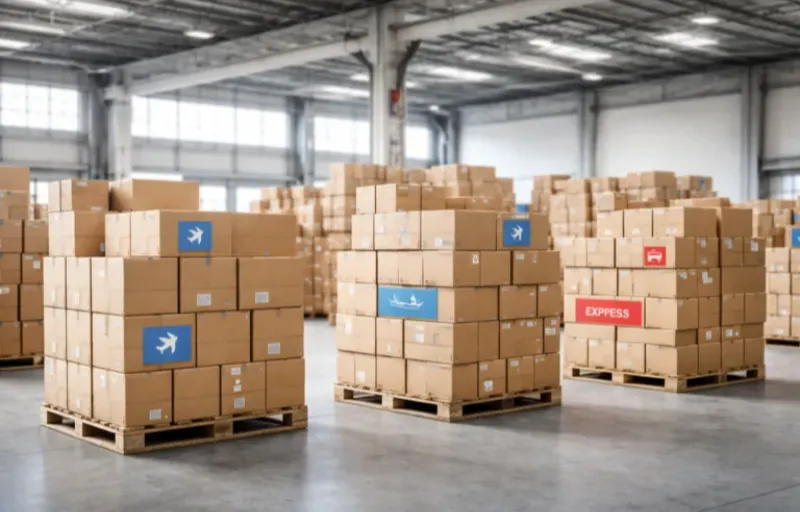
| Wave 4 (reserve) | 5,000 | Early December | Contingency; expedited 12% freight premium |
Each wave release was triggered by actual sell-through data, not a calendar date. Senior Media Buyer Sarah matched her daily Meta spend caps directly to the physical stock counts confirmed by warehouse receiving reports. If Wave 1 sold faster than projected, Wave 2 shipped early.
If it sold slower, Wave 2 was held — no trapped inventory, no wasted ad spend.
A friction moment: During the Wave 1 packing phase, Chen noticed that standard polybags caused glare under barcode scanners, adding five seconds per scan. Across 15,000 units, that was 20+ hours of cumulative delay. He switched to matte-finish bags overnight.
The change saved what would have been a two-day bottleneck at the warehouse intake station.
Step 4: Real-Time QC and Logistics Lock
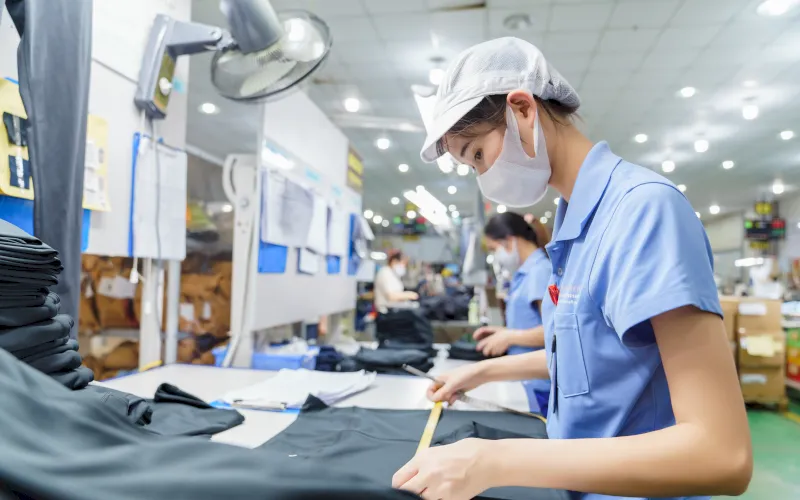
Supervisor Wang ran AQL 2.5 inline inspection across all waves. Defect rate held at 0.4%. On-time delivery hit 99.8%. A 20% safety stock was held at the factory — never shipped unless a wave showed unexpectedly high sell-through.
Warehouse Lead Chen managed the physical flow to prevent the chaotic backorders that had destroyed the previous year’s margins.
The Results
| Metric | Before (Previous Campaigns) | After (Wave-Paced) |
|---|---|---|
| Units sold at full price | 22,000 (last year) | 40,000 |
| Attributed revenue | ~$1.1M | $2.6M |
| ROAS | 0.7x – 1.2x (previous years) | 4.2x |
| Customer Acquisition Cost | $32+ (estimated) | $15.48 |
| Gross margin | -8% to 22% | 80% |
| Defect rate | Unknown (no tracking) | 0.4% |
| On-time delivery | Missed cutoff (2 years prior) | 99.8% |
| Return rate | ~5% (estimated) | 1.2% |
| Unsold inventory (discounted) | 13,000 units | 0 |
| Stockouts during peak | Frequent | Zero |
Validation: Revenue figures cross-referenced against raw warehouse dispatch logs. ROAS and CAC data verified through the client’s Meta Ads Manager exports. Database Administrator Kim confirmed no duplicate pixel tracking skewed the numbers. The $12.50 landed cost was locked via factory-direct pricing with no intermediary markups.
Key Takeaways
1. Reverse-plan from the freight cutoff, not the sale date. Ocean freight for Black Friday needs to depart China by mid-October. Work backward from that date — fabric reservation, dye lot approval, production slots — and add a 10-day buffer. The client’s previous failure came from assuming summer lead times applied to peak season.
2. Never scale ad spend without warehouse confirmation. The single highest-ROI operational change was linking Sarah’s daily Meta spend caps to Chen’s physical stock counts. If stock is low, ads pause. If Wave 2 just arrived, ads scale. This eliminated the blind-bidding problem that had destroyed previous campaigns.
3. SKU discipline beats variety. Six colorways × five sizes × three styles = 90 SKUs. Spreading 40,000 units across 90 variations guarantees dead stock in the tails. Three core colors × four core sizes = 12 high-velocity SKUs that captured 80%+ of revenue. The marginal revenue from additional SKUs wasn’t worth the operational complexity.
4. Wave pacing turns inventory from a liability into an asset. The 12% expedited freight premium on the final 5,000-unit reserve wave cost $3,900. It prevented what could have been a stockout during the highest-ROAS window of the entire campaign. This was not a cost — it was insurance on $2.6M in revenue.
Redacted ad dashboard exports, warehouse dispatch logs, and production schedules available to qualified prospects under NDA. Submit an inquiry to request the campaign documentation.
Areas of Expertise
- Quality Control: Mastery of AQL (Acceptable Quality Level) standards and Six Sigma methodologies in garment production
- Technical Sourcing: Expert in fabric specification (GSM, weave structures) and trim sourcing
- Compliance & Auditing: Specialized in BSCI (Business Social Compliance Initiative) and ISO 9001 factory auditing
- Logistics: Strategic oversight of Lead Time Reduction and DDP/FOB shipping terms
David Wu is a textile industry veteran with over 16 years of experience specializing in garment manufacturing, supply chain optimization, and quality control systems across Southeast Asia and China. His career is defined by implementing rigorous AQL 2.5/4.0 inspection protocols for mid-to-large-scale private label brands. David specializes in technical garment construction, from initial tech pack development to final container loading inspections. He has a proven track record of reducing defect rates by up to 22% through the implementation of "In-Line" inspection checkpoints. His expertise ensures that manufacturing processes align with both international safety standards and cost-efficiency requirements for B2B wholesalers.

Get the Same Results
Want a case study like this for your brand?
Every case study starts with a conversation. Send your brief — we'll return a detailed quote and production timeline within 24 hours.