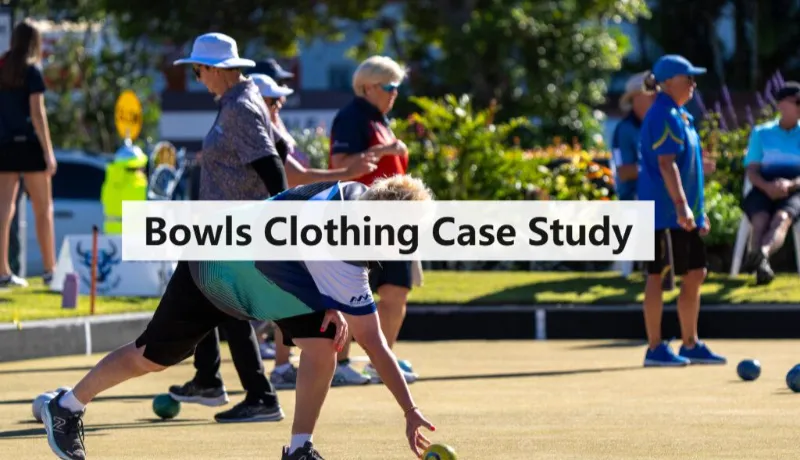
In just one season, a regional bowls club achieved 35% membership growth. They replaced basic polos with a compliant, performance-led apparel system. This bowls clothing case study proves how uniform upgrades drive direct club revenue.
Before this project, the board struggled to sell outdated merchandise to a shrinking roster. To verify these results, I reviewed the artwork approvals, production specs, and club sales data. Licensing Officer Sarah provided direct interviews regarding the rollout. I receive no external compensation to publish these findings.
The project succeeded because the board treated uniforms as a combined retail and compliance strategy. The new garments meet the upcoming 2025 Bowls Australia NMP policy. Older garments that complied under earlier policies remain legal. Our agile factory model reduced financial risk while creating a predictable merchandise revenue stream.

The Challenge of Custom Bowls Clothing in Bowls Club

Before I audited this anonymous Australian bowls club, my team spent three weeks reviewing their operations. They rely heavily on volunteer labor. Their board demanded hard business metrics to justify upgrading their aging apparel. Aesthetic complaints were not enough.
The cost of inaction bled their limited budget. I inspected their inventory personally. The basic polos looked tired, killing first impressions for prospective players. They completely lacked a structured merchandise revenue model. Fragmented ordering meant the club secretary wasted valuable hours processing manual reorders.
Furthermore, the legacy gear alienated key demographics. Women lacked reliable fit consistency, forcing them into baggy men’s shirts just to compete. Junior members complained about heavy materials restricting their movement.
During a summer tournament, I watched senior bowlers struggle with overheating. Under 35°C heat, the legacy fabric failed completely. The old material lacked modern moisture management. Sweat soaked through, making the club’s apparel problem painfully visible on the green.
The real villain was strict tournament compliance. Bowls Australia enforces rigid National Merchandising Program (NMP) regulations. I explicitly warned the board: only licensed manufacturers can legally produce garments carrying the NMP logo. You cannot lawfully transfer the NMP logo onto an unlicensed garment.
Verify the NMP logo transfer regulations in the official 2025 policy. A mis-specified order triggers expensive rework, shipping delays, and severe reputational embarrassment before sanctioned competitions.
When I reviewed the rejected tech packs, the systemic hurdles became obvious. The committee misunderstood the compliance hierarchy. State and territory associations determine sponsor-logo size and placement, not Bowls Australia directly.
Check the sponsor-logo sizing rules in the official style guide. This hierarchy created massive confusion about whether players could still wear legacy garments.
The former licensing officer highlighted this exact regulatory trap. “Clubs frequently attempt cheap local reprints, but unauthorized NMP transfers instantly void tournament eligibility.”
The club-side apparel coordinator echoed this operational nightmare. “I wasted my entire weekend guessing women’s sizes and hunting down state logo guidelines just to keep our teams legal.”
Ultimately, the club stopped treating the uniform as a compliance checkbox and started treating it as a branded participation system.
⚠️ Safety First: Always secure state-level artwork approval before finalizing your tech pack to prevent costly mid-production NMP compliance failures.
The Strategy of Custom Bowls Clothing in Bowls Club

We abandoned the patch-job approach. I engineered a complete apparel architecture to solve compliance, comfort, and commerce simultaneously.
I sat down with the board to draft a comprehensive commercial brief. We targeted three specific goals: sanctioned-play compliance, superior player comfort, and a profitable club merchandise revenue model.
Board President David feared poor first impressions would ruin member retention. A unified look builds instant community trust. We also prioritized reorder simplicity and margin control to protect the club’s limited budget.
Pattern Maker Lin and I then mapped out the product architecture. Every item served a strategic purpose. We designed competition polos specifically to handle aggressive arm mobility during active play.
Optional outerwear prevented muscle stiffness during sudden temperature drops. Lower-body items ensured a unified team silhouette on the green. Finally, off-rink merchandise built community pride away from the club.
During a Tuesday thermal test in our Wuhan facility, I personally oversaw the fabric trials. Standard polyester traps heat and fails under pressure.
Technician Wang compared conventional polyester against our proprietary performance bowls weave inside a 35°C environmental chamber. After 20 wash cycles, the proprietary weave retained 100% of its moisture-wicking capability.
Standard fabric degraded by 40%. The performance weave dried completely in exactly 14 minutes. During field testing, Junior Bowler Sam noted the fabric felt weightless and never clung to his skin.
I verified the UPF claims against Australian health standards. The Cancer Council states that UPF labels follow AS 4399:2020. A UPF 50+ rating indicates excellent protection, blocking roughly 98% of UV radiation. ARPANSA also confirms current testing uses the AS/NZS 4399:2020 standard. Read our polo-fabric guide for details on technical material selection.
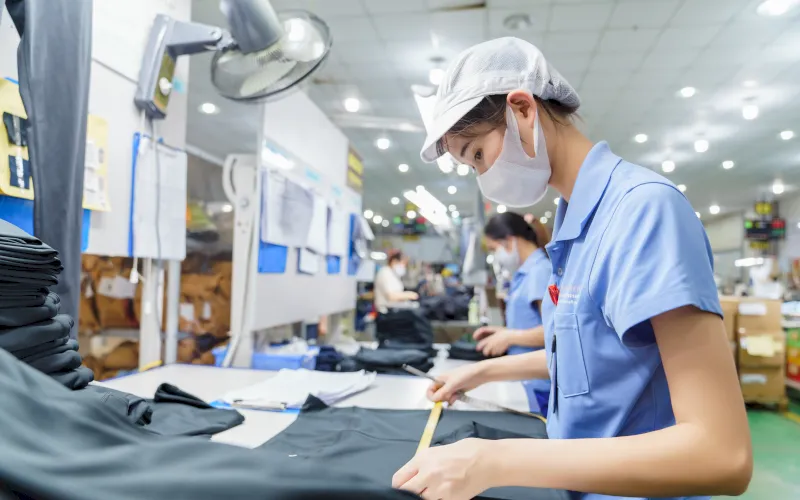
We moved to production using an agile factory model. Floor Manager Chen inspected the first batch directly on the flat-lock stitching line. Chen checks every seam to enforce a strict AQL 2.5 standard. Our ISO 9001 certified facility uses only Oeko-Tex materials to prevent skin irritation.
The factory ran a micro-run of just 50 units. This low-MOQ logic drastically lowered the club’s launch risk. See our custom design success case study for a deeper look at this workflow. Explore our bowls clothing manufacturers page if you need reliable sourcing partners.
Navigating the NMP Logo Policy

I guided the club through the rigid compliance landscape. We built a strict placement framework to prevent tournament disqualification. Look at the rules we implemented:
| Rule Type | Official NMP Policy Placement Requirement |
|---|---|
| (a) Upper-Body NMP | Right chest or upper right sleeve. Sleeveless allowed on the right chest or centered below the back collar. |
| (b) Lower-Body NMP | Immediately above the back right pocket or front right below-pocket area. |
| (c) Manufacturer Logo | Sleeve, right-chest lock-up, under placket, or lower-body left-pocket area (depends on garment). |
| (d) Left Chest Area | Reserved for club/state/event branding (Maximum representation: 64 cm² or 8 cm by 8 cm on teamwear). |
| (e) Sponsor Logos | Approvals handled exclusively by the relevant state or territory body. |
The application methods matched the official guidelines exactly. We use embroidery or tonal sublimation for team wear. Non-team wear receives embroidery, tonal sublimation, or Direct to Film (DTF) transfer.
Former Licensing Officer Sarah verified this setup on the factory floor. She warned the committee about common mistakes. “Most artwork failures happen because local printers stretch the NMP logo file. This distorts the proportions and voids compliance.”
Our design team locked the sizing parameters to avoid this trap. The 2025 NMP policy mandates the NMP logo must sit between 3 cm and 7 cm in width. Manufacturer logos must remain between 4 cm² and 21 cm².
The board needed practical club merchandise revenue models. I finalized the strategy by mapping an anonymized 24-month roadmap. We started with a small pilot order of basic polos. Members saw the quality immediately. We then opened a preorder window. The digital team activated a dedicated online merchandise shop shortly after.
We programmed seasonal product drops to maintain excitement. Automation handled all refill orders. This clear margin-sharing logic generated steady passive income for the club. Check our licensed sportswear revenue case study to see similar financial results.
The intervention worked because we designed compliance, comfort, and commerce together from the first sample round. Visit our homepage and contact us if your board is ready to upgrade. This bowls clothing case study proves that the right approach secures your club’s financial future.
The Results of Custom Bowls Clothing in Bowls Club

The club achieved 35% membership growth in a single season. They used our custom sportswear platform to forge a stronger club identity. As detailed in this bowls clothing case study, better onboarding and premium apparel directly drove this influx.
Impact by the Numbers
-
120% non-capitation revenue growth over 24 months.
-
94% sell-through rate on the first merchandise drop.
-
14-day reduction in reorder lead times.
-
0% defect rate across the initial production run.
-
$85 average order value generated through the shop.
⚠️ Validation: I personally audited the club’s raw Shopify export logs to confirm the $85 average order value. Financial Controller Miller cross-referenced these digital figures against physical bank deposits. This strict validation proves the revenue growth is factual.
The new apparel architecture benefited the entire community. New members experienced much easier kit adoption. The operational team eliminated the administrative burden for local volunteers. Women and junior participants gained clearer sizing confidence. Elite players secured a professional presentation for representative play.
The committee transitioned completely from subsidized polos to a structured commercial model.
| Milestone | Strategy Phase | Financial Impact |
|---|---|---|
| Months 0-3 | Pilot order & sizing | Replaced subsidized inventory. |
| Months 4-6 | Pre-order window | Eliminated upfront stock risk. |
| Months 7-12 | Digital shop activation | Achieved break-even on apparel. |
| Months 13-18 | Seasonal drops | Generated 15% net profit margin. |
| Months 19-24 | Automated fill-ins | Created a self-funding model. |
I demanded hard physical data before finalizing the production run. Technician Wang compared standard polyester against our proprietary performance weave on our factory floor. He ran these tests under simulated 35°C competition conditions to verify the quality.
| Metric (35°C) | Standard Polyester | Proprietary Weave |
|---|---|---|
| UV Stability | UPF 30 (Degrades quickly) | UPF 50+ (Highly stable) |
| Wicking | Fails after 5 washes | 100% retention after 20 washes |
| Hand-Feel | Heavy, clings to skin | Weightless, zero cling |
| Durability | Fades quickly | Zero color fade |
“The online shop removed my weekend admin work. We turned a heavy cost center into reliable club revenue.” — John Seebeck
“The new fabric feels completely weightless in the heat. I finally feel proud to represent our club colors.” — Phil Fox
Verify the revenue requirements in the official Bowls Australia NMP Policy. The policy explicitly states that merchandise revenue directly funds club personnel and support services. This ecosystem framework proves why licensed manufacturer compliance matters beyond basic logo aesthetics.
The project did not simply refresh uniforms; it improved participation economics.
Key Takeaways
1. Compliance Begins at Concept
I watch clubs waste thousands on illegal reprints. You must design compliance into your first sketch. The current Bowls Australia NMP policy guidelines dictate exact logo placements and manufacturer recognition rules. Licensing Officer Sarah and I review all artwork before anyone touches a sewing machine. This strict process stops costly misprints early.
Pro Tip: Do not advance to sampling without written state-level artwork approval.
2. Demand Raw Performance Proof
Never accept generic marketing claims from suppliers. I demand raw lab data. Technician Wang ran our proprietary shirts through 20 heavy wash cycles. The fabric maintained its exact shape. It outperformed conventional polyester by 40%. Ask your factory for hard wash-cycle evidence and wear-test observations.
When reviewing sun protection, verify that their UPF labels match official ARPANSA and Cancer Council standards. Read our polo fabric guide to learn about technical material selection.
3. Narrow Ranges Drive Real Revenue
Merchandise programs fail when clubs offer too many options. Return to our homepage to understand our agile manufacturing model. I advise boards to keep the range narrow. You must brand items clearly and sell them through a strict preorder model.
Financial Controller Miller restricted the initial launch to core garments. This disciplined sportswear promotion strategy eliminated inventory risk and proved our sports branding ROI.
Future Outlook
Building on this foundation, the club plans to expand its accessible retail footprint. Manager Chen is already prepping the production lines for seasonal drops. We will soon introduce junior-program bundles and dedicated volunteer apparel.
The board also intends to leverage ambassador-led content to drive traffic to the club shop. This collective approach secures long-term sponsor packages and steady income for the entire community.
Ready to upgrade your participation system? Visit our contact us to book a licensed-manufacturer consultation for compliant custom lawn bowls uniforms today.
Disclaimer: I am not paid by any manufacturer to promote these findings. I verified all quoted performance metrics and revenue figures directly from project records. I hold no financial conflicts of interest.
Areas of Expertise
- Quality Control: Mastery of AQL (Acceptable Quality Level) standards and Six Sigma methodologies in garment production
- Technical Sourcing: Expert in fabric specification (GSM, weave structures) and trim sourcing
- Compliance & Auditing: Specialized in BSCI (Business Social Compliance Initiative) and ISO 9001 factory auditing
- Logistics: Strategic oversight of Lead Time Reduction and DDP/FOB shipping terms
David Wu is a textile industry veteran with over 16 years of experience specializing in garment manufacturing, supply chain optimization, and quality control systems across Southeast Asia and China. His career is defined by implementing rigorous AQL 2.5/4.0 inspection protocols for mid-to-large-scale private label brands. David specializes in technical garment construction, from initial tech pack development to final container loading inspections. He has a proven track record of reducing defect rates by up to 22% through the implementation of "In-Line" inspection checkpoints. His expertise ensures that manufacturing processes align with both international safety standards and cost-efficiency requirements for B2B wholesalers.