8 Best Swimwear Manufacturers in the USA — Swim-Specific Construction
 David Wu QA Consultant
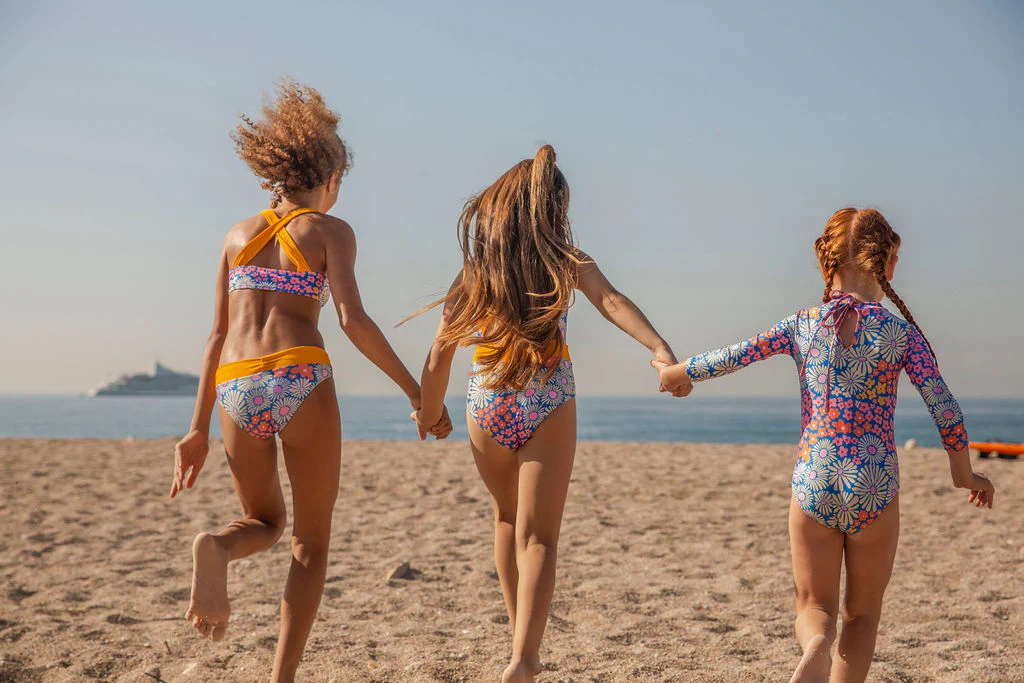
Most “best swimwear brands” posts are written for shoppers. This one is written for the person placing the order, and it covers swim only.
Swim is the least forgiving category in apparel. Half a centimeter of elastic tension decides whether a leg opening curls away from the body or bites into it.
Lining that stretches against the shell pulls the suit out of shape after two wears. A print mapped to the wrong seam lands a flower across the side seam. The eight partners below were filtered on one question: can this house build a swim program that can be reordered?
Every entry is a US production partner. Retail brands, overseas factories with a US landing page and blank-and-relabel suppliers are excluded — none can take a custom swim line from tech pack to bulk.
📌 TL;DR: Plucky Reach publishes the clearest terms: 100 pieces per style per colorway, 150 for sublimation, 5–8 weeks, $12–$35 per unit. SEW IN LA and DZIGN ROOM list the lowest production tiers at 10–50 pieces. For a first run under 100 pieces, start there.
The Shortlist at a Glance
| Company | Location | Model | Published minimum | Lead time |
|---|---|---|---|---|
| Plucky Reach | Los Angeles, CA | Full-package cut-and-sew | 100 / style / colorway (150 sublimation) | 5–8 wks from approved sample |
| SEWBY | Downtown LA | Full-package private label | 100–300 / 300+ / 500+ | Not published |
| SEW IN LA | Downtown LA | Full-service | 10–50 / 50–100 / 100–300 tiers | Not published |
| BOMME Studio | Los Angeles, CA | Full-package development | 100–300 / 300+ tiers; samples 1–10 | Not published |
| ESTILO | Los Angeles, CA | Full-package, high-end | 100–300 / 300+ tiers | Not published |
| Lefty Production Co. | Los Angeles, CA | Development house + production | 10–50 / 50–100 tiers for development clients | Not published |
| DZIGN ROOM | Los Angeles, CA | Small-batch atelier | 10–50 / 50–100 tiers | Not published |
| Renaissance Creative Studios | Los Angeles, CA | Design factory + production management | No minimum stated | Not published |
Method note: Entries were checked in November 2026 against each company’s own pages and its CFDA Production Directory listing. Company figures are labeled; where no number is published, the table says so.
Houses are ranked by how directly they can take a custom swim brief to bulk, not by size. The listing is not evidence of a cutting floor, so any step the public record leaves unproven is named in the entry. Corrections follow the fact-checking process and editorial policy.
What a US Swimwear Run Actually Costs
Minimums are half the decision. Money spent before the first unit ships is the other half.
- Sampling: a first fit sample plus one revision is normal. Plucky Reach’s published process assumes two fit reviews before bulk. Budget for both, and ask whether the sample fee is credited against your bulk order.
- Unit price: Plucky Reach publishes $12–$35 per unit in Los Angeles. That spread covers shell fabric (nylon/Lycra, ECONYL or chlorine-resistant polyester), cup construction, hardware, and whether the print is solid or sublimated.
- Fabric minimum: a custom dye lot is often measured in hundreds of yards, sometimes above the garment minimum. Request the minimum per color before you design a six-color range.
- Labels and packaging: woven labels, care labels, hangtags, poly bags and mesh bags are usually quoted separately. Get an all-in landed cost per unit; our packaging guide covers the components.
- Freight: domestic is faster but not free. Get the ship-from address and the freight term in the quote.
💡 Pro Tip: Price the same style at 100 and at 500 pieces. That gap shows whether the factory wants pilot work or volume work, and it predicts how a reorder will be priced. Negotiation tactics are covered in how to negotiate MOQs with clothing manufacturers.
1. Plucky Reach — Best for Full-Package Swim at a Published 100-Piece Minimum
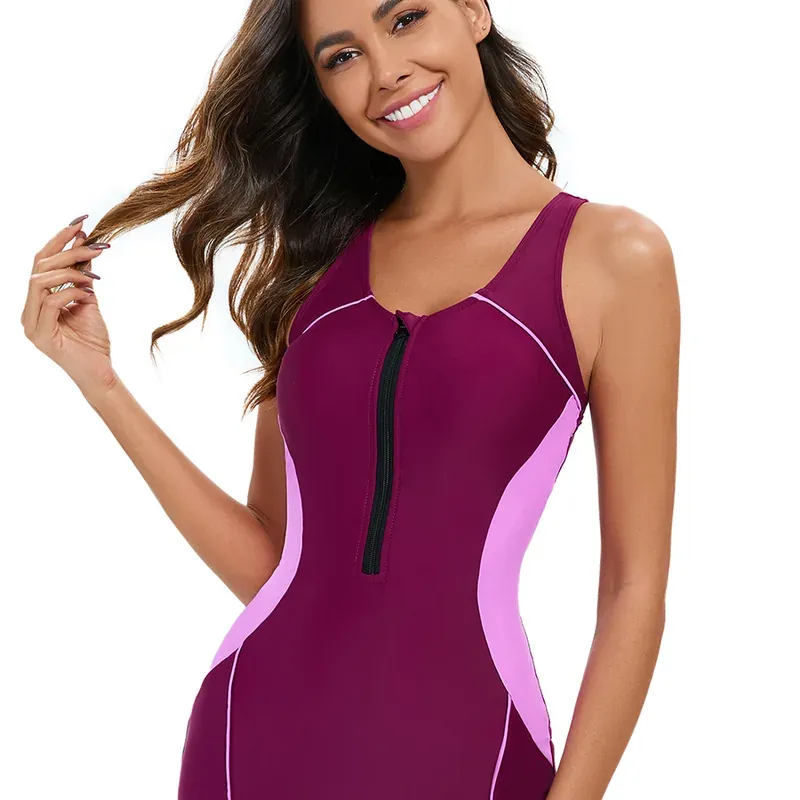
Plucky Reach is the only house on this list that publishes unit price, minimum and lead time together, which makes it the easiest entry point to benchmark.
Documented (November 2026): Los Angeles · full-package cut-and-sew · 100 pieces per style per colorway, 150 recommended for sublimation prints · 5–8 weeks after sample approval · $12–$35 per unit · private label from 100 pieces with woven labels, care labels, hangtags and packaging.
Swim styles include bikinis, one-pieces, tankinis, rash guards, board shorts, swim leggings and cover-ups. Fabrics run from nylon/Lycra 80/20 and ECONYL recycled nylon to chlorine-resistant polyester with Xtra Life Lycra, power-mesh lining and UPF 50+ nylon/spandex. Sourcing is OEKO-TEX Standard 100, with two fit reviews before bulk.
Print workflow sets this house apart. Sublimation on nylon is mapped to the pattern pieces before cutting, so the repeat lands where it should at the side seam and cup seam — the part most small swim runs get wrong.
Model fit is the trade-off. This is a full-package house, not a cheap CMT shop: the price buys sourcing, pattern work, print coordination and QC. Brands that already own swim patterns and fabric should compare a CMT quote from SEWBY first.
🛡️ Verdict: The strongest starting point for a first or second swim collection at 100–500 pieces, provided full-package service is wanted rather than CMT.
⚡ Power Move: Ask for the fabric minimum per color and the print setup cost in the same email as the 100-piece quote. Those two numbers decide whether a five-color range is viable.
2. SEWBY — Best for Private-Label Swim at 100–300 Pieces
SEWBY runs full-package private label from the Downtown LA Fashion District, and its CFDA listing places swimwear next to flatlock activewear, jogging suits and fleece — a useful combination for a swim-and-cover-up collection.
Documented (November 2026): 2431 S Santa Fe Ave, Los Angeles, CA 90058 · full-package private label · CFDA production tiers 100–300, 300+, 500+ · cutting, pattern making and grading, sampling, sewing, printing, embroidery, fabric sourcing and dyeing.
Products cover swimwear, activewear, flatlock activewear, jogging suits, tees, fleece and uniforms. Lead time not published.
Tier structure matters here. Orders of 100–300 pieces sit inside SEWBY’s smallest published band rather than being an exception — a healthier starting point than a factory that quotes 100 and then reveals a per-color minimum.
Print capacity remains the open question. Check whether sublimation is coordinated in house or through a partner, and get the partner named if it is outsourced.
🛡️ Verdict: A strong private-label option for a 100–300 piece swim or swim-and-fleece capsule, with the sewing floor and print partner named in writing.
⚡ Power Move: Request a 150-piece bikini quote with flatlock seams, power-mesh lining and a custom woven label, then ask which of the three is subcontracted.
3. SEW IN LA — Best for the Lowest Documented Tiers
SEW IN LA lists production tiers starting at 10–50 pieces, the lowest band on this list and the reason it belongs near the top for a first sample run.
Documented (November 2026): 309 E 8th St #402, Los Angeles, CA 90014 · full-service apparel manufacturing · CFDA tiers 1–10 proto and samples, 10–50, 50–100, 100–300, 300+, 500+.
Products include swimwear, activewear, bra tops, jogging suits, golf, knits and fleece; services cover cutting, pattern making and grading, sampling, sewing, printing, embroidery and fabric sourcing. Clients range from startups to established brands. Lead time not published.
Low tiers are development work at development prices. Use one to prove fit and print placement, then move bulk to a tier that amortizes setup. Confirm whether the 10–50 band includes swim-specific construction or is a general apparel tier that happens to list swimwear; the answer changes the sample cost.
🛡️ Verdict: The right first stop for a 10–50 piece proof run, especially when pattern help is needed before a tech pack exists.
⚡ Power Move: Book a 20-piece fit run in the final fabric, not a stand-in. Swim fit is fabric-dependent, and a substitute knit hides the problem being tested.
4. BOMME Studio — Best for Sustainable Swim Development
BOMME Studio has built its public positioning around sustainable, ethically made clothing, and lists swimwear inside an activewear range that also covers flatlock construction, bra tops and dance wear.
Documented (November 2026): 824 S Los Angeles St, Los Angeles, CA 90014 · founded 2018 · full-package development house · 100+ brands, celebrities and entertainment companies served · CFDA tiers 1–10 samples, 100–300, 300+, 500+.
Services include cutting, pattern making and grading, sampling, sewing, fabric sourcing, dyeing, printing and embroidery. The house is in the process of becoming a certified B Corp. Lead time not published.
A sustainability claim needs one document: the fiber certificate for the exact lot. Recycled nylon and polyester are traceable, but the certificate must name the mill and the lot, not just the brand story.
Chlorine is the other fork. Resort swim in recycled nylon is a different product than a swim-school suit in chlorine-resistant polyester; decide which is being built before the fabric is locked.
🛡️ Verdict: Best for a resort or DTC line that leads with recycled fabric and needs development support, not only sewing capacity.
⚡ Power Move: Ask for the GRS or RCS transaction certificate for the shell fabric lot and the fabric’s chlorine-resistance test before approving the sample.
5. ESTILO — Best for High-End and Contemporary Swim
ESTILO is a high-end contemporary manufacturer whose public client list includes Neiman Marcus, REVOLVE, SSENSE, FWRD and Farfetch. Swim sits inside a range that also covers leather, suiting and denim.
Documented (November 2026): 860 S Los Angeles St, Los Angeles, CA 90014 · high-end contemporary full-package production · development, bespoke manufacturing, private label and custom merch · CFDA tiers 1–10 samples, 10–50, 50–100, 100–300, 300+, 500+ · swim listed among specialties · lead time not published.
High-end swim is a different brief: bonded seams, structured cups, hardware and lining systems that hold shape. Those details carry the cost, and they belong in the tech pack from the start.
Minimum and price are the trade-off. Houses producing for luxury retailers are not built around 50-piece tests; confirm the smallest swim tier before falling for the sample quality.
🛡️ Verdict: The right partner when the product is premium, the construction complex, and the brand can support a higher minimum and unit cost.
⚡ Power Move: Ask for a bonded-seam and a flatlock sample of the same style, then compare leg-opening recovery after 20 hand washes.
6. Lefty Production Co. — Best for Established Swim Programs
Lefty Production Co. is a one-stop development house and manufacturer specializing in swimwear, activewear and athleisure, with low minimums for clients who develop their garments in house.
Documented (November 2026): 318 W 9th St, Suite 1010, Los Angeles, CA 90015 · full-service design, development and production · swimwear and bikini, activewear, athleisure · CFDA tiers 1–10 samples, 10–50, 50–100, 100–300, 300+, 500+ · low minimums for development clients · swimwear MOQ and lead time not published.
That last clause is the whole model: the low minimum is attached to development. Arrive with a finished tech pack and ask only for sewing, and both the minimum and the price change.
Brands needing pattern work, grading and a production manager in one building usually find the trade worth it. Brands that already own patterns do not.
🛡️ Verdict: Strong for a brand that wants development and production under one roof and will pay for development to unlock the low tier.
⚡ Power Move: Ask for the development fee, the bulk credit and the resulting MOQ on one page, signed before sampling starts.
7. DZIGN ROOM — Best for Small-Batch Emerging Designers
DZIGN ROOM runs a Los Angeles atelier built around small-batch production, and says outright that it offers some of the lowest minimums in the country.
Documented (November 2026): 6311 Romaine St #7327, Los Angeles, CA 90038 · small-batch atelier for emerging designers · CFDA tiers 1–10 samples, 10–50, 50–100, 100–300 · swimwear, activewear, flatlock activewear, dance wear, evening and bridal · women’s contemporary and haute couture · lead time not published.
Strength lies in the 1–10 and 10–50 bands; scale is the limitation. Ateliers set up for emerging designers are not the place for a 5,000-piece reorder, and asking one to behave like a volume factory usually ends in a missed date. Use it to get your fit and print placement right, then decide whether the same house can carry the first production run.
🛡️ Verdict: A sensible starting point for a 10–50 piece proof run when the design is still moving and the budget is tight.
⚡ Power Move: Ask what the 100-piece price would be before approving the sample. If the answer is vague, plan bulk elsewhere from the start.
8. Renaissance Creative Studios — Best for No-Minimum Development
Renaissance Creative Studios describes itself as a design factory with no minimum requirements, pairing pattern making and sample development with production management.
Documented (November 2026): 840 Santee Street, Suite 604, Los Angeles, CA 90014 · design factory and production management · no minimum stated on its CFDA listing · CFDA tiers 1–10 samples, 10–50, 50–100, 100–300, 300+, 500+.
Services cover pattern making, sampling, custom design and full development packages; products include swimwear, activewear, leggings and bodywear. Lead time not published.
“No minimum” is a development statement, not a production promise: it means sampling can start; it does not mean a 200-piece run is priced like a 2,000-piece run. Request the production minimum separately and get both numbers in writing — that question separates a sample room from a factory.
🛡️ Verdict: Useful when pattern and sample support are needed before a production quantity can be committed, provided the production tier is confirmed separately.
⚡ Power Move: Ask for the sample price, the production minimum and the bulk price per unit in one reply, then compare the bulk number with Plucky Reach’s published range.

The Swimwear Specs That Decide Fit
The factory list narrows the field. These are the specifications that decide whether a suit sells through or comes back.
1. Seam Construction
Flatlock lays the seam flat on both sides, removes bulk and reduces chafing at the leg and underarm. Order a seam sample in the final fabric and run a thumb along the leg opening: if it ripples, the tension is wrong, and a bulk run will amplify it. Bonded-seam construction is covered under the ESTILO entry.
2. Swim-Grade Elastic
Standard lingerie elastic is not a substitute. Its core must resist chlorine and salt, and the tension ratio between relaxed and stretched decides whether a leg opening gapes or digs. Confirm the elastic spec in your fit sample, not at bulk approval.
3. Lining and Cups
Power mesh is the standard lining for cups, control panels and brief liners, and it must follow the shell’s stretch direction or the suit pulls and bunches in wear. Choose removable soft cups or sewn-in foam cups before the pattern is graded.
4. Chlorine Resistance
Nylon/Lycra is softer and holds sublimation color better; chlorine-resistant polyester paired with a chlorine-stable elastane is the pool and competition specification. Choose by end use, not by the color card.
5. UPF and Print
UPF 50+ is a measured property of the finished fabric, so ask for the fabric-level test report rather than a garment claim. For all-over prints, sublimation on nylon gives the strongest color; polyester takes print less vividly, which is why chlorine-resistant styles often move to screen print or heat transfer.
6. Fit Reviews
Swim usually needs two fit reviews before bulk: one to correct the block, one to confirm the production sample. Schedule both and put the approval criteria in the tech pack; our tech pack guide covers the measurement fields.
Which Factory Fits Your Order?
First run under 100 pieces: SEW IN LA, DZIGN ROOM or Renaissance Creative Studios. Approve your sample against the seam, elastic and lining checks above, and do not skip the wear test.
First collection at 100–300 pieces: Plucky Reach, SEWBY or BOMME Studio. Compare full-package against CMT so you know what you are paying for.
Premium or complex construction: ESTILO, with a higher minimum and a bonded-seam sample.
Established program with development needs: Lefty Production Co., with the development fee and credited MOQ in writing.
Commercial disclosure: LeelineWear is a sportswear manufacturer in China. It is not on the list above, and no US factory paid for placement here.
For an overseas or hybrid program, LeelineWear manufactures custom swimwear from 100 units per style, with 7–15 day sampling and 15–30 day bulk production.
Sourcing a different category? See the US streetwear manufacturer shortlist and the US yoga apparel manufacturer shortlist.
Frequently Asked Questions about Swimwear Manufacturers USA
1. What MOQ should I expect from a US swimwear manufacturer?
Expect 10 to 300 pieces per style. Plucky Reach publishes 100 per style per colorway and 150 for sublimation prints. SEW IN LA, DZIGN ROOM, Lefty Production, BOMME Studio and ESTILO publish tier bands from 10–50 upward but no single swim MOQ. Where no number is published, ask for it in writing before sending a tech pack.
2. Is US swimwear manufacturing more expensive?
Yes on unit price: Plucky Reach publishes $12 to $35 per unit in Los Angeles. Overseas quotes start lower, but the gap narrows once freight, duties and 8–12 weeks door-to-door are counted. Compare landed cost at the same order quantity, not sticker price.
3. Which seam is standard for swimwear?
Flatlock is standard for most swimwear: a four-thread seam that lies flat on both sides and does not chafe. Luxury and competition suits sometimes use bonded seams, where the allowance is fused with heat-bonded tape. Ask for a seam sample in the final fabric; the leg opening should recover flat, without rippling.
4. Why does chlorine change the fabric choice?
Chlorine attacks spandex. Standard nylon/Lycra fades and loses elasticity after repeated pool exposure; chlorine-resistant polyester with a chlorine-stable spandex such as Xtra Life Lycra is the specification for swim schools, aquatics programs and competition suits. Fashion and resort swim can stay in nylon/Lycra.
5. What certifications and labels should I ask for?
OEKO-TEX Standard 100 on skin-contact shell and lining; GRS or RCS with lot-level transaction certificates if recycled content is claimed; a fabric-level UPF 50+ test report rather than a garment claim. Care labels must match fiber content and country of origin, and Made in USA claims must meet the FTC standard.
Ready to shortlist a factory? Send a tech pack or reference sample to the team.
Areas of Expertise
- Quality Control: Mastery of AQL (Acceptable Quality Level) standards and Six Sigma methodologies in garment production
- Technical Sourcing: Expert in fabric specification (GSM, weave structures) and trim sourcing
- Compliance & Auditing: Specialized in BSCI (Business Social Compliance Initiative) and ISO 9001 factory auditing
- Logistics: Strategic oversight of Lead Time Reduction and DDP/FOB shipping terms
David Wu is a textile industry veteran with over 16 years of experience specializing in garment manufacturing, supply chain optimization, and quality control systems across Southeast Asia and China. His career is defined by implementing rigorous AQL 2.5/4.0 inspection protocols for mid-to-large-scale private label brands. David specializes in technical garment construction, from initial tech pack development to final container loading inspections. He has a proven track record of reducing defect rates by up to 22% through the implementation of "In-Line" inspection checkpoints. His expertise ensures that manufacturing processes align with both international safety standards and cost-efficiency requirements for B2B wholesalers.