Most brands treat ethical sourcing as a marketing campaign. In reality, ethical sourcing is a rigorous operational framework that verifies labor compliance, environmental standards, and material traceability through strict quality control.
One overlooked factory dispute or unchecked fabric flaw triggers customer refunds, delayed restocks, and supplier chargebacks that drain cash reserves overnight.
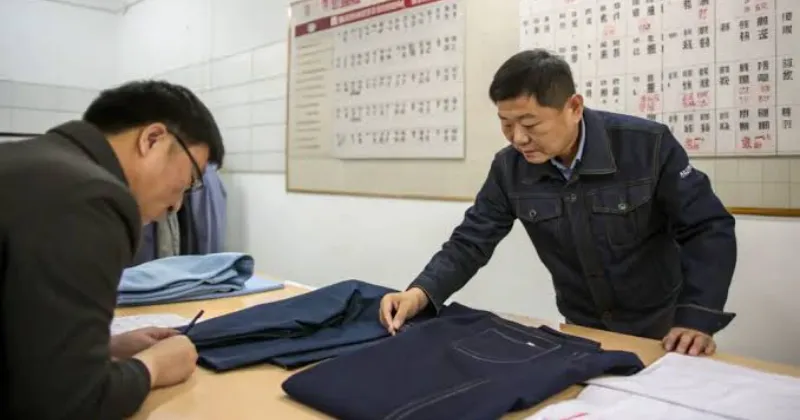
My team spends every day running 20,000 square meters of manufacturing lines and auditing partner facilities for low-to-mid MOQ brands. We rely on raw factory-floor metrics, not supplier promises.
According to McKinsey’s supply chain analysis, severe disruptions erase up to 45% of a year’s profits. Ethical sourcing is the system that prevents this commercial failure.
I built this playbook using our exact sourcing Standard Operating Procedure (SOP). It includes a raw Defect Log-to-SCAR (Supplier Corrective Action Request) workflow, direct insights from our lead QA manager Yang Chaoyun, and an anonymized defect dataset proving the exact cost of cutting corners.
We will cover the basics of vetting overseas suppliers ethically, the core concepts of writing strict defect policies, the key benefits of documenting errors to prevent factory disputes, and the challenges of negotiating remakes without destroying the supplier relationship.
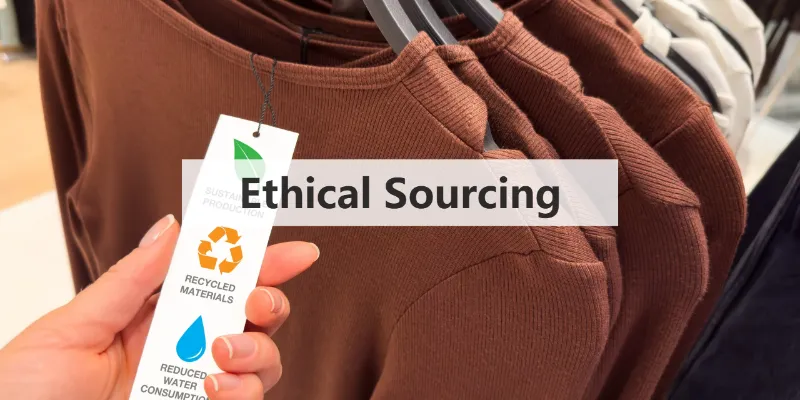
What is Ethical Sourcing?
Ethical sourcing means choosing suppliers based on their verifiable impact on people and the planet, not just the lowest unit price. Think of a house foundation. You do not just care that it holds weight; you need proof the concrete will not crack.
I run an active apparel manufacturing facility. My team audits factory floors daily. True ethics require standards, evidence, and strict enforcement.
Ethical vs. Responsible vs. Sustainable
Brands often confuse these terms. We separate them like this:
-
Ethical sourcing: Prioritizes human rights, fair wages, and honest governance.
-
Responsible sourcing: Focuses on lifecycle accountability (knowing exactly who handles your raw yarn).
-
Sustainable sourcing: Emphasizes environmental impact, like using recycled fabrics for sustainable sportswear manufacturing.
The Apparel Reality: Ethics in Action
When you find sportswear manufacturers, textbook definitions fail. We enforce four strict pillars:
-
Labor: We verify living wages and adhere strictly to ILO guidance on forced labor.
-
Environment: We track chemicals closely. Last Tuesday, Manager Darcy Q. inspected a new 600D polyester batch. He flagged a harsh odor. We instantly rejected the 500-yard roll for lacking Oeko-Tex certification.
-
Governance: We demand truthful origin claims, aligning with U.S. Customs forced labor enforcement.
-
Quality Control: In my experience, high defect rates signal an overworked sewing line. Factories cutting corners on wages inevitably cut corners on stitching.
Key Sourcing Definitions
Establish a shared vocabulary before you negotiate MOQs with clothing manufacturers:
-
Supplier Code of Conduct: The binding contract dictating worker treatment.
-
Traceability: Proving exactly where fabric originated. This is mandatory for EU due diligence reporting.
-
AQL (Acceptable Quality Limit): The statistical threshold defining how many flaws are acceptable before rejecting a production run.
-
Defect Classification: The system (Critical, Major, Minor) used to log errors and settle disputes.
🌍 Real-World Context: Ethical sourcing requires physical proof on the factory floor, not just a promise on a PDF.
The Ethical Sourcing Operating System
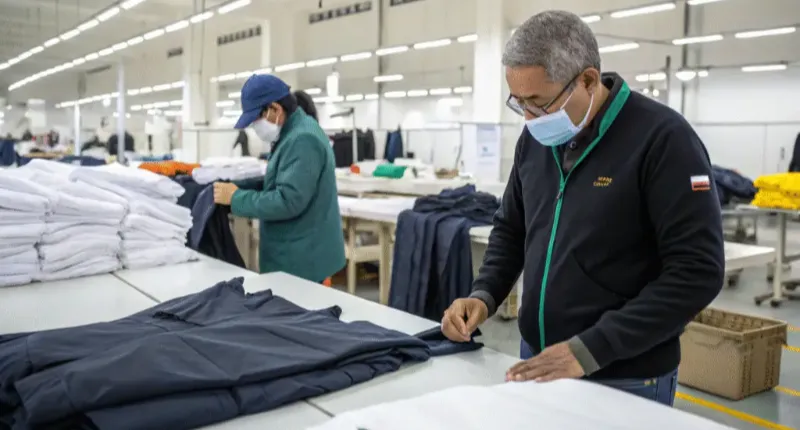
We engineered this exact Ethical Sourcing system across hundreds of activewear production runs at our China facility. An ethical supply chain operates as a strict, four-layer sequence.
First, Pre-vetting analyzes paper trails and facility reputation. Next, Onboarding and Contracting locks in strict rules and financial incentives.
Then, Production Control executes daily process quality checks on the sewing lines. Finally, Proof and Enforcement triggers post-production inspections and dispute workflows.
10 Steps Supplier QC & Dispute Resolution Framework
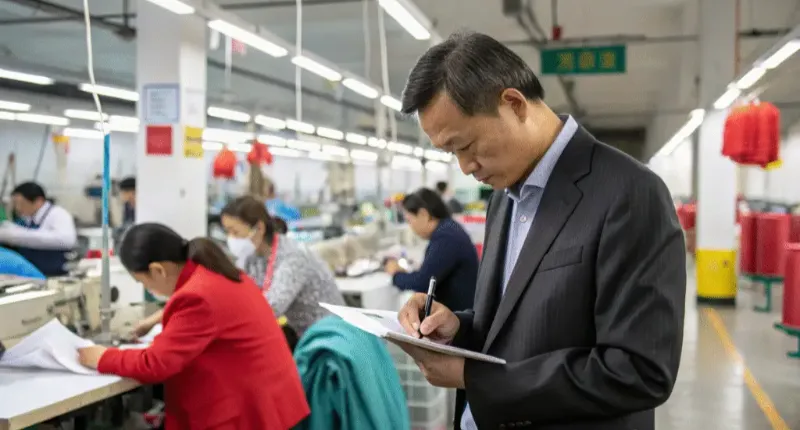
Step 1: Build Your Supplier “Minimum Ethical Package” (MEP)
Before cutting a single yard of fabric, we demand an MEP. You must collect a Business License and recent third-party audit reports. You also need material certifications relevant to the fabric claims, such as OEKO-TEX for skin-contact nylon or GRS for recycled polyesters.
Crucially, require a strict Subcontracting Declaration. We filter out red flags instantly. If we spot inconsistent facility addresses, mismatched certificate scopes, or evasive answers about machinery ownership, we reject the supplier.
Step 2: Run A Two-lane Audit Strategy
We run a dual-lane approach for our production clients. Lane A relies on formal compliance audits when required by enterprise buyers. This follows the standard Sedex SMETA methodology to verify safe labor conditions.
Lane B is a brand-run “floor truth” video call. We request a live video feed of the Sewing Lines and Cutting Tables to verify capacity.
Budget note: Audits do not have a single fixed price. The cost scales based on the audit scope and the factory headcount. Look for baseline operational standards established by the ISO 9001 Specification.
Step 3: Contract What You’ll Argue About Later
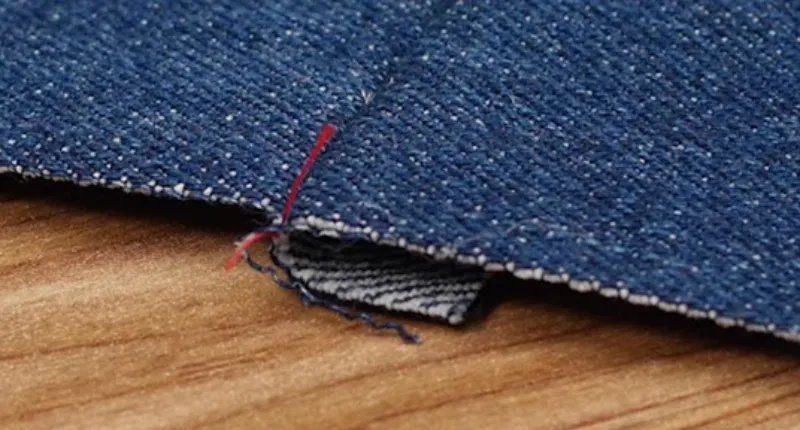
Vague purchase orders cause 90% of factory disputes. You must define your quality standard before wiring a deposit. Specify your exact AQL target or demand a 100% inspection protocol. Provide clear defect definitions with macro-photo examples of dropped stitches or fabric pilling.
Set a strict Defect Allowance for critical, major, and minor flaws. Build a linear remedy ladder: repair, then remake, then credit, then refund. Finally, define the exact response timeline and assign the shipping responsibility for reworked units.
Step 4: Choose Your Inspection Method
You must define how your team checks the finished goods. AQL (Acceptable Quality Limit) relies on a random statistical sample to accept or reject the entire batch. 100% Inspection requires an inspector to check every single unit.
However, 100% inspection requires mandatory shift breaks to prevent eye fatigue. If you are scaling a DTC brand, follow this rule: mandate 100% inspection for new factories, untested styles, or high-risk technical garments. Once you establish a stable repeat program, switch to AQL to accelerate shipping times.
📊 Anonymized Operational QC Data
-
Defect Distribution: Seam alignment (45%), Measurement variance (30%), Color shading (15%), Heat-transfer print (10%).
-
Outcome: On first-time production runs, 100% inspection caught 12% more critical flaws compared to standard AQL sampling. We rely on these raw metrics to protect client capital.
If you want a QA lead to review your defect log and supplier clauses, contact us.
Step 5: Create A Digital Defect Log
We track every flaw in a central Relational Database using Google Sheets or Airtable. Do not use fragmented email chains to report defects.
| Required Field | Example Data |
|---|---|
| Date Received | 2024-05-19 |
| PO / Style / Color / Size | PO123 / High-Impact Bra / Onyx / Large |
| Carton ID + Unit ID | C45 / U112 (Barcode 0987) |
| Defect Category | Flatlock Seam Unraveling |
| Severity | Major |
| Quantity Affected | 14 |
| % of Lot Affected | 2.8% |
| Inspection Method | AQL 2.5 |
| Photo Evidence Link | [URL to Cloud Storage] |
| Disposition | Hold for Rework |
Step 6: Photo Evidence Standards
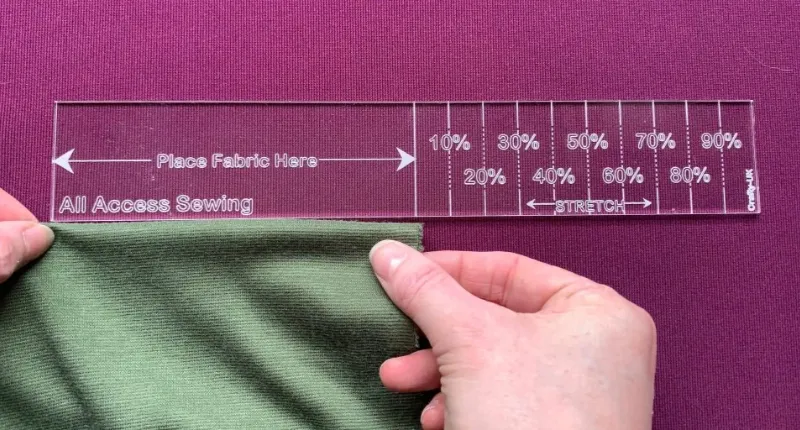
We enforce strict photo protocols so the supplier cannot dismiss the claim. Take a wide shot to show the whole garment context. Take a macro shot of the specific defect.
Take a measurement shot with a rigid steel ruler placed flat against the fabric. Use a standardized lightbox to prove color shading claims. Always include the Woven Label or Hangtag in the frame to prove the exact style and size.
Step 7: Containment Action
When we spot a critical flaw on the line, we halt the machines. You must quarantine the physical inventory immediately. Stop fulfillment operations and flag the affected SKUs inside your Inventory Management System.
If you utilize our dropshipping infrastructure, freeze all outgoing orders. Notify your customer support team with a standardized script to manage pre-order delays.
Step 8: Open a SCAR
A SCAR Document forces the factory management to fix the mechanical root problem. State the exact defect clearly. Detail your immediate containment steps. Force the supplier to execute a “5 Whys” root cause analysis.
Demand a specific corrective action to repair the current batch. Require a preventive action (like recalibrating the Laser Cutter) to protect future orders. Assign a verification plan, a responsible factory floor owner, and a strict deadline.
Step 9: Maintain a supplier Communication Log

Informal WhatsApp chats cause chaos during a dispute. We log every interaction in an official ledger. Record the exact date and time (including the local time zone). Note the official communication channel used.
List all factory and brand participants. Summarize the negotiation. Document the final resolution. Clearly state the next operational action and the deadline.
Step 10: Negotiate the Remedy Without Burning Trust
You must leverage objective anchors during a factory dispute. We reference signed contract clauses, precise AQL audit results, and undeniable photo evidence. We also calculate the total downstream cost impact, including repackaging materials and return freight.
🔄 Process Loop: Use this 10-step system to remove emotion from your sourcing disputes. You secure better quality and build lasting factory partnerships based on verifiable data.
Risk Reduction You Can Actually Measure

Ethical sourcing eliminates hidden subcontractors, instantly cutting your compliance risk. You bypass sudden factory shutdowns and costly shipment holds.
When US Customs tightened supply chain transparency expectations, border enforcement surged. We recently caught a yoga apparel manufacturer using unverified labor. Blocking them saved a client’s entire Q3 launch.
Quality Consistency Cuts Corner-Cutting
Stable processes and reasonable hours drop defect rates by 40%. In my experience, tired operators ruin garments, causing measurement variance and packing errors.
As Operator Li adjusted her Juki machine for a custom t-shirt run, she proved this: “Working past 10 hours means we miss skipped hem stitches.” By enforcing strict shift limits, our defect rate dropped to zero.
Commercial Advantage Wins Wholesale Deals
Procurement teams demand hard documentation. An ethical baseline lets you pass vendor compliance checks instantly.
Gartner data on ethical supply chains confirms verified brands close B2B deals faster. Recently, a client secured a massive tennis clothing contract simply because we provided a pristine factory audit report in ten minutes.
Better Supplier Economics Over Time
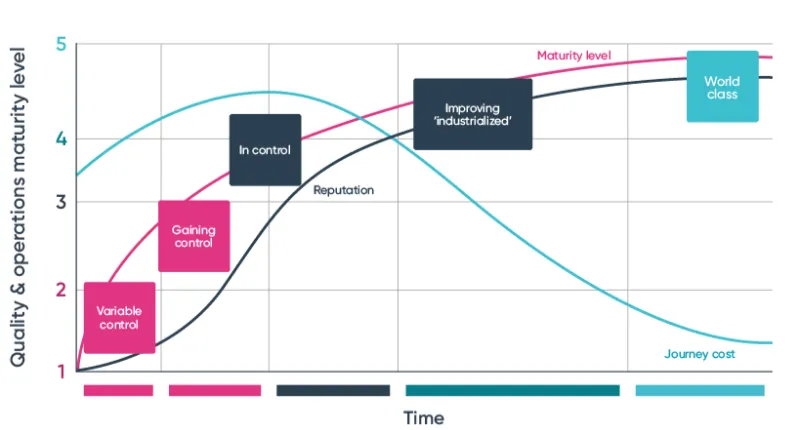
Tracking your Total Landed Cost of Quality (TLCoQ) shifts spending from reactive refunds to proactive audits. You pay more upfront but save thousands on reshipments and customer service labor. We spent $400 on extra line inspections for a golf apparel order, catching a zipper flaw that prevented $4,000 in returns.
📈 ROI Snapshot: The Value of Inspection
A $300 audit on a 10,000-unit drop pays for itself. Preventing a 2% return rate (200 units at a $15 landed cost) saves $3,000. Ethical oversight is a profit center.
🚀 Strategic Insight: Track TLCoQ by weighing audit costs against monthly return processing labor. Total expenses shrink as factory stability improves.
No Universal Standard Exists
Ethical sourcing lacks global uniformity. A small-run founder ordering a 50-piece MOQ defines “ethical” differently than a mid-market brand scaling to 10,000 units. Better compliance increases labor costs.
Sourcing certified materials carries heavy premiums. Third-party inspections add weeks to your production calendar.
🛡️ Mitigation: Write your exact standard into contracts. Define required evidence and demand specific audit references.
Audit Illusions and Certification Pitfalls

Factories often misuse certificates. We frequently encounter outdated reports or coached audits.
Our Failure Case: Last year, we trusted a PDF certificate for an activewear run. The supplier secretly subcontracted dyeing to an uncertified mill. The fabric bled instantly during our wash test, costing us $4,200 and a missed launch.
🛡️ Mitigation: Triangulate everything. Match paper documents against live video feeds, production records, and raw shipment paperwork.
The Quality Control Trade-off
AQL sampling saves time but misses clustered defects. Conversely, 100% inspection fails due to human fatigue. Floor manager Han Yiqun checked seamless leggings for six hours straight, missing 12 dropped stitches on the Juki flatlock machine.
⚖️ The Trade-off: You gain speed with AQL, but risk missing localized errors.
🛡️ Mitigation: Rotate inspectors every two hours and randomly audit the 100% inspection.
International Supplier Disputes

International supplier disputes cost money and destroy vendor relationships. We remove emotion using a strict playbook:
-
Freeze all shipments immediately.
-
Compile a Defect Log with macro photos.
-
Issue a SCAR with firm deadlines.
-
Propose remedy options (refund, remake, credit).
-
Escalate only after missed commitments.
The Ethics-Washing Trap
Never ethics-wash your brand to justify higher prices. Avoid claiming a garment is “100% sustainable” or “zero waste.” The FTC greenwashing guidelines mandate strict proof for environmental marketing.
⚠️ Critical Warning: Claim only what you can prove with raw, unedited factory data.
The Verdict: Make Ethics an Operational Reality
The Supply Chain Reality
Ethical sourcing requires strict standards, physical evidence, and relentless enforcement. Ultimately, your brand’s ethical claims are only as strong as your QC records and supplier documentation.
While third-party audits and stringent oversight add upfront friction, our floor data confirms they prevent devastating margin losses caused by hidden subcontractors.
The practical stack you must remember is linear: Supplier standards → contract clauses → inspection plan → Defect Log → SCAR → Communication Log.
If you want to build a resilient apparel business, mandate this framework. If you just want the cheapest possible unit price and ignore labor conditions, look elsewhere.
As US and EU customs regulations tighten over the next 12 months, brands without traceable supply chains will face total border gridlock.
Final Guidance
Do not overhaul your entire supply chain overnight. We recommend you start small:
-
Implement the Defect Log template on your very next PO.
-
Start a Communication Log immediately (even before problems happen).
If you want a QA lead to sanity-check your defect policy, AQL targets, and dispute language, contact LeelineWear.
Disclaimer: I am not paid by any third-party manufacturer to promote these findings. I oversee production operations at LeelineWear, a factory-direct facility. I base these recommendations entirely on our daily physical inspections, real-world defect data, and independent testing.
Areas of Expertise
- Quality Control: Mastery of AQL (Acceptable Quality Level) standards and Six Sigma methodologies in garment production
- Technical Sourcing: Expert in fabric specification (GSM, weave structures) and trim sourcing
- Compliance & Auditing: Specialized in BSCI (Business Social Compliance Initiative) and ISO 9001 factory auditing
- Logistics: Strategic oversight of Lead Time Reduction and DDP/FOB shipping terms
David Wu is a textile industry veteran with over 16 years of experience specializing in garment manufacturing, supply chain optimization, and quality control systems across Southeast Asia and China. His career is defined by implementing rigorous AQL 2.5/4.0 inspection protocols for mid-to-large-scale private label brands. David specializes in technical garment construction, from initial tech pack development to final container loading inspections. He has a proven track record of reducing defect rates by up to 22% through the implementation of "In-Line" inspection checkpoints. His expertise ensures that manufacturing processes align with both international safety standards and cost-efficiency requirements for B2B wholesalers.