

Client Profile
| Industry | Amazon FBA private label — activewear |
| Company Size | Solo founder + 2 virtual assistants |
| Location | United States |
| Starting Point | Zero apparel sourcing experience; pre-launch |
| Sales Channel | Amazon FBA |
| Key Challenge | No supplier network, no technical pattern-making skills, and generic Alibaba suppliers producing sizing failures and 30%+ return rates |
| What They Needed | End-to-end product development: validated market research, tech packs, Western-fit grading, sampling, QC, and Amazon-compliant fulfillment |
The client requested anonymity. Redacted Amazon Seller Central exports, unit economics models, and QC inspection logs available to qualified prospects under NDA.
The Challenge
The founder had a clear opportunity: Helium 10 and Jungle Scout data showed strong search demand for premium leggings with weak competition on quality. The niche was there. The execution wasn’t.
What they were up against:
- No supplier network. Finding a factory willing to handle low-MOQ pilot runs for a first-time seller is notoriously difficult. Factories prioritize established buyers with bulk orders. After two months of Alibaba outreach, the founder had received 47 responses — and zero credible activewear specialists. Generic suppliers offering “we can make anything” were abundant; factories that could demonstrate four-way stretch testing, flatlock seam capability, and Western grading experience were nonexistent.
- Catastrophic sizing failures. When our team reviewed the founder’s initial prototypes from a generalist Alibaba supplier, the sizing ran a full two inches too small for Western bodies. The leggings that were supposed to be a US Medium fit like an XS. On Amazon, this is a death sentence: the first 30 reviews would be one-star ratings about sizing, and no amount of PPC spend recovers from a 3.2-star launch.
- No technical documentation. The founder’s “tech pack” was a PDF of inspiration photos and a one-paragraph fabric description. No GSM specification, no grading rules, no seam construction requirements, no stretch-recovery tolerances. The supplier had nothing to execute against — and predictably, executed nothing correctly.
- Cash flow exposure. The founder had $15,000 in startup capital. A single bad production run would wipe out 60% of it. Ordering multiple unverified sizes and colors risked creating inventory that would never sell — a common FBA graveyard.
What they tried first: The founder nearly pulled the trigger on a 500-unit order from the Alibaba supplier based on a single static sample photo. Our team caught the sizing issue during the pre-production audit.
If that order had shipped, the founder estimated it would have generated a ~30% return rate and likely killed the brand within three months.
The Solution
We built an end-to-end manufacturing pipeline from market research to Amazon fulfillment. Eight deliberate steps, executed as one integrated system.
Phase 1: Market Validation and Niche Selection
The founder used Helium 10 and Jungle Scout to validate demand before spending a dollar on production. We mined thousands of one-star reviews on competing products to identify exactly what customers hated: see-through fabric, weak stitching, rolling waistbands. These pain points became the product brief.
Phase 2: Product Differentiation Strategy
Strategic trade-off: the team found that adding hidden zipper pockets increased COGS by 15%. We killed the zippers and redirected that budget into a higher fabric weight (250 GSM vs. the competitor standard of 200-220 GSM). This guaranteed total squat-proof opacity — the #1 customer complaint in the category.
Phase 3: Tech Pack Development
We built a production-ready tech pack that eliminated factory-floor ambiguity:
| Element | Specification | Why |
|---|---|---|
| Fabric | 75% nylon / 25% spandex, 250 GSM | Opacity guarantee at full stretch |
| Seams | Flatlock stitching, all structural seams | Eliminates chafing during workouts |
| Grading | Western size curve XS-XXL | Corrects the 2-inch sizing mismatch |
| Testing | Stretch recovery + opacity at tension | Prevents the #1 return reason |
Phase 4: Supplier Vetting
We ignored Alibaba badges. The factory was audited on activewear-specific criteria: flexible MOQs, flatlock machine capability, Western grading experience, and OEKO-TEX certified material sourcing. Unlike a generic sourcing agent who forwards messages, we engineer the product directly on our own floor.
Phase 5: Sampling and Fit Lock
3D virtual prototyping saved two weeks of international shipping. Physical samples arrived in 7 days — a speed that also powered our 40,000-unit holiday campaign. The lead merchandiser tested stretch recovery, opacity, and seam comfort across three revision rounds.
Phase 6: Quality Control
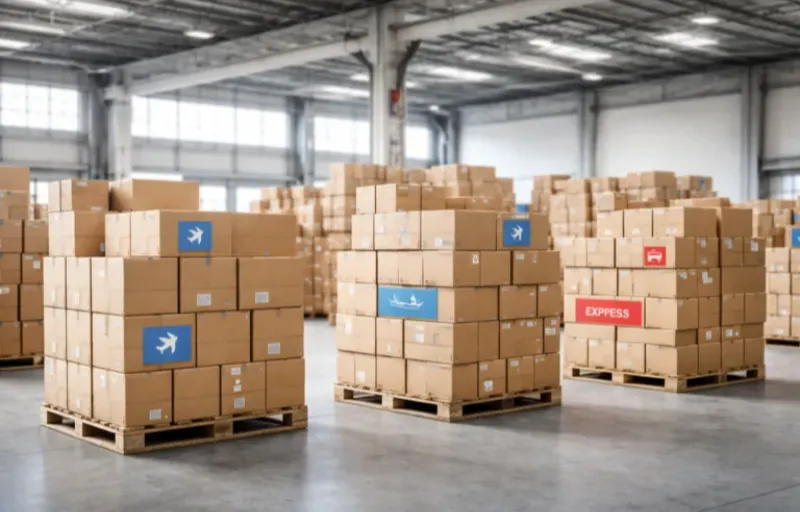
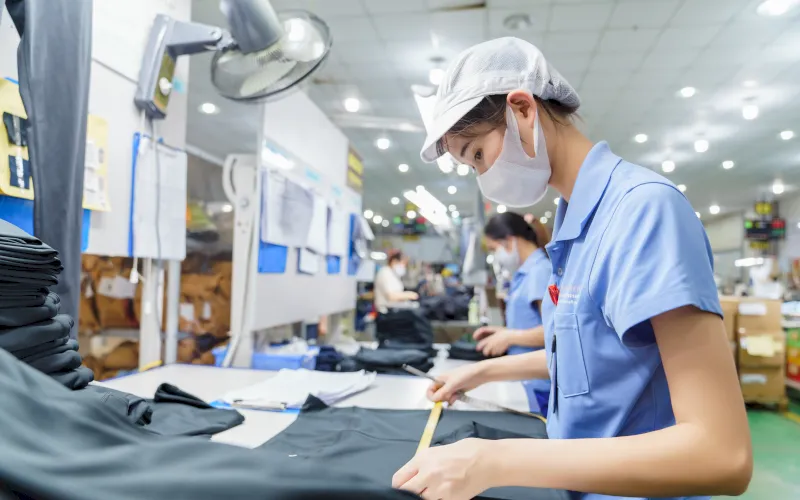
Inline inspections during active sewing caught defects before they reached finished goods. Final Random Inspection (FRI) at AQL 2.5 before packing. Every carton met Amazon FBA prep guidelines — correct polybag specifications, suffocation warnings, scannable barcodes.
Phase 7: Landed-Cost Planning
Unit economics were modeled before the PO was placed. DDP freight eliminated customs surprises. A 10% returns reserve was built into pricing from day one — not discovered after the fact.
Phase 8: Amazon Launch
Product pages built with detailed sizing charts, close-up stitch photography, and fabric education. PPC campaigns separated exact-match “squat proof leggings” from broad category terms. Early reviews were monitored daily for sizing signals.
The Results
| Metric | Before | After |
|---|---|---|
| Revenue | $0 (pre-launch) | $500,000 (18 months) |
| Net margin per unit | Unknown (no cost model) | 41.1% ($18.50 on $45 retail) |
| Return rate | 30% (estimated with bad grading) | 4.1% combined defect + return |
| Industry return benchmark | — | 24.4% (NRF online apparel average) |
| Sample turnaround | 4-6 weeks (generic suppliers) | 7 days |
| Production model | Generic Alibaba blanks | Factory-direct, application-specific |
Unit Economics (Core Legging SKU):
| Line Item | Cost |
|---|---|
| Retail Price | $45.00 |
| COGS | $8.50 |
| Packaging & Labeling | $0.50 |
| DDP Freight/Duty | $2.00 |
| Amazon Referral (17%) | $7.65 |
| FBA Fulfillment | $3.85 |
| PPC Allocation | $3.50 |
| Returns Reserve | $0.50 |
| Net Contribution | $18.50 (41.1%) |
Validation: Revenue verified against Amazon Seller Central export logs. Return-rate data cross-referenced with factory shipment manifests. Unit economics reconciled against actual landed-cost invoices.
Key Takeaways
1. Market data tells you what to build; factory execution determines whether you profit. Helium 10 and Jungle Scout identified the opportunity. The tech pack, grading, and QC discipline converted that opportunity into $500K in revenue with a 4.1% return rate versus the 24.4% industry average.
2. Spend on fabric weight, not features. Killing the zipper pockets and redirecting the 15% cost savings into 250 GSM fabric eliminated the #1 competitor complaint (sheer/see-through fabric). One meaningful quality signal outperforms three marginal features.
3. Tech packs are cheaper than returns. The founder’s initial vague PDF cost nothing to produce — and would have generated a 30% return rate costing $6,000+ in refunds. A proper tech pack costs a few hundred dollars to develop and prevents thousands in return processing.
4. Build the unit economics model before placing the PO. The $18.50 net contribution and 41.1% margin didn’t happen by accident. DDP freight, Amazon fees, PPC allocation, and returns reserve were all modeled upfront. The 10% returns buffer absorbed early sizing adjustments without destroying profitability.
5. Amazon FBA apparel is a manufacturing business, not an arbitrage play. The founder’s success came from controlling the physical product — fabric composition, grading, QC, fulfillment — not from finding a cheap supplier on Alibaba.
The sellers who treat activewear like a commodity are the ones generating 30% return rates and 3.2-star reviews.
Amazon Seller Central export data, unit economics models, and QC inspection logs available to qualified prospects under NDA. Submit an inquiry to request the full launch documentation.
Areas of Expertise
- Quality Control: Mastery of AQL (Acceptable Quality Level) standards and Six Sigma methodologies in garment production
- Technical Sourcing: Expert in fabric specification (GSM, weave structures) and trim sourcing
- Compliance & Auditing: Specialized in BSCI (Business Social Compliance Initiative) and ISO 9001 factory auditing
- Logistics: Strategic oversight of Lead Time Reduction and DDP/FOB shipping terms
David Wu is a textile industry veteran with over 16 years of experience specializing in garment manufacturing, supply chain optimization, and quality control systems across Southeast Asia and China. His career is defined by implementing rigorous AQL 2.5/4.0 inspection protocols for mid-to-large-scale private label brands. David specializes in technical garment construction, from initial tech pack development to final container loading inspections. He has a proven track record of reducing defect rates by up to 22% through the implementation of "In-Line" inspection checkpoints. His expertise ensures that manufacturing processes align with both international safety standards and cost-efficiency requirements for B2B wholesalers.

Get the Same Results
Want a case study like this for your brand?
Every case study starts with a conversation. Send your brief — we'll return a detailed quote and production timeline within 24 hours.