10 Italian Cycling Apparel Manufacturers: MOQ & Lead Time
 David Wu QA Consultant Updated:
 A “Made in Italy” label tells you almost nothing about who owns the sewing line, what the MOQ is, or whether the factory will answer your email. Those three things — not the label — decide whether your custom kit ships on time and at the margin you quoted.
This guide is written from the buyer’s side. We’re a China-based manufacturer, so we have an interest in the hybrid option at the end — but our job here is to help you evaluate Italian cycling apparel manufacturers fairly, including knowing when Italy is the wrong answer.
Every fact below is drawn from official brand pages and public sourcing data, last verified August 2026. Figures like MOQ and lead time are planning ranges — confirm them with the factory before you order.
The most useful skill is reading the supply chain: a famous brand name is not the same as a factory.
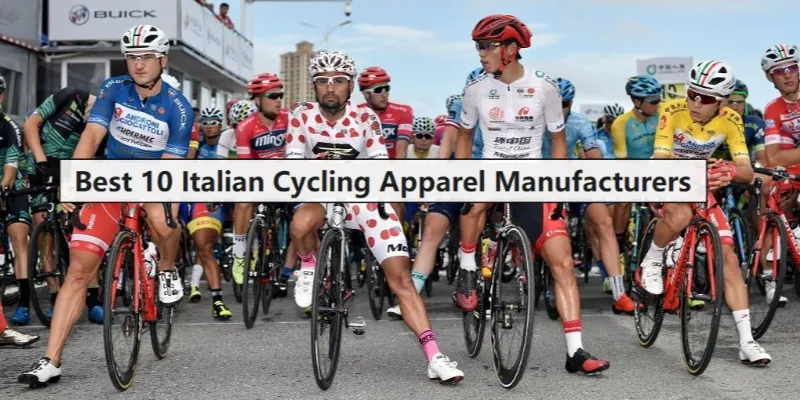
List of 10 Italian Cycling Apparel Manufacturers
Quick Preview:
| Brand / Factory | Type | Base | Known For | Best For |
|---|---|---|---|---|
| Castelli | Consumer brand (Manifattura Valcismon group) | Fonzaso, Veneto | Aero racewear, the Gabba jacket | Premium retail; pro-grade aero |
| Santini | Brand + in-house factory | Bergamo | Giro & UCI jersey supplier | In-house custom teamwear |
| Nalini / MOA Sport | Brand + in-house factory | Castel d’Ario, Mantua | Vertical integration, custom kits | R&D-led custom programs |
| Sportful | Consumer brand (Manifattura Valcismon group) | Italy | Thermal layering, ski heritage | Cold-weather and endurance kits |
| Biemme | Factory + brand | Brogliano, Vicenza | First textile chamois; WorldTour kit | Factory-direct custom kits |
| Marcello Bergamo | Family-owned brand | Italy / Australia / USA | Wool blends, boutique scale | Small-batch heritage brands |
| De Marchi | Heritage brand | Conegliano | 1946 heritage, wool craftsmanship | Retro and heritage collections |
| Giordana | Brand + custom program | Italy / USA | Premium bib shorts, Cirro chamois | Premium bibs; team custom |
| Erreà | Teamwear brand | Parma | OEKO-TEX, multisport teamwear | Compliance-focused clubs |
| Carvico | Fabric mill | Carvico, Bergamo | ECONYL recycled knits | Verifying “Italian fabric” claims |
How to Evaluate an Italian Cycling Apparel Maker
Before you compare brands, learn to read the supply chain. The five checks below are the same ones we teach every client who asks about sourcing from Italy — and they work for any supplier in any country.
For a broader comparison of suppliers, start with our guide to cycling apparel manufacturers.
📋 Checklist: Five things to verify before you order:
- Brand or factory? Most names you recognize — Castelli, Sportful, Giordana — are consumer brands. The factory behind them is often a different company (Castelli and Sportful share the Manifattura Valcismon group). If you want custom manufacturing, you need the factory’s OEM or custom-program door, not the retail brand.
- Who weaves the fabric? “Italian fabric” is a vague claim. Ask for the mill name — Carvico, M.I.T.I., and other Italian mills supply much of what ends up in premium kits — plus the GSM of the specific cloth.
- MOQ and lead time, in writing. Ask whether the minimum applies per style, per color, or per size, and get the current lead-time commitment on a dated quote.
- Certifications with dates. OEKO-TEX Standard 100, GRS, and ISO 9001 certificates expire or are re-audited. Batch-specific documentation beats verbal claims.
- Who owns your patterns? Confirm the supplier does not hold your pattern blocks and 3D fit files hostage. If they do, you cannot switch factories later.
⚠️ Experience Warning: Some supplier lists include brands that are not Italian at all — MYN, for example, is a Belgian brand that sometimes appears in “Italian cycling apparel manufacturers” roundups. Always check the registered production address before you assume origin.
1. Castelli: Best for Premium Aero Racewear
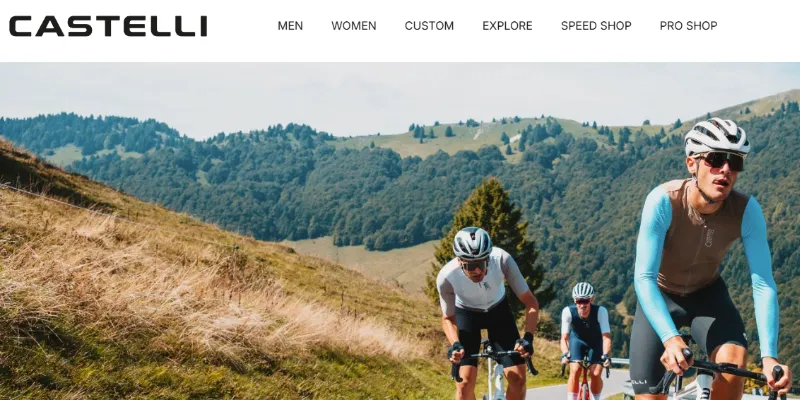
Castelli is the benchmark for aero-focused racewear. The brand traces its tailoring roots to Milan in the 1930s and was built into what it is today from the 1970s — it launched the first aerodynamic Lycra shorts in 1977, and the all-weather Gabba jacket defined a category.
Castelli is now part of the Manifattura Valcismon group in Fonzaso (Veneto), which also owns Sportful. The group produces around three million garments a year.
For a buyer, the important part is what Castelli is not: a small-batch custom partner. Brand-level custom work runs through large pro-team programs with volume minimums that rule out most clubs. If you want Castelli-level quality, your realistic path is the group’s OEM side — and you should expect high MOQs.
💡 Pro Tip: When a supplier claims “Castelli-level” fabric, ask for the mill name and the physical swatch — a brand name is not a material spec. In our experience negotiating tech packs, a supplier that can name the mill and GSM is far more likely to deliver what it promised.
2. Santini: Best for In-House Custom Teamwear
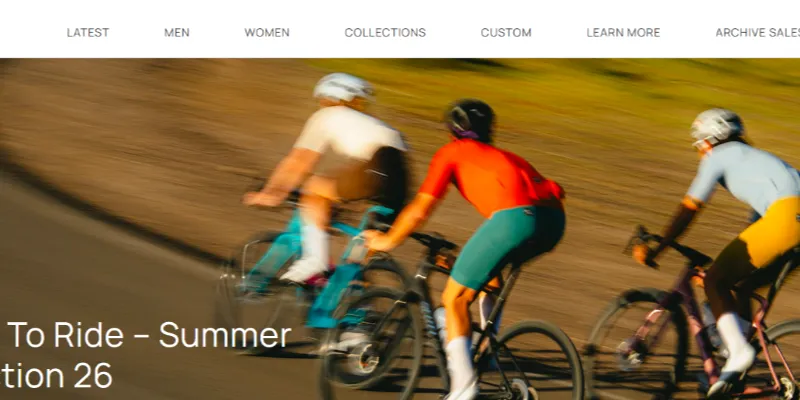
Santini has produced cycling apparel in Italy since 1965, when founder Pietro Santini took over a knitwear factory in Lallio (Bergamo). Today the company designs, develops, and manufactures entirely at its Bergamo facility.
Its track record is public: the Giro d’Italia pink jersey since 1993 and the UCI World Championship rainbow jerseys since 1994. Its Custom Series is the division a club or team actually talks to.
Santini’s selling point for buyers is control — design, sampling, and printing happen in-house, which removes the handoff errors that delay custom jerseys. The trade-off is price and volume; plan for a larger minimum and a premium over mass-market suppliers.
Before you compare padding, learn what to check in a cycling chamois.
💡 Pro Tip: Before you lock in a season, ask for the Custom Series MOQ and a written lead-time commitment. The production queue tightens every year before summer — the factories that ship on time are the ones whose clients booked early.
3. Nalini / MOA Sport: Best for R&D-Led Custom Programs
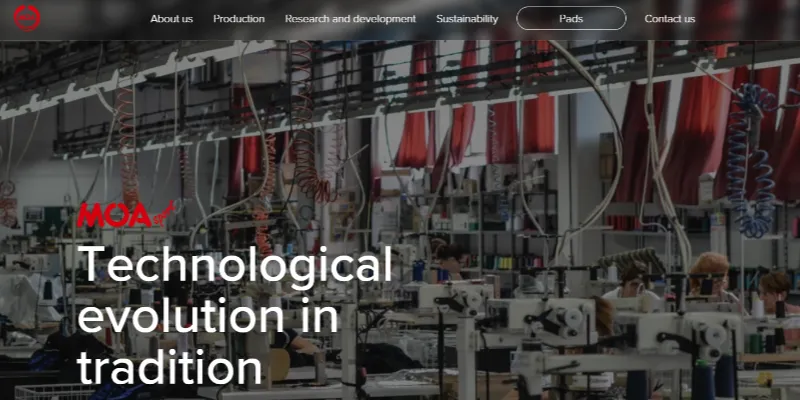
Nalini and MOA Sport are one company seen from two doors. The Nalini brand was founded in the early 1960s by the Mantovani brothers — Vincenzo Mantovani took silver in the Olympic team pursuit in 1964 — and the business is vertically integrated: garments are designed and produced in one facility.
MOA Sport (MOA SPORT MANTOVANI VINCENZO SRL, in Castel d’Ario near Mantua, founded 1970) is the manufacturing arm, and Nalini Custom is the division that handles team and club orders.
The company was an early adopter of synthetic chamois construction and keeps R&D in-house, which makes it a credible option for buyers who want a technical custom program rather than a rebranded blank. Because brand and factory are the same company, you can hold one accountable for fit, printing, and delivery.
💡 Pro Tip: Ask which factory location will actually sew your SKU and who owns the pattern blocks and 3D fit files. Vertical integration is only useful if the people you negotiate with control the sewing line — confirm that in writing before you order fit samples.
4. Sportful: Best for Cold-Weather and Endurance Kits
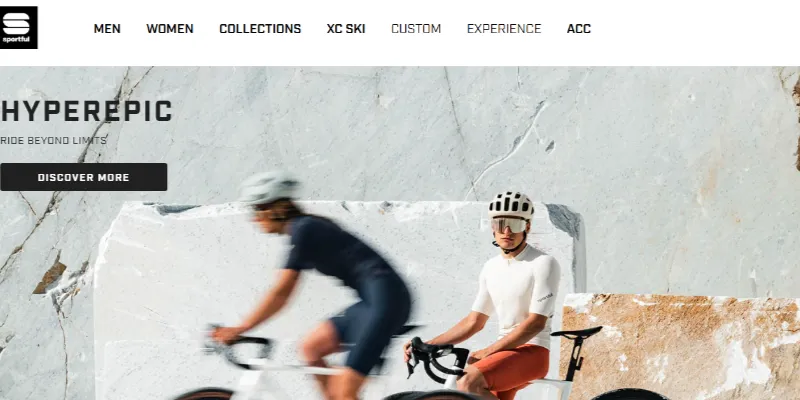
Sportful’s roots are in a family knitwear business that dates to 1946, and it built its technical reputation in cross-country skiing before moving into cycling in 1985. That history shows up in its layering systems — Sportful is strong when the brief is warmth and ventilation for long, cold rides rather than all-out aero.
It shares the Manifattura Valcismon group with Castelli, so the same volume constraints apply to brand-level custom work.
The engineering behind these layers is covered in our cycling fabric technology guide.
💡 Pro Tip: Heavy winter textiles absorb dye differently than summer mesh. If you order custom winter kit, demand a Pantone-matched strike-off on the actual fabric before bulk — a logo printed on a sample jersey can shift on a fleece-backed fabric.
5. Biemme: Best for Factory-Direct Custom Cycling Kits
Biemme is the type of entry this list should be built around: an actual factory, not just a consumer brand. Founded in 1978 and based in Brogliano (Vicenza), it runs an in-house design lab, made the first textile chamois in 1984, and currently supplies WorldTour teams including XDS Astana.
It produces both collection and custom teamwear and runs a “Green Line” program using recycled polyester.
For a club or an emerging brand, Biemme is realistic in a way that the big consumer names are not — public sourcing data places its custom MOQ around 150 units with roughly 6–8 week lead times, and the factory is set up to take team orders directly.
When you compare quotes, learn how to negotiate MOQs with clothing manufacturers.
💡 Pro Tip: Ask Biemme’s B2B or teamwear contact for a written lead-time commitment and for the OEKO-TEX or GRS certificate that applies to your specific fabric. A factory that can show batch-specific paperwork is a factory you can plan a season around.
6. Marcello Bergamo: Best for Boutique Heritage Brands
Marcello Bergamo is a family-owned Italian performance apparel brand operating since 1977, with offices in Italy, Australia, and the USA. It specializes in premium fabrics, including wool blends, and positions itself for smaller brand-building projects rather than the volume race.
In practice that means a mid-size house that can be more responsive to micro-runs than the giants — relevant if your program is 50 to 150 units and you want a credible Italian pedigree without the group-scale bureaucracy.
💡 Pro Tip: Request a physical color strike-off before bulk production. Complex gradient files are where sublimation color drift shows up, and a printed PDF can’t reveal it.
7. De Marchi: Best for Heritage Storytelling
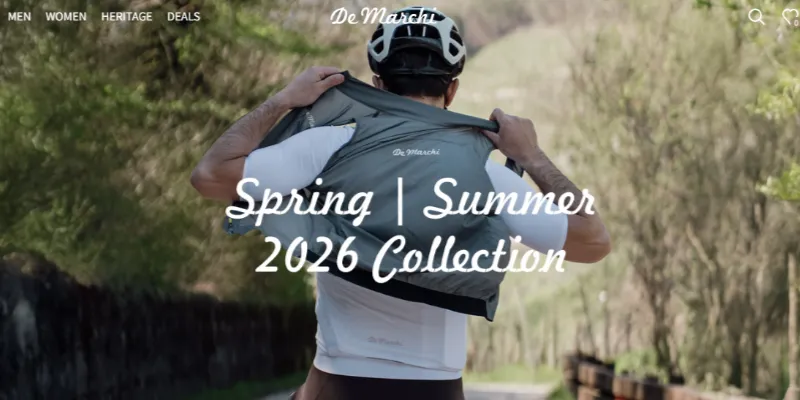
De Marchi, founded in 1946 by Emilio De Marchi and based in Conegliano, is one of the oldest cycling clothing makers in the world, with roots in the era of Coppi and Bartali. It is a storytelling brand first — buyers pay for narrative-rich craftsmanship and vintage silhouettes rather than pure aero claims.
That makes it a fit for premium retail and heritage collections, not for a race team chasing aggressive positions. Classic fits lack the stretch of modern race cuts.
💡 Pro Tip: If you want to merchandise a heritage angle in your own brand, study how De Marchi builds the story around provenance and craft — but verify your supplier can still deliver a race-ready modern fit. Retro styling is a positioning choice, not a performance one.
8. Giordana: Best for Premium Bib Shorts and Pro-Level Fit
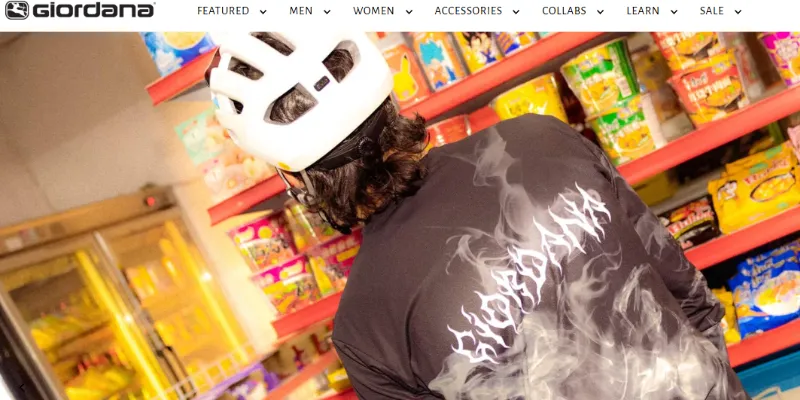
Giordana was founded in 1979 by the cyclist Giorgio Andretta and remains family-owned, with its own manufacturing facility in Italy since 1986. It is best known for premium bib shorts and pro-level fit — its high-compression fabrics and Cirro chamois are the reasons riders pay a premium.
The brand runs a dedicated custom team program (custom.giordanacycling.com), which is the realistic door for club orders.
💡 Pro Tip: Giordana’s pro-cut compression fit runs snug, so order physical fit samples across your full size range — including women’s-specific grading — before you place a bulk order. A fit issue at 100+ units is an expensive mistake to learn in production.
9. Erreà: Best for Compliance-Focused Clubs
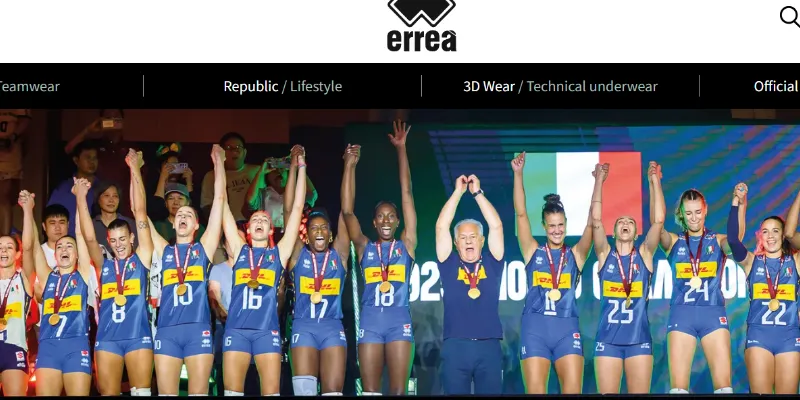
Erreà is an Italian teamwear specialist based in Parma, best known across football and multisport. It matters to cycling buyers for two reasons: it holds OEKO-TEX Standard 100 certification, and it has served as an official supplier to the Italian Cycling Federation for national-team apparel.
For youth clubs and organizations where chemical safety is non-negotiable, that compliance record is the point.
The trade-off is fit specialization. Erreà is a broad teamwear maker, so its cycling-specific fit blocks are less aggressive than a dedicated racewear brand. Verify the fit for your discipline before bulk.
💡 Pro Tip: Ask for the OEKO-TEX certificate number and its current validity date for your specific fabric batch. A certification is only useful if it’s dated, valid, and attached to the material you’re actually buying.
10. Carvico: The Fabric Mill Behind Many “Italian” Kits
Carvico is not a garment maker — it is a technical fabric mill in Carvico (Bergamo province), known for recycled knit fabrics such as ECONYL and certified under GRS and OEKO-TEX.
It earns a place on this list because it teaches the supply-chain insight that saves buyers the most money: much of the “Italian fabric” used across premium apparel comes from a small number of mills like Carvico, and naming the mill cuts through marketing.
When a supplier tells you a kit is “Italian fabric,” the professional response is to ask which mill and which GSM. If they can name it, you can verify the actual material. If they cannot, the claim is a label, not a spec.
To know what to ask for by GSM, browse the best fabrics for cycling clothing.
💡 Pro Tip: Put the mill and GSM in your tech pack — for example, “4-way stretch, 160 GSM, mill to confirm” — and request the certificate with your sample. That one habit removes most of the ambiguity in premium fabric claims.
Comparison at a Glance
The table below is a planning aid, not a quote sheet. MOQ, lead time, and certification figures are drawn from public sourcing guides (including a 2023–24 audit of Italian factories published by Fexwear) and official brand pages. Confirm every number with the factory before you order.
Know what each sportswear certification actually covers before you trust a logo.
| Brand / Factory | Type | Base Region | Typical MOQ | Typical Lead Time | Reported Certifications |
|---|---|---|---|---|---|
| Castelli | Brand (Valcismon group) | Fonzaso, Veneto | High — large programs | 8–10 weeks | ISO 14001, OEKO-TEX (group) |
| Santini | Brand + factory | Bergamo | ~200 units (Custom Series) | 6–9 weeks | OEKO-TEX; EMS-certified site |
| Nalini / MOA Sport | Brand + factory | Castel d’Ario, Mantua | Mid — custom programs | 7–9 weeks | OEKO-TEX (pad fabrics) |
| Sportful | Brand (Valcismon group) | Veneto | High — large programs | 8–10 weeks | Same group as Castelli |
| Biemme | Factory + brand | Brogliano, Vicenza | ~150 units | 6–8 weeks | GRS, OEKO-TEX |
| Marcello Bergamo | Family brand | Italy / AU / USA | Low–mid (small runs) | Varies | Verify directly |
| De Marchi | Heritage brand | Conegliano | Mid | Varies | Verify directly |
| Giordana | Brand + custom | Italy / USA | Mid (custom program) | Varies | UPF-rated garments |
| Erreà | Teamwear brand | Parma | Club-friendly | Varies | OEKO-TEX Standard 100 |
| Carvico | Fabric mill | Carvico, Bergamo | n/a (fabric) | 3–5 weeks (fabric) | GRS, OEKO-TEX |
The Hybrid Alternative
The honest question every buyer should ask is whether the “Made in Italy” premium earns its keep for their program. Italian manufacturing typically costs 20–45% more than Portuguese or Turkish equivalents for similar polyester blends.
Most of the factories above need 150+ units — Marcello Bergamo is the low-MOQ exception.
If your volume is on the low end, or you want Italian fabric without the Italian labor cost, a hybrid model is worth evaluating: specify the fabric (for example, Carvico or another named mill), and assemble under the same QC protocol in a lower-cost facility.
That is exactly the model we run. LeelineWear is a China-based sportswear manufacturer — we are not an Italian factory, and we don’t pretend to be one.
We quote Italian-sourced fabric with our own cut-and-sew at a 100-unit MOQ, with DDP shipping to 40+ countries. Use the Italian list above as your benchmark, then compare landed cost, not unit price.
See how we ran a full custom cycling apparel program for a brand like yours.
People Also Ask
1. Are these brands really made in Italy?
Most “Made in Italy” cycling apparel is assembled in Italy, but the fabric is often knitted elsewhere. Castelli, Sportful, De Marchi, and Erreà produce in Italy; Santini manufactures entirely at its Bergamo factory. Ask for the specific production address and a fabric-origin certificate for your SKU — the label alone is not proof.
2. What MOQ and lead time should I expect for custom cycling kits?
Plan for 150–500 units and 6–10 week lead times with Italian factories such as Biemme and Santini’s Custom Series. A few accept 50–100 unit runs in off-peak months. Always confirm whether the MOQ applies per style, per color, and per size, and book production 3–6 months before your season starts.
3. Which Italian brand is best for club kits versus premium retail?
For race-cut aero apparel, Castelli and Giordana lead. For club team kits, Santini Custom Series and Biemme are stronger because they control design, sampling, and printing in-house. Ask which department prints your logo — a brand that outsources printing is slower and more error-prone.
4. What fabric technologies matter most in premium Italian cycling wear?
Verify three things in writing: the fabric mill and GSM (Carvico and M.I.T.I. are common Italian mills), the chamois type and density, and OEKO-TEX or GRS certificates with a current date. For waterproof membranes, ask for the moisture vapor transmission rate (MVTR) figure, not the marketing claim.
5. When should I choose an Italian manufacturer versus a hybrid manufacturer?
Choose Italy when you need higher volume, EU delivery speed, and a heritage label, and your margin covers Italy’s cost premium over Portugal or Turkey. Choose a hybrid — Italian fabric, lower-cost assembly — when your MOQ is on the low end or you need faster sampling. Compare landed cost, not unit price.
Disclosure: LeelineWear is a China-based manufacturer. We wrote this guide to help buyers evaluate Italian suppliers fairly and to disclose our own interest in the hybrid option up front.
No manufacturer paid for placement. All facts are from official brand pages and public sourcing data, last verified August 2026 — verify MOQs, lead times, and certifications with each factory.
Related reading: Compare more sourcing options in our guides to cycling apparel manufacturers, sportswear manufacturers in Vietnam, sportswear manufacturers in the UK, and best sportswear manufacturers in China.
Learn what fabrics matter in best fabrics for cycling clothing, how to negotiate MOQs with clothing manufacturers, and check UPF testing standards before you spec sun-rated garments.
Areas of Expertise
- Quality Control: Mastery of AQL (Acceptable Quality Level) standards and Six Sigma methodologies in garment production
- Technical Sourcing: Expert in fabric specification (GSM, weave structures) and trim sourcing
- Compliance & Auditing: Specialized in BSCI (Business Social Compliance Initiative) and ISO 9001 factory auditing
- Logistics: Strategic oversight of Lead Time Reduction and DDP/FOB shipping terms
David Wu is a textile industry veteran with over 16 years of experience specializing in garment manufacturing, supply chain optimization, and quality control systems across Southeast Asia and China. His career is defined by implementing rigorous AQL 2.5/4.0 inspection protocols for mid-to-large-scale private label brands. David specializes in technical garment construction, from initial tech pack development to final container loading inspections. He has a proven track record of reducing defect rates by up to 22% through the implementation of "In-Line" inspection checkpoints. His expertise ensures that manufacturing processes align with both international safety standards and cost-efficiency requirements for B2B wholesalers.