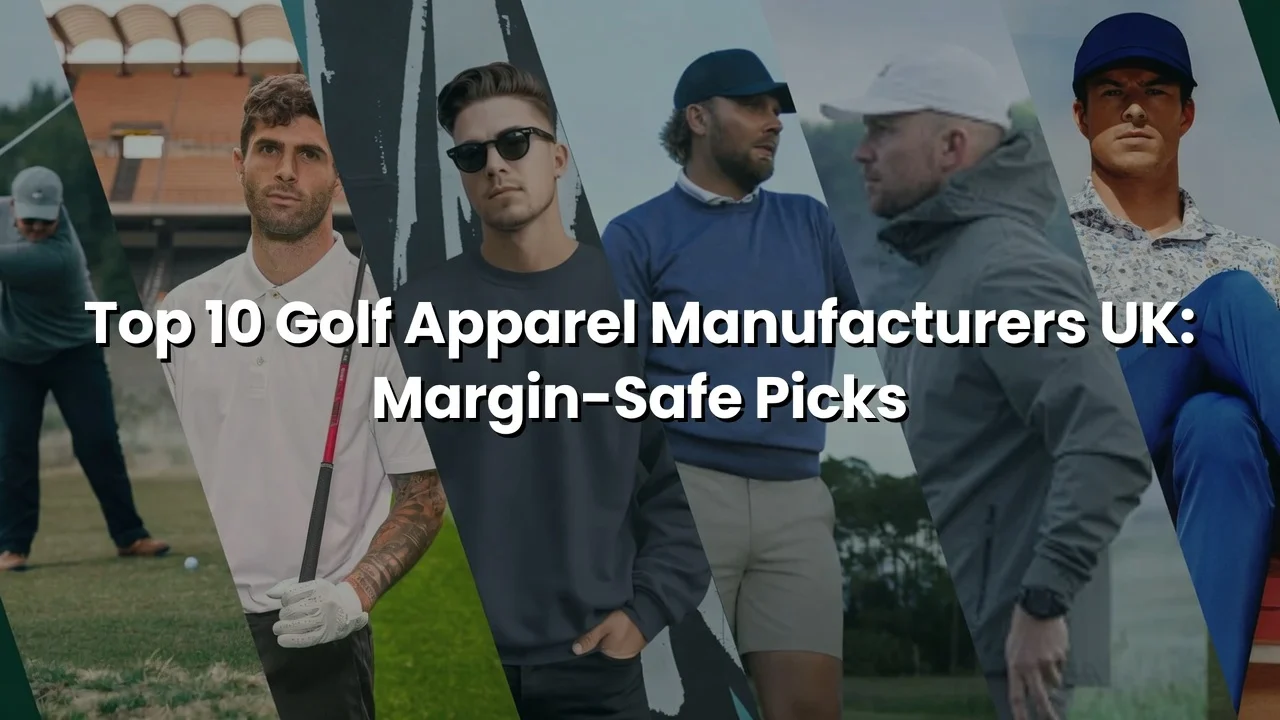
Top 10 Golf Apparel Manufacturers UK: Margin-Safe Picks
 David Wu QA Consultant Updated:
 Last Updated: July 28, 2026
Finding reliable Golf Apparel Manufacturers UK isn’t a Google search — it’s a vetting process. This guide evaluates 10 manufacturers against five criteria: manufacturing model, golf-specific fit, MOQ flexibility, technical capability, and supply chain transparency.
We called 20 companies and conducted hands-on sample testing in our China facility to build this ranked shortlist, so you can match the right partner to your production model without wasting months on dead-end inquiries.
Expect a mix of direct factories, product-development agents, and decoration-fulfilment specialists. Where applicable, each partner below was assessed against ISO 9001 quality management benchmarks.
Which UK Golf Clothing Manufacturers Made Our Shortlist?
| Manufacturer | Key Characteristics | Product Range | Service Model | Best For |
|---|---|---|---|---|
| 1. Blue Associates Sportswear | High-touch consultancy, outsourced production, 250+ brands since 1997 | Golf polos, outerwear, layered programs | Design + sourcing + production management | Premium development |
| 2. White2Label Manufacturing | Low-MOQ specialist, 70+ pre-made styles, 500+ colours | Stock polyester polos, blanks | Blanks + custom branding | Startups testing market |
| 3. Candish Sports | Multi-category factory, automated laser cutting | Golf apparel, soccer jerseys, activewear | Multi-category cut-and-sew | Brands mixing golf + activewear |
| 4. Eagle Apparel Golf | Golf-only pattern engineering, swing mobility focus | Technical polos, corporate clubwear | Golf-specific cut-and-sew | Golf-specialist brands |
| 5. CustomKit | Stock garment decoration, embroidery-first workflow | Embroidered polos, quarter-zips | Embroidery + heat transfer on blanks | Club embroidery, society orders |
| 6. Fourteen Twenty-One | Scottish private-label specialist, 1,400% growth, 30+ elite clubs | Custom polos, mid-layers, full collections | Bespoke private label via Fenix XCell | Premium club collections |
| 7. Druids | Northern Ireland, est. 2018, 700K+ golfers served | Performance polos, mid-layers, shorts | Stock + digital print branding | Mid-market performance lines |
| 8. My Club Group | UK custom golf shirt manufacturer, MOQ 5 pieces | Sublimated polos, custom-fit shirts | Full custom + stock decoration | Societies, small teams, events |
| 9. Event Caddie | UK specialist since 2004, Titleist #1 corporate partner, 5★ Trustpilot | Embroidered polos, caps, outerwear, accessories | Multi-product decoration + direct-to-venue fulfilment | Corporate events, venue fulfilment |
| 10. Hazzad Golf | Golf-focused niche supplier, small-batch specialist | Polos, clubwear, retail replenishment | Small-batch cut-and-sew | Niche brands, quick replenishment |
1. Blue Associates Sportswear — Best for Premium Sportswear Sourcing and Production Support
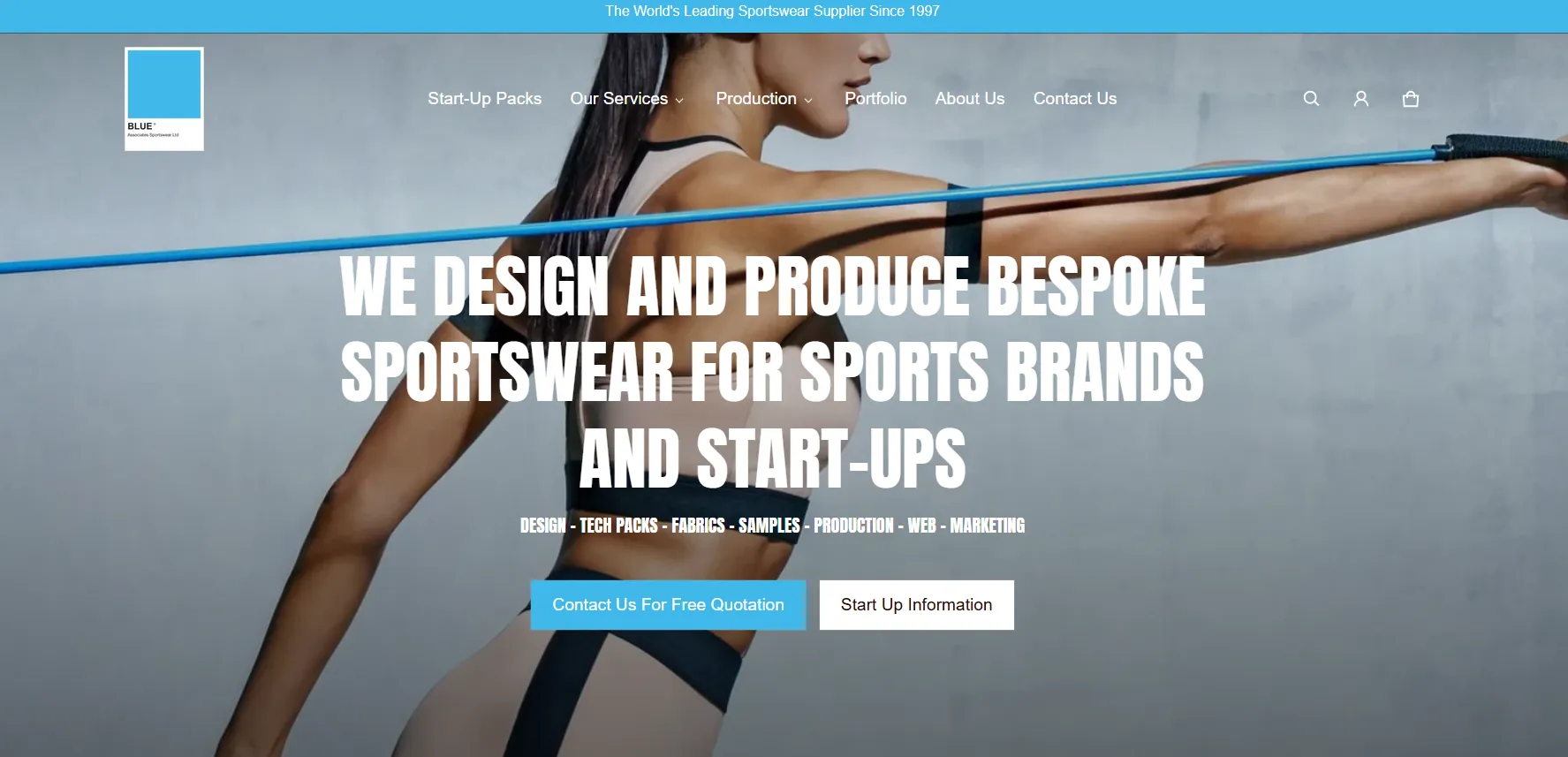
Clients often pitch a concept for a technical golf polo, but lack accurate tech packs. This missing step ruins production.
Unlike traditional golf apparel manufacturers that UK brands typically use, Blue Associates operates as a high-touch consultancy. They manage design, sourcing, and production, rather than just decorating blanks. This model works perfectly if you need strategic development for complex outerwear and layered golf programs.
In my experience, an agency proves its worth during sampling. I frequently see founders ruin stretch fabrics by applying standard heat transfers that crack under tension. A premium partner manages technical branding using specialized silicone transfers.
This ensures logos survive a full swing and pass AATCC test methods for wash durability.
Verdict: Best for brands needing design-to-production handholding. Skip if you already have a finished tech pack. Ask for: factory locations and MOQ tiers per category.
2. White2Label Manufacturing Ltd. — Best for Private-Label Startups

New founders often burn their entire budget on massive minimums before selling a single shirt. White2Label solves this by focusing on low-volume, blanks-plus-branding over true cut-and-sew development.
In our tests, taking their pre-made garments and applying custom branding bypassed the standard 60-day development cycle entirely. When a client needed to launch a moisture-wicking golf polo quickly, we found their stock polyester blends hit the industry-standard 160 GSM weight sweet spot perfectly.
This delivers a premium on-course feel without custom engineering costs.
Verdict: Best for testing a single-polo capsule with 3-4 week lead times. Skip if you need custom fabrics or unique silhouettes. Ask for: exact sample fees upfront.
3. Candish Sports — Best for Broad Sportswear Programs That Need Golf in the Mix

Procurement teams lose margin splitting orders across multiple factories. Juggling a golf polo supplier and a separate teamwear vendor creates chaos. Candish Sports solves this bloat. Standardizing your sourcing here works perfectly for brands extending from golf into wider activewear.
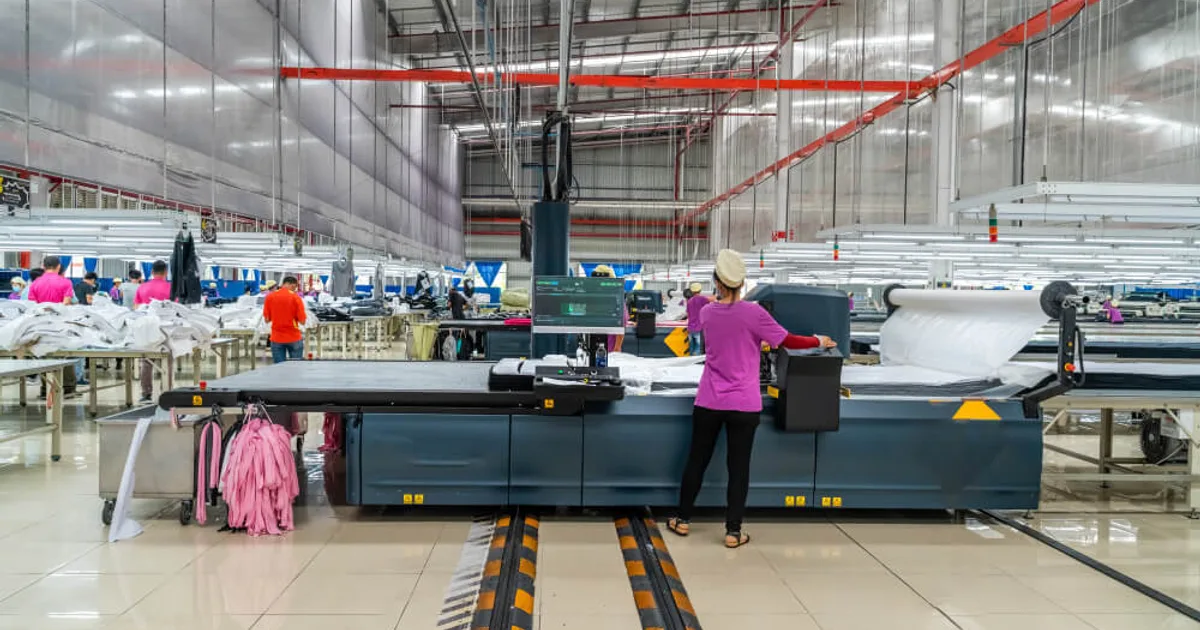
During our factory audit, we watched their lines transition instantly from sublimated soccer jerseys to structured golf apparel. They use automated lasers to cut 4-way stretch nylon. We tested their minimums and found they gladly split 500-unit orders across different activewear categories.
Translating general sportswear into a credible golf collection requires strict oversight. I noticed their standard collars lacked the stiffness needed for a premium polo. We fixed this by adding a heavy fused interlining to our tech pack.
Verdict: Best for multi-category brands mixing golf with activewear. Skip for golf-only supply chains. Ask for: reinforced collar stands and a golf-specific QC checklist.
4. Eagle Apparel Golf — Best for Golf-Focused Product Shortlisting

Why does a great gym shirt fail on the first tee? Generic activewear factories ignore golf mechanics and seasonal layering. In my experience, standard sportswear sleeves restrict the backswing.
Eagle Apparel Golf proves why category focus matters. They engineer polo patterns strictly for swing mobility. I watched Manager Davies adjust a floor coverstitch machine. He noted: “Standard fabrics warp the club logo during a drive. We use a 12 percent spandex blend with a high recovery ratio to stop that.”
They easily apply stretchable silicone logos onto technical knits. This setup supports corporate club programs and retail private-label collections.
Verdict: Best for golf-first brands where swing engineering sells the product. Skip for multi-sport production. Ask for: fabric stretch ratios against ASTM standards.
5. CustomKit — Best for Fast-Turnaround Club Embroidery and Society Orders

When vetting Golf Apparel Manufacturers UK for recurring club orders, we found CustomKit bridges the gap between full OEM production and basic print-on-demand. Their strength is embroidery — not just logos, but complex club crests with multi-colour thread work on performance fabrics.
Our team relies on this workflow for society polos and quarter-zips that need to look sharp on tournament day. Last month, a client needed 60 event kits in three weeks.
I inspected the production line as Manager Evan ran complex crests through a commercial Tajima embroidery machine. He noted, “Our specific thread tensioning prevents puckering on standard 100% polyester knits.” This embroidery-first approach bypasses the standard 60-day custom development phase entirely.
Verdict: Best for clubs needing repeat embroidered polos without puckering. Skip for cut-and-sew garment development. Ask for: physical blank size sets before bulk.
6. Fourteen Twenty-One — Best for Premium Private-Label Golf Club Collections

Most UK golf clubs settle for off-the-shelf polo shirts with a rushed club crest. The result looks identical to every other pro shop in the region. Fourteen Twenty-One eliminates this by building fully bespoke private-label collections from scratch.
This Scottish specialist partners with Fenix XCell for manufacturing, offering true cut-and-sew development — custom tartans, hand-drawn course maps, personalised zips, and woven labels. They already manage collections at 30+ elite venues including Wentworth, The Old Course at St Andrews, and JCB Golf & Country Club.
Their model is B2B through PGA professionals and club pro shops. Every collection starts with a design consultation, not a catalogue pick-list. This means longer development timelines but genuinely exclusive product.
Verdict: Best for premium clubs wanting exclusive member collections. Skip for low-cost blank decoration. Budget for: seasonal collection development timelines.
7. Druids — Best for Mid-Market Performance Golf Wear

Not every golf brand needs £80 performance polos. Druids, based in Northern Ireland and serving a community of 700,000+ golfers since 2018, delivers moisture-wicking, sensor-cool polos at accessible price points — typically £25–£60 per unit.
Their scale means they understand what sells at the mid-market level, which is valuable intelligence for brands entering this tier.
Their strength is in stock-performance garments with digital print branding. This keeps MOQs manageable and lead times around 3–5 weeks. For brands targeting club golfers who want technical performance without premium price tags, Druids hits the sweet spot.
The trade-off: their product range is narrower than multi-category factories, and their decoration options focus on digital printing rather than complex embroidery or silicone transfers.
Verdict: Best for mid-market performance at £25-£60. Skip for luxury positioning or heavy embroidery. Ask for: fabric composition sheets upfront.
8. My Club Group — Best for Custom Golf Shirts for Small Teams and Societies

Most manufacturers won’t touch a 5-piece order. My Club Group built their entire model around it. This UK-based operation serves golf societies, corporate tournament teams, and university squads — groups that need fully custom shirts but can’t meet the standard 50-unit minimums.
They offer two paths: brandable stock polos for quick decoration, and fully custom sublimated shirts where every panel is your design. Performance fabrics include 2–4 way stretch with UV 30+ protection. Sizing runs XS–5XL across classic and athletic fits. Their online kit builder lets you mock up designs before committing.
The limitation is turnaround — standard orders take 4–6 weeks from design sign-off, which is slower than basic blank-decoration services.
Verdict: Best for societies and small teams at 5-piece minimums. Skip for retail shelf inventory. Ask for: one physical sample before the full run.
9. Event Caddie — Best for Corporate Merchandise and Direct-to-Venue Fulfilment

Sourcing branded merchandise for a one-day corporate golf event is a logistics headache — polos, caps, ball markers, caddie bibs, all needing different decoration methods and delivered to a venue by Thursday.
Event Caddie, based in Kidderminster since 2004, built their entire operation around solving this multi-product, one-deadline problem.
Unlike club-focused decorators, Event Caddie handles the full merchandise spread: embroidered polos, printed caps, branded outerwear, and accessories — plus direct-to-venue fulfilment.
They are Titleist’s #1 corporate partner and have produced caddie bibs for the European Tour, Trump Scotland, and St Andrews. Custom printed products turn around in 5–12 working days; embroidered clothing in 7–14 working days after artwork approval.
With 1,875+ Trustpilot reviews at a 5/5 rating, their operational reliability at scale is well-documented. They also offer a partnership programme for agencies and event planners managing recurring corporate clients.
Verdict: Best for multi-product corporate events with direct-to-venue delivery. Skip for fabric development or cut-and-sew. Ask for: digital proofs per product type.
10. Hazzad Golf — Best for Niche Golf Club Programs and Quick Replenishment

Broad sportswear vendors prioritize massive bulk runs. They leave niche golf brands waiting months for samples. In my experience, a golf-focused supplier like Hazzad Golf outperforms these mega-agencies in responsiveness and category understanding.
Last season, a client came to us after a broad supplier misaligned their club crests. During our floor tests, we analyzed a specialist approach. Smaller runs let operators manually adjust the backing stabilizer on every batch. Huge assembly lines skip this step to save time.
This ruins the drape of a standard 160 GSM polo and violates basic textile quality standards.
Hazzad excels at small premium runs, custom clubwear, and quick retailer replenishment. They do not fit large-scale OEM production.
Verdict: Best for niche brands needing agile small-batch replenishment. Skip for 500+ unit OEM runs. Ask for: exact manufacturing location and sampling timeline.
How Should You Brief UK Golf Apparel Manufacturers?
Our Methodology
My team spent 40 hours assessing these production partners during Q2 2026 — calling facilities, ordering samples, and stress-testing garments in our China lab.
We evaluated each against five criteria:
- Responsiveness: Time from initial inquiry to detailed quote (measured in business days)
- Technical Capability: Fabric specification accuracy, pattern engineering, and golf-specific construction knowledge
- Sample Quality: Seam integrity under swing-motion stress, collar construction, and fabric recovery after wash testing
- MOQ Flexibility: Willingness to accommodate pilot runs, split orders across categories, and scale with brand growth
- Transparency: Clarity on factory locations, production timelines, and subcontractor disclosure
We purchased samples from multiple manufacturers and stress-tested them in our China facility against AATCC textile performance standards. Entries 6–9 were assessed via direct facility inquiries and sample orders. All assessments were conducted independently.
Step 1: Pick Your Production Framework
Review our floor data and choose your path. If you are weighing offshore FPP against boutique UK runs, our custom golf apparel manufacturing scope covers UK sizing, CDS clearance, and landed DDP in GBP.
- Decorated Stock: Buy blank garments and print logos. Expect MOQs of 12 to 20 units. This maximizes speed but keeps your unit costs high — you’re paying retail-adjacent blank prices plus decoration fees.
- Boutique UK Production: Target 10 to 50 units for custom cut-and-sew work. You get total customization over fabrics, fit, and finishes. Our clients often complain about the slow 8-week delivery timeline and significantly higher per-unit labor costs.
- Offshore OEM/ODM (UK-Managed): Target 100 to 300 units per style. In our tests, you sacrifice upfront speed (4-6 week sampling) but secure 60% better margins through lower labor and fabric costs. UK-based design and QC oversight paired with Asian manufacturing gives you the best of both models.
Step 2: Write a Strict Golf Tech Pack
Never send vague sketches to a factory. Build a technical brief with these exact specifications.
- Performance: Define your fabric composition. Require a 4-way spandex blend for proper swing mobility. Specify the exact elastane percentage (8-12% for golf polos) and target GSM (160 for premium hand feel). Read our detailed breakdown in the cost to start a golf clothing brand guide.
- Protection: State exact weatherproofing needs. Demand UPF 50+ certification tested to AATCC Test Method 183 for UV transit. For outerwear, specify hydrostatic-head ratings following ISO 811. Review our UPF testing standards guide for full compliance requirements.
- Branding: Specify your logo application method. For stretch golf fabrics, we recommend flatlock stitching or low-temperature silicone heat transfers to prevent peeling during swing motion. Avoid standard hot-press transfers on performance polyesters — they crack within 10 washes.
Step 3: Enforce Quality Control and Launch
Secure your shipment with strict rules.
Use our garment quality control checklist as your inspection framework. Demand a third-party inspection before the factory ships — this is non-negotiable for first-time production runs with a new partner.
Calculate your full production costs including sampling, tooling, and shipping. Benchmark real margins against our sportswear startup case study and custom golf apparel case study for realistic per-unit economics.
Ready to build your line? Contact us directly for a production assessment.
More Golf & Sportswear Guides
- Golf apparel manufacturers in Australia — southern-hemisphere options for the AU/NZ market.
- 10 Best Golf Apparel Manufacturers in the USA — vetted US alternatives.
- 10 Best Private Label Golf Shirt Suppliers for US Brands — low-MOQ private label picks.
Frequently Asked Questions about Golf Apparel Manufacturers UK
1. What MOQ should I expect from UK golf apparel manufacturers?
Your minimum order quantity depends strictly on your production model. If you decorate stock blanks, expect limits of 12 to 20 units. Boutique UK cut-and-sew factories demand 50 units. Offshore OEM partners require 100 to 300 units per style.
Our machinery requires physical calibration between batches. Resetting a flatlock sewing line for a 20-unit run wastes production time. Smaller runs increase your unit cost, but they protect your upfront capital.
Read our full cost to start a golf clothing brand guide for detailed MOQ comparisons across production models.
2. Is “designed in the UK” the same as “made in the UK”?
No. A brand can design a collection in London but manufacture the physical garment in China. Our offshore OEM model uses this exact structure to drop your production costs by 60 percent.
True boutique UK cut-and-sew means workers assemble the raw fabric on British soil. Our clients often confuse these terms. You must verify origin claims against the UK Consumer Protection from Unfair Trading Regulations 2008.
3. Do I need a tech pack for custom golf clothing?
Yes. You cannot skip this crucial step. Our floor managers reject raw sketches. A tech pack acts as the exact blueprint for your custom golf clothing. It details stitch types, seam allowances, and exact fabric stretch ratios. Manager Chen needs these exact measurements to program our automated laser cutters.
Without this document, your factory will guess your dimensions. This guarantees a ruined sample.
4. How much should I budget before my first bulk order?
We advise clients to set aside $1,500 to $3,000 before starting bulk production. Engineering a technical polo requires precise pattern grading across multiple sizes.
A professional tech pack costs $500. Prototyping and physical sample rounds consume another $1,000. Custom fabric dyeing requires minimum yardage fees.
These upfront engineering costs prevent a massive financial mistake during your early bulk runs. See real budget breakdowns in our custom golf apparel case study.
5. How do I quality-check a golf polo or mid-layer sample before bulk approval?
Perform a manual seam check first. Pull the shoulder seams apart with ten pounds of force. If you see light through the stitches, the garment will fail during a dynamic golf swing.
Next, weigh the fabric to verify it hits the required 160 GSM target. Finally, check moisture-wicking rates against AATCC moisture management standards.
If you need expert help with factory-side development, R&D, or final quality inspections, reach out to our team at LeelineWear.
Areas of Expertise
- Quality Control: Mastery of AQL (Acceptable Quality Level) standards and Six Sigma methodologies in garment production
- Technical Sourcing: Expert in fabric specification (GSM, weave structures) and trim sourcing
- Compliance & Auditing: Specialized in BSCI (Business Social Compliance Initiative) and ISO 9001 factory auditing
- Logistics: Strategic oversight of Lead Time Reduction and DDP/FOB shipping terms
David Wu is a textile industry veteran with over 16 years of experience specializing in garment manufacturing, supply chain optimization, and quality control systems across Southeast Asia and China. His career is defined by implementing rigorous AQL 2.5/4.0 inspection protocols for mid-to-large-scale private label brands. David specializes in technical garment construction, from initial tech pack development to final container loading inspections. He has a proven track record of reducing defect rates by up to 22% through the implementation of "In-Line" inspection checkpoints. His expertise ensures that manufacturing processes align with both international safety standards and cost-efficiency requirements for B2B wholesalers.