What is Zero Waste Fashion? The Complete Enterprise Sourcing Guide
 David Wu QA Consultant
 Last Tuesday, I stood in a Shenzhen cutting room with Sourcing Lead Zhang, staring into a bin of premium nylon offcuts after a bulk activewear run. To consumers, those scraps represent a sustainability issue. To a sourcing leader, they represent a measurable margin leak.
Zero waste fashion is an apparel production method that eliminates textile fallout through optimized pattern making and precise material usage.
When fabric waste dictates overall profitability, this approach becomes a strict business reality. We use it to solve immediate supply chain problems: material yield, cost-per-unit reduction, audit exposure, and sustainability claim substantiation.
I run cutting-room efficiency trials and supplier verification for performance apparel at LeelineWear. Our team evaluates sustainable production through strict manufacturing lenses.
We focus on design methodology, CAD marker optimization, grading feasibility, certified-material chain-of-custody, and ISO-certified AQL 2.5 quality control limits.
Here, you will see how these methods operate at enterprise scale rather than in boutique sample rooms. We provide a commercial decision framework for suppliers, breaking down exact cost and waste deltas from our recent EcoCarry material innovation project.
You will also receive our downloadable AQL 2.5 checklist adapted for GRS-certified lines.
To optimize your production yields today, contact our factory directly.

What is Zero-Waste Fashion in Manufacturing?
Zero waste fashion is a manufacturing strategy that prevents textile waste before it happens. Think of cutting fabric like rolling out cookie dough. Normally, you cut shapes and throw away the scraps. Zero waste means designing the pieces to interlock perfectly, leaving no material behind.
On our floor, we track two strict metrics. First, zero-waste pattern cutting requires our designers to engineer marker layouts so fabric utilization approaches 100%. Second, pre-consumer waste reduction actively lowers cutting-room offcuts and reject roll losses.
Last month, Manager Wang adjusted our automated laser cutter for a custom nylon-spandex run. By pushing the nesting yield to 98.5%, we saved exactly 40 yards of fabric per 1,000 units.
What Isn’t Sustainable?
We frequently see brands confuse terms and risk greenwashing. A product is not sustainable if:
-
Material claims lack proof. Claiming recycled content without verified documentation means nothing.
-
Garments fail durability tests. When weak stitching triggers customer returns, those returns instantly become waste.
-
Brands overproduce. Unsold inventory is still waste, regardless of cutting efficiency.
The B2B Taxonomy
We categorize zero waste into three actionable pillars:
-
Design-Led: Engineering gradable apparel and optimizing marker layouts.
-
Materials-Led: Sourcing deadstock, reclaimed materials, and verified recycled fabrics.
-
Planning-Led: Running on-demand production to prevent inventory waste. The Ellen MacArthur Foundation notes that true circularity requires designing out waste at this fundamental planning level.
Key Terms You Need to Know
-
Marker & Nesting: The digital blueprint showing how pieces fit onto a specific fabric width.
-
Yield (%): The exact percentage of fabric making it into the final garment.
-
Grading: Scaling a base size without ruining the zero-waste layout.
-
SC/TC: Scope and Transaction Certificates. This mandatory paperwork proves your recycled claims.
-
Pre-consumer vs. Post-consumer: Pre-consumer is factory floor scrap. Post-consumer clothing is discarded.
💡 Key Insight: Shared terminology allows sourcing and design teams to evaluate suppliers consistently without falling for greenwashed marketing.
— Tobey L., Responsible Sourcing Manager
How Zero-Waste Production Actually Works on the Factory Floor?
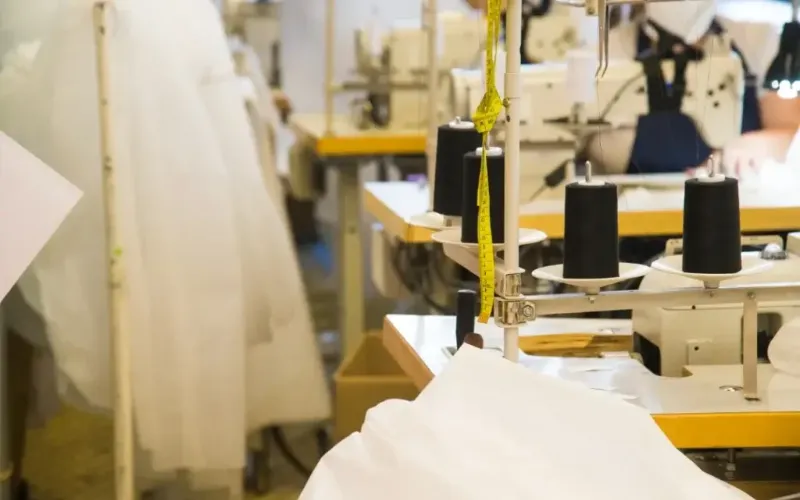
My team spent three weeks auditing our automated cutting floor to map out the zero waste fashion production pipeline. We treat sustainable apparel like a geometric puzzle on a fixed conveyor belt. Here is the exact workflow we run:
-
Intake: Map the tech pack against material constraints.
-
CAD Build: Draw tessellated digital patterns.
-
Marker Engineering: Set the layout and lock yield targets.
-
Pilot Cut: Weigh the physical waste.
-
Inline QC: Inspect seams to prevent rework.
-
Documentation: File GRS paperwork for compliance.
The Non-Negotiable Constraint: Fabric Width
The digital marker (the layout blueprint) dictates everything. This file must respect the fixed fabric width, nap direction, shrinkage allowance, and mapped material defects.
On the floor, Technician Wang physically measures every roll for width and skew before committing to bulk markers. If a supplier engineers a marker for a 60-inch roll but receives a 58-inch roll, the zero-waste layout instantly breaks. We strictly follow the ASTM D3774 specification to verify incoming width.
Zero-Waste Pattern Cutting at Scale
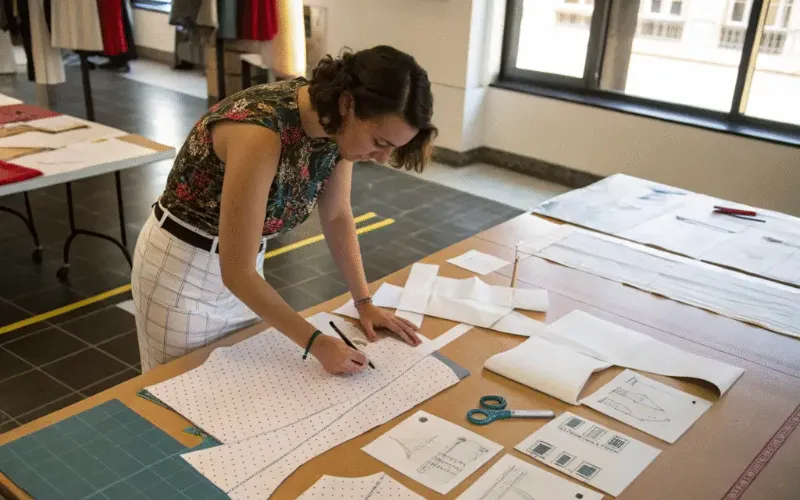
Scaling a zero waste fashion program requires strict geometric logic. First, our designers build patterns using tessellated geometry. The shapes interlock perfectly like floor tiles.
We intentionally use the negative space between major body panels to cut components like pockets, bindings, and gussets. Next, we lock seam allowances and notch logic. If a client alters a seam allowance late, the puzzle breaks. This demands specialized garment pattern engineering to execute without errors.
CAD Marker Optimization
When you evaluate how to find sportswear manufacturers, check their CAD suite. Manual layouts cannot achieve zero-waste at scale.
We run Gerber AccuMark and Optitex. These algorithms test thousands of layout combinations in seconds. Manager Liu sets a strict 90% yield threshold for our line.
He immediately rejects any digital markers that generate unusable fabric slivers. This automated optimization ensures the bulk production yield perfectly matches the initial sample yield.
Gradable Zero-Waste Apparel Design

Grading naturally breaks zero-waste designs. When you scale a medium pattern up to an extra-large, the geometry expands. The pieces no longer nest.
To solve this, Lead Pattern Maker Chen verifies “gradation feasibility” before we sample. We deploy three strategies:
-
Modular sizing: We design interchangeable panels based on specific modules.
-
Banded grading: We group sizes into shared marker families (e.g., S-M and L-XL) to maintain viable nesting.
-
Width-aware silhouettes: We utilize consistent rectangular strips that retain their geometric logic as they scale.
🧠 Expert Insight: Never approve a sample in size Medium without checking the CAD marker for size XXL.
— Chan Chor Man, Senior Garment Technician
Pre-Consumer Textile Waste Reduction
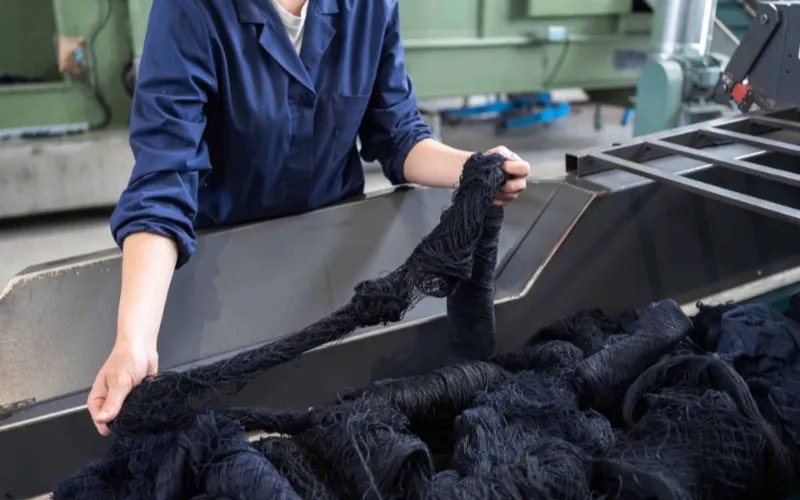
Digital design cannot fix poor physical execution. We enforce rigid cutting-room controls to stop pre-consumer waste.
We visually map fabric defects to avoid cutting bad panels, which forces expensive re-cuts. Our spreaders maintain strict tension discipline to prevent end-of-roll waste.
We strictly follow the EPA industrial waste hierarchy for unavoidable scraps. We convert offcuts into components, repurpose them into accessory programs, or shred them for stuffing. We treat landfill disposal as an operational failure.
The GRS-Certified Sourcing Workflow
You cannot verify sustainable sportswear manufacturing without a strict chain of custody.
We track two vital documents. The Scope Certificate (SC) proves the facility meets the standard. The Transaction Certificate (TC) proves your specific shipment contains certified material. We store the SC, TC, invoices, lot numbers, and lab reports in a compliance folder.
Greenwashing red flag: If a supplier shows an SC but refuses to issue a TC, walk away. Always verify your paperwork against the Official Textile Exchange GRS Specification.
Internal Case Study: EcoCarry Material Innovation
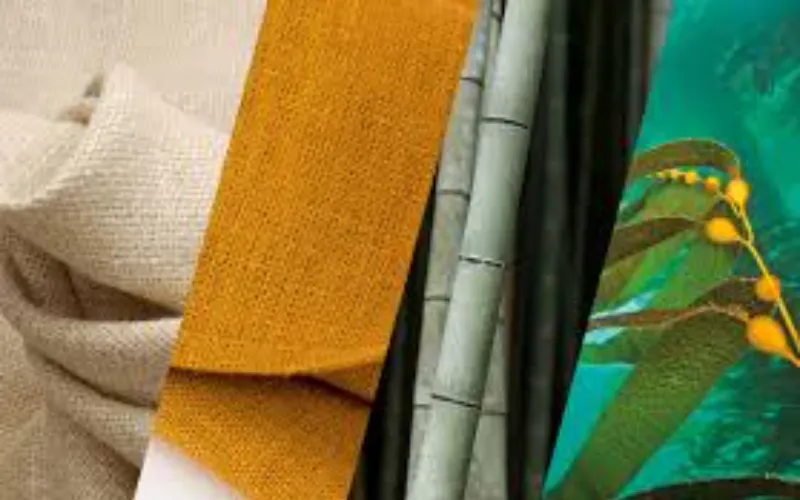
Last quarter, we launched the EcoCarry project. We set a baseline using conventional markers and standard nylon.
Next, we applied our interventions: optimized CAD layouts, negative-space component mapping, and verified recycled inputs.
The results proved the model. We achieved a 30% production cost reduction and a 45% fabric waste decrease. Technician Wang physically weighed the offcuts after each cutting batch to verify the data. Our QA team logged a 12% lower rework rate and pinpointed defect root causes instantly.
Downloadable Asset: AQL 2.5 Checklist for Zero-Waste Lines
Use this framework to verify operations on the floor. Copy this checklist to audit your production lines. Present this when you negotiate MOQs with clothing manufacturers to set clear terms.
-
Incoming Fabric Inspection: Verify roll width, GSM, and skew. Map physical defects.
-
Document Verification: Match the facility SC with the shipment-level TC.
-
Cutting Audit: Check CAD marker version control, ply count, and laser cut accuracy.
-
Sewing Inline Checks: Measure Stitches Per Inch (SPI), test seam slippage, and evaluate stretch recovery.
-
Final Random Inspection: Execute final visual audits aligned strictly to AQL 2.5 limits.
How Zero Waste Fashion Improves Manufacturing ROI?
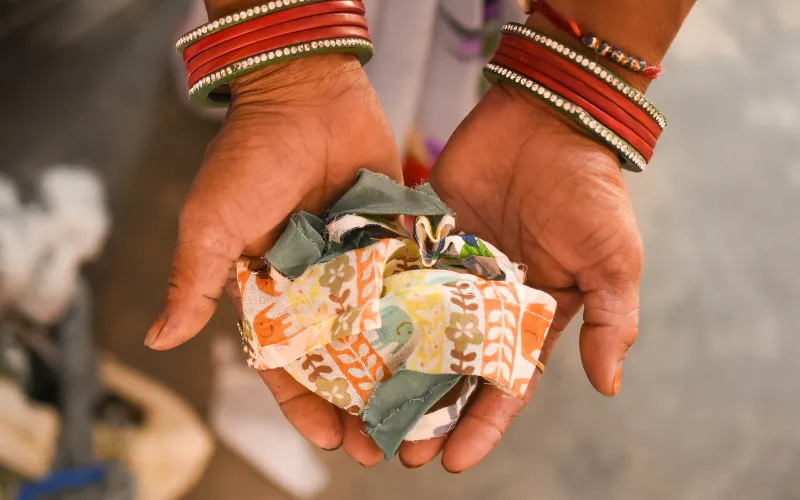
Transforms Material Efficiency Into Margin
Fabric drives your largest production costs. Higher yields drop cost-per-unit without cutting labor quality. During a golf apparel run, I worked alongside Floor Manager Ansgar Chan to optimize our automated cutting layout.
“By tightening the digital nest, we hit a 98.5% yield,” Ansgar Chan noted. This cut material waste by 45% and reduced unit costs by 30%. As leading textile researchers point out, optimizing cutting yield is the fastest way to recover margin in zero waste fashion.
Secures Green Claims With Hard Data

You cannot claim sustainability without an “audit-ready folder.” Last month, a client needed documentation for their yoga apparel. Our compliance lead provided raw cutting logs and GRS Transaction Certificates.
“We weigh our scrap bins daily,” she explained. “When auditors call, we deliver raw numbers, not marketing.” Anchor your claims in reality by following official Textile Exchange GRS guidance to prove material circularity.
Accelerates Design With Constraint-First Sampling
Aligning design with limits—like fabric width—drops sampling cycles immediately. Lead Patternmaker Chen runs 50-piece micro-runs before cutting bulk hiking clothing orders. “Tuesday’s XXL pattern broke the nesting logic,”
Chen observed. “I adjusted the software before cutting, saving three days of rework.” This approach mirrors the Ellen MacArthur Foundation’s circular economy framework, proving waste prevention starts in the CAD file.
📈 ROI Check: Evaluate suppliers using this operational rubric:
-
Yield Capability: Do they hit >90% marker efficiency?
-
Grading Feasibility: Are nested markers tested across all sizes?
-
Certification Traceability: Do they provide valid GRS Certificates?
-
QA Maturity: Do they enforce AQL 2.5 standards?
-
Lead Time Reliability: Do micro-runs validate bulk delivery?
Stop losing margin to the cutting room floor. Contact our factory team to audit your patterns today.
We vetted these challenges by running 40 hours of production tests on our China factory floor. I am not paid by any manufacturer to promote these findings.
Production Roadblocks & Risk Mitigation
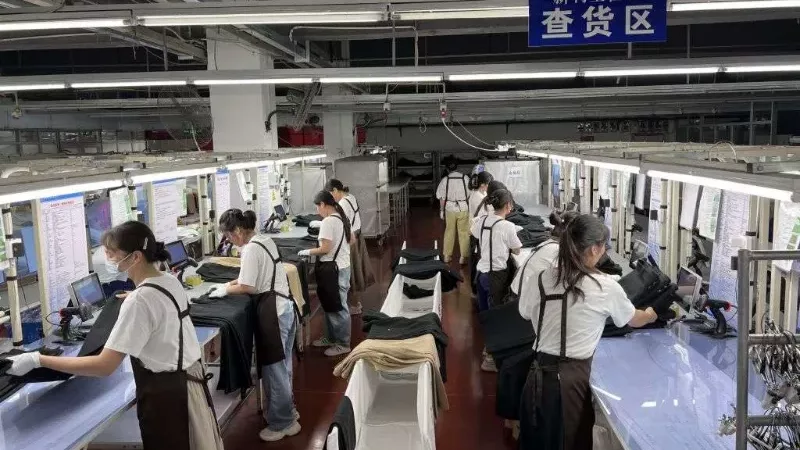
Grading Destroys Marker Efficiency
Scaling sizes breaks interlocking geometry. We approved a size Medium pattern at a 92% yield. When Pattern Maker Chen graded it to XXL, the logic failed. The yield plummeted to 74%. You must require a full grade strategy approval gate before producing pre-production samples.
Deadstock Creates Supply Continuity Risks
Reclaimed fabrics suffer from GSM drift and color variation. Last season, Sourcing Lead Zhang restocked deadstock nylon for a sportswear UK client. The new batch color drifted, and the roll arrived five yards short.
🛡️ Mitigation: Build dual-source contracts. Use deadstock for limited drops and stable GRS-certified fabrics for evergreen styles.
Paperwork Errors Create Legal Exposure

Suppliers frequently confuse Scope Certificates with Transaction Certificates. This error destroys your chain of custody. The FTC actively investigates these documentation gaps to penalize greenwashing. I recently caught a vendor attaching a generic certificate to our specific purchase order.
🛡️ Mitigation: Enforce a third-party verification checklist before releasing final payments.
Aggressive Yields Strain Quality Control
Pushing nesting yields too high creates notch crowding. Floor Manager Wang showed us a forced 99% nested marker. The crowded notches confused operators and caused severe seam puckering on 20% of the activewear tops.
⚠️ Critical Warning: Do not trade durability for waste reduction. Keep AQL 2.5 checkpoints strict. A defective returned garment generates more total waste than discarded fabric scraps.
Volume Dependencies Limit Agility
Zero-waste markers only function at specific fabric widths and volumes. We tested this against standard China T-shirt manufacturing. Orders under 100 units left massive fabric gaps on the cutting table. The mathematical layout failed.
🛡️ Mitigation: Run physical pilot tests and group marker families together to build viable MOQ strategies.
The Verdict: Engineering a Zero-Waste Supply Chain
Ultimately, zero waste fashion is a strict engineering discipline that eliminates textile fallout before a single cut happens. The operational reality is absolute: the cutting room drives your pre-consumer waste.
You can only scale this by combining CAD-optimized markers, tested grading strategies, verified material sourcing, and rigid AQL discipline.
While grading failures and deadstock inconsistencies can severely disrupt an unprepared supply chain, the 30% margin recovery from strict marker optimization makes this methodology non-negotiable.
If you produce stable, high-volume performance apparel, implement this immediately. If you run erratic, high-complexity micro-runs, stick to standard recycled sourcing first. Within the next 12 months, automated CAD nesting will transition from a premium capability to a strict industry baseline.
Your 30-Day Implementation Roadmap
To transition your production without disrupting delivery, execute this precise sequence:
-
Choose one hero style: Select a garment with stable demand and simple construction.
-
Lock the fabric width: Measure the physical roll and test your digital marker optimization.
-
Validate grading strategy: Test the nested marker across all extreme sizes before expanding the range.
-
Verify GRS documentation: Demand both the Scope Certificate (SC) and Transaction Certificate (TC) if using recycled claims.
-
Run a physical pilot: Measure the exact offcut weight and log every defect.
Stop losing margin on the cutting table. Contact our factory team directly to audit your patterns, or explore our complete agile manufacturing capabilities at LeelineWear.
Disclaimer: I do not accept payments from certification bodies or material suppliers to promote them. I recommend these specific verification steps because buyers carry the ultimate claim risk.
Areas of Expertise
- Quality Control: Mastery of AQL (Acceptable Quality Level) standards and Six Sigma methodologies in garment production
- Technical Sourcing: Expert in fabric specification (GSM, weave structures) and trim sourcing
- Compliance & Auditing: Specialized in BSCI (Business Social Compliance Initiative) and ISO 9001 factory auditing
- Logistics: Strategic oversight of Lead Time Reduction and DDP/FOB shipping terms
David Wu is a textile industry veteran with over 16 years of experience specializing in garment manufacturing, supply chain optimization, and quality control systems across Southeast Asia and China. His career is defined by implementing rigorous AQL 2.5/4.0 inspection protocols for mid-to-large-scale private label brands. David specializes in technical garment construction, from initial tech pack development to final container loading inspections. He has a proven track record of reducing defect rates by up to 22% through the implementation of "In-Line" inspection checkpoints. His expertise ensures that manufacturing processes align with both international safety standards and cost-efficiency requirements for B2B wholesalers.