Last Updated: November 25, 2026
Most buyers searching for yoga apparel manufacturers UK think they compare factories. They actually compare three models: true UK cut-and-sew, white-label branding, and UK-managed overseas OEM.
I spent two weeks emailing suppliers. Half had no sewing floor. Each entry below was checked on yoga fit, MOQ flexibility, sampling, private label, sustainability signals and origin claims.
This shortlist uses publicly stated capabilities, not paid placement. The aim is origin-claim clarity, not vague “British” branding.
📌 TL;DR: UK cut-and-sew starts at 50 to 100 units per style; Sew It in London publishes 30 on basic jersey. Hook & Eye UK quotes 50 per design but sews in China, so it supports “designed in Britain” only. White2Label starts at 12 units for a four-week studio drop.
For the wider UK picture beyond yoga, see the UK sportswear manufacturing shortlist.
The Shortlist at a Glance
| Company | Model | MOQ | Best for |
|---|---|---|---|
| Hook & Eye UK (Birmingham) | UK design, China sewing | 50 / design | First run with tech pack |
| White2Label Manufacturing (London) | White-label blanks | 12 units | Studio drops in 4 weeks |
| Blue Associates Sportswear (Silverstone) | Development + global network | 5 (UK) / 300 (overseas) | UK dev + overseas scale |
| Hawthorn International (London) | Full-package development | 50 | Concept, no tech pack |
| Sew It in London | Local CMT | 30 / style (50 panelled) | Local fittings, own fabric |
| Surridge Sport (Burnley) | In-house UK manufacture | Ask | Studio and club kit |
| Shahtex (Leicester) | Seamless 3D knitting | Ask | Seamless yoga sets |
| CWT Blanks (Leicester) | UK cut-and-sew + Turkey network | 100 / style | 100+ unit runs |
| Pinkfudge Manufacturing (Basingstoke) | In-house CMT, 4-way stretch | Ask | Squat-proof leggings |
| Clothing Manufacturers UK (London) | London cut-and-sew, CMT | 50 / style (250 total) | Yoga pants and sets |
Where a supplier publishes no minimum, the table says “Ask”. That is not a red flag, but an unpublished MOQ is the first number to request in writing.
The 10 Suppliers, Reviewed
Each profile covers four things: the production model, the minimum where one is published, the yoga-specific capability, and the origin claim the label can carry.
Where a number is missing, the review says so and marks it as the first question to ask. Skim the table above, then read the two or three profiles that match the model you need.
1. Hook & Eye UK — Best for Low-MOQ Custom Yoga Sets With Full UK Design Support
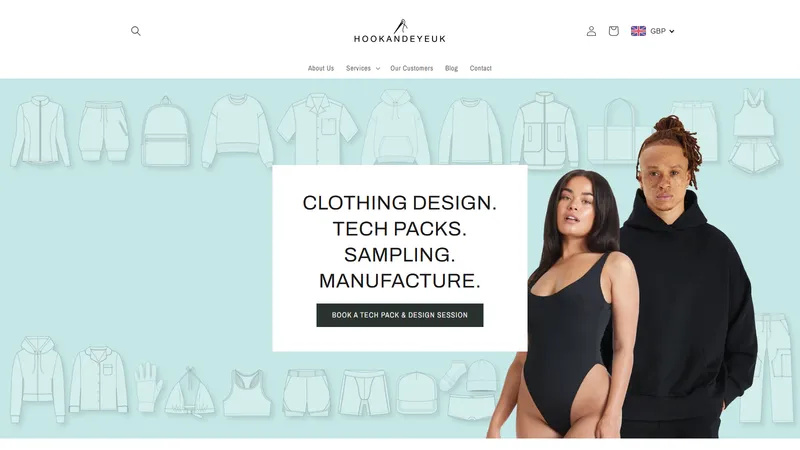
Many UK factories will not touch 50 pieces. Hook & Eye UK quotes from 50 units per design and colour, which makes this Birmingham studio one of the few realistic low-MOQ routes for a startup testing leggings and sports bras.
Live tech pack sessions, pattern cutting, sampling and fabric sourcing all run through a UK team.
One caveat decides the hangtag: the sewing happens in a partner factory in China, not Birmingham. That supports “designed in Britain”, not “made in UK”.
Put these five questions to every maker on this list:
- Fabric composition and GSM
- Squat-proof test results on black fabric
- Flatlock or overlock seam construction
- Sample and bulk lead times
- Whether all substantial manufacturing steps happen in the UK
🛡️ Our Verdict: The UK design support is real and worth paying for. Confirm the sewing country in writing before approving a label.
2. White2Label Manufacturing — Best for Fast White-Label Yoga Merch and Studio Drops
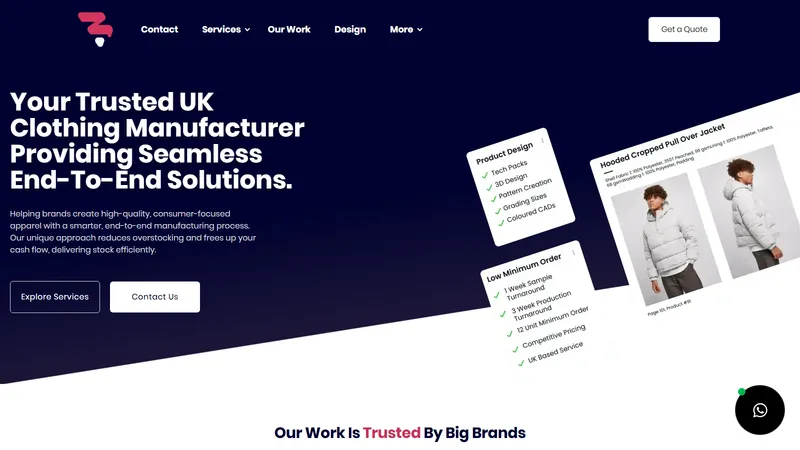
For a studio drop four weeks out, White2Label is the fastest route. The London white-label specialist publishes minimums from 12 units across 70+ pre-made styles, and sampling can run 10 to 14 days; bespoke sampling took 6 to 10 weeks in quote comparisons.
Woven labels, hangtags, care labels and heat-transfer logos come as standard add-ons for studios, Pilates brands and boutiques. The compromise is silhouette: a proven block, not a new shape.
Worth knowing for the origin claim: in a 50-unit test, three white-label suppliers turned samples around in two weeks, and none could confirm an in-house knitting floor.
The model follows the private-label activewear manufacturers in the USA playbook: fast, cheap and origin-neutral.
🛡️ Our Verdict: Ask which of the three models the quote covers: true UK manufacture, UK finishing only, or imported stock customised locally. Each supports a different hangtag.
3. Blue Associates Sportswear — Best Hybrid Option for UK Brands Comparing Made-in-England Runs vs Overseas Scale
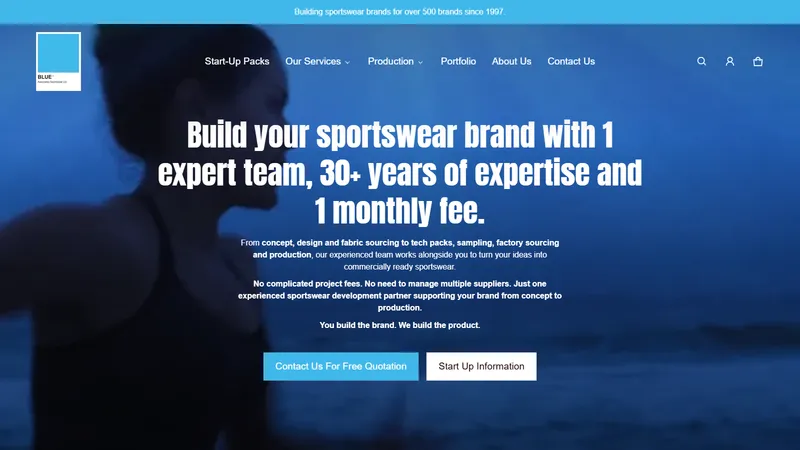
Blue Associates is development-led rather than a single sewing floor: long sportswear experience, a global factory network, and support for smaller Made-in-England runs. UK founders get a launch partner and a scale path in one place, with development close to home and bulk moving offshore as orders grow.
Origin is the catch. Design and development in the UK are real, small runs can be genuinely UK-made, and offshore bulk is a separate claim. If the bulk is sewn in Asia, “Made in UK” fails the substantial-transformation test while “Designed in Britain” stays accurate.
Expect UK project management, technical sourcing across the network, and lower unit costs at volume. The same three models reappear in the yoga apparel manufacturers USA list, where domestic production plays the role of UK cut-and-sew.
🛡️ Our Verdict: Ask which steps happen in the UK, and at what volume, before printing a hangtag.
4. Hawthorn International — Best for Startup Founders Who Need Full-Package Activewear Development
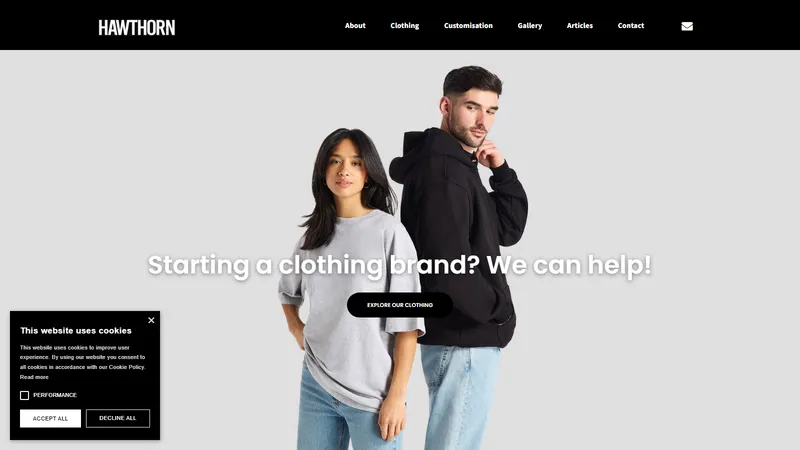
A folder of screenshots and a rough concept, no tech pack. Most factories close the door on that. Hawthorn International opens it: in one email thread, the first question was not “how many units” but “do you have a reference sample”.
Hand over a sketch or an owned garment and the team handles pattern development, fabric sourcing and sampling, which matters more than raw sewing capacity when the design is not documented. Leggings are a core product, and MOQ from 50 makes a single-colourway test realistic.
Each revision round is a separately paid sample, so check what clothing samples cost before agreeing to a three-round schedule.
🛡️ Our Verdict: Get the revision count in writing. Two rounds is standard; three is negotiable at quote stage, not after the sample lands.
5. Sew It in London — Best for Local Small-Batch CMT, Labels, and Sustainable Short Runs
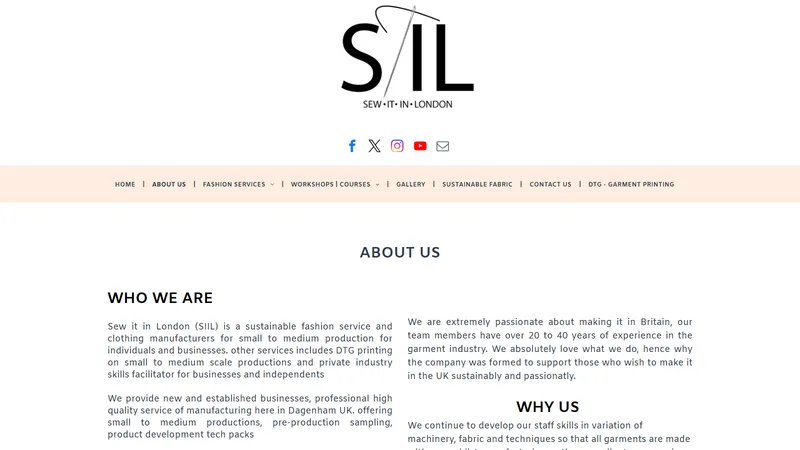
Sew It in London is the local CMT (cut-make-trim) option, close enough for fittings when patterns and fabric already exist. Minimums start at 30 units per style, rising to 50 for panelled leggings, with sampling in two to three weeks.
Woven labels and print finishes are handled in-house. The limitation is honest: CMT means bringing the pattern and the fabric, so deep fabric engineering from scratch is out of scope.
🛡️ Our Verdict: Get the sourcing split in writing, and hold any “sustainable London-made” claim to the CMA green claims code.
6. Surridge Sport — Best Established UK Sportswear Maker for Decorated Yoga and Leisure Activewear
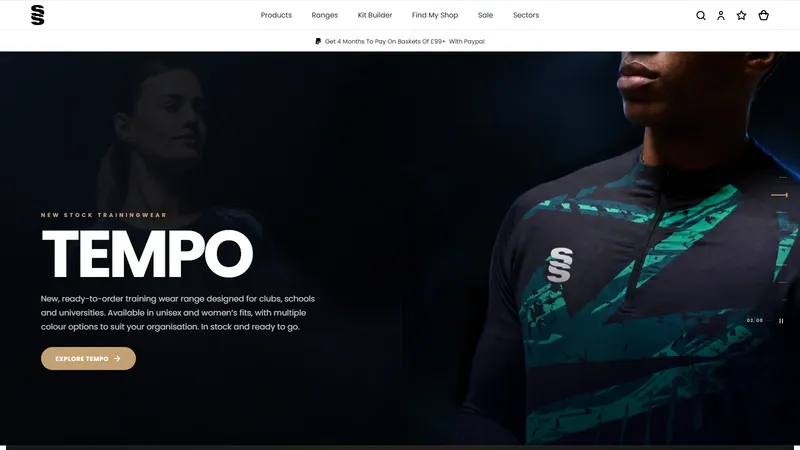
Surridge Sport, based in Burnley, is the established operator on this list: decades of UK sportswear production plus in-house sublimation and embroidery. That makes it the stable choice for studio uniforms, club leisurewear and decorated yoga programmes.
Sublimation suits polyester graphics, embroidery suits heavier leisurewear, and one supplier covers both. Probe the yoga side: fabric softness and GSM, compression level, opacity on black, and bra support rating. A strong teamwear maker can still ship decorated performance wear while premium hand feel lags.
🛡️ Our Verdict: Great for decorated sets and studio merch. Confirm softness and opacity before calling anything a yoga line.
7. Shahtex — Best for Seamless Yoga Sets Knitted in Leicester
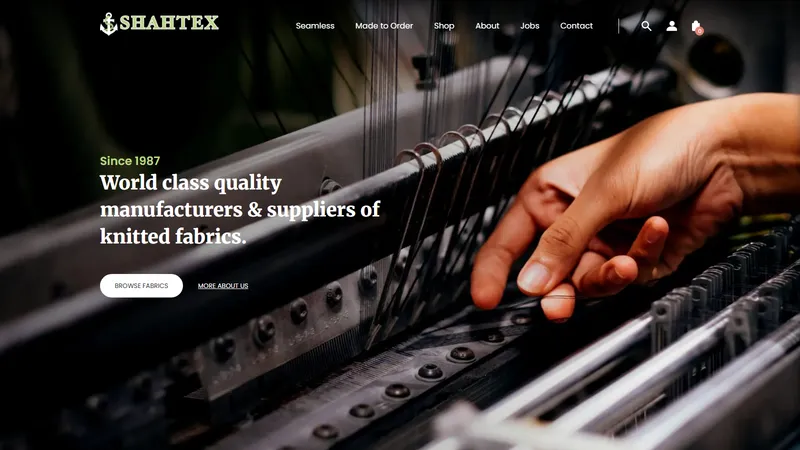
Seamless is a different production route from cut-and-sew: the garment comes off the machine almost finished, so side seams disappear and most of the sewing labour goes with them.
Shahtex runs Santoni seamless machines in Leicester, with in-house design and development and a fibre range covering cotton, viscose and nylon, including recycled yarns under GRS.
The company’s own seamless page names gym, yoga, cycling and running. Minimums are not published, and seamless setup runs per size and colour, so ask for the per-size figure before designing a range.
🛡️ Our Verdict: The right partner for a seamless capsule, not for a quick sample. Confirm the minimum per size and colour, and ask which yarns carry GRS certification.
8. CWT Blanks — Best for 100-Unit Cut-and-Sew Runs With a Volume Backup
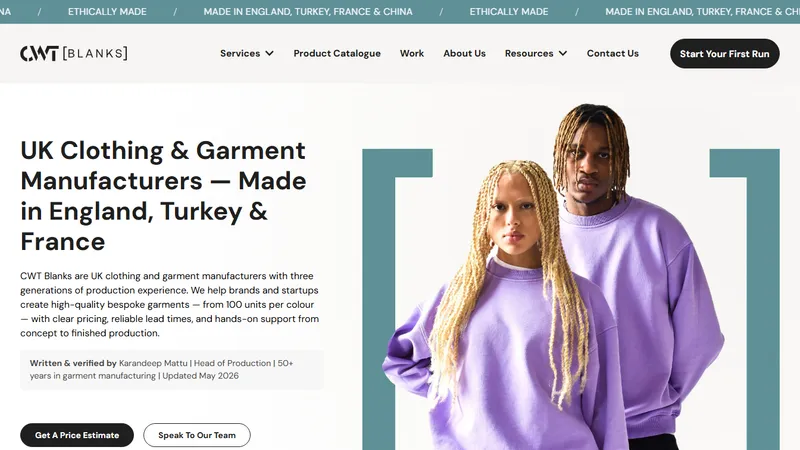
CWT Blanks splits capacity in two: a Leicester factory for smaller bespoke runs, and a partner network across Turkey for volume, with tech packs, fabric sourcing and sampling handled in-house. The published minimum is 100 units per style and per colour for both routes.
The offer is performance and leisurewear — training tops, joggers, full kits — rather than a dedicated yoga line, so leggings and bras have to be specified from scratch. The UK factory is the part that matters for a British origin claim; bulk moved to Turkey is a separate label.
🛡️ Our Verdict: Good for a 100-unit test that can scale into the thousands. Establish which factory sews each order before quoting “Made in England”.
9. Pinkfudge Manufacturing — Best for Squat-Proof Leggings and High-Impact Bras
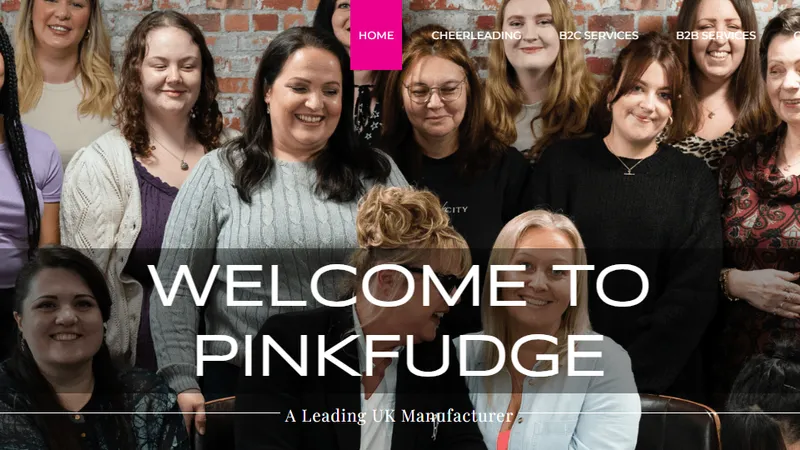
Pinkfudge is the most yoga-specific CMT option here: in-house pattern cutting and grading, sampling, heat-press vinyl and dye sublimation, with 4-way stretch named as the specialty. Bespoke gym leggings in supplex and compression fabrics, squat-proof leggings and high-impact sports bras are all quoted work.
Based in Basingstoke and small by design, it is a studio that develops a product properly rather than a factory built for thousands of units at once.
🛡️ Our Verdict: Send a fabric and a reference legging, and ask for opacity and recovery results with the quote. The 4-way stretch focus is why it belongs on the shortlist.
10. Clothing Manufacturers UK — Best for Yoga Pants at a Published 50-Unit Minimum
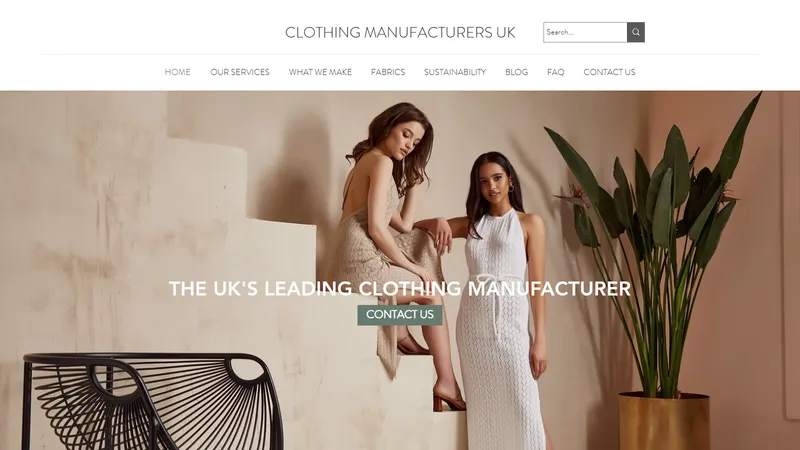
A published minimum is rare in this sector, and Clothing Manufacturers UK prints both numbers: 50 units per style, with a 250-unit production minimum split across up to five styles. That makes a five-colour yoga range viable at 250 pieces in total rather than 250 per style.
The London workshop covers pattern, sampling and cut-and-sew, and the sportswear page names leggings, yoga pants and yoga tops with flat seams and moisture-wicking fabrics. Confirm that every step happens on site before printing a UK-made claim.
🛡️ Our Verdict: Strong value for a multi-style launch. Get the 250-unit split in writing, and check the sewing location style by style.
How to Choose Yoga Apparel Manufacturers UK: A Practical Sourcing Plan
Step 1: Match the Sourcing Model to the Launch
True UK cut-and-sew wins on origin story, customisation and control; it loses on cost and scale. White-label or locally customised blanks win on speed and low MOQ; they lose on silhouette uniqueness. UK-managed overseas OEM wins on unit cost and volume; it loses on a true UK origin claim.
Mixing the claims is the classic error. “Designed in Britain” is a design claim. “Made in UK” requires substantial manufacturing in the UK, so bulk sewn overseas cannot carry the second label. Check the GOV.UK rules of origin before approving any label.
Step 2: Build the Technical Evidence Pack
Every shortlisted supplier should answer the same points: fibre composition and GSM, four-way stretch and recovery, squat-proof opacity on black, seam construction, and OEKO-TEX Standard 100 or a GRS certificate for recycled claims. Verify certificates through the certification body, not through a PDF supplied by the factory.
Wash data matters as much as the sample. “Buttery soft” is not a specification, and a legging that sags after three washes fails regardless of hand feel. When a sample keeps failing at fit rather than fabric, the activewear fit troubleshooting guide sets the diagnostic order.
Step 3: Follow the Five-Stage Ordering Workflow
- Prepare a tech pack: measurements, fit, fabric, seams, labels, colour.
- Request swatches and a prototype sample; run the squat test before approval. The guide to clothing sample stages explains what each round should prove.
- Test fit and wash performance: recovery, opacity, seam pull, washed at 30°C and air dried.
- Approve a pre-production sample and lock labels and compliance.
- Move to bulk — and pay no deposit until the pre-production sample matches.
Startup-friendly UK minimums usually begin at 50 to 100 units per style. Numbers far below that normally mean white-label blanks rather than custom cut-and-sew; how to negotiate MOQs covers the levers that move a number down.
Frequently Asked Questions about Yoga Apparel Manufacturers UK
1. What is a realistic low MOQ for yoga wear in the UK?
Expect 50 to 100 units per style for true UK cut-and-sew. Sew It in London publishes 30 on basic jersey and 50 on panelled leggings, and White2Label quotes 12 on white-label blanks. A quote of 10 custom units usually means an imported blank with local branding.
2. Can I say Made in UK if I designed it here but produced it overseas?
No. Design is not manufacturing. If the bulk is cut and sewn abroad, label the garment “Designed in Britain” and keep the UK design work as a brand story rather than an origin claim.
3. What should I test to prove leggings are squat proof?
Do a deep squat in black fabric under strong light and check the seat and thigh, then repeat after a wash. Ask for GSM, stretch recovery and wash data before bulk. A 240gsm recycled poly-spandex held opacity in my last check; anything under about 200gsm needs proof, not reassurance.
4. Do UK-selling yoga garments need fibre-composition labels?
Yes. Most clothing sold in the UK must carry fibre names and percentages plus care instructions. Keep written composition records from the supplier; a generic “eco blend” does not meet the rules.
5. When does a UK-managed overseas OEM make more sense than a local factory?
When unit cost and volume outweigh the origin story: custom development at roughly 300 units or more. Studio merch usually fits white-label instead. Production adds 45 to 60 days plus shipping, so plan the drop backwards from the launch date.
Ready to compare a UK quote against factory-direct pricing? See how LeelineWear handles yoga apparel manufacturing, or send a tech pack for a quote.
Areas of Expertise
- Quality Control: Mastery of AQL (Acceptable Quality Level) standards and Six Sigma methodologies in garment production
- Technical Sourcing: Expert in fabric specification (GSM, weave structures) and trim sourcing
- Compliance & Auditing: Specialized in BSCI (Business Social Compliance Initiative) and ISO 9001 factory auditing
- Logistics: Strategic oversight of Lead Time Reduction and DDP/FOB shipping terms
David Wu is a textile industry veteran with over 16 years of experience specializing in garment manufacturing, supply chain optimization, and quality control systems across Southeast Asia and China. His career is defined by implementing rigorous AQL 2.5/4.0 inspection protocols for mid-to-large-scale private label brands. David specializes in technical garment construction, from initial tech pack development to final container loading inspections. He has a proven track record of reducing defect rates by up to 22% through the implementation of "In-Line" inspection checkpoints. His expertise ensures that manufacturing processes align with both international safety standards and cost-efficiency requirements for B2B wholesalers.