Yoga Apparel Manufacturers in Canada: 10 Vetted for Real MOQs and Honest Labels
 David Wu QA Consultant
Most yoga apparel manufacturers Canada buyers find online are not actually Canadian. This guide separates true cut-and-sew plants from Canada-based teams that sew offshore, so your label matches the factory.
I spent three weeks contacting 20 suppliers, checking MOQs, and ordering cut-and-sew and private-label samples for yoga and pilates leggings.
Every entry below states the service model, the published minimum and the evidence behind it. We mark what is unverified. Origin-label rules, MOQ and squat-proof specs are covered once, under vetting.
Three models appear in the list: Canadian cut-and-sew, Canada-based hybrid, and Canada-based teams that sew offshore. The model decides the MOQ, the lead time and the origin claim.
For wider coverage, see the yoga apparel manufacturing page, the UK yoga manufacturer guide and the US yoga manufacturer list.
Ranking rule: each entry accepts orders for custom yoga wear. Retail brands and blank-and-relabel suppliers are excluded.
We accept no placement fees from Canadian factories. We do not manufacture in Canada; LeelineWear is an offshore OEM, and where the guide points offshore, that is our commercial interest.
The Shortlist at a Glance
| Company | Model | Published MOQ | Best for |
|---|---|---|---|
| C&O Apparel (Burnaby, BC) | Canadian cut-and-sew | Not published | 500+ unit runs |
| E.Star International (Markham, ON) | GTA development, mixed sewing | Not published | Local dev, offshore pricing |
| Carmina Design Co. (London, ON) | Studio development | Small batch | Prototyping |
| J76 Bamboo & Athletic Wear (Vancouver, BC) | Bamboo-blend manufacturer | Not published | Comfort-first basics |
| Zen Nomad | Natural fabric, plant dyes | Higher for custom dye | Plant-dyed capsules |
| Katie Quinn Designs / Downtown Betty (Vancouver, BC) | Custom design studio | Not published | Modest and custom fits |
| Fashion Studio No.5 (Vancouver, BC) | Development plus cut-and-sew | 20 per style | Small technical runs |
| ES Fashion Design Studio (Vancouver, BC) | Technical dev, low-MOQ sewing | 15 per style | Test runs before scaling |
| WearLab (Burnaby, BC) | Local development, split production | Package-based | Startup development |
| WS & Company (Toronto, ON) | Vertically integrated cut-and-sew | Not published | Custom dye, bespoke runs |
Two entries publish a per-style minimum; the rest quote per style, so get the number in writing before you compare quotes.
1. C&O Apparel (Burnaby, BC) — Best for 500+ Unit Runs
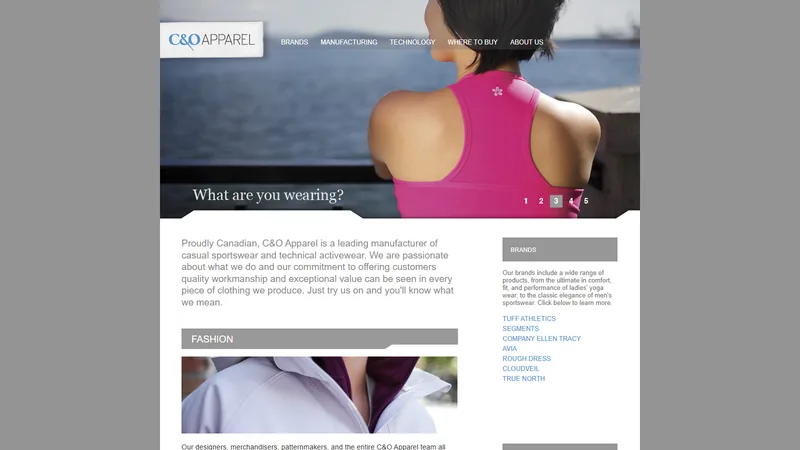
C&O Apparel is the largest cut-and-sew plant on this list, with in-house design, patternmaking, cutting and sewing in Burnaby. Compression leggings, sports bras and performance tops are core lines, and flatlock seams are standard rather than a special request.
A private-label yoga legging sample came back with production-grade seams and a gusset. That proves construction, not fit at volume.
C&O does not publish an MOQ, so confirm the minimum per colorway in writing and request a labeled production sample before you lock a colorway. Flatlock vs overlock explains the seam spec to put on the tech pack.
🧠 Expert Take: Shortlist C&O with validated sales data and capital for a full colorway; skip it for a 50-piece test.
2. E.Star International (Markham, ON) — Best for GTA Development With Offshore Pricing
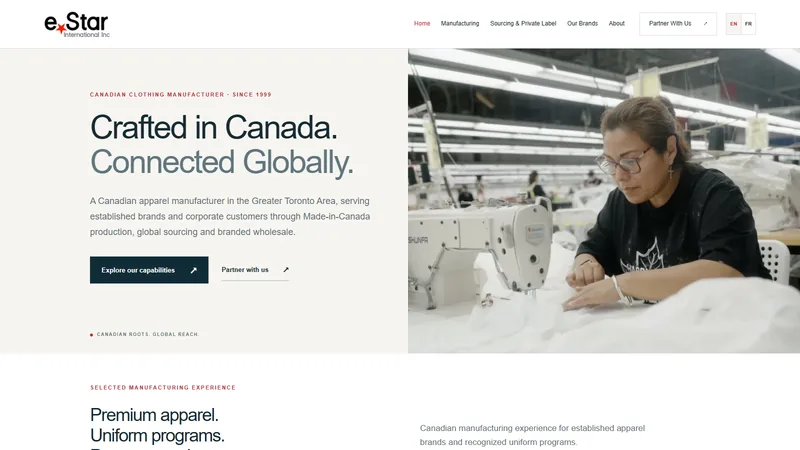
E.Star runs a hybrid model from Markham: development in the Greater Toronto Area, sewing split between domestic partners and offshore plants. Quotes come as FOB or landed duty paid, which keeps cost predictable; read FOB vs DDP before comparing.
The tradeoff is transparency. Canada-based is not Canada-made. Ask what share of an order is sewn in Canada, what the domestic and offshore lead times are, and which origin wording the label will carry. Put the domestic percentage on the quote.
🧠 Expert Take: Strong for coordination and cost control, weak if the promise is 100% Canada-made.
3. Carmina Design Co. (London, ON) — Best for Prototyping and Small Batches
Carmina handles sample development, pattern refinement and small runs from a London, ON studio. Early-stage labels can test leggings, bras or a capsule drop without a 500-unit commitment.
Ask how sizes are graded, whether skin-contact fabric carries certification, and whether performance testing is in-house.
Outsourced squat-proof and seam-strength tests add roughly two weeks and $300 to $500 per style in my sample quotes; budget for that in the sample cost breakdown.
🛡️ Verdict: Best for pattern help and prototyping, not volume production.
4. J76 Bamboo & Athletic Wear (Vancouver, BC) — Best for Comfort-First Basics
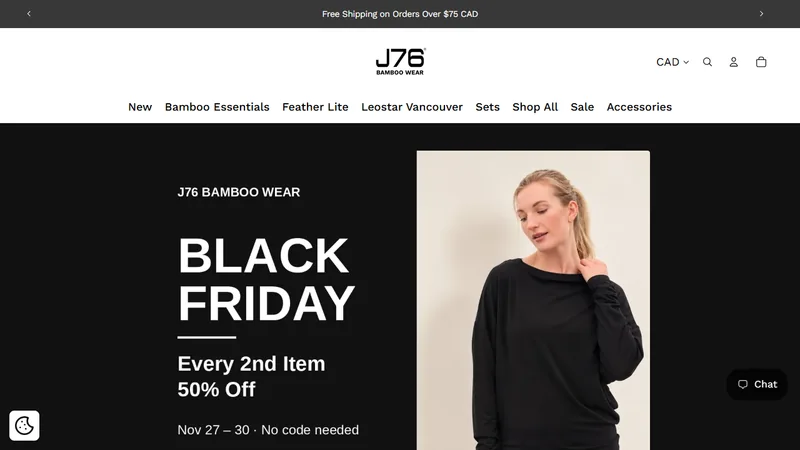
J76 focuses on bamboo-blend yoga, pilates and lounge pieces. The hand-feel is soft and the stretch suits slow flow; compression is not the selling point.
High-compression work needs documented fabric weight, recovery and seam construction, and J76 does not publish them. Bamboo blends can also pill and lose shape faster than nylon-spandex.
Request composition, shrinkage and colorfastness data, and treat softness claims as unverified until you see a wash report. The leggings fabric guide sets out the specs worth testing.
🛡️ Verdict: Suits capsule drops and relaxed sets; skip for high-impact lines without test data.
5. Zen Nomad (Canada) — Best for Plant-Dyed Capsules
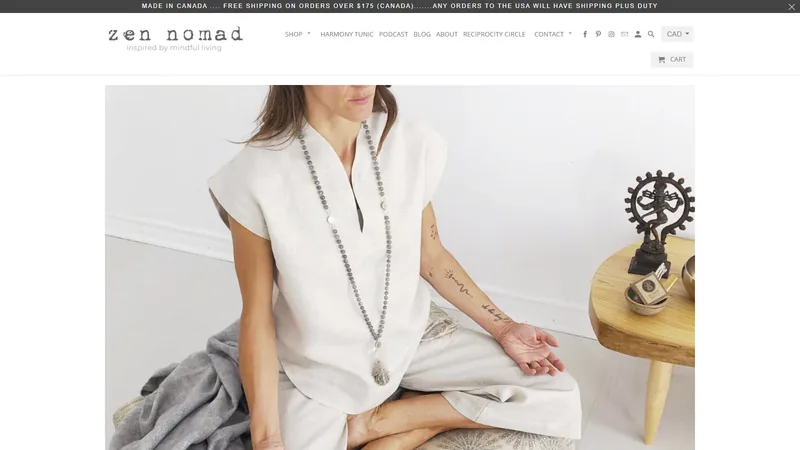
Zen Nomad works with natural eco fabrics and plant dyes for small-batch yoga and meditation lines. The muted palette is the differentiator, and plant dyes behave differently from stock dyes.
Ask for colorfastness results after wash, sweat and sunlight, plus a signed lab dip before bulk. Dye lots shift, so a second drop may not match the first; colorfastness testing explains the checks.
Custom dye baths can raise minimums and add lead time.
🧠 Expert Take: Story-rich capsules, not fast reorders.
6. Katie Quinn Designs / Downtown Betty (Vancouver, BC) — Best for Custom and Modest Activewear
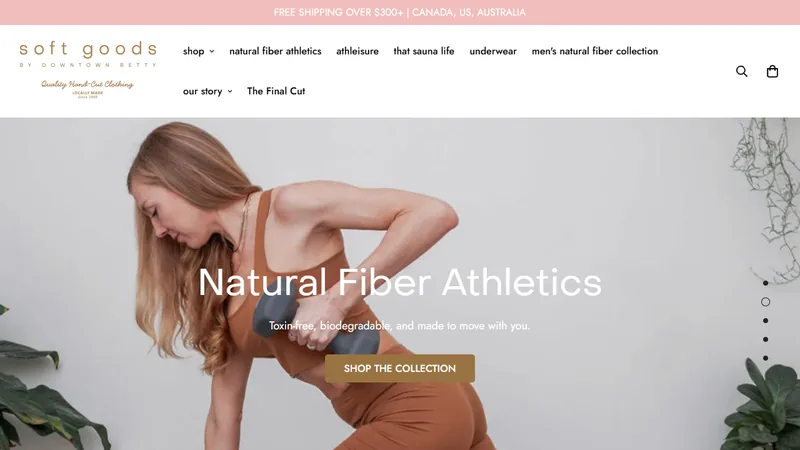
This Vancouver studio is customization-led, with a focus on women’s performance, custom yoga and modest activewear. Higher necklines and longer torso lengths are the kinds of fit problems it solves.
It is a design partner first. Before treating it as a full technical manufacturer, confirm monthly units per style, pattern grading across the size range, and lab data for opacity and seam strength.
🧠 Expert Take: Useful for fashion-led lines and differentiated silhouettes, not volume.
7. Fashion Studio No.5 (Vancouver, BC) — Best for 20-Piece Runs
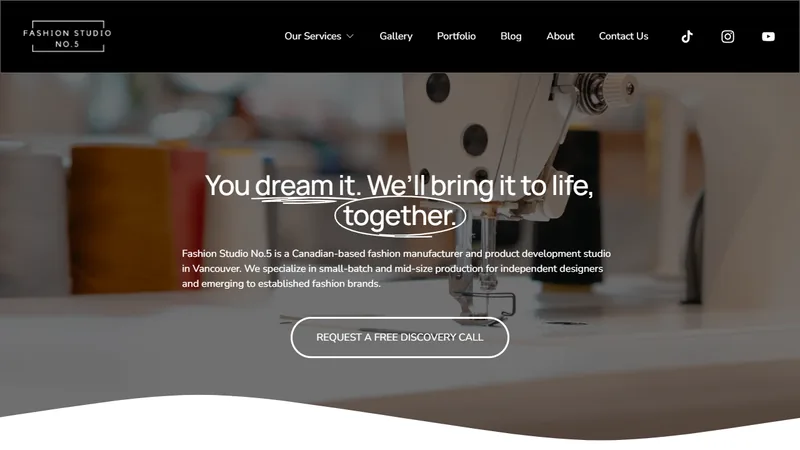
Fashion Studio No.5 runs product development and cut-and-sew from Homer Street in Vancouver. Sampling, pattern making, grading and sourcing sit under one roof, and production minimums start around 20 pieces per style.
The portfolio spans swimwear, athletic wear, technical garments and tailored pieces, so ask how much of the recent work is four-way stretch. A mixed portfolio can mean a strong pattern room and thin activewear testing.
Request an opacity and seam-strength report with the first sample, and confirm who grades the size run. The sample cost breakdown shows what a development cycle usually adds.
🛡️ Verdict: The lowest published minimum here; treat activewear test data as unverified until a report lands.
8. ES Fashion Design Studio (Vancouver, BC) — Best for 15-Unit Test Runs
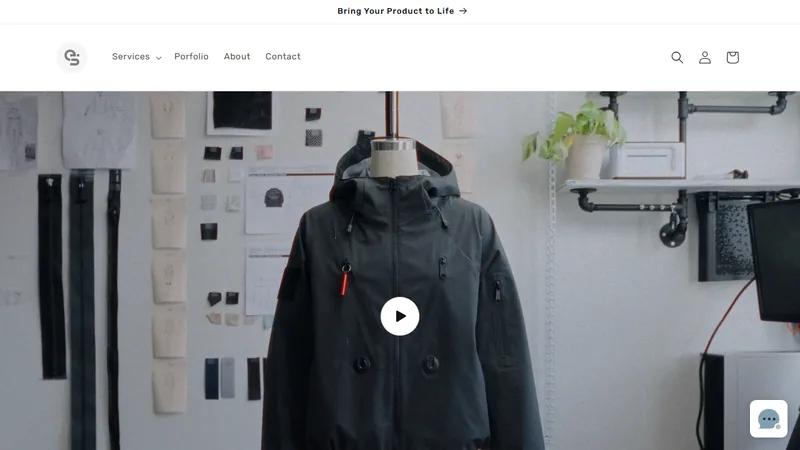
ES Fashion Design Studio is a development studio and manufacturer in downtown Vancouver. Technical design, tech packs, pattern making, sample development, fittings and grading sit with one team, and low-MOQ production starts at 15 units per style.
Activewear, swimwear and performance apparel are listed lines, alongside outerwear and streetwear. That breadth suits a first capsule; it also means capacity is shared across categories.
Ask how many units per month the studio can hold after sample approval, and whether bulk is sewn in-house or placed elsewhere. Put the brief in writing first; the tech pack guide lists the fields.
🧠 Expert Take: Best entry point for a 15 to 50 piece test, not for a 1,000-unit reorder.
9. WearLab (Burnaby, BC) — Best for Local Development With a Production Split
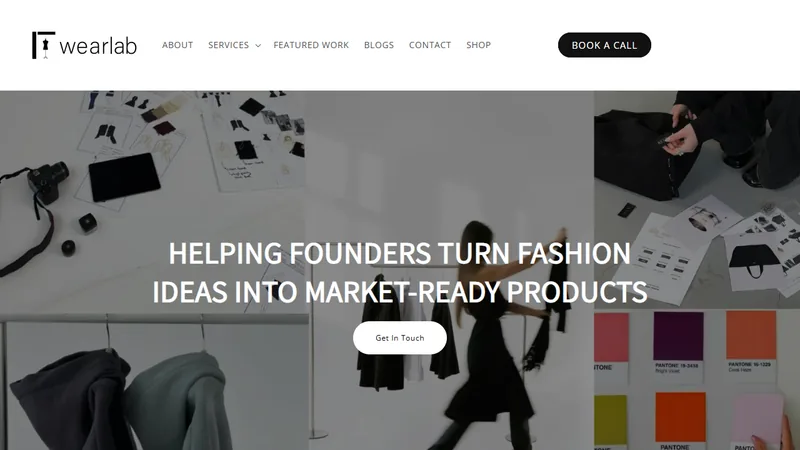
WearLab develops products in Canada and produces either locally or through vetted offshore partners. Design consulting, tech pack development, pattern creation and fittings are the front end; in-house development packages start at $2,500.
That split is the selling point and the risk. Two quotes for the same style can carry different origin wording and different landed cost.
Ask which production path a quote uses, what share is sewn in Canada, and whether the price is FOB or landed. FOB vs DDP explains the difference.
🛡️ Verdict: Strong for founders who need a tech pack and a sample; confirm where bulk is sewn before a label is printed.
10. WS & Company (Toronto, ON) — Best for Vertically Integrated Custom Dye
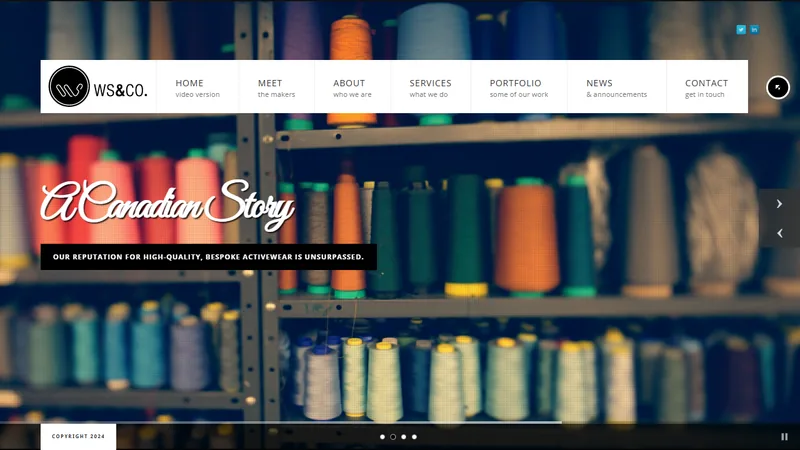
WS & Company is a Toronto manufacturer with cutting, sewing, a dye house and finishing under one roof. Custom dye runs stay in-house instead of going out, which shortens the loop between a lab dip and a bulk run.
Private-label programs, sampling and product development are offered to brands; the portfolio includes work for Roots, Todd Snyder and Holt Renfrew.
Minimums are not published. Custom dye adds lead time and a dye lot can shift between drops, so ask for colorfastness testing and a signed lab dip before bulk.
🧠 Expert Take: The deepest in-house capability on this list; budget for premium pricing and a longer development loop.
Vetting a Canadian Yoga Manufacturer: Origin, Specs and Model
Three decisions matter: the origin claim, the technical brief and the sourcing model. I reviewed sample labels and wash reports during sampling; these steps caught most problems early.
Step 1: Confirm the origin claim
Product of Canada requires at least 98% of total direct costs in Canada. Made in Canada requires at least 51%, plus the last substantial transformation. Imported fabric usually forces a qualifier, such as “Made in Canada with imported fabric”.
Check the Competition Bureau guidance before you approve artwork, and keep the cost calculation on file.
Federal rules also require bilingual fiber content and a dealer ID. In Quebec, product labels must be in French, and commercial advertising must give French markedly predominant display under Bill 96.
Step 2: Lock the technical brief
One brief covers leggings and bras: GSM range, fiber blend, 4-way stretch, gusset and waistband construction, flatlock or overlock seams, and opacity at full stretch.
Set the GSM floor at 240 for polyester and 260 to 280 for nylon interlock; 220 sits below that floor.
Grading decides whether the brief holds from small to XL; fixing activewear fit issues covers the causes sampling misses.
Add wash testing and AQL 2.5 sampling under ISO 2859-1, with inline and final random inspection (AQL guide). The garment QC checklist lists the checks to agree before bulk.
If you skip a squat check at sampling, it returns as a defect. The tech pack guide lists the fields to include. OEKO-TEX Standard 100 covers skin-contact fabric; recycled blends need a GRS certificate from the spinner, and the fabric certification guide covers the paperwork.
Step 3: Choose the model
Canadian cut-and-sew fits when your label must say Made in Canada and volume supports the cost. A Canada-based hybrid fits when development should stay local and pricing should stay offshore.
Factory-direct offshore fits when 100-piece runs, DDP shipping and faster scale matter more than the origin story. Contact LeelineWear for the offshore option.
Frequently Asked Questions about Yoga Apparel Manufacturers Canada
What is a realistic MOQ for a new yoga wear brand in Canada?
Quoted minimums ranged from 15 to 1,000 units per style in my calls. Vancouver studios go as low as 15 to 20 per style; larger plants sit at 300 or more; offshore factory-direct suppliers such as LeelineWear start at 100 to 200 per color/style.
We recommend starting with one colorway and two sizes.
Can I legally say “Made in Canada” if the fabric is imported?
Yes, if at least 51% of total direct costs are incurred in Canada and the last substantial transformation happens here. The label must carry a qualifier, for example “Made in Canada with imported fabric”.
Keep the cost calculation and the approved label on file before printing.
What fabric specs help make leggings squat-proof?
4-way stretch, a gusset and flatlock seams. A 78/22 nylon-spandex interlock at 260 to 280 GSM is the benchmark, and 240 GSM is the floor for polyester.
Test a finished legging under strong light, then repeat after one wash. Ask for an opacity report, not a hand-feel sample.
Should I choose a Canadian factory or an offshore partner?
Canadian when the label must say Made in Canada and volume is 300 or more. Offshore when volume is lower or the origin claim is not needed. Compare landed cost, not unit price, and get the origin wording in writing on both quotes.
Next step: shortlist two or three suppliers, request a sample plus label clarification, then compare bulk pricing and landed cost. No deposit before that comparison. We review this list quarterly and update it when a supplier changes its MOQ or model.
Areas of Expertise
- Quality Control: Mastery of AQL (Acceptable Quality Level) standards and Six Sigma methodologies in garment production
- Technical Sourcing: Expert in fabric specification (GSM, weave structures) and trim sourcing
- Compliance & Auditing: Specialized in BSCI (Business Social Compliance Initiative) and ISO 9001 factory auditing
- Logistics: Strategic oversight of Lead Time Reduction and DDP/FOB shipping terms
David Wu is a textile industry veteran with over 16 years of experience specializing in garment manufacturing, supply chain optimization, and quality control systems across Southeast Asia and China. His career is defined by implementing rigorous AQL 2.5/4.0 inspection protocols for mid-to-large-scale private label brands. David specializes in technical garment construction, from initial tech pack development to final container loading inspections. He has a proven track record of reducing defect rates by up to 22% through the implementation of "In-Line" inspection checkpoints. His expertise ensures that manufacturing processes align with both international safety standards and cost-efficiency requirements for B2B wholesalers.