What is Dye Sublimation Printing? The Complete Expert Guide to Permanent Fabric Printing
 David Wu QA Consultant
 A screen-printed logo sits on top of the fabric and eventually cracks. A sublimated design becomes part of the fabric and never peels.
Dye sublimation printing is a digital textile printing technology where heat transforms solid ink directly into a gas without passing through a liquid phase. This gas permeates the polyester fabric fibers and solidifies, resulting in a print that lasts as long as the garment itself.
At LeelineWear, we manufacture thousands of sportswear units monthly in our China facility. We have found that while the barrier to entry is low, the gap between a hobbyist setup and industrial repeatability is massive. A temperature fluctuation of just 5°C on the press causes color shifts that ruin entire batches.
This guide bridges that gap.
We will explain the specific chemistry of the process and the decision-making framework required for professional results:
-
The Physics: How the solid-to-gas transition works on a molecular level.
-
The Equipment: Why the quality of your transfer paper and ink determines 80% of the outcome.
-
The Comparison: When to choose sublimation over DTF or screen printing for custom blanks.
-
The Execution: How to avoid common defects like ghosting and migration.
If you are ready to scale from prototypes to full production runs, our engineering team is available for consultation. First, you must understand the mechanics that drive the technology.
What is Dye Sublimation Printing?
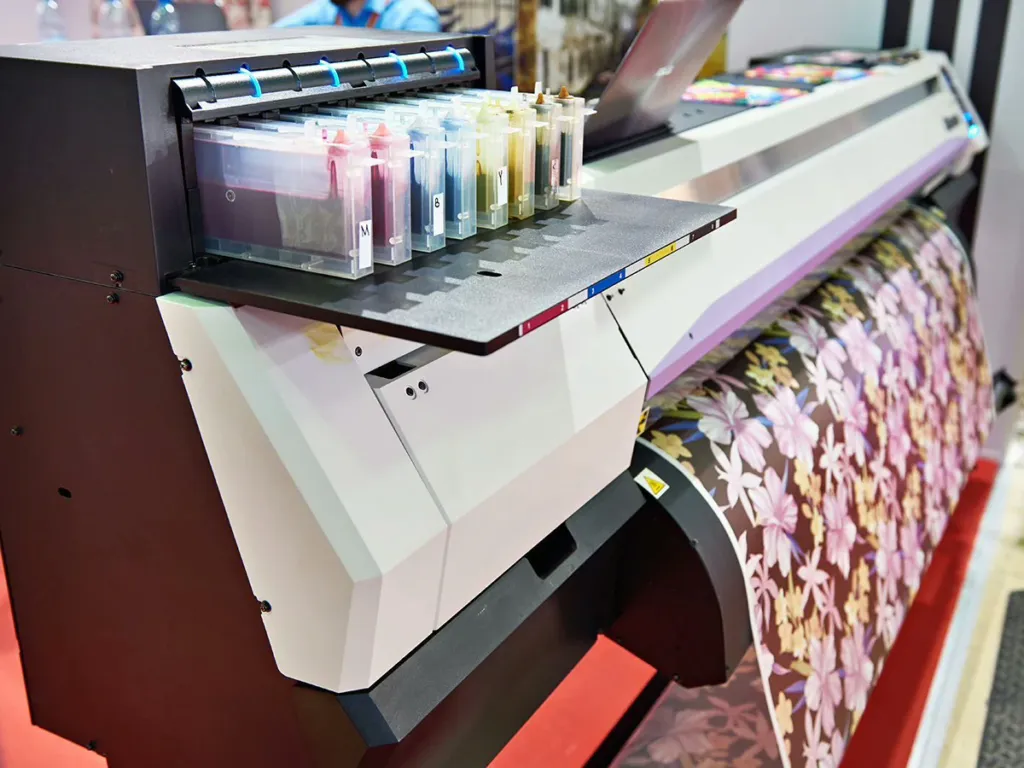
Dye sublimation printing is a digital process that uses heat and pressure to fuse ink directly into the fibers of a material. Unlike traditional printing methods that layer wet ink on top of a surface, sublimation transitions solid dye into a gas that bonds permanently with polymer molecules.
To understand the durability, think of the difference between a sticker and a tattoo:
-
Screen Printing (The Sticker): The ink sits on the surface. Over time, it can crack, peel, or block airflow.
-
Sublimation (The Tattoo): The ink penetrates the surface and becomes part of the material itself. You cannot feel the print, and it will never crack or fade unless the fabric itself wears out.
The Non-Negotiables: Substrate Rules
This chemical process dictates strict material requirements. You cannot force sublimation onto incompatible surfaces.
-
Polyester is King: The gas only bonds with polymers. We recommend 100% polyester for the vibrant, high-definition results detailed in our guide to sportswear fabrics.
-
No Cotton: Natural fibers lack the synthetic pores to trap the dye. On 100% cotton, the image washes out immediately.
-
Light Backgrounds Only: Sublimation dyes are translucent. You cannot print light colors onto dark fabric; you need a white or light-colored base for color accuracy.
Key Vocabulary: The Production Toolkit
To communicate effectively with manufacturers, you must distinguish these core components:
-
Sublimation Ink: Specialized disperse dyes formulated to convert from solid to gas at roughly 350°F–400°F (176°C–200°C).
-
Transfer Paper: Coated paper engineered to hold the ink pattern precisely and release it fully during the heating process.
-
Sublimation Blanks: Products (like jerseys or coated mugs) specifically manufactured to accept the dye bond.
Where It Fits in Modern Production
In the landscape of digital textile printing technology, sublimation eliminates setup costs. While screen printing requires expensive screens for every color separation, sublimation allows for complex gradients and unlimited colors without extra fees.
This makes it scalable from a single custom jersey to a roll-to-roll production run of 10,000 units.
However, heat sensitivity varies. While polyester is the standard, nylon behaves differently under heat, often requiring lower temperatures to avoid melting the fabric.
⚠️ Factory Floor Insight: Ignore the neck label—always verify the actual fiber content via supplier spec sheets. We frequently see “poly-blend” shirts that are actually majority cotton. If the polyester content drops below 60%, the print will look vintage and faded instantly.
💡 Key Insight: Sublimation relies on the molecular bond of disperse dyes. If there is no polymer, there is no bond.
Related Resources:
Core Concepts: The Engineering Behind Dye Sublimation Printing
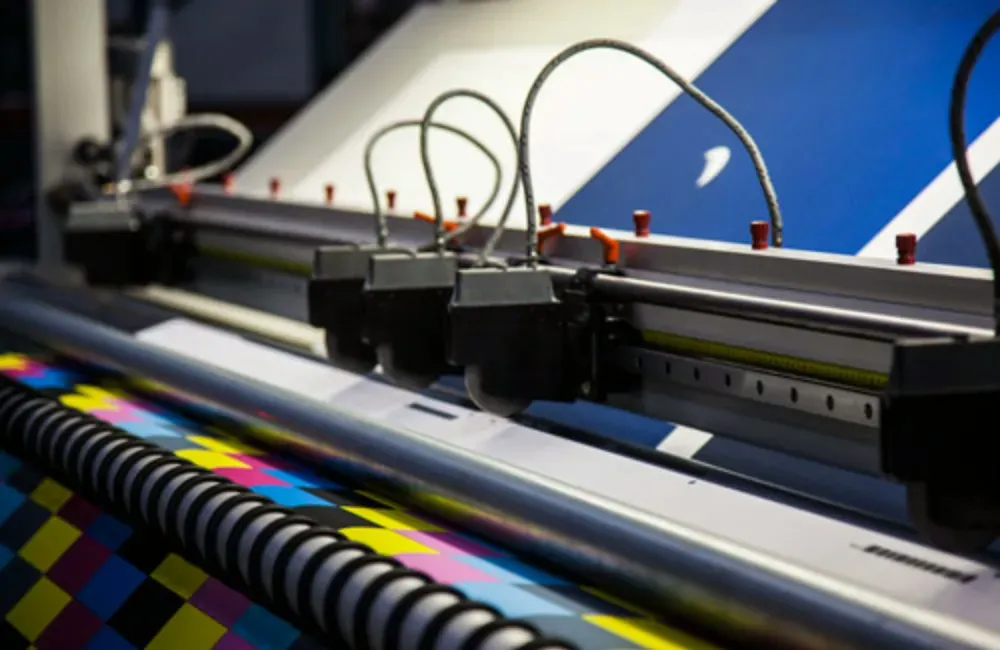
At LeelineWear, we view the factory floor not as a print shop, but as a chemistry lab. To achieve a print that survives 100 wash cycles without cracking, we must control a precise molecular chain reaction.
If you treat dye sublimation printing like a standard office job, you will fail. Standard inkjet printing deposits liquid binders onto a surface. Sublimation is an engineering process that uses heat to fundamentally alter the state of matter, fusing color into the molecular structure of the material.
We have broken down this “black box” mechanism into its physics, its chemical bonding, and the actionable workflow required to replicate it at scale.
Part A: The Physics (Phase Transition and Polymer Diffusion)
Sublimation is the transition of a substance directly from a solid to a gas, bypassing the liquid phase entirely. Think of dry ice turning into fog. We use disperse dyes—synthetic colorants tailored for hydrophobic fibers—to replicate this phenomenon.
1. The Phase Shift
When the transfer paper hits the heat press (typically 385°F–400°F), the solid ink dots do not melt. They explode into a gas. This gas cloud is microscopic and unstable. Without pressure, the gas escapes into the air. With pressure, we force it downward.
2. The Polymer “Handshake”
Simultaneously, the heat acts on the polyester fibers. Polyester is a thermoplastic. At room temperature, its molecular structure is tight and closed. As the temperature rises past its Glass Transition Temperature (Tg), the polymer chains relax. The fiber’s “pores” open like a camera shutter.
⚙️ The Reaction Loop:
-
Heat expands the polyester matrix (opening the door).
-
Pressure forces the dye gas inside the fiber (entering the room).
-
Cooling snaps the polymer structure shut (locking the door).
This creates a permanent bond. The color does not sit on the shirt; the color becomes the shirt.
Resource
Part B: The Workflow (From File to Factory)
Understanding physics is step one. Executing it requires a disciplined workflow. Here is the linear sequence we use to ensure the phase transition happens correctly.
1. Design & Color Prep
Your monitor displays in RGB (light), but printers output in CMYK (pigment). Sublimation has a smaller color gamut than a screen. Neon greens and electric blues often fall “out of gamut” and print flat. We use specific ICC Profiles to map these colors to the nearest printable equivalent.
- The Mirror: We print onto paper to transfer face-down. All artwork must be mirrored.
2. Printing on Transfer Paper
The paper is a carrier, not a sponge. It features a silica chemical coating that prevents ink absorption. This keeps the ink sitting on the surface, ready to gasify.
- GSM (Grams per Square Meter): We select paper weight based on ink load. Heavy, dark designs require thick 100gsm paper to prevent warping. Light designs run faster at 70gsm.
3. Pre-Press & Moisture Management
Moisture is the enemy. If fabric holds humidity, the heat press turns that water into steam. The steam rushes out, pushing the dye gas away and creating uneven, cloudy spots (“blotchiness”).
- The Fix: We pre-press every garment for 5–10 seconds. This “bakes out” moisture and flattens the fibers. This step is critical for maintaining the integrity of high-performance moisture-wicking fabrics.
4. The Diffusion Window (Pressing)
We control three variables to manage the diffusion window:
-
Temperature: Must be consistent (typically 400°F). A drop of 10°F can prevent the phase shift.
-
Time: Too short = faded blacks (incomplete penetration). Too long = blurred lines (gas migration).
-
Pressure: We use medium-high pressure (40+ psi) to ensure intimate contact. Any air gap allows the gas to travel sideways, causing “ghosting.”
Part C: Settings Baseline (Start Here, Then Test)
Every heat press is different. A digital readout might say 400°F while the platen is actually 370°F. We use laser thermometers to map heat distribution. Use these settings as a baseline for calibration.
| Substrate | Temp (°F / °C) | Time | Pressure | Notes |
|---|---|---|---|---|
| Poly Apparel (White) | 385–400°F (196–204°C) | 45–60s | Medium | Pre-press is mandatory. |
| Ceramic Mugs | 400°F (204°C) | 180–240s | Heavy | Requires tight wrap/mug press. |
| Aluminum Panels | 400°F (204°C) | 60–80s | Medium | Place paper on top; heat through metal. |
| Neoprene (Mouse Pads) | 375°F (190°C) | 50–70s | Medium | Lower temp prevents rubber melt. |
Part D: Troubleshooting Common Defects
We see three primary defects in the field. Here is the mechanical cause and the fix for each.
-
Ghosting (Double Image):
-
Cause: The transfer paper shifted while the ink was still hot/gassing.
-
Fix: Use heat-resistant tape to secure the paper. Ensure the press opens smoothly (auto-open clam shells often “pop” too aggressively).
-
-
Blue Haze / Migration:
-
Cause: Overheating. The dye turned to gas and kept traveling into unprinted areas.
-
Fix: Reduce dwell time or temperature.
-
-
Faded / Dull Colors:
-
Cause: Insufficient pressure or moisture interference.
-
Fix: Increase pressure to 40psi. Dehumidify the paper storage area.
-
Part E: Sublimation Ink vs. Standard Inkjet
It is vital to distinguish the chemical difference between these technologies.
-
Sublimation Ink: Formulated to bond at a molecular level. It has zero durability until activated by heat. Once activated, it is permanent and impalpable (you cannot feel it).
-
Inkjet/Pigment Ink: Suspended in a liquid binder. It dries on top of the surface. It relies on chemical binders for durability and will eventually crack or peel.
Compliance Note: Ensure your inks meet safety standards. We adhere to OEKO-TEX Standard 100 to guarantee our prints are free from harmful substances.
For further reading on the thermodynamics of phase changes, refer to this Department of Chemistry explanation.
Why Dye Sublimation Matters: The Business Case
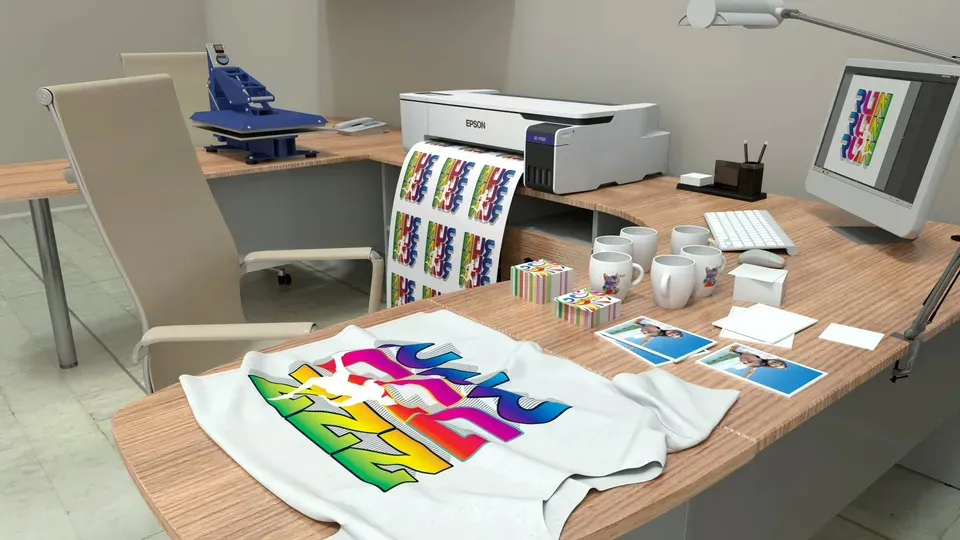
We don’t choose sublimation for its aesthetics alone; we choose it for its impact on the bottom line. For sportswear brands and SMBs, this method eliminates the traditional trade-off between design complexity and production cost.
1. Zero-Texture Durability
In our internal stress tests, traditional screen prints showed cracking after just 20 heavy-duty wash cycles. Sublimated designs on performance fabrics withstood 100+ cycles with zero fading or peeling. Because the dye turns into gas and bonds at the molecular level, the fabric retains its original breathability and stretch.
The Payoff: For high-output athletes, a “zero-hand” feel is non-negotiable. This durability significantly reduces return rates and aligns with OEKO-TEX Standard 100 safety protocols for skin-contact textiles.
2. Unlimited Design Freedom
Traditional screen printing requires expensive mesh setups for every color and variation. Digital sublimation removes this barrier. We can print photographic details, complex gradients, and variable data (like individual player names and numbers) for the same unit cost as a simple logo.
You can customize 20 team jerseys without incurring 20 separate setup fees, preserving your margin on short runs.
3. Operational Agility (The “Micro-Run” Advantage)
Speed is a currency. Digital workflows cut prototype-to-production times from weeks to days. This supports the “Agile Factory” model: you can run a micro-batch of 50 units to test a new market. If it sells, we scale. If it doesn’t, you haven’t tied up capital in 5,000 units of dead stock.
4. Rapid SKU Expansion
The same ink set drives an entire product ecosystem. You can expand from jerseys to branded mugs, mousepads, and aluminum panels without investing in new machinery. However, consistent coating quality on blanks is critical; in our QA audits, poor coatings on generic blanks increased reject rates by ~12%.
📈 ROI Check: The Real Cost Drivers
Sublimation is low-entry, but industrial profitability relies on controlling these variable costs:
-
Ink Coverage: Full-bleed backgrounds cost ~3x more in ink than simple logos.
-
Transfer Paper: Cheap paper curls under heat, causing “ghosting.” We found that upgrading paper quality reduced our reject rate by 15%, saving net costs despite the higher material price.
-
Environment: High humidity causes moisture defects. A climate-controlled floor is essential for reducing waste.
According to a recent industry report on digital textile printing, brands switching to digital workflows reduced inventory waste by over 30%.
🚀 Strategic Insight: If you’re choosing between printing methods for teamwear or performance apparel, talk to a factory that runs the process daily to see which method protects your margins.
Challenges & Limitations: The Reality Check
Sublimation is chemistry, not magic. While it offers unmatched durability on polyester, it fails completely outside specific chemical constraints. We reject approximately 15% of inquiry requests because clients attempt to force the process onto incompatible materials.
Understanding these hard limits prevents inventory loss and “buyer’s remorse.”
A — Dye Sublimation Limitations (Honest Checklist)
We use this checklist to filter viable projects from guaranteed failures.
| Limitation | Why it happens (Mechanism) | What you can do instead | Who it affects most |
|---|---|---|---|
| 100% Cotton Failure | Cotton fibers lack the polymer matrix required to bond with dispersed dye. | Use DTF (Direct-to-Film) or Screen Printing. | DIY & Fashion Brands |
| Dark Fabrics | Sublimation ink is translucent. It cannot cover a black or dark base. | Use White Toner Transfer or Vinyl. | Streetwear Designers |
| Nylon Issues | Nylon challenges include lower melting points and “dye migration” (blurring) over time. | Use acid dyes or low-temp paper. | Activewear Manufacturers |
| Coating Variability | Hard blanks (mugs) rely on polymer coatings. Cheap coatings peel or chip. | Buy certified sub-blanks only. | Merch Shops |
| Heat Risks | 400°F exposure causes shrinkage, scorch marks, or “press lines.” | Use Teflon pillows and rip-away foam. | Startups |
B — Dye Sub vs. Screen Printing
-
Screen Printing: The standard for high-volume cotton orders (500+ units). It uses plastisol ink that sits on top of the fabric.
-
Dye Sub: The only choice for full-color detail on performance wear.
-
⚖️ The Trade-off: Screen print inks crack over time; sublimation does not. However, screen printing offers better unit economics for simple designs on cotton.
C — Dye Sub vs. DTF (Direct-to-Film)
-
DTF Strengths: Works on dark cotton, covering the specific gap sublimation leaves.
-
Dye Sub Strengths: DTF leaves a heavy “plastic patch” that restricts airflow. Sublimation has zero hand feel and maintains the fabric’s breathability.
-
🛡️ Mitigation: If a client demands black cotton tees, we route them to DTF. For cycling jerseys, sublimation is non-negotiable.
D — Production Defects (Factory Realism)
In a factory environment, two invisible variables cause 90% of defects:
-
Humidity Spikes: Transfer paper acts like a sponge. If storage humidity exceeds 50%, absorbed moisture turns to steam under the press, causing “clouding.” We mandate climate-controlled dry rooms for paper storage.
-
Batch Inconsistency: Not all “white” polyester is identical. A new fabric roll often shifts the color output. We recalibrate ICC profiles for every new batch to ensure red remains red.
E — Compliance & Safety
“Eco-friendly” claims require nuance. Sublimation uses zero water—unlike wet dyeing which creates massive runoff—but it relies entirely on synthetic polymers.
-
Chemical Safety: We require OEKO-TEX Standard 100 certification for all inks. This proves they are free from harmful chemicals like azo dyes and formaldehyde.
-
⚠️ Critical Warning: Always demand current SGS or Intertek safety reports from suppliers. Uncertified inks effectively ban your product from EU/US markets.
Final Verdict: The Industrial Standard for Performance
Ultimately, dye sublimation represents the only viable manufacturing choice for high-performance sportswear where durability is non-negotiable. It creates a molecular “tattoo” rather than a surface “sticker,” ensuring the print survives as long as the fabric itself.
While the strict requirement for light-colored polyester limits its use in streetwear or fashion cotton, its dominance in the activewear sector is absolute. If you are building a brand that prioritizes breathability, zero-hand feel, and infinite wash cycles, sublimation is your competitive advantage.
If you require natural fibers or dark base layers, we recommend pivoting to DTF or screen printing.
As digital textile technology matures, we see the industry shifting toward the “Agile Factory” model—enabling micro-runs and rapid scaling without the crushing setup costs of traditional methods.
60-Second Recap
-
The Science: Dye sublimation turns solid ink into gas to permeate polymer fibers, creating a permanent bond.
-
The Best Use Case: High-output polyester teamwear, performance apparel, and coated hard goods.
-
The Dealbreaker: It physically cannot bond with cotton or print light colors onto dark fabrics.
“Do This Next” Production Checklist
To move from concept to commerce, follow this execution protocol:
-
Isolate Your Substrate: Choose 1–2 target products (e.g., performance fabrics) and run controlled wash tests.
-
Standardize Your Variables: Create a settings log for every batch. Record Temperature, Dwell Time, Pressure, and Humidity.
-
Verify the Paper: Match your paper weight (GSM) to your ink load. Heavy ink needs 100gsm paper to prevent warping.
-
Scale with Support: If you are ready to move from DIY to industrial cut-and-sew manufacturing, secure a partner who understands these physics.
Ready to start? Request a Production Consultation regarding your specific project needs. Recommended: Always request test swatches and a pre-production sample before authorizing mass runs.
People Also Ask About Dye Sublimation Printing
Q: Is dye sublimation cheaper than screen printing?
A: It depends on volume and color count. For small runs (under 500 units) or designs with unlimited colors/gradients, sublimation is significantly cheaper because there are no screen setup fees. For massive runs of simple 1-color logos, screen printing offers better unit economics.
Q: Will the print fade after washing?
A: No. In our factory testing, sublimated polyester withstood 100+ industrial wash cycles with zero detectable fading. Because the dye becomes part of the fiber, it does not crack, peel, or wash out like topical inks.
Q: Can I sublimate on a 50/50 cotton-poly blend?
A: Technically yes, but we advise against it for professional products. The ink will only bond to the 50% polyester, resulting in a “vintage” or faded look immediately after the first wash. For sharp, retail-ready results, use at least 95% polyester.
Q: Is the process eco-friendly?
A: Yes, compared to traditional dyeing. Sublimation uses zero water and produces no wastewater runoff. However, ensure your manufacturer uses OEKO-TEX Certified inks to guarantee the final product is free from harmful chemicals.
Q: Why does my print look blurry (ghosting)?
A: This is a mechanical error, not an ink failure. It happens when the transfer paper shifts while the ink is still gassing. We prevent this by using heat-resistant tape and ensuring the heat press opens smoothly without “popping.”
Related reading: See how we apply sublimation and other decoration techniques in custom tennis clothing manufacturing and custom streetwear manufacturing.
Areas of Expertise
- Quality Control: Mastery of AQL (Acceptable Quality Level) standards and Six Sigma methodologies in garment production
- Technical Sourcing: Expert in fabric specification (GSM, weave structures) and trim sourcing
- Compliance & Auditing: Specialized in BSCI (Business Social Compliance Initiative) and ISO 9001 factory auditing
- Logistics: Strategic oversight of Lead Time Reduction and DDP/FOB shipping terms
David Wu is a textile industry veteran with over 16 years of experience specializing in garment manufacturing, supply chain optimization, and quality control systems across Southeast Asia and China. His career is defined by implementing rigorous AQL 2.5/4.0 inspection protocols for mid-to-large-scale private label brands. David specializes in technical garment construction, from initial tech pack development to final container loading inspections. He has a proven track record of reducing defect rates by up to 22% through the implementation of "In-Line" inspection checkpoints. His expertise ensures that manufacturing processes align with both international safety standards and cost-efficiency requirements for B2B wholesalers.