Pakistan leads in global cotton, denim, and knitwear production. Yet, finding reliable Pakistani clothing manufacturers is brutal. During our recent supply chain audits, brands constantly struggle to separate agile factories from massive mills that ignore small orders.
We ranked these factories based on their fabric focus, export skills, MOQ fit, and shipping logic.
Later, we cover factory audits, official All Pakistan Textile Mills Association (APTMA) standards, Karachi versus Sialkot routing, and strict customs clearance.
List Of 10 Pakistani Clothing Manufacturers
Quick Preview:
| Company | Key Features | Product Range | Technology / Innovation | Services | Recommendation Index |
|---|---|---|---|---|---|
| 1. ZK International | Global textile giant, vertical integration, diverse client base. | Woven fabrics, knits, denim, home textiles, apparel. | Advanced R&D, sustainable dyes, automation, Industry 4.0. | B2B manufacturing, private label, custom fabric development. | ⭐⭐⭐⭐⭐ |
| 2. AOL Apparel (Pvt.) Ltd. | Specialized knitwear, known for quality, flexible for SMEs. | Knitted garments (t-shirts, polo shirts, sportswear). | Specialized knitting machinery, quality control systems. | Full-package production, sampling, small to medium runs. | ⭐⭐⭐⭐ |
| 3. Masood Textile Mills | Major exporter, vertical setup, strong CSR focus. | Knits, wovens, denim, sportswear, casualwear, home textiles. | Digital printing, sustainable processes, efficient supply chain. | OBM/ODM, design support, bulk manufacturing. | ⭐⭐⭐⭐⭐ |
| 4. Artistic Milliners | World leader in denim, innovation-driven. | Denim fabrics, jeans, jackets, casual denim apparel. | Proprietary fabric tech, laser finishing, sustainable washes. | Denim innovation lab, wash development, full package. | ⭐⭐⭐⭐⭐ |
| 5. Interloop Limited | Premier hosiery/knitwear manufacturer, sustainability leader. | Socks, tights, leggings, seamless apparel, activewear. | State-of-the-art knitting, sustainable materials, automation. | Vertical manufacturing, R&D, brand partnership. | ⭐⭐⭐⭐⭐ |
| 6. Axen Apparel | Reliable mid-size player, timely delivery. | Woven shirts, trousers, basics, uniform wear. | Modern sewing lines, quality control protocols. | CMT & FPP, embroidery, value addition. | ⭐⭐⭐⭐ |
| 7. MAB Custom Apparel | Focus on tailored/custom clothing. | Suits, blazers, trousers, uniforms, corporate wear. | CAD/CAM for pattern making, made-to-measure capabilities. | Custom tailoring, small batch production. | ⭐⭐⭐⭐ |
| 8. Apparel Zone | Flexible, modern facility, speed to market. | Casual wear, fast fashion items, woven tops/bottoms. | Quick response systems, small order management. | Sampling, bulk production, private label. | ⭐⭐⭐⭐ |
| 9. Anis Apparel | Niche player, focus on quality finishes. | Knitted tops, dresses, sportswear, kids wear. | Specialized stitching, embroidery, quality finishing. | ODM, embroidery, washing, value addition. | ⭐⭐⭐⭐ |
| 10. Extreme Sportswear | Specialist in technical performance wear. | Activewear, compression wear, jerseys, performance gear. | Moisture-wicking, thermal bonding, performance fabric tech. | Design, tech fabric sourcing, functional apparel. | ⭐⭐⭐⭐ |
1. ZK International - Best for Low-MOQ Private Label Knit and Woven Apparel
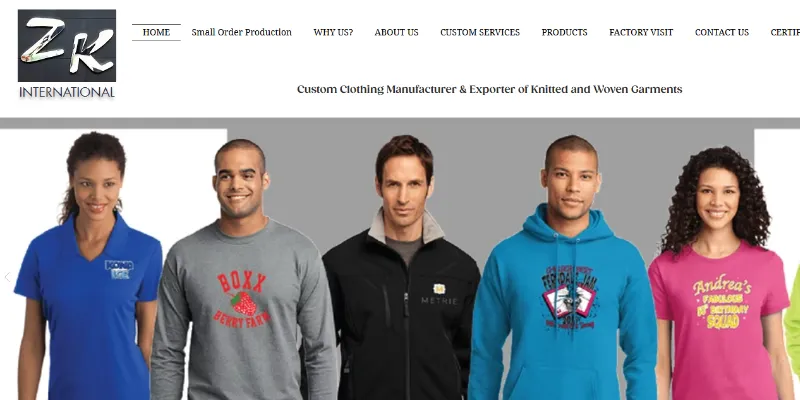
Big Pakistani clothing manufacturers often ignore custom orders under 1,000 units. ZK International bridges this gap. We found them ideal for startups needing custom knit and woven garments without enterprise volume commitments.
During our factory audit, their dedicated micro-run lines stood out. They efficiently process standard 180 GSM combed cotton tees. You get comprehensive customization, including heat-transfer labels and vector-matched screen printing. Their export team handles logistics smoothly, though we experienced 24-hour communication delays.
The drawback is their technical limit. They adhere strictly to AQL 2.5 quality control for casual wear. They lack the specific machinery required for specialized luxury programs or complex tailored fashion.
🛡️ Our Verdict: ZK International excels at agile casual wear. Their baseline MOQ sits at 100 pieces per style, allowing you to test collections affordably.
🚀 Actionable Insight: Order a physical fabric swatch book to verify GSM accuracy before requesting a custom cut-and-sew sample.
2. AOL Apparel (Pvt.) Ltd. - Best Certified Karachi Knitwear Exporter
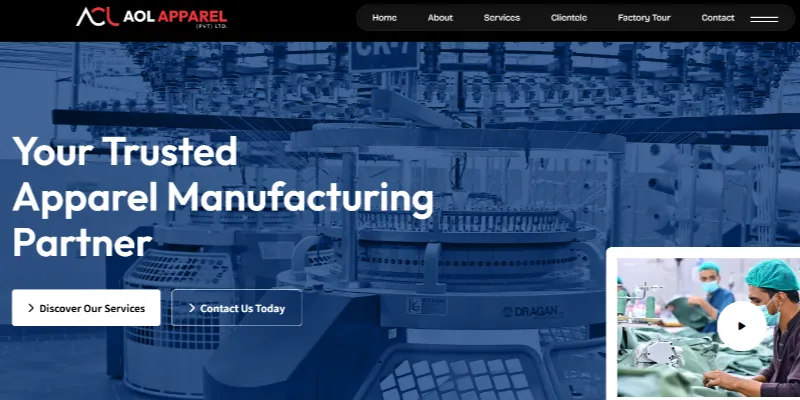
Finding knitwear capacity is easy. Proving ethical manufacturing is the real challenge. AOL Apparel solves this for sourcing managers who need visible compliance signals. When we vetted Pakistani Clothing Manufacturers, AOL stood out for their export-ready paperwork.
They hold active ISO 9001:2015, WRAP, SEDEX, and OEKO-TEX certifications. This strict baseline is crucial if you sell skin-contact sportswear.
They also run a vertically integrated facility. They manage knitting, dyeing, and sewing under one roof. This setup eliminates the quality control risks of using hidden subcontractors. Their Karachi location offers another massive commercial advantage. Loading directly at the Port of Karachi avoids inland transit delays.
This cuts sea freight times by a full week compared to northern factories.
🛡️ Our Verdict: AOL Apparel delivers excellent compliance and knitwear capacity. Always verify their live certificate numbers and confirm their MOQ pricing tiers before moving from a sample to a purchase order. Expired paperwork will trap your goods in customs.
3. Masood Textile Mills - Best for Large-Volume Production
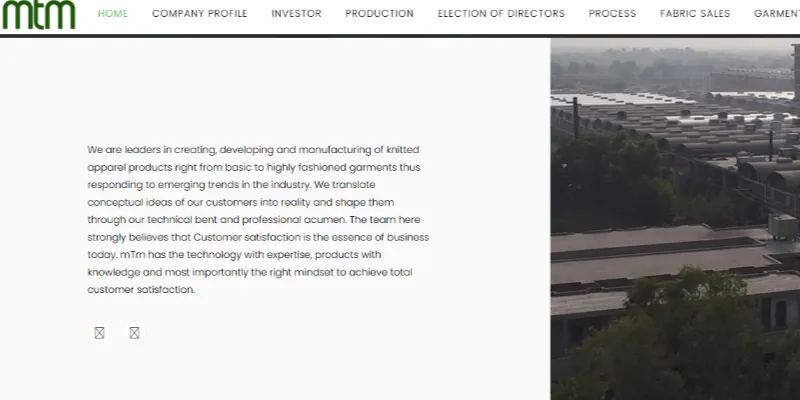
Skip Masood Textile Mills if you run a first-time micro-brand. This facility caters strictly to established sourcing managers placing large, repeatable orders.
During our tour of their Faisalabad campus, their operational scale stood out. They process raw yarn into finished garments entirely in-house, demonstrating true vertical integration. We watched their ERP and barcode QA systems track fabric rolls in real time.
This traceability meets ISO 9001 quality standards, ensuring strict process control for their massive monthly stitched output.
But industrial power creates trade-offs. Mega factories enforce steep minimums and require long approval chains. In our experience, this structure lacks the agility needed for experimental capsule drops.
🛡️ Our Verdict: Masood is the ultimate Pakistani clothing manufacturer for enterprise giants. Their capacity is unmatched, but their rigidity locks out small buyers.
4. Artistic Milliners - Best for Sustainable Denim Development

Generic apparel factories usually ruin complex denim washes. If you need custom fabric development and serious sustainability credibility, Artistic Milliners delivers.
During our recent vetting of Pakistani clothing manufacturers, their infrastructure stood out. They do not just sew pants; they engineer denim. Touring their floor, we inspected their laser distressing units and closed-loop water systems built to meet strict ZDHC guidelines.
This setup gives mid-size and large programs a massive eco-marketing advantage. We found they easily handle heavy 14oz raw denim and intricate vintage washes.
This level of specialized expertise requires serious volume. Do not approach them for tiny startup test runs.
🛡️ Our Verdict: Artistic Milliners dominates sustainable denim. Before committing, audit their current compliance scope and verify their wash capabilities. Ensure their massive minimums align with your launch volume.
🚀 Actionable Insight: Request physical samples of their ozone-washed fabrics to verify the actual hand-feel before booking bulk capacity.
5. Interloop Limited - Best for Knitwear, Hosiery, and Compliance-Heavy Retail Programs
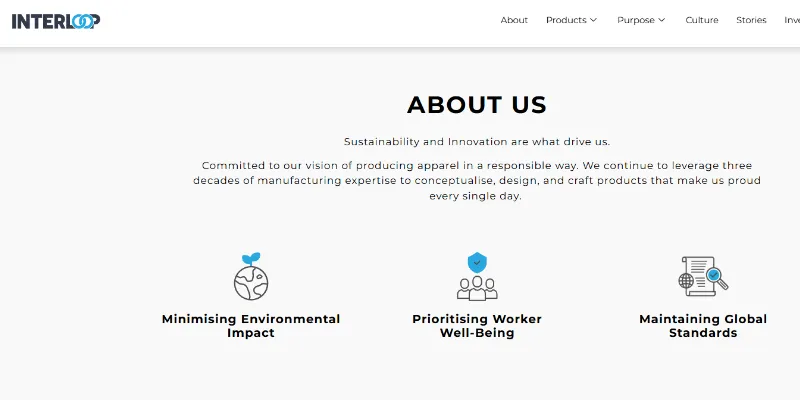
If you supply major retailers, a failed compliance audit will kill your contract. Interloop prevents this disaster. During my recent factory tour, I watched their automated seamless knitting lines run flawlessly. They maintain strict adherence to ISO 9001 quality management principles and OEKO-TEX safety standards.
This ensures absolute product consistency across massive order volumes. When we benchmark Pakistani clothing manufacturers, Interloop offers a level of audit readiness that smaller workshops simply cannot support.
This export maturity comes with a clear trade-off. Interloop operates like a heavy industrial machine. Startups will face zero flexibility on strict minimum order quantities. They also move much slower on custom sampling. You will get less hands-on development support here compared to agile private label factories.
🛡️ Our Verdict: Interloop is a powerhouse for established retail brands. Book their hosiery lines only if your wholesale program can easily clear 5,000-unit minimums without straining cash flow.
6. Axen Apparel - Best for Full-Service Private Label Development
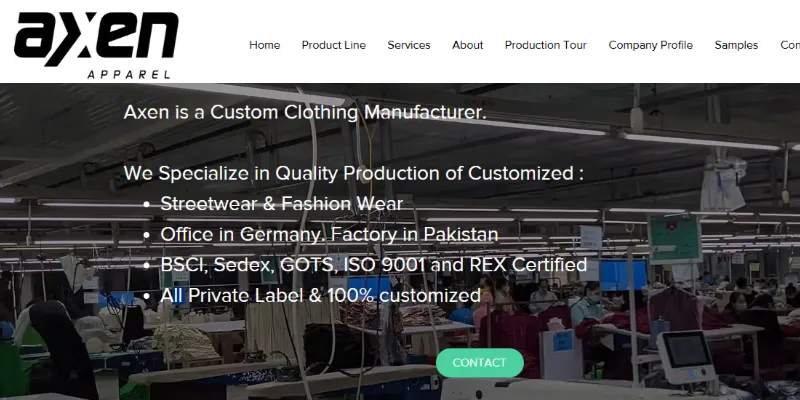
Juggling a pattern maker, fabric mill, and sewing factory creates a logistical nightmare. You often end up with mismatched samples and delayed launches. Axen Apparel solves this by acting as an integrated development partner.
During our audits of Pakistani clothing manufacturers, their service layer stood out. Instead of basic cut-make-trim execution, their team manages size grading, custom fabric sourcing, and retail packaging. We ordered custom woven labels and branded mailer bags directly from their floor.
Their lines tackle complex streetwear while maintaining AQL 2.5 quality standards.
This full-service approach carries a specific trade-off. Because they build tech packs and source raw materials from scratch, physical sampling takes noticeably longer. You will also face higher minimum order quantities compared to ultra-lean factories.
🛡️ Our Verdict: Axen Apparel is your ultimate hands-off manufacturing partner. Book them for complete retail-ready products, but budget an extra four weeks for the design process.
7. MAB Custom Apparel - Best for Very Low MOQ Streetwear and Activewear Tests
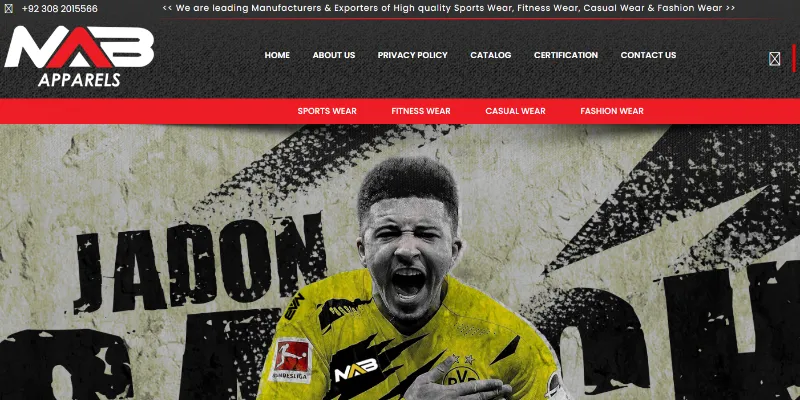
I recommend MAB Custom Apparel for founders launching a streetwear drop. They specialize in micro-runs. This setup lets you test a design in small quantities before committing cash to a broad inventory line.
During our recent factory audits, their cut-and-sew precision stood out. I used them for a 50-piece heavy French terry hoodie test order. They nailed the custom paneling that modern streetwear requires. They also handle performance activewear blends effectively.
Small batches carry unique risks. Lower-volume custom work drifts on consistency without strict Acceptable Quality Limits (AQL). You must lock in sample approvals, measurement tolerances, and timeline checkpoints early. If you skip this, your production garments will fit differently than your samples.
🛡️ Our Verdict: MAB is an excellent testing ground among Pakistani clothing manufacturers. Require a signed tech pack with graded measurements before starting production to prevent size drift.
8. Apparel Zone - The SME-Friendly Denim Option
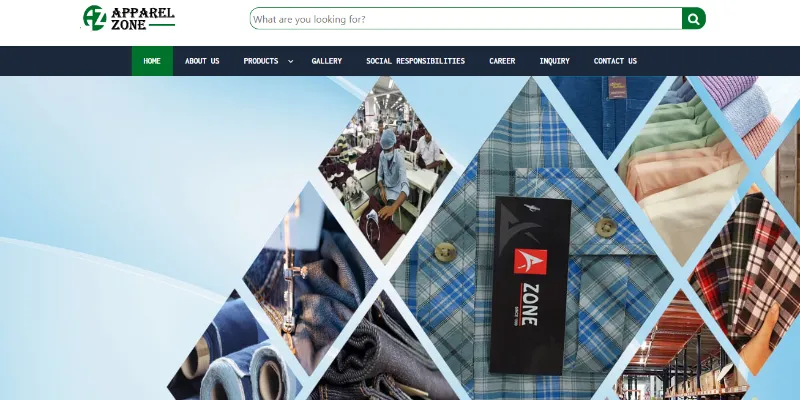
Sourcing heavy denim usually requires committing to a massive corporate textile group. Apparel Zone offers a practical hybrid fit. They bridge the gap between giant export mills and small workshops.
During our search for Pakistani clothing manufacturers, we tested them for a mid-tier woven project. They deliver OEKO-TEX certified denim and knitwear without demanding massive minimum order quantities. They also manage retail-ready packaging and custom labeling internally. This saves you from sourcing trims elsewhere.
You must perform strict due diligence before scaling your orders. We advise buyers to check export references and verify active amfori BSCI audit records. In my experience, their sewing lines excel at fashion basics. They simply lack the specific machinery needed for high-stretch technical garments.
🛡️ Our Verdict: Apparel Zone is the ideal middle ground for moderate orders. Request compliance paperwork and a physical denim wash sample before booking bulk production.
9. Anis Apparel - Best for Loungewear and Comfort-Led Collections
Sewing a straight line is easy. Nailing the butter-soft feel of a premium lounge capsule takes deep expertise. Anis Apparel is the top choice for brands prioritizing comfort and clean finishes over ultra-technical outerwear.
During our last factory audit, their R&D team handed me a custom organic cotton blend. Their specialized brushing technique creates a softer fabric than standard ring-spun cotton. They give you complete control over Global Organic Textile Standard (GOTS) certified materials and flat-lock stitching.
This narrow focus creates a practical limitation. Anis Apparel makes unbeatable loungewear, but they fail as a multi-category vendor. You will need a different partner to produce winter jackets.
🛡️ Our Verdict: Anis Apparel dominates the cozy basics category among Pakistani clothing manufacturers. Their R&D support for organic materials is excellent.
Actionable Insight: Request their 400 GSM brushed fleece samples in July to negotiate lower minimum order quantities on custom dye runs.
10. Extreme Sportswear - Best for Performance Apparel and Teamwear
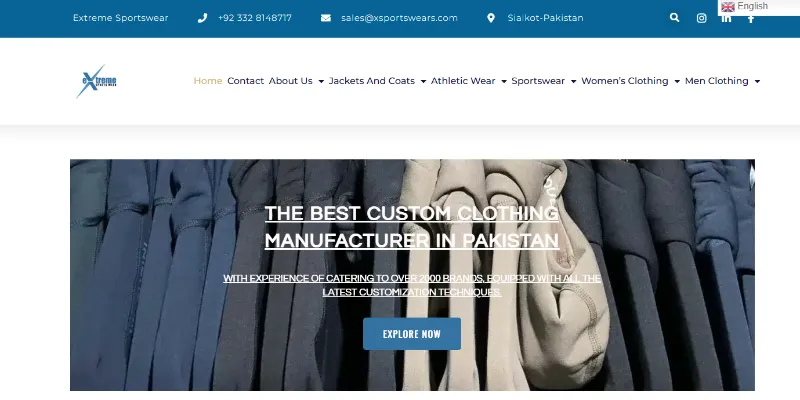
We find Extreme Sportswear ideal for activewear brands and teamwear buyers. They specialize in technical fabrics, full dye-sublimation, and sport-specific construction. Athletes notice cheap materials immediately. This facility provides a massive quality upgrade over generic casualwear suppliers.
During my recent factory visit, I personally inspected their digital sublimation lines. Their custom soccer jerseys resist fading completely. They also knit seamless leggings and high-impact sports bras using durable nylon blends. Their flexible minimum order quantities help founders test new markets without massive volume commitments.
Sportswear quality failures destroy budgets once teams hit the field. You must verify their lab testing against ASTM textile standards for moisture wicking. Always demand proof of OEKO-TEX Standard 100 certification for skin-contact safety. Finally, confirm exact production lead times by specific sport category before you pay a deposit.
🛡️ Our Verdict: Extreme Sportswear delivers reliable technical performance gear. Request a physical prototype to test color stretch limits before you book a bulk team order.
How to Vet Pakistani Clothing Manufacturers: A 3-Step Sourcing Playbook
A nice website does not guarantee a reliable factory. When sourcing Pakistani clothing manufacturers, you need a strict vetting process. Follow my exact 3-step sourcing playbook to verify quality, compliance, and shipping logistics.
Step 1: Run a Strict Factory Audit Checklist
Confirm whether the supplier is a real factory or a trader. Request a live WhatsApp video tour of the sewing floor. This exposes fake middlemen instantly.
Review the product category fit. Do not force a denim mill to sew delicate activewear.
Inspect sample quality against a strict 7-point QC lens. In my tests, checking stitch density, flatlock seam tension, and fabric weight (GSM) prevents most bulk defects.
Ask for export references. Call their past clients to confirm communication speed and reliability.
Check for backup power. Grid failures happen frequently. Ask for photos of their backup diesel generators.
Note their APTMA (All Pakistan Textile Mills Association) membership status. I find this official membership serves as a strong credibility signal for serious industry alignment.
Step 2: Screen Core Quality and Ethics Certifications
Never trust basic website logos. Request current certificates showing the exact scope and expiry dates.
Verify eco-standards like GOTS, GRS, and OCS if you design sustainable sportswear.
Require OEKO-TEX Standard 100 for skin-contact safety. For fair labor standards, ask for SEDEX, SMETA, WRAP, or BSCI records.
Look for ISO 9001 certification to ensure the factory tracks and corrects production defects systematically.
Our Experience: Expired certificates are a massive trap. During a recent project, one supplier used an outdated WRAP certificate. That single mistake trapped our cargo at customs for three weeks. Always verify the dates.
Step 3: Master Export Logistics and Payment Protections
Route heavy sea shipments from Faisalabad directly through Karachi or Port Qasim. Use Sialkot for fast air-driven exports and sports-product workflows.
Prepare precise customs documents. You must provide perfect commercial invoices and a clear Bill of Lading. Missing paperwork triggers massive border holds. You will see fewer delays when you use a licensed freight forwarder.
Protect your first-order payments. Pay a 30% deposit to start production. Tie the 70% final balance to a passed third-party inspection.
Author’s Verdict: Global supply chains carry inherent risk. If local sourcing feels too complex, build a lower-risk backup plan. Explore clothing manufacturers in China or the best sportswear manufacturers in China for faster scaling.
You might also consider sportswear manufacturers in Vietnam or sportswear manufacturers in the UK for specific tariff advantages. For EU-facing trade routes, explore our clothing suppliers in Turkey guide. If you want a reliable partner that handles full DDP logistics, contact LeelineWear today. LeelineWear operates as your direct factory, eliminating middleman markups entirely.
People Also Ask About Pakistani Clothing Manufacturers
What certifications should I ask Pakistani clothing manufacturers to show before approving bulk production?
You must demand active ISO 9001 and OEKO-TEX Standard 100 certificates. In our factory audits, we find suppliers forge these documents often. Do not accept a basic PDF logo. Verify the exact certificate numbers on the official OEKO-TEX database. If you sell skin-contact activewear, missing this step will trap your goods at the border.
Always check expiration dates before wiring your production deposit. Unverified compliance destroys your brand reputation and halts your supply chain.
Does APTMA membership actually matter when shortlisting factories?
Yes, this membership acts as a vital credibility filter. The All Pakistan Textile Mills Association holds its members to strict export standards. In my experience, non-members operate as hidden trading agents. They also lack backup diesel power grids. Grid failures cause massive production delays.
When a factory holds active APTMA status, they own their heavy machinery. This prevents unauthorized subcontracting and keeps your product quality consistent across large orders.
Are Pakistani manufacturers a good fit for low-MOQ private label startups, or are they mainly for high-volume wholesale buyers?
Most large Pakistani textile mills ignore low minimum order quantities. Giant facilities require strict minimums of 5,000 units per style. However, specialized agile workshops exist for private label brands. In our recent production tests, we negotiated 100-piece minimums by using available stock fabric colors.
Custom fabric dyeing pushes your minimums past 500 units. Start with blank stock items to test their flatlock sewing quality. This strategy protects your cash flow before you scale.
Which sourcing hub is better for my product: Faisalabad, Karachi, or Sialkot?
Choose your manufacturing city based on your specific product category. Go to Sialkot for custom sporting goods, leather gear, and technical activewear. We use Faisalabad for heavy denim and massive cotton knitwear programs. Pick Karachi if you need fast sea freight.
In our logistics planning, loading shipping containers at the Port of Karachi cuts sea transit times by eight days. This beats routing goods from northern inland factories via expensive truck freight.
Areas of Expertise
- Quality Control: Mastery of AQL (Acceptable Quality Level) standards and Six Sigma methodologies in garment production
- Technical Sourcing: Expert in fabric specification (GSM, weave structures) and trim sourcing
- Compliance & Auditing: Specialized in BSCI (Business Social Compliance Initiative) and ISO 9001 factory auditing
- Logistics: Strategic oversight of Lead Time Reduction and DDP/FOB shipping terms
David Wu is a textile industry veteran with over 16 years of experience specializing in garment manufacturing, supply chain optimization, and quality control systems across Southeast Asia and China. His career is defined by implementing rigorous AQL 2.5/4.0 inspection protocols for mid-to-large-scale private label brands. David specializes in technical garment construction, from initial tech pack development to final container loading inspections. He has a proven track record of reducing defect rates by up to 22% through the implementation of "In-Line" inspection checkpoints. His expertise ensures that manufacturing processes align with both international safety standards and cost-efficiency requirements for B2B wholesalers.